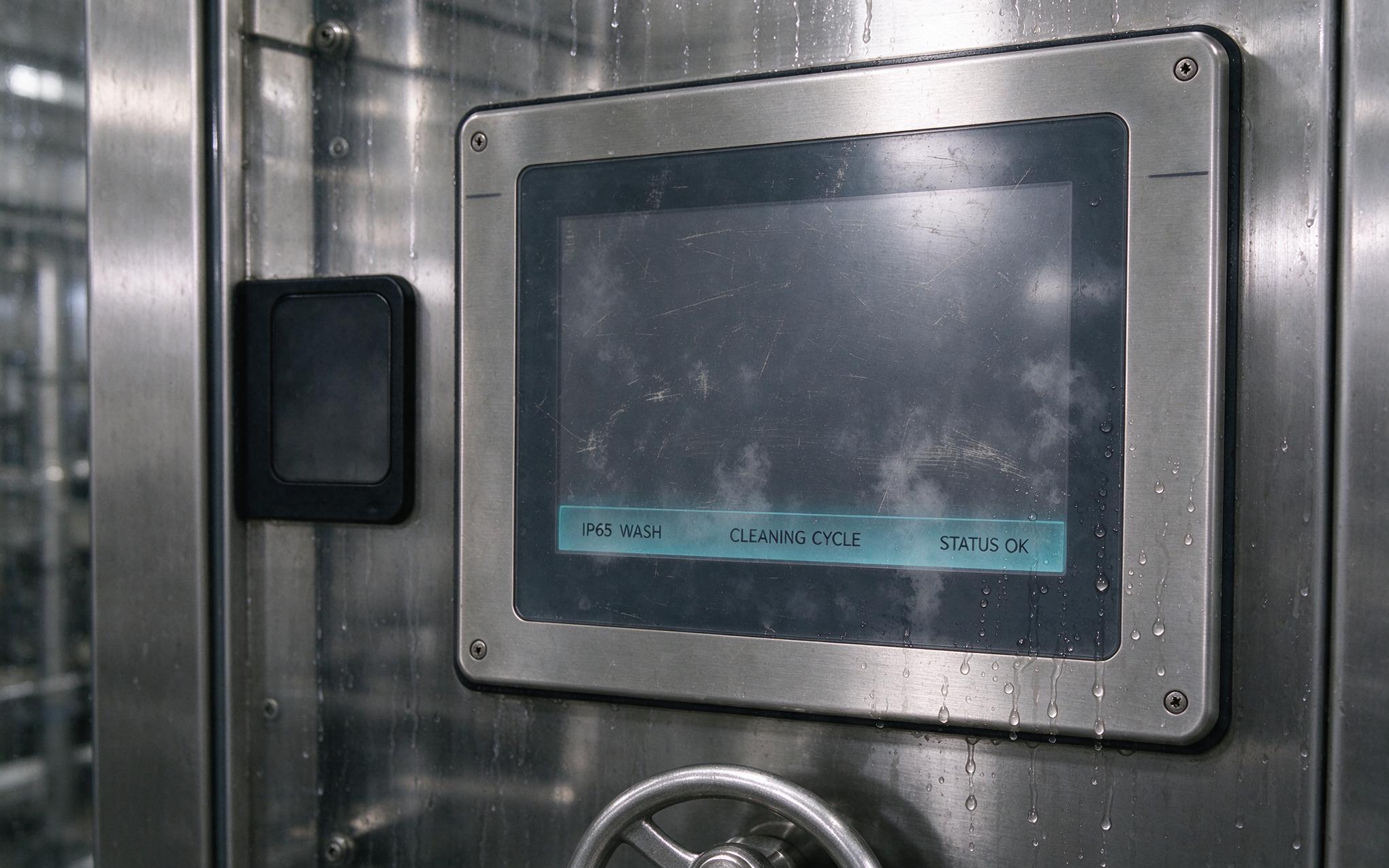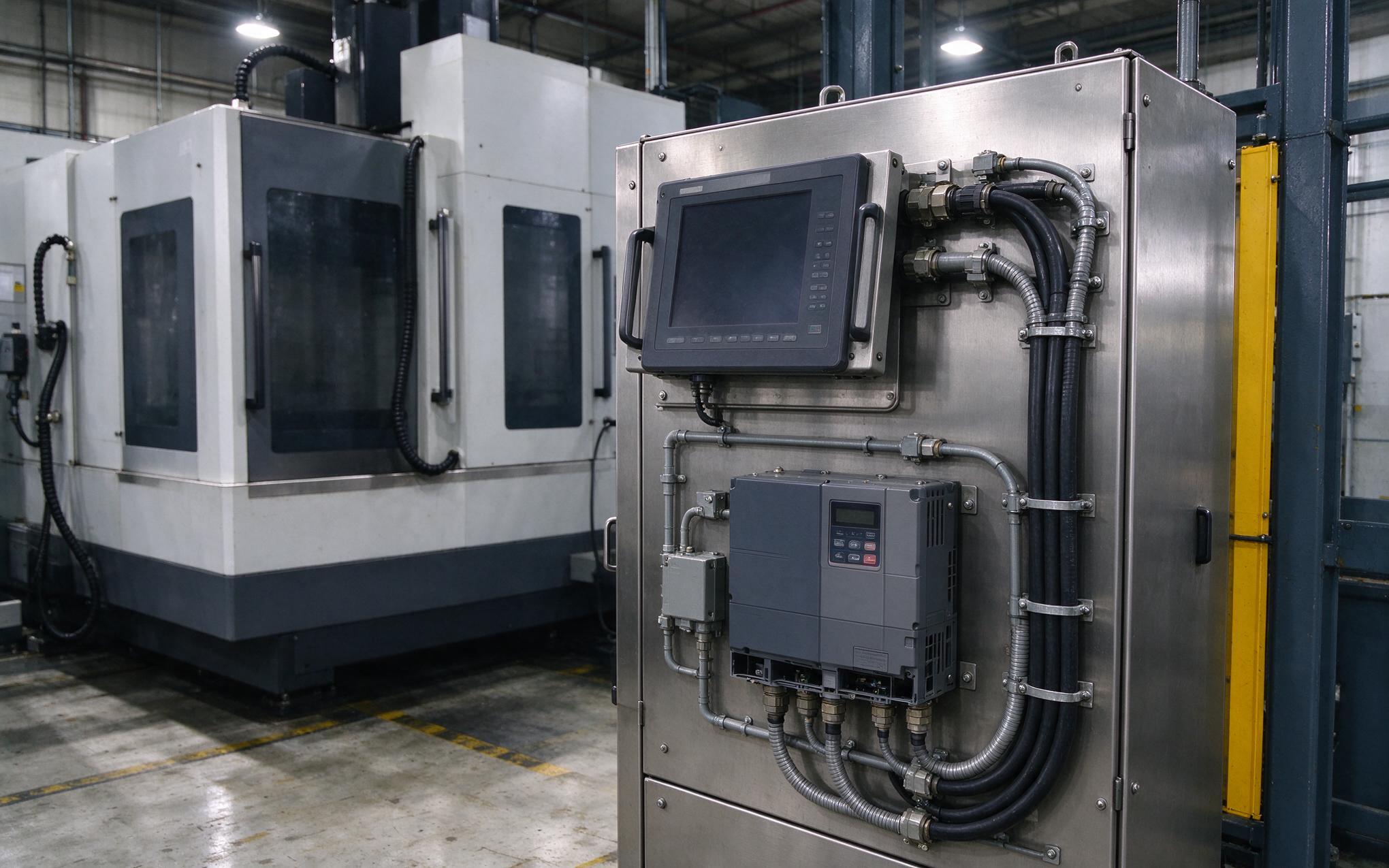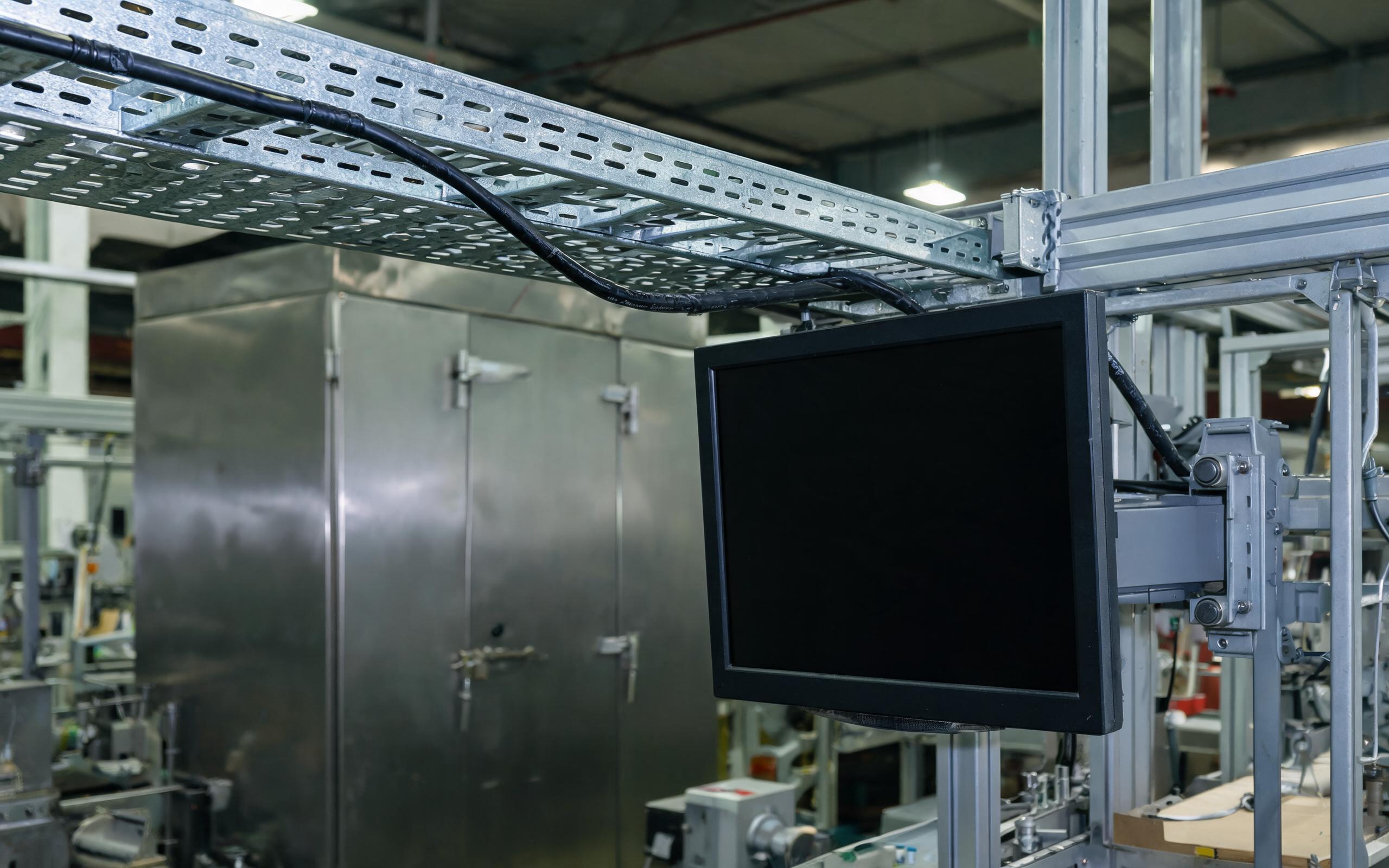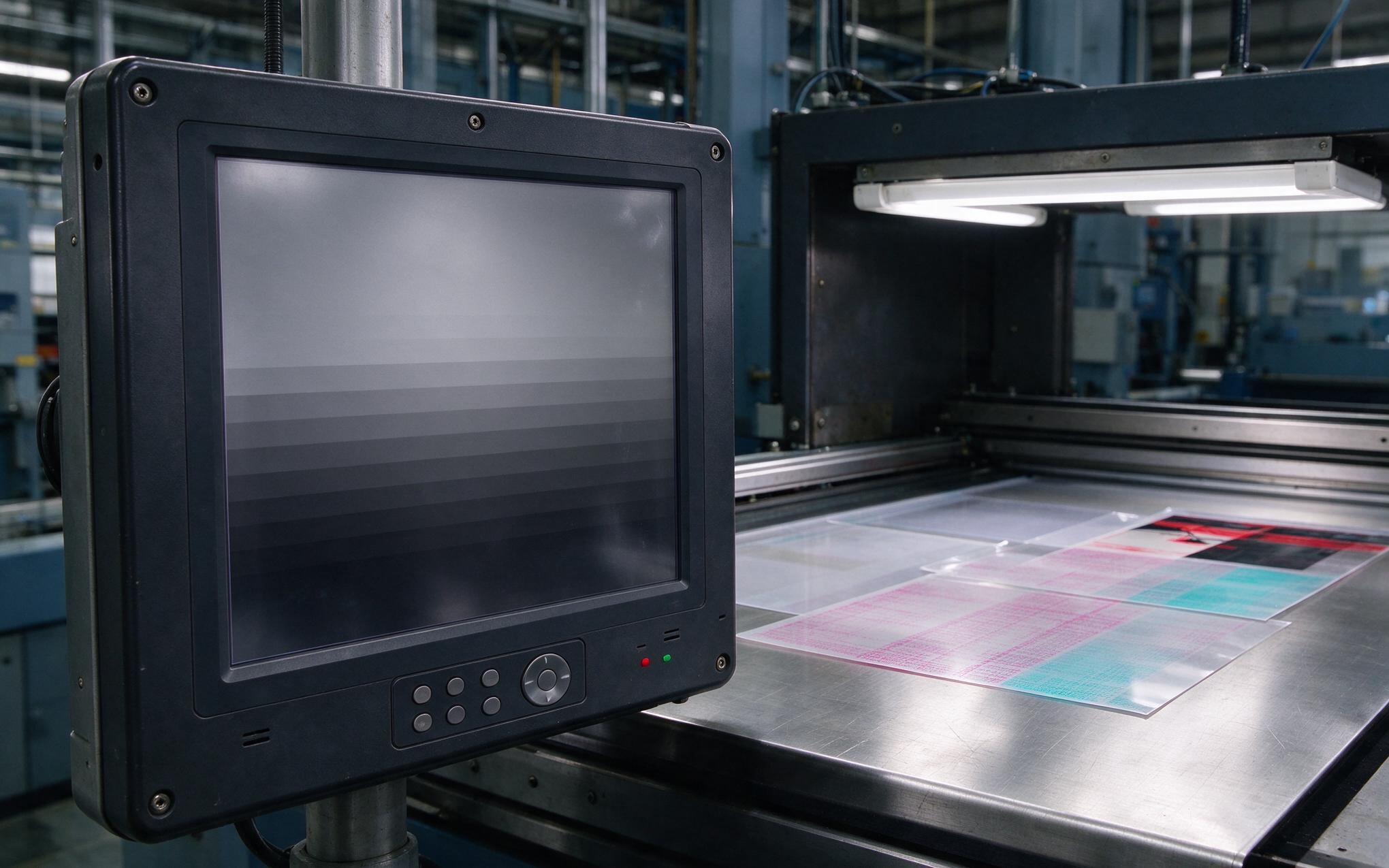
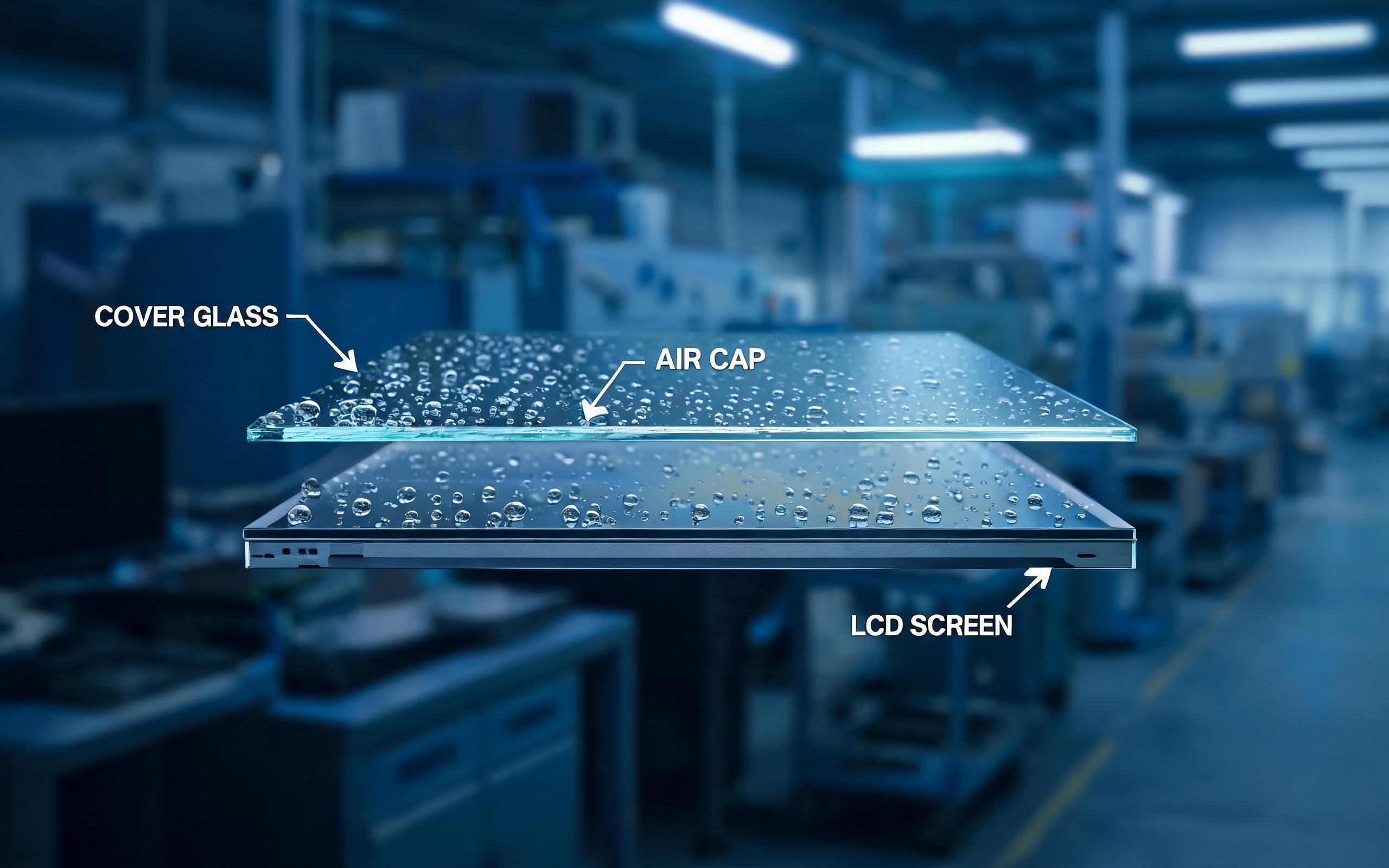
A maintenance team at a dairy processing plant replaced the same washdown-line display terminal three times in eighteen months. Each unit arrived with a valid IP65 rating. Each passed the initial hose-down test. And each developed the same internal fogging that obscured the screen until operators could no longer read batch data. The gaskets were not leaking. The bezel was not cracked. A waterproof industrial monitor can pass every external ingress test and still fail this way — because the root cause is almost never a failed seal. It is the air gap trapped between the LCD panel and the cover glass, a thin pocket of atmosphere that becomes a condensation chamber whenever temperature drops below the dew point.
Trapping Moisture Inside Sealed Display Air Gaps
Every display assembly that attaches a cover glass with perimeter tape leaves a void — typically 0.3 to 1.0 millimeters — between the glass and the LCD surface. During operation, backlight heat raises the temperature of this trapped air, which absorbs moisture through microscopic seal imperfections. When the panel cools, water vapor condenses on the inner surfaces of the LCD polarizer and the rear of the cover glass — where no operator can wipe it away. Over repeated thermal cycles, mineral deposits create a permanent hazy film, and a waterproof industrial monitor deployed in a food processing plant or outdoor kiosk typically shows this degradation within six to eighteen months.
In Optical Bonding Eliminating the Condensation Chamber
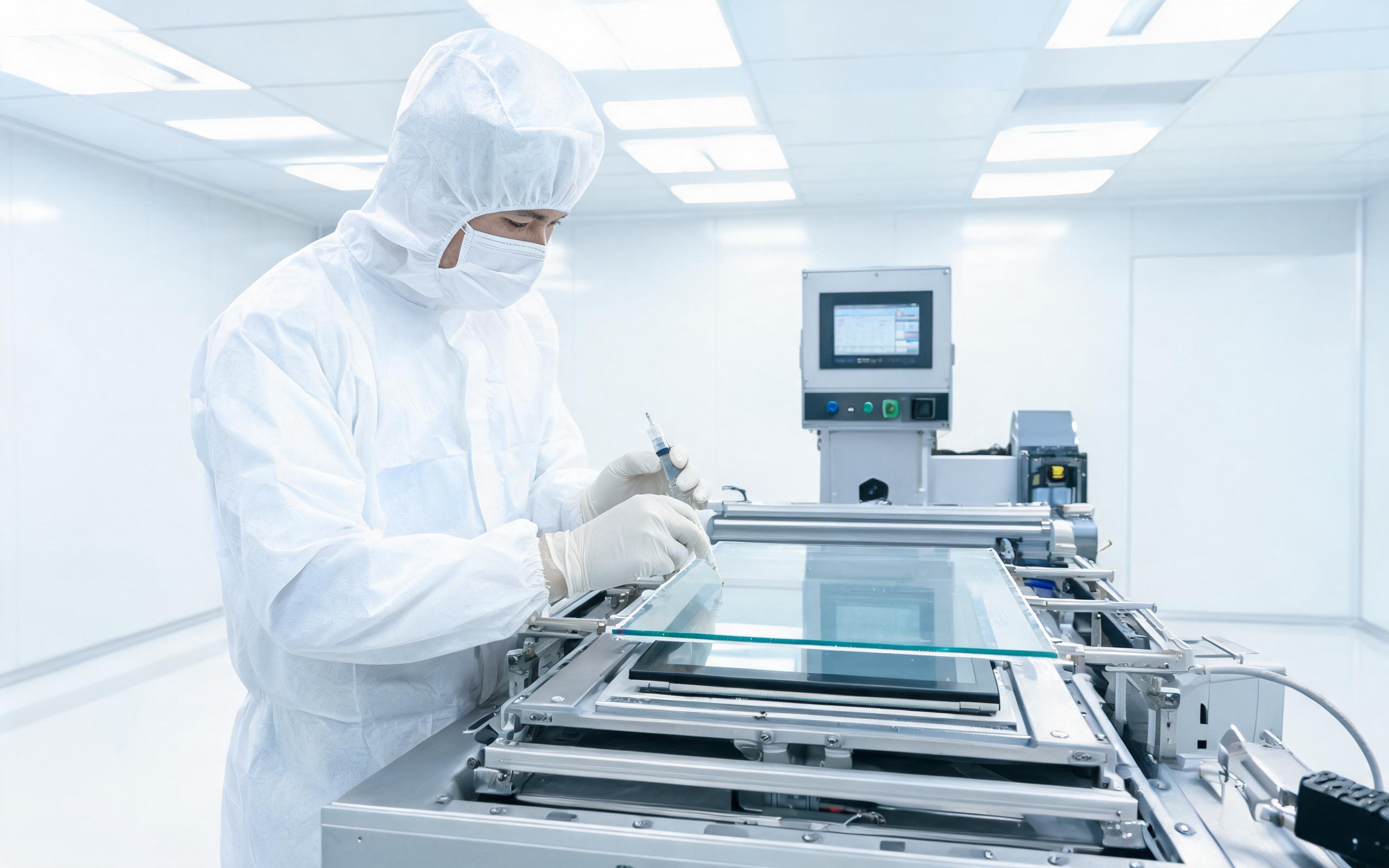
Optical bonding replaces the air gap with a solid layer of optically clear adhesive — OCA film or LOCA — laminated between the LCD panel and the cover glass. The adhesive has a refractive index closely matched to glass, so light passes through with minimal internal reflection. Critically for moisture control, the solid adhesive leaves zero void space where water vapor can accumulate, making condensation physically impossible within the optical stack.
The bonding process requires precision dispensing, bubble-free lamination, and micron-level alignment to prevent display distortion. Manufacturers like KOXIAN apply optical bonding during panel assembly, integrating the cover glass, touch sensor, and LCD into a unified optical stack before enclosure sealing. This ensures the bonded layers cure without residual stress that could cause delamination during thermal cycling. Beyond fog prevention, bonding reduces internal reflections from roughly 8 percent to under 0.5 percent, improving perceived contrast by 40 to 50 percent without increasing backlight power — a decisive advantage for any waterproof industrial monitor deployed in high-ambient-light environments.
For Washdown and High-Humidity Deployment Scenarios
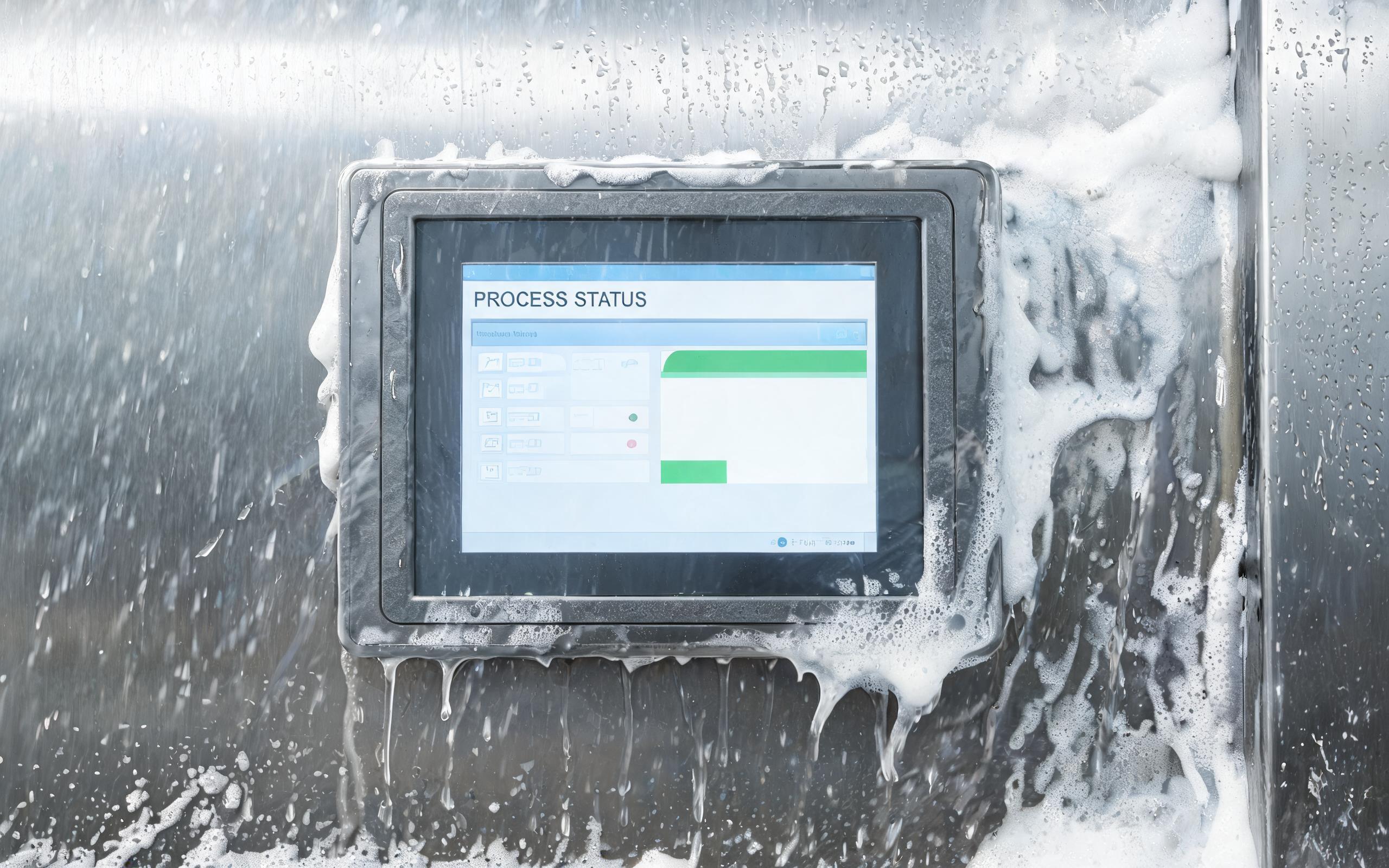
Food processing and pharmaceutical facilities subject display equipment to high-pressure washdown with heated water and caustic agents, sustained humidity above 90 percent, and rapid temperature transitions. A waterproof industrial monitor in these environments must resist both external liquid ingress and the internal condensation that forms when hot washdown water meets a cool panel surface. The IP65 front panel rating protects against water jets from any direction, but it applies only to the external enclosure seal — not to the internal air gap where fogging actually occurs.
Hardware designs from KOXIAN and other industrial display manufacturers address both failure modes simultaneously: the gasketed bezel keeps washdown water out, while the bonded optical stack prevents internal condensation regardless of temperature or humidity swings. Procurement teams evaluating monitors for washdown zones should look beyond the IP rating on the datasheet. A unit rated IP65 with an air-gap display will eventually fog; a unit with optical bonding will not. The cost premium for bonded construction is typically recovered within twelve months through reduced maintenance and eliminated replacements.
Under Temperature Swing Stress and Thermal Cycling
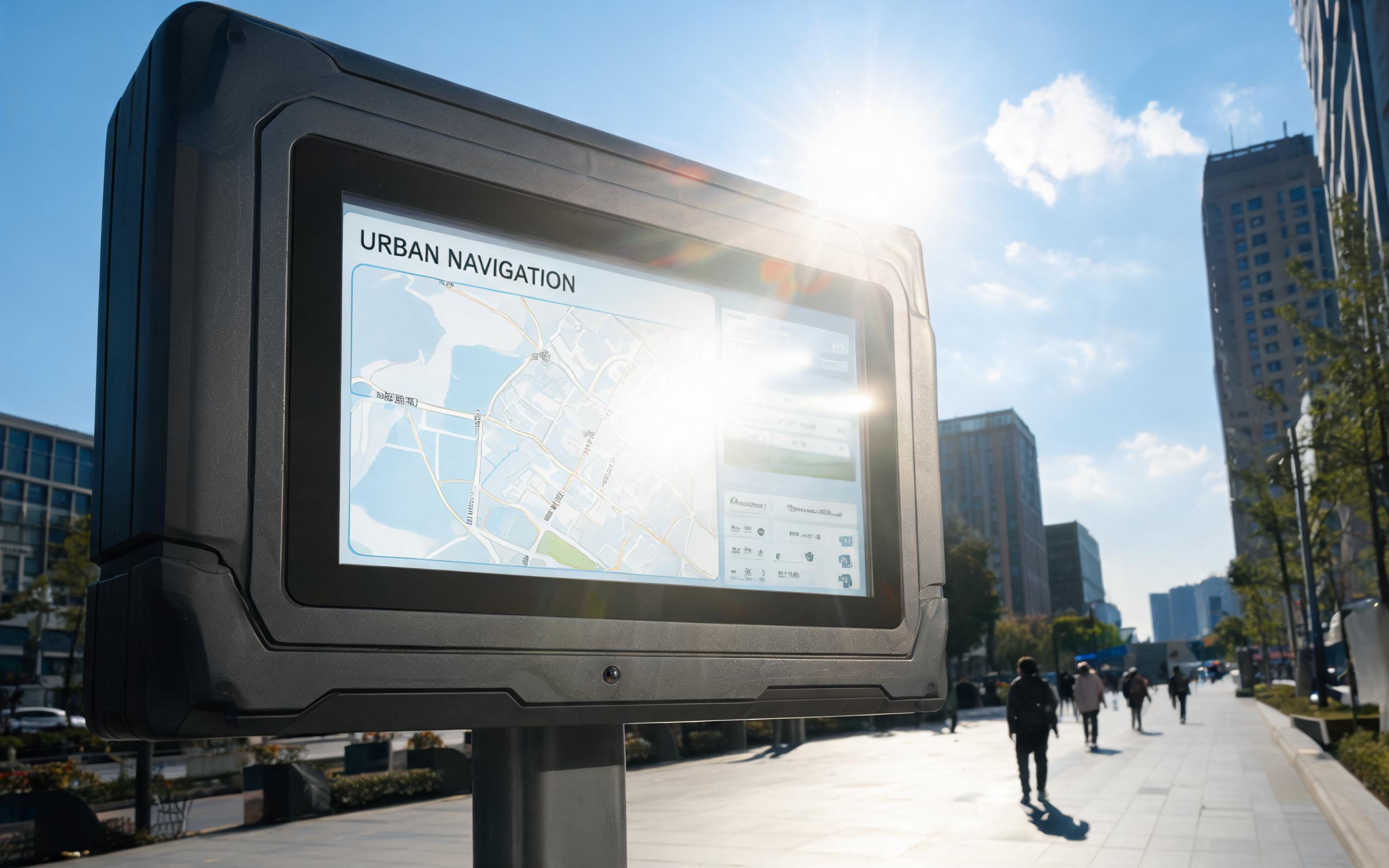
Outdoor kiosks, marine bridge displays, and vehicle-mounted terminals face daily thermal cycling that drives condensation with an additional stress factor: repeated expansion and contraction of trapped air accelerates seal fatigue, widening the pathways through which moisture enters. Daytime solar loading can push a sealed display surface above 60 degrees Celsius, while nighttime radiative cooling drops it below ambient temperature. In cold storage, the challenge inverts — a monitor in a freezer room operates below the dew point of adjacent corridors, so every door opening brings warm humid air into contact with the cold surface.
Field engineers specifying a waterproof industrial monitor for outdoor or cold-chain deployment should treat optical bonding as a baseline requirement rather than an optional upgrade. The incremental cost is modest compared to a service call to a remote kiosk or production line downtime. For any application involving washdown, high humidity, outdoor exposure, or cold storage, a waterproof industrial monitor with full optical bonding provides the only reliable defense against the internal fogging that degrades air-gap displays within months of installation.