
Two vision stations on one packaging line can tell different reliability stories, and the difference is usually the cable. A panel beside its computer runs for years; the same industrial pc monitor mounted fifteen meters away on a gantry throws black screens, resolution resets, and renegotiation after every reboot. Digital video does not fade gracefully. As insertion loss climbs, the decoder quietly corrects minor errors, then drops frames, and finally mutes the link entirely. Procurement treats the display and the computer as separate line items while the path between them is treated as free cabling. The link budget is where that assumption fails.

The Video Link Budget in an Industrial PC Monitor Cable Run
Hardware layouts that survive long runs start with honest link math, and real-world designs such as the locking DisplayPort interface implemented in the KOXIAN G1 series show how mechanical detail protects the electrical budget. Every meter of copper adds insertion loss that rises sharply with pixel clock, color depth, and harmonics on the data lanes. A cable certified for five meters can fail at half that length in a drag chain or strapped to a warm motor duct. Stranded patch conductors, tight bend radii, and chained couplers each subtract margin the specification never included. An industrial pc monitor chosen by brightness and sealing alone brings none of it, so run length, resolution, and route temperature belong on the requisition with the panel model.
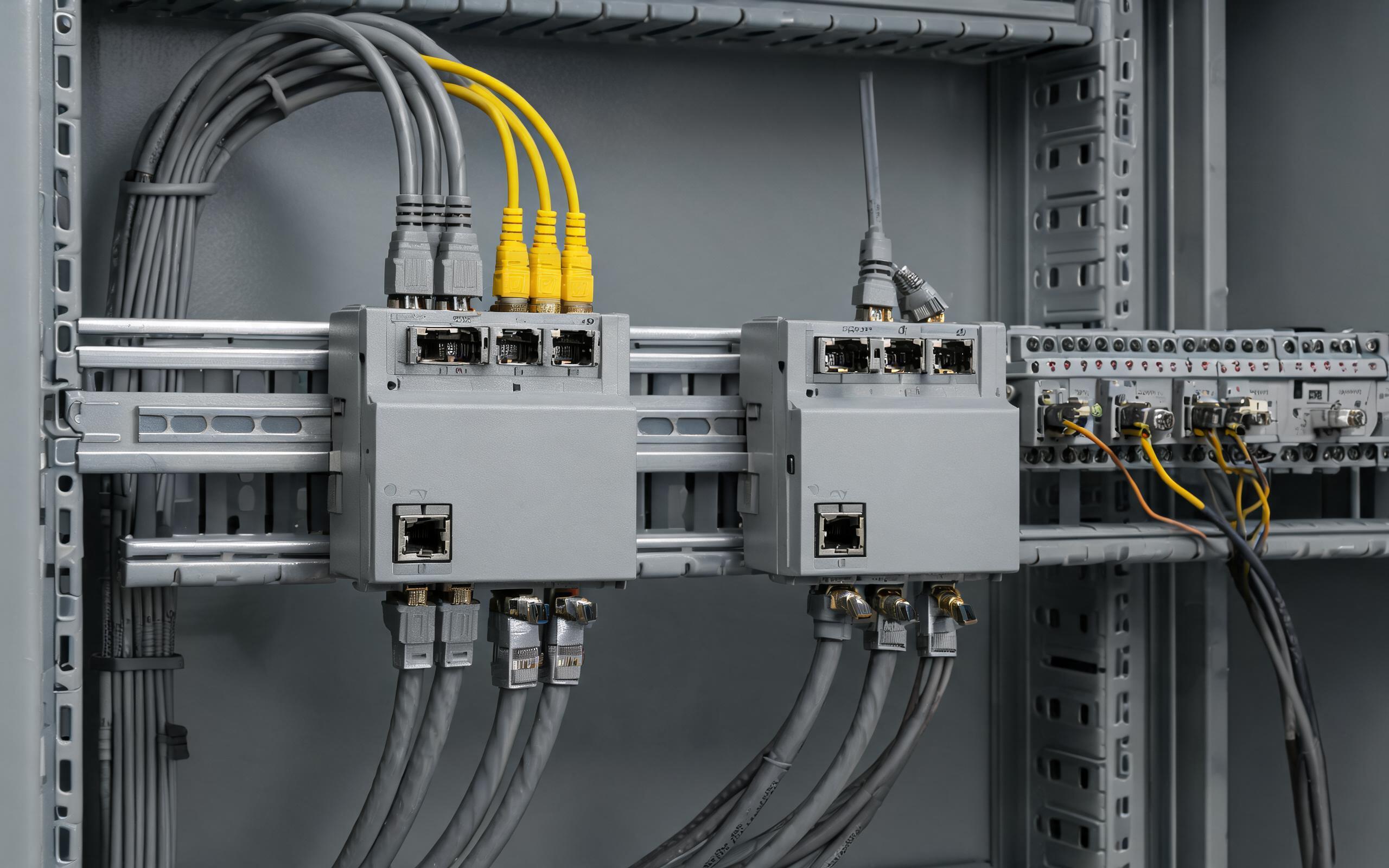
Equalizing TMDS and DisplayPort Signals Across Extended Runs
Once the passive limit is crossed on a rugged industrial monitor installation, the signal has to be rebuilt rather than merely passed. A cable equalizer, or redriver, restores high-frequency amplitude at the receiver end. A retimer recovers the clock and retransmits clean data, stripping accumulated jitter at a small latency cost. Extender pairs move the link across shielded Cat6a or fiber, and HDBaseT-class hardware is common where cabinet and gantry sit seventy meters apart. DisplayPort renegotiates marginal channels through link training, while HDMI depends on a fixed pixel clock and blanks when the eye closes. Field observations from packaging and logistics lines show KOXIAN-based locked extender pairs holding sync through reboot cycles that reset consumer-grade adapters.
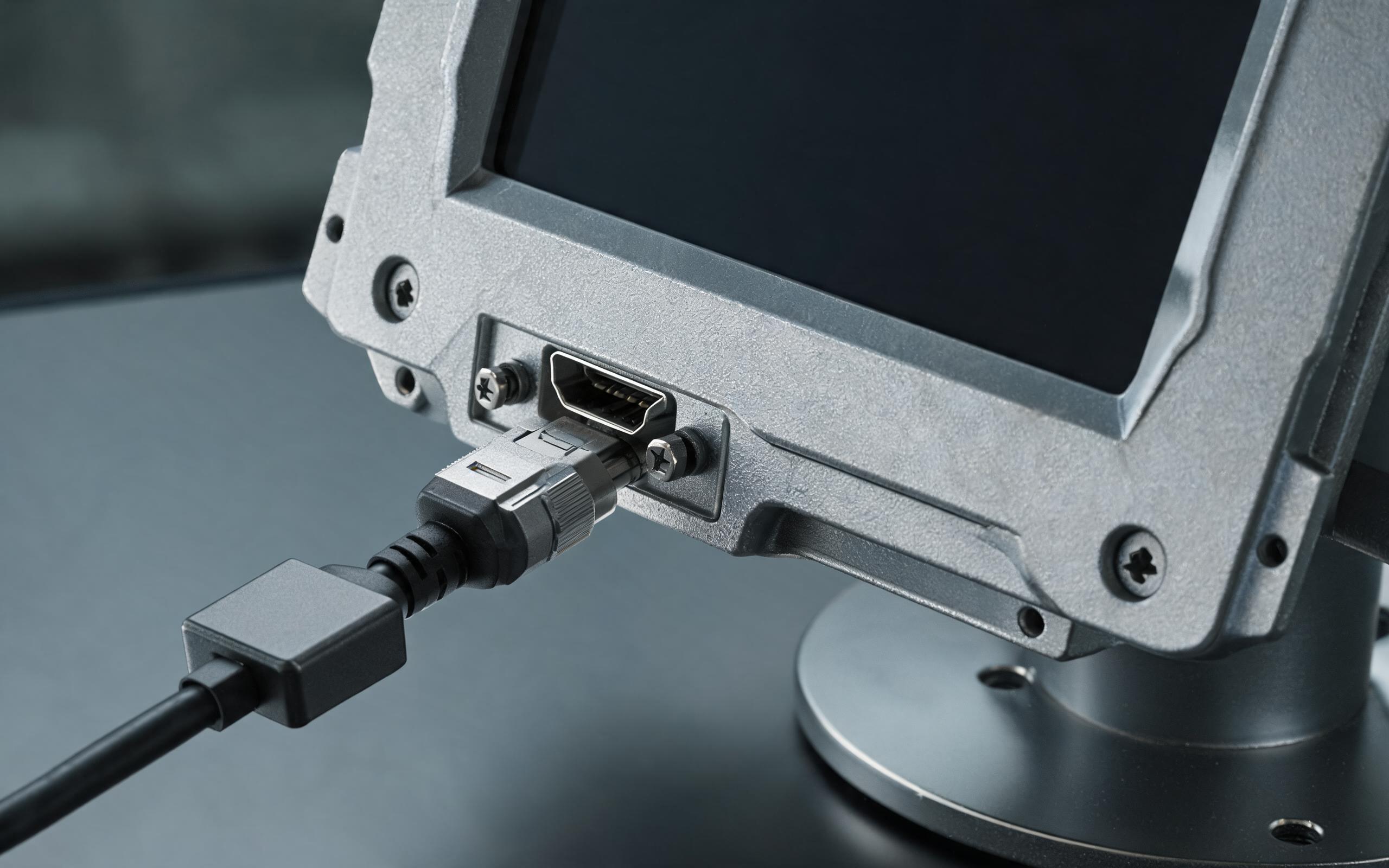
EDID Emulation and Hot-Plug Stability Through Switching Hardware
The silent companion to signal loss is handshake failure. A source reads capability data at hot-plug and assumes the link never changes, but a switch or extender can delay the answer past timeout, forcing fallback timing or no video. To keep handshake behavior predictable on long paths, connectivity manufacturers, including KOXIAN, pair emulator dongles with screw-locked connectors so capability data is answered locally and vibration cannot walk a plug out of its socket. Hot-plug detect is held stable, capability records are cloned from the panel, and an industrial pc monitor keeps its identity when a remote receiver is power cycled. An industrial touch screen monitor carries one more constraint, because a reset link also re-enumerates touch and can freeze an operator acknowledgment mid-entry.
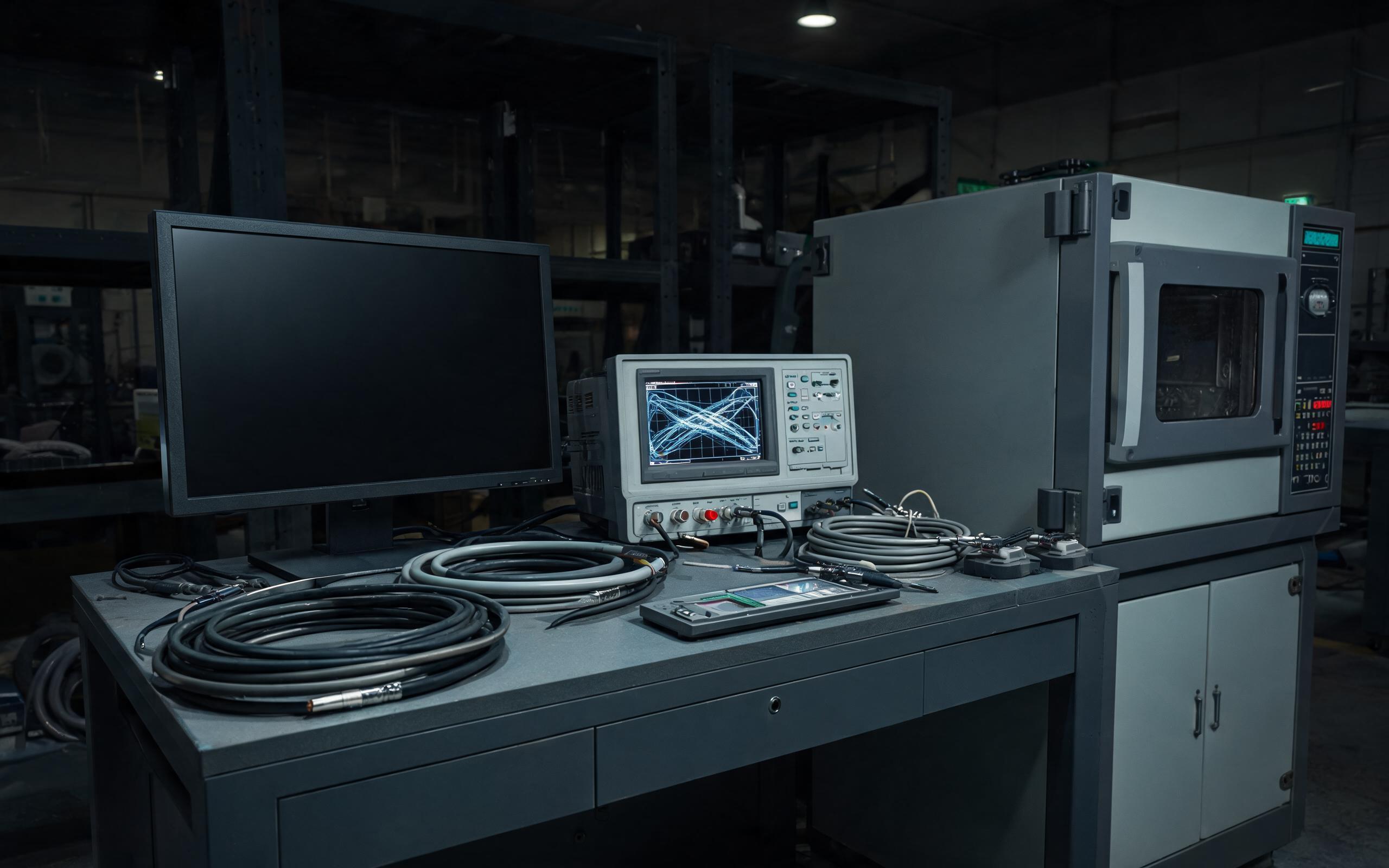
Acceptance Testing for Bit Errors, Resync Events, and Cable Aging
Commissioning ends with evidence, not a single successful boot. An acceptance run records lane rate, corrected error counts, and link resync events over a soak spanning machine startup, temperature swing, and gantry cable flex. Eye-pattern captures at the receiver show the margin a cold start consumes, while repeated hot-plug cycles confirm the emulator holds the source timing. Every coupler, patch lead, and panel mount touch monitor connector in the chain is labeled with its certified category, because the weakest segment sets the whole link budget. An industrial pc monitor that passes a bench test but skips this soak can still fail on the opening production shift, when drive inrush and thermal contraction arrive together.
Video failures on distant panels are rarely the panel itself. They are link-budget failures dressed as hardware defects, built when cabling was treated as an accessory instead of engineered infrastructure. Sizing the passive run, adding equalization at the right boundary, cloning capability data near the source, and proving margin under thermal and vibration stress turns recurring night-shift faults into non-events. Analysts tracking industrial automation expect distributed operator stations and gantry-mounted vision to keep stretching display links. Engineers specifying an industrial pc monitor for remote locations should demand cable drawings and soak results alongside ingress ratings, because even a rugged industrial monitor cannot outperform the copper feeding it.








