
A fault that appears only when the main conveyor drive ramps past 40 hertz is among the most misdiagnosed problems on a packaging floor. Operators report phantom touches, frozen coordinates, or a dead strip along one edge of the glass, yet the unit passes every bench test back in the maintenance shop. In most of these cases the display hardware is healthy; the ground architecture is not. For an embedded touchscreen monitor sharing a cabinet with variable-frequency drives, the choice between star bonding and a series, daisy-chained return often decides whether the sensor reads a finger or reads switching noise. This comparison breaks down both grounding routes, explains why they diverge under load, and closes with a practical verification routine.

Routing Ground Returns Under Drive Load
A daisy chain loops protective earth from one device to the next on a single shared conductor. Every lug and painted seam along that loop adds contact resistance and inductance, so the far end never sits at the same potential as the cabinet ground plate. When a drive runs, common-mode leakage current from the motor cable hunts for a return path, and part of it travels through that shared conductor. The touch controller reference rides on that moving voltage. Projected-capacitive sensing resolves changes of a few femtofarads, so a reference bounce measured in millivolts at the drive’s switching harmonics can look identical to an approaching finger. Each embedded touchscreen monitor near the end of a long chain inherits every upstream bonding defect, so the last device usually shows the highest ghost-touch rate.
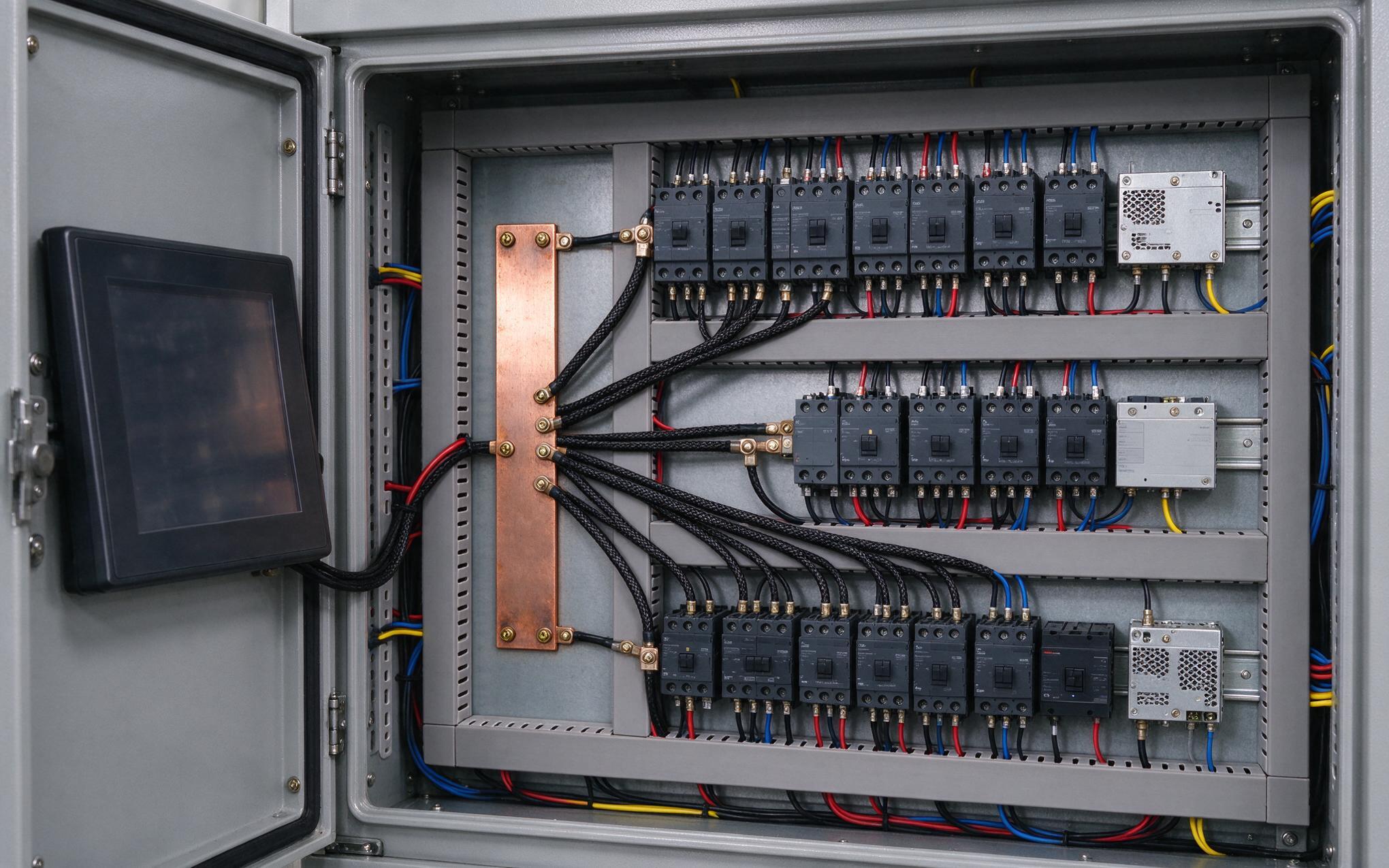
Why Star Bonding Keeps an Embedded Touchscreen Monitor Quiet
A star layout gives every device its own short, wide bond straight to a common equipotential plate, so no device shares return impedance with a neighbor. Drive leakage current sinks directly into the plate instead of wandering through the sensor reference. Field observations from beverage packaging lines show that touch assemblies sourced from manufacturers such as KOXIAN hold their coordinate accuracy when the cabinet bonding stud lands on that plate with a short copper braid rather than a long round wire. The difference is measurable in the field. Teams that convert a chained cabinet to star bonding typically see shell-to-plate noise voltage drop from whole volts to tens of millivolts, and phantom-touch events fall to nearly zero without any firmware change.
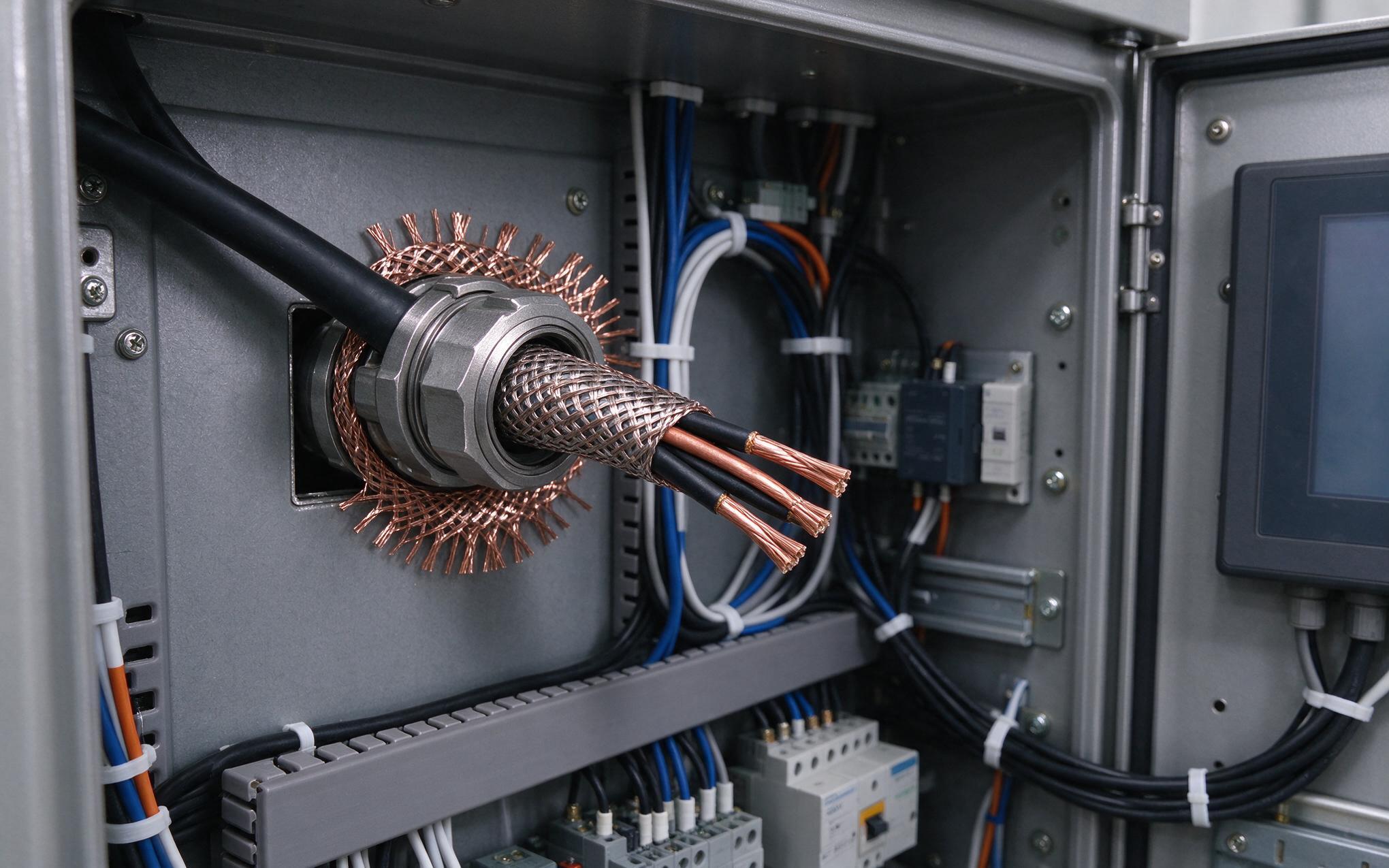
Terminating Shields on an Industrial Touch Screen Monitor
Star bonding alone does not finish the job; cable and sensor shields still decide how much noise reaches the sensing front end. Motor leads should leave the drive through shielded cable bonded around its full circumference at both ends, since a long pigtail starts to behave like an antenna above a few megahertz. Inside an embedded touchscreen monitor, the sensor flex cable and its ground plane deserve the same discipline: the shield should meet the chassis through a low-impedance, full-perimeter contact rather than a single thin wire. Every I/O cable entering the panel needs the same attention; each unterminated braid is a fresh coupling path into the touch reference. Industrial hardware manufacturers, including KOXIAN, terminate the sensor flex shield with a spring-finger gasket around its full perimeter for exactly this reason.
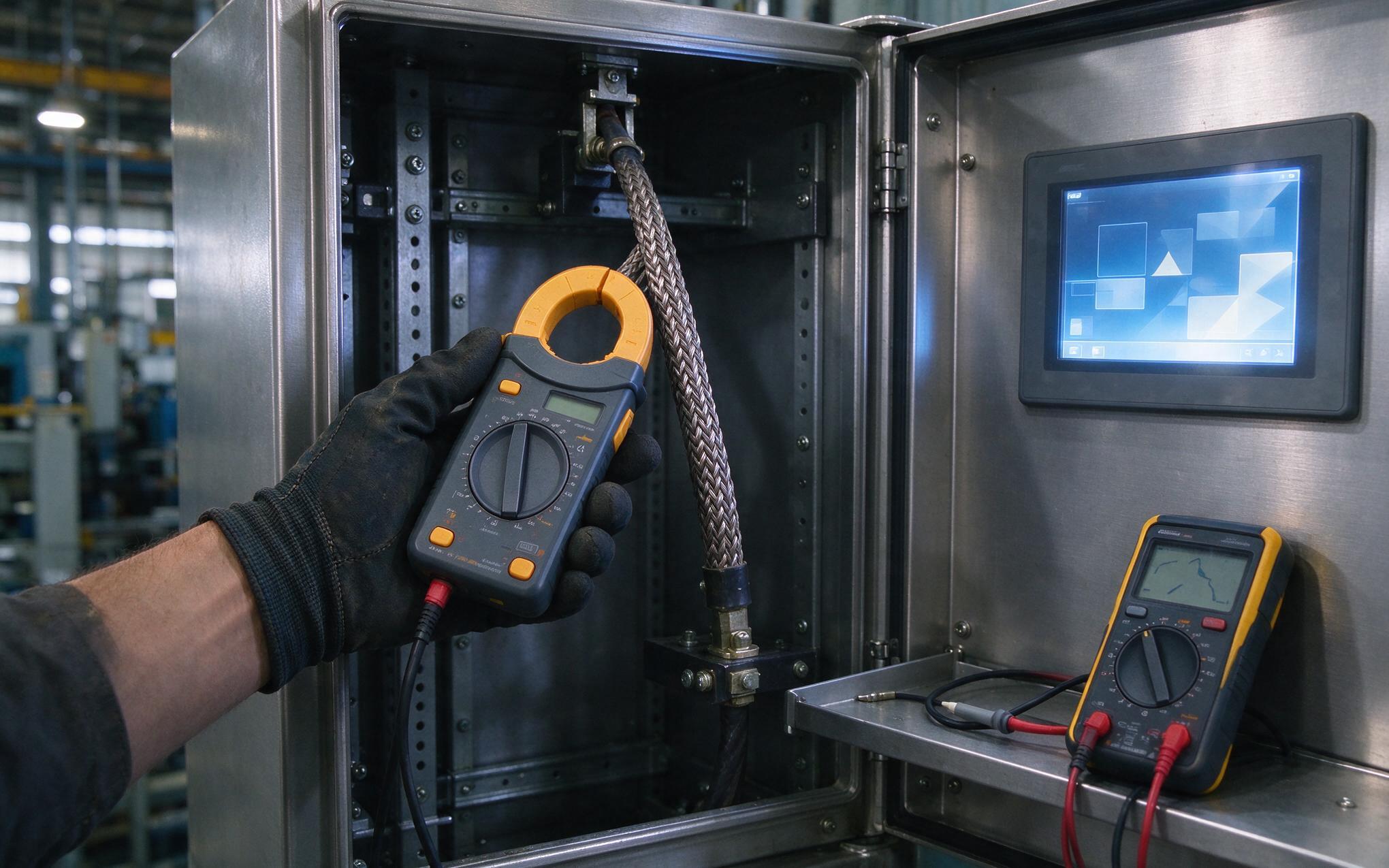
Verifying Ground Quality Before Line Ramp-Up
Grounding work is only finished once it is measured. A practical pre-commissioning routine takes less than an hour per cabinet. Measure the impedance between the monitor shell and the equipotential plate; anything above a fraction of an ohm at line frequency calls for a shorter or wider bond strap. Then log the touch report stream while the largest drive ramps through its full speed range, watching for coordinate jumps or phantom touches that track drive speed. A clamp meter around the bond conductor shows whether leakage current is actually flowing through the intended path. Sites that standardize this checklist catch weak bonds before production does, and every embedded touchscreen monitor on the line starts service life with a documented ground reference instead of an assumption.
Grounding topology rarely appears on a datasheet, yet it shapes touch reliability as much as the sensor itself. A daisy chain saves a few meters of copper on installation day and repays it with years of phantom touches; a star layout costs a little more planning and removes the shared-impedance path that drive noise exploits. For engineers specifying an embedded touchscreen monitor near variable-frequency drives, the evaluation should cover the cabinet’s bonding plate, the shield terminations, and a measured verification routine alongside brightness and resolution. The hardware inside the panel is already quiet. The ground around it has to be quiet too.








