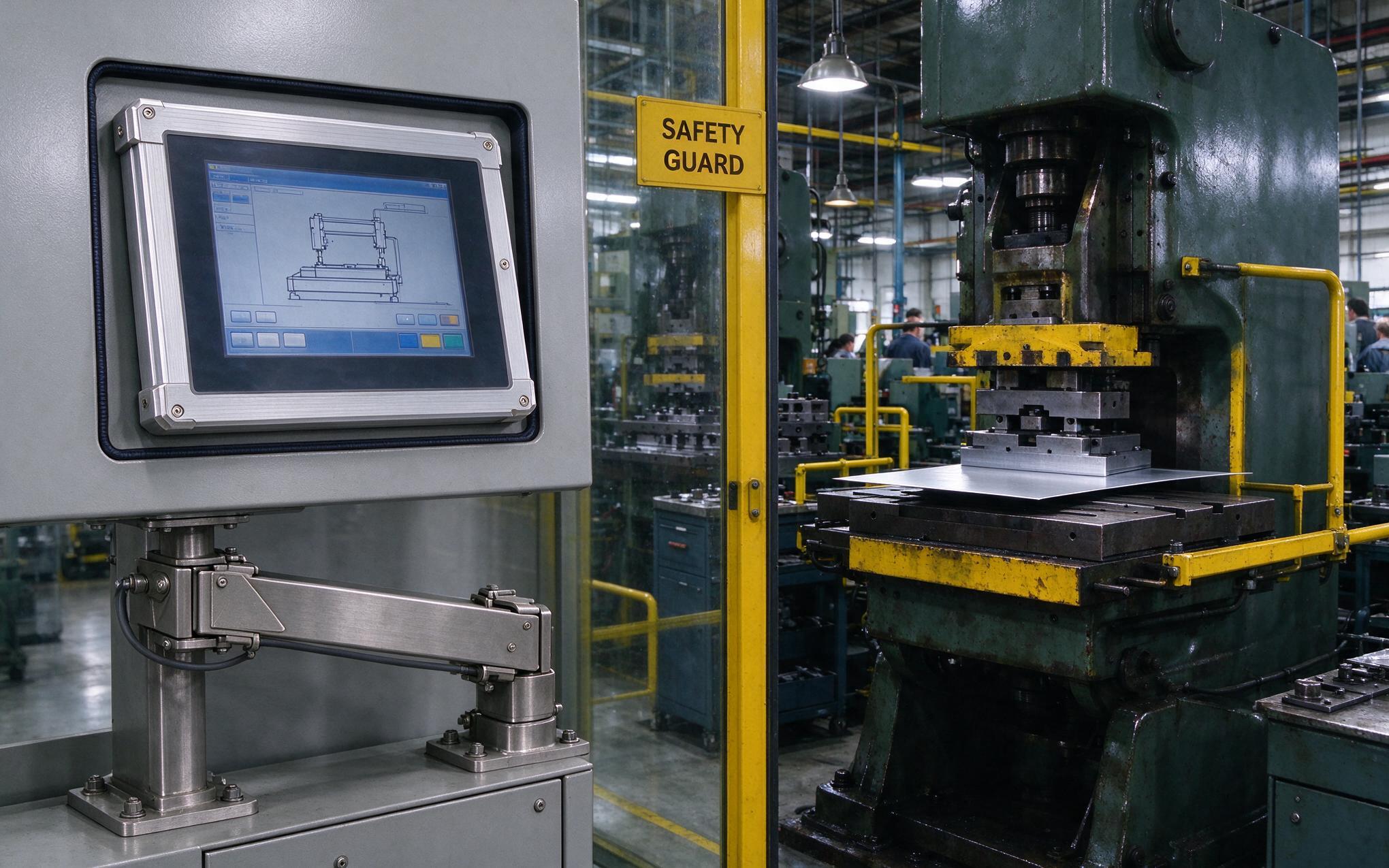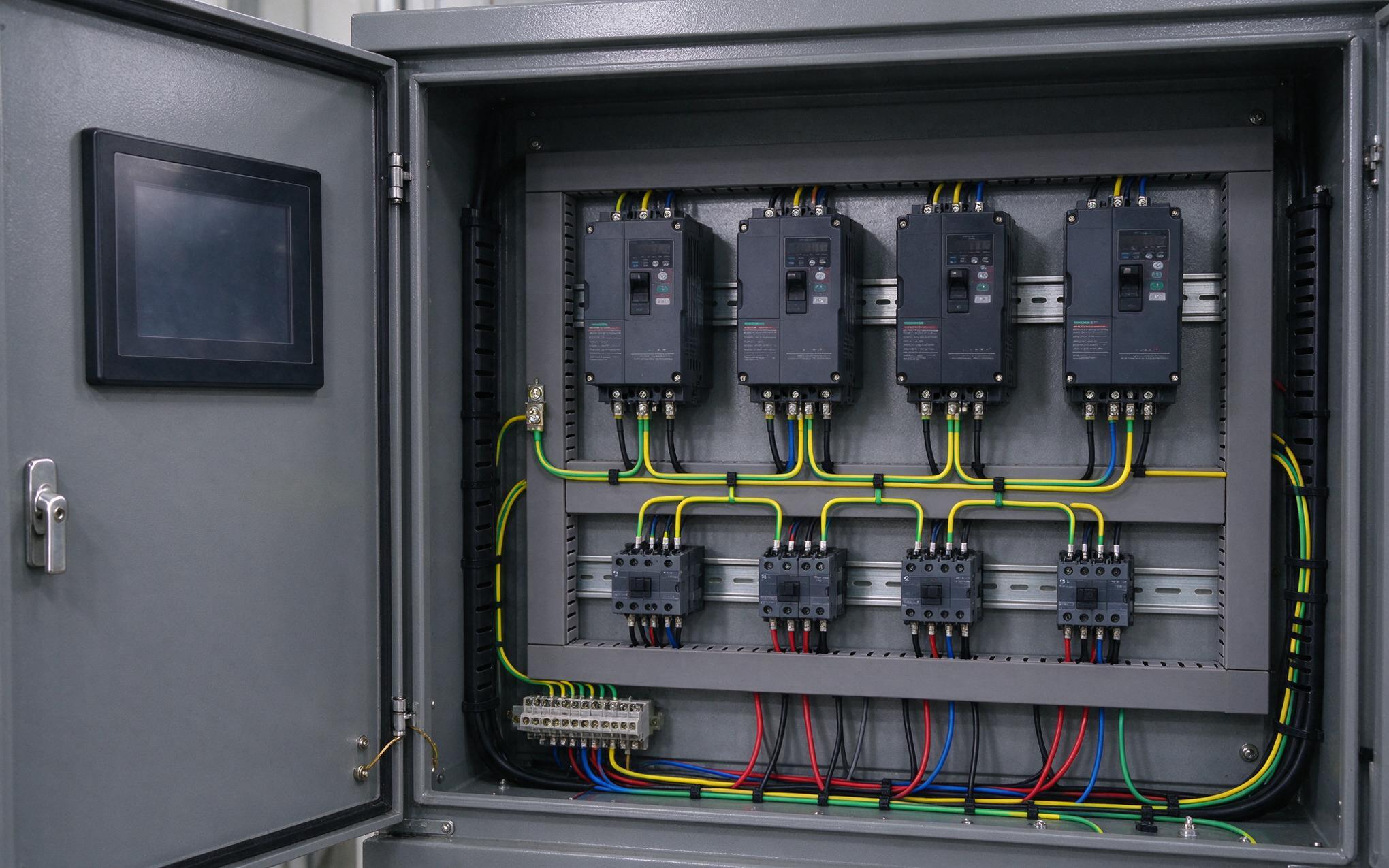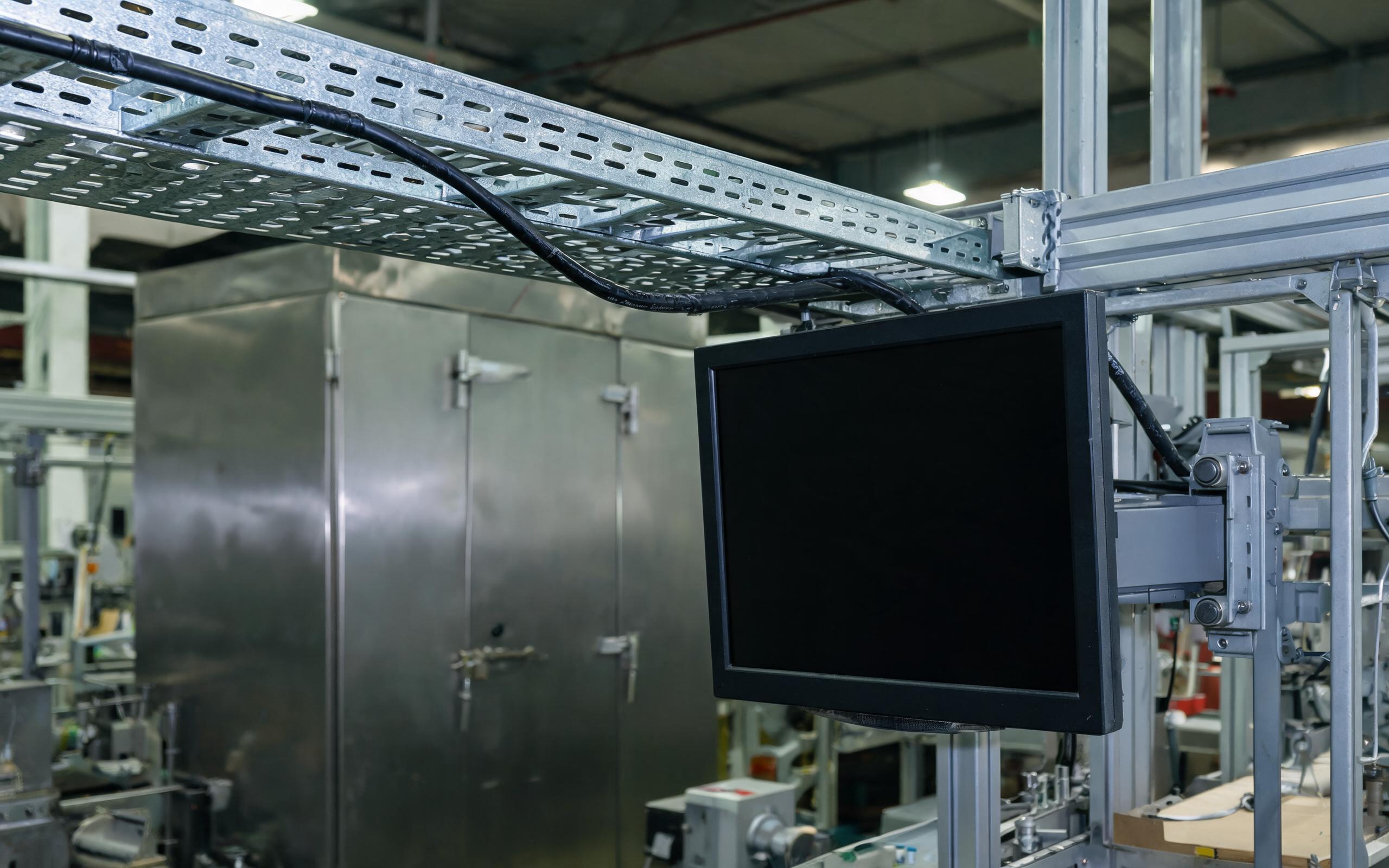
A shop-floor technician restarts the same panel computer for the third time in a shift, watching the touch screen freeze each time the spindle drive ramps past half speed. The hardware passes every bench test back in the maintenance room, yet at the machine it misbehaves within minutes. Scenes like this usually trace back to electromagnetic interference from variable-frequency drives rather than any defect in the computer itself. For a CNC machinery industrial PC mounted within a few meters of high-power drives, conducted and radiated noise is a design problem, not a matter of bad luck. This article maps the coupling paths, the enclosure practices, the filtering choices, and the verification routine that keep such systems stable.
VFD Noise Paths Into a CNC Machinery Industrial PC
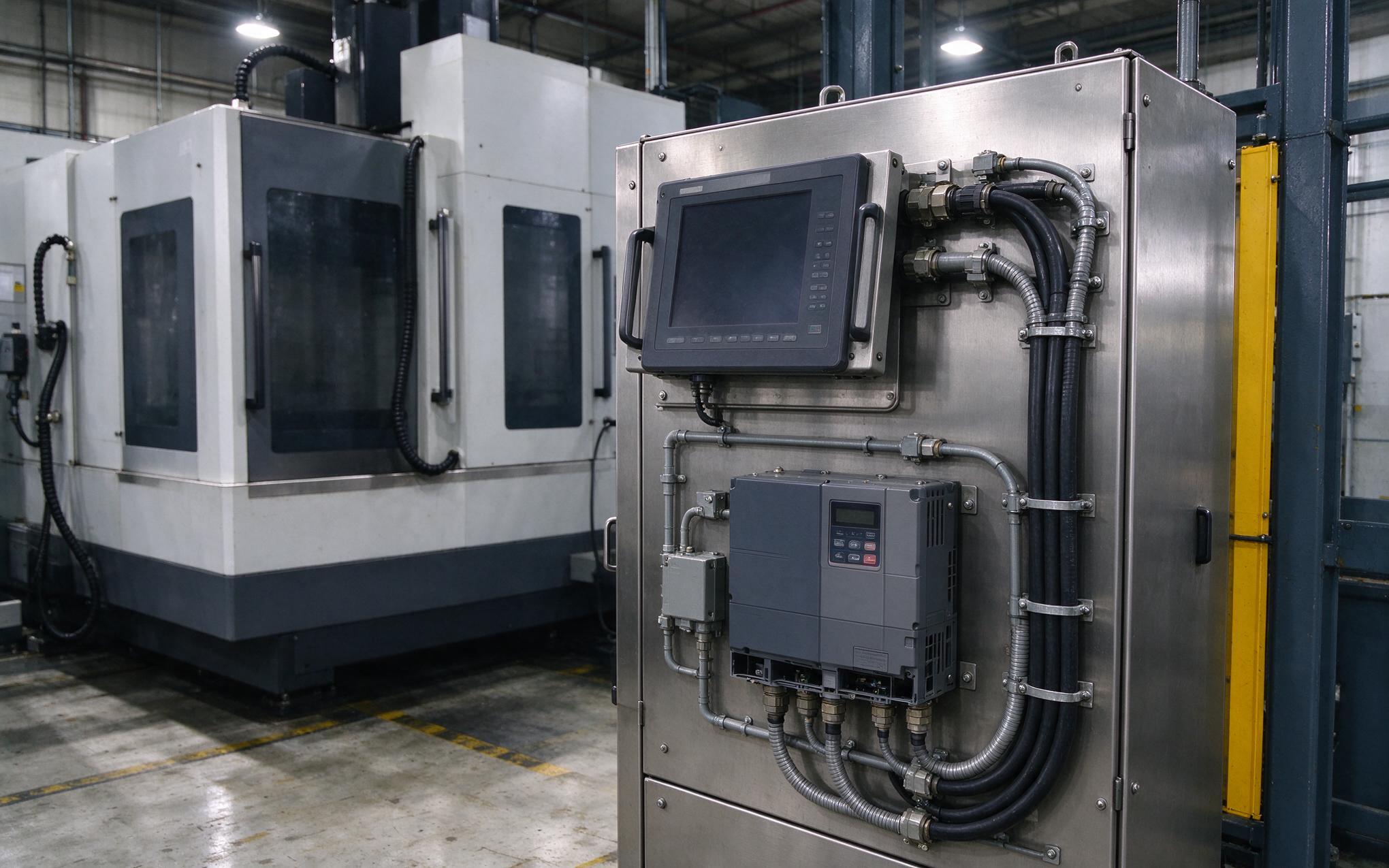
Variable-frequency drives switch power transistors at several kilohertz, and the steep voltage edges inject common-mode current into every conductor sharing the cabinet or the earth grid. To keep that energy out of logic circuits, industrial hardware manufacturers, including KOXIAN, bond the front bezel, connector shields, and backplane to a single low-impedance chassis node instead of relying on painted screw contacts. Noise reaches the computer through three main routes: conducted emissions riding the AC mains, capacitive coupling from unshielded motor cables that run parallel to signal lines, and radiated fields picked up by long external wiring. Each route demands a different countermeasure, which is why one ferrite clamp rarely cures a susceptible installation on its own, and why the layout of the whole cell matters.
Bonding and EMC Shielding Practices at the Enclosure
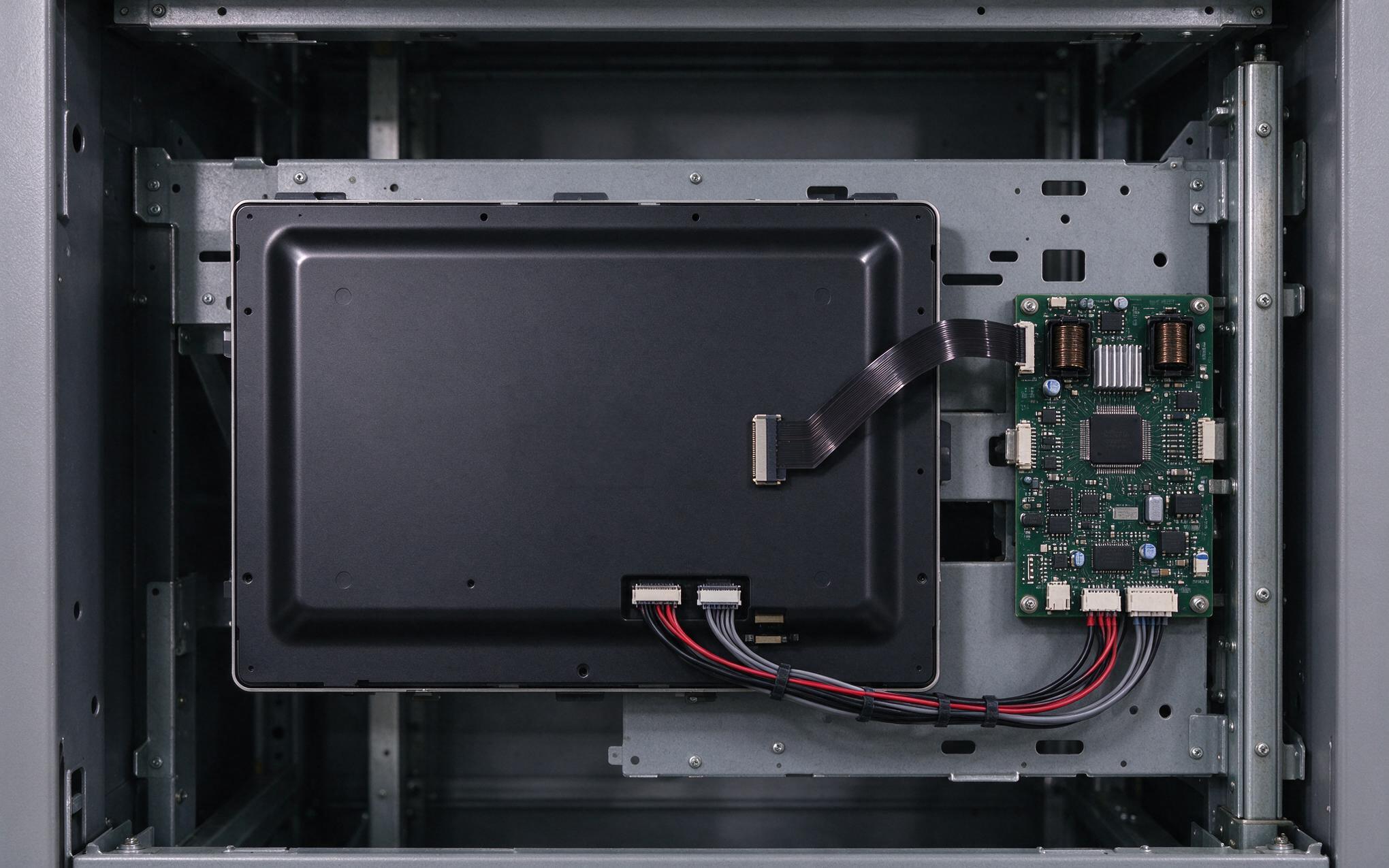
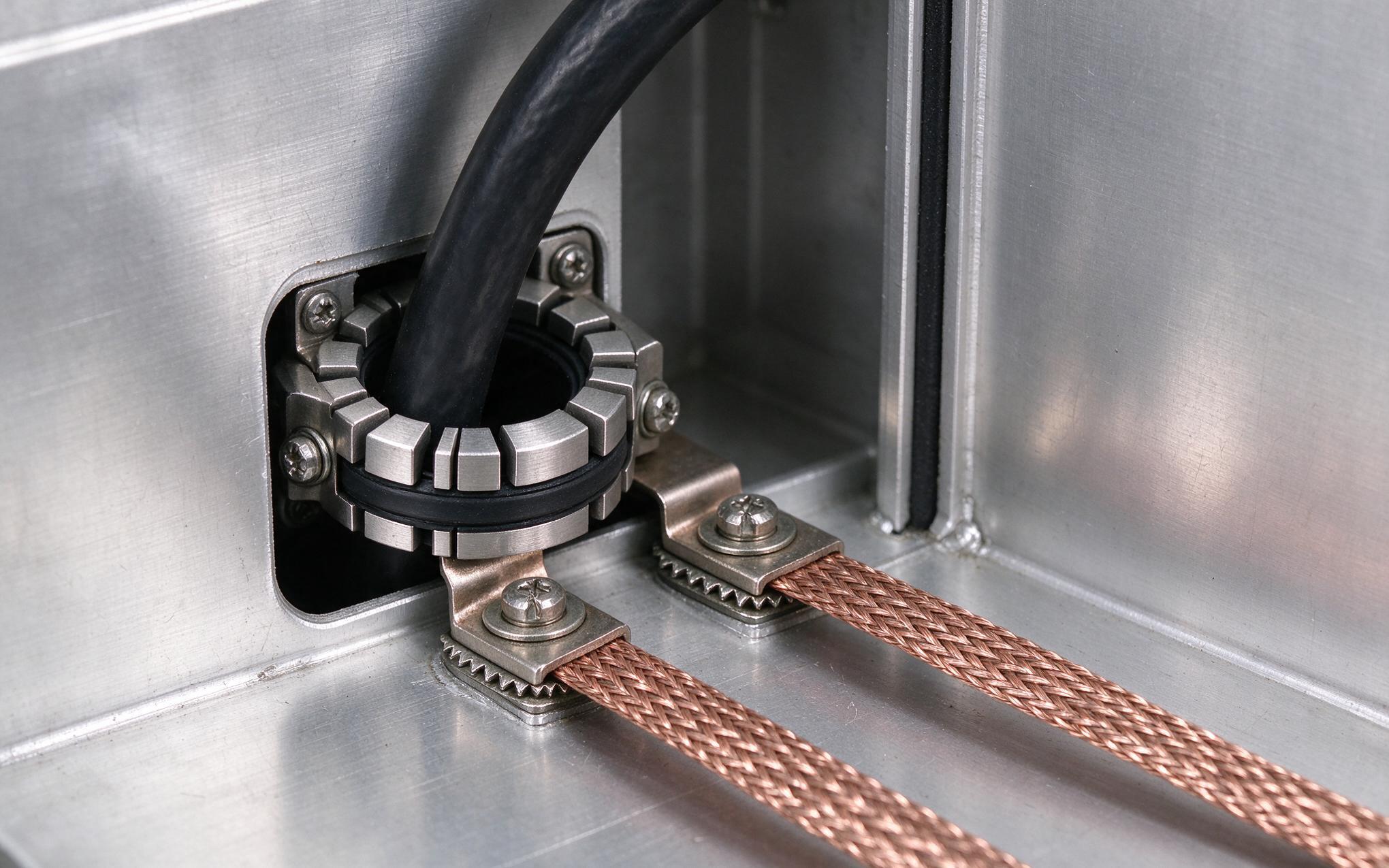
Chassis bonding starts with bare-metal contact. Paint and anodizing insulate seams, so EMC shielding relies on conductive gaskets, serrated washers, or rated finger stock around doors and panel cutouts. Cable shields deserve the same discipline: a pigtail only a few centimeters long behaves as an antenna at drive switching harmonics, while a 360-degree clamp termination holds the shield at chassis potential around its full circumference. Inside a CNC machinery industrial PC, the touch controller, display ribbon, and communication ports all reference that same quiet node, which keeps external fields from modulating the sensing front end. Integrators should also keep motor leads at least 30 centimeters away from low-voltage signal runs, crossing them at right angles where routing space is tight.
Filtering and Isolation for Power and Signal Lines
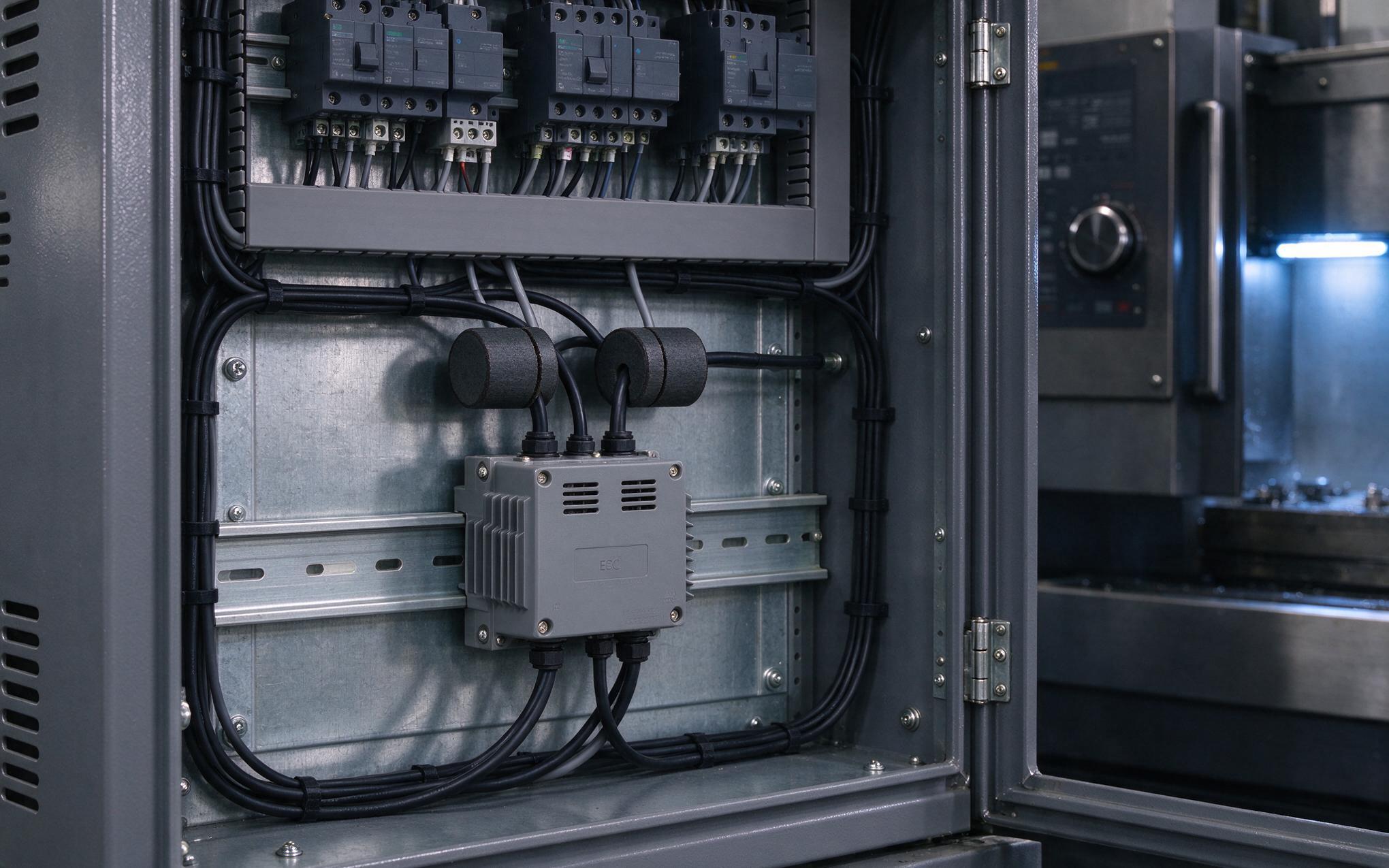
Conducted noise calls for a different toolkit. An EMC-rated mains filter at the cabinet inlet attenuates switching hash before it reaches the power supply, while ferrite cores on external cables add series impedance exactly where it matters. Wide-voltage supplies with isolated DC rails give the logic side a fresh reference, so surges and dropouts from nearby contactors stay on the dirty side of the barrier. Field observations from turning and milling cells show that configurations utilizing KOXIAN industrial panel PCs hold touch coordinates steady while spindle drives ramp, largely because filtered inlets and isolated ports keep common-mode current off the logic ground. Signal lines that must leave the cabinet should use shielded twisted pairs, and sensor wiring should run in its own tray rather than sharing conduit with motor power.

How Should Shops Verify EMC Resilience Before Deployment
Bench testing alone cannot clear an installation. Before a CNC machinery industrial PC goes live near high-power drives, a practical routine runs the spindle through its full speed range with axes in motion while the industrial touch screen stream is logged for dropouts or phantom coordinates. A clamp meter around bond conductors reveals whether drive leakage actually flows along the intended path. Where budget allows, pre-compliance burst and surge testing per IEC 61000-4-4 and IEC 61000-4-5 exposes weak filtering before the machine enters production. Recording the drive switching frequency helps as well, because susceptibility often peaks near specific harmonics. Only after the system survives a worst-case shift, with coolant mist in the air and full motor load on the spindle, should the installation be signed off.
Drive interference on the shop floor follows physics, not chance. Once the coupling paths are understood, the countermeasures become a checklist: bond every seam, terminate every shield around its full circumference, filter the mains, isolate sensitive rails, and prove the result under real load. A CNC machinery industrial PC treated this way stops being the mysterious failure point and becomes one of the most predictable nodes in the cell. The plants that avoid midnight resets are rarely the ones with the most expensive hardware; they are the ones that verified bonding and filtering before production began.