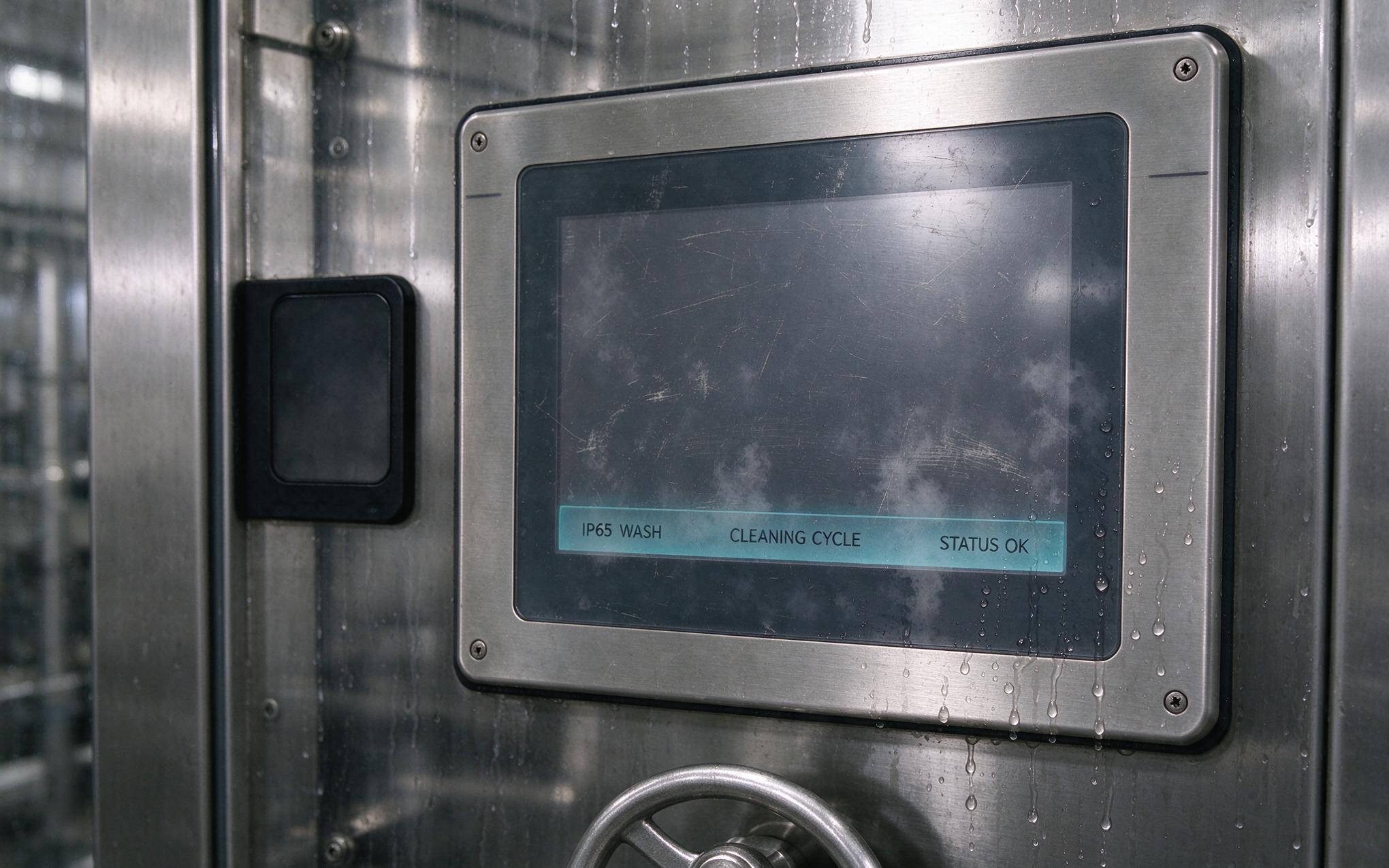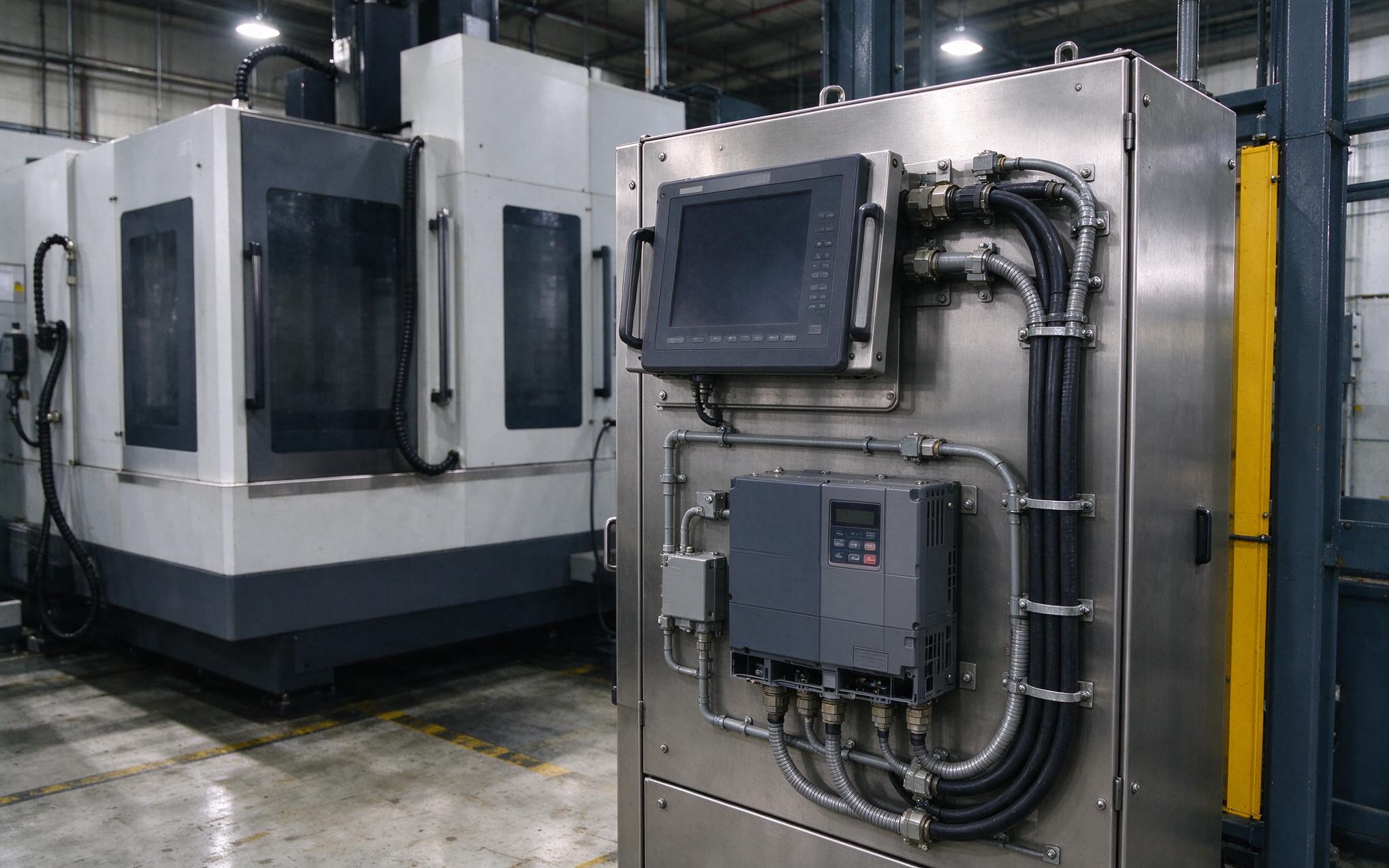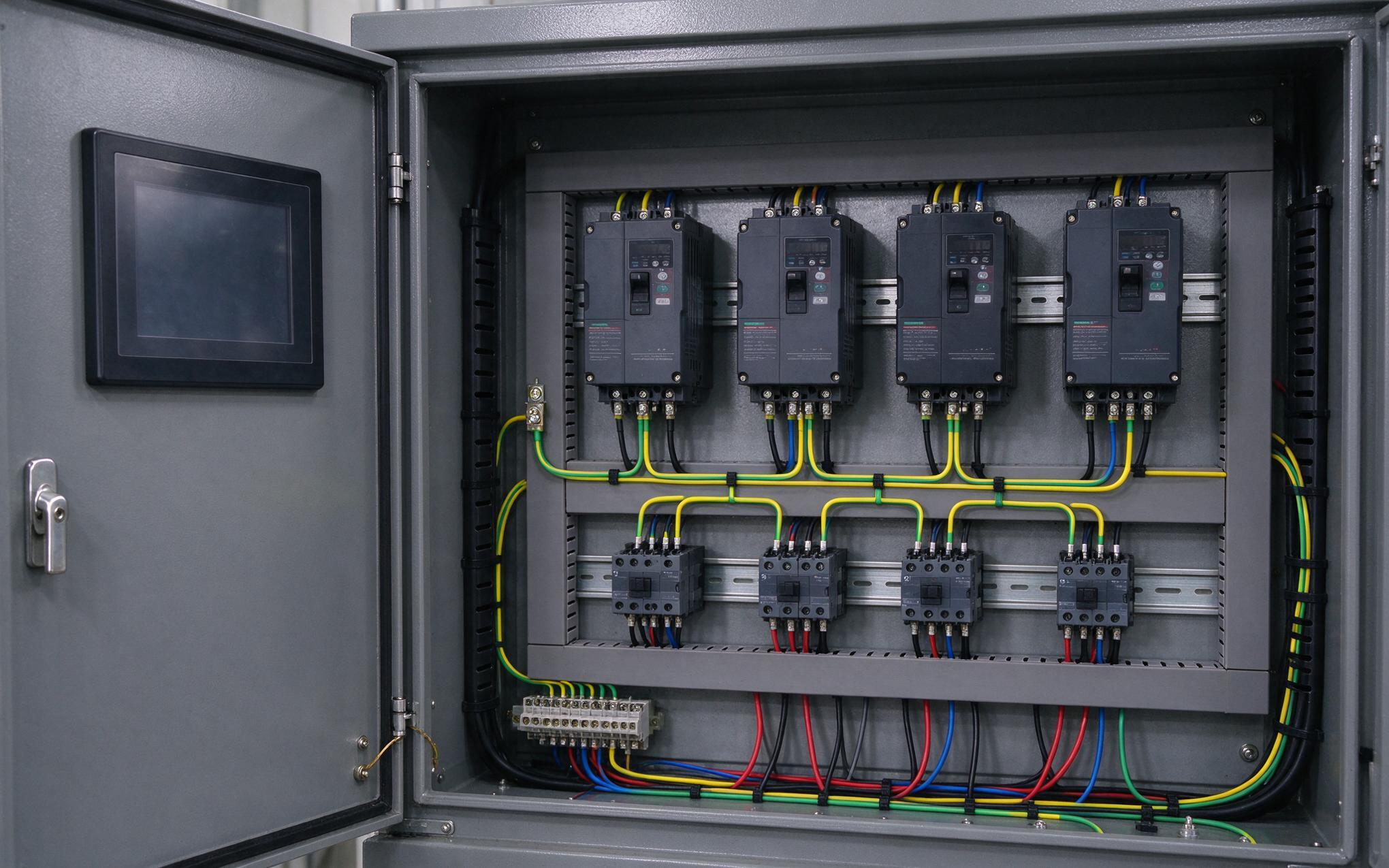
Water sheeting across a touch surface during a washdown produces a signal that looks almost identical to a finger. The sensor cannot resolve that ambiguity on its own, because the scan method running underneath decides the outcome. Every industrial touch panel pc built on projected capacitive sensing runs one of two electrical measurements, mutual capacitance or self capacitance, and many controllers alternate between them. That distinction rarely reaches a datasheet, yet it governs how a unit behaves when a glove layer, a water film, or a floating ground enters the picture.

Distinguishing Mutual Scan Grids from Self Scan Lines
Mutual capacitance measures charge coupling at every intersection of a driven row and a sensed column. A grid of 20 rows and 12 columns therefore yields 240 discrete measurement nodes, and a finger landing on the surface pulls charge away from the local intersection. Self capacitance works differently, measuring each row and each column against earth ground, so the same panel returns 32 profile values instead of 240 nodes. Hardware suppliers such as KOXIAN document both scan modes in controller release notes, since node count sets a hard limit on what firmware can resolve. The mutual grid supports true multi-touch, while a self profile reports only an X shadow and a Y shadow. Two fingers on a self-only scan consequently generate two phantom coordinates at the mismatched corners of that shadow pair, which is why gesture support on an industrial touch panel pc depends on the mutual grid being active.

Where Self Capacitance Fails in Industrial Touch Panel PCs
Documentation from vendors including KOXIAN ties self capacitance to a stable earth reference, which is precisely what a plant floor tends to strip away. A cabinet on rubber isolators, a monitor fed by an ungrounded supply, or an operator wearing insulating boots all weaken the return path. Signal amplitude then collapses, and the controller either misses light contact or drifts as its baseline retracks against a moving reference. Mutual capacitance sidesteps most of this by measuring row against column, a self-contained loop that never asks the plant for a ground. The compensation is sensing depth, because coupling across an intersection is roughly an order of magnitude weaker than the load a hand presents to ground.

Water Films and Glove Layers on Wet Production Lines
Sanitation crews expose the practical divide within minutes. A continuous water film loads entire electrode rows at once, and a self capacitance profile reads that broad load as genuine contact, producing cursor jumps and spurious entries throughout a rinse cycle. Suppliers like KOXIAN address the case with mutual scanning plus water rejection logic, which discriminates a wide diffuse footprint from the compact signature of a fingertip. Gloves invert the problem. Three millimeters of nitrile or leather push the finger back from the sensor and weaken the already faint mutual coupling, so glove modes usually raise drive voltage or fall back to a self capacitance pass that reaches further into the air gap. No single scan mode covers both conditions, so an industrial touch panel pc destined for mixed duty needs firmware that switches deliberately between them.

Selecting a Scan Mode Against Real Site Conditions
Scan mode selection should follow the site rather than the specification sheet. Wet process areas favor mutual capacitance with water rejection enabled, since the grid separates a conductive film from a discrete touch. Dry assembly halls running heavy gloves gain from the deeper reach of a self capacitance pass, provided chassis grounding is solid and single-point input is acceptable. Many current controllers run a hybrid sequence, using a low-power self scan to detect an approaching hand and then switching to a full mutual grid for coordinate accuracy. Integrators should ask which sequence ships in the delivered firmware, what report rate applies in each state, and whether water and glove profiles remain selectable in the field after commissioning.
Mutual and self capacitance are not competing product tiers but two measurements that fail in opposite directions. Mutual scanning trades sensing depth for spatial resolution and water discrimination, while self scanning trades resolution for reach and leans on a ground path the plant may never supply. Specifying hardware for a wet line, a cold store, or a glove-heavy assembly cell therefore means asking which scan runs by default, how firmware transitions between the two, and what evidence a supplier holds for each mode under the conditions that site actually presents.