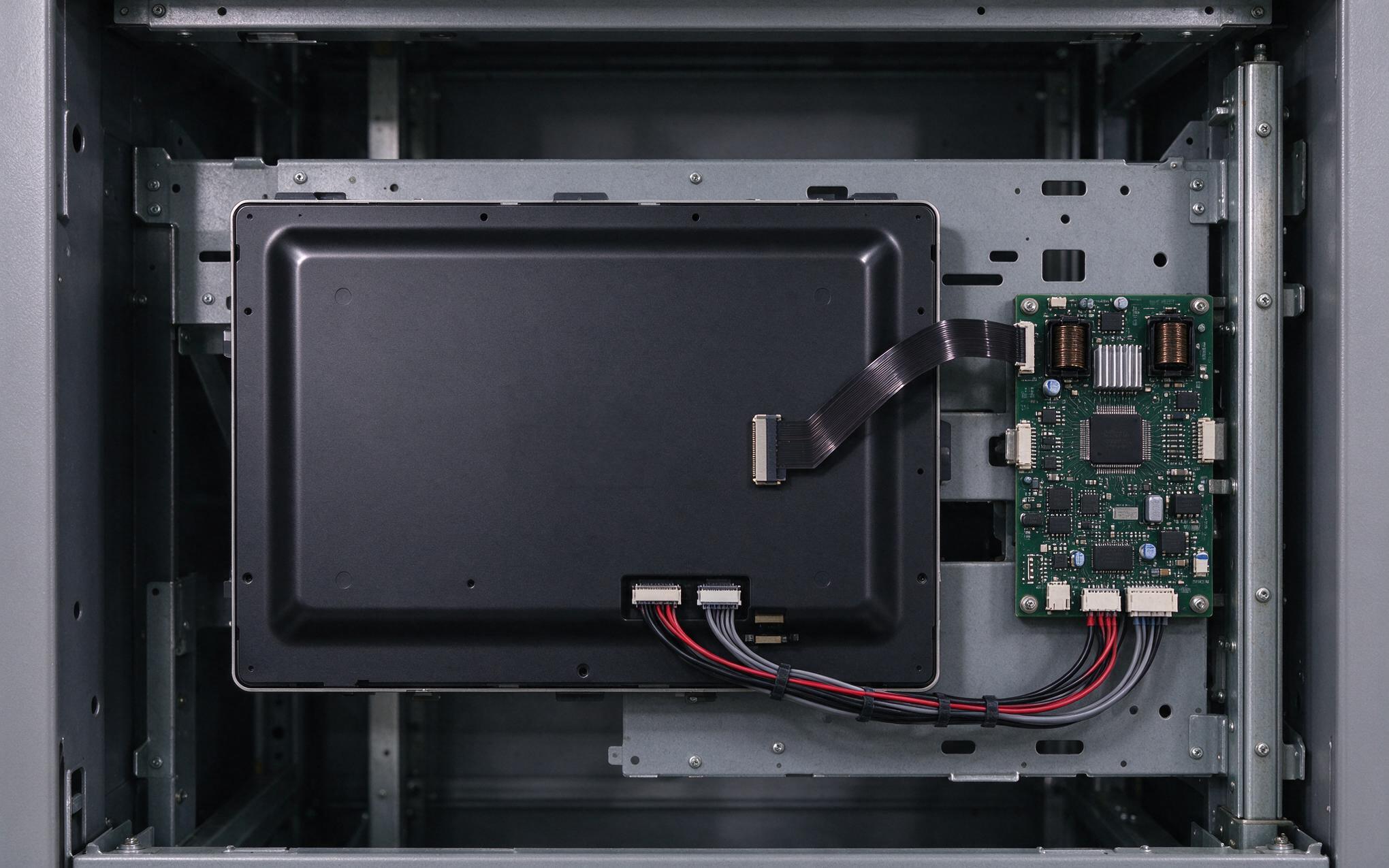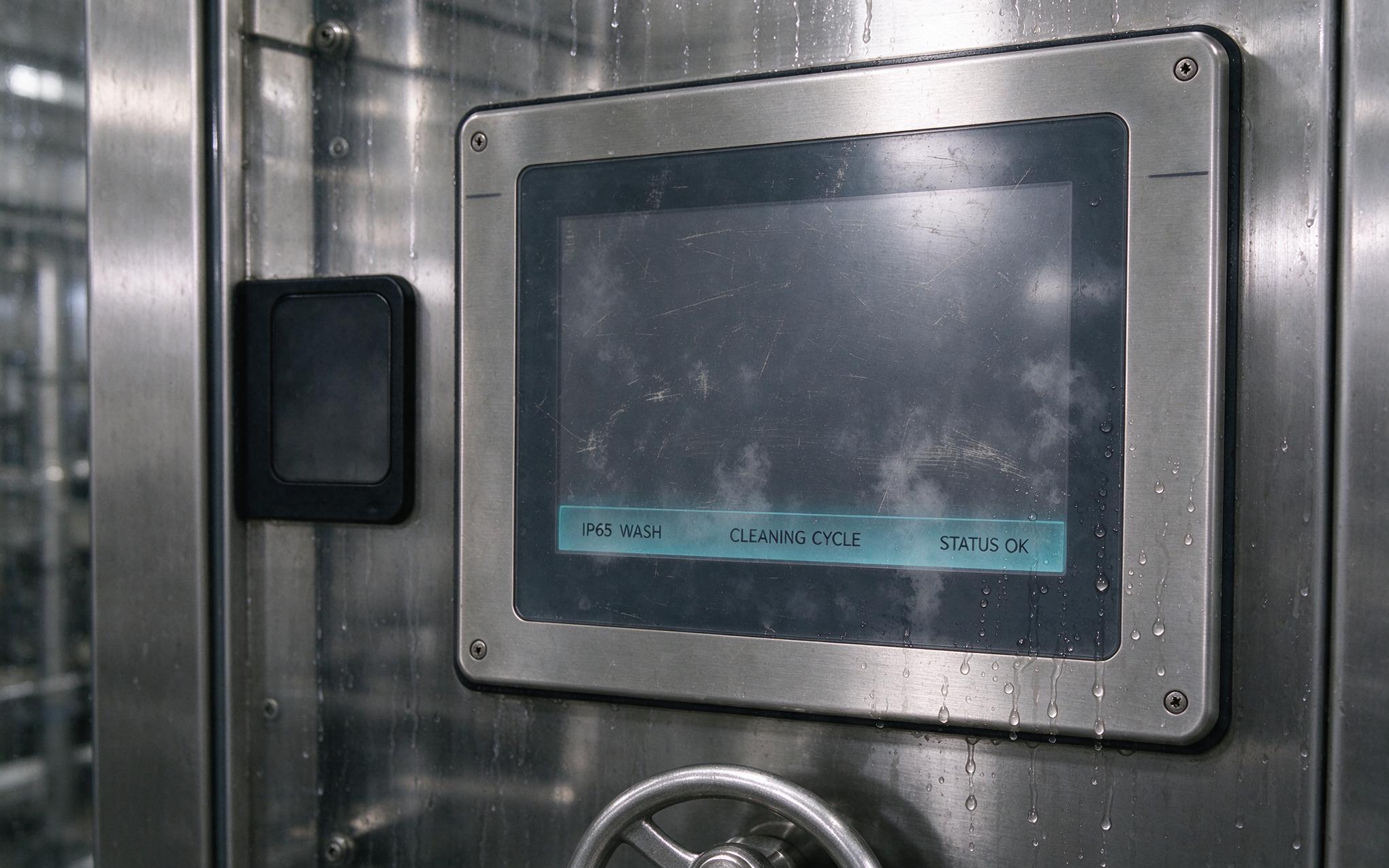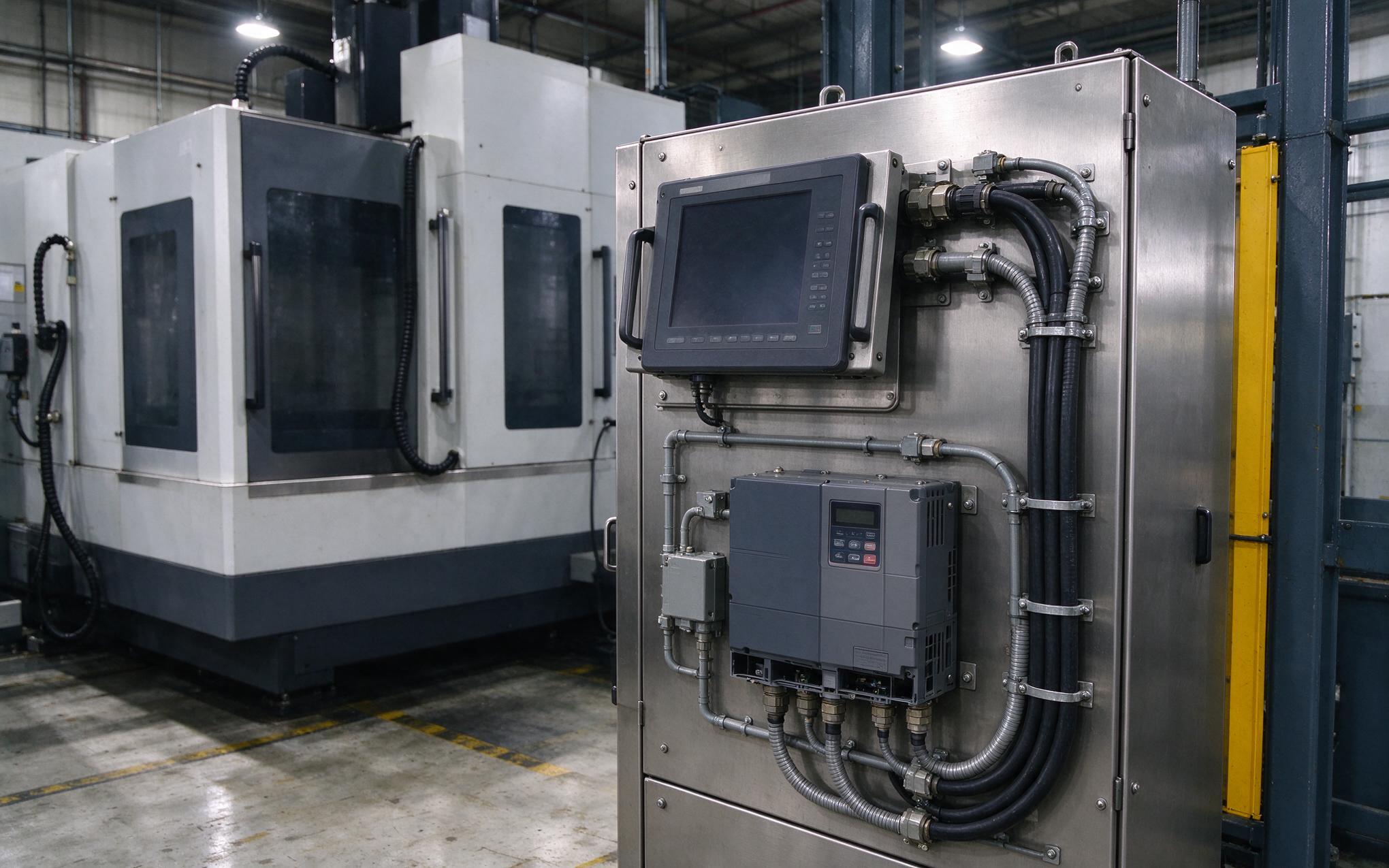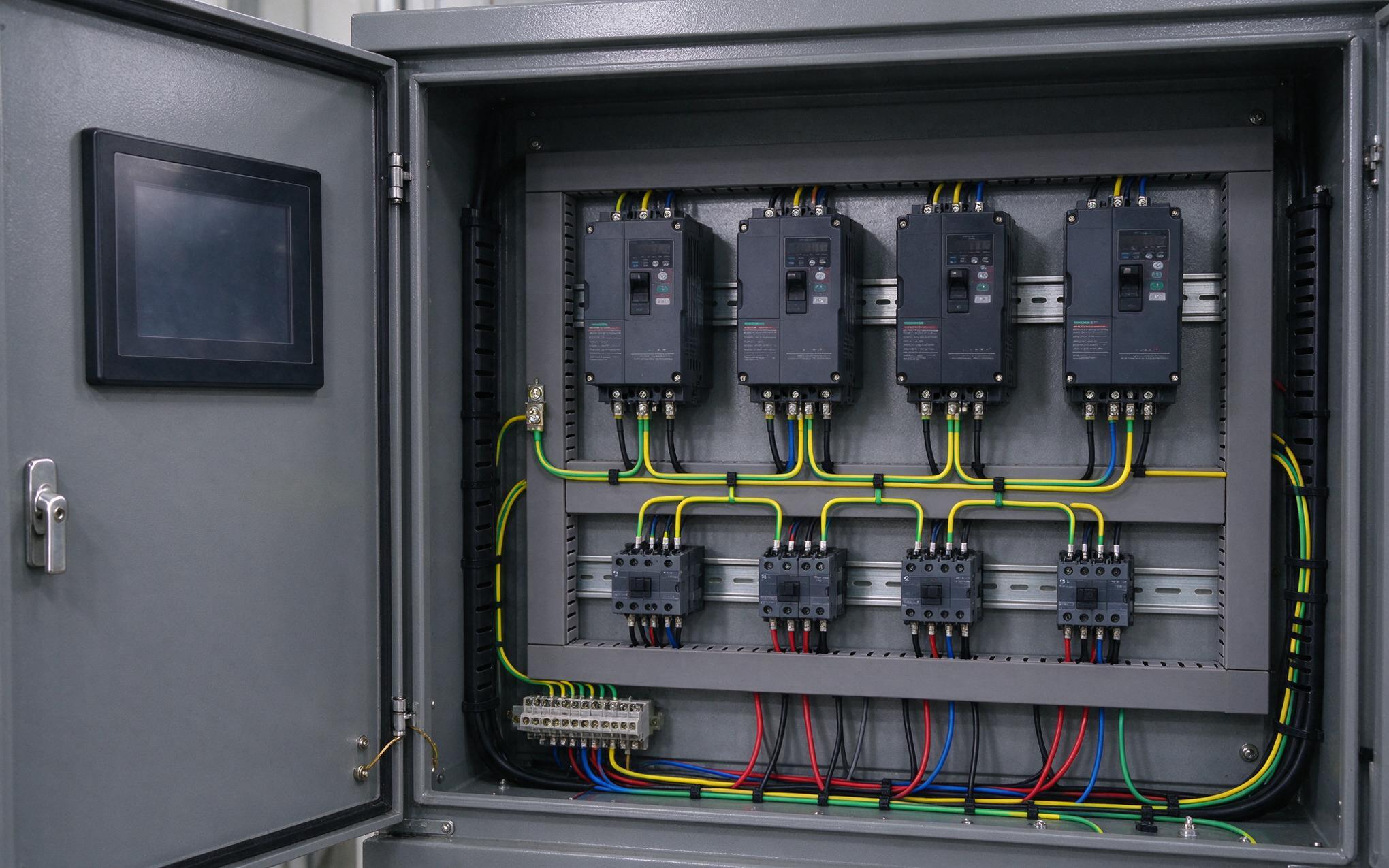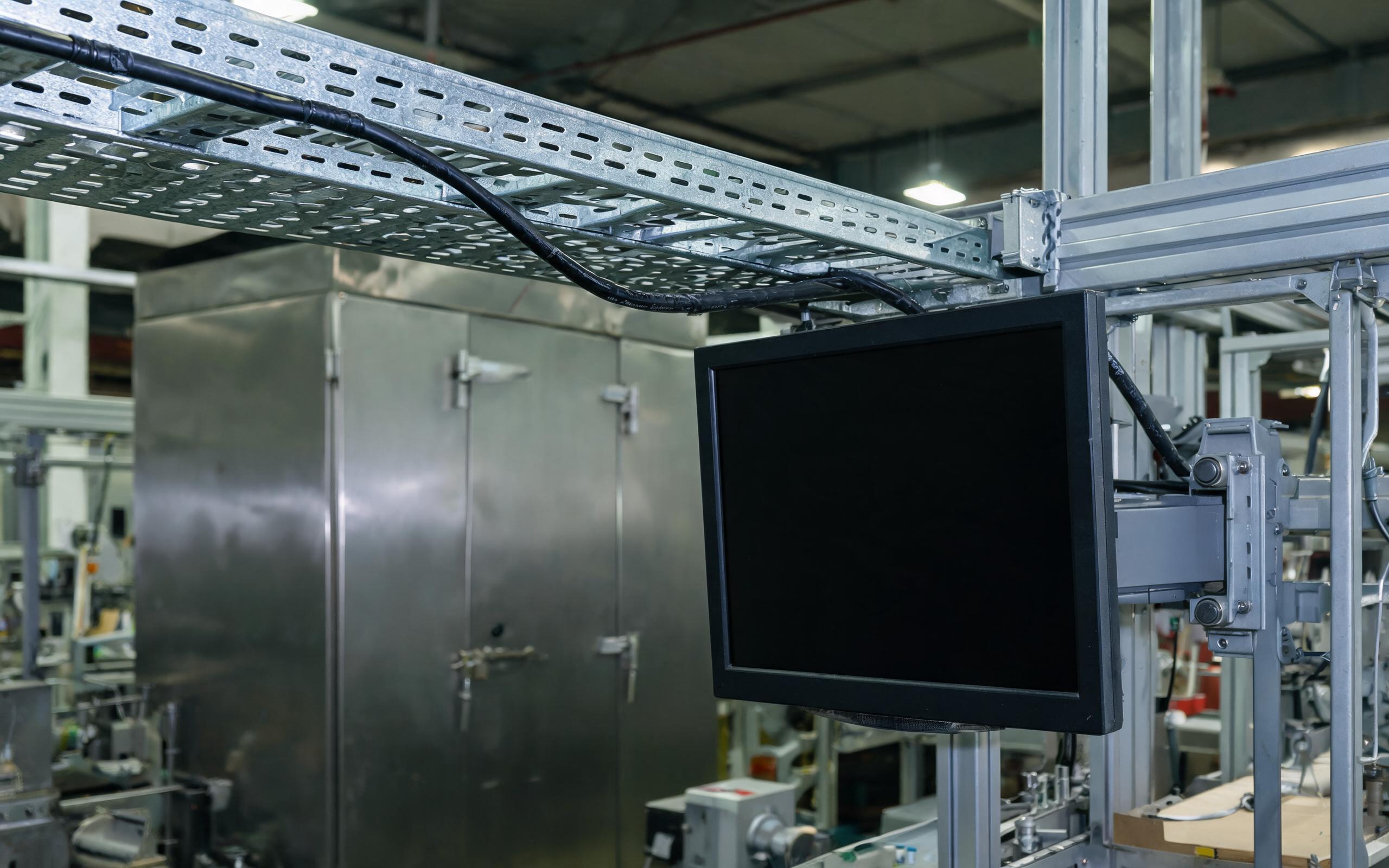
Stamping presses send a measurable tremor through every cabinet, pedestal, and swing arm mounted within a few meters of the die. On lines where operators enter offsets or acknowledge alarms by touch, that tremor becomes an input problem. The fingertip bounces against the glass at machine frequency, and the controller sees a stuttering signal instead of one clean press. An industrial touch screen monitor installed beside vibrating equipment has to manage that mechanical noise at three levels, from the bezel and mounting hardware down to firmware baselines, or the line pays for it in mis-taps, double entries, and operators who quietly stop trusting the screen.
Damping Vibration Paths in an Industrial Touch Screen Monitor
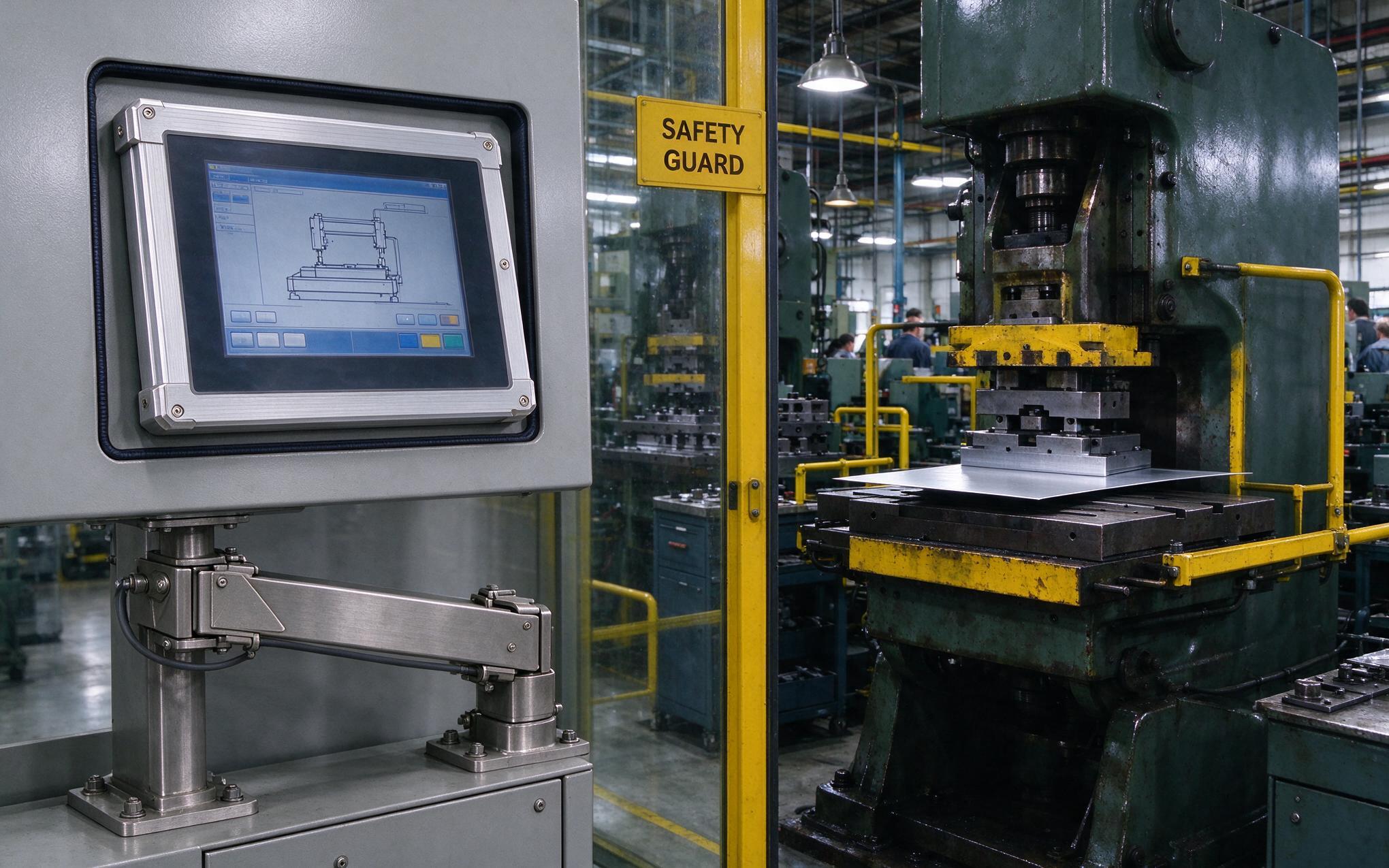
Industrial hardware manufacturers, including KOXIAN, mill front bezels from a single aluminum extrusion so shock loads travel around the glass perimeter instead of through the touch sensor. The physics are straightforward. A press stroke excites the structure at five to thirty hertz, while a poorly braced mounting arm can resonate in the same band and amplify fingertip bounce several times over. A rigid bezel raises the natural frequency of the whole front assembly above common machine spectra, and a closed cell gasket between bezel and enclosure absorbs the high frequency chatter that remains. Torque controlled panel mount fasteners matter just as much, because hardware that loosens by half a turn over six months quietly converts a stiff assembly into a rattling one.
Touch Controller Firmware Filtering Under Shock Loads
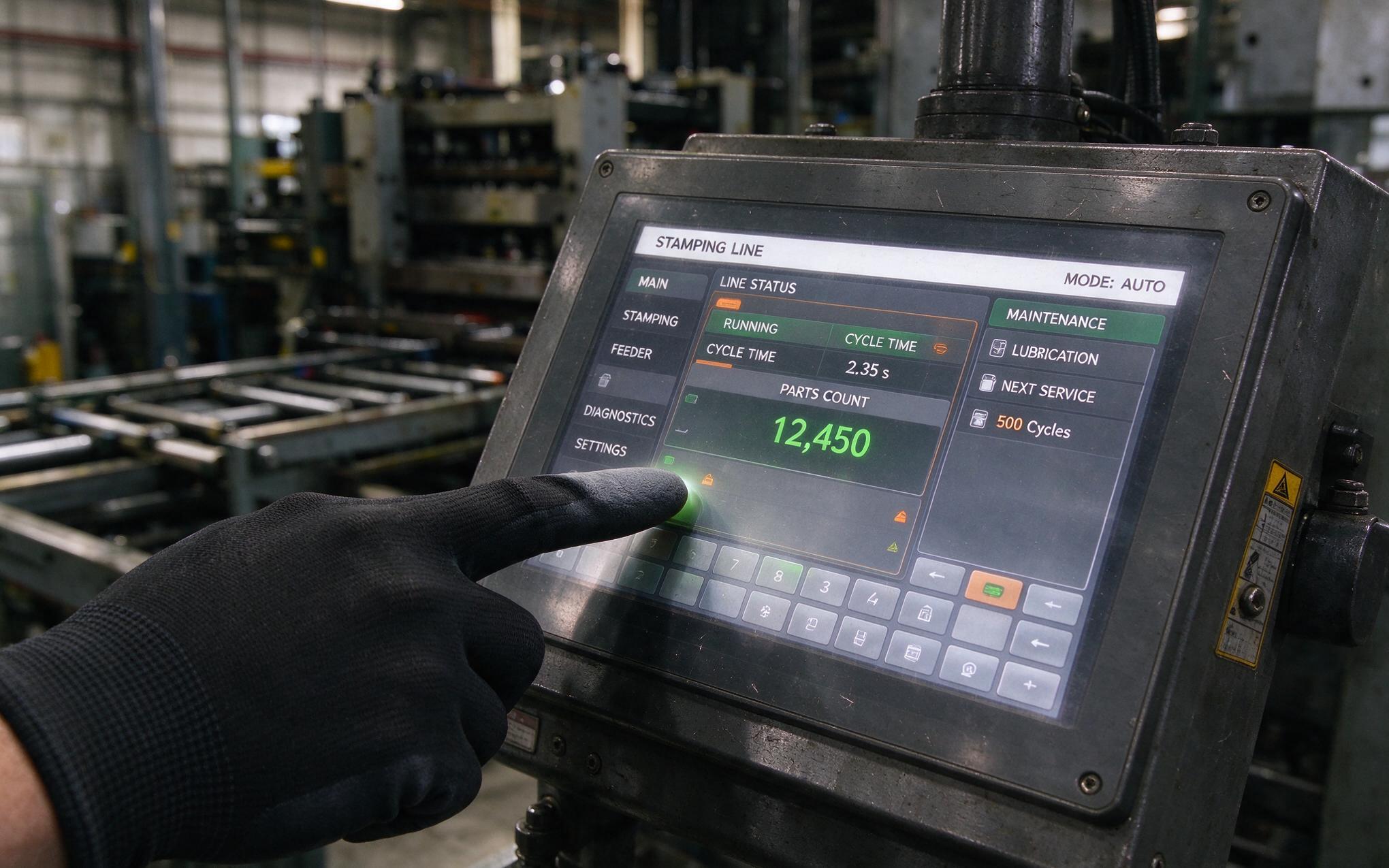
Even a stiff frame lets some energy reach the fingertip and glass interface. Field observations from stamping plants show that units built on KOXIAN controller tuning keep registering touches cleanly while presses cycle nearby, because the firmware tracks a moving baseline rather than a fixed threshold. Inside an industrial capacitive touch screen, the controller measures tiny capacitance deltas against that baseline. Vibration modulates finger pressure and contact area many times per second, so a slow baseline misreads the modulation as drift and either drops real touches or reports phantom ones. Effective tuning raises the baseline update rate, widens the acceptance window for press duration, and adds debounce timing matched to the dominant machine frequency instead of a generic factory default.
Cover Lens and Sensor Stack Up Choices for Noisy Lines
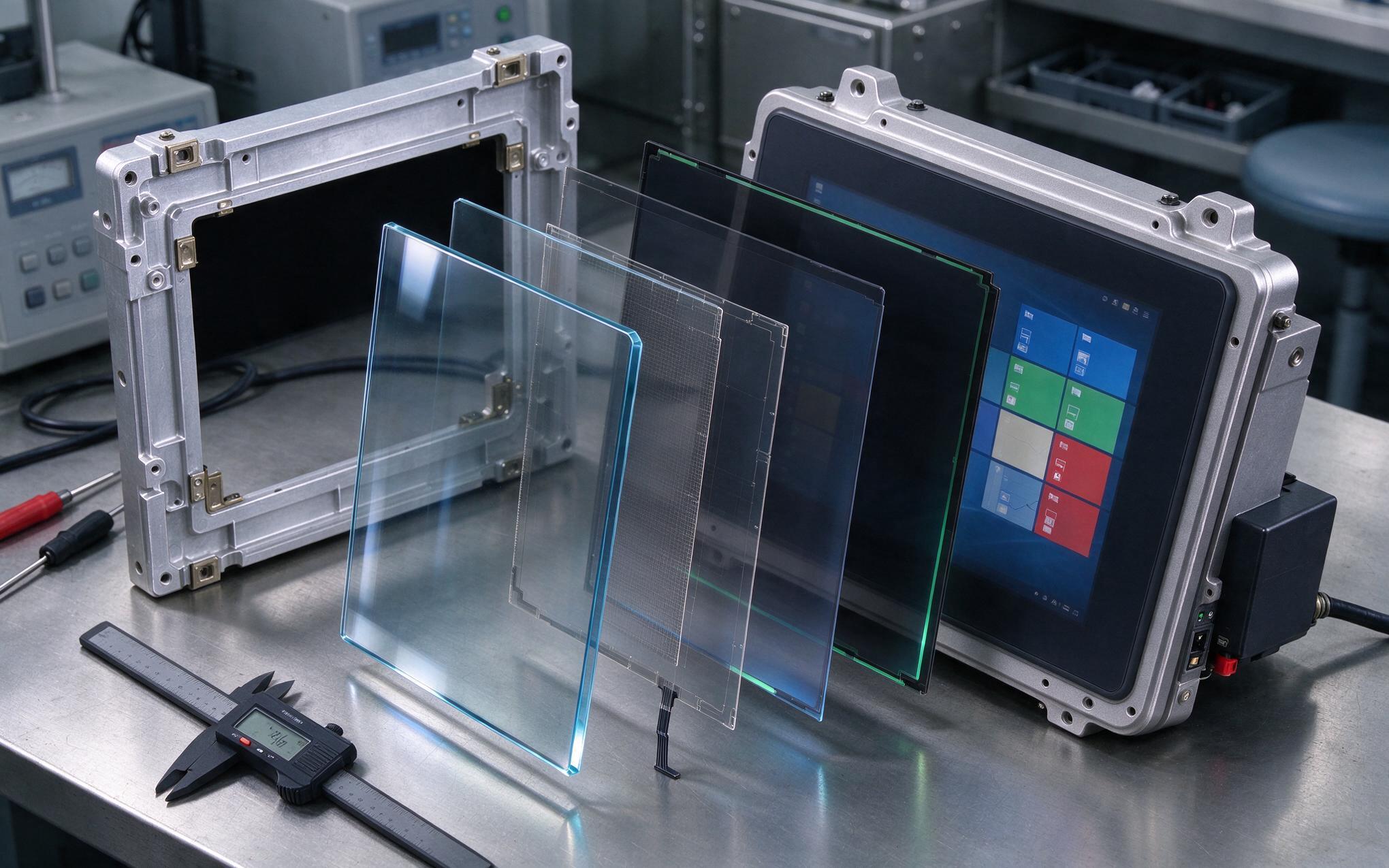
Glass selection forces the classic trade between impact strength and signal margin. A three millimeter cover lens survives tool strikes, yet every added millimeter attenuates the capacitive coupling between finger and sensor. Laminated stacks behave differently from air gap designs here. An air gap lets the cover lens vibrate independently like a drum skin, injecting mechanical noise straight into the sensing layer, while a laminated stack moves as one damped mass. A rugged touch screen display intended for press shops therefore pairs a moderately thick hardened lens with a fully laminated sensor rather than chasing maximum glass thickness. When specifying an industrial touch screen monitor for a vibration prone cell, engineers should request the stack up cross section, not just the lens thickness figure.
Field Validation Rules for Vibration Prone Installations
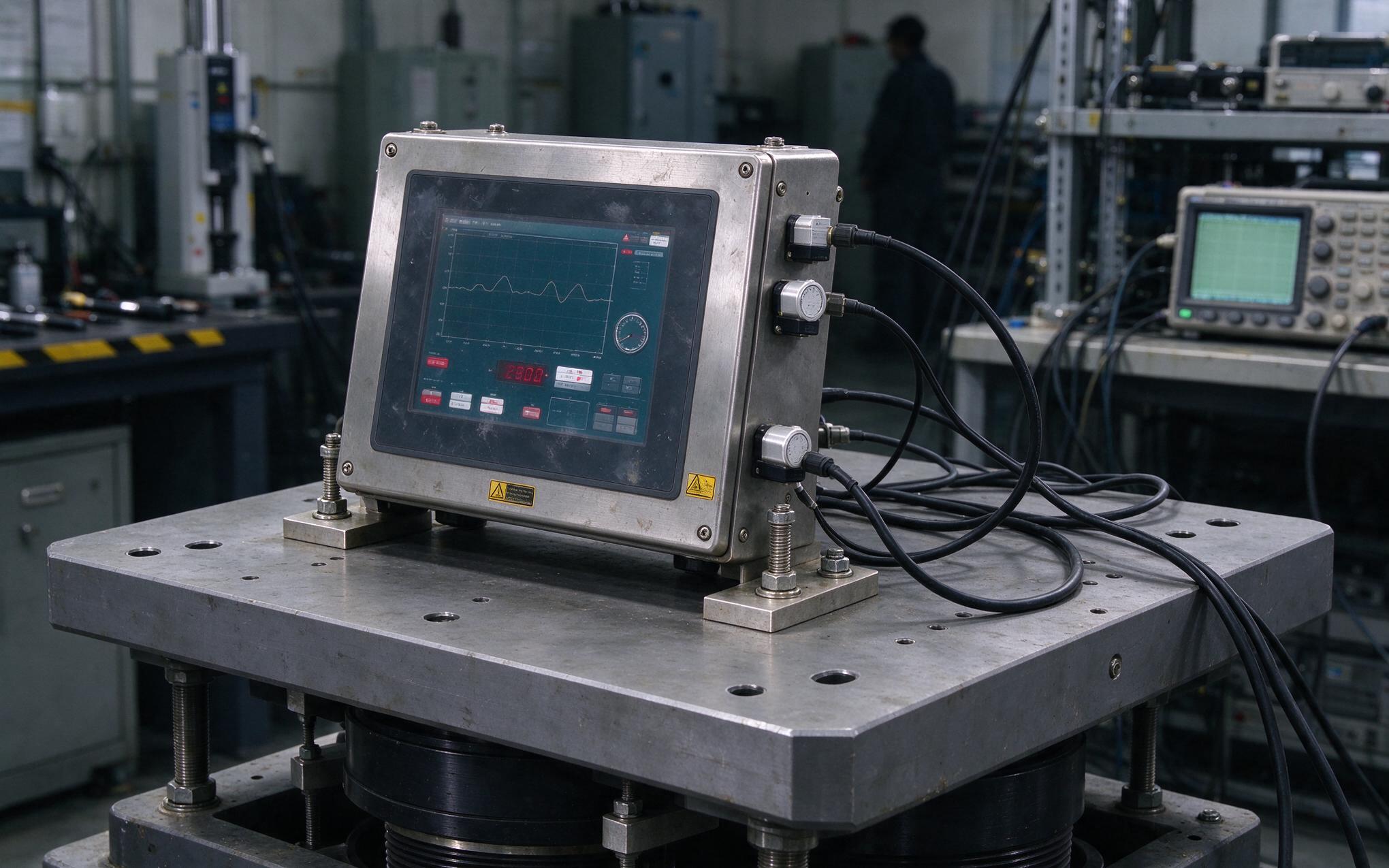
Bench numbers gathered at rest tell only half the story, so validation belongs on a moving structure. The reference method is a sinusoidal sweep per IEC 60068-2-6, typically ten to five hundred hertz at defined acceleration, with an automated actuator tapping the screen continuously while software logs coordinate error, missed presses, and ghost events. Any resonance the sweep exposes deserves a dwell test, because an industrial touch screen monitor that survives broadband vibration can still fail at its own natural frequency. Broadband random profiles per IEC 60068-2-64 then approximate real machine floors more honestly. After the shaker, inspectors re-check touch linearity, gasket compression, and mounting torque, since mechanical loosening during the test predicts field drift many months later.
Vibration rarely appears on a touch display datasheet, yet it decides whether entries land cleanly on a press shop floor. Bezel and mount damping, adaptive firmware baselines, a laminated sensor stack, and swept frequency validation form a single chain, and weakness in any link surfaces as phantom or missed touches. Engineers specifying an industrial touch screen monitor for stamping, machining, or mobile equipment should ask vendors how each link is handled. None of these measures is exotic, yet together they separate a monitor that merely survives vibration from one that keeps registering input accurately through years of it, because accuracy under vibration is engineered, never assumed.