
Maintenance leads on washdown shifts know the sound of grit grinding under a lint-free wipe as it crosses the IP65 touch screen at the end of line three. The gasket keeps water out, yet the front glass still collects scratches from knife scabbards, crate corners, and abrasive cleaning pads. Ingress protection seals the enclosure; it does nothing for the surface operators actually touch. Sacrificial overlay films close that gap by taking the mechanical abuse themselves, letting the sealed display underneath stay optically clean for years rather than months. The practice is common on packaging and protein lines, but the details decide whether a film extends service life or quietly destroys readability.

Under the Glass Where Abrasion Actually Strikes
Industrial hardware manufacturers, including KOXIAN, chemically strengthen the cover glass on sealed fronts to raise surface hardness, yet that glass still faces three distinct wear modes. Grit trapped under a wipe behaves like a lapping compound, cutting micro-scratches that scatter backlight and erode contrast. High-contact zones polish the anti-glare texture into glossy patches that mirror overhead lamps. Oleophobic coatings wear thin, so oils and protein residues adhere harder and demand more aggressive wiping, which accelerates both damage modes in a feedback loop. On an IP65 touch screen the capacitive sensor behind the glass remains sealed and keeps reporting touches, so the failure is optical rather than electrical. Operators compensate by raising brightness, which quietly shortens backlight life.
PET and Polycarbonate Films Compared for Plant Duty
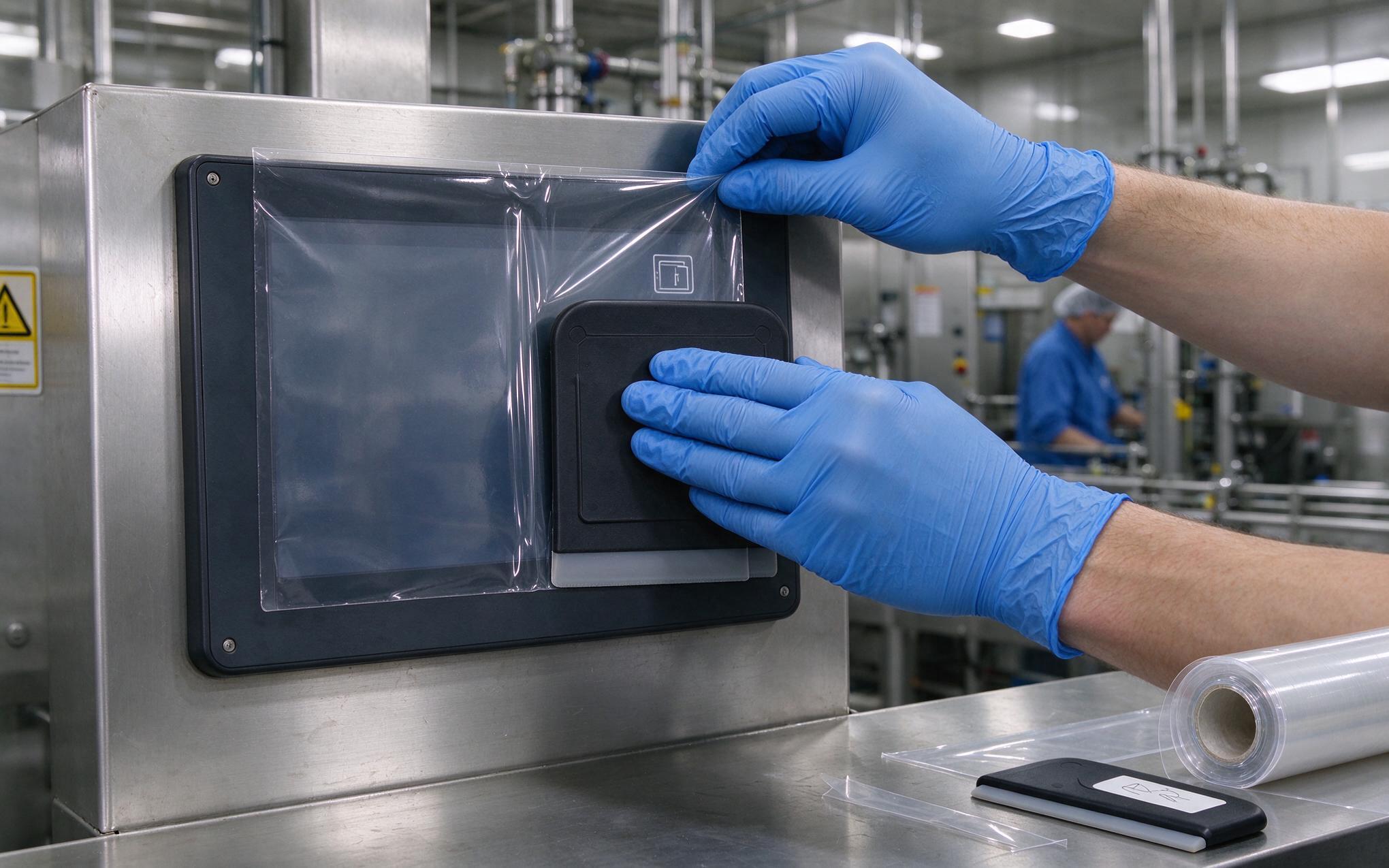
Film selection starts with material. Polyester films dominate food and beverage lines: they resist common sanitizers, hold optical clarity above ninety percent, and their hard-coated faces reach pencil hardness ratings that shrug off casual contact. Polycarbonate films tolerate impact better but scratch sooner and cloud when exposed to alkaline cleaners, so they suit dry machining areas more than washdown halls. Tempered-glass protectors offer the hardest sacrificial layer, though added thickness can detune capacitive sensitivity on some controllers. Thickness matters everywhere: a film above roughly 0.3 millimeter may require controller gain adjustment to keep gloved touches reliable on an IP65 touch screen. Adhesive choice completes the stack, since full-surface silicone adhesives avoid the rainbow artifacts that edge-only tapes create under humid conditions.
Keeping the IP65 Touch Screen Seal Intact During Film Changes
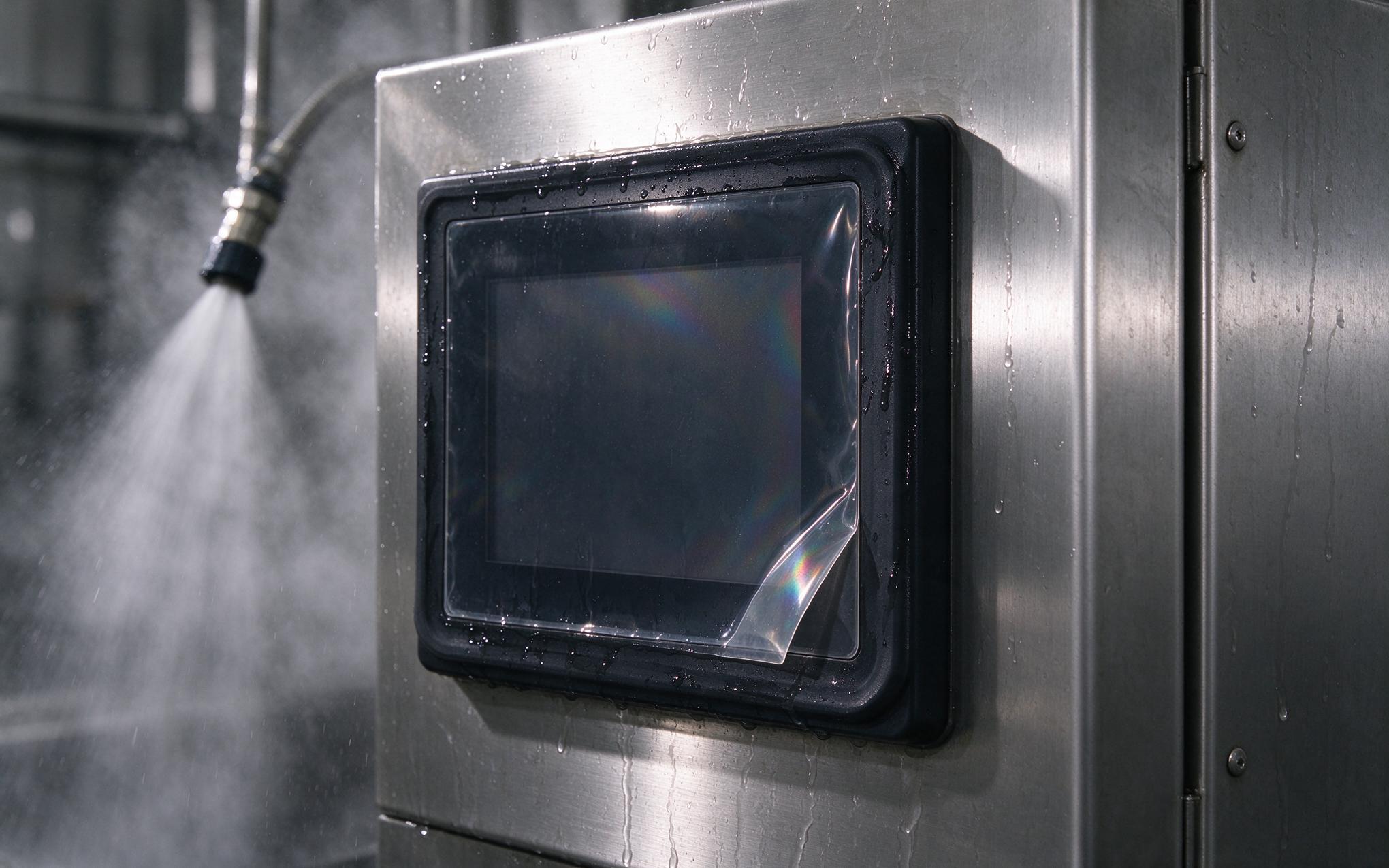
A film only helps when its edges stay inside the gasket compression zone. Installation starts with a degreased, dry front and a controlled peel: technicians align the film against two bezel datums, then work a soft squeegee from center outward so no trapped air pocket lifts an edge later. The film should stop short of the gasket line; overlapping the seal invites capillary paths that wick washdown fluid toward the adhesive. Edge lift is the usual early failure, because once a corner rises, spray jets catch it during sanitation and peel force multiplies. Replacement happens with the line dry and locked out, never mid-washdown. After fitting, a spray test from the normal sanitation distance confirms nothing reaches the seam, and the change is logged against the asset.
When to Rotate Films and What Records Matter
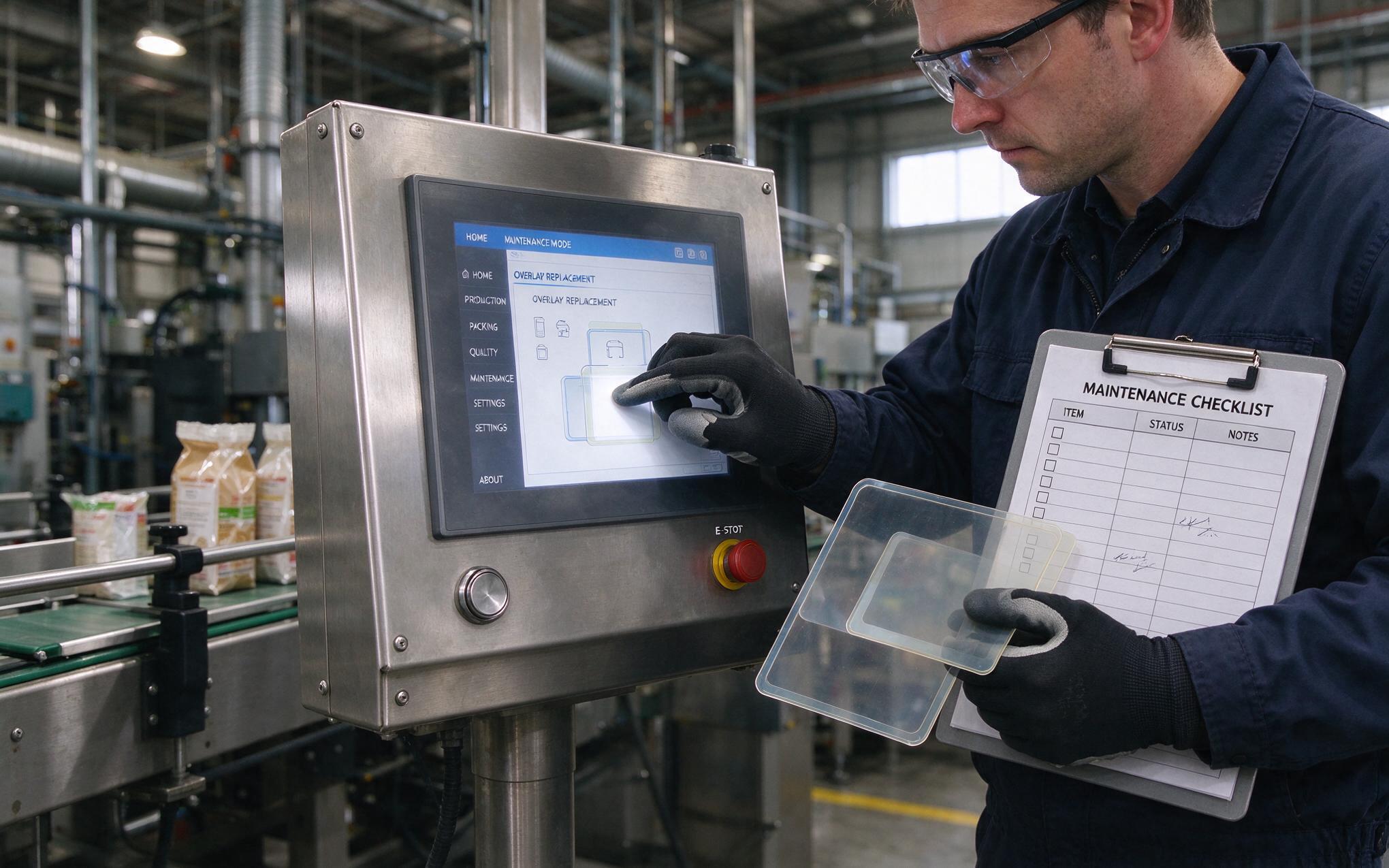
Rotation triggers should be measurable rather than cosmetic. Plants that track haze with a simple gloss or contrast check replace films when measured readability drops an agreed amount, not when someone complains. Scratch density around the primary button zones, coating peel at edges, and any clouding after sanitizer exposure all justify an earlier change. Field observations from poultry packing halls show that sealed units from vendors such as KOXIAN hold optical clarity longer when films are rotated on a fixed calendar instead of on complaint. Procurement teams writing specifications for an IP65 touch screen now routinely ask for Taber abrasion haze data under ASTM D1044, pencil hardness per ASTM D3363, and guaranteed film availability, so the sacrificial layer stays a stocked spare rather than a custom order.
Screens rarely fail because water gets in; they fade because the working surface wears out. A sacrificial overlay film converts that slow optical decline into a planned, inexpensive swap, while the sealed enclosure behind it keeps doing its rated job. For any IP65 touch screen deployed in washdown or high-contact duty, the practical formula is simple: pick a film material matched to the chemistry, fit it inside the gasket line, rotate it on measured triggers, and record every change. The display then ages on the plant’s schedule, not the environment’s.








