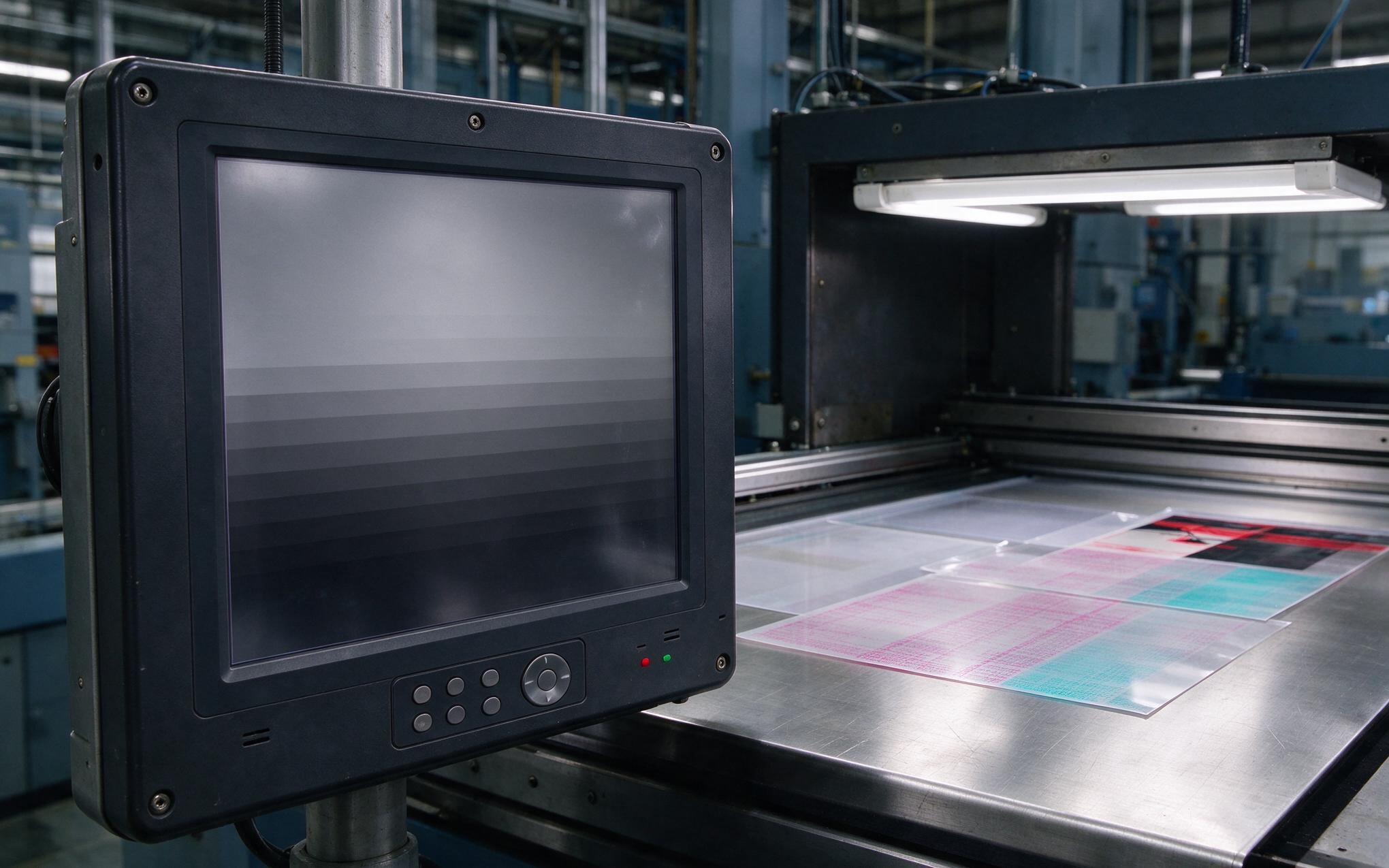
The failure of a third panel mount industrial pc on the same packaging line told the maintenance team at a Midwest food processing plant that they had a systemic problem, not a hardware defect. Each unit had passed bench diagnostics. Each had worked flawlessly for days after reinstallation, then failed again with identical display flickering symptoms. The root cause turned out to be a shared mounting panel directly coupled to a vibratory conveyor operating at 28 Hz. The bezel gaskets on all three units had compressed unevenly, allowing micro-movement that fatigued the display ribbon cable connectors. Systematic vibration analysis during site assessment would have identified this coupling path and prevented the recurring failures.
Understanding Solder Joint Fatigue Mechanisms
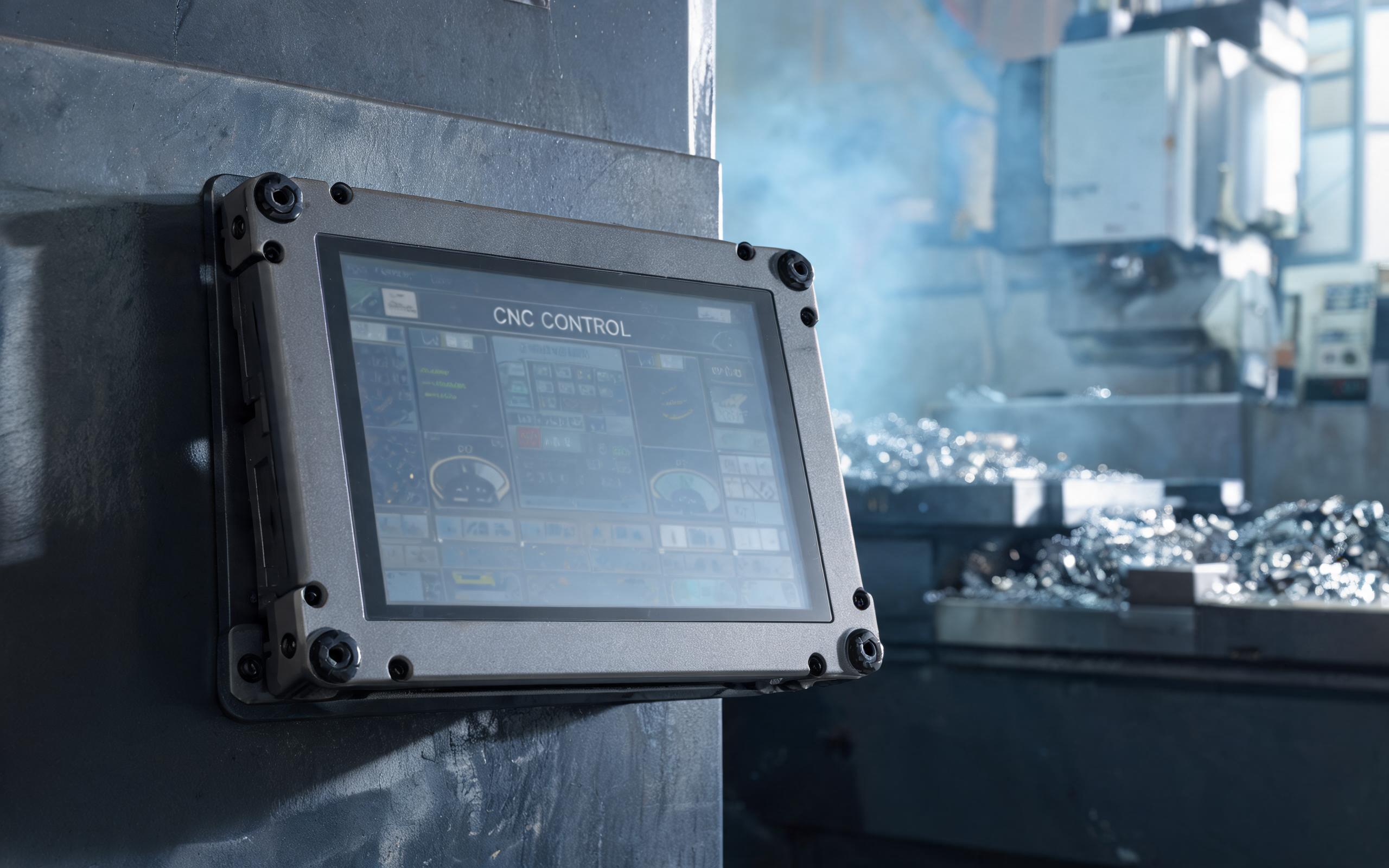
Every material inside a panel mount industrial pc has a natural resonant frequency. Standard FR-4 PCB substrates resonate between 100 and 300 Hz depending on board thickness and mounting point spacing. Electrolytic capacitors on radial leads resonate near 150 Hz. When ambient vibration matches these frequencies, displacement amplifies by a factor of 5 to 20, and the cyclic bending moment at each solder joint accelerates fatigue crack propagation per the Coffin-Manson relationship. Effective isolation begins at the mounting interface. Silicone or neoprene grommets rated at 40 to 60 Shore A hardness attenuate vibration above 50 Hz, covering most CNC and conveyor-generated frequencies. For lower-frequency sources like stamping presses, wire-rope isolators or spring-damper assemblies extend isolation down to 5 Hz. The chassis mounting approach in KOXIAN K2 series units positions four M4 standoffs with EPDM gaskets compressed to 30 percent of free height, maintaining consistent damping force across thermal cycles. At the board level, increasing PCB thickness from 1.6 mm to 2.0 mm raises bending stiffness by approximately 95 percent, shifting the resonant frequency higher and away from common industrial vibration bands.
Evaluating Enclosure Materials for Rigidity
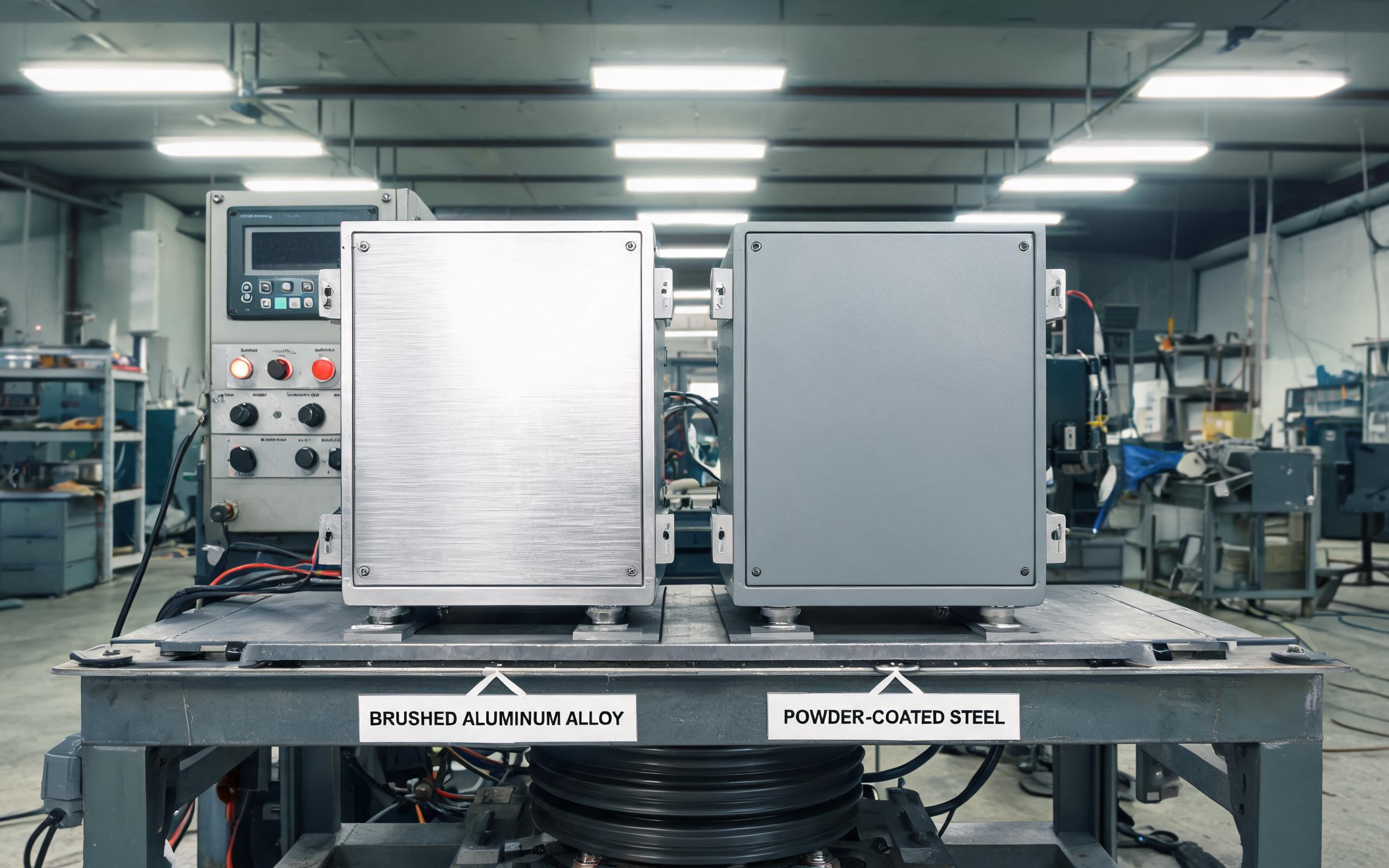
The enclosure serves dual roles: it protects internal components from environmental contaminants, and it acts as the primary structural frame that determines how external vibration transmits into the system. Extruded aluminum alloy enclosures offer a strength-to-weight ratio roughly three times that of mild steel. The thermal conductivity of aluminum (approximately 167 W/m-K for 6063-T5 alloy) allows the enclosure walls to function as passive heatsinks, eliminating internal fans that would otherwise introduce their own vibration source. Fanless thermal management through conduction cooling removes a rotating component whose bearings degrade under sustained vibration, improving mean time between failures. Powder-coated steel enclosures provide superior EMI shielding and lower material cost, but the added mass can lower the assembly’s resonant frequency into the range of common industrial vibration sources. When steel enclosures are necessary for EMC compliance, internal stiffening ribs raise the natural frequency above the danger zone. The IP65 front bezel seal adds another mechanical consideration. Vibration gradually relaxes gasket compression over time. Machined gasket grooves with controlled-torque fasteners maintain seal integrity far longer than adhesive-backed foam strips.
Preventing Cable Connector Failures
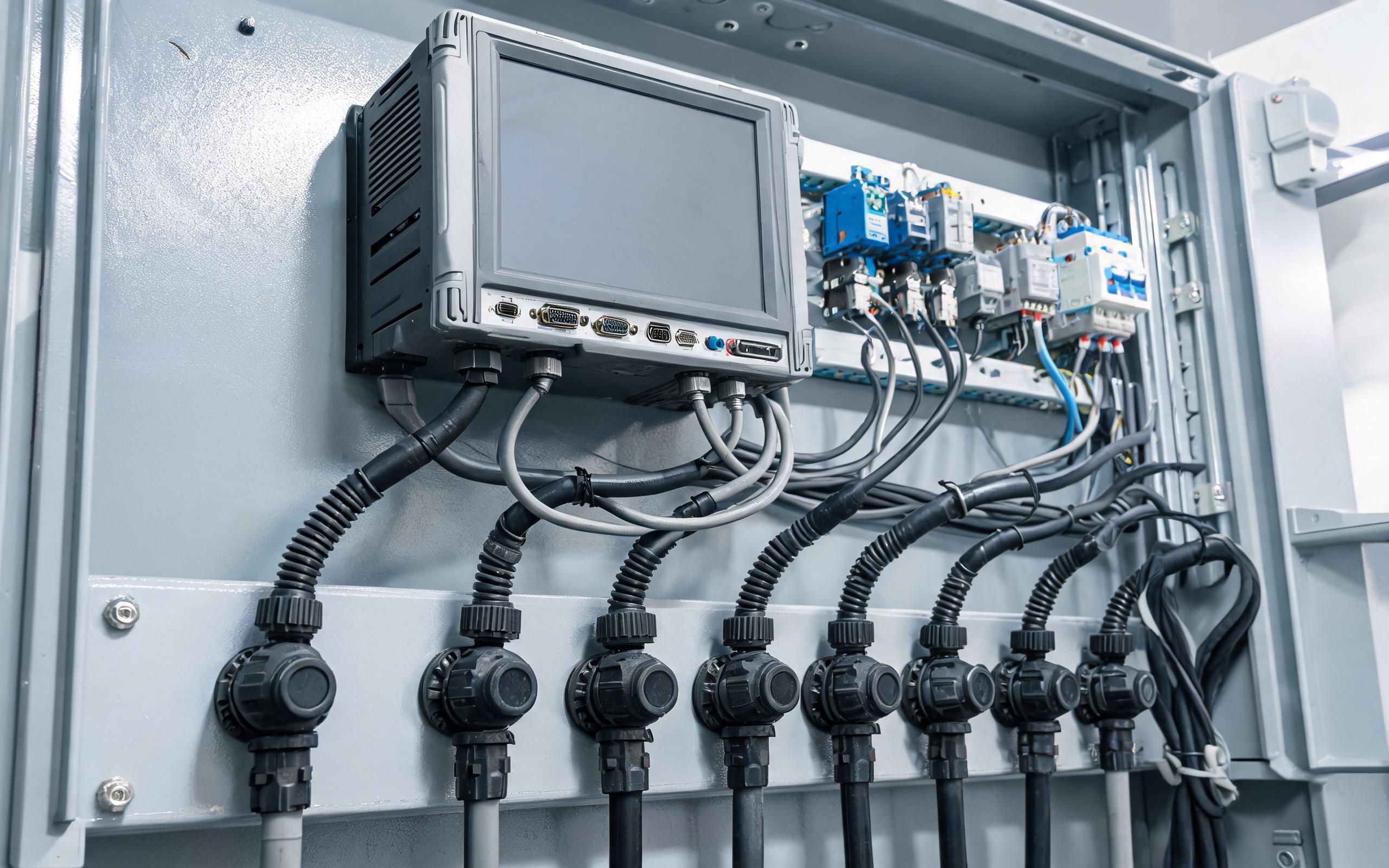
Connectors and cables represent the most common failure point in vibration-prone installations. Fretting corrosion at connector contacts, caused by micro-motion between mating surfaces, increases contact resistance over weeks of exposure until intermittent signal loss triggers system faults that are difficult to diagnose. Proper strain relief prevents cable weight and vibration from transmitting mechanical loads to connector solder joints. Cable glands rated to IP68 clamp the cable jacket and prevent axial movement. Inside the enclosure, service loops of 150 to 200 mm allow the cable to flex without pulling on the connector body. Locking connectors with threaded couplings or latch mechanisms resist vibration-induced back-off far better than friction-fit alternatives. For panel mount industrial pc deployments on mobile equipment or near heavy machinery, wide voltage input power supplies with locking DC connectors eliminate a common failure point. Standard barrel connectors can work loose under vibration, causing intermittent power cycling that corrupts storage media. Terminal block connectors with screw-lock retention maintain reliable contact under sustained mechanical stress. Field observations from automated production lines show that hardware configurations incorporating KOXIAN panel mount industrial pc units with proper strain relief maintain signal integrity despite continuous mechanical stress. Routed cable bundles should be secured to the enclosure or DIN rail at intervals not exceeding 300 mm using cushioned P-clamps. Unsecured cables act as undamped springs that amplify vibration at the connector interface.
Vibration damping in a panel mount industrial PC is not a single feature but a system-level engineering discipline that spans mounting isolation, enclosure material selection, PCB design, and cable management. Each layer of protection addresses a specific failure mode: grommets and isolators protect solder joints from resonant amplification, enclosure rigidity shifts natural frequencies away from ambient vibration bands, and strain relief prevents connector fretting. Facilities that specify vibration resistance as a procurement requirement rather than an afterthought avoid the intermittent failures and unplanned downtime that plague inadequately protected installations.