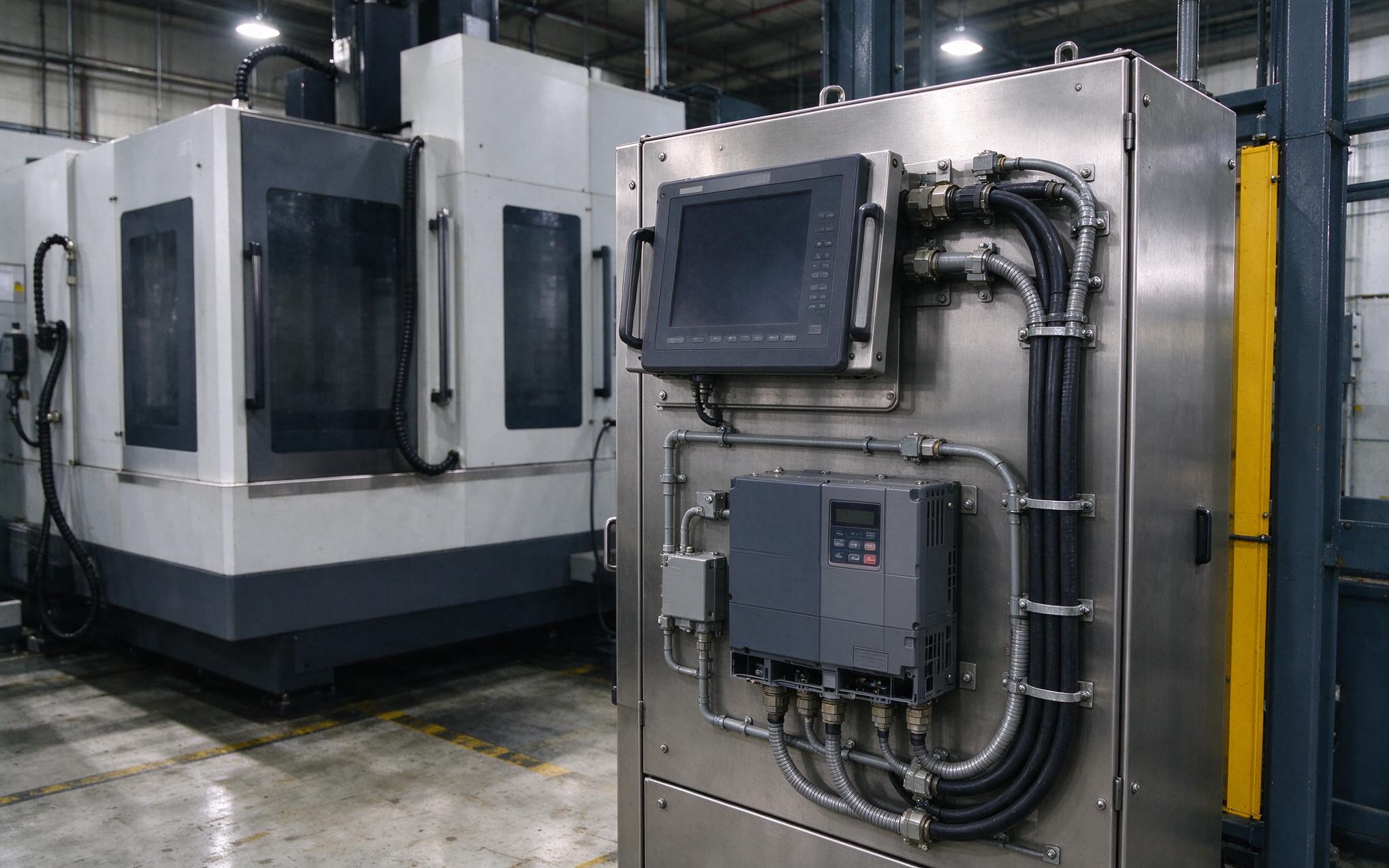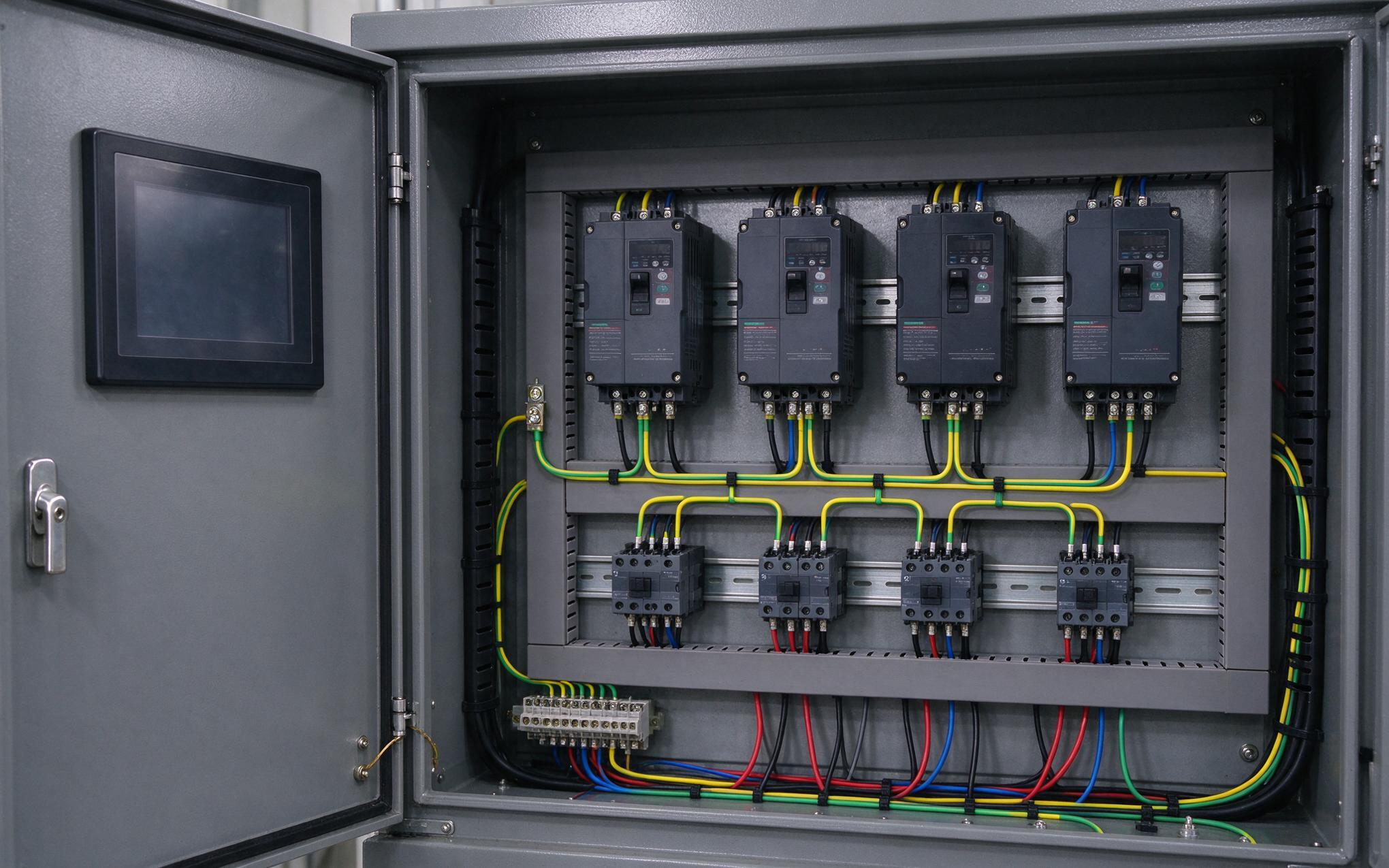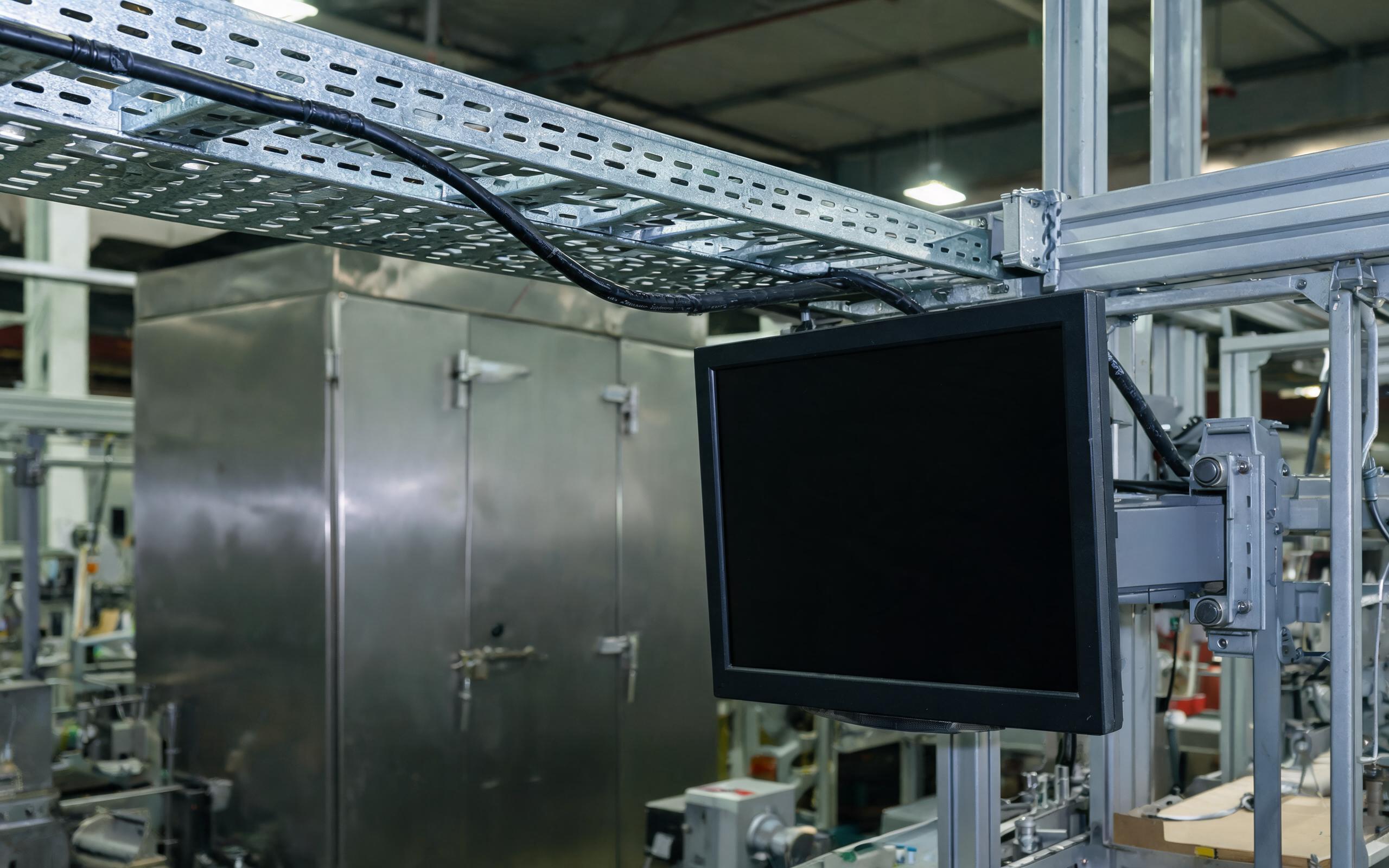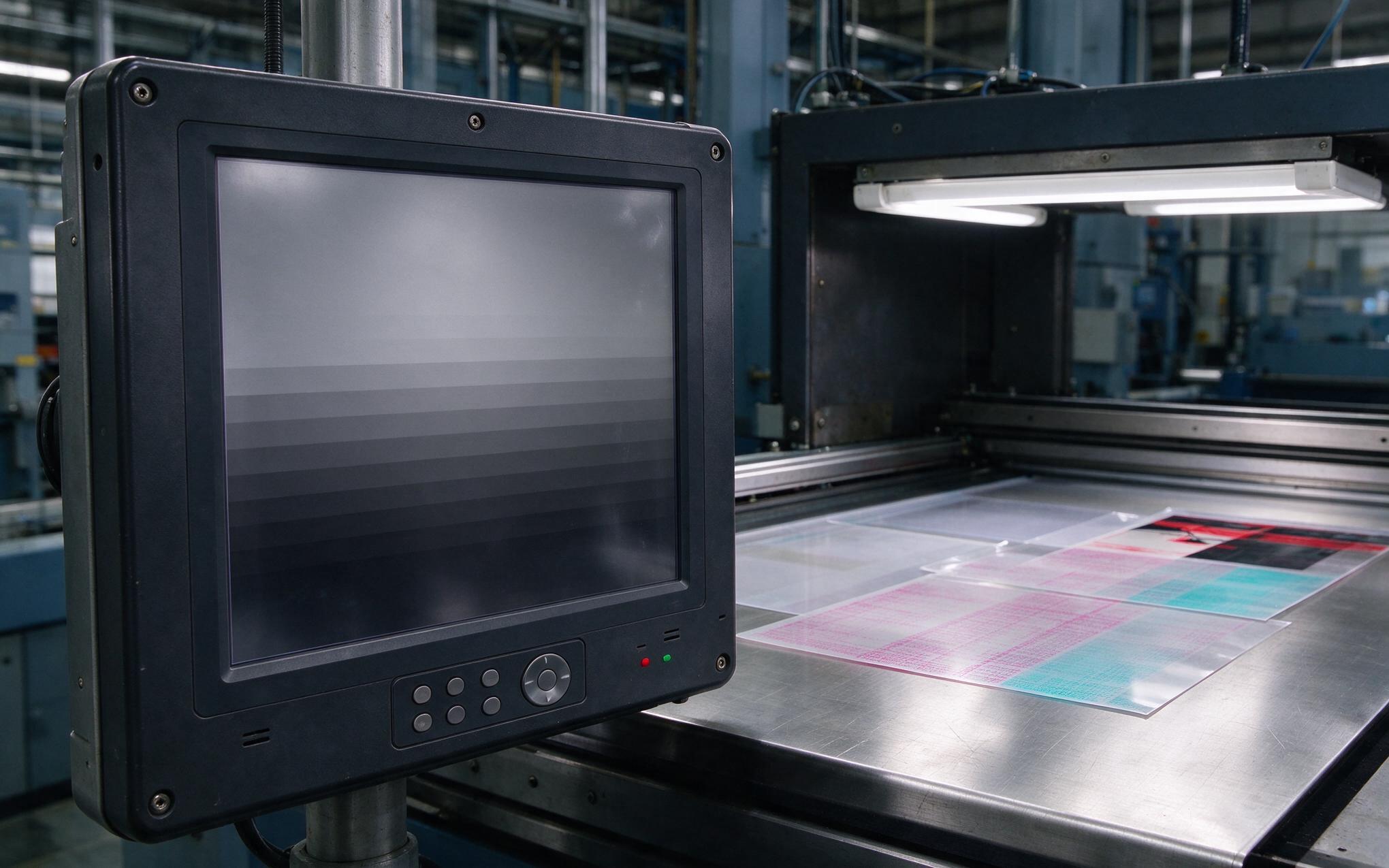
Underground mining operations present one of the most unforgiving computing environments anywhere. Coal dust concentrations that ignite at 50 grams per cubic meter. Methane pockets accumulating in poorly ventilated headings. Continuous vibration from drilling rigs, conveyor belts, and heavy-haul vehicles. Temperatures that swing from freezing at ventilation shafts to over 40 degrees Celsius near active working faces. Deploying a Panel PC in this environment requires a layered protection strategy addressing ignition prevention, particulate ingress, mechanical shock absorption, and thermal management simultaneously. For mining operations that depend on real-time monitoring of gas levels and personnel location, the reliability of computing hardware is a safety-critical function.
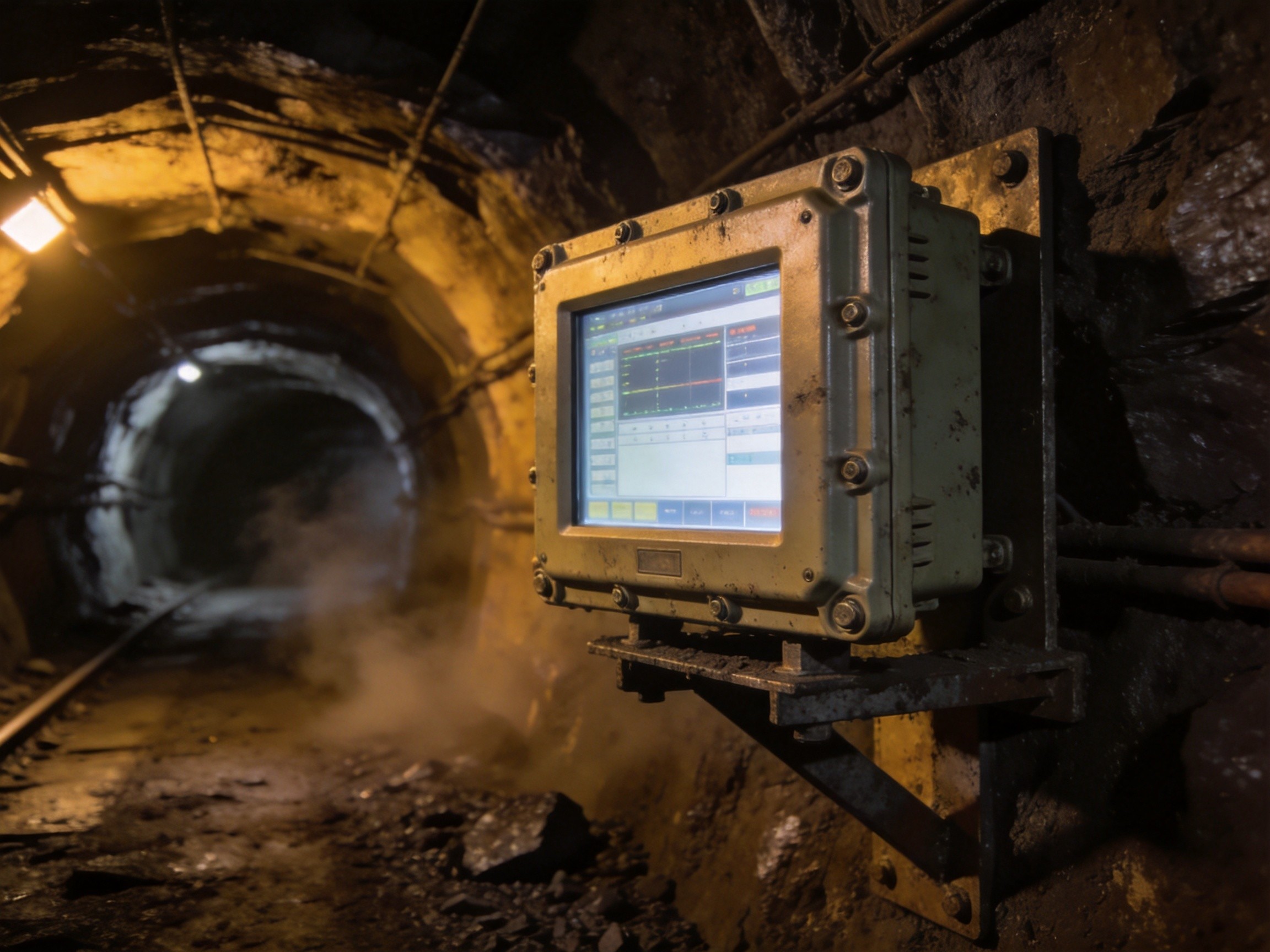
Explosion-Proof Enclosure Design: Flame Path Engineering
ATEX Category 1 and IECEx Zone 0/1 certification mandate that any internal ignition—from an electrical arc or component failure—must be contained within the enclosure and cooled below the ignition temperature of the surrounding atmosphere before escaping. This is achieved through flame-path engineering: precisely machined gaps between enclosure surfaces narrow enough to quench a flame front while allowing pressure equalization. For a Panel PC, every interface—the display bezel, cable glands, mounting bolts—must be designed as a flame path. The enclosure is typically cast aluminum with a copper-free alloy specification to prevent sparking upon impact. KOXIAN explosion-proof Panel PC designs incorporate flame-path gaps machined to tolerances under 0.1 millimeters, verified through third-party certification at accredited IECEx laboratories.
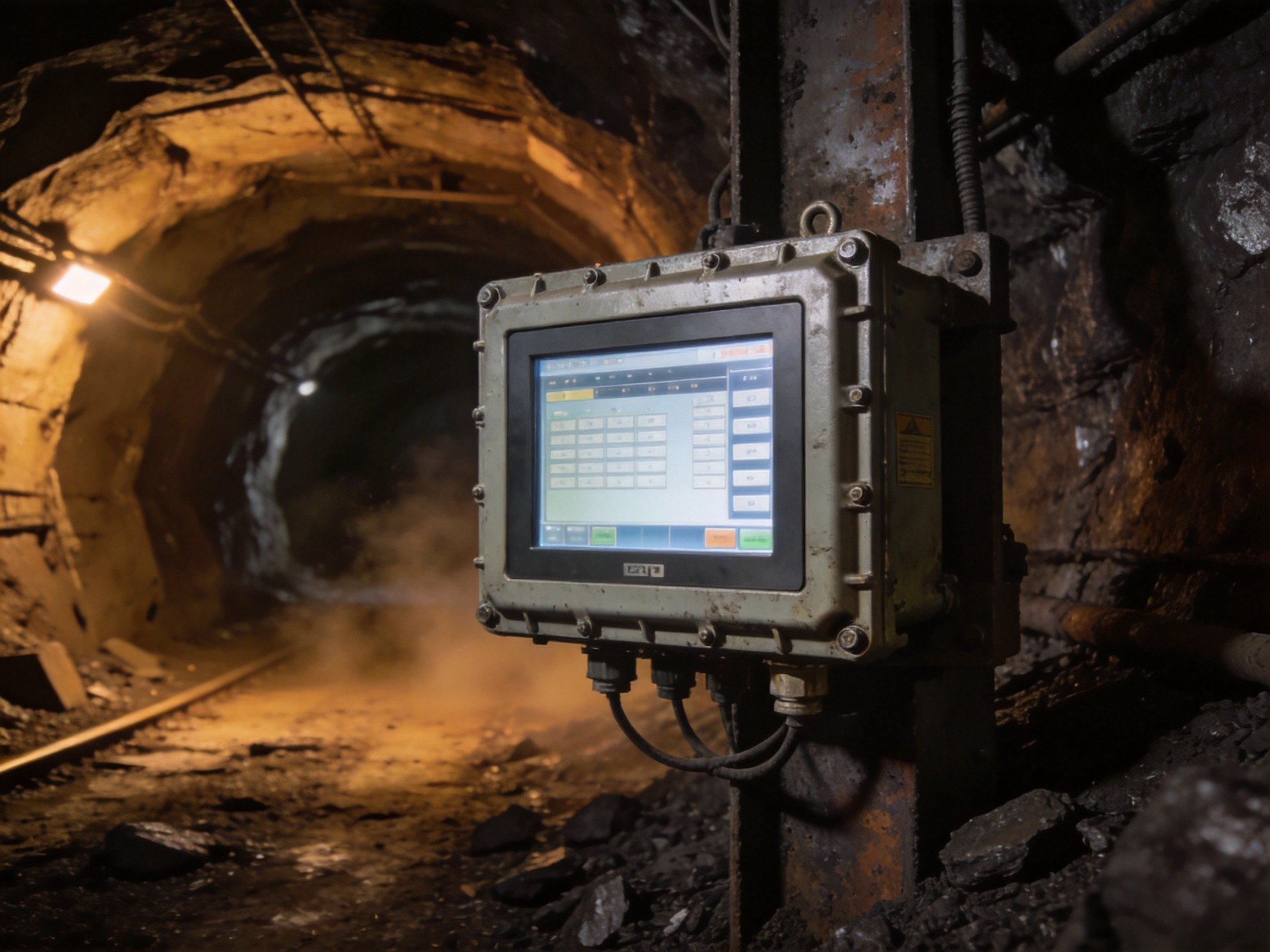
Dust Ingress Protection and the Thermal Challenge
Coal dust is not just an explosion hazard; it is a relentless abrasive that destroys electronics through conductive bridging, thermal insulation, and mechanical wear. The IP6X rating under IEC 60529 requires complete sealing against dust ingress. For a Panel PC deployed underground, achieving IP6X means eliminating all unfiltered airflow paths. This creates a direct conflict with thermal management: a sealed enclosure cannot use fan-based cooling, and the thick aluminum walls required for explosion-proof certification act as thermal insulators. The solution combines conduction cooling through the enclosure body with internal copper heat pipes routing thermal energy from the processor to the external chassis surface. Attaching the Panel PC to a steel support beam that acts as a secondary heatsink can improve dissipation by 15 to 20 percent.
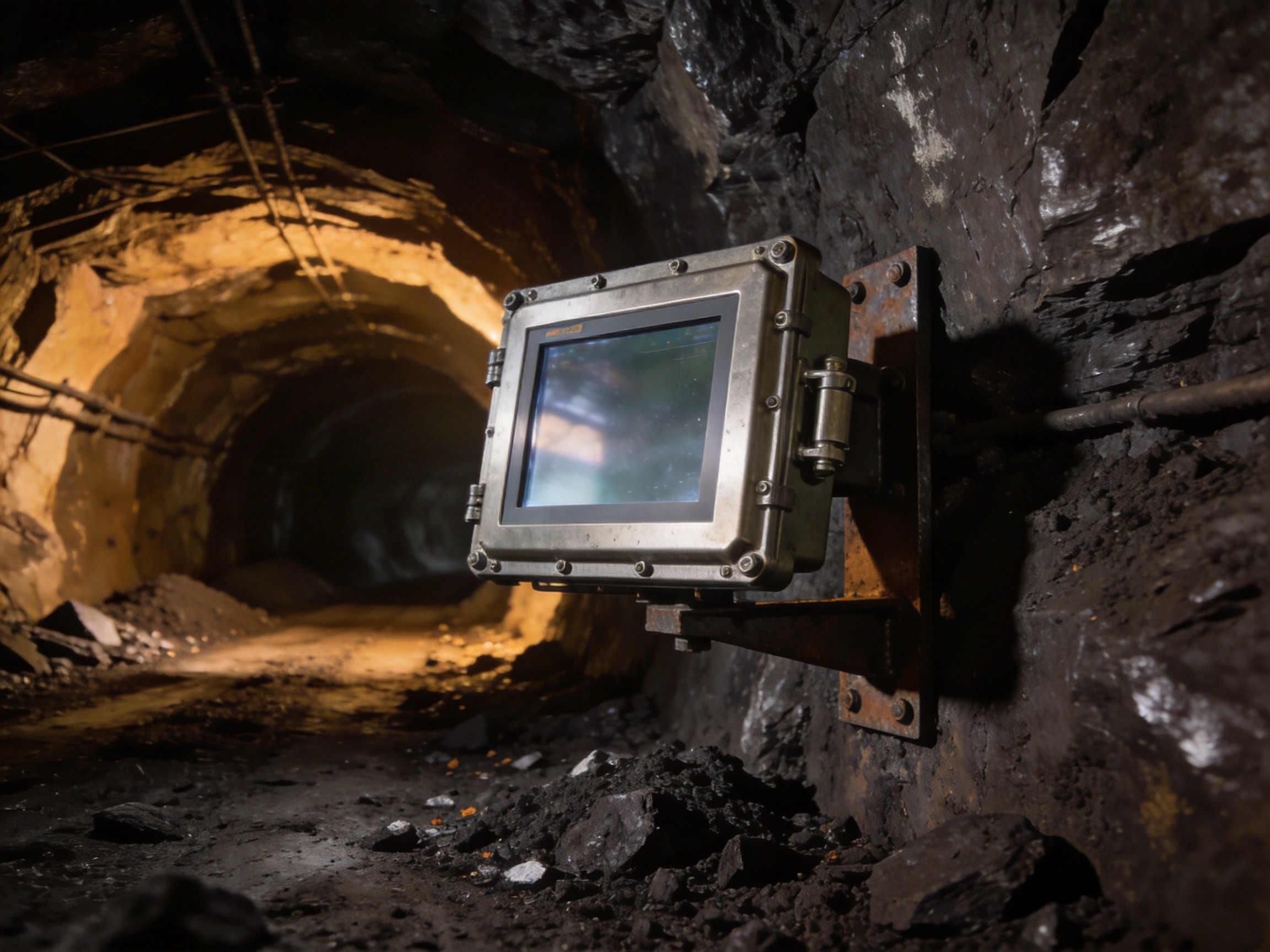
Vibration Resilience Under Constant Mechanical Stress
Mining machinery generates vibration spectra ranging from low-frequency seismic rumble from blasting to high-frequency oscillations from pneumatic drills and conveyor drives. The primary failure modes for a Panel PC under vibration are connector fretting—microscopic movement between contact surfaces eroding the plating—and solder joint fatigue on surface-mount components. The most effective countermeasures include locking connectors with threaded collars rather than friction-fit designs, conformal coating of all printed circuit boards to dampen component-level resonance, and shock-absorbing mounting brackets with elastomeric isolators tuned to the dominant vibration frequencies of the installation site. KOXIAN has validated these approaches through field deployments where vibration-isolated Panel PCs achieved mean time between failure rates three times longer than rigid-mounted equivalents in the same mine section.
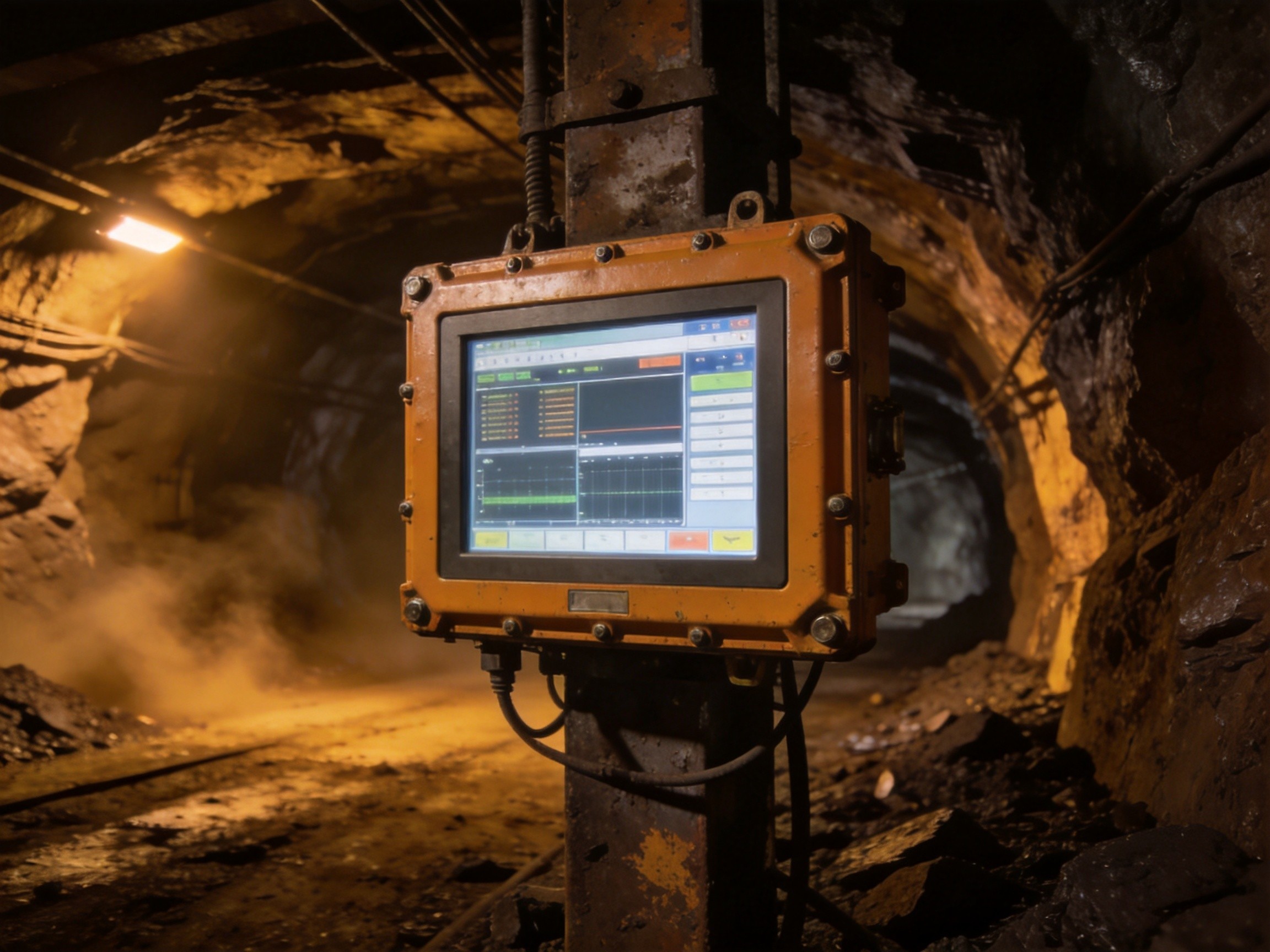
Methane Detection and System-Level Safety Integration
Modern underground mining operations integrate gas detection sensors directly into the control network, with Panel PCs serving as the local processing node for methane, carbon monoxide, and oxygen concentration data. The safety architecture demands that the computing platform itself does not become an ignition source while processing safety-critical readings. This requires galvanic isolation on all sensor input channels, redundant power supply paths with automatic failover, and a watchdog timer circuit that triggers safe-state shutdown if the processor hangs. The display must remain readable under cap-lamp illumination, typically requiring an optically bonded LCD panel with minimum 1,000 nits brightness and anti-reflective coating. When these systems are engineered as an integrated platform rather than assembled from discrete components, the result is a Panel PC that operators can rely on for both production data and life-safety monitoring in the most demanding underground environment.
Underground mining will always be a harsh and hazardous environment. But the computing hardware supporting it does not have to be a point of vulnerability. A properly engineered explosion-proof Panel PC—with certified flame-path enclosures, IP6X dust sealing, vibration-isolated mounting, and galvanically isolated sensor interfaces—transforms the control station from a potential ignition risk into a reliable safety asset. The engineering principles are well understood. The difference lies in the rigor with which those principles are applied during integration and certification.