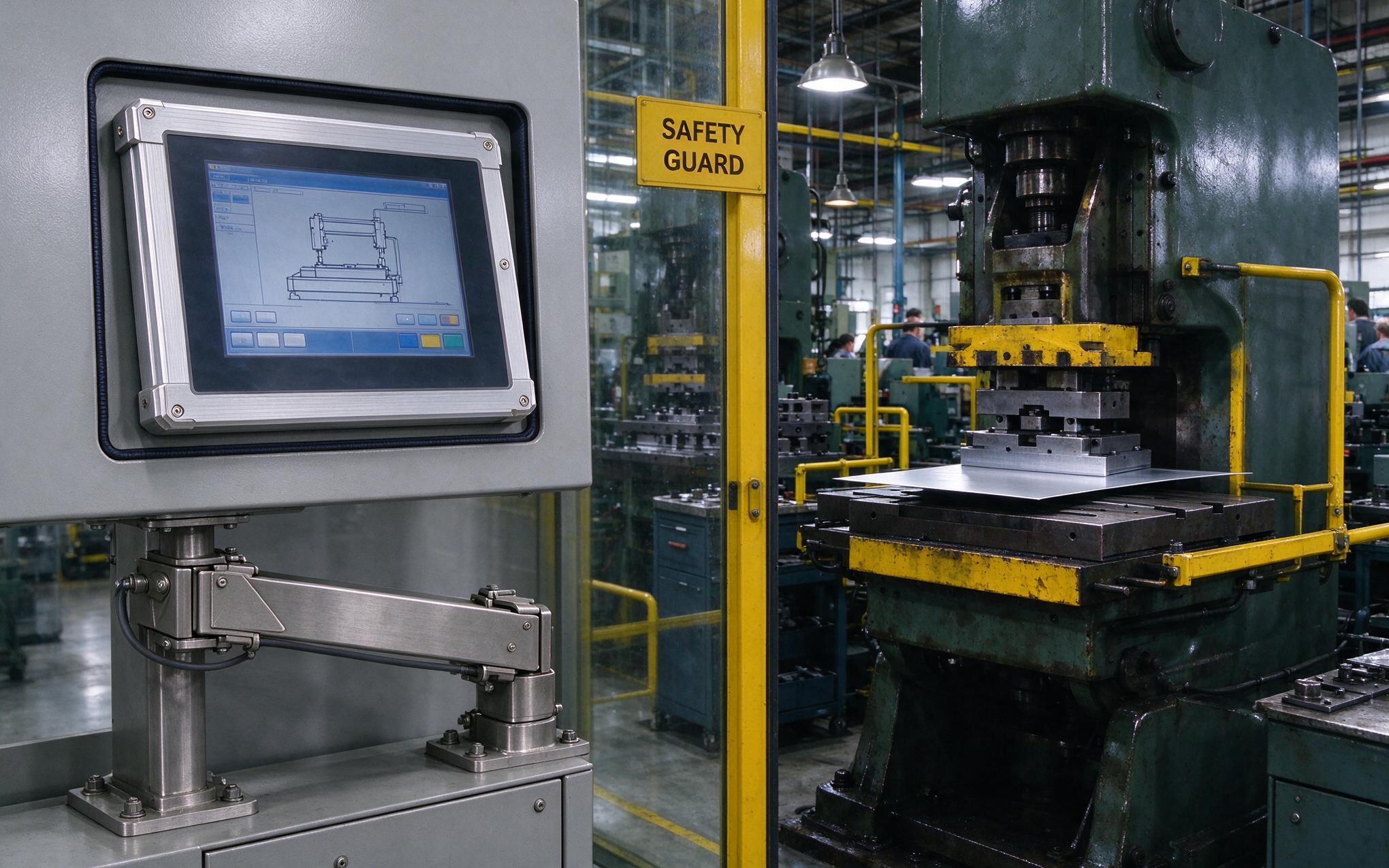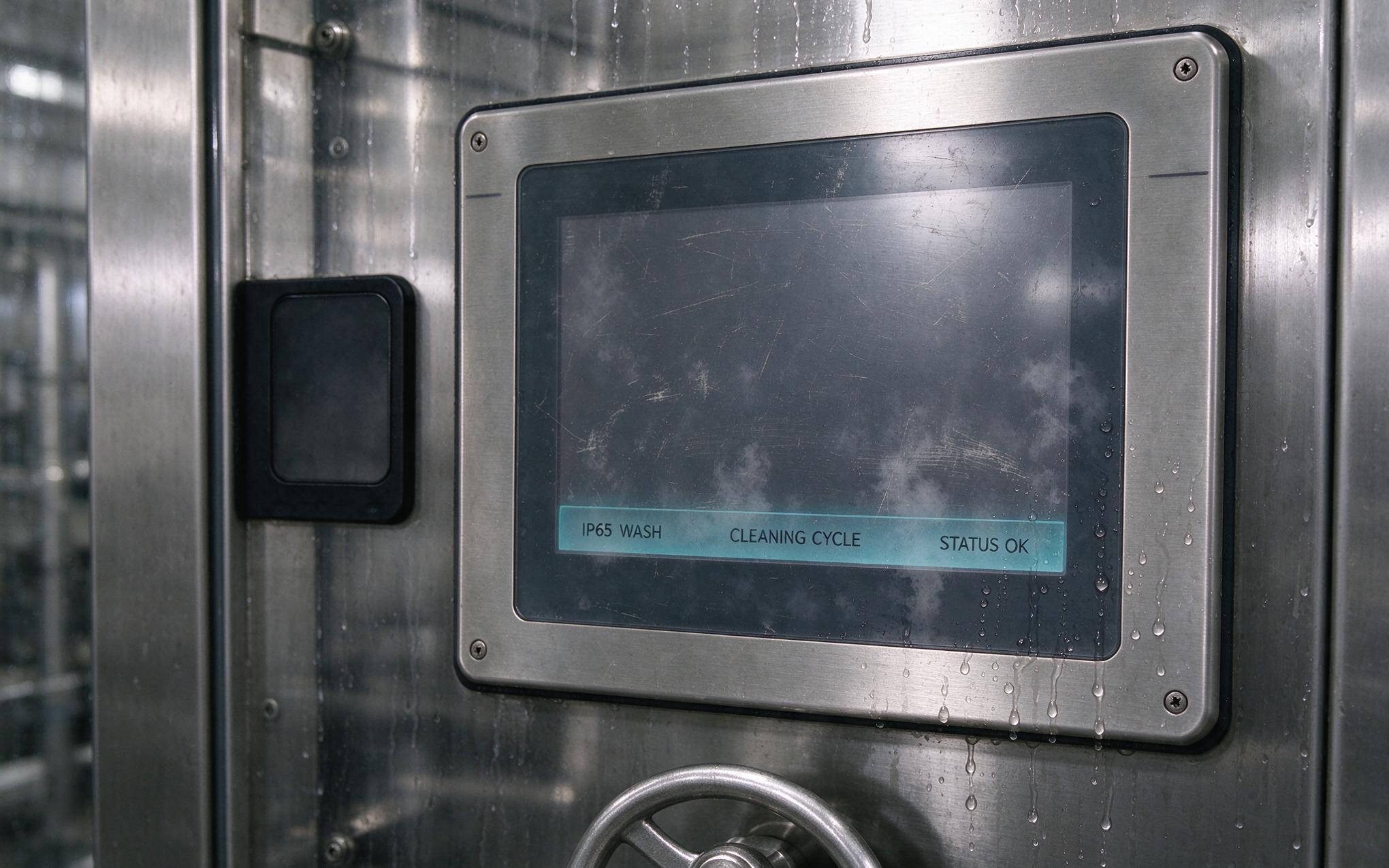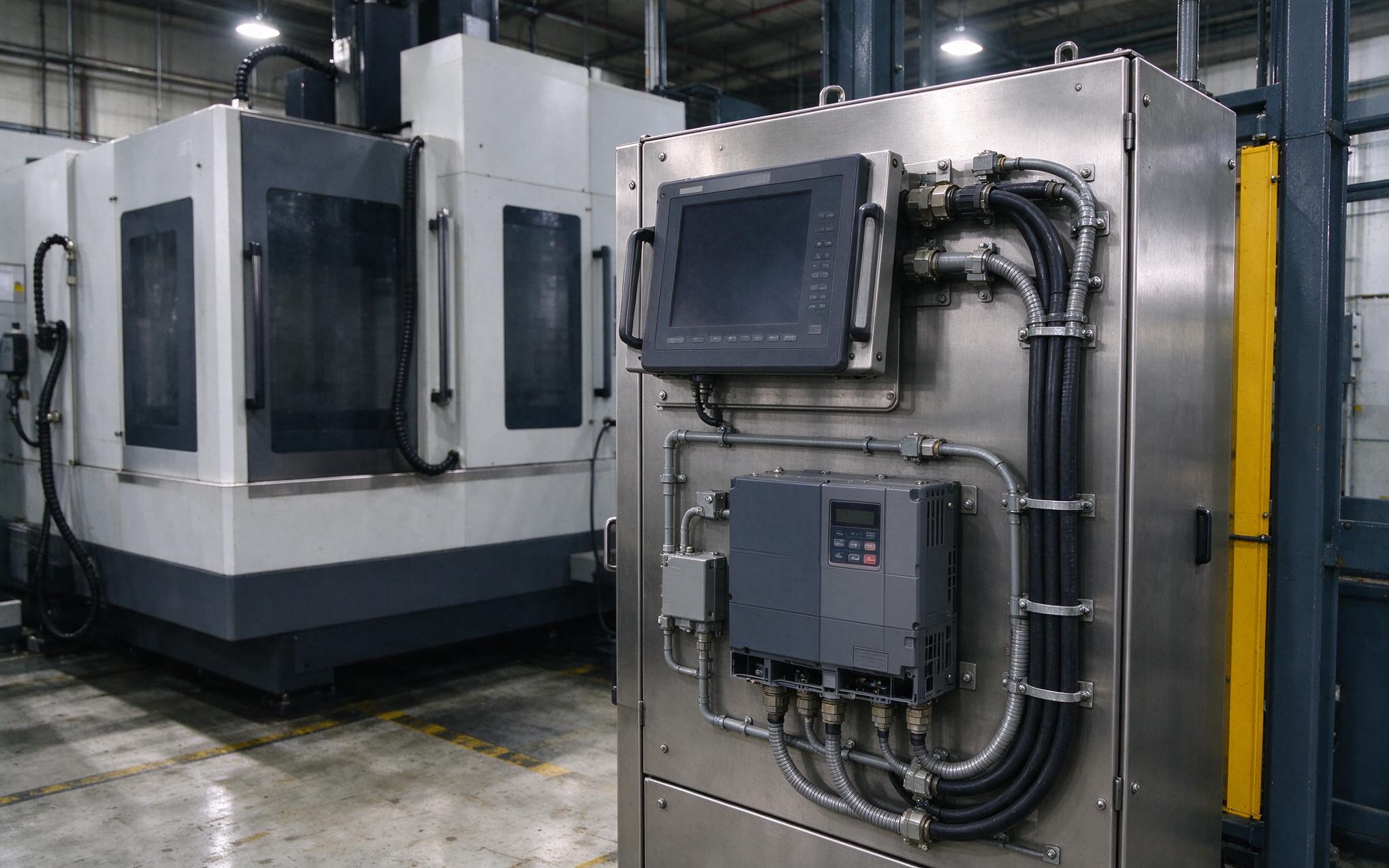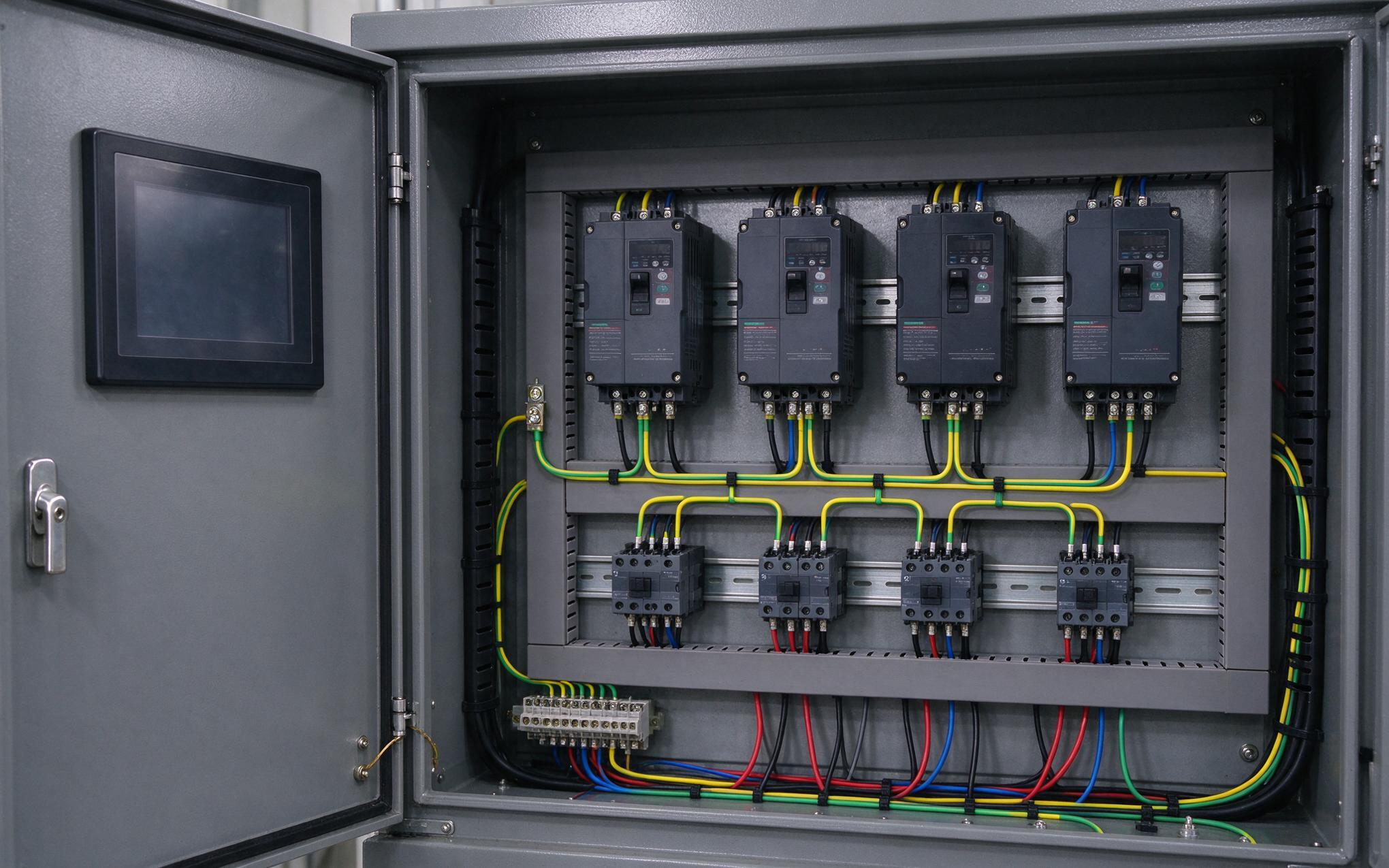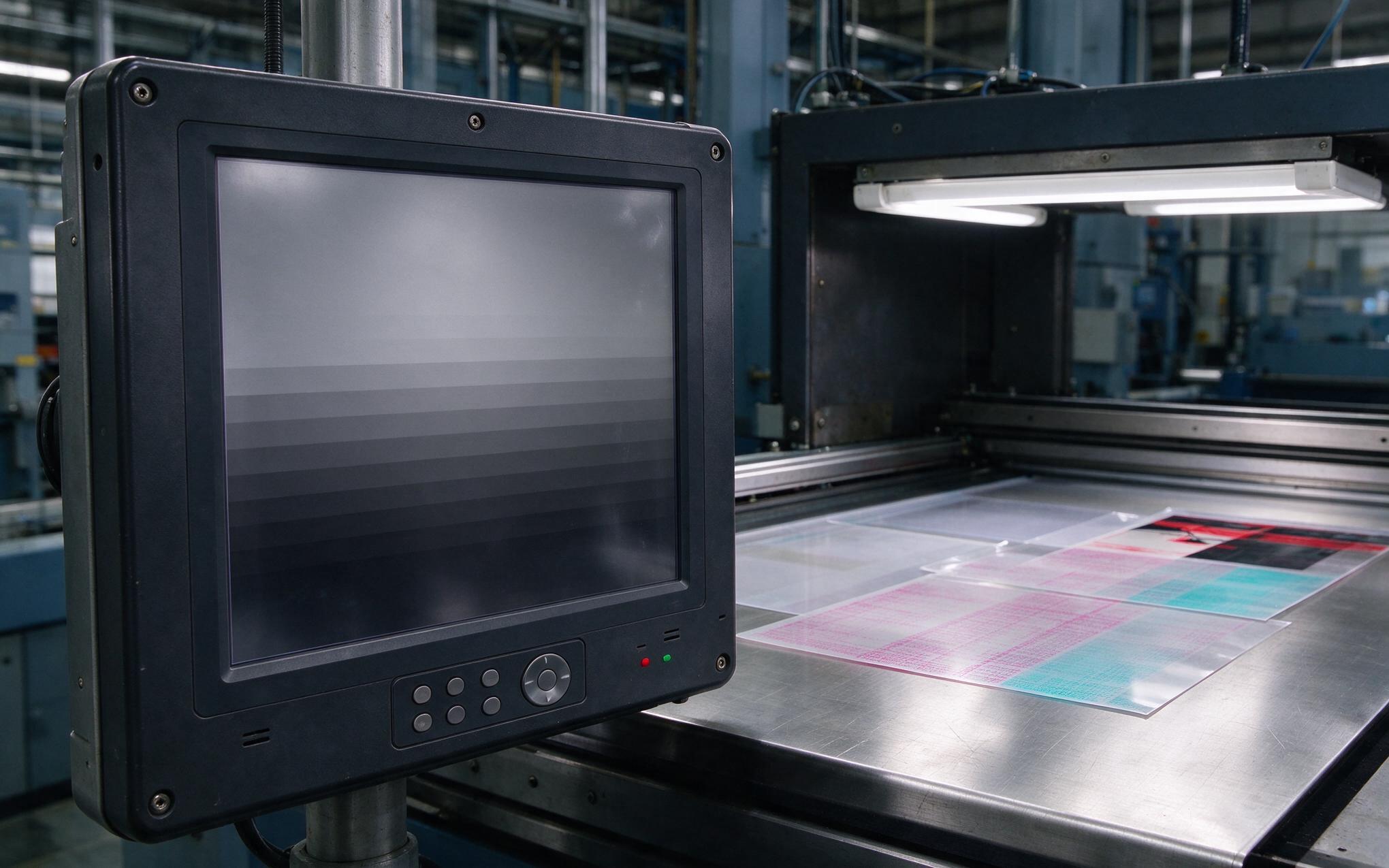
Consumer tablets ship with cover glass measuring 0.5 to 1 mm thick, while industrial touch displays in prisons, factories, and outdoor kiosks routinely require 8 to 12 mm of tempered or laminated glass for impact and chemical protection. That difference in dielectric thickness fundamentally changes how projected capacitive (PCAP) touch sensing must be engineered, because the signal coupling between a finger and the sensor electrode weakens exponentially as the protective layer grows thicker. Understanding this attenuation physics and the design strategies that compensate for it is essential for engineers specifying touch interfaces in demanding environments.

Signal Coupling Physics Behind Thick Glass
Projected capacitive sensing generates a fringing electric field from a grid of transparent electrodes. When a conductive finger enters this field, it creates a capacitance change governed by C = εA/d, where d is the total dielectric thickness between finger and electrode. With 0.5 mm consumer glass, coupling is strong. At 6 mm, the signal drops to a fraction of its original strength. Beyond 8 mm, conventional PCAP designs fail entirely, producing weak or intermittent response. This is why thick cover glass compatibility in industrial touch display systems requires rethinking electrode density, controller sensitivity, and firmware calibration rather than simply adding more protection.
The challenge intensifies when operators interact through safety gloves or when the glass surface accumulates moisture and oil that further distort the capacitive field. Industrial PCAP modules must solve the signal problem without introducing false triggers from environmental noise — a balance that separates purpose-built industrial designs from consumer components adapted for factory use.

Compensating Sensitivity Through Firmware and Electrode Design
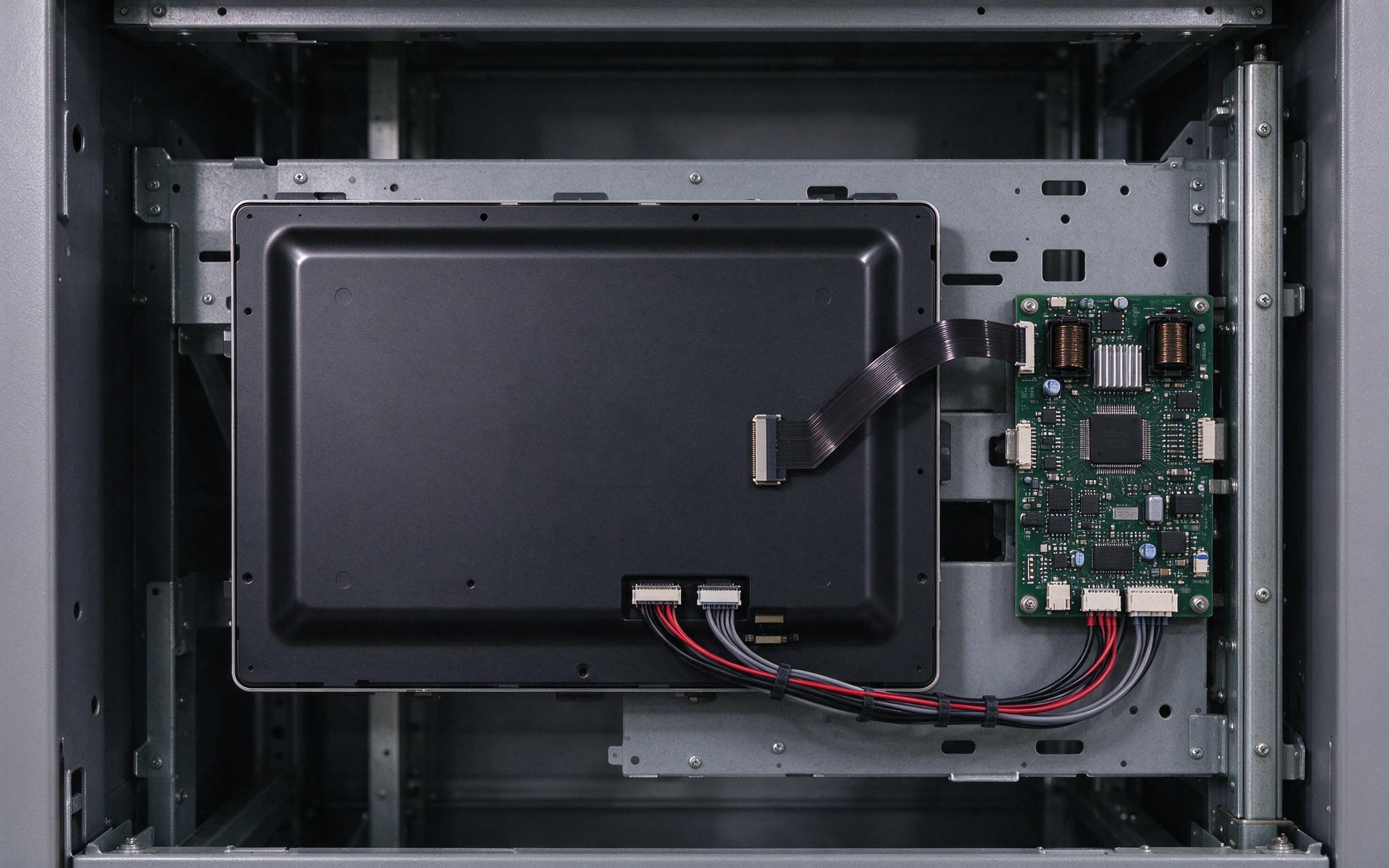
Addressing thick glass attenuation requires solutions at both hardware and firmware levels. On the hardware side, industrial touch display modules use higher-density electrode grids with narrower trace spacing to increase sensing nodes per unit area. Multi-layer ITO film stacks, noise-shielding ground electrodes, and controller ICs with extended dynamic range all contribute to capturing the weakened signal through 8 to 12 mm of cover glass. Some designs incorporate additional sensing channels tuned for thick-glass modes, allowing the controller to switch between standard and high-sensitivity scan profiles without hardware modification.
Firmware calibration is equally critical. Industrial PCAP controllers use adaptive threshold algorithms that dynamically adjust the detection baseline based on real-time noise levels. Calibration routines map the sensor grid before deployment, accounting for glass thickness variations across the electrode array. Many modules also support firmware-tunable sensitivity profiles, allowing operators to switch between bare-finger and gloved-hand modes without hardware changes — a capability critical in food processing and metalworking facilities where operators alternate between bare and gloved operation throughout a shift. Industrial touch display manufacturers like KOXIAN have adopted this approach in their panel-mount product lines, where firmware-level calibration enables consistent touch response across varying cover glass specifications.

Installation and Environmental Factors
Temperature fluctuations shift the dielectric constant of the cover glass itself, altering the baseline capacitance the controller uses for detection. Controllers with auto-recalibration features periodically re-map the sensor grid to compensate for thermal drift across operating ranges from cold storage at minus 20 degrees Celsius to foundry floors exceeding 50 degrees Celsius.
The bonding method between the touch sensor and LCD panel also matters. Optical bonding fills the air gap with adhesive to reduce reflections and improve sunlight readability, but changes the dielectric stackup the controller must account for. Anti-glare and high-brightness surface treatments for outdoor deployments introduce additional scattering layers that can alter touch response. For industrial touch display systems deployed in harsh conditions, integrating optical bonding with thick cover glass designs requires pre-calibrating the touch controller for the bonded assembly’s specific dielectric profile. In environments where oil, metal shavings, or cleaning chemicals contact the display surface, oleophobic and chemical-resistant coatings add yet another variable. The most effective designs from industrial touch display manufacturers like KOXIAN incorporate coating specifications into the controller’s calibration profiles during manufacturing rather than treating them as field adjustments.
Selecting an industrial touch display with thick cover glass compatibility demands attention to PCAP controller capabilities, electrode construction, and environmental calibration features. Engineers should prioritize modules with firmware-tunable sensitivity and auto-recalibration, confirm testing at the required cover glass thickness, and verify optical bonding availability for outdoor readability. The dielectric challenge imposed by thick glass is solvable, but only when the entire touch system — sensor, controller, firmware, and cover glass — is engineered as an integrated assembly.