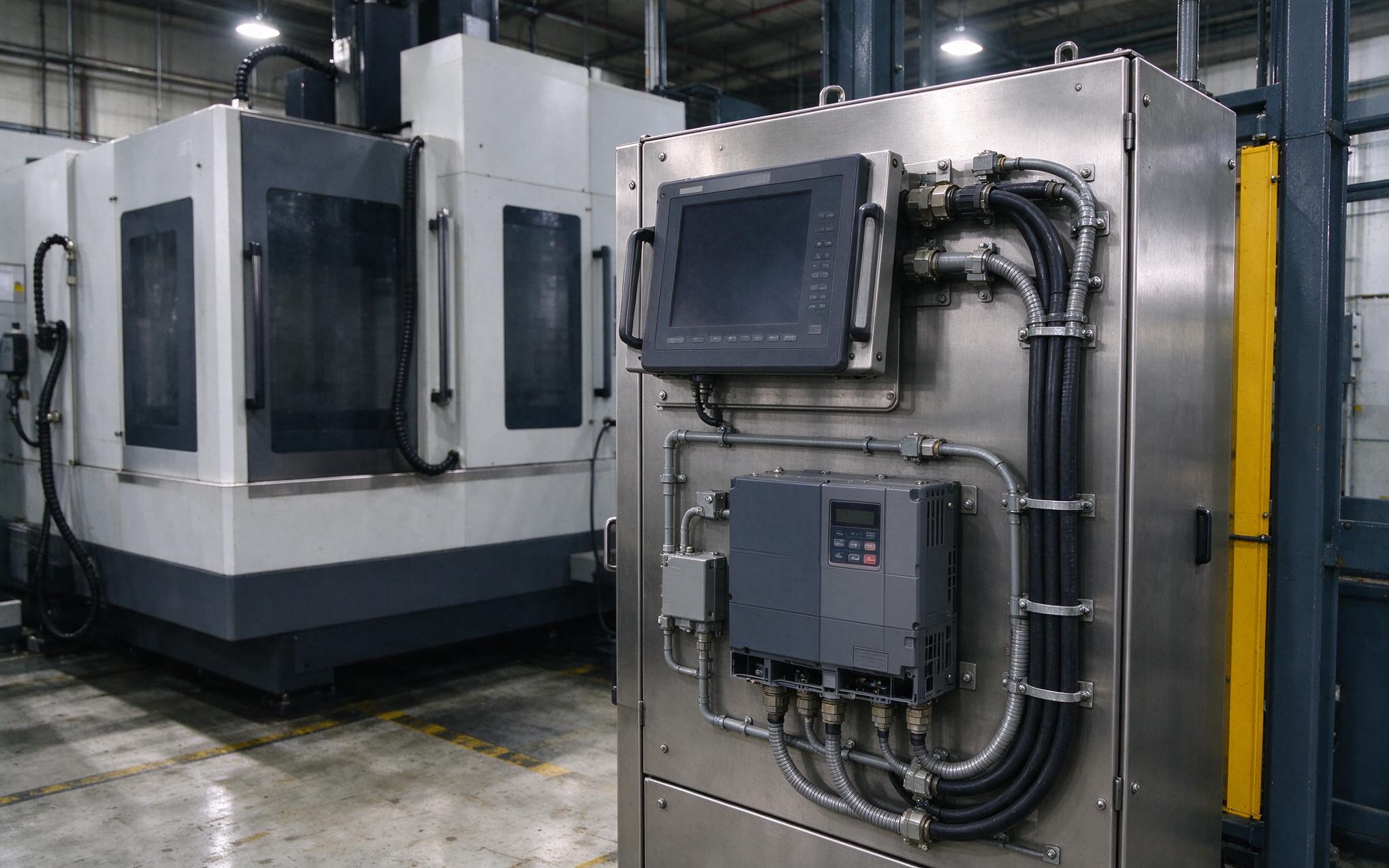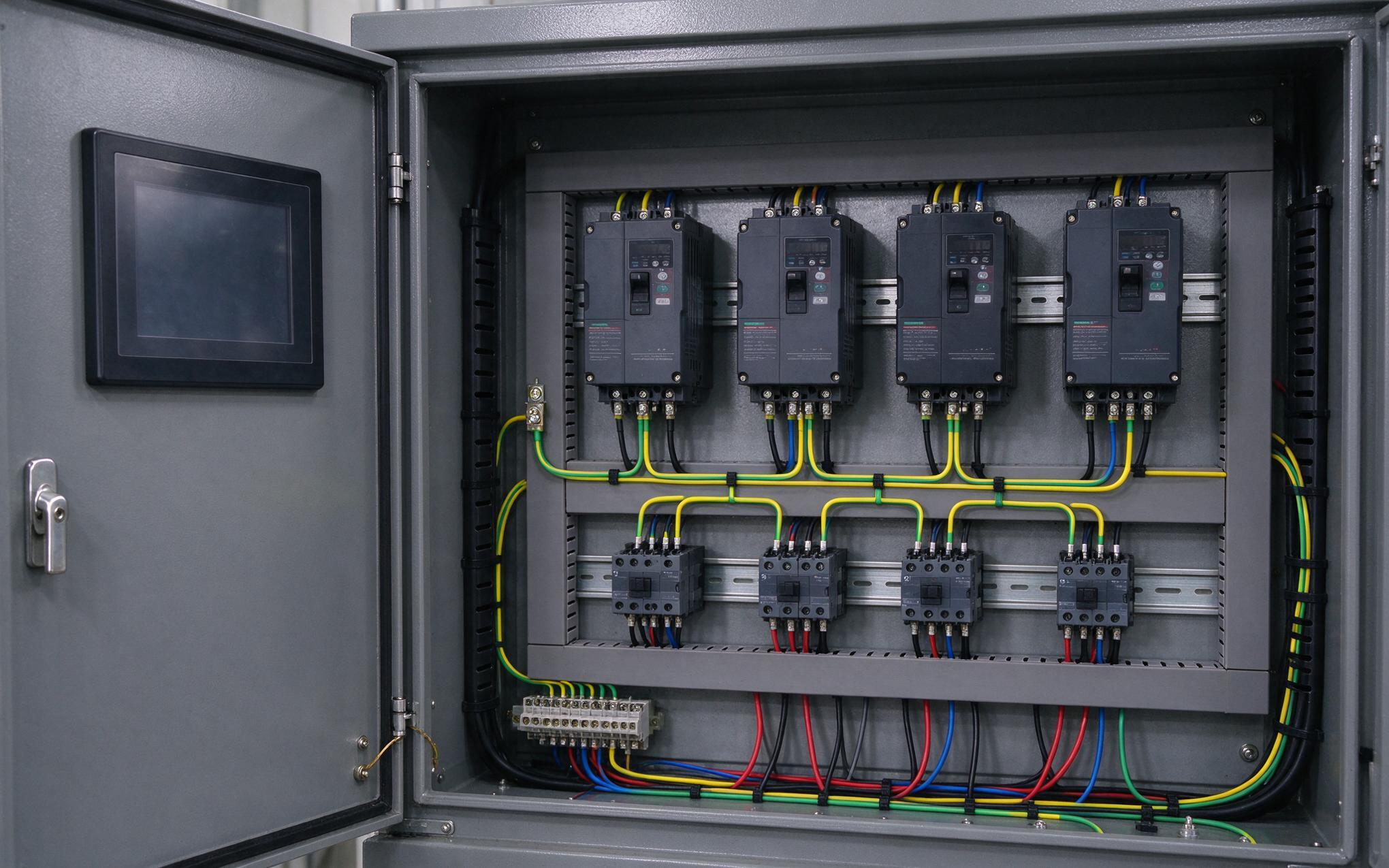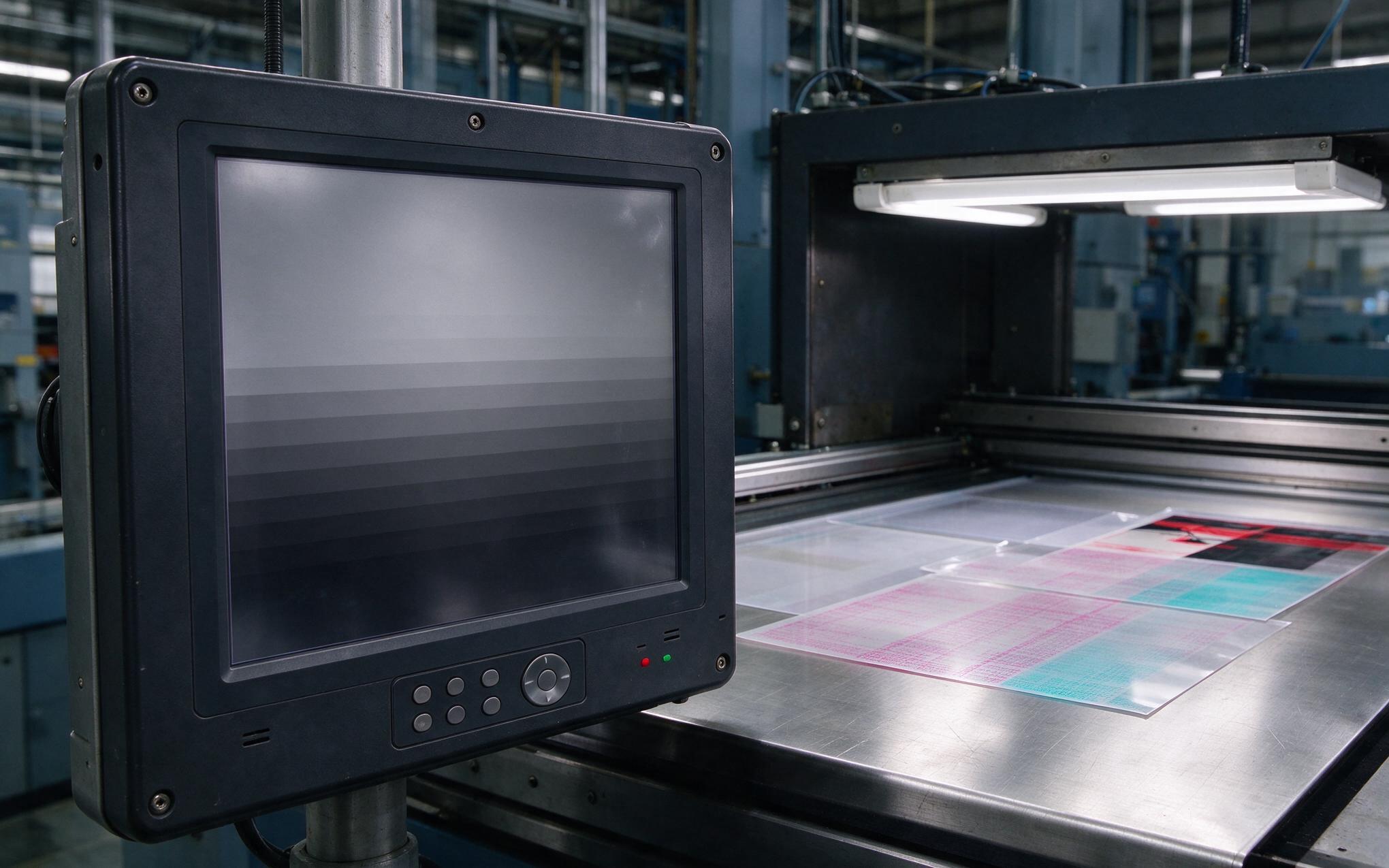
Every winter morning, operators at a cold-storage facility in the upper Midwest power up their industrial touch screen panel and wait. For roughly 45 minutes, the screen drifts—registering touches two millimeters off target, rejecting gloved input, or producing phantom taps that trigger unintended commands. When temperatures finally stabilize, the problem vanishes until the next shift change. This recurring failure pattern reveals a fundamental challenge in industrial touch screen panel design: thermal drift in capacitive sensors, an issue that remains underestimated despite its measurable impact on production uptime and operator safety.

Why Does Thermal Drift Occur in Capacitive Touch Sensors
Capacitive touch controllers measure the mutual capacitance between row and column electrodes in the touch matrix. When ambient temperature changes, the parasitic capacitance of the sensor substrate shifts proportionally. The controller must distinguish between actual finger input and this temperature-dependent baseline drift—a task that becomes exponentially harder when temperature swings of 30 to 50 degrees Celsius occur within a single production shift. Consumer-grade panels typically lack the resolution to track these changes accurately, resulting in missed touches or phantom inputs that degrade operator efficiency and introduce safety risks in high-throughput manufacturing environments.
Equipment manufacturers like KOXIAN have documented that panels installed near furnaces or in cold-storage facilities experience measurable calibration drift within 15 minutes of startup if the controller’s built-in recalibration routine lacks sufficient resolution. The problem intensifies when panels operate in environments with rapid thermal cycling—such as food-processing lines that alternate between ambient staging areas and refrigerated storage—where the rate of temperature change outpaces the controller’s ability to compensate.

Compensating for Thermal Expansion in Capacitive Touch Sensors
Addressing thermal drift requires solving three interrelated engineering challenges. One primary challenge involves the thermal expansion coefficient mismatch between the touch sensor substrate—typically glass or ITO-coated film—and the aluminum or steel enclosure. When these materials expand at different rates, mechanical stress creates uneven capacitance distribution across the touch surface, causing certain zones to become more or less sensitive than others. Wide-temperature industrial touch screen panel designs mitigate this through material selection and mechanical isolation strategies that decouple the sensor from enclosure-induced stress.
Engineering teams at KOXIAN report that incorporating temperature-compensating algorithms directly into the touch controller firmware—rather than relying on periodic recalibration alone—reduces residual drift to below the perceptible threshold for most industrial applications. This approach requires embedding temperature sensors in close proximity to the touch controller IC, enabling real-time adjustment rather than interval-based correction. The result is a panel that maintains sub-millimeter touch accuracy across a operating range spanning from minus 20 to plus 60 degrees Celsius, without requiring operator intervention during temperature transitions.

Practical Calibration Strategies for Wide-Temperature Factory Deployments
Even with robust hardware design, operational practices can significantly reduce calibration drift in industrial touch screen panel installations. Pre-conditioning the panel—a practice that KOXIAN recommends for deployments in cold-storage facilities—involves powering it 30 to 60 minutes before the production shift begins—allows internal components to reach thermal equilibrium, eliminating the transient drift that causes most calibration complaints during cold starts. In environments where thermal cycling is unavoidable, positioning panels away from direct thermal sources such as steam vents or radiant heaters reduces the rate of temperature change that the calibration system must track.
Facilities that adopted wide-temperature industrial touch screen panel models in combination with scheduled recalibration routines have reported measurable reductions in touch accuracy complaints—particularly in environments where ambient temperatures fluctuate by more than 25 degrees Celsius during a single shift. The economic justification extends beyond operator convenience: in precision assembly operations, a miscalibrated touch input can trigger incorrect parameter entry, resulting in product defects or machine faults that cause unplanned downtime. For operations managers evaluating total cost of ownership, the incremental cost of a wide-temperature variant often pays for itself within weeks in facilities where thermal drift events occur daily.