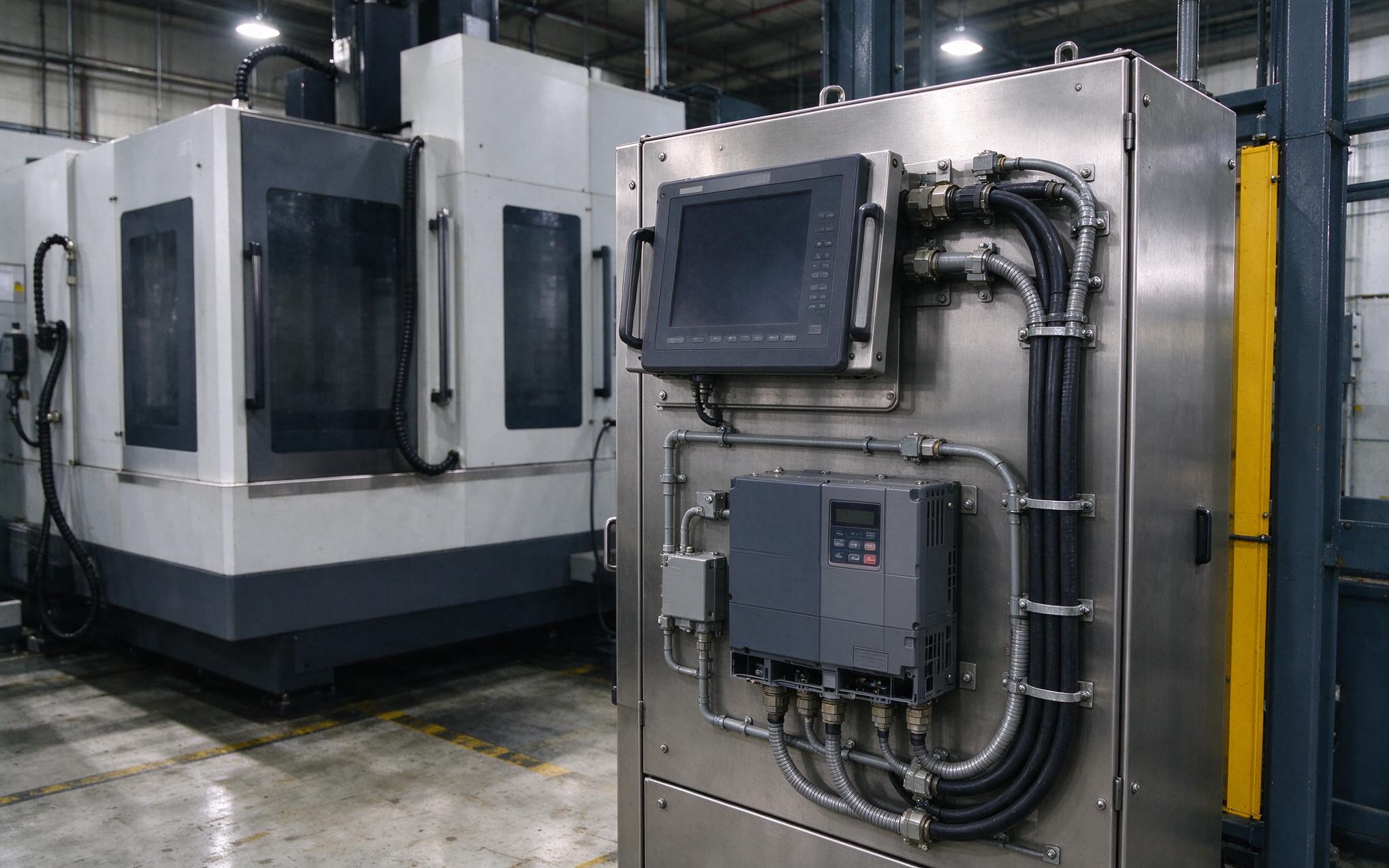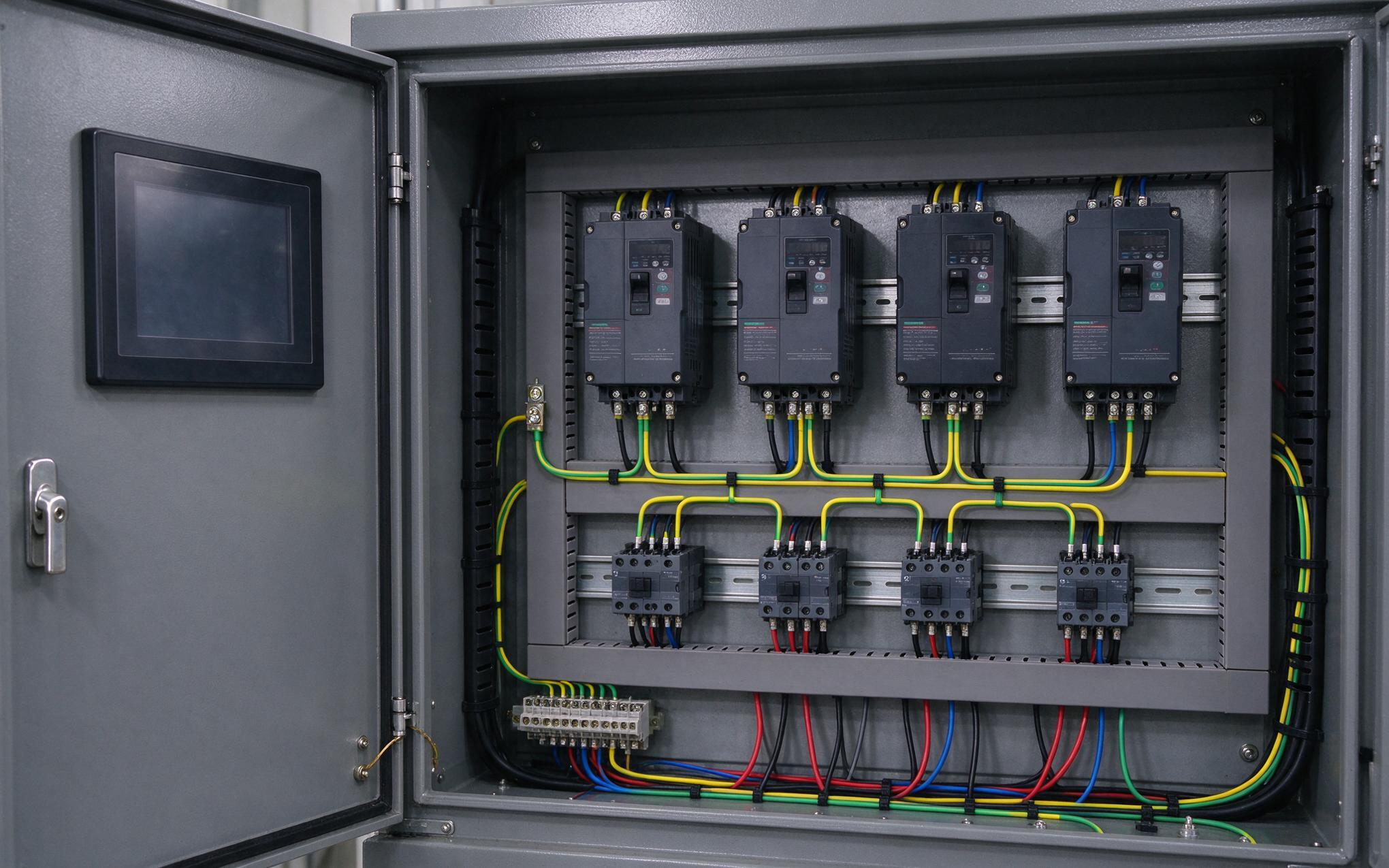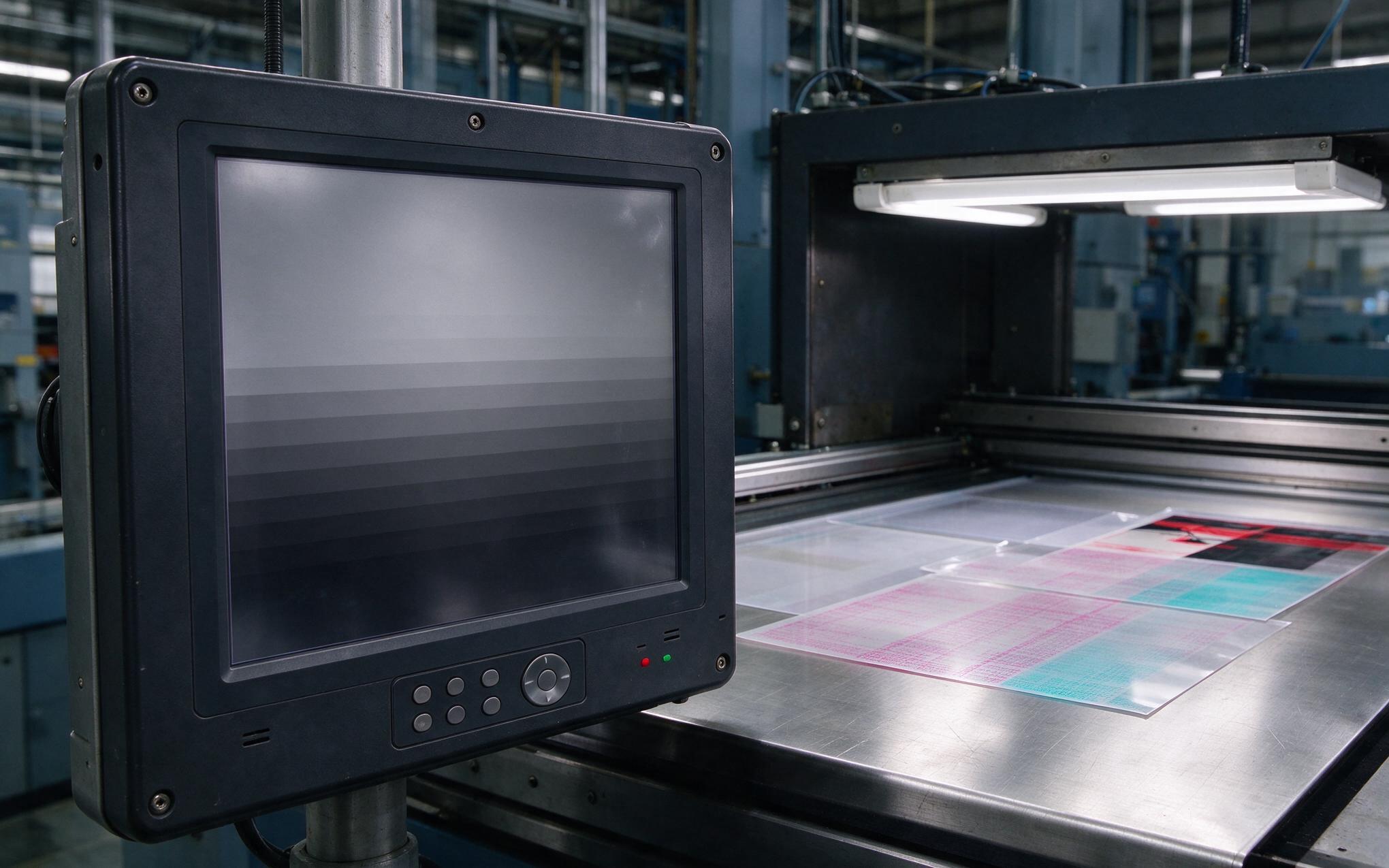
On a packaged-food line in the Midwest, a corrupted Windows registry key traced to an operator’s accidental install caused a six-hour production halt and a six-figure loss. That incident underscores why unsecured Windows industrial panel PCs on factory floors are not merely IT concerns but operational hazards with direct P&L impact.

With Registry Lockout Against Unauthorized Configuration Changes
The Windows registry stores thousands of configuration parameters that govern boot behavior, peripheral enumeration, and service startup. On a factory floor, an unguarded registry invites three categories of risk: operator error, malware persistence, and configuration drift during maintenance windows. Registry lockout addresses each by restricting write access to critical keys through Group Policy restrictions, NTFS access control lists, and in advanced deployments, Windows Unified Write Filter (UWF) overlay redirection.
Implementation starts at deployment. System integrators configure a standard user profile with administrative restrictions baked into the Windows industrial panel PC master image. PowerShell scripts set registry key permissions via Set-Acl calls, while Group Policy Objects enforce deny-write rules on HKEY_LOCAL_MACHINE\SYSTEM subkeys that control driver loading and network interface settings. Operators interact only with the designated control application, and any attempt to modify system-level configuration is silently blocked or logged to the Windows Event Log for IT review.

Against SSD Degradation Through Unified Write Filter
Industrial panel PCs with Windows embedded in factory environments rely on SSD boot drives — yet SSDs have finite write cycles. A standard SATA SSD rated for 1,000 P/E cycles at 128 GB degrades faster in write-heavy environments where the OS continuously writes logs, temporary files, and application state data. Windows Unified Write Filter intercepts all write attempts to protected volumes and redirects them to a virtual overlay, keeping the underlying SSD in a near-read-only state.
Pre-configured UWF overlays from KOXIAN reduce SSD write amplification by 80–95%, extending storage lifespan from three years to seven or more in 24/7 production environments. The overlay strategy depends on the deployment profile. For thin-client SCADA terminals running a single application, a RAM-based overlay of 1–4 GB suffices, and the overlay clears on every reboot — delivering both SSD longevity and a guaranteed clean system state on power cycle. For Windows industrial panel PC installations that must persist application data between reboots, a disk-based overlay allocates a partition on the SSD itself, preserving changes through the uwfmgr.exe configuration interface.

Under Group Policy Lockdown for SCADA Workstation Integrity
Group Policy provides the deepest lockdown layer for Windows industrial panel PC systems in factory automation. A layered GPO configuration restricts USB device installation, disables Windows Update auto-restart, enforces BitLocker drive encryption, and prevents unauthorized application execution through AppLocker or Software Restriction Policies. The critical distinction from consumer-grade lockdown is defense-in-depth: each layer operates independently, so a gap in one restriction does not expose the entire system.
At the factory level, industrial panel PC manufacturers like KOXIAN configure these policies before shipment, so integrators receive pre-hardened units ready for domain-joined deployment. For production environments, the recommended Group Policy stack covers five tiers: shell replacement via Assigned Access, application whitelisting through AppLocker, device installation restrictions for USB and removable media, Windows Update service hardening, and audit policy configuration that logs privilege escalation attempts. On fleet-scale installations, these policies distribute centrally through Active Directory, enabling IT teams to push configuration updates across hundreds of factory floor units without physical access.

Without LTSC Lifecycle Risks in Long-Term Industrial Deployments
The final pillar of industrial panel PC protection in factory environments is operating system lifecycle management. Windows 10 IoT Enterprise LTSC (Long-Term Servicing Channel) receives security updates for ten years without feature updates that could break SCADA application compatibility. This servicing model eliminates the forced-update restarts that plague consumer Windows editions and allows system integrators to freeze a validated software stack for the duration of a production line’s operational life.
Factories managing large fleets of industrial panel PC installations should pair LTSC with Windows Update for Business deferral policies, creating a two-stage patch deployment: security updates roll out within 30 days to a pilot group, then to the full production fleet after validation. This approach balances cybersecurity compliance with the operational stability that production environments demand.
From registry lockdown to write-filter protection to Group Policy hardening, each layer addresses a distinct failure mode in Windows industrial panel PC deployments on factory floors. Factories that implement all four mechanisms — and pair them with LTSC lifecycle management — transform their panel PC fleet from a potential attack surface into hardened, production-ready infrastructure. For industrial operations teams, the question is not whether to harden these systems, but how quickly the full stack can be deployed before the next unplanned downtime event.