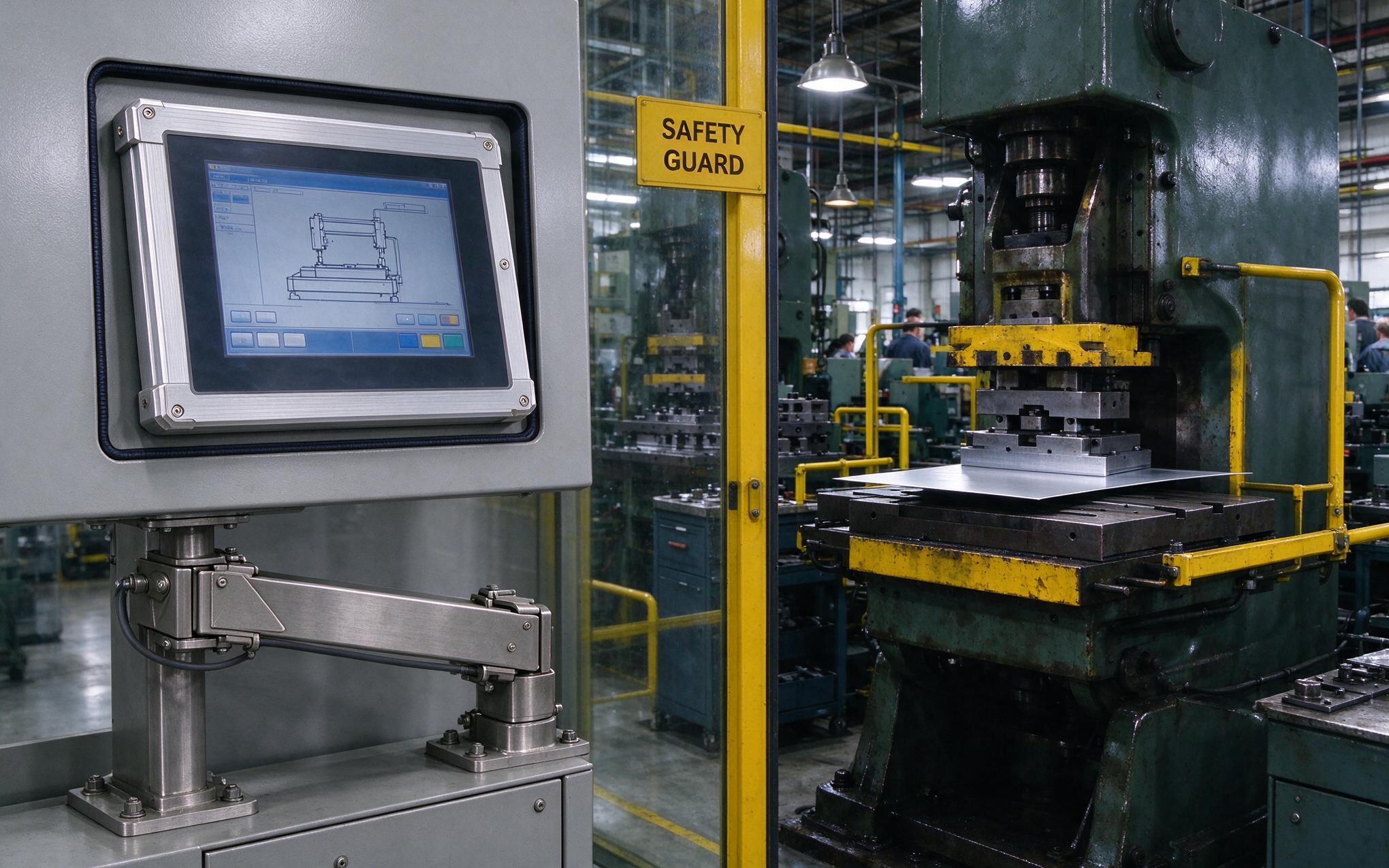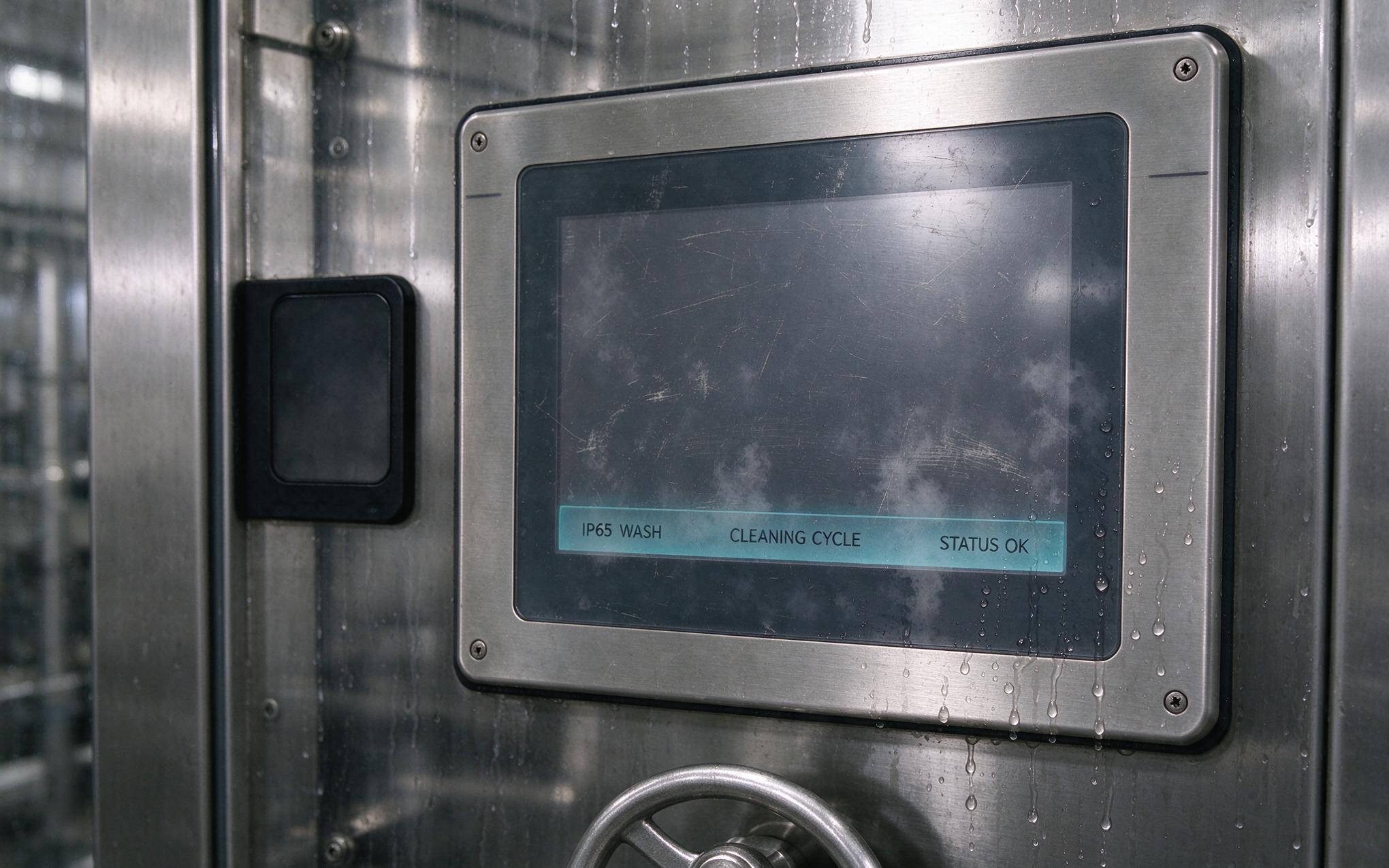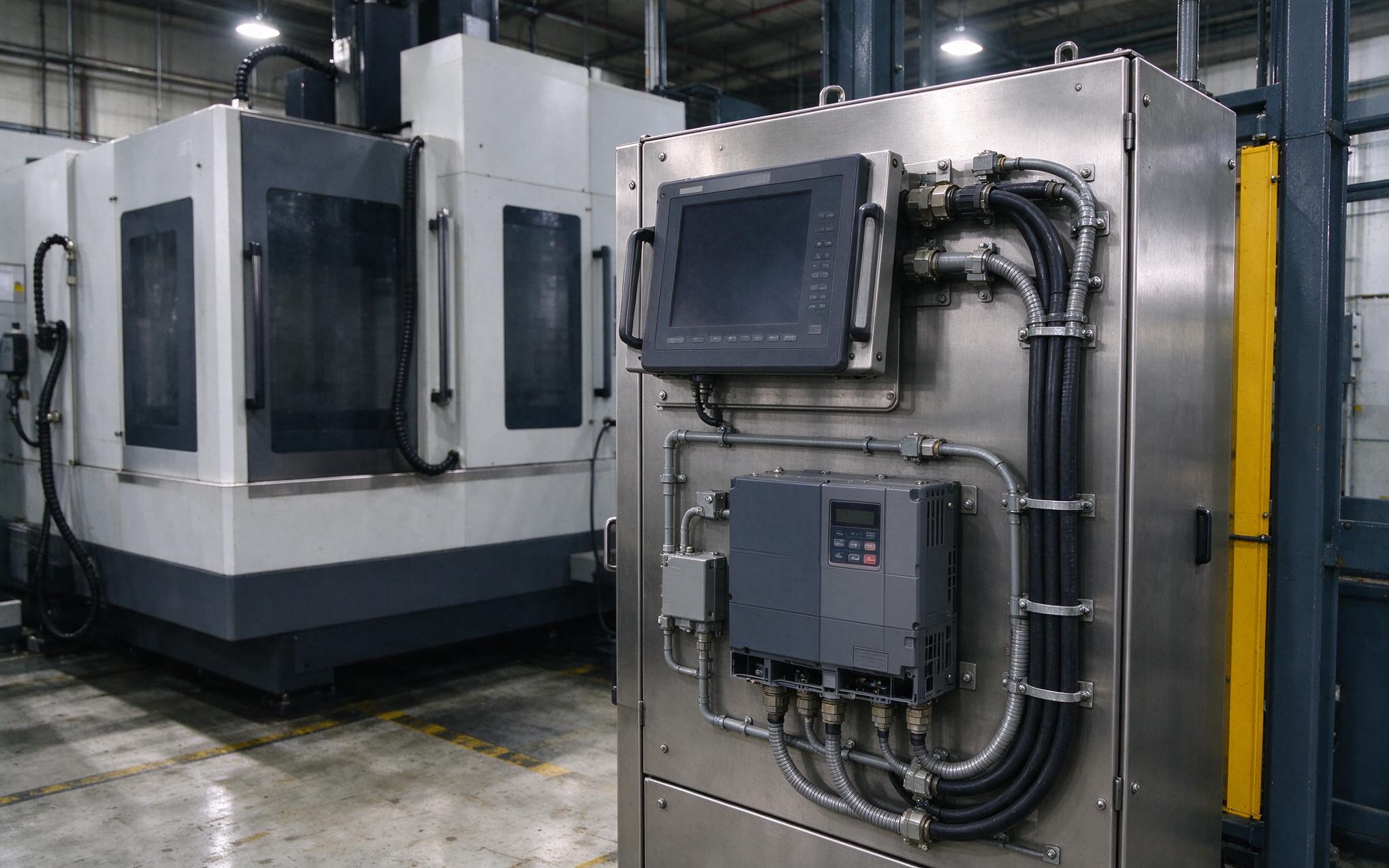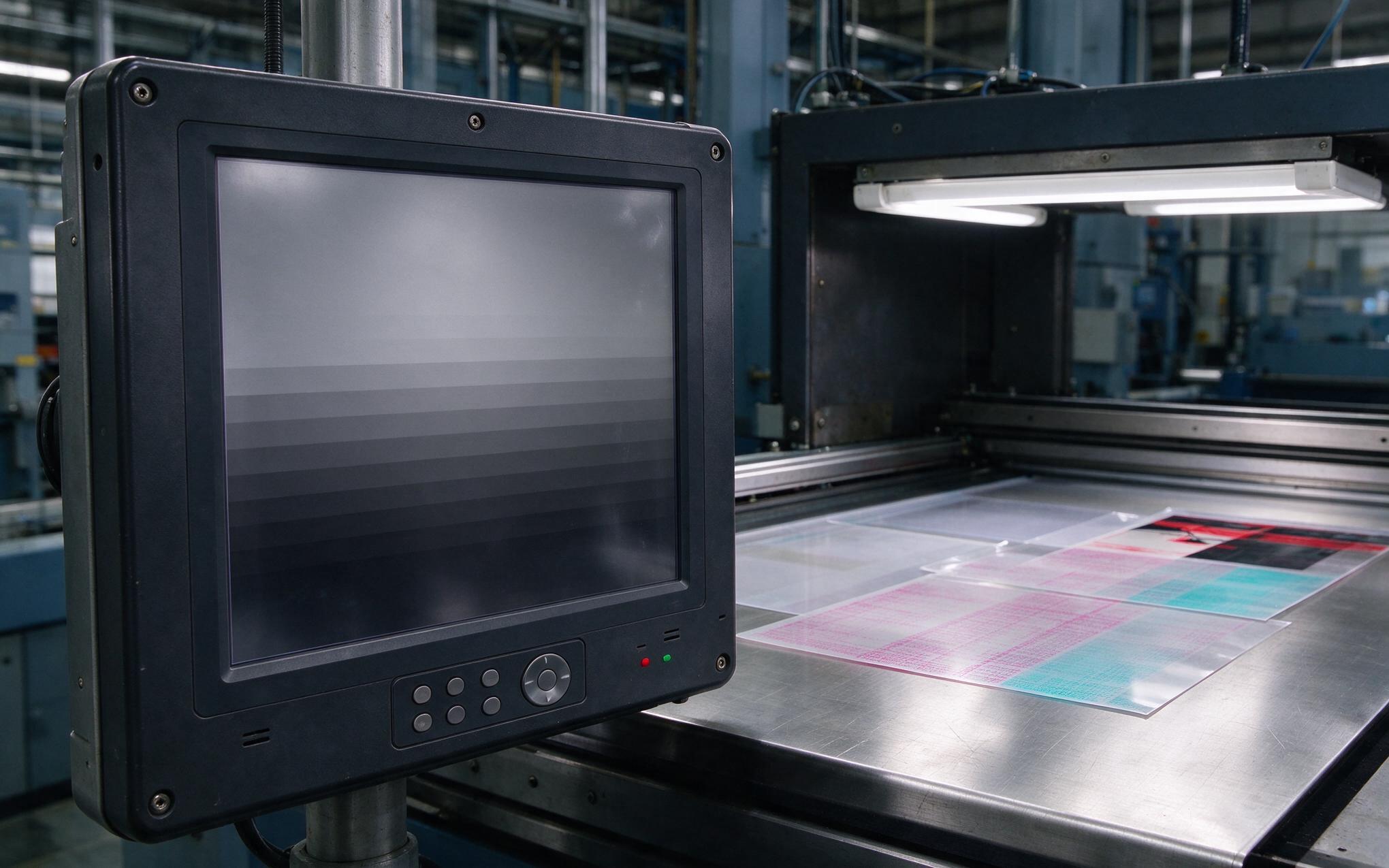
When a forklift operator drags a steel pallet across a warehouse loading dock and the corner strikes a wall-mounted control terminal, the damage pattern tells a clear story. Hairline fractures radiate from the point of impact, rendering the touch interface unresponsive within hours. In heavy manufacturing environments, the cover glass is the primary defense layer — and the most common point of mechanical failure. Selecting the right glass type directly determines whether a unit survives five years on a factory floor or fails within eighteen months.

Soda-Lime vs Chemically Strengthened Glass in Industrial Touch Screen Displays
The two dominant cover glass options for industrial touch screen displays are soda-lime glass and chemically strengthened glass. Soda-lime glass is the default in cost-sensitive applications, offering adequate optical clarity and basic scratch resistance for light-duty interfaces. However, its surface hardness falls between 5.5 and 6 on the Mohs scale, meaning airborne silica dust — ubiquitous in cement plants, grain processing facilities, and metal fabrication shops — can abrade the surface over time, degrading touch accuracy and visual clarity.
Chemically strengthened glass undergoes an ion-exchange process in which sodium ions in the glass surface are replaced by larger potassium ions in a molten salt bath at approximately 400°C. This exchange creates a compressive stress layer on the surface, typically 400 to 600 micrometers deep, that resists crack propagation. The result is a surface hardness approaching 7 on the Mohs scale and a fracture strength roughly four to six times that of untreated soda-lime. For industrial touch screen display applications in environments with routine tool contact, chemical splash, or particulate abrasion, chemically strengthened glass eliminates the most frequent mechanical failure mode.

IK Rating Correlation and Surface Hardness in Cover Glass Selection
The IEC 62262 standard defines IK ratings from IK00 to IK10, quantifying the energy an enclosure or cover can absorb from a mechanical impact. While IK ratings are formally assigned to complete assemblies rather than individual glass panels, the cover glass material is the dominant variable in determining the achievable rating. Soda-lime glass panels in standard industrial touch screen display enclosures typically achieve IK05 to IK07, corresponding to impact energies of 0.35 to 2 joules. Chemically strengthened glass, with its higher fracture threshold, consistently reaches IK08 or above — absorbing up to 5 joules of impact energy without surface breach.
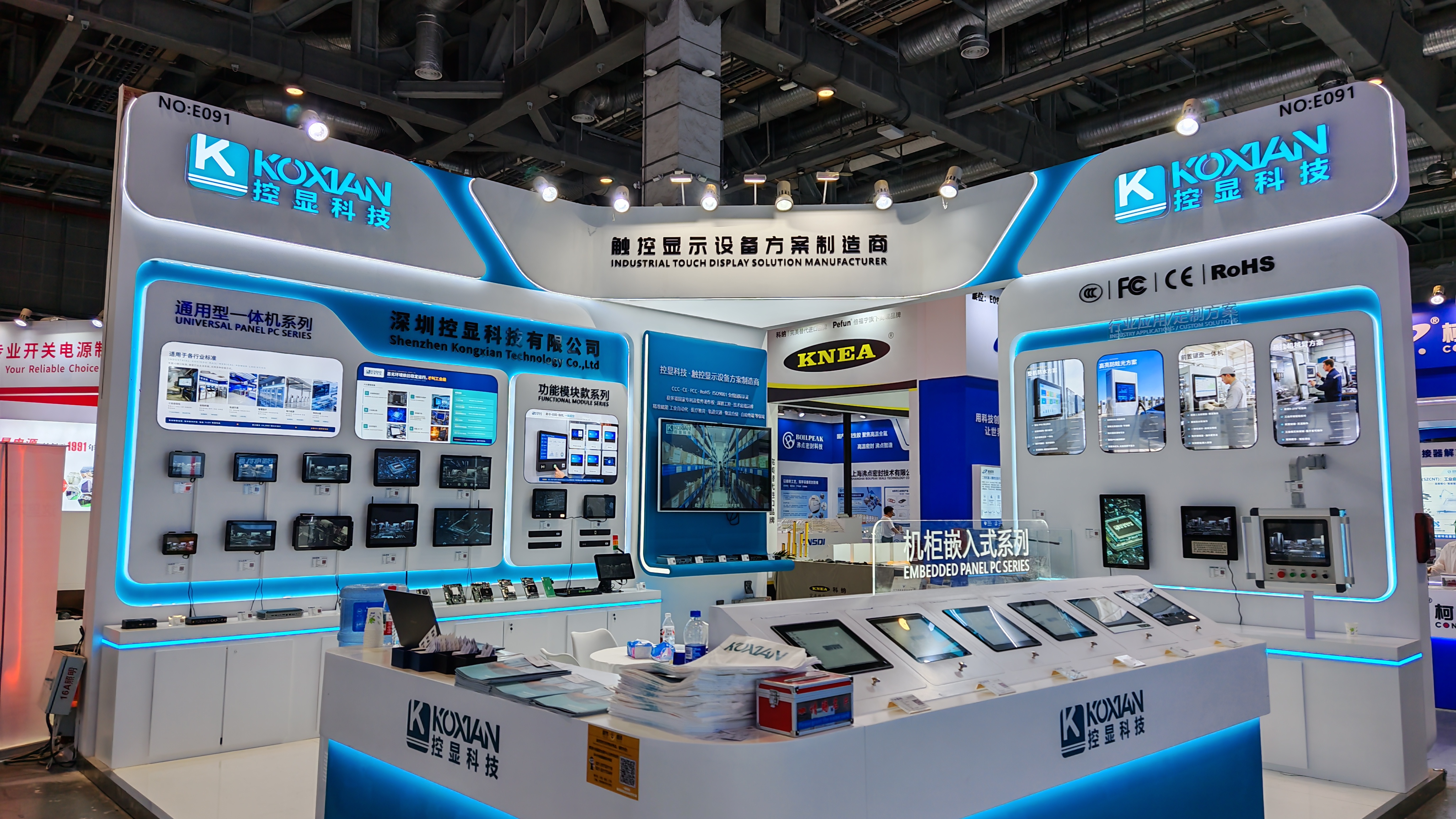
Engineers selecting industrial touch screen display glass should also consider the edge condition of the cover panel. Sharp-cut edges concentrate stress and reduce the effective impact resistance of even chemically strengthened glass by 30 to 40 percent. Manufacturers such as KOXIAN incorporate edge-polishing and beveling processes into their touch screen display assemblies, ensuring that the compressive stress layer extends consistently to the panel perimeter. This edge treatment, combined with gasket mounting that distributes impact forces across the frame, differentiates a display rated for a control room from one built for a stamping press.

Optical Trade-Offs and Anti-Reflective Coating Integration
Chemically strengthened glass does introduce an optical consideration. The ion-exchange process slightly increases surface haze — typically from less than 0.5 percent in soda-lime to 0.8 to 1.2 percent in strengthened variants. In standard indoor lighting, this difference is imperceptible. In direct sunlight or high-ambient-light environments exceeding 10,000 lux, however, the additional haze compounds with external reflections to reduce perceived contrast. The standard mitigation is an anti-reflective coating on the outer surface, reducing external reflectance from roughly 4 percent to below 1 percent. When paired with optical bonding — filling the air gap between the LCD panel and the cover glass — a chemically strengthened and AR-coated assembly can achieve sunlight readability at 800 to 1,000 nits, whereas an equivalent soda-lime assembly would require 1,500 nits or more to reach the same perceived contrast.
For deployments where both mechanical durability and outdoor readability are non-negotiable — such as oil and gas wellhead monitoring, port logistics terminals, or agricultural equipment cabs — the combination of chemically strengthened glass, AR coating, and optical bonding represents the prevailing engineering standard practice. Panel PC manufacturers such as KOXIAN have adopted this triple-layer approach across their outdoor-rated display product lines, reflecting the industry consensus that cover glass selection drives field reliability more than any other single component. The incremental material cost typically adds 15 to 25 percent to the cover glass component, but eliminates the two most frequent field failure modes: surface abrasion and internal condensation.
Choosing the right cover glass is not a specification checkbox — it is an engineering decision that directly impacts total cost of ownership, operator safety, and system uptime across the deployment lifecycle.