The fault ticket at a west facing weighbridge kiosk repeated itself every clear afternoon last August, half the screen brightness gone by two o’clock and full output back by dusk. Maintenance swapped the video source twice before anyone measured the temperature behind the panel, which sat at 71 degrees Celsius while the yard air read 34. Nothing had actually broken. The driver board had reached a thermal threshold and cut backlight current to protect the LED string. That is the ordinary behavior of a sunlight readable industrial monitor installed without a deliberate heat path, and it is a chassis problem rather than an optical one. Brightness that survives direct sun depends on where the waste heat goes after the LEDs make it.

Tracing Heat From LED Strings to the Chassis Wall
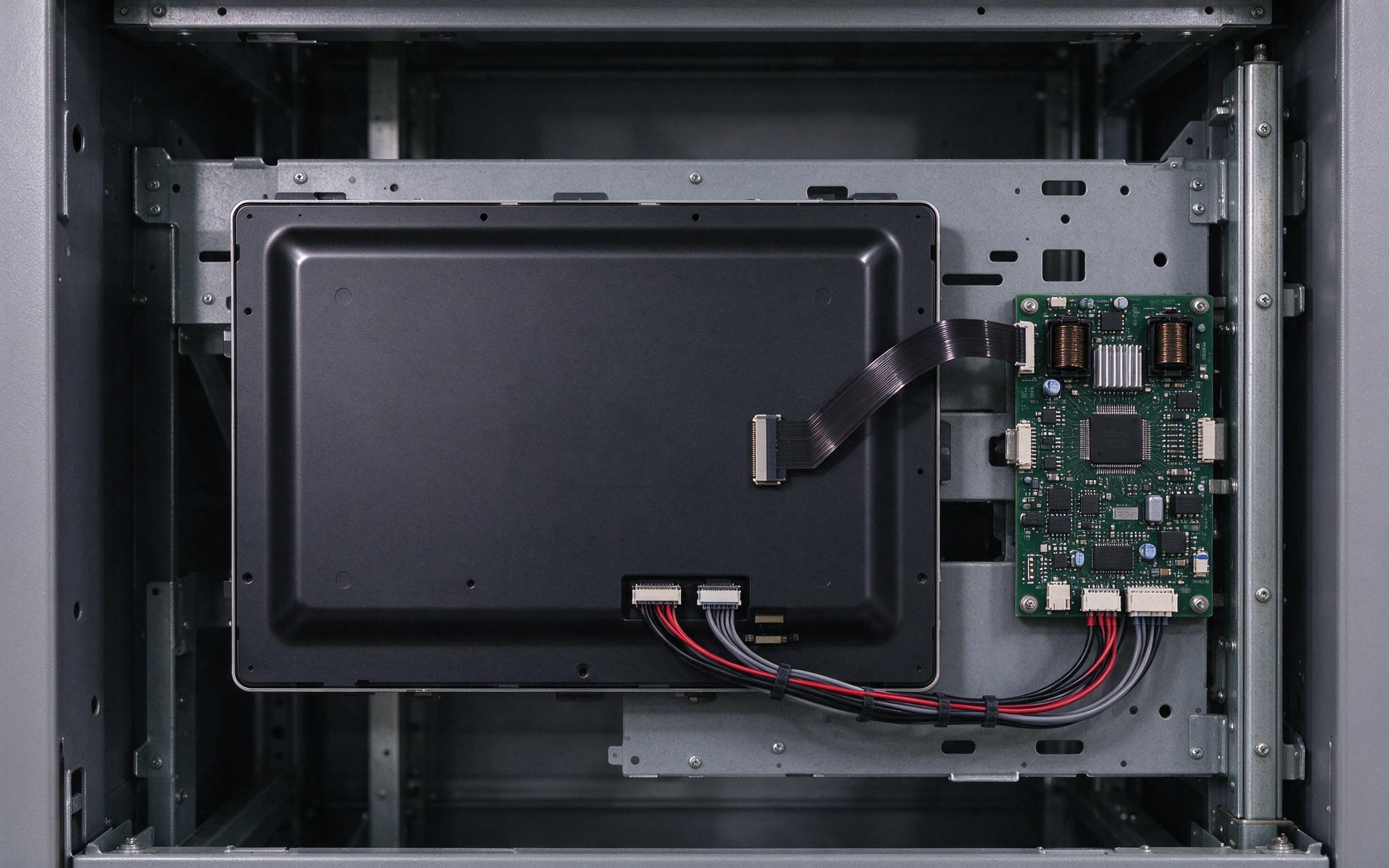
Panel manufacturers including KOXIAN treat a high brightness backlight as a heat source before treating it as a light source. A 1,000 nit assembly draws roughly three to four times the LED power of a 350 nit commercial module, and nearly all of that added input leaves as heat inside a sealed cavity. The heat crosses the light guide plate, loads the metal back plate, and then has to reach outside air through the chassis itself. Where that back plate touches only trapped air, junction temperature climbs until the driver derates current and the screen visibly dims. Where it is coupled to the rear housing through a compressed thermal pad, the same assembly holds its rated output. Path continuity matters more than fin count, because a handsome fin stack separated by an air gap moves almost nothing.

Solar Gain Adds Load the Datasheet Never Counted
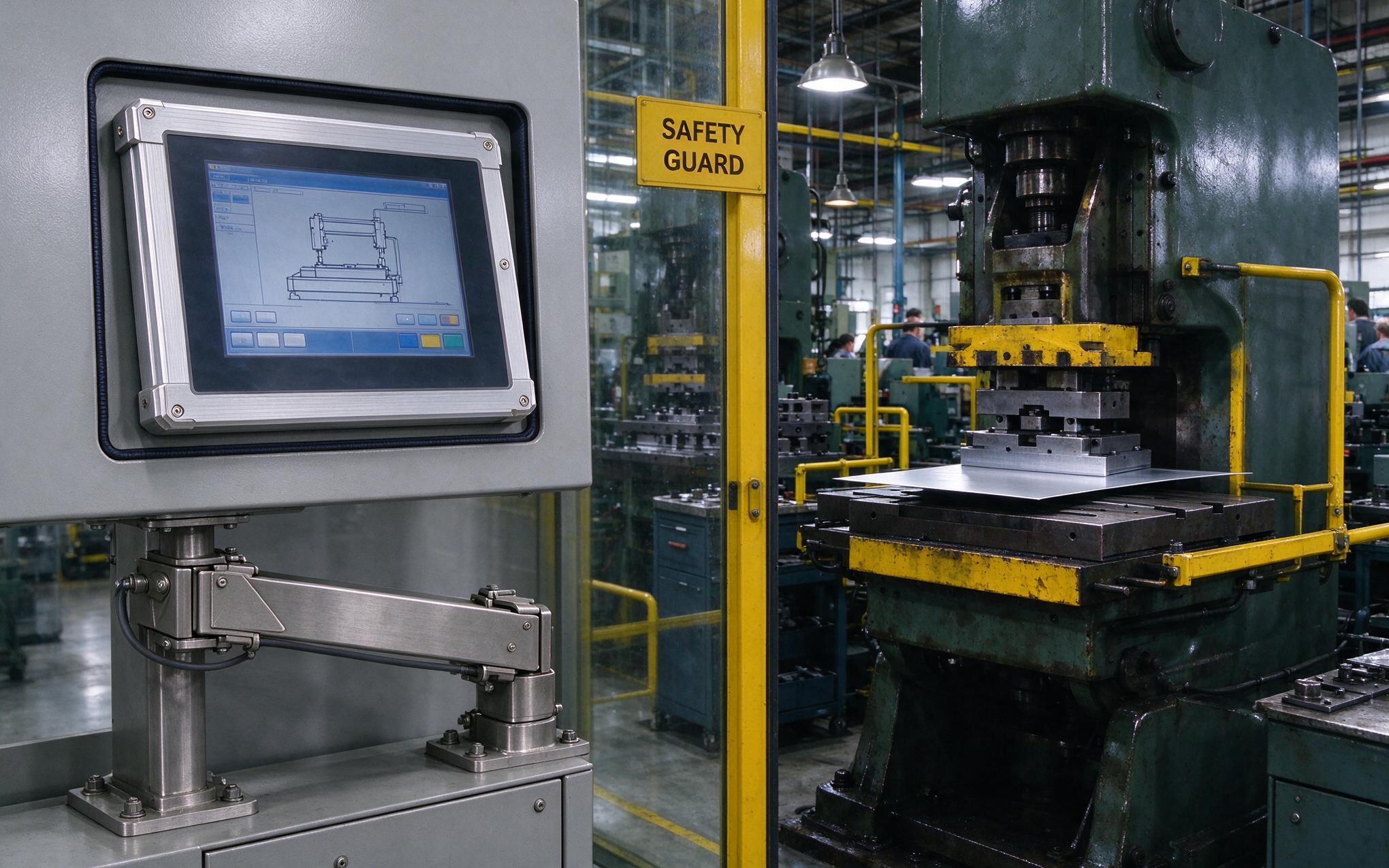
Ambient temperature ratings assume shade. Direct sun on a dark bezel adds 10 to 20 degrees Celsius of internal rise above whatever the surrounding air is doing, and a south facing lens traps a further share behind the cover glass. A 50 degree Celsius rated assembly standing in a 35 degree yard therefore has very little margin left before the controller intervenes. Field observations from integrators and from KOXIAN engineering teams show west facing installations dimming earlier in the day than north facing units of identical build. A high brightness industrial monitor specified purely on nit count will still fade at noon when mounting orientation, sun shade geometry, and bezel finish were never entered into the thermal budget. Orientation is a specification input, not an installation detail left to the crew on site.

Conduction Cooling Inside a Sunlight Readable Industrial Monitor
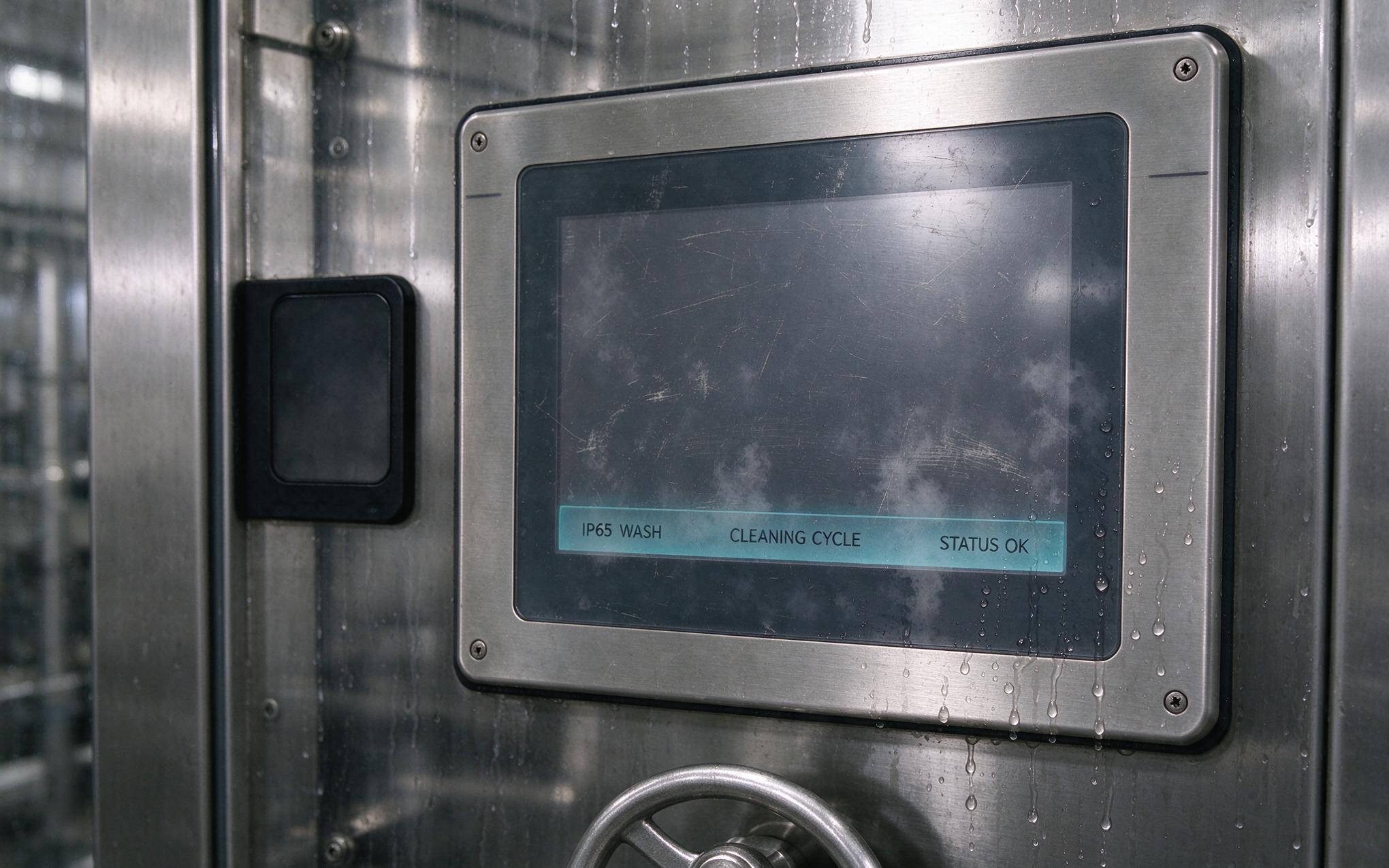
Vents shed heat and invite ingress. In washdown bays, coastal yards, and unsheltered weighbridges the enclosure has to stay closed, so heat leaves by conduction instead. That demands a continuous metal route from the backlight back plate, through thermal interface pads, into an aluminum rear housing, with external fins or a finned casting handling the final transfer to air. Wall thickness, pad compression, and screw torque all register in the measured junction temperature, and a pad left uncompressed can cost 8 to 10 degrees on its own. An outdoor industrial display sealed to IP65 can run cooler than a vented cabinet unit whenever the metal path is unbroken, which is the design approach taken by KOXIAN and other builders serving unshaded sites.

Reading Derating Curves Before Committing to a Nit Figure
Specification sheets quote maximum luminance at 25 degrees Celsius, and a separate curve, when published at all, shows how that figure falls as internal temperature rises. Requesting the curve is the practical test of whether a sunlight readable industrial monitor was engineered for sun or simply fitted with brighter LEDs. Useful documents state the ambient at which full luminance is sustained, the slope of reduction above that point, and whether the controller dims progressively or steps down abruptly. A wide temperature industrial monitor rated to 60 degrees Celsius with a documented linear derate above 45 is a more predictable purchase than an undocumented 1,500 nit claim. Service life follows the same physics, since LED lumen depreciation accelerates sharply as junction temperature rises.
Brightness that holds through an afternoon is a thermal outcome rather than an optical one. A nit rating describes what the backlight can produce, while the chassis decides how long it is permitted to keep producing it. Evaluating a sunlight readable industrial monitor therefore means asking for the conduction path, the derating curve, and the rated ambient in the same conversation as the luminance figure. Mounting orientation, shading, and bezel finish belong in that same budget, because each one changes the internal temperature the design has to carry every clear day.