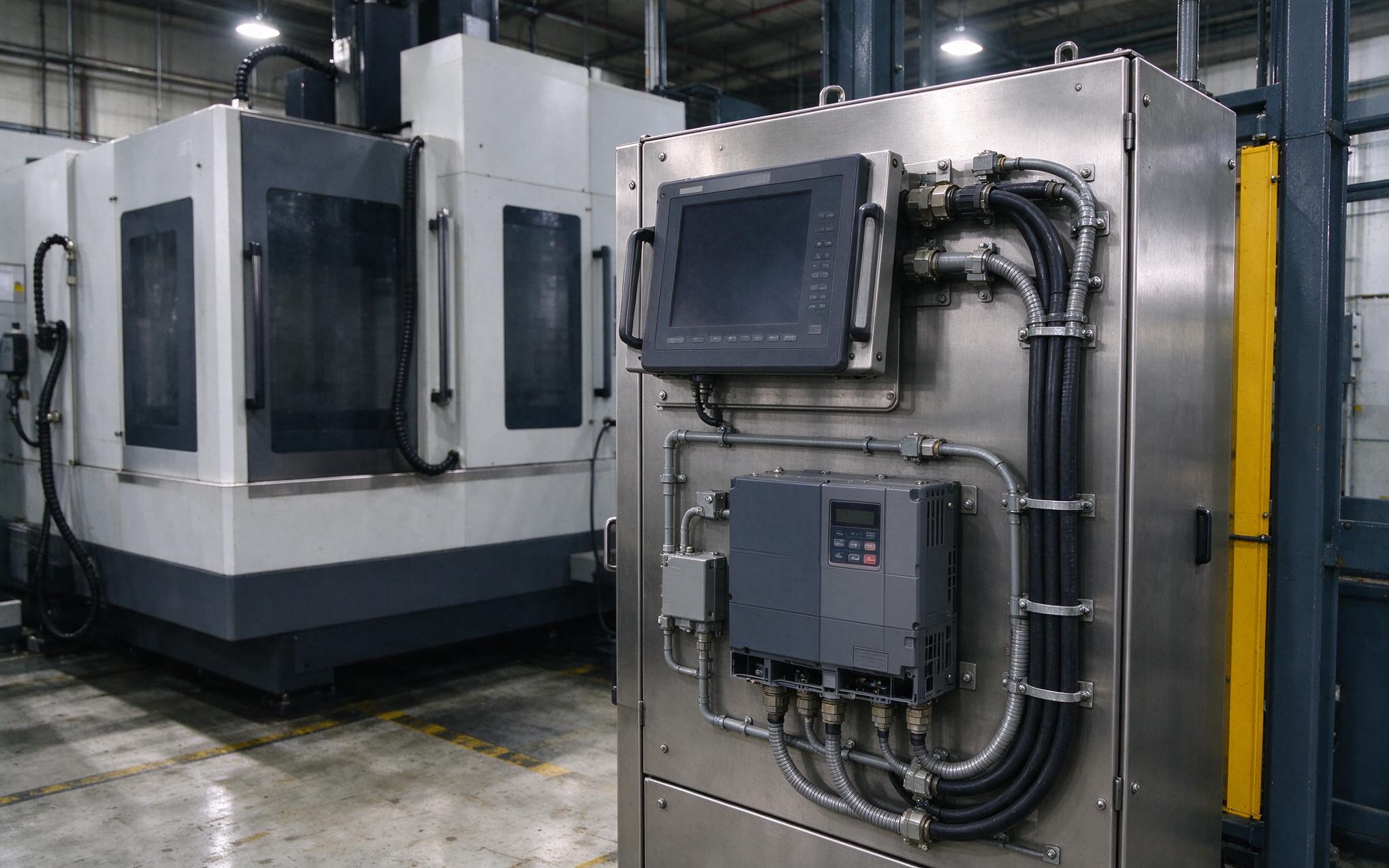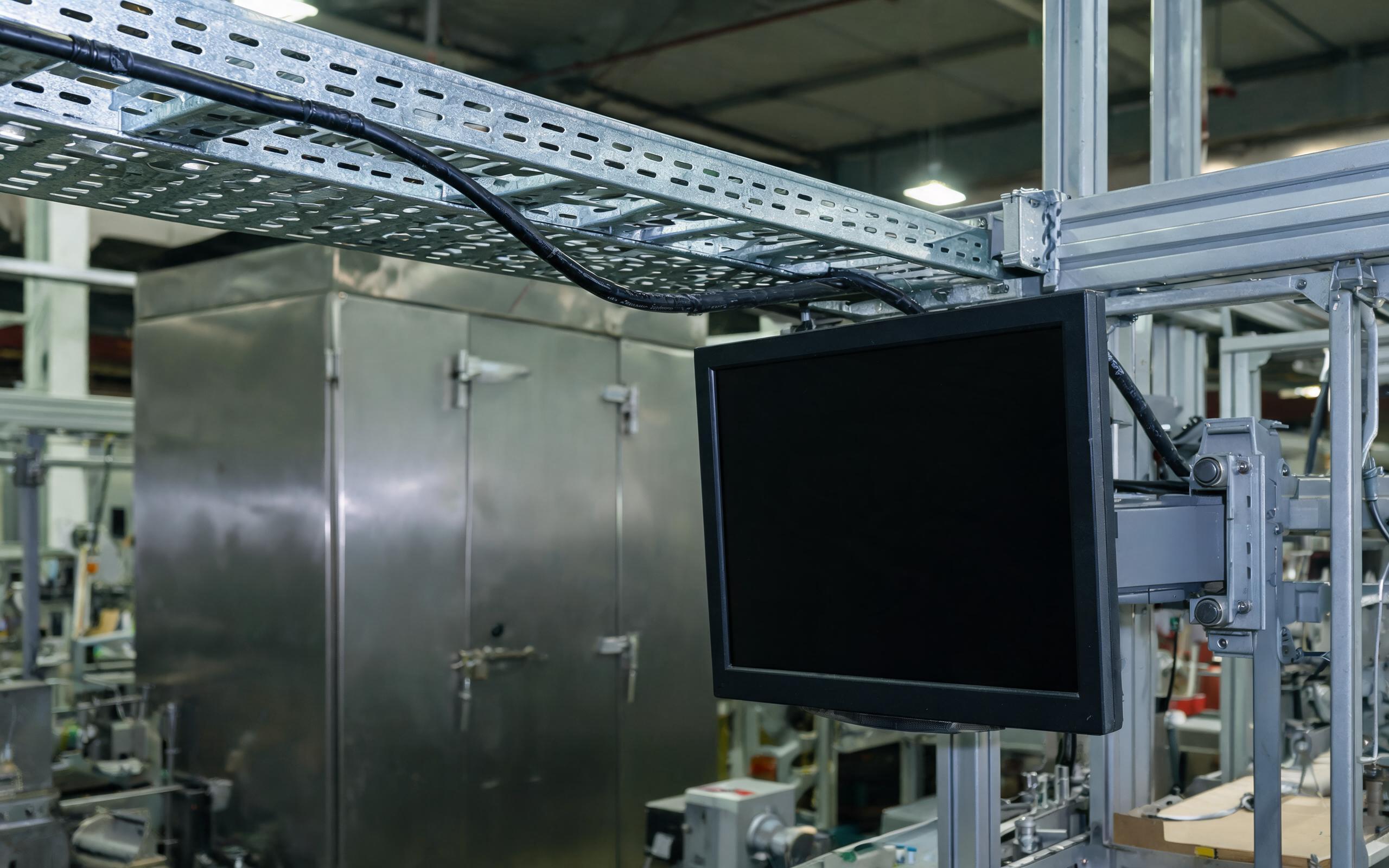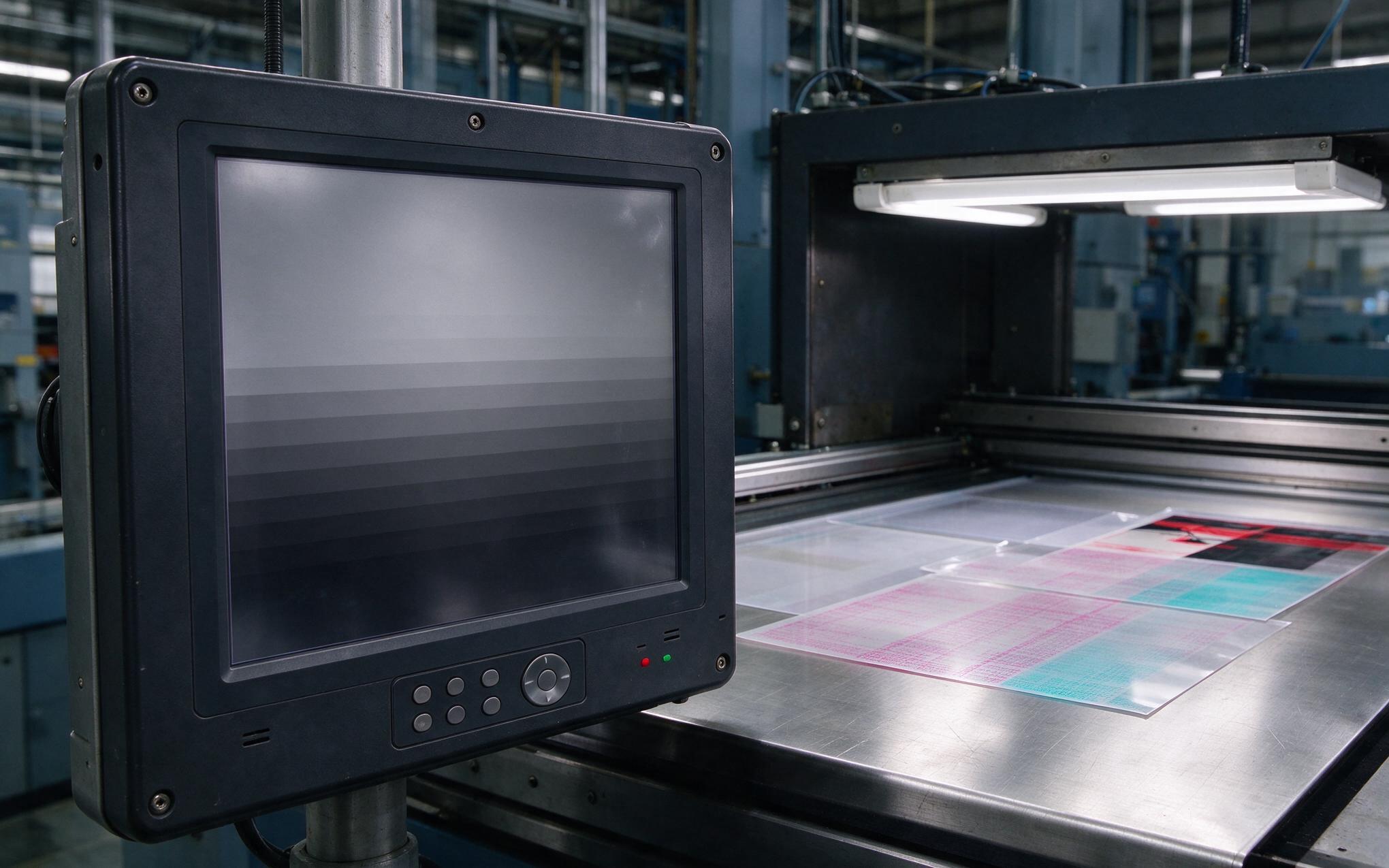
A carton traveling 60 meters per minute crosses roughly 16 millimeters of viewing area during a single 16 millisecond frame, while the same carton on a halted line stays inside one pixel. That gap explains why operators watching an industrial display screen above a moving inspection lane report smeared edges and unreadable lot codes on panels rated at 5 millisecond response. Response time describes how quickly liquid crystal molecules twist between gray levels. It says nothing about how long each finished frame stays lit in front of the eye, and that hold interval dominates perceived blur on moving content. Specifying a quicker panel fixes little when the governing variable is backlight duty behavior.

Within Industrial Display Screen Frame Hold Timing
Eye tracking, not pixel speed, creates most of the smear. When an operator follows a bottle across the glass, the eye moves smoothly while the panel holds one static frame for the full refresh interval, so the image slides across the retina and integrates into a streak. At 60 hertz that hold lasts 16.7 milliseconds, which produces a blur width near 16 pixels for content crossing the screen in one second. Panel builders working on inspection stations, KOXIAN among them, size refresh and backlight behavior against belt speed rather than quoting gray to gray figures alone. Doubling refresh halves the hold interval and halves the streak, which is why a high refresh industrial monitor reads cleaner on the same conveyor without any change in liquid crystal chemistry. Belt speed therefore belongs in the specification for any industrial display screen placed over moving product.

Behind Response Time Numbers and Overdrive Behavior
Published display response time figures come from a narrow measurement window that rarely matches shop conditions. Most gray to gray numbers are captured between mid tones at 25 degrees Celsius, where transitions are quickest, and they omit the slower dark to light shifts common on inspection graphics. Cold starts stretch those transitions further, since crystal viscosity rises sharply below 5 degrees Celsius and a panel quoted at 5 milliseconds can settle near 25 in a chilled packing hall. Overdrive circuits compensate by briefly pushing beyond the target voltage, which sharpens edges but introduces inverse ghosting artifacts that appear as bright trails behind dark objects. Vendors serving vision integrators, including KOXIAN, publish response behavior across the rated thermal band rather than a single ambient figure. Reading a single figure off a datasheet tells an integrator little about how an industrial display screen behaves at the coldest point of its duty cycle.

Across Backlight Strobing and Sample Hold Tradeoffs
Two mitigation routes exist, and they trade different things away. Sample and hold operation keeps the backlight continuously lit, delivering full brightness and no flicker while accepting the retinal smear described earlier. Backlight strobing instead blanks the light source between frames, shortening the effective hold to a few milliseconds and cutting apparent blur by a factor of three or more. The cost is luminance, since a 25 percent duty cycle discards roughly three quarters of the available output, which matters on a bright industrial display screen specified for a sunlit loading area. Strobing below 85 hertz also introduces visible flicker that contributes to operator fatigue across a long shift. Raising native refresh avoids both penalties but demands matching source bandwidth end to end.

Under Acceptance Testing at Real Line Speed
Acceptance testing on a stationary pattern misses the whole failure mode. Practical evaluation runs the actual line at production speed with a printed test target on the belt, then asks whether an operator can read the smallest required character at the normal standing distance. Documentation practices seen across KOXIAN inspection deployments record belt speed, refresh rate and backlight mode together in the acceptance package, so later substitutions stay comparable. A pursuit camera moving with the target quantifies blur width in pixels for sites needing numbers instead of judgment. Recording the source chain matters equally, because a converter locked to 60 hertz cancels the benefit of a 120 hertz panel. Sites that verify each industrial display screen at speed avoid replacing panels that were never the actual constraint.
Blur on a moving lane is a timing problem shared between the panel, the backlight and the video source, not a defect in liquid crystal speed. An industrial display screen chosen only on a gray to gray figure will still smear lot codes if each frame is held for the full refresh interval. Matching refresh and backlight duty to belt speed, then confirming readability with the line running, settles the question before the equipment reaches a production floor.