Walk onto any outdoor loading dock at noon and try reading a standard industrial monitor. The screen becomes a mirror reflecting the sky, the operator squints, and scanning errors multiply. The culprit is the battle between ambient light and the screen’s luminance output. Outdoors on a clear day, ambient light reaches 10,000 lux or more. Direct sunlight pushes past 100,000 lux. A typical indoor industrial display rated at 300 to 400 nits simply cannot compete. The screen washes out, and critical information becomes invisible.
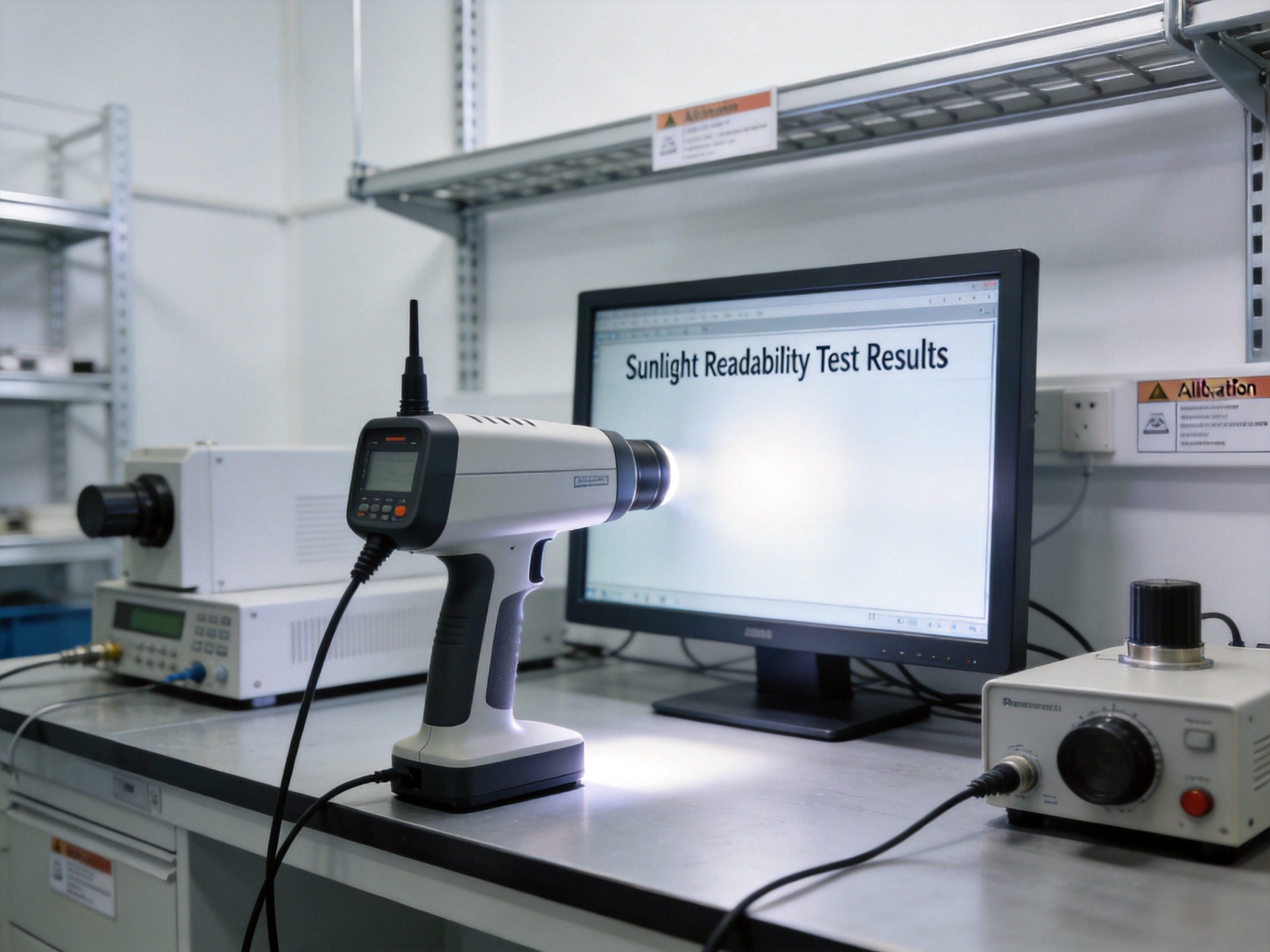
Understanding Nits: The Brightness Baseline
A nit is one candela per square meter. For indoor industrial environments, 400 nits is often sufficient. Sunlight-readable displays require a minimum of 1,000 nits. Many purpose-built outdoor units from suppliers like KOXIAN ship at 1,200 to 1,500 nits, with some high-brightness models reaching 2,000 nits. The jump from 400 to 1,500 nits is not linear in perceived brightness. Human vision follows a logarithmic response, so a 1,500-nit display appears roughly two to three times brighter than a 400-nit unit. This matters because engineers ordering brighter backlights alone often find the real-world improvement disappointing.
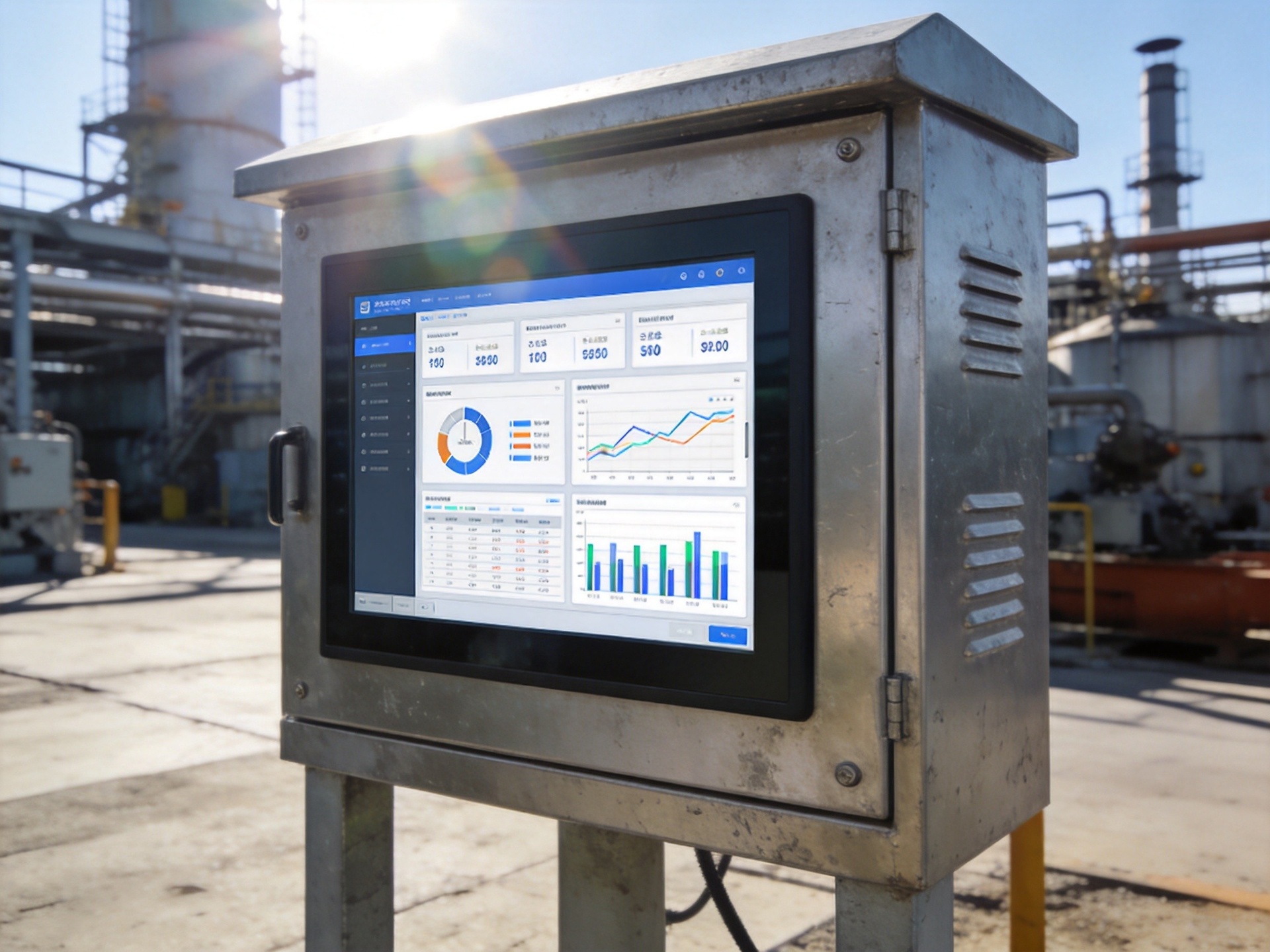
Optical Bonding: Eliminating Internal Reflections
The most underrated factor in sunlight readability is optical bonding. In a standard air-bonded display, an air gap sits between the LCD panel and the outer touchscreen or cover glass. Every time light passes through this gap, about 4% to 8% reflects back at each interface. With multiple layers—polarizer, color filter, glass substrate—the cumulative internal reflection reaches 12% to 15%. This creates a hazy, washed-out appearance even before ambient light hits the outer surface. Optical bonding fills the air gap with an optically clear adhesive, eliminating two reflective surfaces. The result is dramatically reduced internal reflections, improved contrast ratio, and better structural rigidity. KOXIAN industrial panel PCs with optical bonding achieve contrast ratios up to three times higher than non-bonded equivalents under the same ambient conditions.
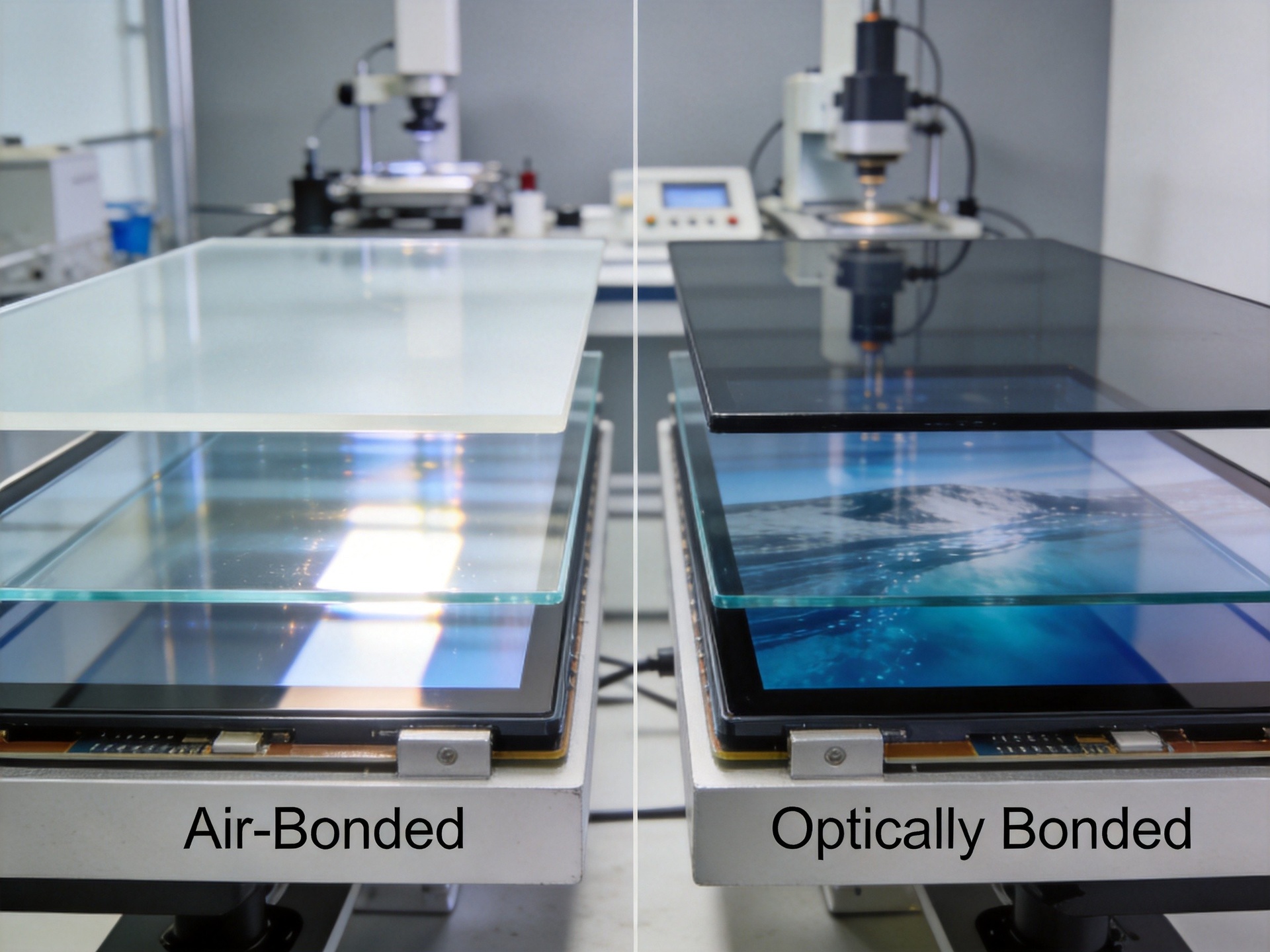
Transflective Technology: Using the Sun as a Backlight
Transflective displays take a fundamentally different approach. Instead of fighting sunlight with more backlight power, they harness it. A transflective LCD contains a partially reflective layer behind the liquid crystal cell. In bright ambient light, the display reflects incoming sunlight back through the LCD, using it as illumination. The stronger the sunlight, the brighter the display appears. In dark conditions, the standard LED backlight takes over. This dual-mode operation makes transflective panels extremely power-efficient outdoors. A 1,200-nit transmissive display may consume 30 to 40 watts outdoors. A transflective panel of the same size delivers comparable readability at 8 to 12 watts. The trade-off is color saturation. Transflective panels typically achieve 50% to 70% of the NTSC color gamut of a full transmissive display, acceptable for most industrial interfaces but unsuitable where precise color rendering matters.
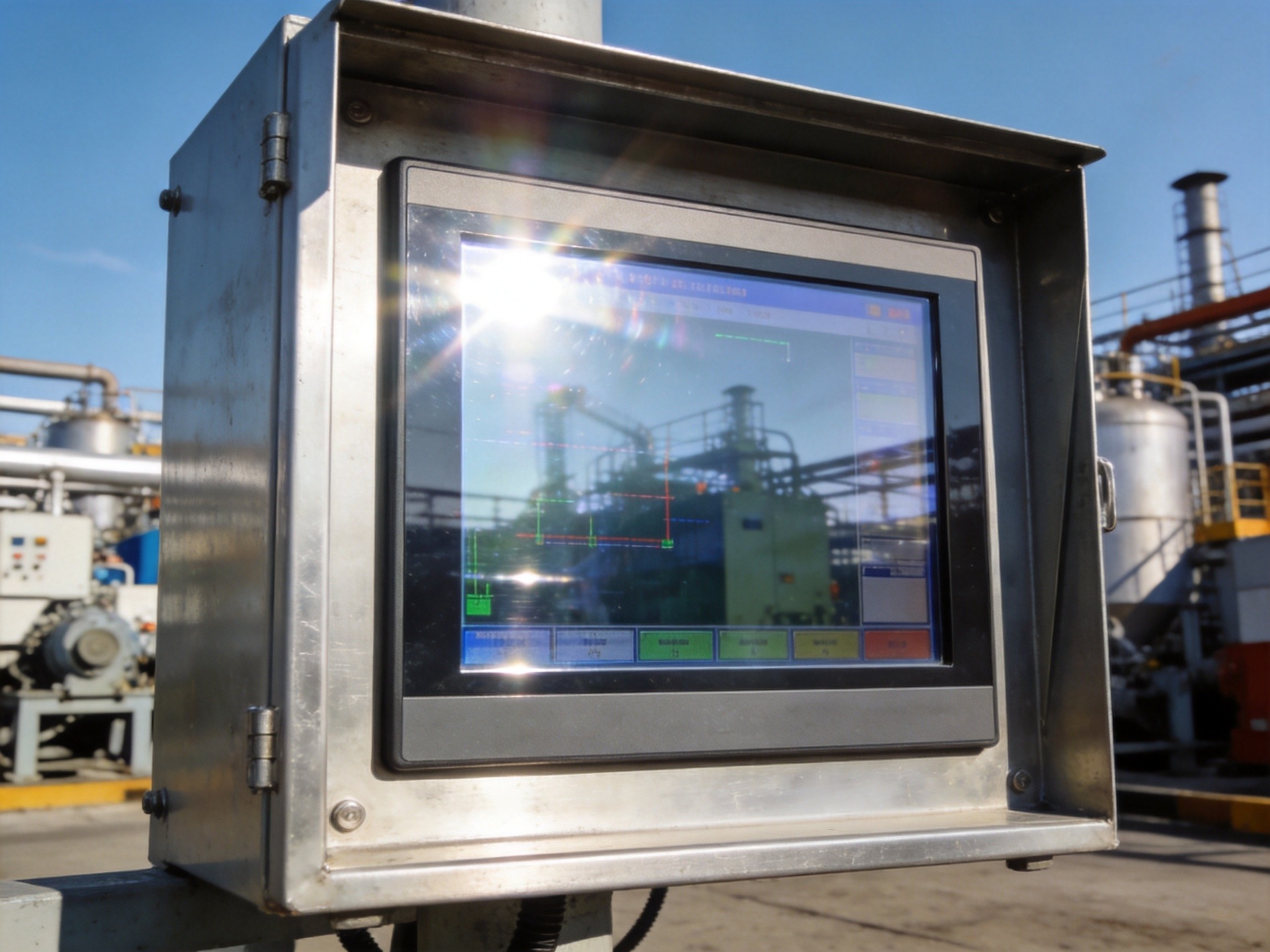
Anti-Reflective and Anti-Glare Surface Treatments
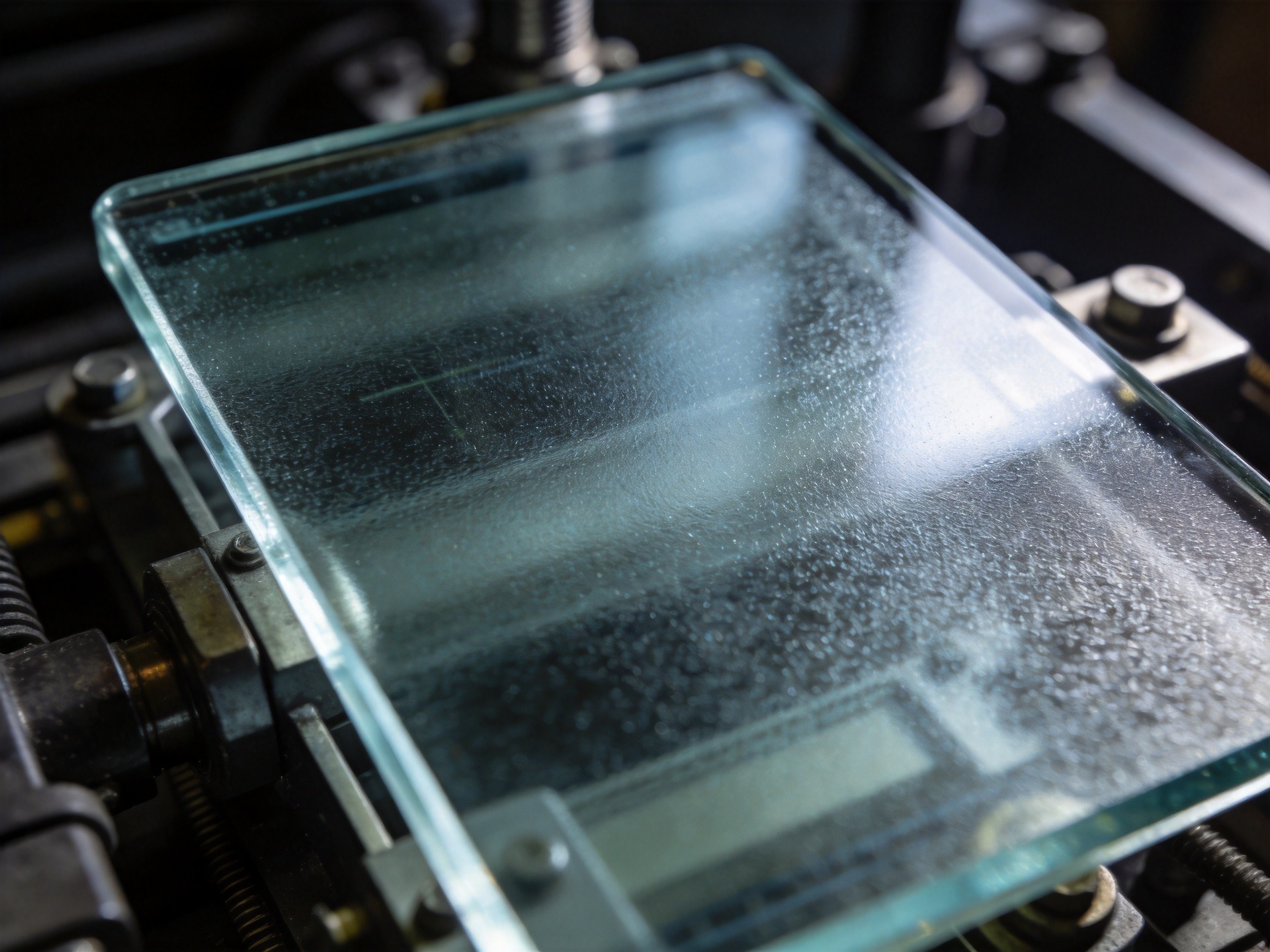
The outermost surface of the display is the first line of defense. Anti-reflective coatings use thin-film interference to cancel specific wavelengths of reflected light. A multi-layer AR coating reduces surface reflectance from 4% to below 0.5%. Anti-glare treatments use a microscopically textured surface to scatter incoming light, diffusing specular reflections into a soft haze. The trade-off is a slight reduction in sharpness. AG-treated surfaces introduce a fine graininess that reduces effective resolution by 5% to 10%. For industrial applications where operators read alphanumeric data and simple graphics, this is negligible. For high-density schematics or detailed process diagrams, a pure AR coating with a smooth surface and optical bonding is the better choice.
Putting It Together: A Sunlight Readability Checklist
Selecting a sunlight-readable display requires engineers to evaluate four parameters simultaneously. Start with the required nit rating based on the worst-case ambient light at the installation site. A loading dock under an awning may only need 800 nits. A desert oil field terminal needs 1,500 nits minimum. Next, specify optical bonding. The cost premium is typically 15% to 25% over air bonding, but the contrast improvement is worth multiples of that in usability. Third, decide between transmissive and transflective. If the device runs on battery or solar power, transflective is the clear winner. If color accuracy matters, stay transmissive and budget for the higher power draw. Finally, choose the surface treatment. AG for general industrial use, AR for precision applications. When these four elements align, operators read the display comfortably in any light condition, reducing errors and eye strain across an entire shift.