A CNC machine shop is not a server room. It is a battlefield of vibration, coolant mist, metal chips, and temperature swings. Standard commercial computers deployed in these environments fail within months. Hard drives crash from constant low-frequency vibration. Motherboards short out when conductive dust bridges solder joints. Touchscreens become unreadable under layers of oil residue. The engineering challenge is not about making a faster computer. It is about making one that survives. This is the domain of industrial panel PCs built for machine shop environments.
Vibration: The Silent Component Killer
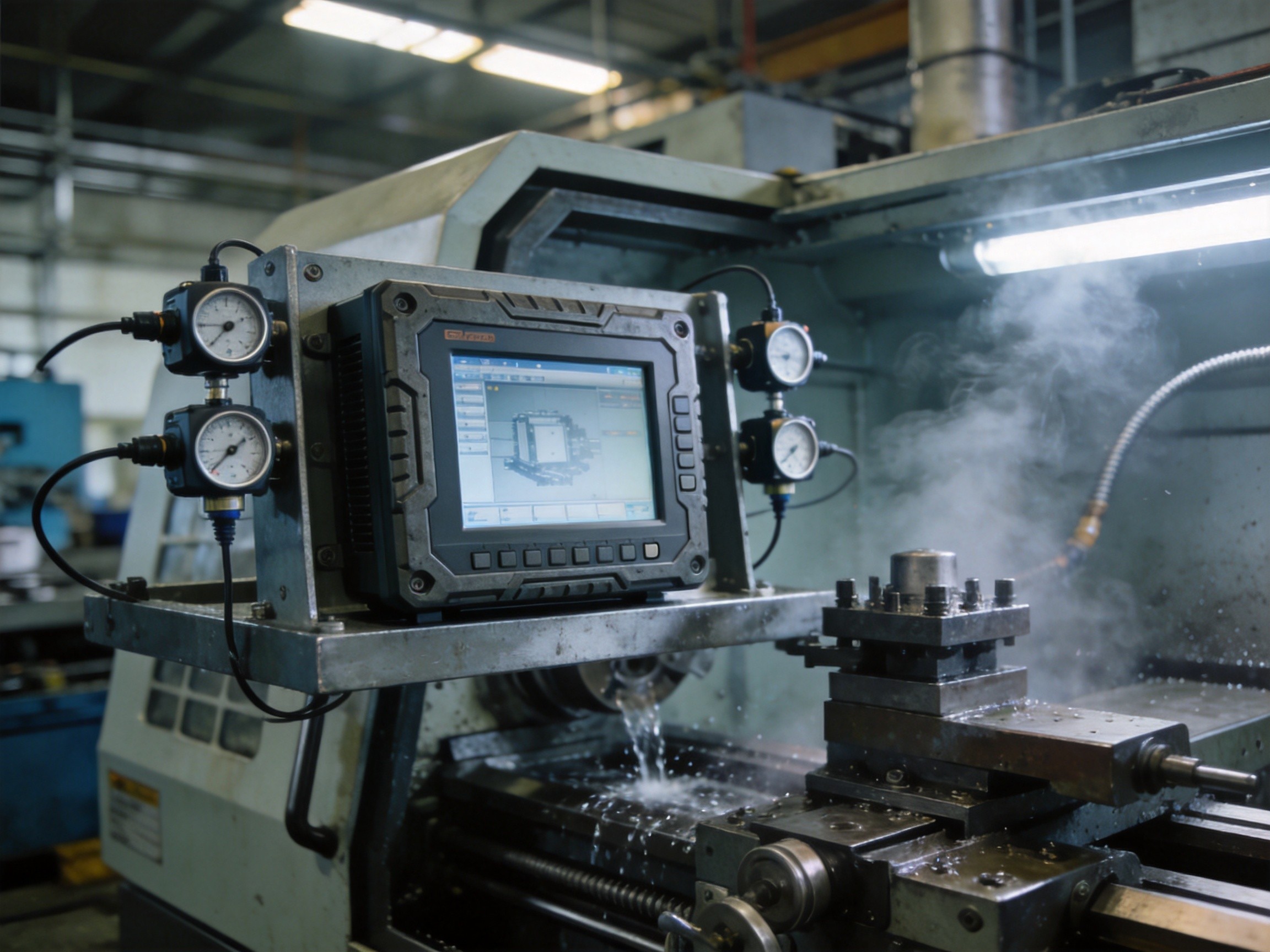
CNC machines generate vibration across a broad frequency spectrum. Low-frequency vibrations from spindle rotation, typically 10 Hz to 200 Hz, travel through the machine frame into nearby electronics. Higher-frequency vibrations from cutting tool engagement, reaching 500 Hz to 5,000 Hz, add shock loads. The primary failure mode is fretting corrosion on connector pins, loosening of internal cables, and gradual degradation of solder joints. Solid-state storage is mandatory. Spinning hard drives fail catastrophically under sustained vibration. KOXIAN industrial panel PCs for CNC environments eliminate all moving parts including fans, using passive thermal management through a finned aluminum chassis that doubles as a heatsink and vibration-damping structure.
Coolant Mist and Particulate Ingress
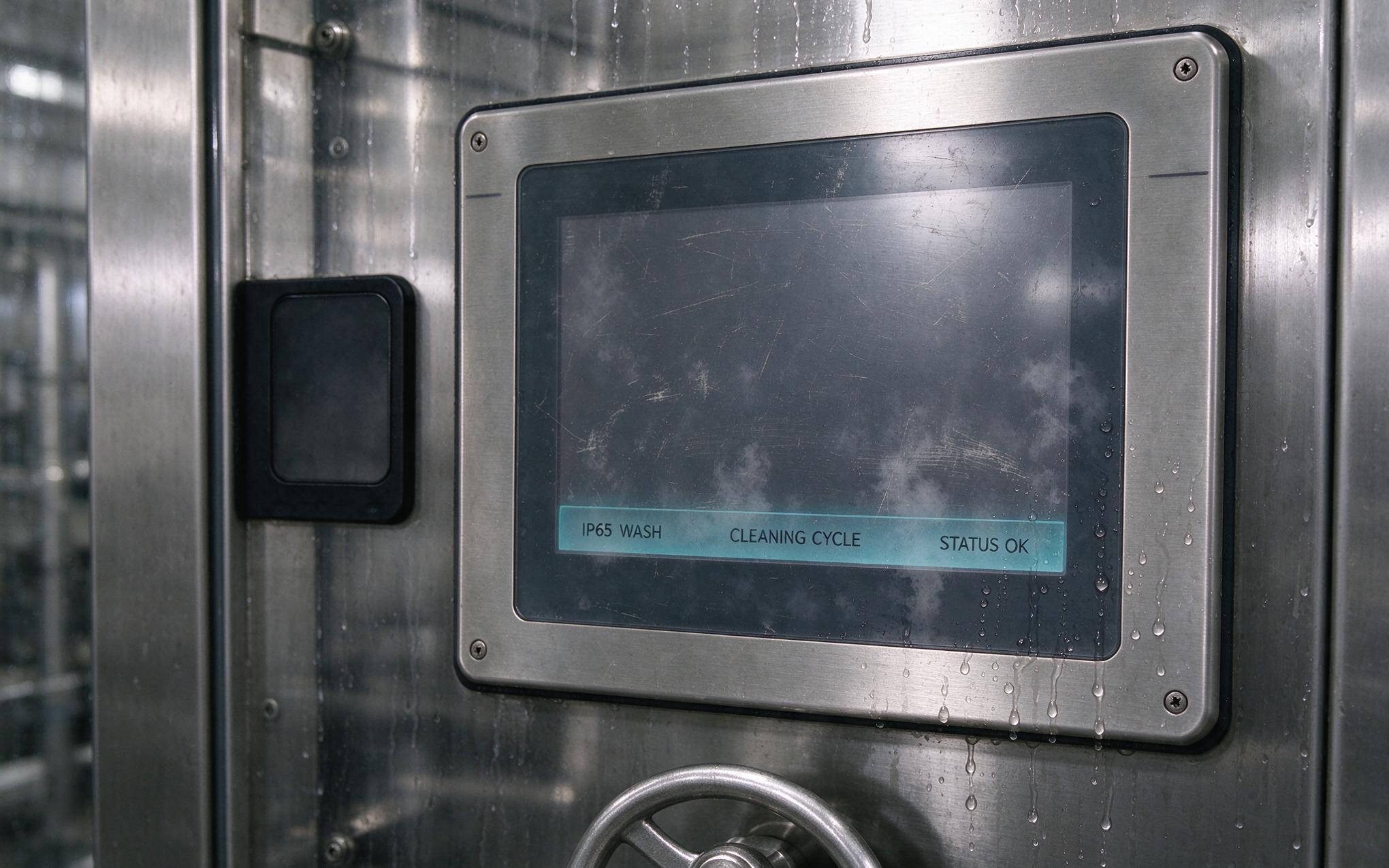
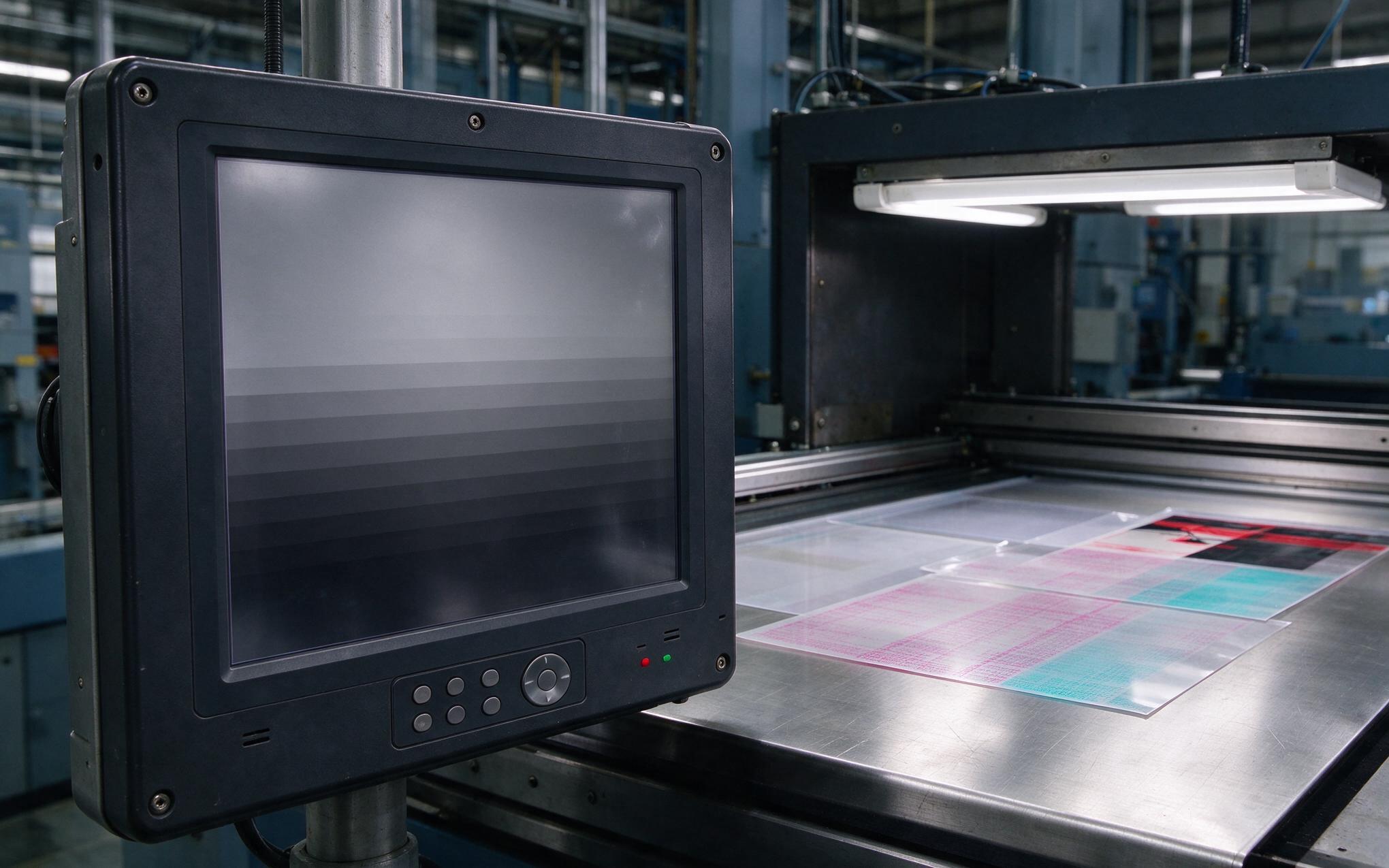
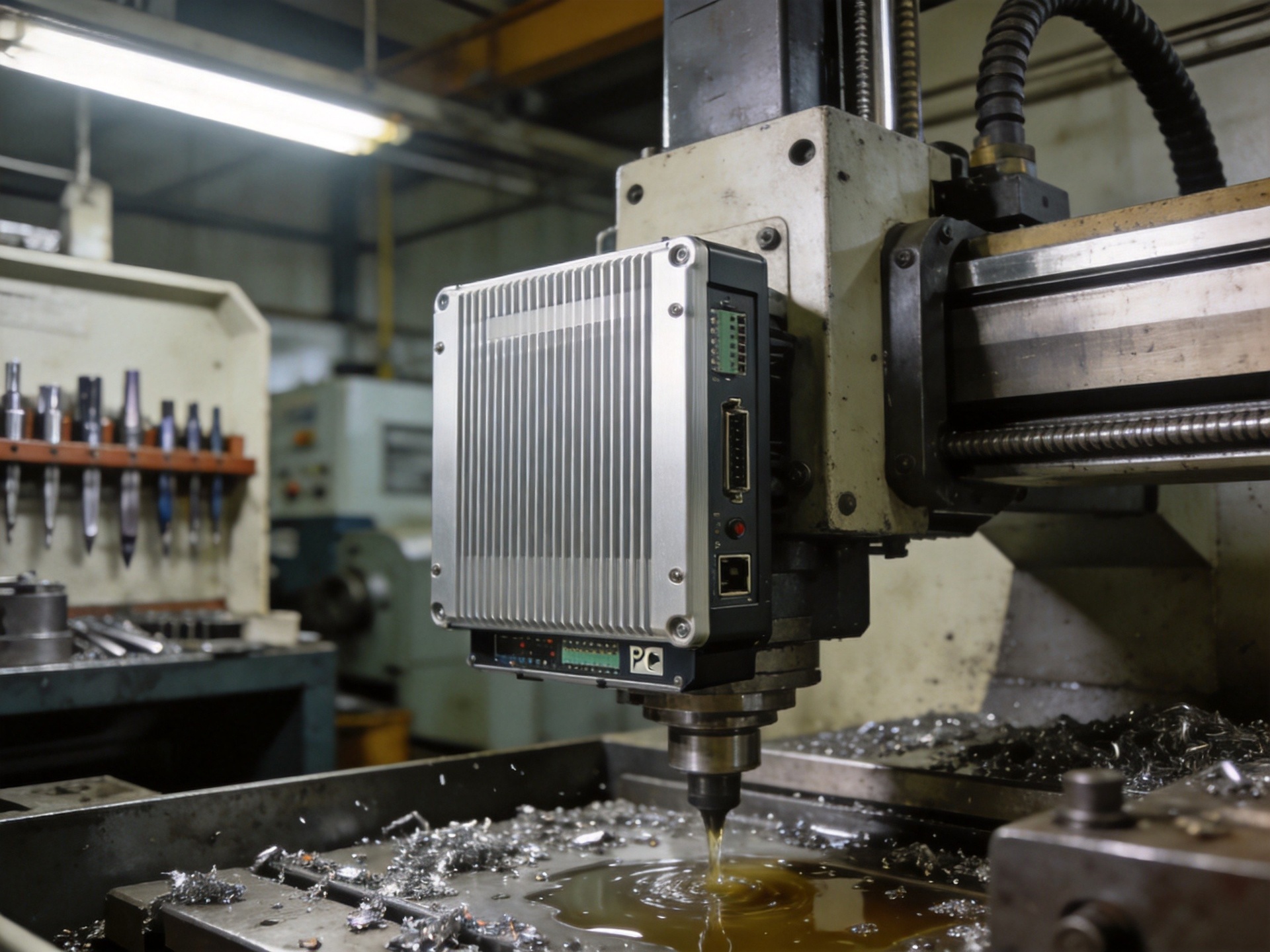
Water-soluble coolants are sprayed continuously during CNC machining. The mist they generate hangs in the air and settles on every surface. Over time, this fine film penetrates any unsealed opening. The coolant is slightly conductive and chemically aggressive, accelerating corrosion on exposed copper traces and connector pins. IP65-rated front panels are the minimum requirement for the display side, but the enclosure as a whole must also be sealed. Gasketed cable entry points, sealed connectors, and a one-piece front bezel with no seams are essential. Resistive touchscreens degrade as coolant permeates the flexible top layer. Projected capacitive touch with chemically strengthened glass offers far better long-term durability. The glass surface resists scratching from metal particulates and wipes clean with industrial solvents.
Thermal Cycling and Condensation
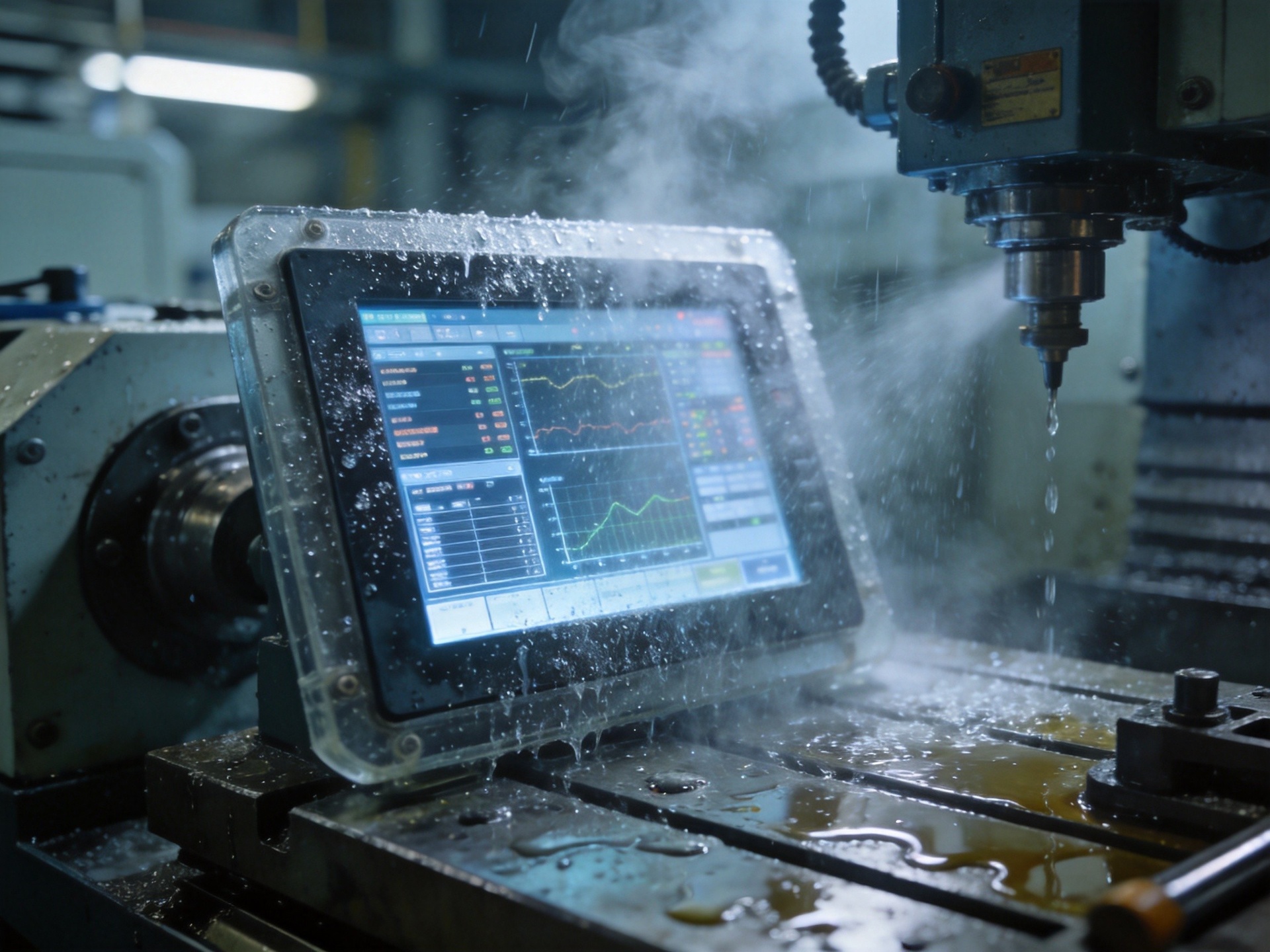
Machine shops are rarely climate-controlled with data center precision. Temperatures swing from near-freezing on a winter morning to above 40 degrees Celsius by mid-afternoon when multiple machines are running. These thermal cycles create condensation inside poorly sealed enclosures. Water droplets form on circuit boards when warm, humid air trapped inside the chassis cools below its dew point. This failure mechanism manifests weeks or months after installation. The solution is twofold: a sealed enclosure rated to IP65 or higher, and a wide operating temperature specification. Industrial-grade components rated for -20 to 60 degrees Celsius eliminate the need for internal heaters or active cooling in most shop environments.
Mounting and Integration in Tight Spaces
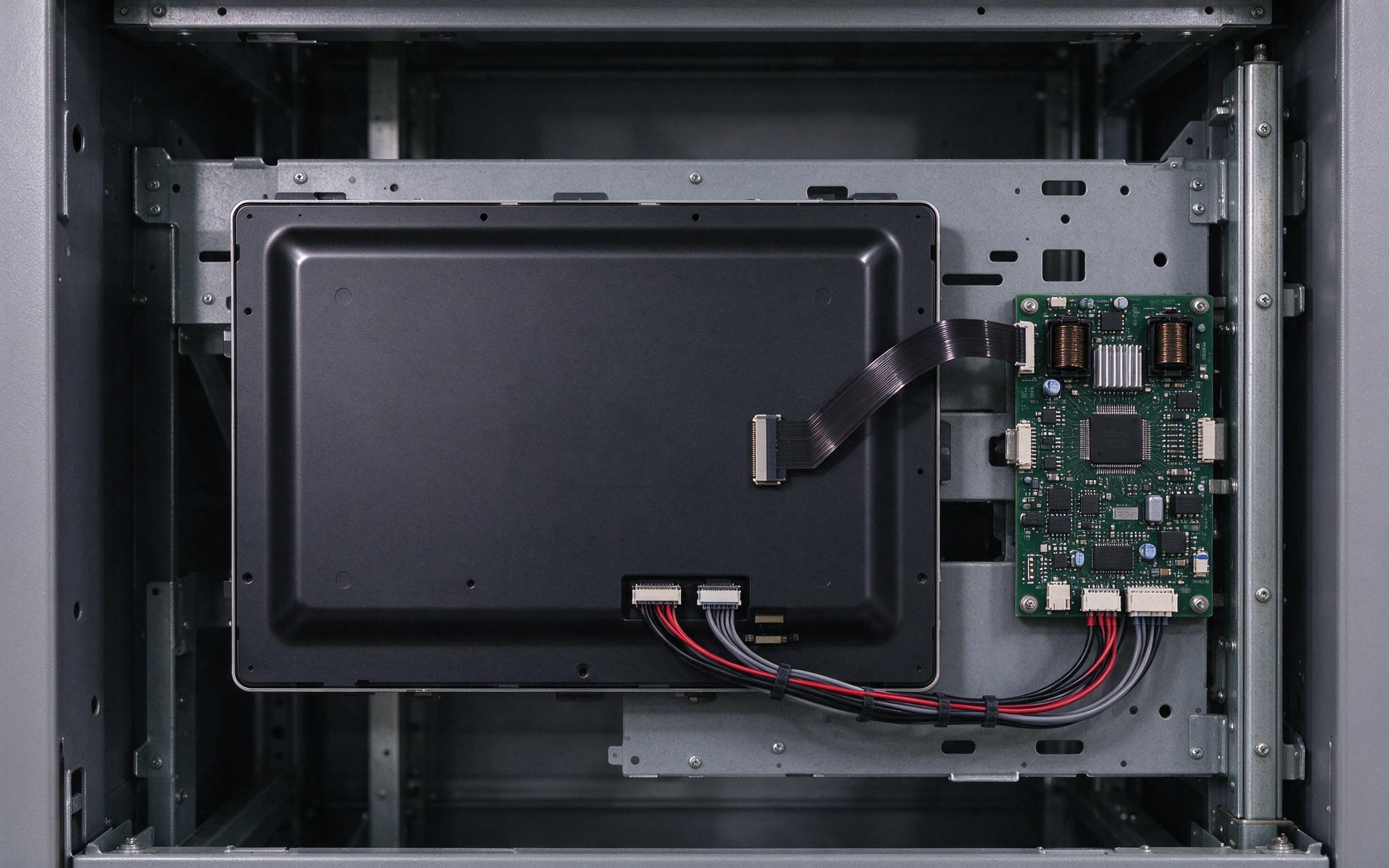
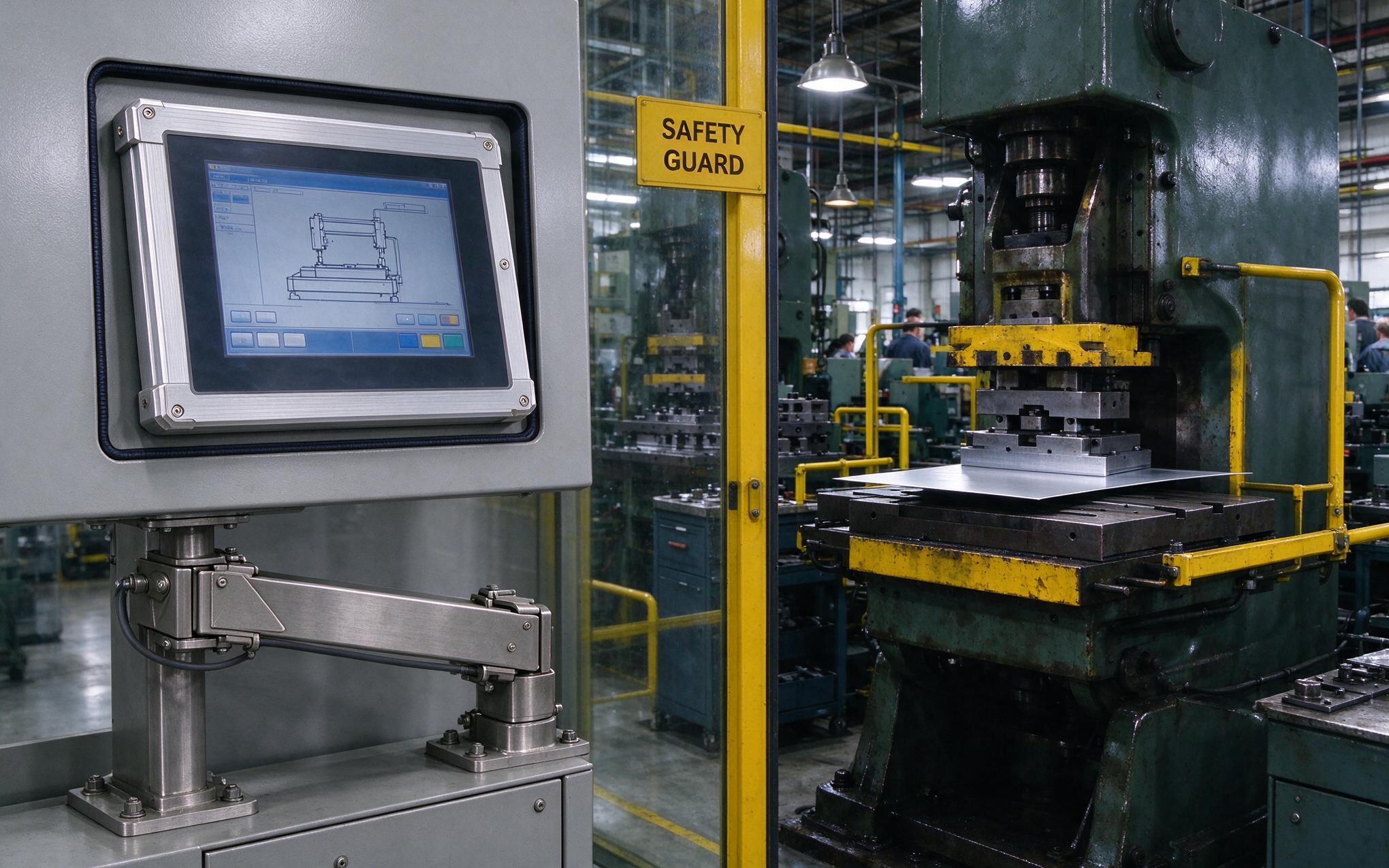
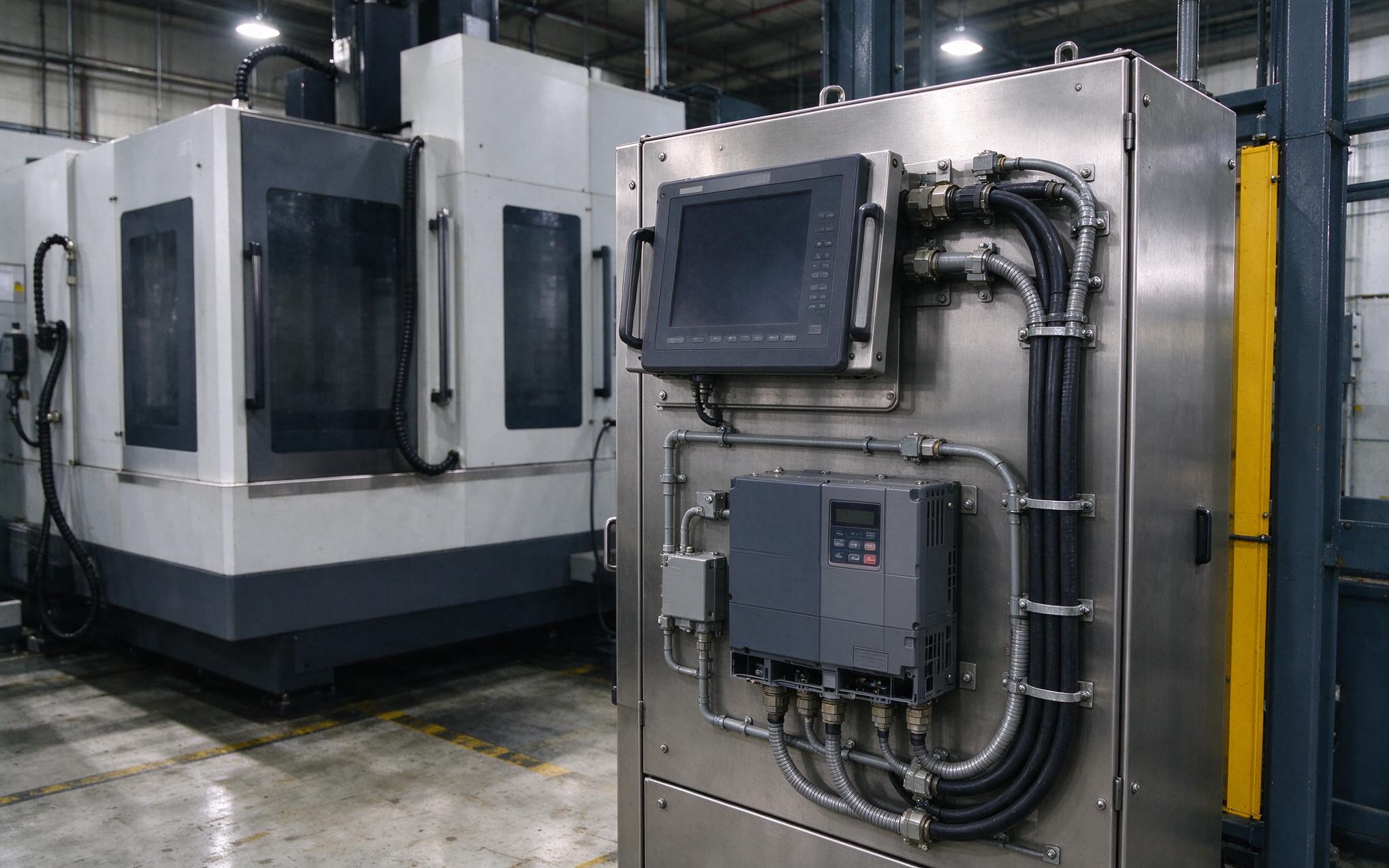
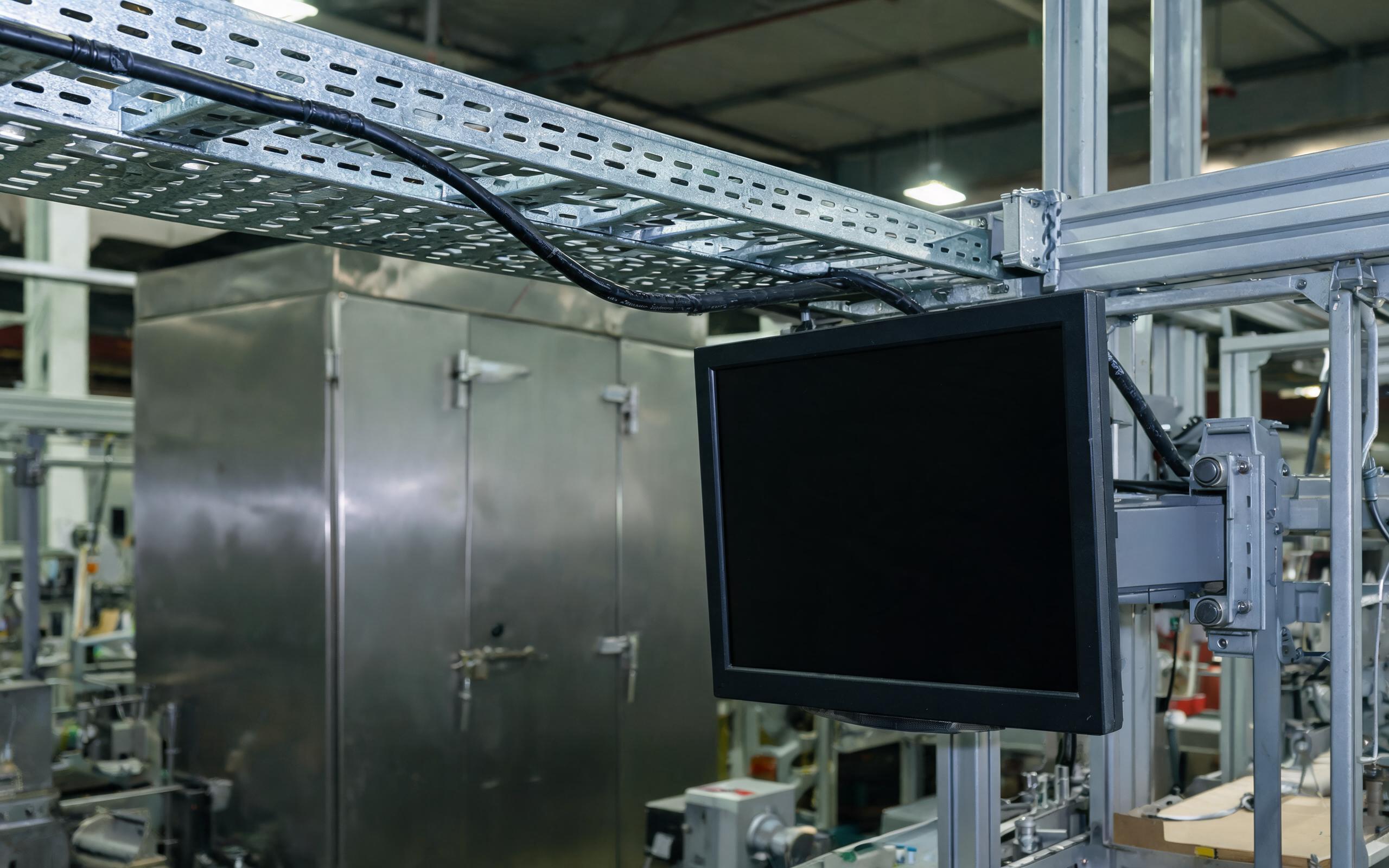
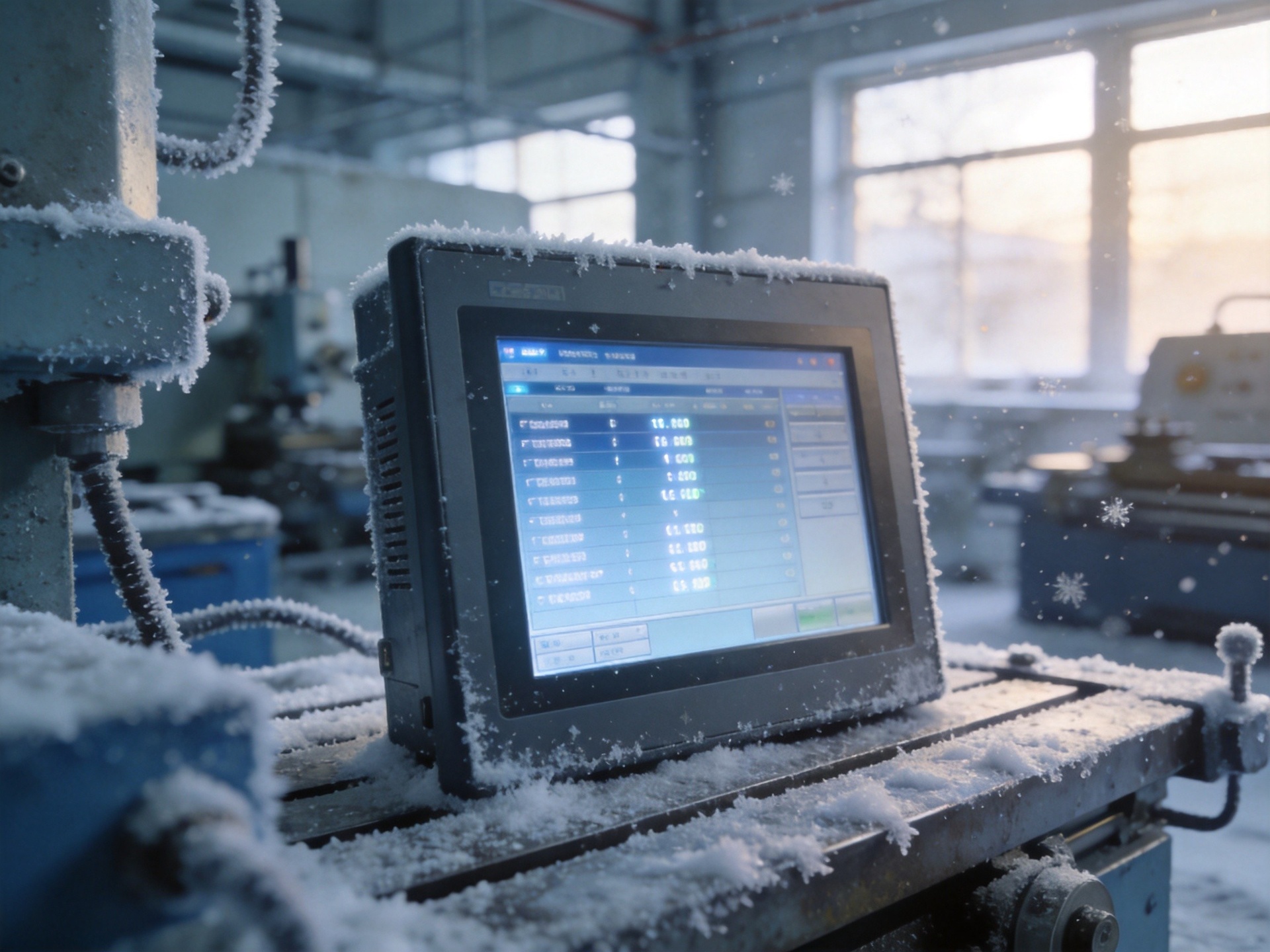
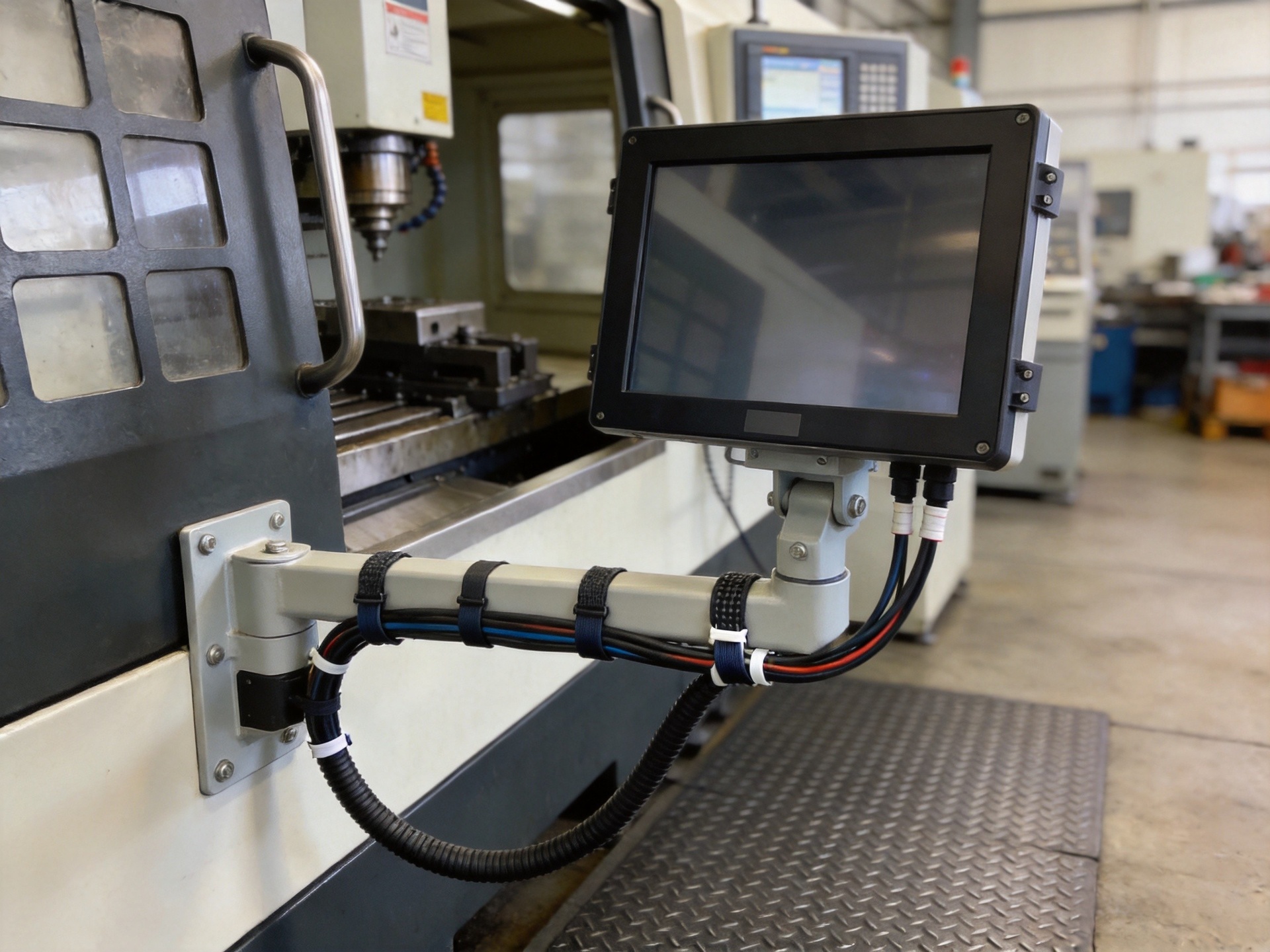
CNC machines and their surrounding workstations leave little room for auxiliary equipment. Panel PCs must mount directly on the machine frame, a swing arm, or a pedestal anchored to the shop floor. VESA mounting patterns are standard, but the mounting hardware must accommodate the machine’s vibration profile. Thread-locking compounds on all fasteners prevent loosening over time. Cable routing is equally important. Power and data cables must be secured with strain relief and routed away from chip conveyors, coolant lines, and operator walkways. KOXIAN panel PCs designed for these environments include cable glands and internal cable tie-down points that keep connections secure regardless of machine movement. The integration goal: the panel PC becomes a seamless part of the machine tool, not a fragile peripheral.
The ROI of Purpose-Built Hardware
The cost difference between a commercial all-in-one computer and a purpose-built industrial panel PC for CNC environments is roughly two to three times. But the comparison is misleading. A commercial unit failing every six months costs far more in downtime than the hardware premium. In a shop running three shifts, one hour of unplanned downtime on a critical machine can exceed the cost of the panel PC itself. The industrial unit is designed for five to seven years of service in these conditions. Over that horizon, total cost of ownership flips decisively in favor of industrial hardware.