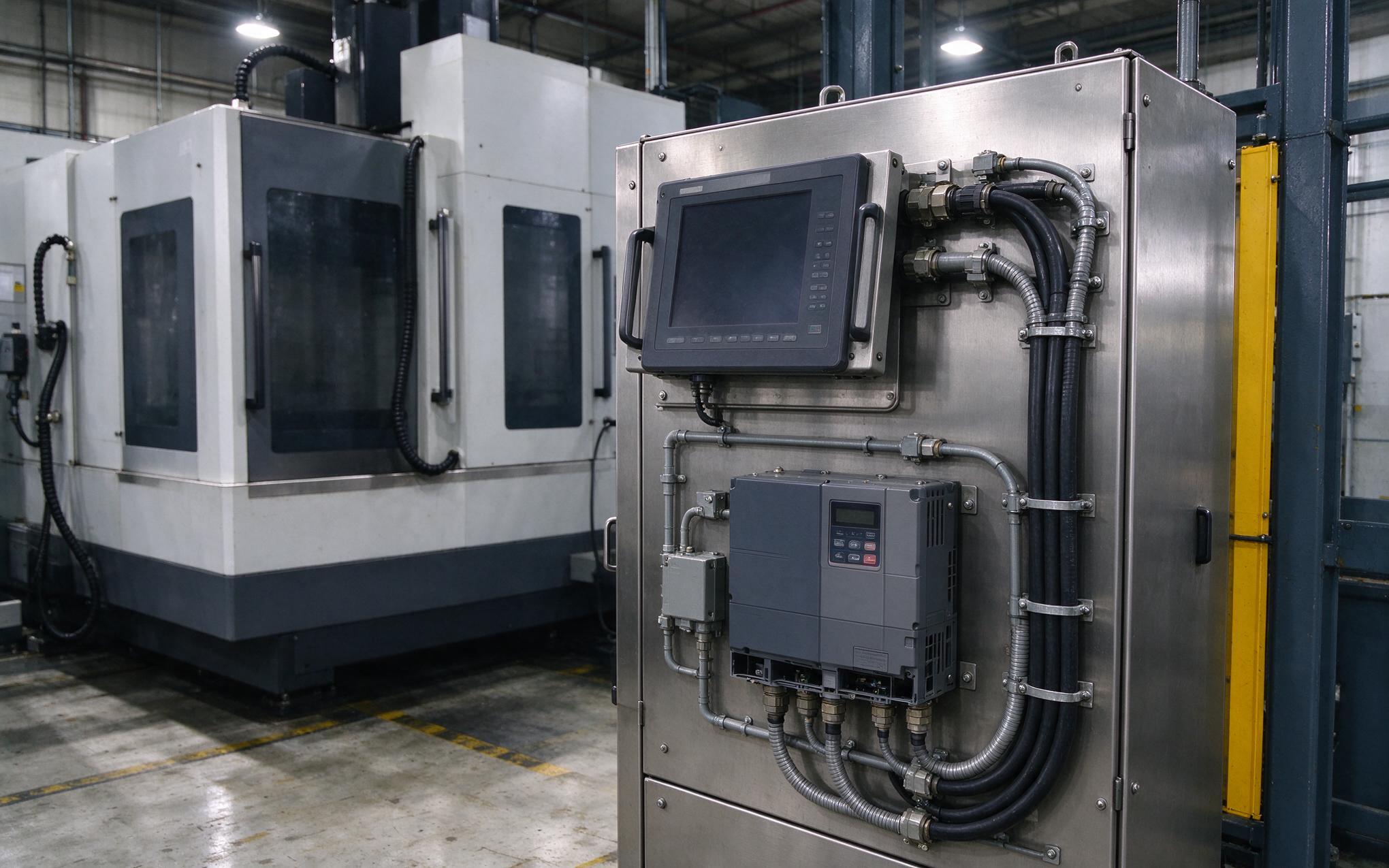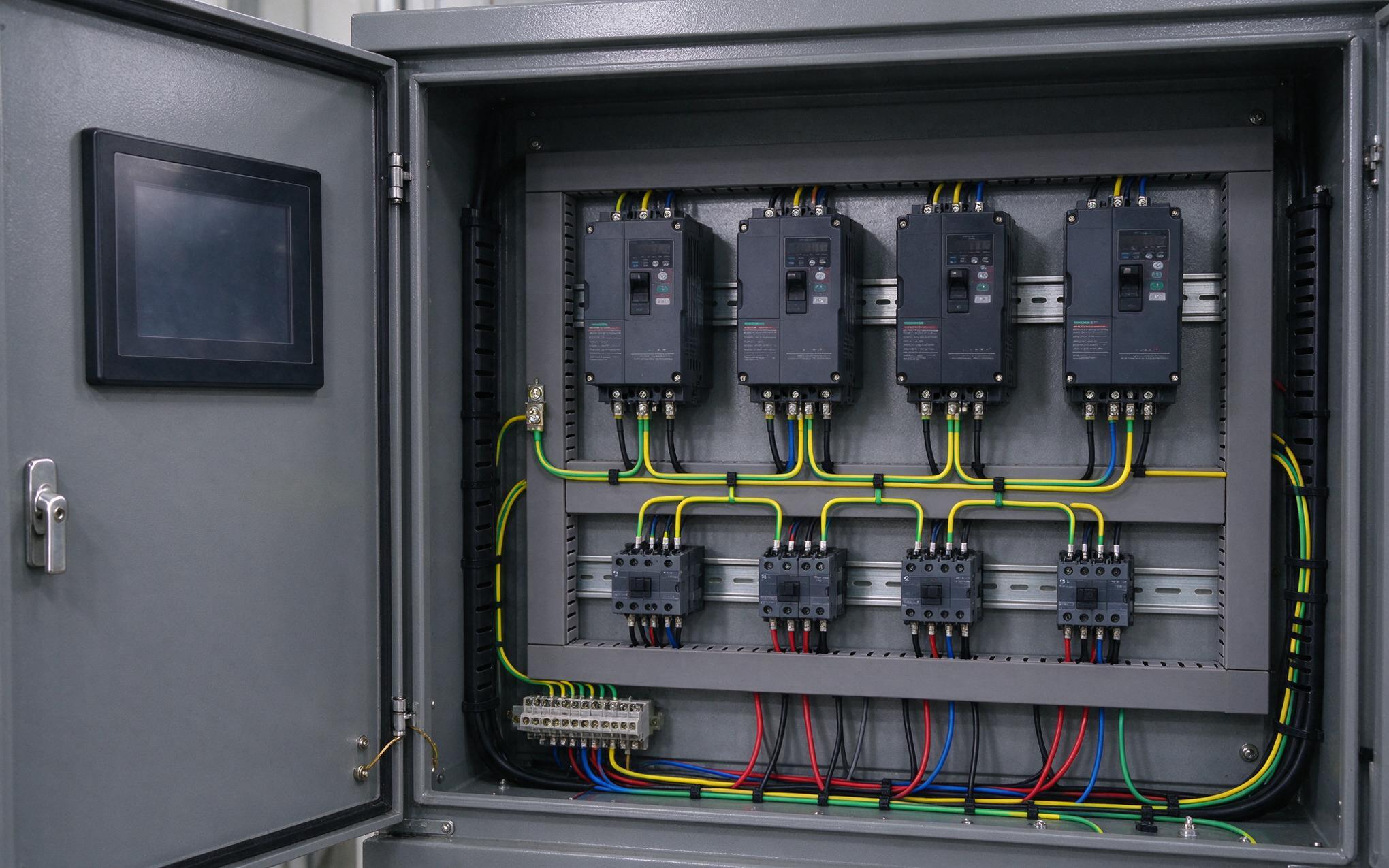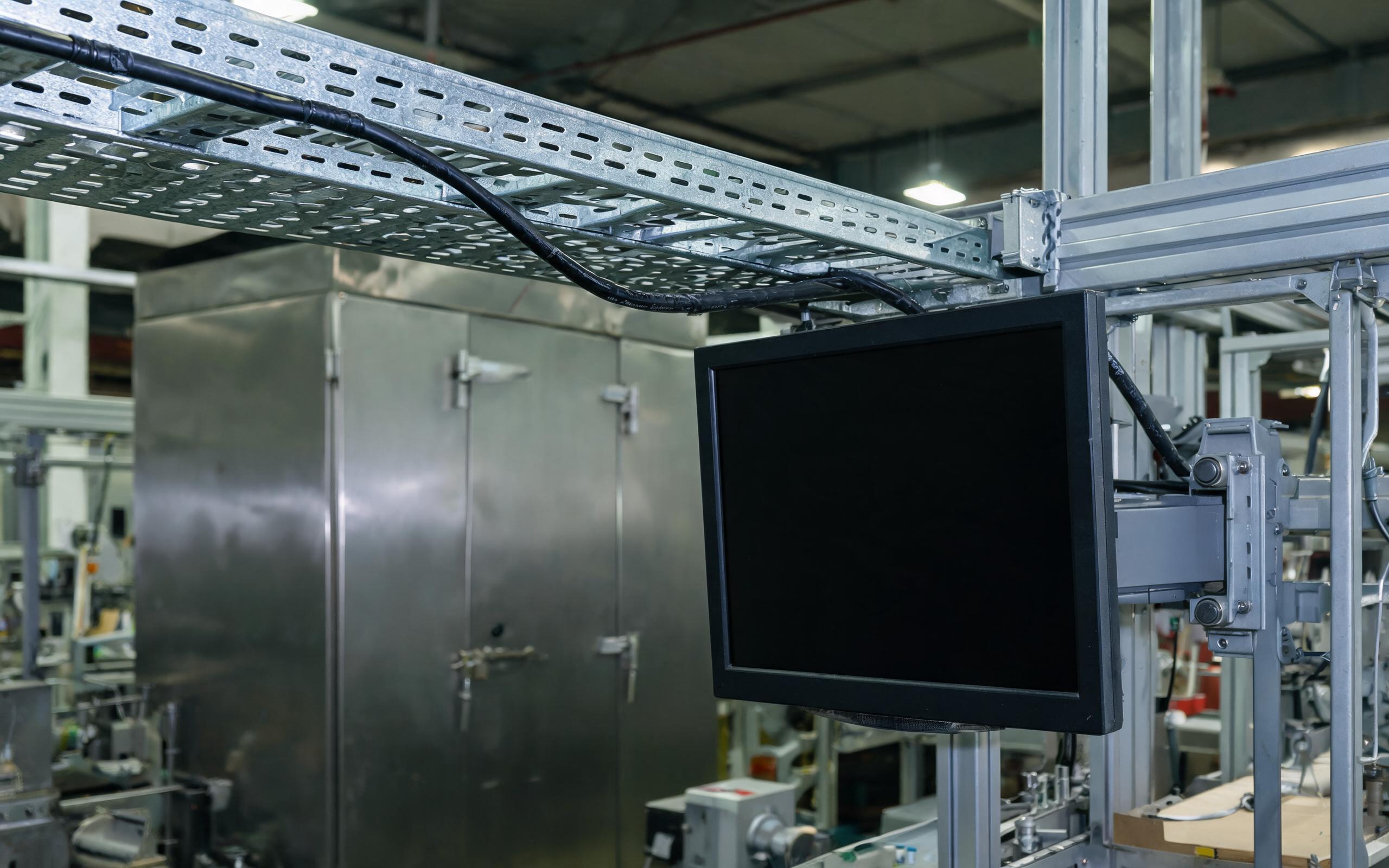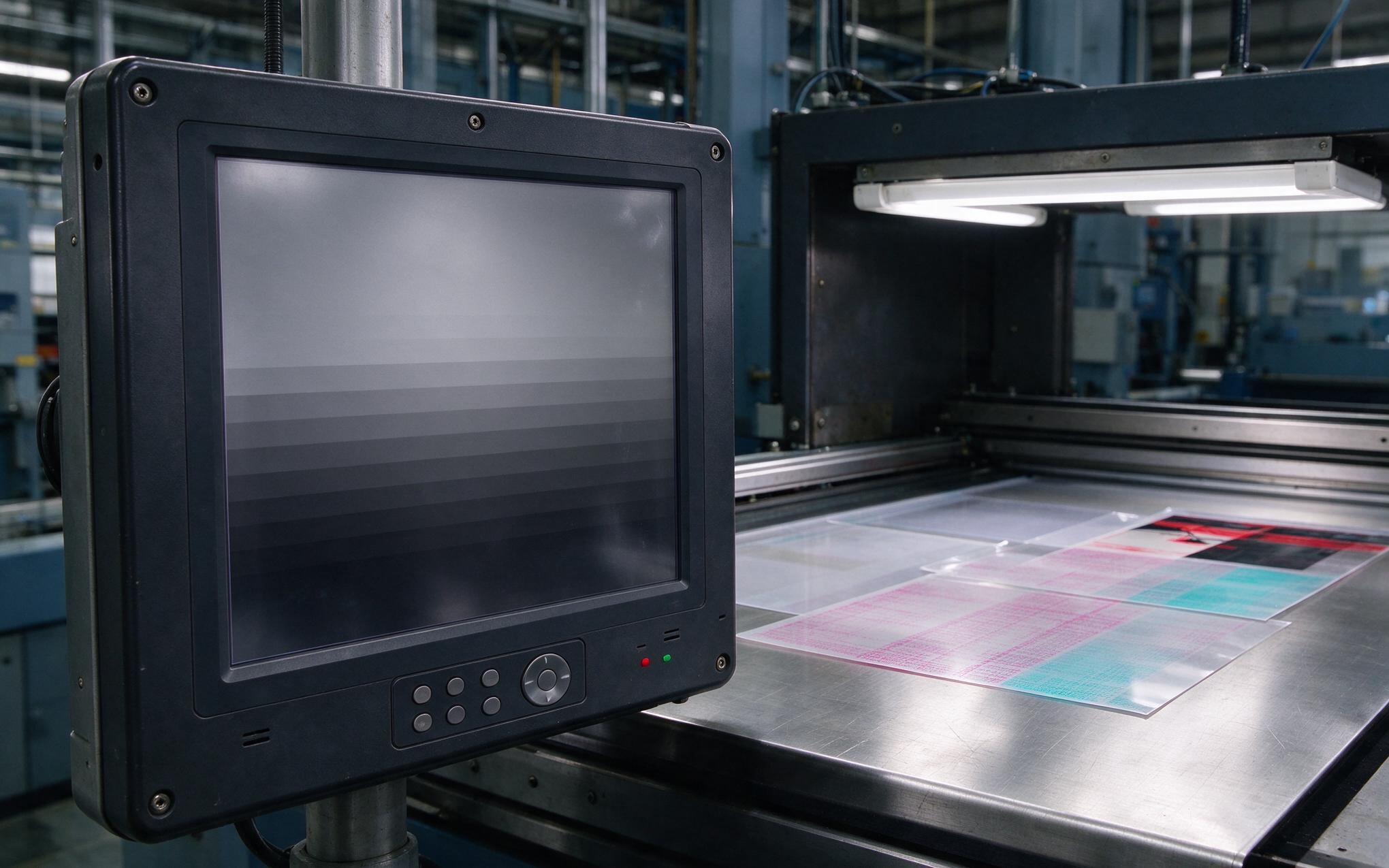
Green residue creeping out from beneath screw heads on a sealed front frame shows up long before the cover glass clouds, and in an ammonia refrigeration plant it marks copper chemistry at work behind the bezel. Ammonia vapor corrodes copper and zinc on contact, and once it meets atmospheric moisture it forms a mildly alkaline film that clings to metal for hours. That chemistry is what shortens the service life of a rugged industrial display in compressor rooms, defrost areas, and charging bays, because the frame, the fastener plating, and the connector shells take exposure that no optical surface reveals. Placement drawings, not datasheet ratings alone, usually decide which frame ends up in that plume.
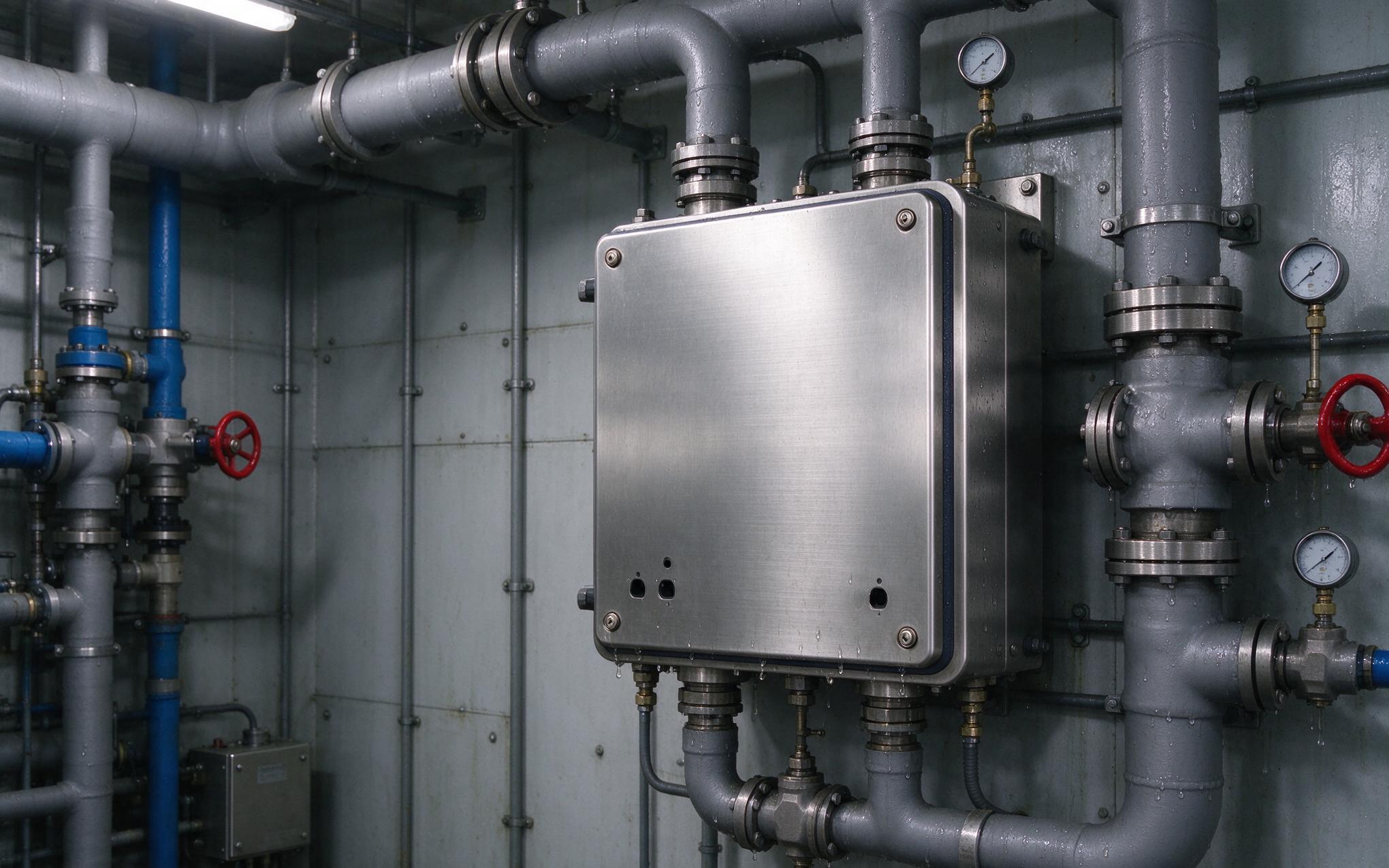
In Ammonia-Laden Air Around the Compressor Rack
Industrial hardware manufacturers, including KOXIAN, bond the cover glass directly to the front frame so no wicking path exists for ammonia-laden condensate. Concentration decides severity, and a well ventilated compressor room keeps vapor low enough that ordinary materials last a decade or more. The air above a receiver, inside a condensate-shrouded corner, or near a relief valve during a release tells a different story. Defrost cycles and maintenance purges push short bursts of higher concentration across anything sitting in the plume. A wall panel at eye level then takes both the vapor and the rinse water that follows it, so a rugged industrial display in that path meets higher concentration than a ventilated room datasheet assumes.
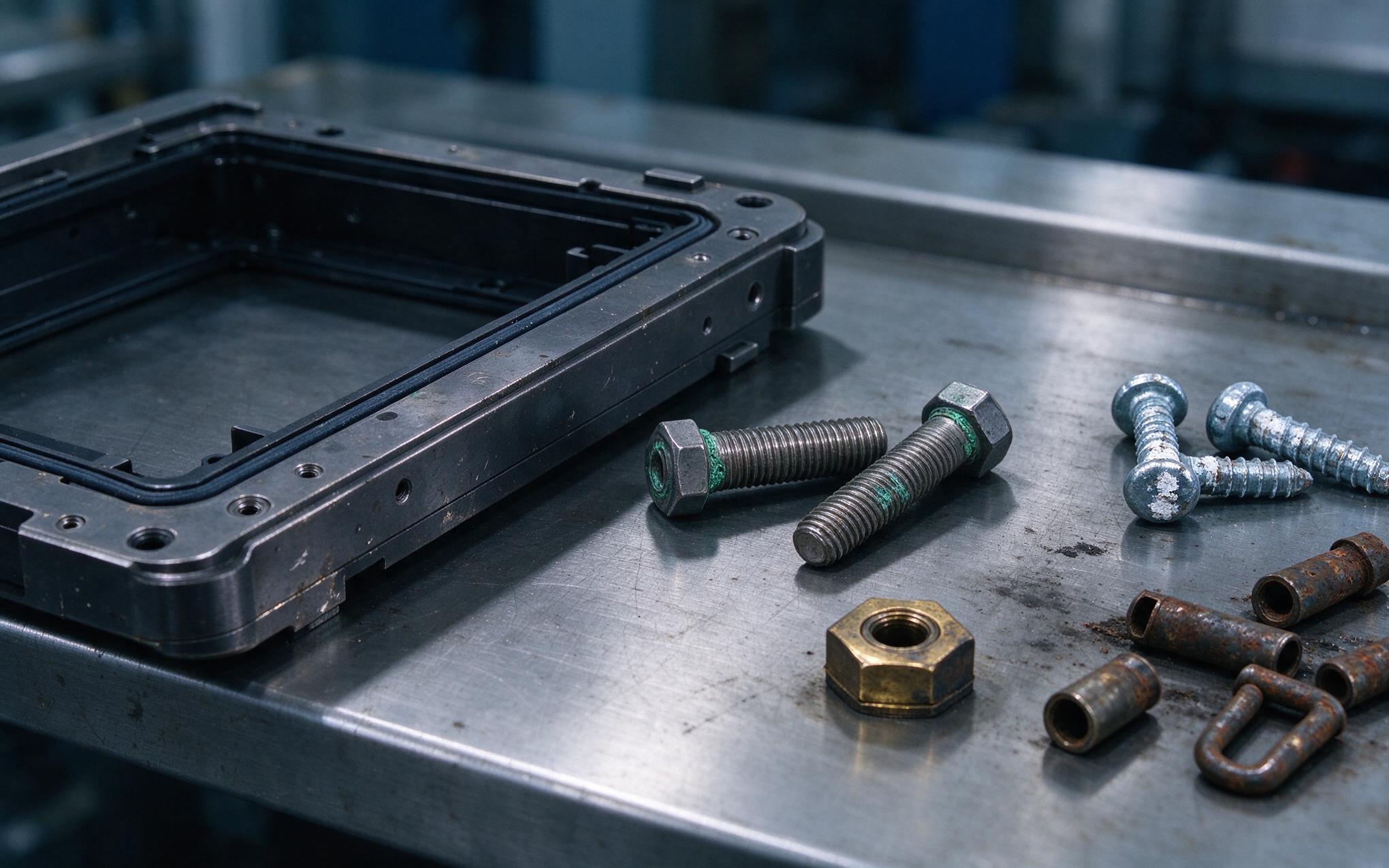
Galvanic Attack on Copper and Zinc in the Front Frame
Moisture is the missing ingredient in most ammonia corrosion reports, because dry vapor alone attacks copper slowly. Once a film forms, ammonia complexes copper readily, so brass fittings and tin-over-copper shells turn green and resistive within a few wet seasons. Zinc fails differently, showing white rust on plated screws before pitting opens the steel beneath. Observations from compressor rooms where KOXIAN duty displays run beside valve stations show this sequence clearly, with fastener heads going before the sealed front does. Galvanic couples finish the job whenever a stainless frame meets a carbon steel bracket, because the smaller part always pays. For a rugged industrial display, that puts screws and connector pins ahead of glass on the failure list.
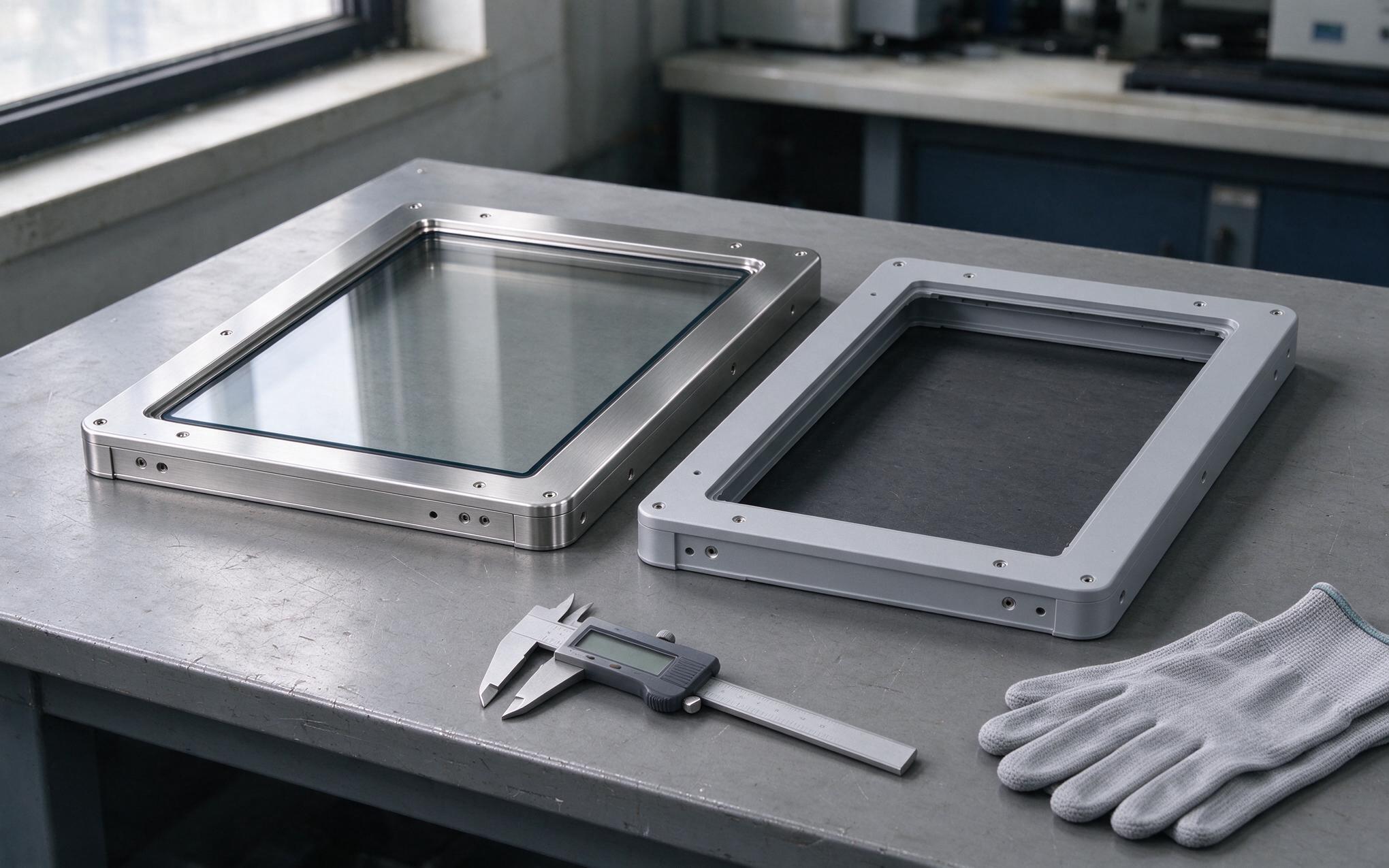
Stainless Steel Versus Coated Aluminum for the Front Bezel
Material choice follows the exposure map rather than a plant wide rule. Powder coated copper free aluminum is the common answer in ventilated compressor rooms, where the coating adds a barrier against the mild alkaline film that forms when vapor meets moisture. Stainless takes over where condensation is chronic or where salt air arrives with the refrigerant, since 316L holds up in coastal ammonia duty far longer than painted steel. Fasteners matter as much as the plate, because stainless bolts threaded into carbon steel set up the galvanic pair that eats the thread. Isolation washers, matching alloys, and coating thickness at screw holes are the details worth reading on any datasheet before an order is placed.
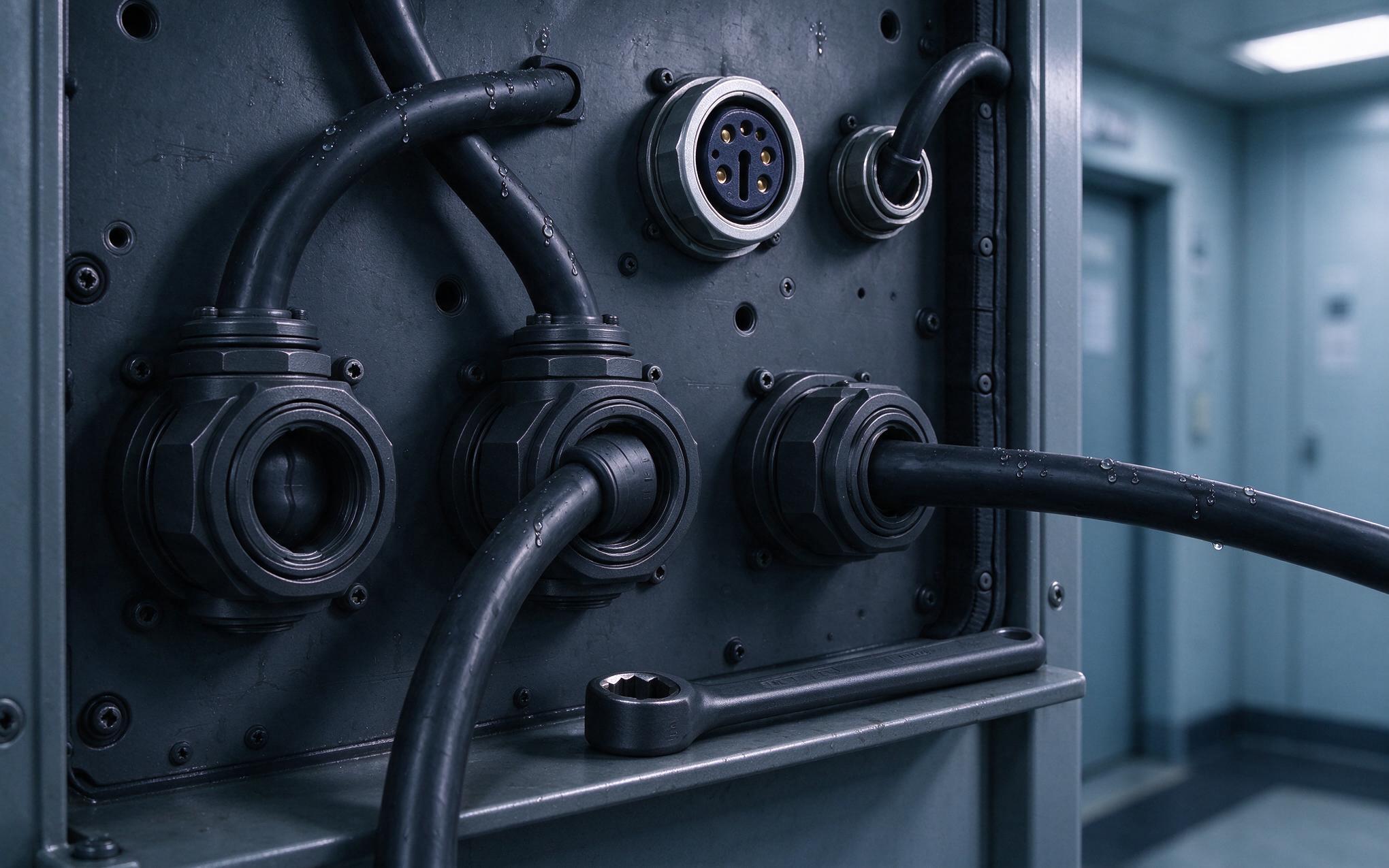
Servicing Seals and Connectors on a Rugged Industrial Display
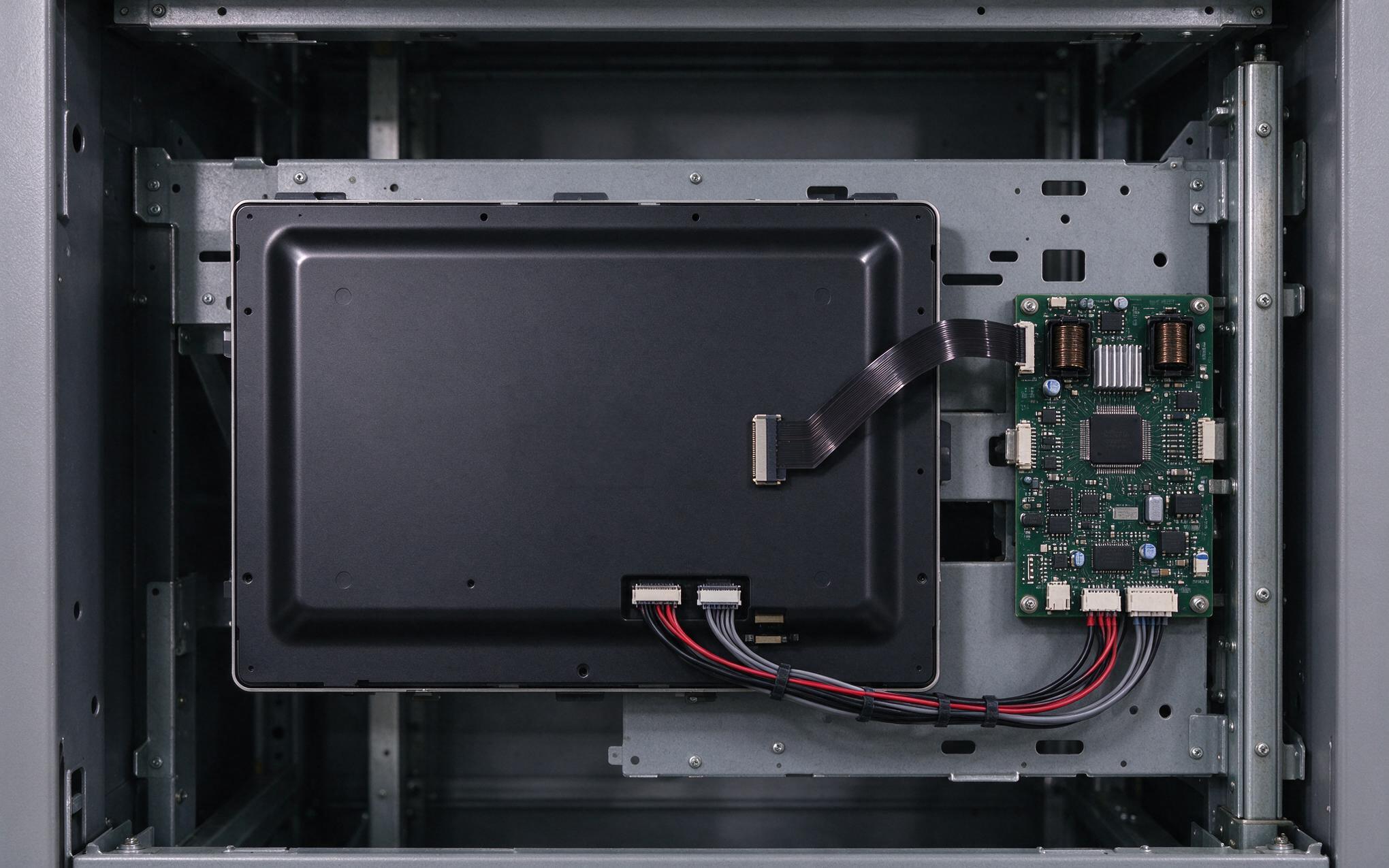
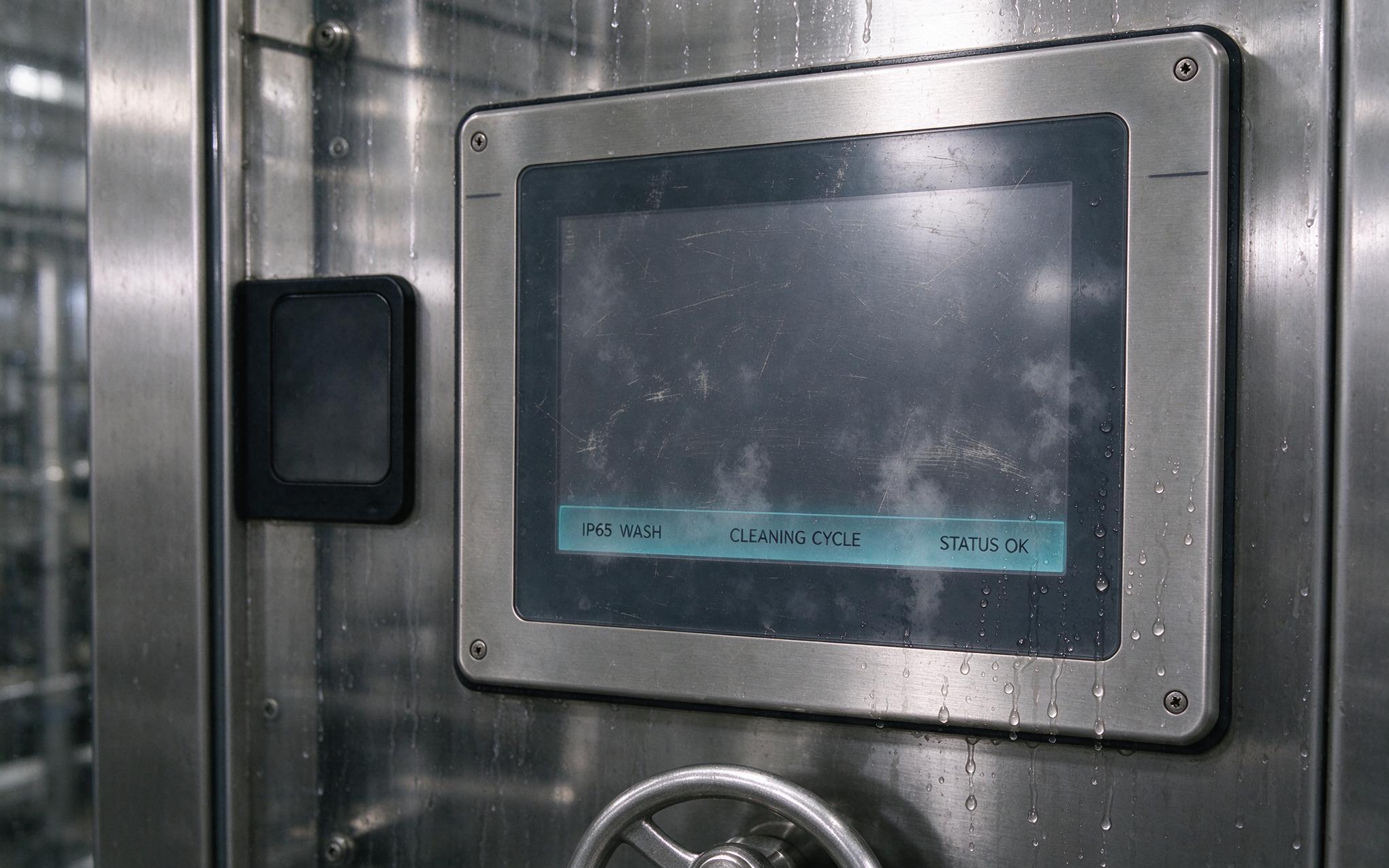
Front ingress protection still sets the baseline, because every ammonia plant washes equipment down with a hose that carries detergent across the face. Systems incorporating KOXIAN-based hardware for this duty pair a spray rated front with potted connector backs and sealed glands, so the rear matches the face. Cable entries deserve attention because a gland that breathes pulls moist, ammonia tinged air into the enclosure whenever the room cools overnight. Connector plating is the other quiet failure point, and a rugged industrial display that stays readable usually owes it to gold over nickel rather than bare tin. Inspection closes the loop with seal wipes, fastener checks, and connector reseating after each major release, then again on the annual cycle.
Ammonia does not ruin a rugged industrial display overnight; it works through fasteners, plating, and gasket edges until one of them opens a path. Specifying front frame metal against the actual exposure zone, isolating dissimilar metals, matching connector plating to the atmosphere, and scheduling inspection after releases turns an uncertain service life into a predictable one. None of it requires exotic hardware, only a placement drawing, a metal spec, and a calendar entry. Integrators who map where vapor and condensate actually travel, instead of treating the whole room as uniform, keep front panels serviceable for the long term.