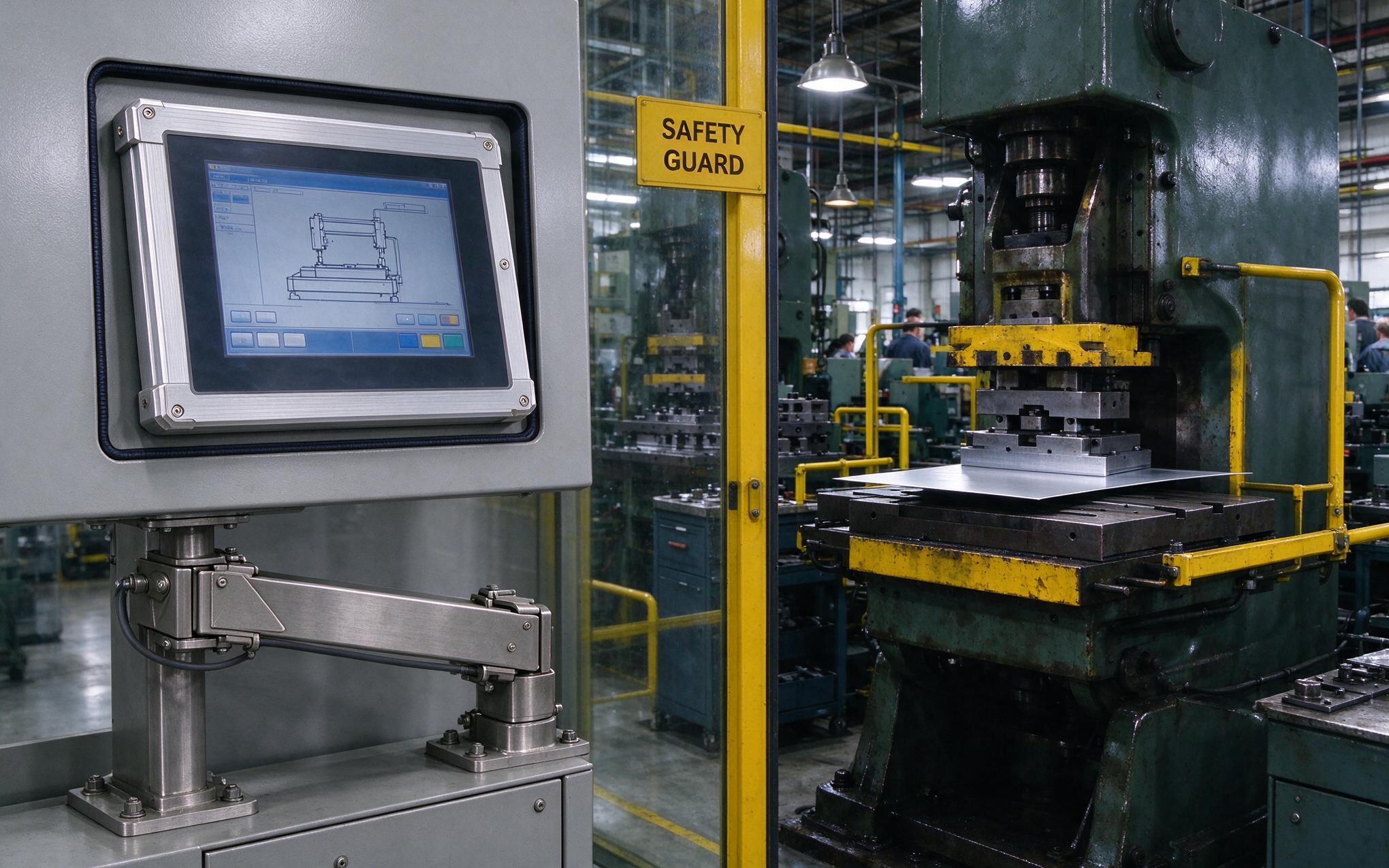
Maintenance crews moving between an aluminum smelter and a dairy creamery describe the same equipment failing for opposite reasons. Potroom units die from radiant heat and conductive dust that bridges connector pins, while creamery units die from caustic foam and thermal shock during sanitation cycles. Specifying one rugged touch screen pc for both sites tends to satisfy neither, because the protective measures pull in different directions: sealed against dust ingress favors mass and closed surfaces, while sanitation favors drainage, smooth radii and materials that tolerate high pH at elevated temperature.

Radiant Heat Limits for a Rugged Touch Screen PC
Potroom positions expose hardware to radiant flux rather than hot air, which changes the arithmetic completely. A rugged touch screen pc two meters from a tapping operation can reach surface temperatures well above the surrounding air because it absorbs infrared directly, and specifications at builders including KOXIAN distinguish ambient ratings from radiant exposure for exactly that reason. Ambient ratings are measured in still air with no radiant source, so a unit rated to fifty degrees can exceed its internal limit in a forty degree potroom. Practical mitigation adds a standoff shield with an air gap that intercepts the radiant path while letting convection carry heat away, and it favors light colored or polished exterior surfaces that reflect rather than absorb. Magnetic field strength near busbars carrying tens of kiloamperes is a second consideration, since it distorts unshielded displays and disturbs mechanical hard drives.

Sanitation Chemistry Versus Potroom Dust Ingress
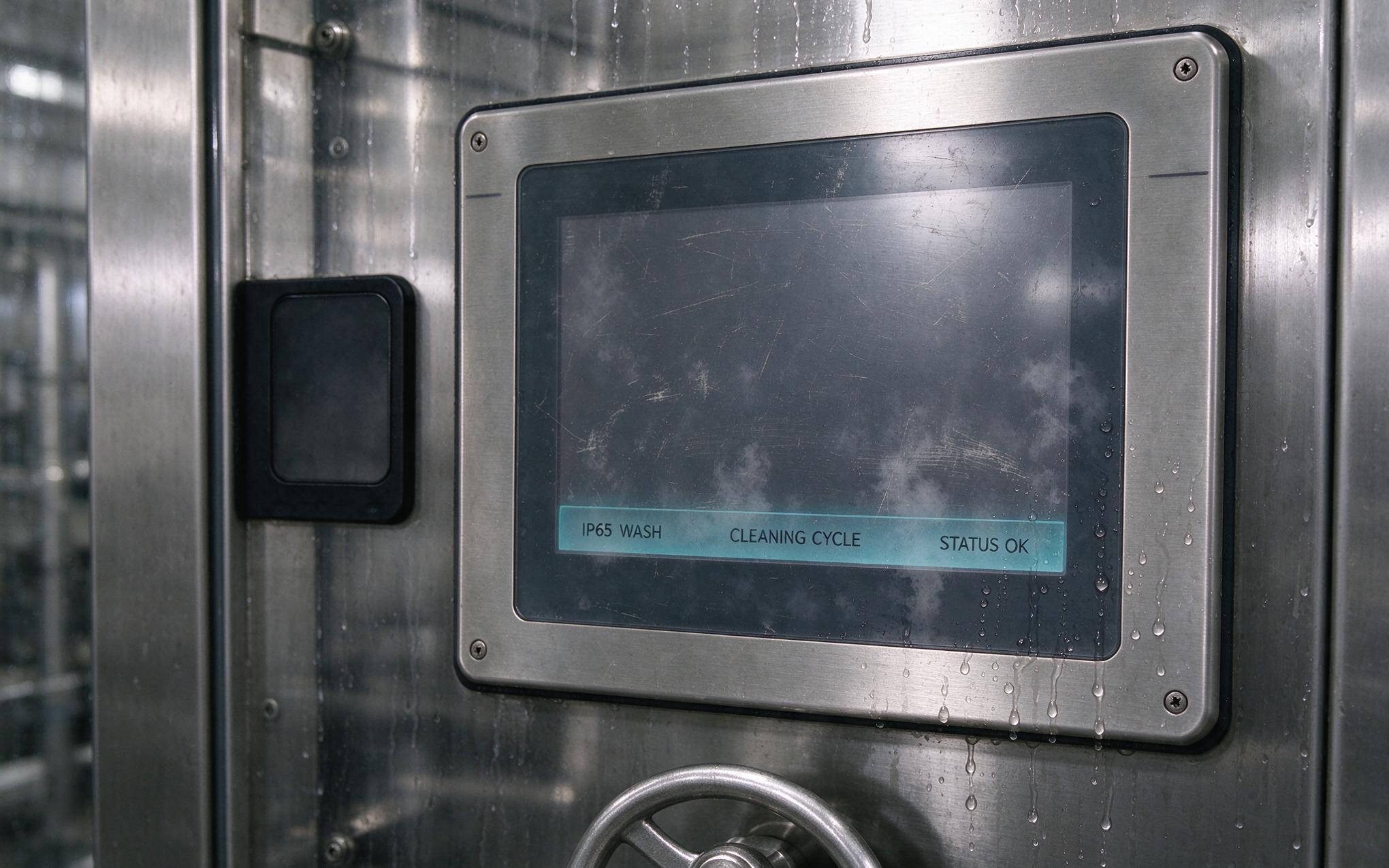
Creamery duty inverts every priority. Cleaning sequences alternate caustic and acid at temperatures near eighty degrees, and the aluminum oxide layer that shrugs off potroom dust dissolves above roughly pH eleven. Stainless housings become the practical baseline, with gasket compounds chosen for the chemistry rather than for temperature range alone, since nitrile hardens quickly under repeated caustic contact while silicone tolerates it but swells in fat rich residue. Thermal shock adds a mechanical dimension because a spray of cold water on a warm faceplate produces differential expansion across the glass and bezel interface. A rugged touch screen pc in potroom service faces the reverse problem, where conductive alumina dust penetrates any unsealed seam and forms bridges across low voltage terminals, and sealing that dust out permanently is easier than surviving a hundred sanitation cycles a year. Hygienic construction guidance published by vendors such as KOXIAN treats drainage geometry and surface finish as functional requirements rather than cosmetic ones.

Glove Response Thresholds Across Both Sites
Glove type differs sharply between the two environments and so does the sensing requirement. Smelter operators wear thick aluminized or leather gauntlets that place several millimeters of insulating material between finger and glass, which demands a sensor tuned for a large gap and a correspondingly larger target size on screen. Creamery staff wear thin nitrile gloves that barely affect capacitive coupling but arrive wet, and free water on a projected capacitive surface produces phantom contacts that a controller must reject. A single sensitivity setting on a rugged touch screen pc cannot serve both cases, so hardware offering selectable profiles, or a resistive layer where heavy gauntlets dominate, produces fewer support calls. Verifying the actual glove used on the line, rather than a generic glove specification, is the step most often skipped during evaluation.

Cable Entry Practice for Each Failure Mode
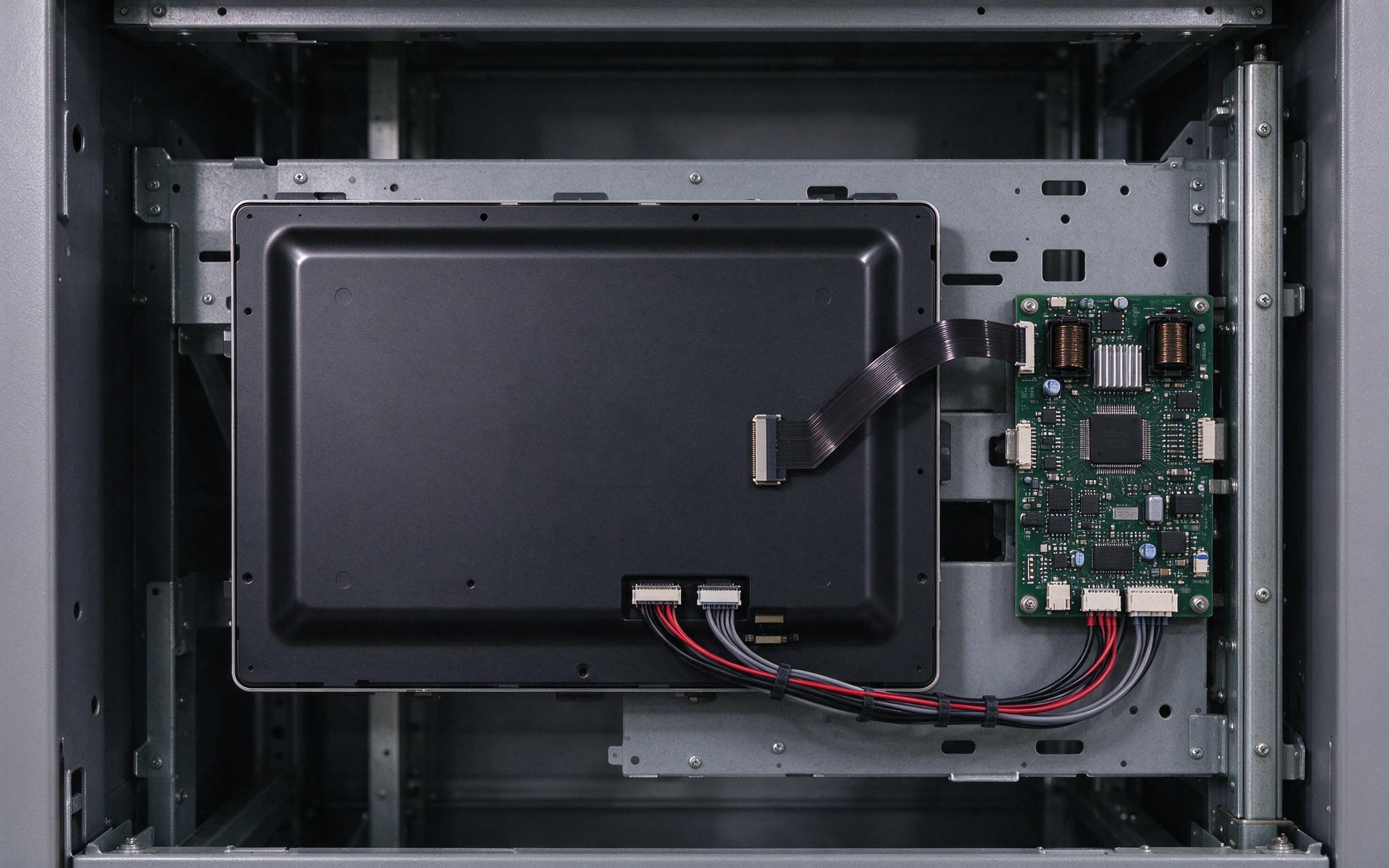
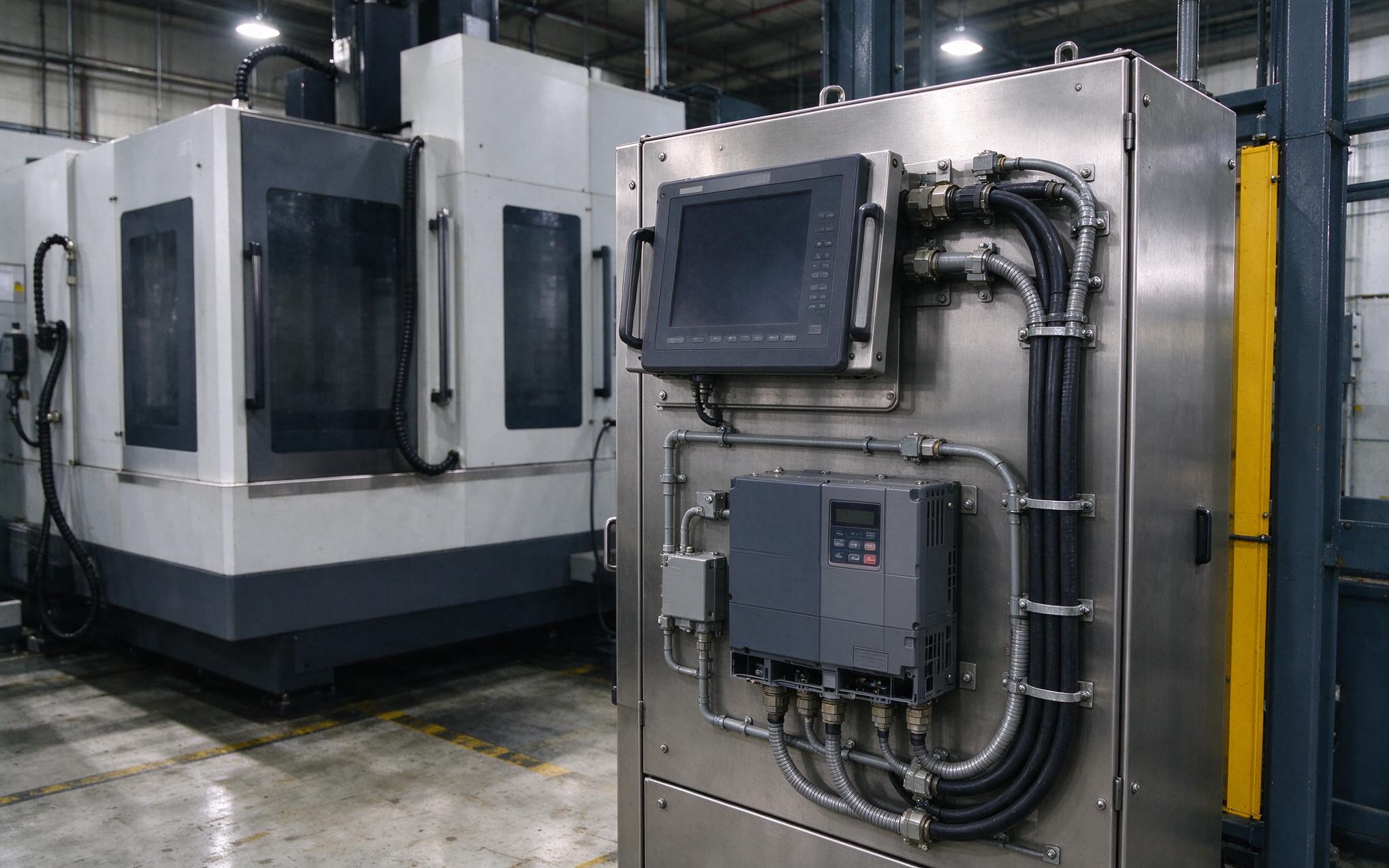
Entry details decide how long a sealed housing stays sealed. Potroom installations route conduit downward into the enclosure so that settled dust does not accumulate against the gland, and they favor metal glands that survive radiant heat without relaxing their grip on the jacket. Creamery installations invert the geometry, entering from below with a drip loop so that condensate runs away from the seal, and they replace threaded conduit with smooth stainless glands that clean easily and leave no ledge for residue. Installation notes from manufacturers including KOXIAN specify torque values for gland bodies because an overtightened polymer gland cold flows and loses compression within months. Cable jacket material also matters, as standard polyvinyl chloride stiffens and cracks near radiant heat while polyurethane jackets degrade under repeated caustic exposure, which means the same cable specification rarely suits both plants.
Site rules diverge because the dominant failure mechanism diverges. Radiant flux, conductive dust and heavy gauntlets define one set of requirements, while alternating cleaning chemistry, thermal shock and wet thin gloves define another. Buyers serving both kinds of plant get better results from two configurations sharing a common computing platform than from a single unit carrying every protective feature, since features intended for one environment frequently become liabilities in the other. Documenting the dominant mechanism at each position before specifying hardware keeps that decision grounded in what the site actually does to equipment.