Solvent vapor migrates into cabinet interiors long before anyone reports a fault, condensing on cool surfaces and leaving a film that shortens creepage distances across exposed boards. Coating line retrofits concentrate that risk, because the cabinets were sized for relays and contactors rather than computing hardware, and every watt added pulls more room air through unsealed seams. Requests reaching industrial panel pc manufacturers now combine area classification, purge pressure and cutout geometry in a single specification, which marks a shift away from the sealed-and-rated conversation that governed earlier projects.

Across Coating Zones Area Classification Precedes Hardware Choice
Spray application releases atomized solvent within a defined envelope around the gun, and the extent of that envelope determines which electrical practice applies at a given mounting position. A cabinet two meters outside an extraction curtain sits in unclassified space and accepts standard sealed hardware; the same cabinet relocated inside the booth wall falls under a classified division and requires purging or an intrinsically safe design. Enclosure programs at builders such as KOXIAN start from the site classification drawing rather than a generic protection rating, since a rating describes resistance to water and dust and says nothing about ignition risk in a flammable atmosphere. Retrofit projects frequently move equipment without revisiting the drawing that established those boundaries, so hardware qualified for the original position ends up serving a different one. Experienced industrial panel pc manufacturers ask for that drawing before quoting a display size, which avoids the outcome where an approved unit must be relocated after installation.

Purge Air Pressure Practice for Industrial Panel PC Manufacturers
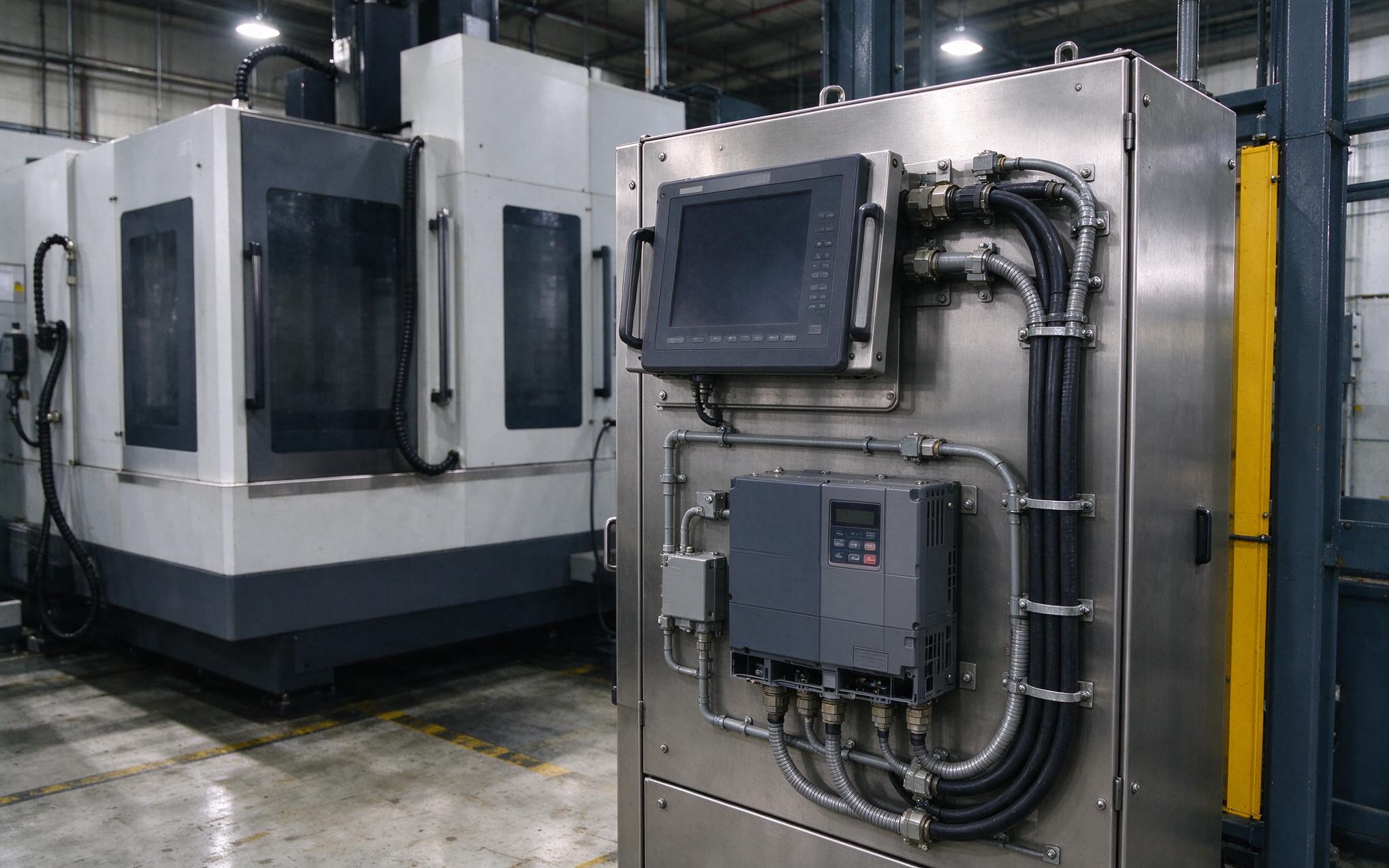
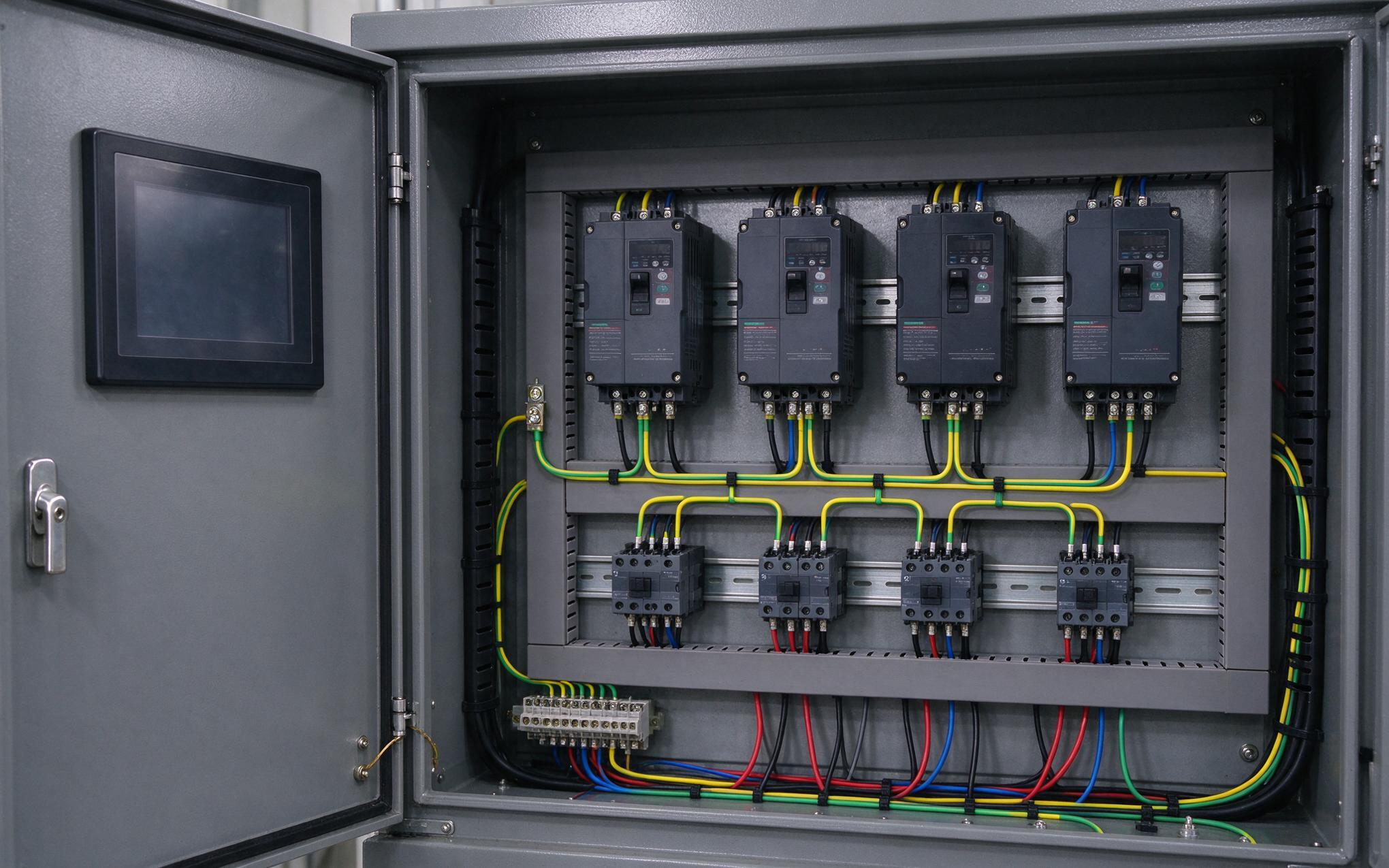
Pressurized enclosures rely on maintaining a small positive differential so that leakage flows outward. Typical practice holds around twenty five pascals above the surrounding atmosphere, with an initial dilution flow that exchanges several enclosure volumes before power is applied. That sequence matters more than the steady state number, because an enclosure opened for maintenance fills with the surrounding atmosphere and energizing it immediately places an ignition source inside a potentially flammable mixture. Retrofits complicate the arithmetic since added computing hardware displaces internal volume and changes the exchange time, while new cable entries create leakage paths that reduce achievable pressure. Instrument air quality matters too, as oil carryover deposits residue internally and moisture condenses when air expands into a cool housing. Specifying the pressure switch setpoint, the dilution volume and the air dryness together produces a system that behaves as intended.

Bonding Braided Shields Against Electrostatic Discharge
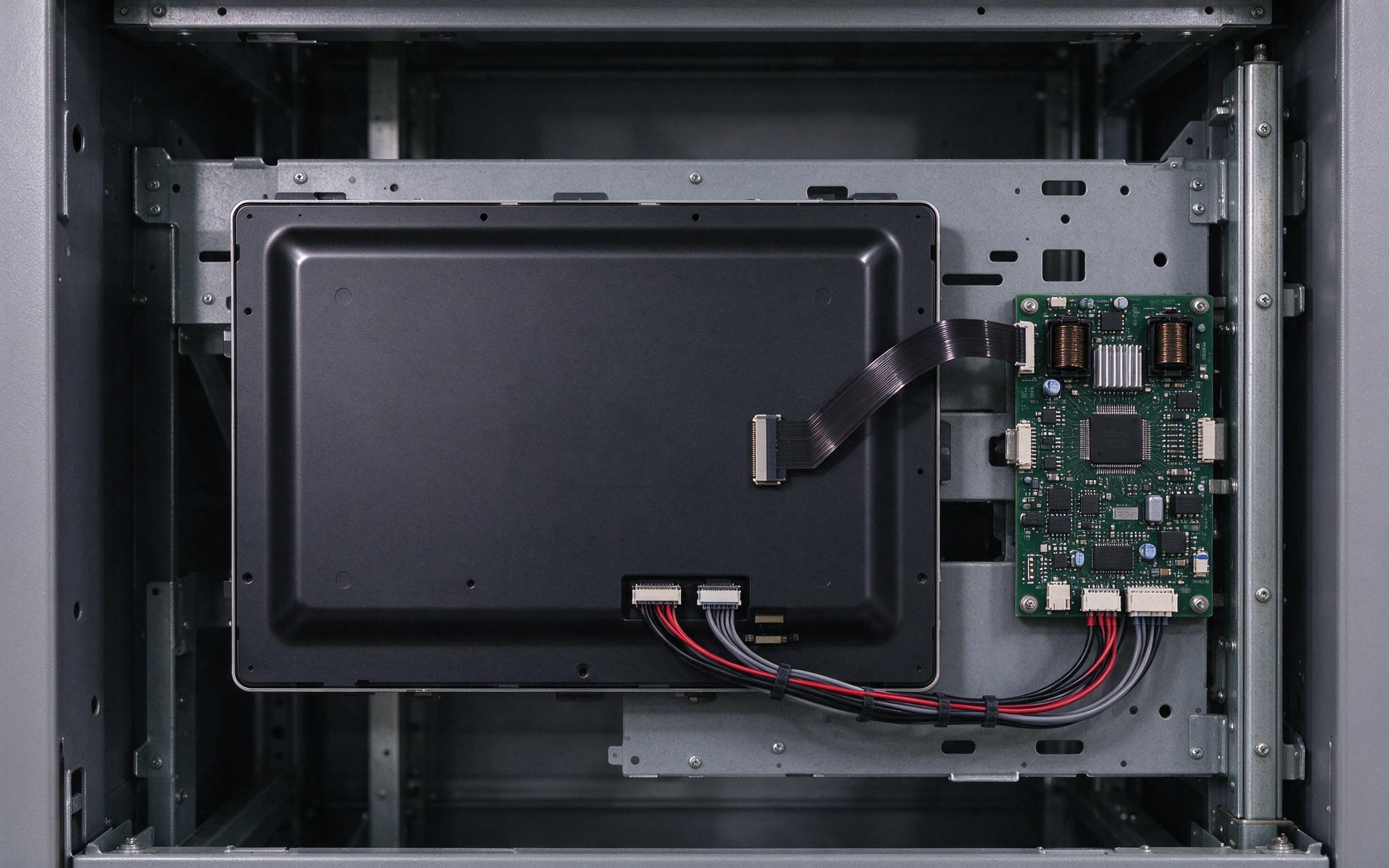
Documentation from vendors including KOXIAN identifies which chassis points are intended for protective bonding and which serve only mechanical fastening, a distinction that prevents installers from grounding through an anodized surface measuring as an open circuit. Electrostatic charge accumulates wherever insulating coating material moves at speed, and rotary atomizers generate potentials measured in tens of kilovolts within a meter of grounded metalwork. Discharge finds the path of least impedance, which in a retrofitted cabinet is often a signal cable whose shield terminates through a pigtail wire long enough to act as an inductor at discharge frequencies. Terminating shields with a full circumference clamp onto a bonded plate keeps that impedance low, and serrated washers under bonding straps preserve the connection after paint overspray accumulates. Sites that add a dedicated bonding conductor between the cabinet and the conveyor structure report fewer unexplained resets during color changes, when charge generation peaks.

Cutout Geometry and Panel Flatness in Existing Cabinets
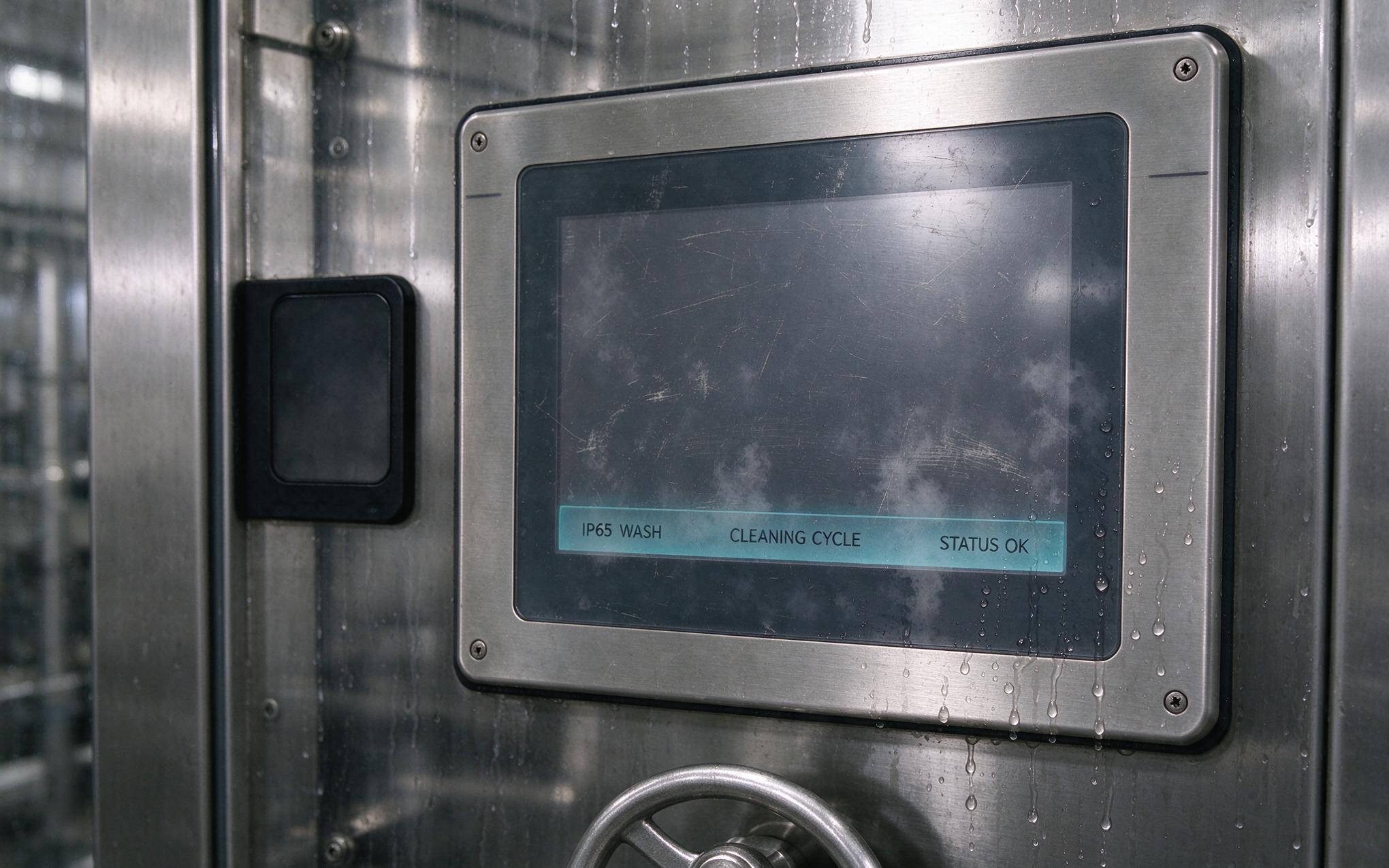
Retrofit sealing failures usually trace to the panel rather than the gasket. A cutout enlarged with a nibbler leaves a wavy edge, and a door drilled and patched over two decades no longer sits flat within the tolerance the gasket was designed to accommodate. Compression of a closed cell gasket needs roughly twenty percent deflection around the full perimeter, which a panel deviating more than half a millimeter across the clamped span cannot deliver. Practical remedies include a stiffening subplate spanning the cutout, additional clamps at the mid span of long edges, and a thicker gasket with lower durometer where flatness cannot be corrected. Measuring the panel with a straightedge and feeler gauge gives industrial panel pc manufacturers the information needed to supply a continuous frame bezel for the position instead of a generic clamp kit.
Coating line retrofits reward engineering that begins with the classification drawing, the purge sequence, the bonding path and the condition of the panel being cut. Each item is verifiable on site with simple instruments and existing documentation, and each predicts field behavior more reliably than a protection rating printed on a datasheet. Buyers who supply those four inputs to industrial panel pc manufacturers receive hardware matched to the position rather than to a catalog assumption, which keeps commissioning short and prevents the relocation and rework that consume the schedule.