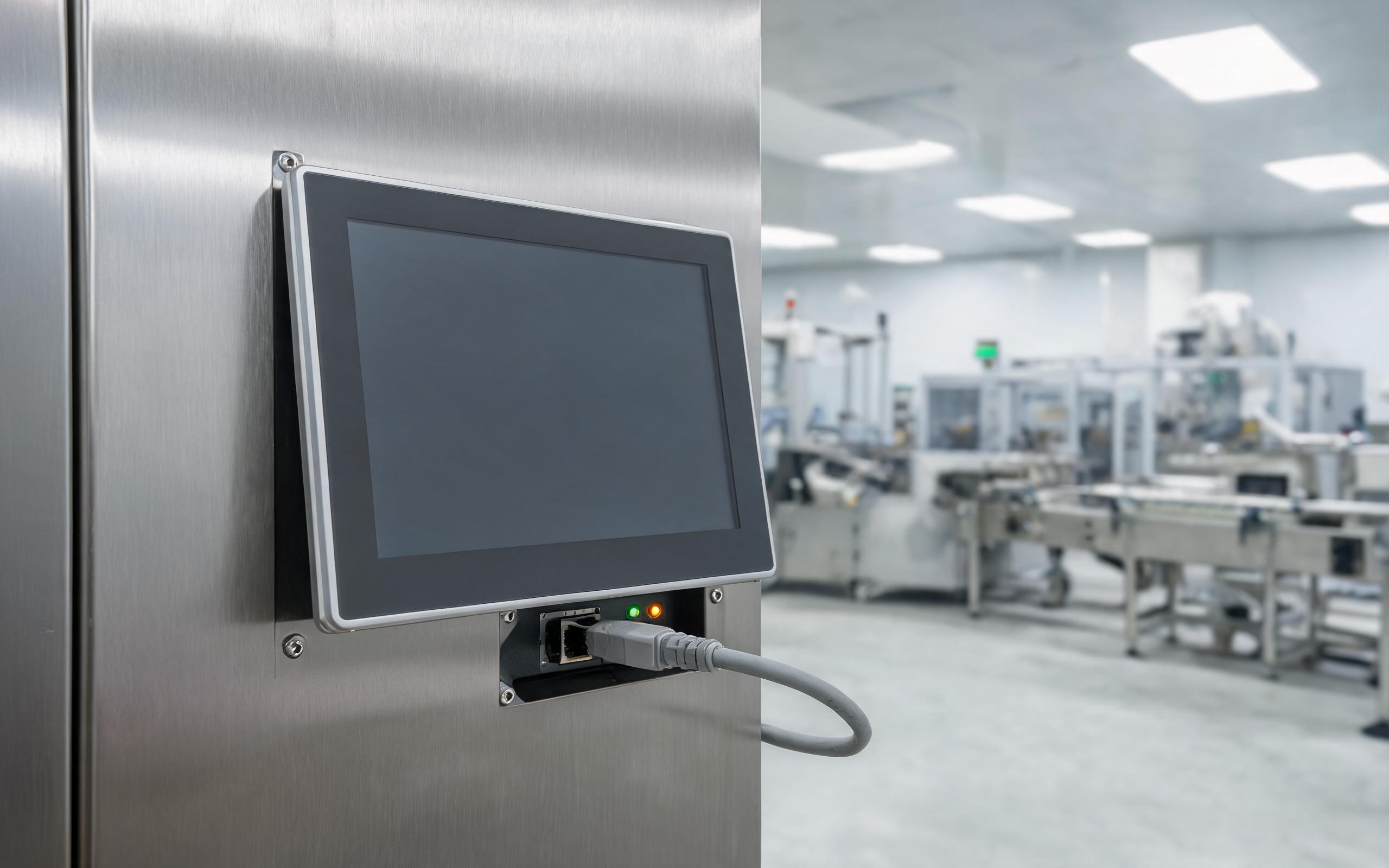
Down a quiet warehouse aisle, an embedded panel pc boots, negotiates its power class, and draws energy through the same RJ45 connector that carries its traffic. When the screen hits full brightness on a 90-meter link, the unit blanks and restarts. The reboot is rarely a software fault. Direct current loses voltage to cable resistance in proportion to current, and a long PoE link can leave the powered device below its turn-off threshold as its backlight peaks. Engineers qualifying machine stations often compare processor and brightness specs while treating the Ethernet cable as free, but every meter of copper carries a resistance budget and a power budget. Treating a short machine drop and a long field run by the same rules produces exactly these intermittent failures.
Running an Embedded Panel PC From a PoE Switch Port
A powered device does not simply accept whatever current a switch offers. During the inrush classification event, it presents a detection signature, and the power sourcing equipment answers with a class that caps available wattage: 802.3af leaves about 12.95 watts at the device, 802.3at reaches 25.5 watts, and four-pair 802.3bt reaches 71.3 watts. An embedded panel pc with a bright projected-capacitive display and populated USB ports can approach 20 watts with the backlight at maximum, pushing a Type-1 port out of budget before a camera is added. The link carries gigabit traffic and direct current on the same magnetically isolated pairs, breaking ground loops between cabinet and machine frame by design. To stay inside the powered-device envelope, embedded panel pc designs informed by KOXIAN power architecture combine an isolated PoE PD module, a regulated downstream DC-DC stage, and an active class-negotiation handshake rather than a passive tap.
Calculating Voltage Drop Across Short and Long Links
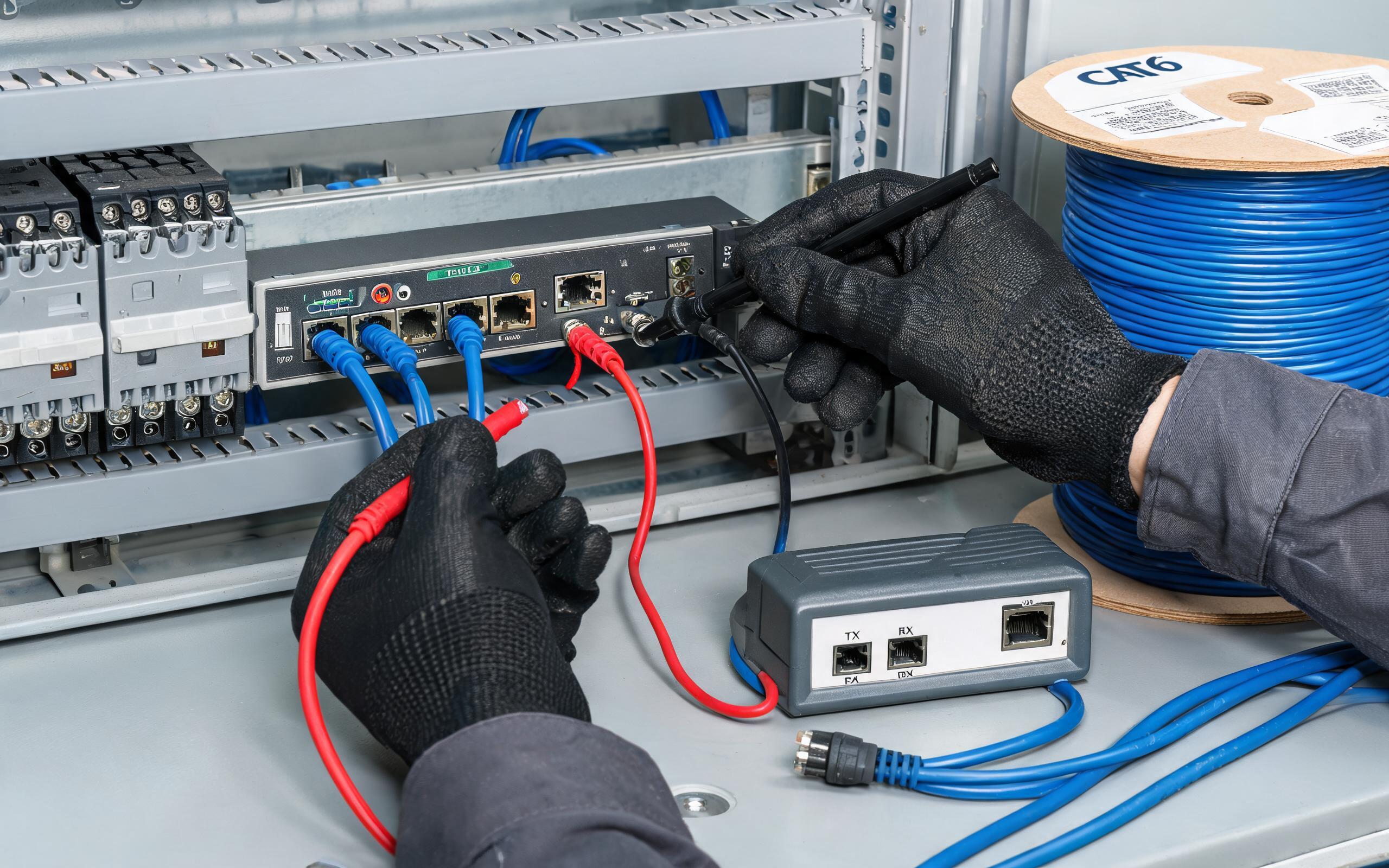
Voltage, rather than wattage alone, decides whether a distant station stays on. In practical retrofits, stations built around KOXIAN-based embedded panel pc hardware have been qualified on 90-meter links by budgeting volts rather than trusting labels. Direct-current drop follows Ohm’s law across the complete loop, current multiplied by the round-trip resistance of the active pair. A common Cat6 cable with 24 AWG conductors is rated near 9.38 ohms per 100 meters per conductor, roughly 18.76 ohms of loop resistance per 100-meter pair. At 0.6 ampere, a 15-meter machine drop loses about 1.7 volts, while a 90-meter run loses more than 10. Sourced at 50 volts, that long run delivers near 40 volts at the far end, close to the undervoltage cutoff, and headroom shrinks further as patch cords, couplers, and a hot cabinet add losses. The margin between a stable station and a repeating restart can be under two volts.
Comparing Machine Cell Drops With Field Runs
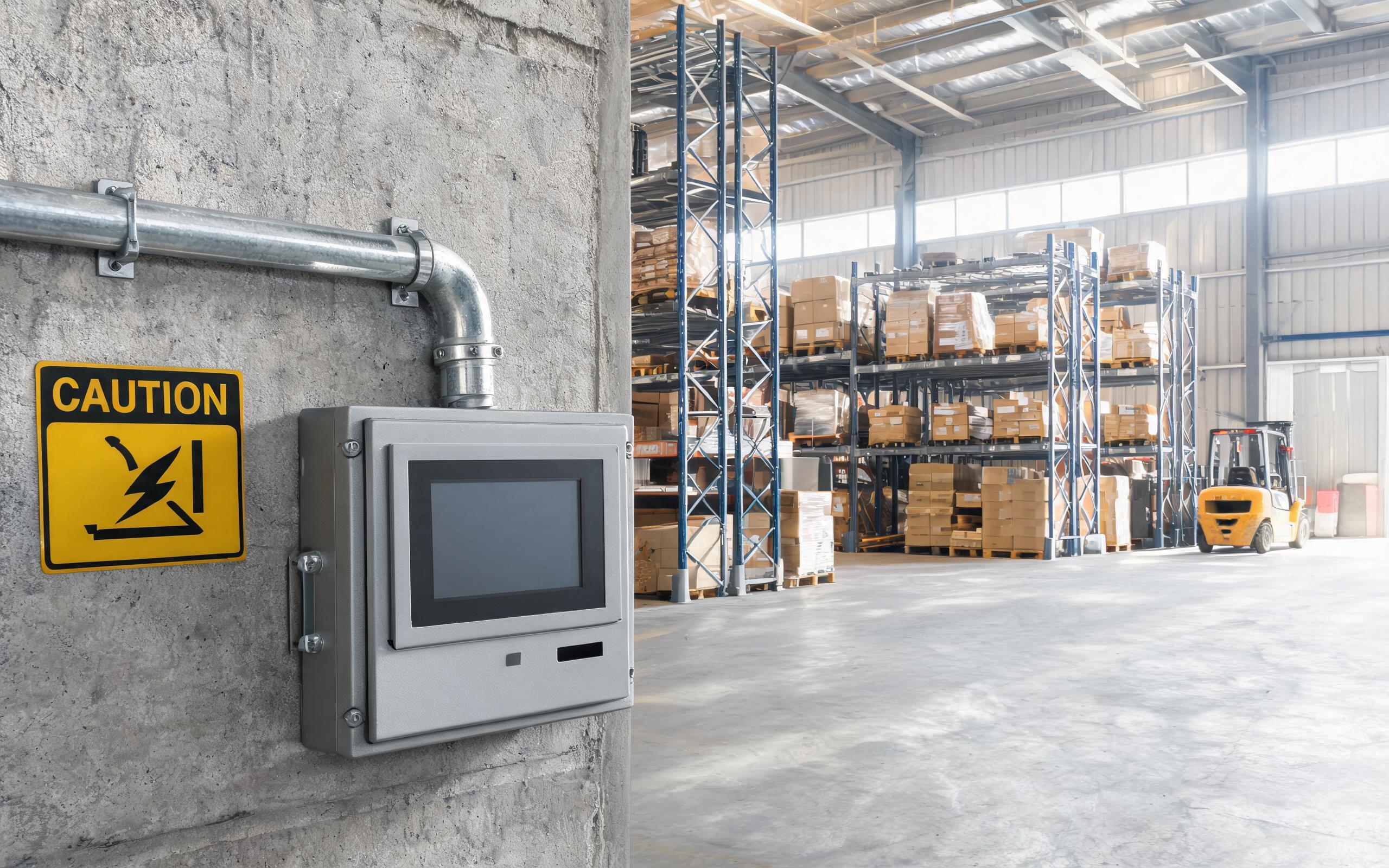
The two deployment shapes fail in different ways. A 10-to-20-meter drop inside a control cabinet follows a short, cool, fully rated path, and its electrical losses rarely matter; the real risk is connector seating and retention under vibration. A 70-to-100-meter run serving an embedded panel pc at a warehouse kiosk, outdoor weighbridge, or cold-storage door crosses patch panels and conduit, and copper resistance climbs with temperature at about 0.4 percent per degree Celsius above the 20-degree rating. Four-pair 802.3bt splits current across two pair sets and cuts resistive loss sharply, while 23 AWG Cat6A conductors and fewer patch points buy margin. Outdoor segments add surge exposure, so shielded channels bonded at the switch end and surge protection at building entry belong in the same decision as the power budget. Dust, washdown, and cold drive the enclosure choice; distance drives the electrical choice.
Specifying PSE Class, Cabling, and Margin
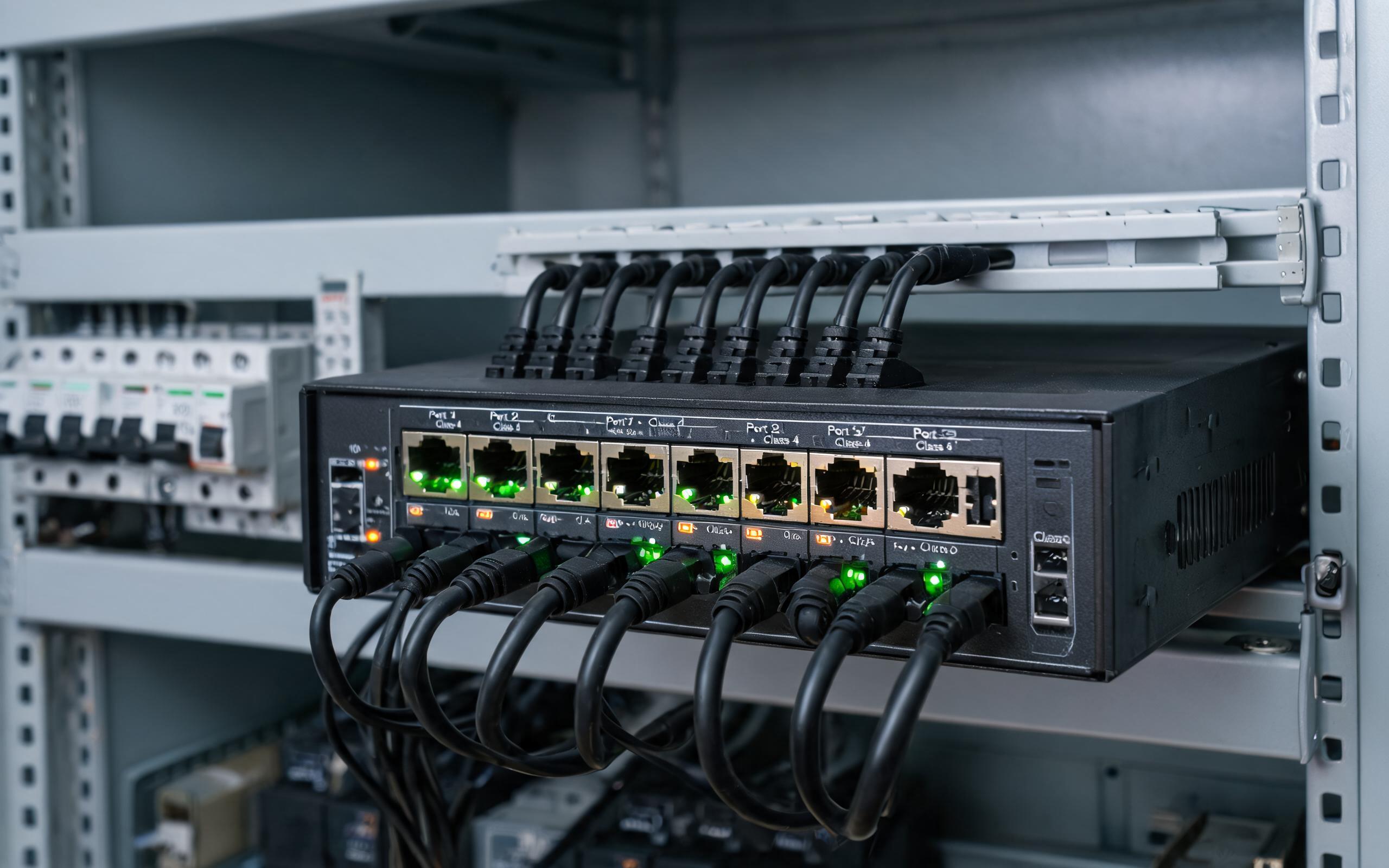
A reliable embedded panel pc specification starts from measured draw with the backlight at maximum and every USB port populated, rather than the idle figure. Select the next higher power sourcing class so the link stays below about 80 percent of capability, calculate far-end voltage from the actual source voltage instead of a nominal 48, and require a loaded link test at the installed length, adding a hot-cabinet check when ambient temperatures run high. Managed switches expose per-port power, assigned class, and disconnect events, and port-level alive checks can cycle power to an unresponsive device without dispatching maintenance. Inspect cable category, bend radius, and shield bonding at acceptance like any conduit run. The channel then stays diagnosable for years: one pull, one connector, and one measured power budget per station.
PoE removes the local power outlet from a machine station, but it does not remove Ohm’s law. Short drops are governed mainly by retention and connectors; long runs are governed by loop resistance, temperature, and class headroom. Matching the source class to measured peak draw, choosing four-pair delivery and heavier copper for distant stations, and validating voltage at the far end keep single-cable simplicity from becoming single-cable downtime.