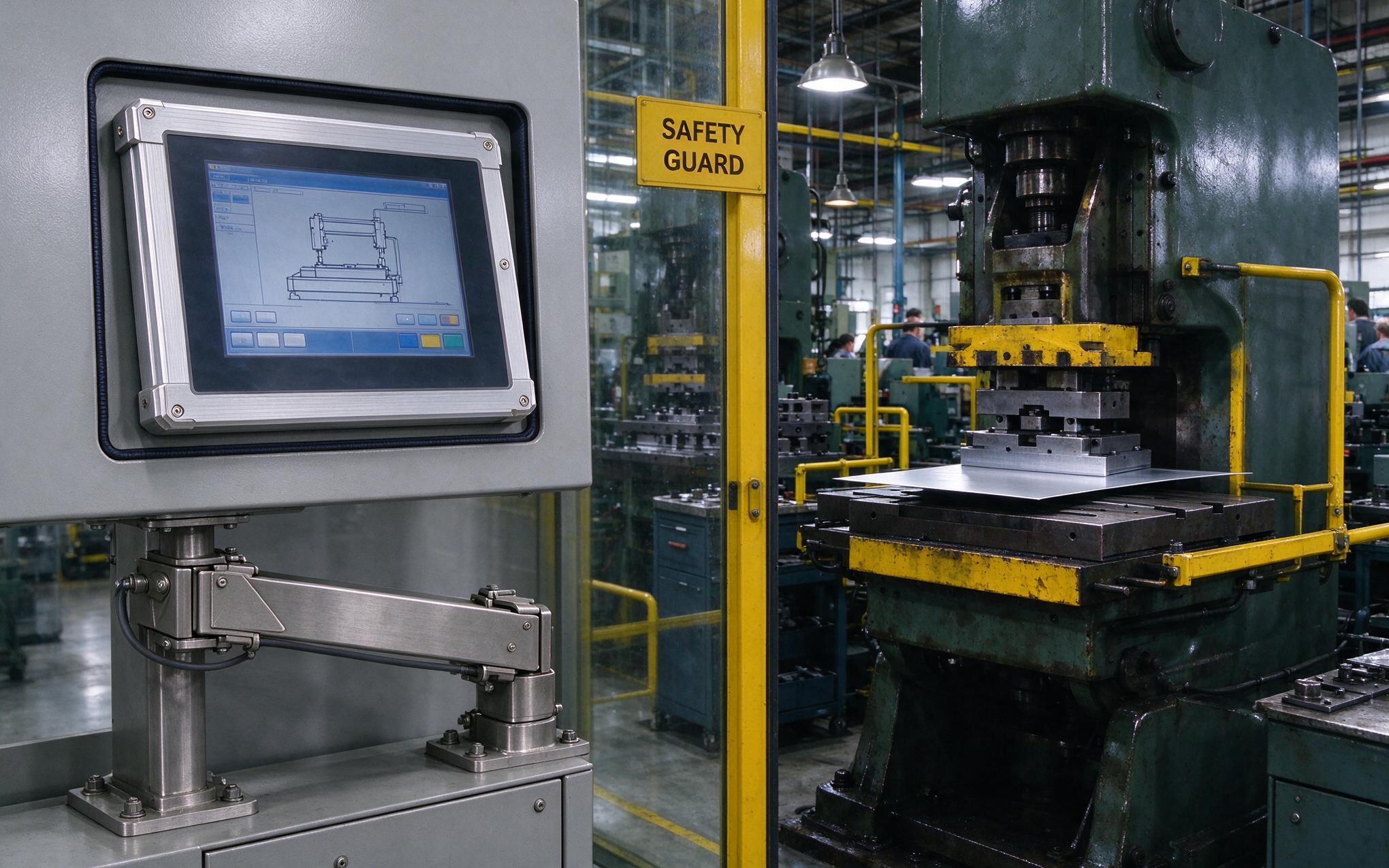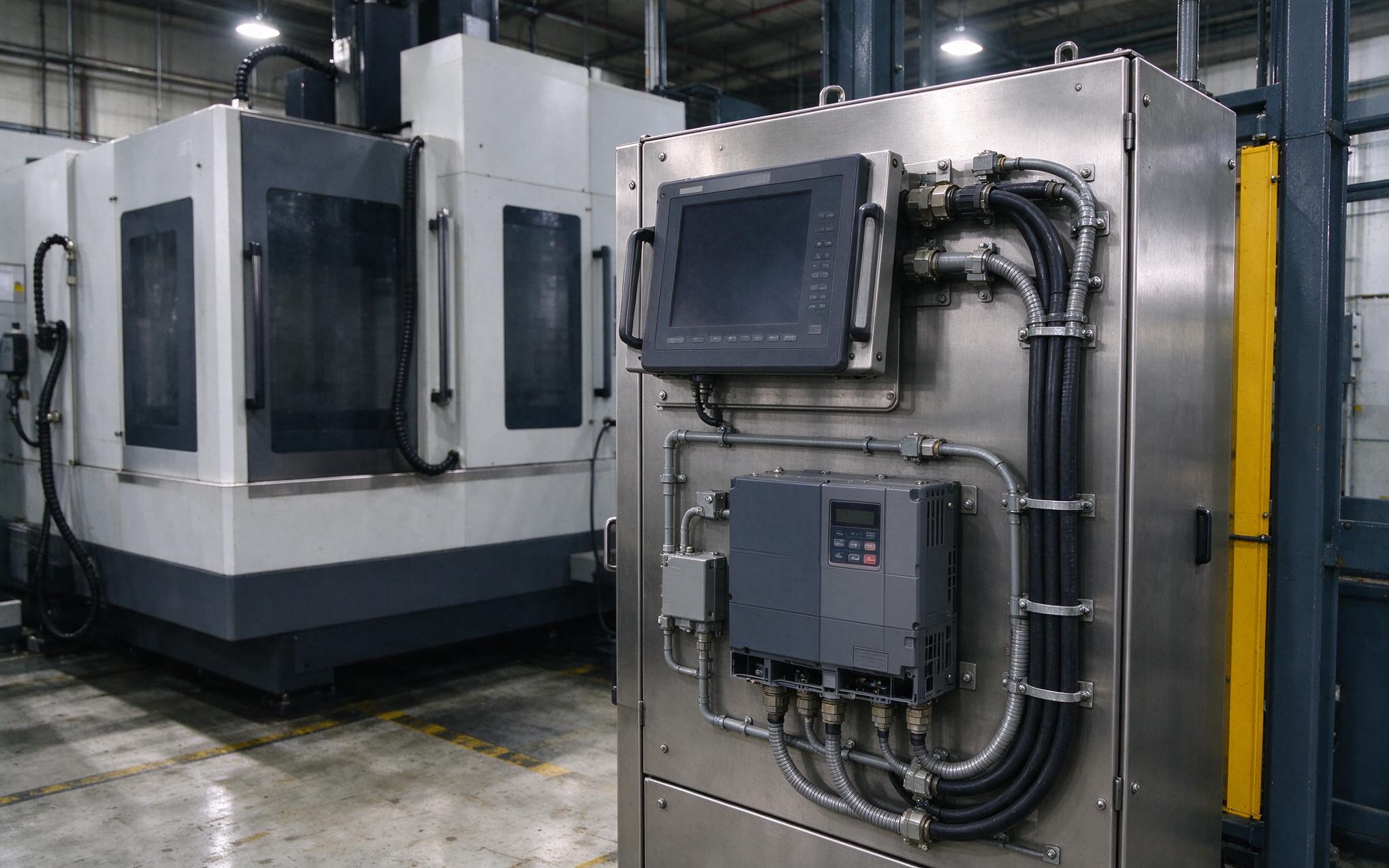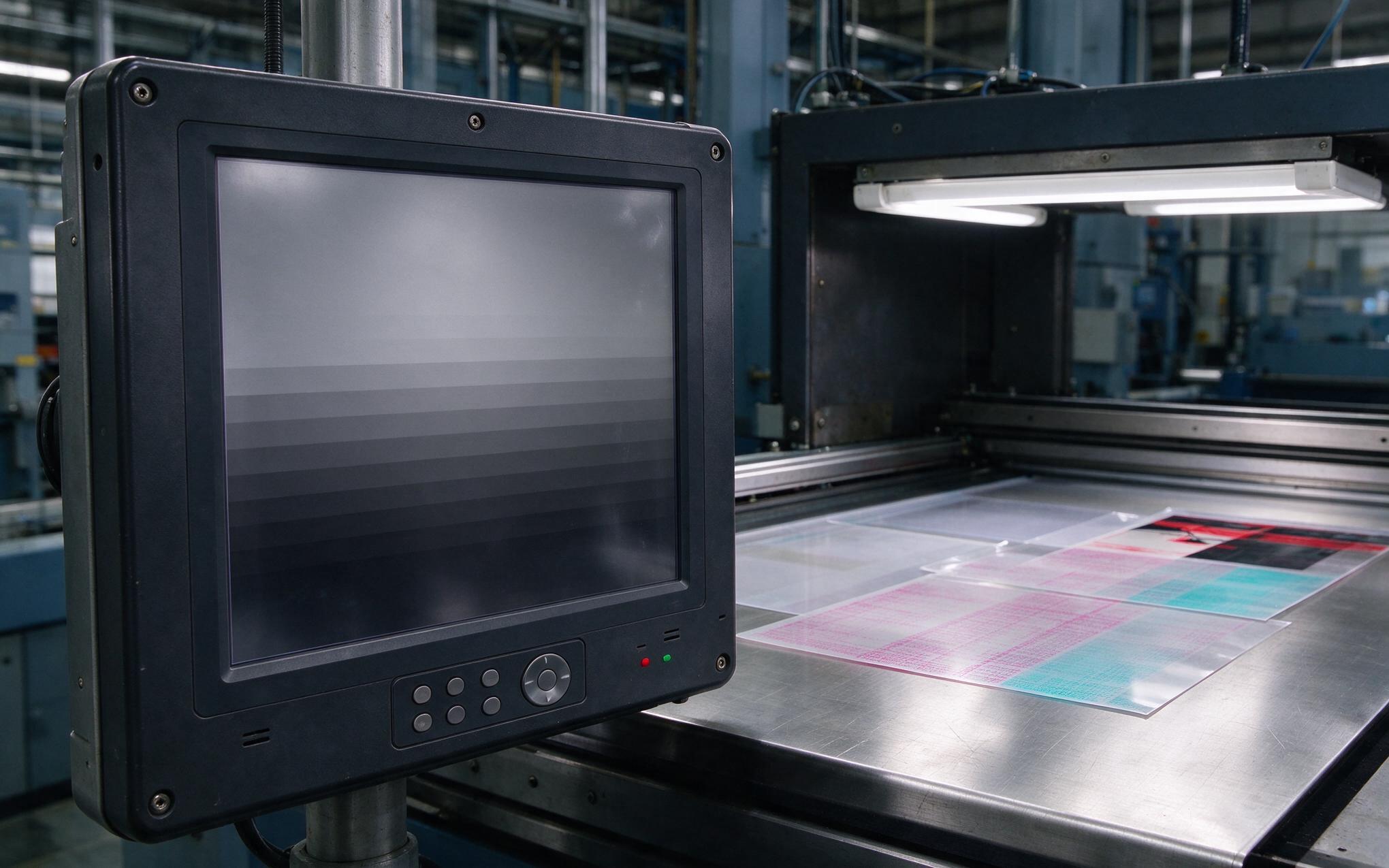
A fault report from a metal stamping plant listed cracked cover glass three weeks after commissioning, with no record of any tool being dropped on it. The panel had an IP66 seal and an aluminum housing, so the specification looked adequate on paper. What it lacked was any stated impact class. IEC 62262 defines that class, and its IK code is the only standardized way to compare how a rugged touch screen display responds to mechanical shock rather than water or dust. Purchasing teams read protection ratings fluently and skip impact codes almost entirely, which is why cracked glass remains among the most common warranty disputes raised from the plant floor.

IK Code Structure and the Energy Behind Each Level
IEC 62262 assigns a two-digit IK code to an enclosure based on the impact energy it withstands without losing protection. The scale runs from IK01 at 0.14 joules up to IK10 at 20 joules, and the steps are not linear: IK08 corresponds to 5 joules, IK09 to 10 joules, and IK10 to 20 joules. Each level is verified with a defined striking element, mass, and drop height applied to the points judged most vulnerable. That procedural detail matters more than the number itself, because a technician aiming at a steel rear panel and one aiming at the center of cover glass are measuring two different products. A rugged touch screen display carries its weakest impact point on the visible surface, so a code validated against the housing tells a buyer very little.

Impact Energy Limits Translated Into Plant Events
Twenty joules stays abstract until it is converted into things that actually happen in a bay. A one kilogram wrench falling two meters delivers roughly 20 joules at contact, which places a routine dropped tool at the ceiling of the IK scale rather than somewhere in its comfortable middle. Aisle traffic adds a second mechanism, where a pallet corner or cart handle strikes slowly but with far more mass behind it, loading the bezel as a sustained push instead of a sharp blow. Sites that log these events usually find damage concentrated within a meter of walkways and door swings. Selecting a rugged touch screen display at IK08 for a location that regularly sees dropped hand tools is an arithmetic error rather than a judgment call.

Bezel Geometry and Mounting Stiffness as Load Paths
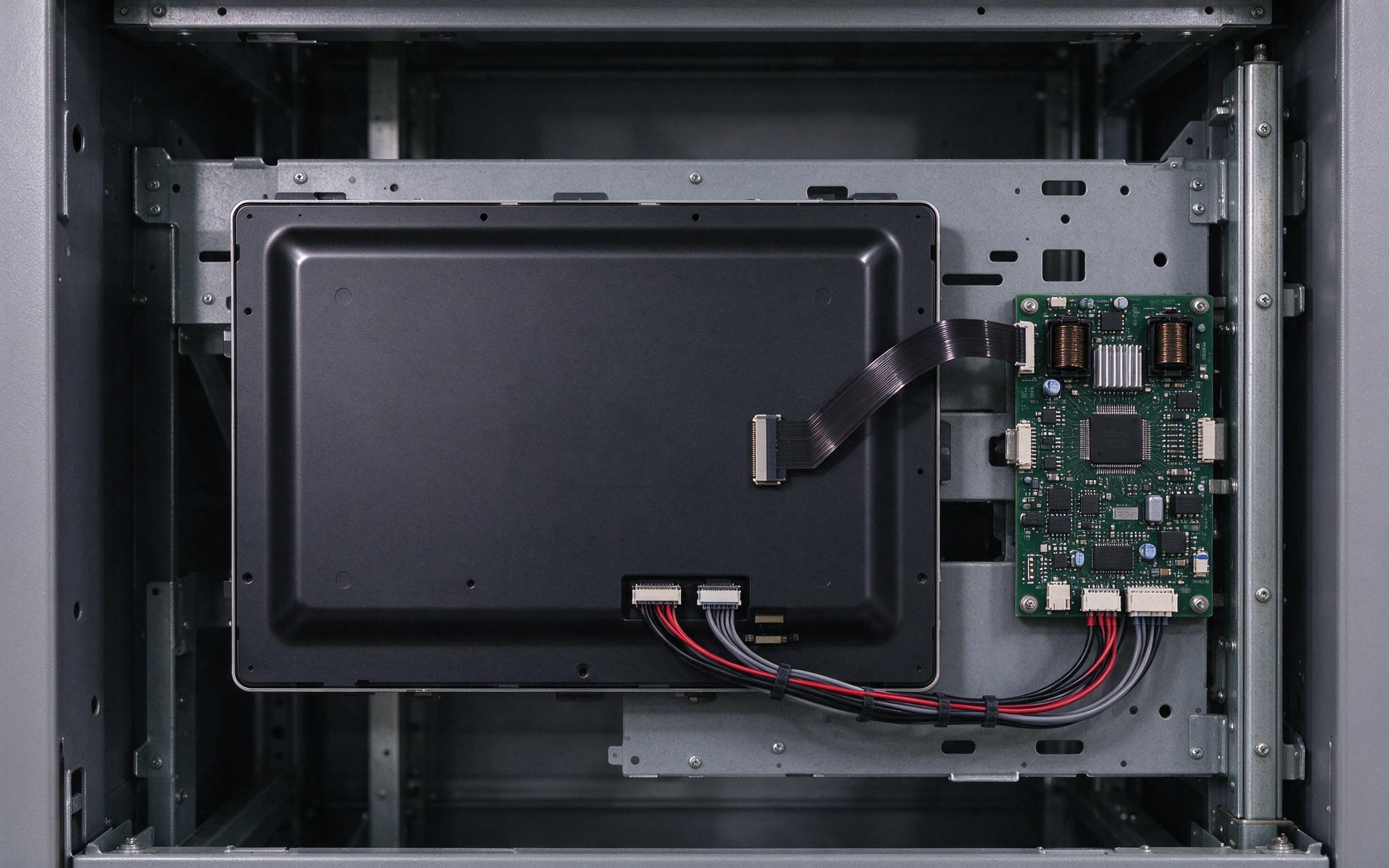
Impact resistance behaves as a system property rather than a glass property. Cover glass fails in tension on its back face, so the way a panel is supported decides whether energy spreads or concentrates. A recessed bezel standing proud of the glass intercepts angled strikes before they reach the surface, while a flush architecture looks cleaner and transfers the event straight into the laminate. Mounting stiffness works the same way: a housing bolted into a rigid cabinet cutout has nowhere to deflect, so the glass absorbs everything, whereas slight compliance behind the unit converts part of the energy into movement. Engineers often evaluate this trade-off through real hardware, such as the recessed aluminum bezel used in the KOXIAN G1 series, where the frame edge takes the strike instead of the touch surface.

Specification Language for a Rugged Touch Screen Display
A usable requirement names the impact class, the test surface, and the failure criterion in the same sentence. Asking for IK09 without stating that the energy must land on the display area lets a supplier certify a steel rear housing and remain technically honest. The failure definition needs to be explicit too, because IEC 62262 treats loss of enclosure protection as the endpoint, which means a spidered but still sealed panel can pass while being operationally useless. To close that gap, industrial hardware manufacturers, including KOXIAN, publish separate statements for glass integrity and touch function after impact rather than folding both into one code. Adding a clause that touch accuracy be re-verified after the impact sequence turns a compliance label into something a maintenance team can actually rely on.
Ingress ratings and impact classes describe unrelated physical events, and only one of them gets specified with any discipline. IEC 62262 supplies a defensible scale, but its value depends entirely on where the energy was applied and what counted as failure. Reviewing quotations for the test surface, the joule figure behind the code, and a stated post-impact touch criterion costs one email and removes the most frequent source of cracked-glass disputes. Bezel geometry and cabinet stiffness then decide whether that certified number survives contact with a real walkway.