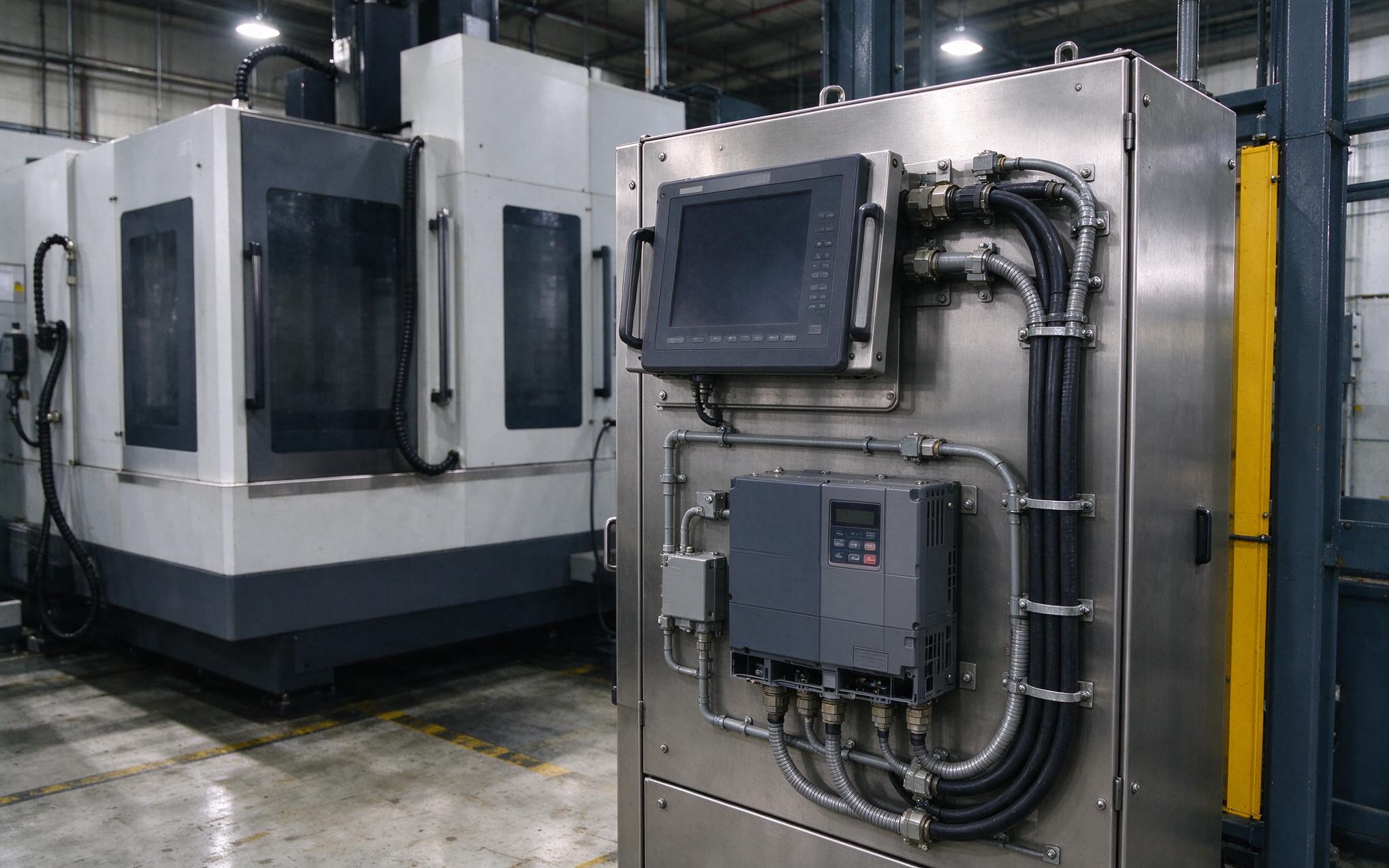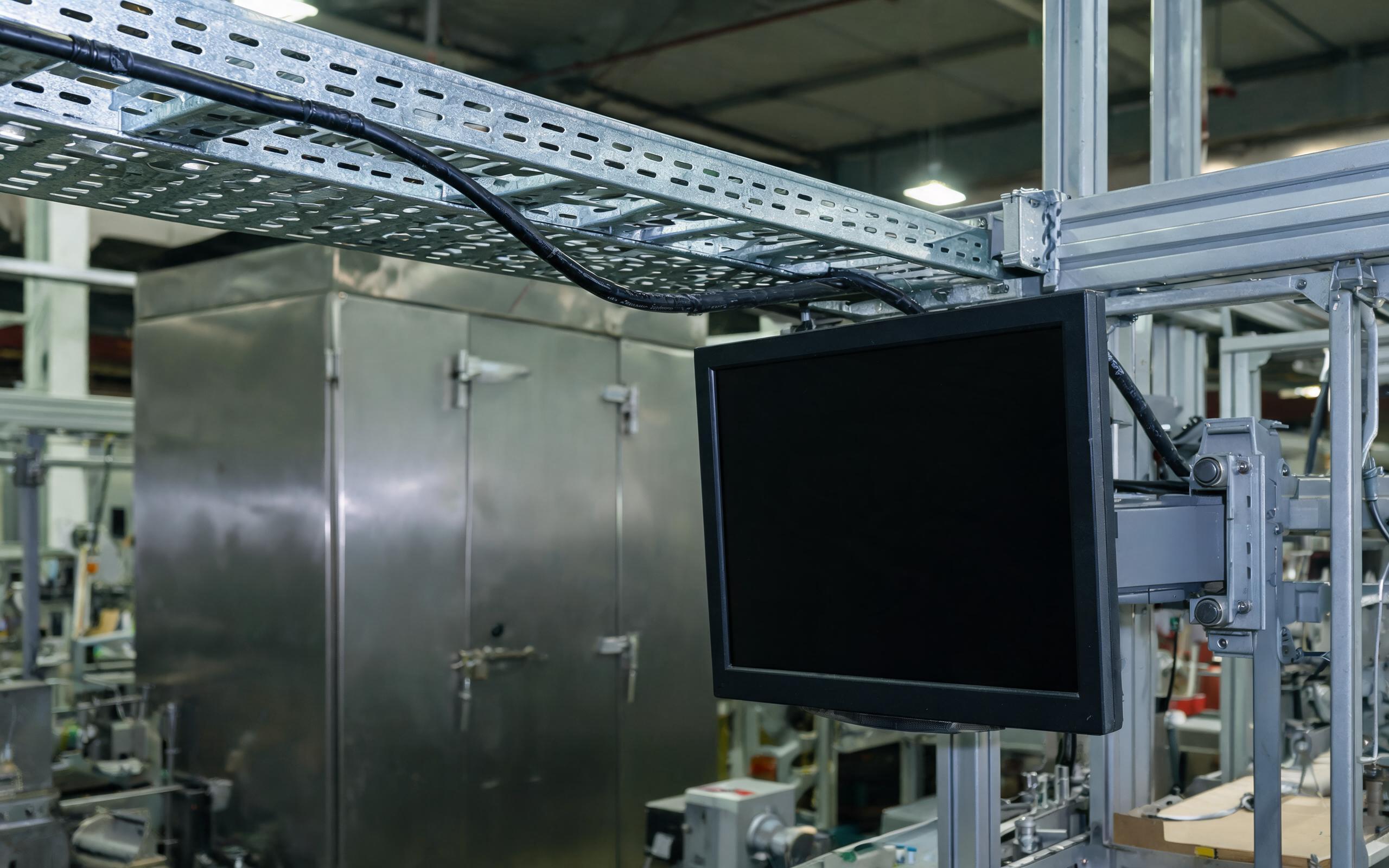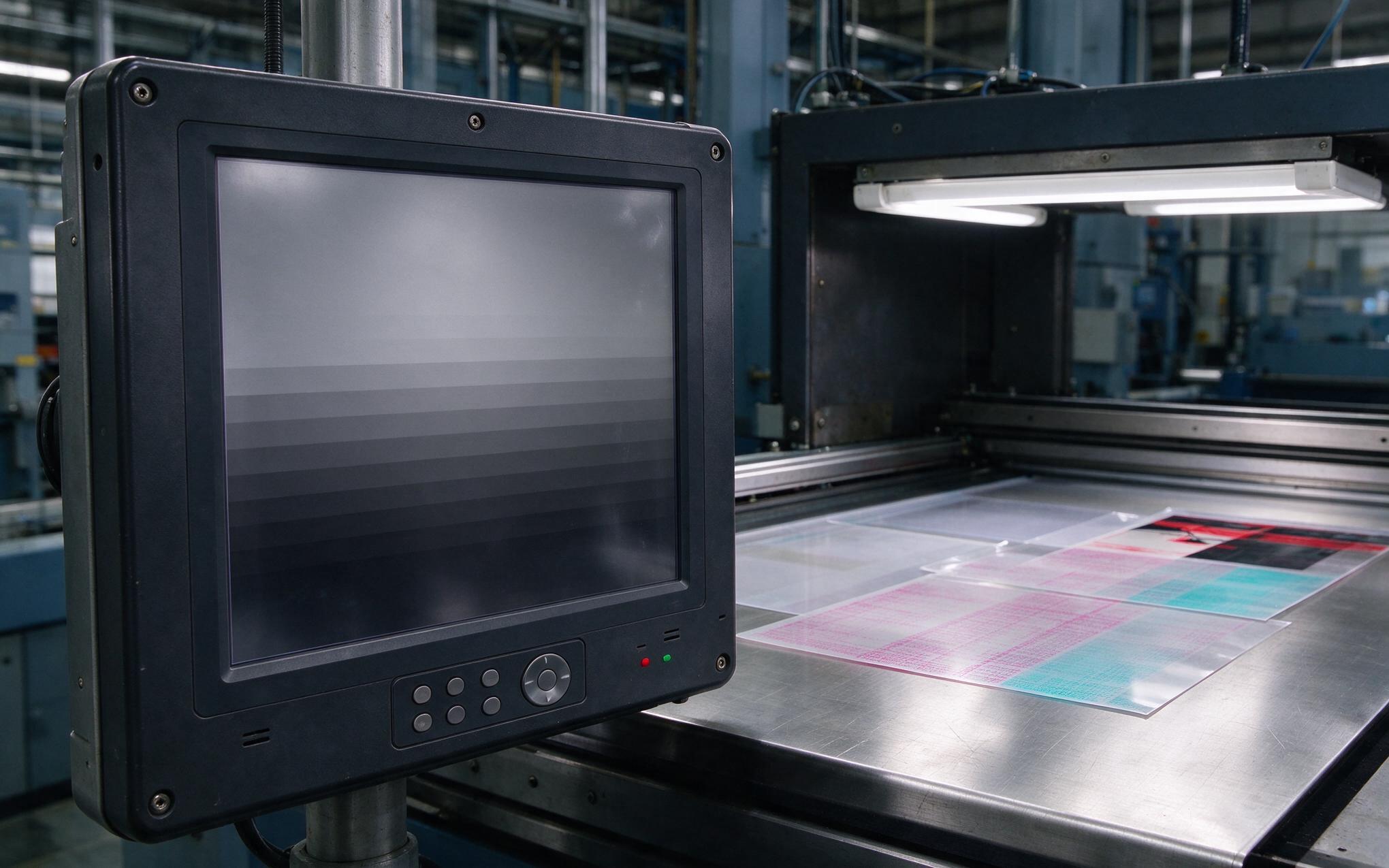
Maintenance technicians on a three-shift packaging operation reported that operators had begun leaning toward the screens and squinting at status text, though every unit still powered on and passed its self-test. A luminance meter settled the question: panels commissioned at a documented brightness had fallen to roughly sixty percent of it after two years of continuous duty. Nothing had failed in a way any diagnostic would flag. Industrial display monitors installed for around-the-clock service degrade gradually through mechanisms tied to drive current and junction temperature, and both are set by decisions made long before the units reach a plant floor.

Under Continuous Duty: How Lumen Depreciation Actually Progresses
Backlight emitters in industrial display monitors do not fail abruptly; they lose output on a curve. Manufacturers characterize this as the time until output falls to a stated fraction of the original value, commonly seventy or fifty percent, and those figures are quoted at a specified junction temperature and drive current. Change either variable and the published life no longer applies. A panel driven near its maximum current inside a sealed housing with limited conduction path can reach half its rated interval, which explains why two installations of the same model diverge so widely. The practical response is to record a luminance baseline at commissioning and re-measure annually, because gradual decay is invisible to daily observation. Operators adapt to it, and the loss is only recognized once a new unit is installed beside an aged one for comparison.

Across the Panel Surface: Thermal Gradients and Uneven Aging
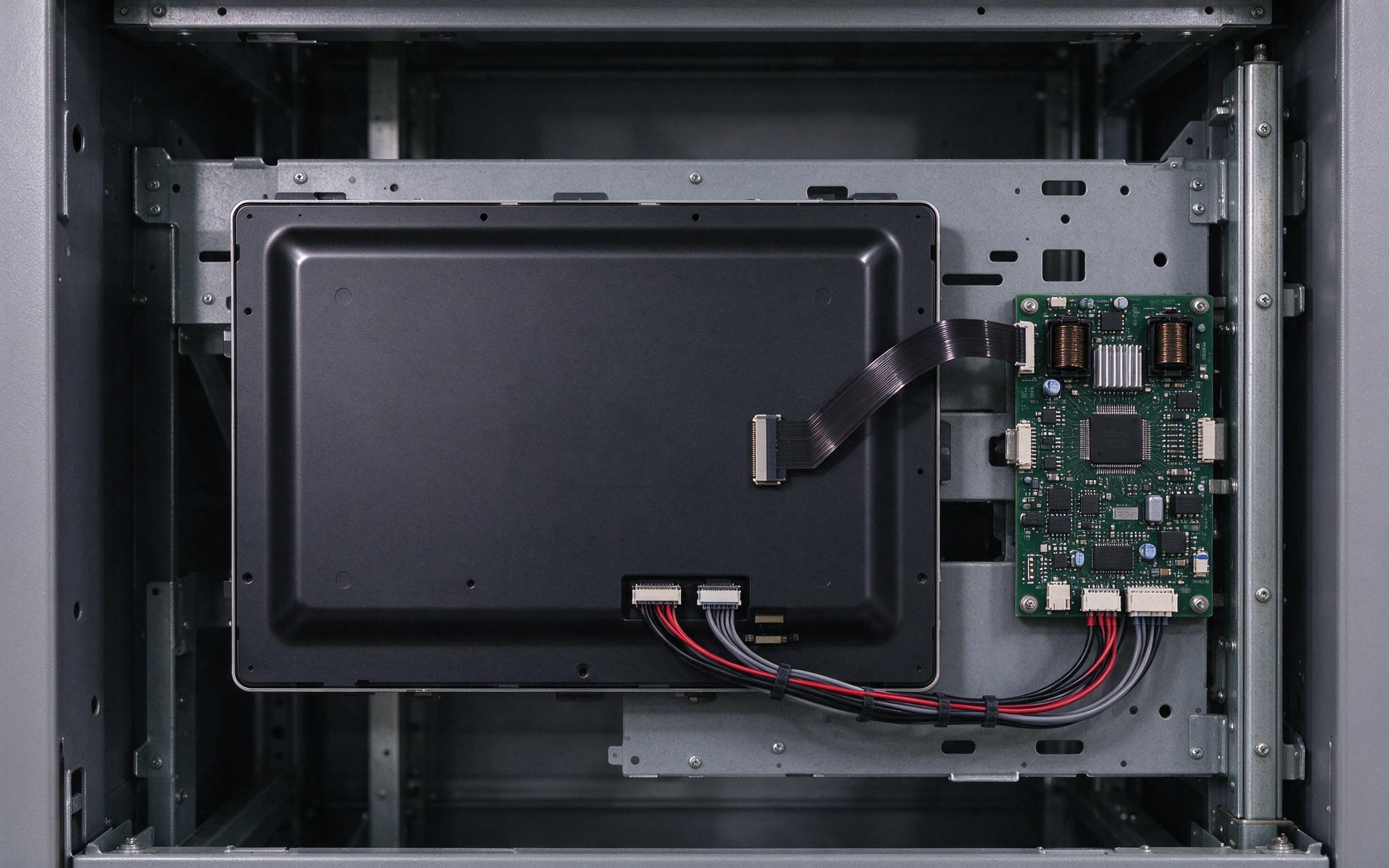
Heat is the dominant accelerant, and it is rarely distributed evenly. Convection carries warmth upward inside an enclosure, so the emitter row along the upper edge routinely operates warmer than the lower edge by a meaningful margin, and it ages faster in proportion. The result appears as banding or a brightness gradient rather than uniform dimming, which is more objectionable to operators than an overall reduction. Designs that spread heat into a metal rear housing rather than relying on internal air keep the gradient narrow, an approach visible in sealed aluminum construction such as the KOXIAN G1 series where the backlight assembly conducts directly into the chassis. Reviewing industrial display monitors for continuous duty therefore means asking how backlight heat leaves the assembly, not only what ambient range appears on the datasheet.

Within the Drive Circuit: Current Headroom and Dimming Method
Brightness specifications for industrial display monitors create a trap. A panel rated at a high peak figure and operated at that peak all day will decay quickly, while the same panel operated at seventy percent of maximum can last considerably longer. Selecting a unit with headroom above the required working brightness, then running it below maximum, converts specification margin directly into service life. Dimming method matters alongside current level: pulse-based dimming reduces average current while keeping the emitter at an efficient operating point, whereas reducing forward current continuously can shift color output as it drops. Manufacturers of industrial display screen assemblies, including KOXIAN, publish operating brightness separately from peak capability for this reason, and that distinction is worth requesting when a quotation lists only a single figure.

Beyond Brightness: Color Point Drift and Replacement Planning
Emitters do not age uniformly across the spectrum. Phosphor conversion degrades at a different rate than the underlying die, so the white point of industrial display monitors migrates over service life, typically toward a cooler or greener cast depending on the emitter design. Where operators judge product appearance or use color-coded status information, this drift becomes a functional defect well before brightness limits are reached. It also complicates partial replacement, since a new unit placed beside aged ones is immediately obvious and can prompt questions about whether the old units are faulty. Plants running large installed bases generally handle this by replacing industrial display monitors in zones rather than individually, and by keeping commissioning luminance and color measurements on file so replacement decisions rest on recorded data rather than on complaints.
Gradual optical decay is a predictable engineering outcome, not a defect. Junction temperature and drive current set the rate, enclosure thermal design determines uniformity, and dimming method influences color stability. Recording luminance and color at commissioning, specifying brightness headroom instead of running at peak, and confirming how backlight heat reaches the outside world together turn an unpredictable complaint into a planned replacement interval that maintenance budgets can absorb.