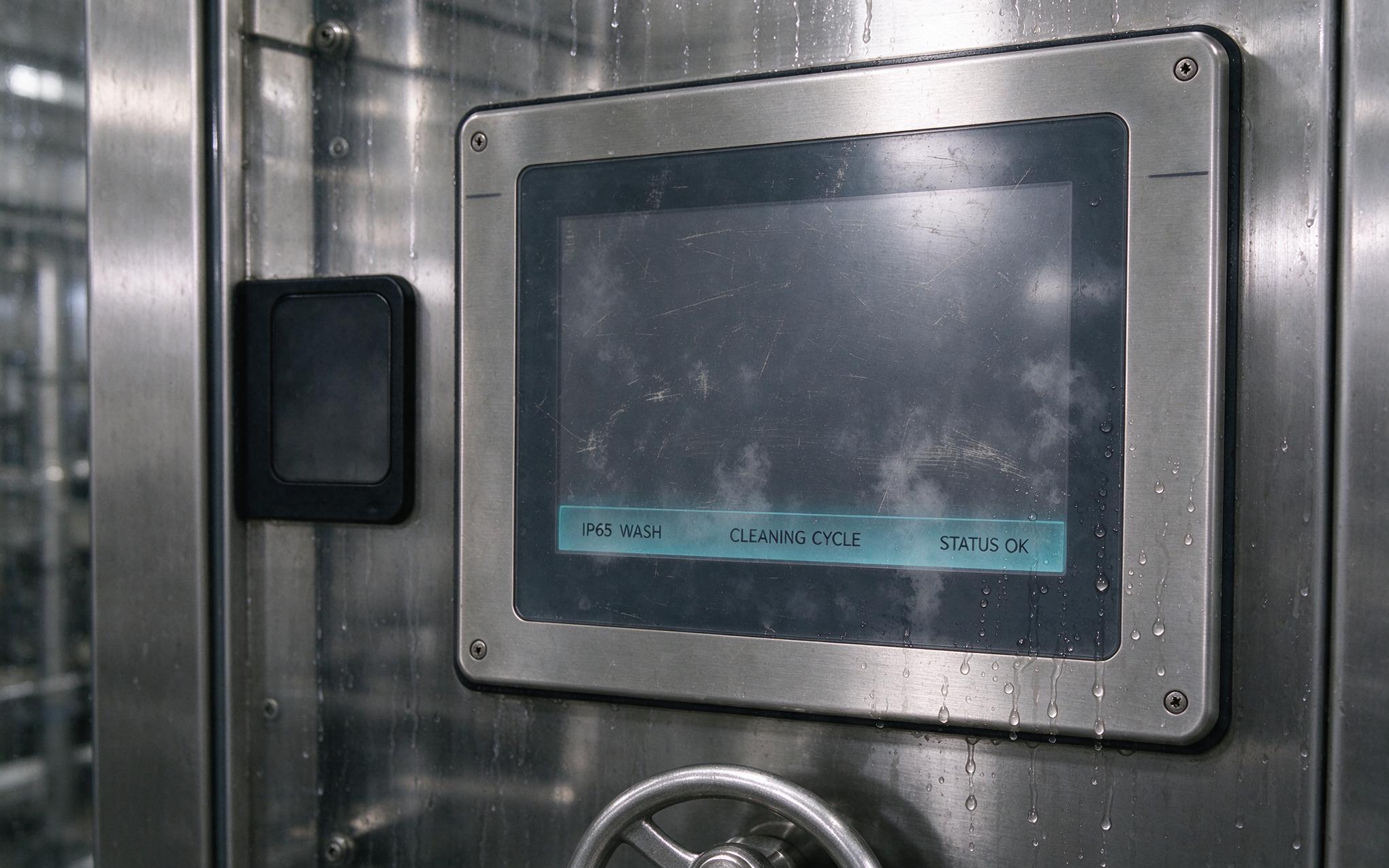
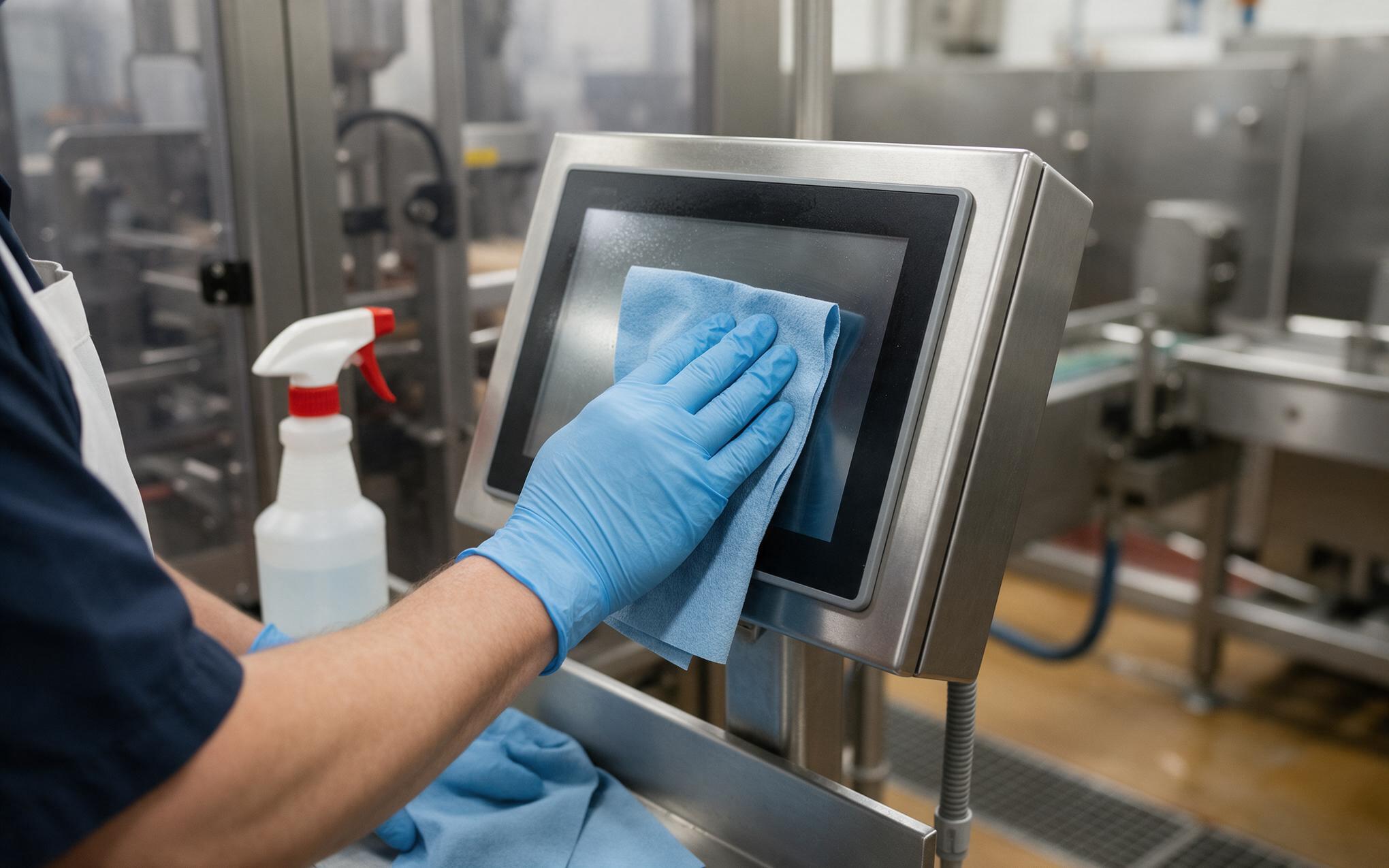
Sodium hypochlorite wipes and isopropyl alcohol swabs land on the same front panel inside a single sanitation shift, and each chemistry works on a different part of the stack. Oxidizing sanitizers drive moisture into coatings and edge seals, while solvent wipes soften surface treatments and swell adhesive beads. Procurement teams often specify a rugged touch screen display by ingress rating and brightness alone, then watch the front haze or craze after a few months of routine wipe downs. Chemical compatibility at the front belongs in the specification, not in the warranty claim. Both failures trace back to a chemical choice made long before the panel was mounted.
In Wipe Down Duty the Front Stack Meets Two Chemical Families
Two chemistry families dominate daily cleaning in food, pharmaceutical, and process plants. Oxidizing sanitizers such as sodium hypochlorite and peracetic acid are applied wet and left to dwell, while alkaline foams lift organic residue before a hot rinse. Front panel manufacturers, including KOXIAN, keep those oxidizer duties separate from solvent duties when qualifying a front stack for a given production line. Solvent wipes built on isopropyl alcohol or acetone are reserved for adhesive residue and ink marks, and they behave nothing like the water-based chemistry that runs through the rest of the shift. Each family selects its own failure mode, since oxidizers haze coatings and attack exposed edges while solvents craze plastics and swell the sealant bead behind the glass.
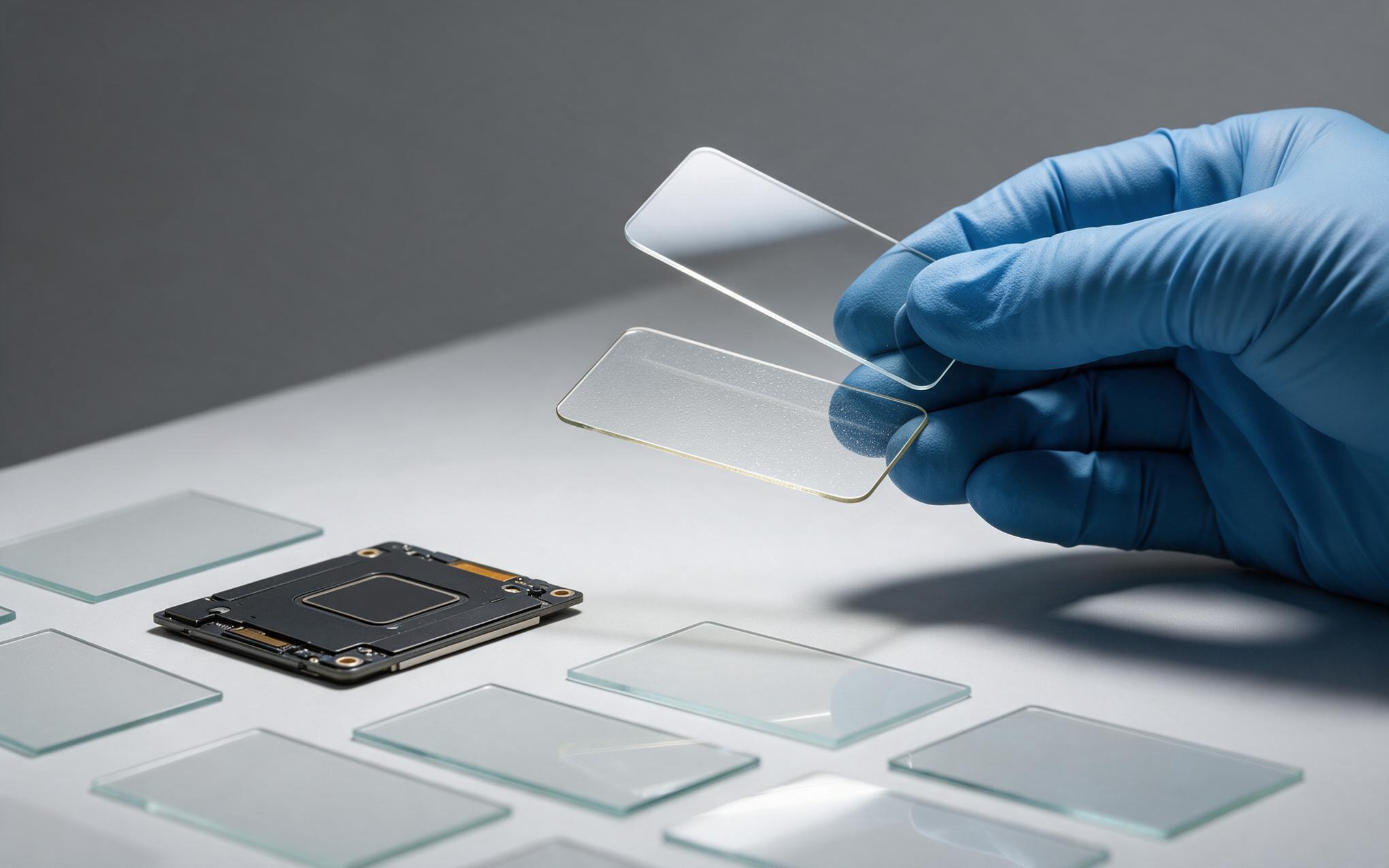
Cover Glass Routes Under Repeated Chemical Exposure
Soda-lime tempered glass remains the default front for a rugged touch screen display because it is inexpensive, dimensionally stable, and tolerant of most water-based sanitizers. Chemically hardened aluminosilicate adds surface compression through an ion exchange bath, which raises scratch resistance against grit carried on gloves and wipes. Polymer fronts such as polycarbonate take impact well but scratch easily, and solvent wipes can craze their surface under repeated dwell. Anti-reflective and anti-smudge coatings sit above whichever substrate is chosen, so a chemical resistant cover glass specification only holds if that coating survives the same concentration and dwell time. Suppliers publish chemical resistance charts for the material, and those charts rarely describe the finished, coated assembly that ships to a plant.
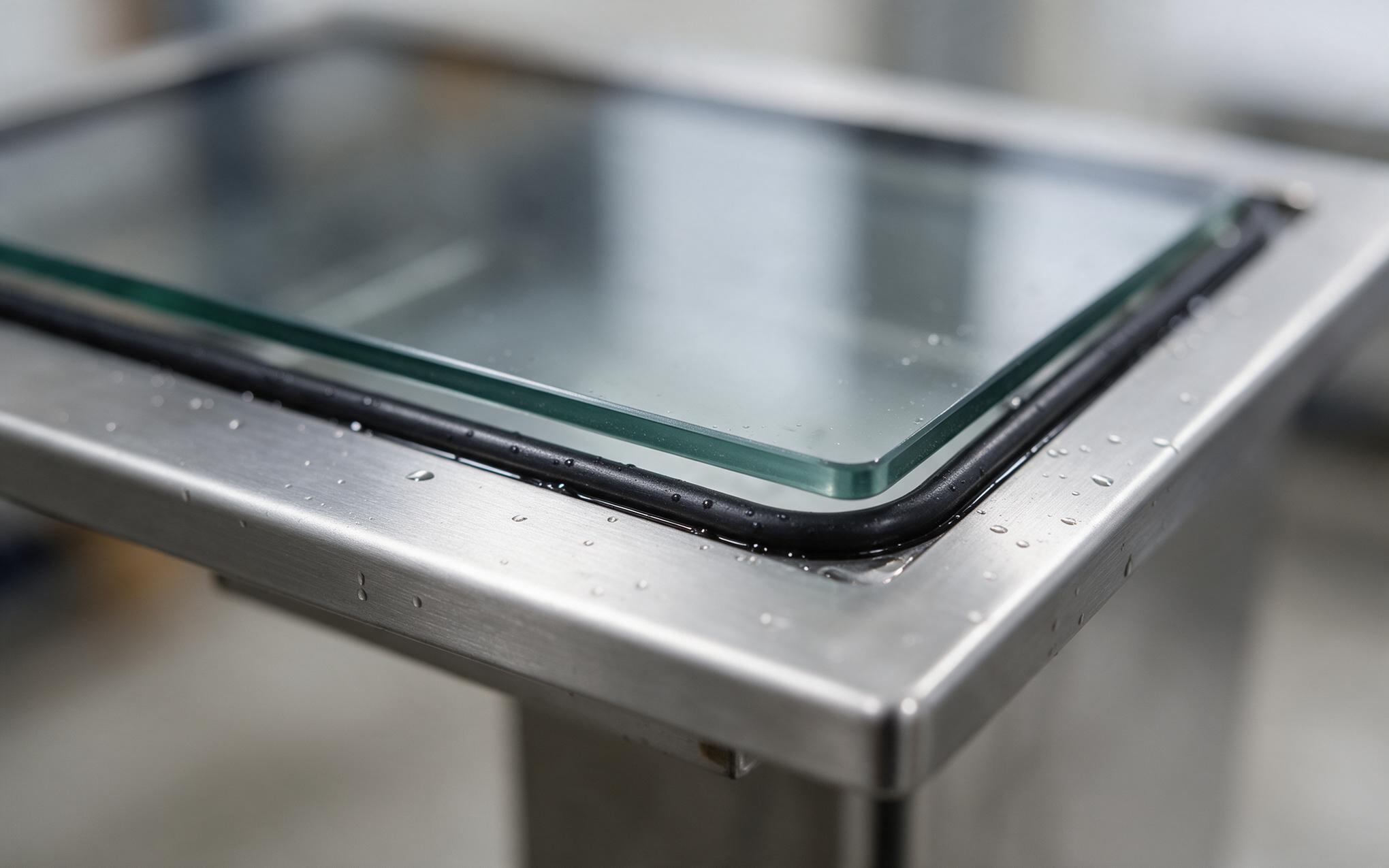
Gasket and Bezel Materials That Survive Sanitizer Exposure
The glass rarely fails alone, because the sealant bead and the front frame decide how long the assembly stays closed. EPDM resists oxidizing sanitizers yet swells in aromatic solvents, silicone covers wide temperatures with modest solvent tolerance, and fluoroelastomer holds its seal through repeated solvent wipes. Aluminum frames need anodizing that survives oxidizer dwell, while stainless frames hold up only if crevices at the glass line drain and get wiped. A cleaning chemical compatibility matrix built from the exact chemistry and dwell time on the line settles these choices faster than any generic rating. Field observations from food packaging lines show that stacks built by KOXIAN keep their seal when gasket, frame finish, and glass edge are treated as one material system.

Validating a Rugged Touch Screen Display Against Site Chemistry
Datasheets describe materials in isolation, so validation of a rugged touch screen display has to run on the finished front with the site’s actual chemistry. A practical sequence starts with wipe cycles at the recorded concentration, dwell, and temperature, repeated for as many shifts as the panel will see between deep cleanings. Coupons of the candidate glass, coating, gasket, and frame finish run through the same cycles, then get checked for haze, tack, swelling, and loss of surface texture. Standards supply the test frames, with ASTM D543 covering plastics against chemical reagents, ISO 2812 addressing coating resistance, and IEC 60529 ingress classes describing water only, not chemistry. Running it on samples before the order keeps the chemistry decision in engineering rather than in a replacement schedule.
A rugged touch screen display sits where cleaning chemistry, optics, and mechanics meet, and the front stack has to be chosen for all three at once. Match cover glass and coating to the oxidizers and solvents actually in use, confirm gasket and frame materials against the same dwell times, and validate the assembled front with wipe cycles before the order. Projects that treat chemical compatibility as a purchasing detail tend to rediscover it as a maintenance cost.