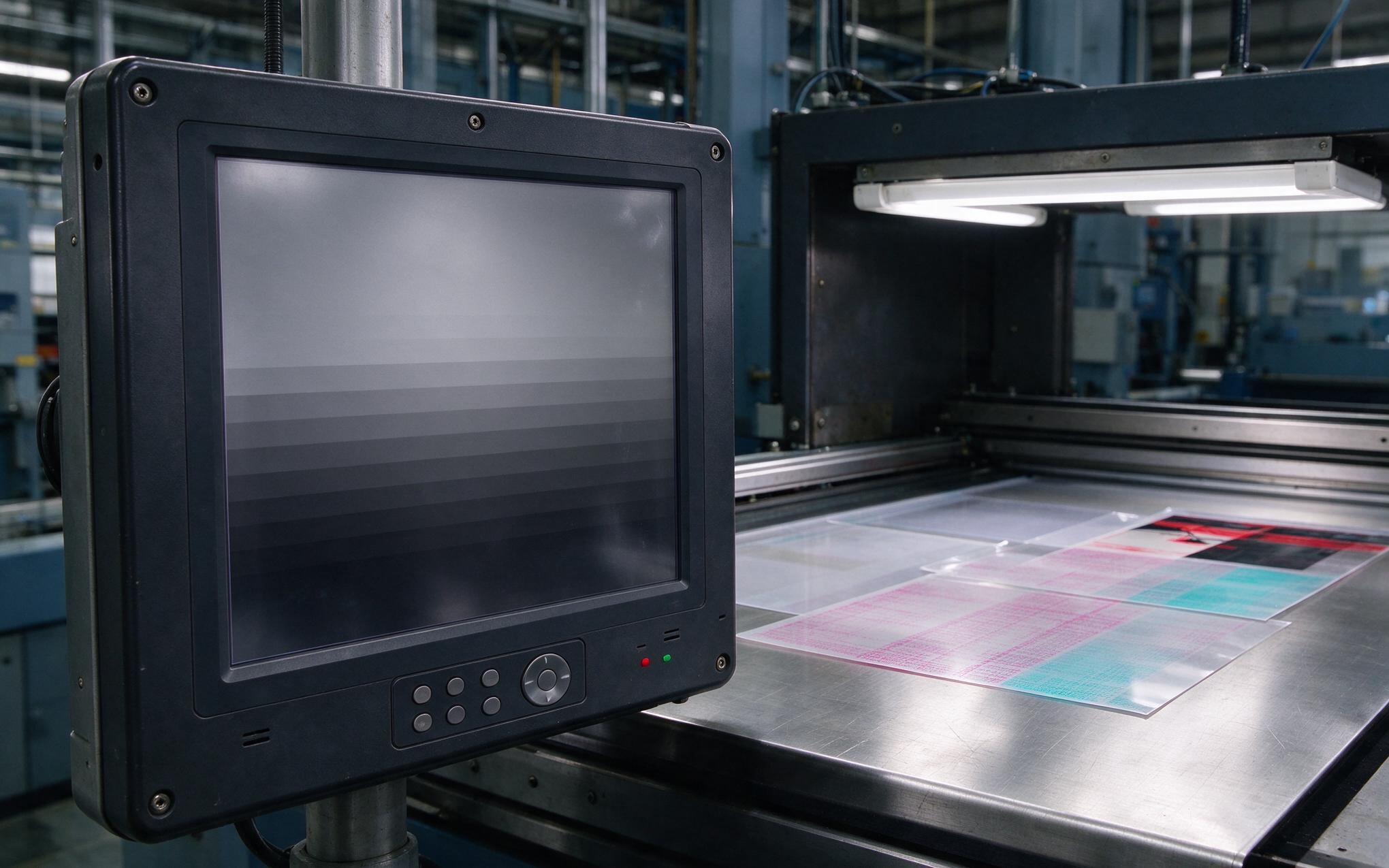
Two numbers frame every rugged front panel decision: five joules, the strike energy behind an IK08 rating, and twenty joules, the energy behind IK10. Many specifiers default to the higher class because a tougher front feels like the safer purchase, then discover that the thicker glass needed to pass the strike test has weakened the touch response the panel depends on. An industrial panel pc touch screen couples each finger press through that cover glass to a sensor grid below, so every added millimeter works against signal strength. The result is a unit that passes its impact spec yet frustrates operators during a shift, which is why impact class and touch sensitivity have to be selected together.
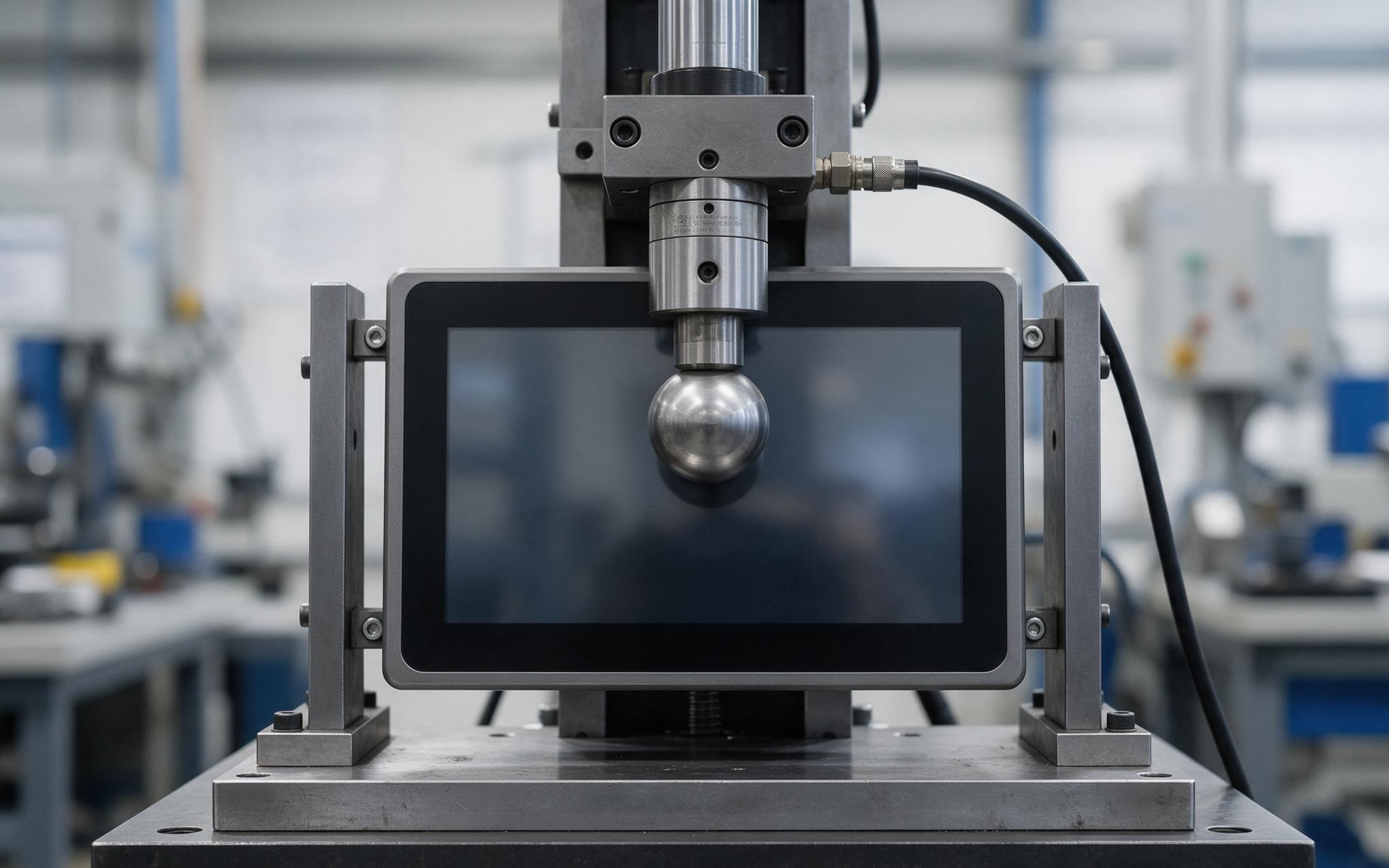
IEC 62262 Impact Classes Behind IK08 and IK10
Design approaches like those used at KOXIAN fix the joule class before any glass is cut, because the strike energy governs every thickness decision that follows. The IEC 62262 impact test drives five joules at an IK08 front and twenty at IK10, roughly four times the energy into the same area. The test strikes the assembled face, so the rating belongs to the whole stack of cover glass, bezel, gasket, and mounting rather than to one material. With a two kilogram mass, five joules corresponds to a drop of about a quarter meter, while twenty joules needs closer to a full meter. That gap decides how much abuse a front can absorb in aisles where carts and hand tools pass all day.
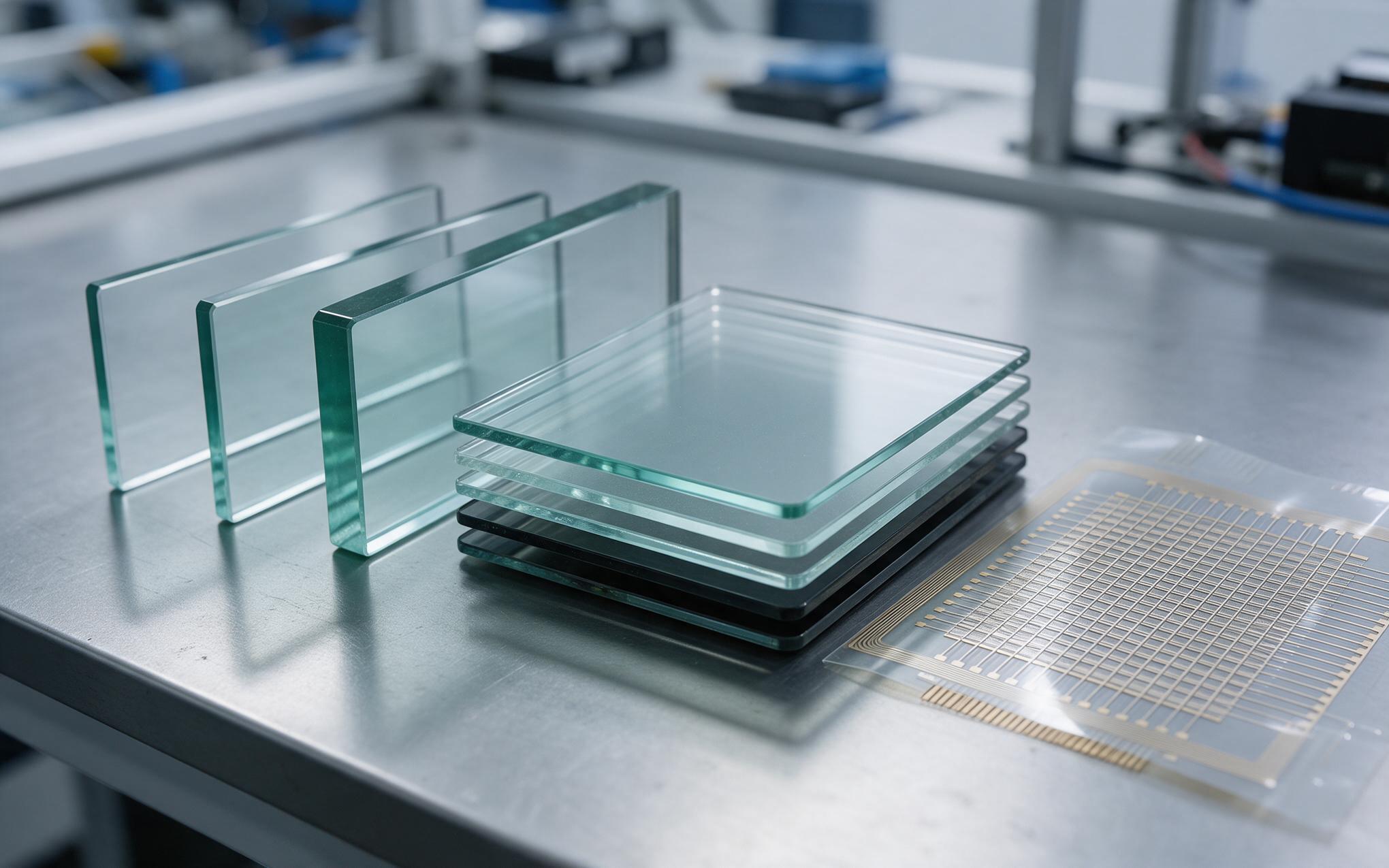
Why Cover Glass Thickness Erodes Touch Sensitivity
The coupling that registers a touch depends on the distance between finger and electrode grid, and signal strength falls roughly with the square of that distance. Application data puts reliable mutual capacitance coverage near two millimeters of cover glass without special tuning, so each added millimeter erodes the controller noise margin. Front panel manufacturers, including KOXIAN, counter that loss by pairing chemically strengthened glass with controller tuning instead of stacking the thickest laminate available. Published integrator data reports that moving from 1.1 mm to 3.0 mm cover glass can cut touch sensitivity by sixty to seventy percent. On an industrial panel pc touch screen the symptoms show up as missed taps from gloved hands and unreliable presses near the bezel.
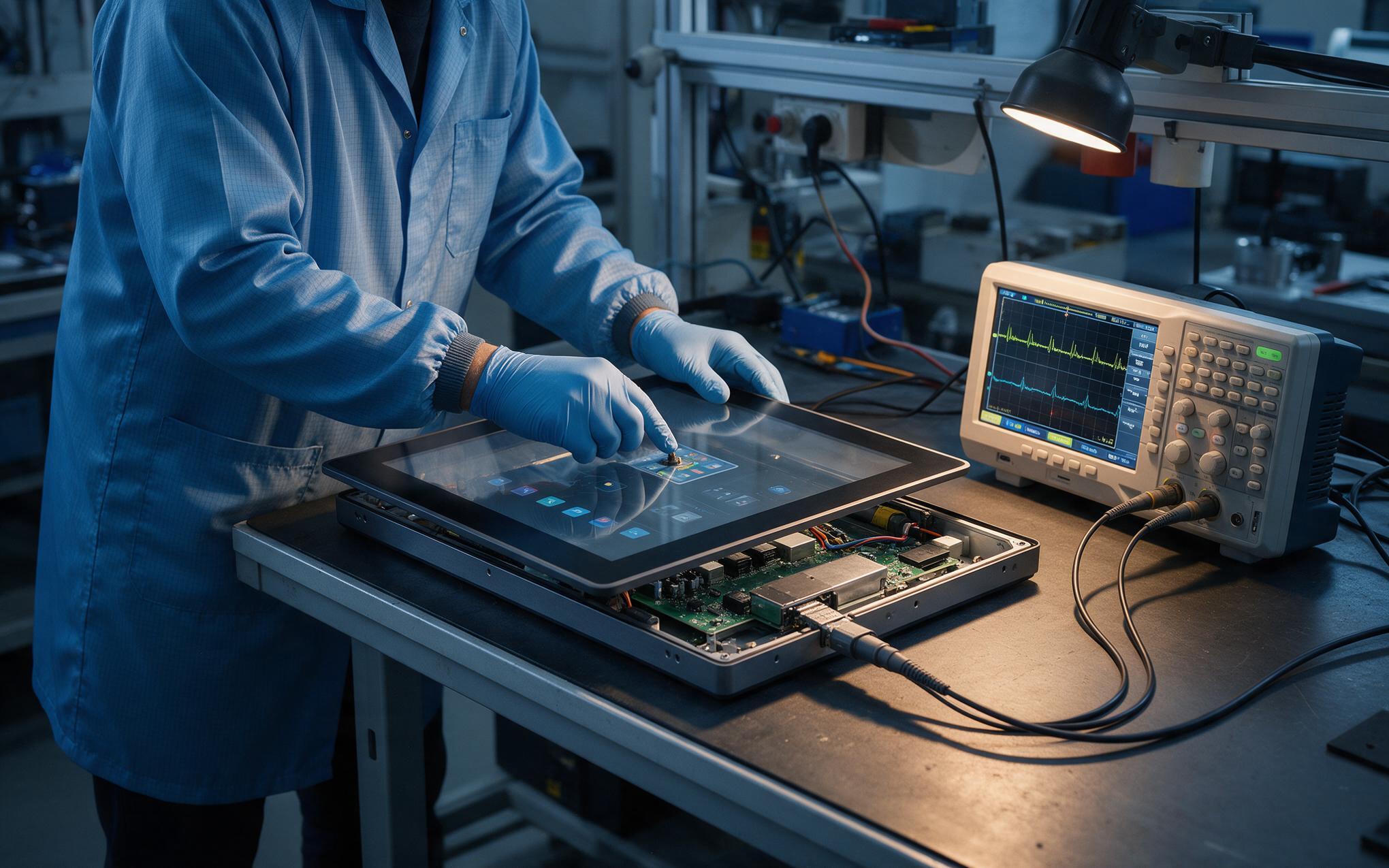
Recovering Sensitivity Through Controller Tuning
Thicker glass does not automatically doom an industrial panel pc touch screen to sluggish response, because most of the loss can be recovered in the signal chain. Raising receiver gain and adjusting touch and release thresholds restores headroom, while water rejection thresholds stay deliberately higher so droplets remain distinguishable from fingers. Controllers that switch between mutual and self capacitance hold accurate tracking behind three to six millimeters of glass, with debounce frames smoothing the noisier signal. Optical bonding removes the internal air gap that causes reflections and weakens the touch signal, which helps both display contrast and gloved operation in cold aisles. Electrode geometry and firmware filtering finish the job without changing the mechanical design of the front.
Choosing IK Classes for Industrial Panel PC Touch Screens
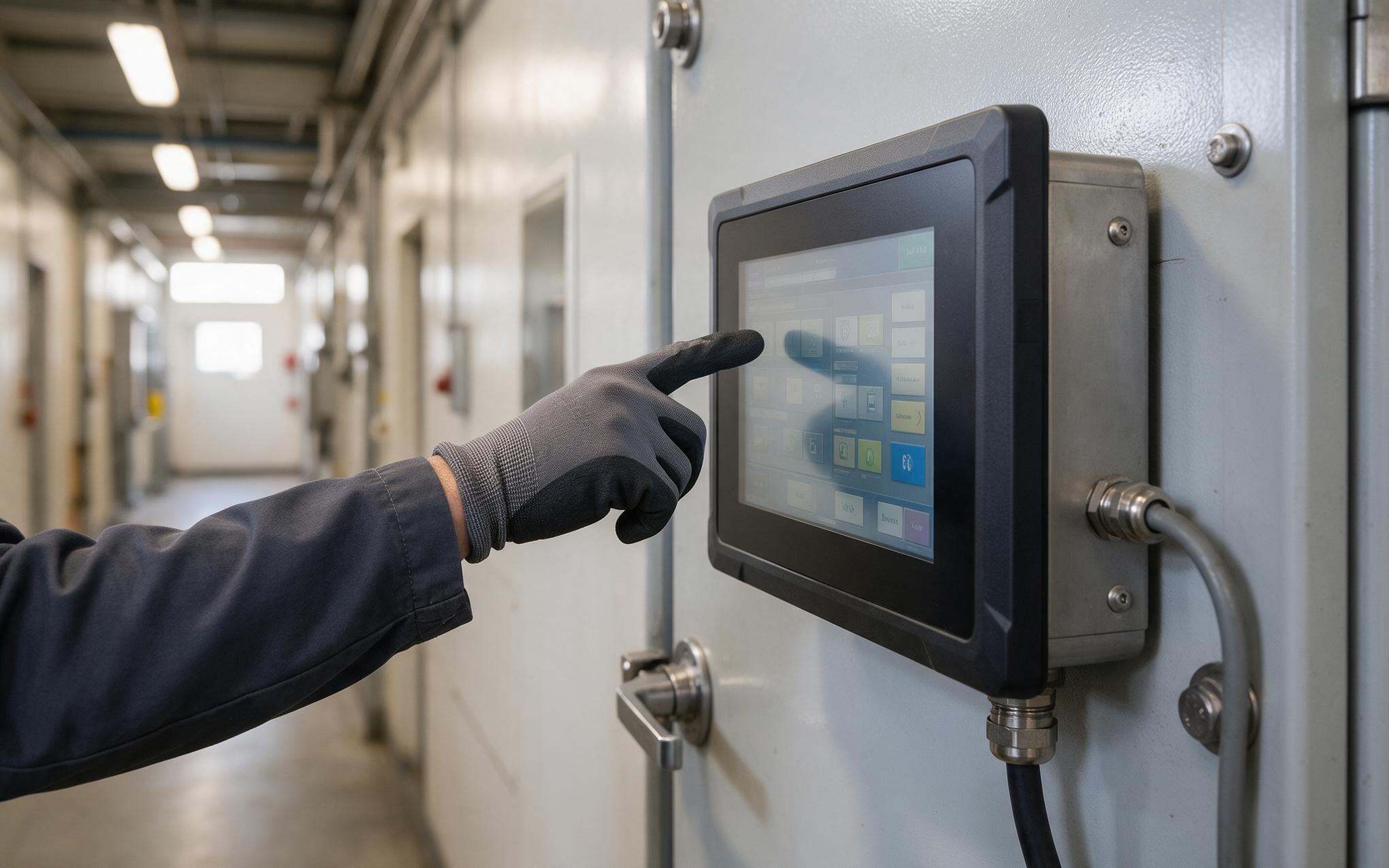
The right class starts with a credible inventory of what actually strikes the front in service. An aisle unit that only meets dropped hand tools and routine wiping usually lives comfortably at IK08 with two millimeter glass and full touch margin. A wall terminal facing deliberate abuse, forklift contact, or public reach needs IK10, and the project should budget for tuning rather than accepting dead touches. Glove thickness matters as much as joules, since a strike rating means little if operators cannot register input through winter gloves. Sample trials with the actual gloves, cleaning chemicals, and mounting hardware settle the decision faster than any specification table.
IK08 and IK10 describe how much energy a front absorbs, not how well the panel performs under an operator hand. The higher class brings thicker glass, and thicker glass quietly works against touch signal, gloved input, and edge accuracy. Treat the strike rating and the touch stack as one selection problem: inventory the real impact risk, check glove and cleaning demands, then verify the pair with sample tests before the order is placed. When five joules cover the credible risk, the sensitivity saved by staying there is worth more than the paperwork margin of a twenty joule spec.