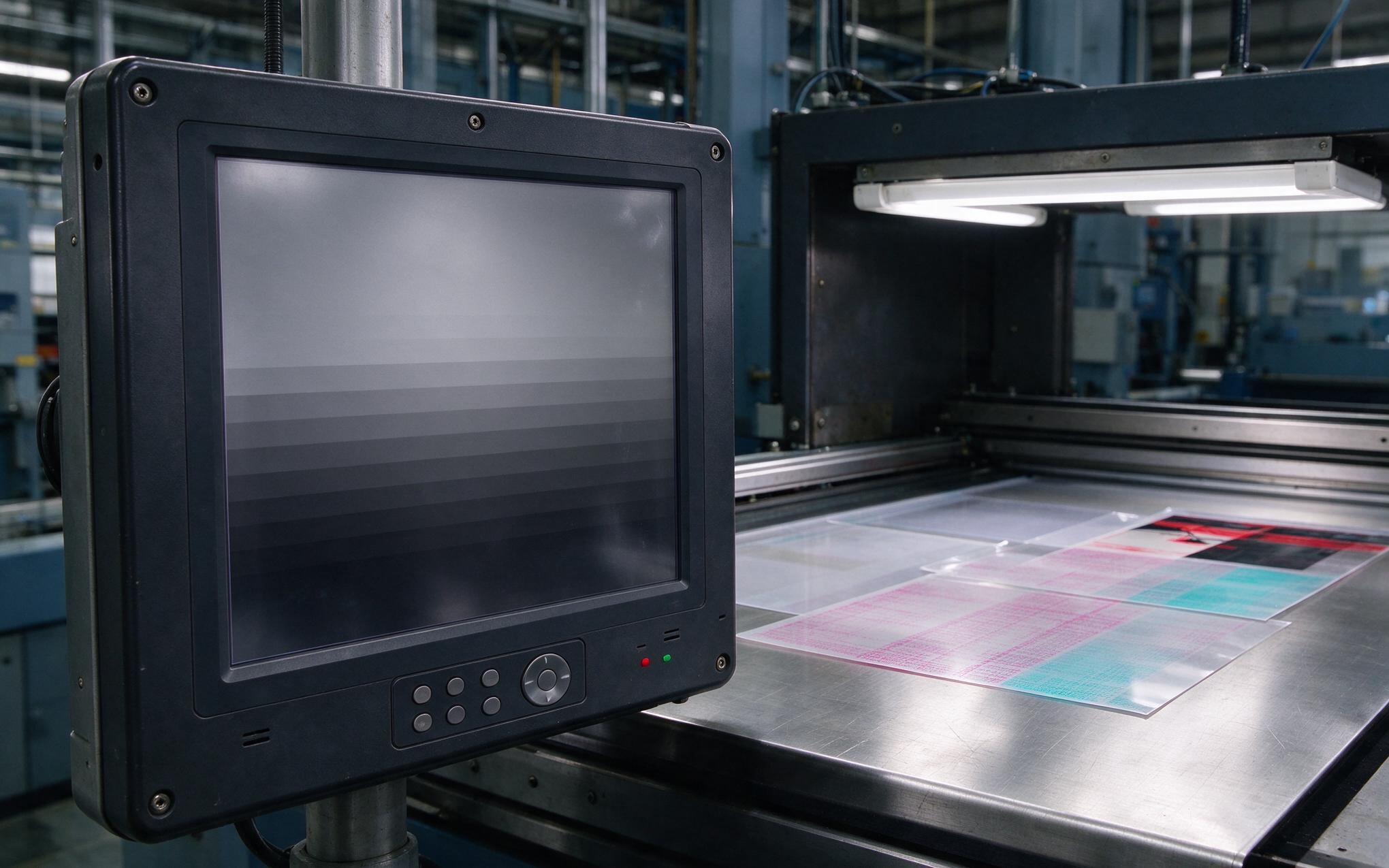
A status LED on the power bay turns amber at 3 a.m., and a fan inside one supply begins to drag on its bearing. On a conventional rack build that module feeds every load in the cabinet, so a locked rotor or a swollen bus capacitor leaves the whole line dark until a technician arrives. In continuous operations the power supply is what turns an electrical fault into a production stoppage. A rackmount industrial pc built around a hot swappable redundant power bay changes that model: two modules share a common backplane, and either one carries the system while the other is replaced without dropping the dc bus. The real questions are how the bays share current, how the backplane survives live insertion, and what keeps the spare path ready over years of service.
Single PSU Failure Modes in Continuous Production Racks
Field returns point to a short list of repeat killers: fan bearings under continuous rotation, electrolytic capacitor aging in sustained heat, and surge events arriving on plant feeds. Each ages by calendar and thermal hours, so even a lightly loaded supply drifts toward failure. A single-feed architecture also exposes the repair-time problem, because every minute between fault and restored power is downtime, and powering down the cabinet to unbolt a fixed supply can stretch that window past a full shift. Industrial hardware manufacturers, including KOXIAN, build a rackmount industrial pc around tool-less power bays so the conversion stage becomes a field-replaceable item instead of a cabinet-level repair.
Current Sharing in 1+1 and N+1 Rackmount Industrial PC Power Bays
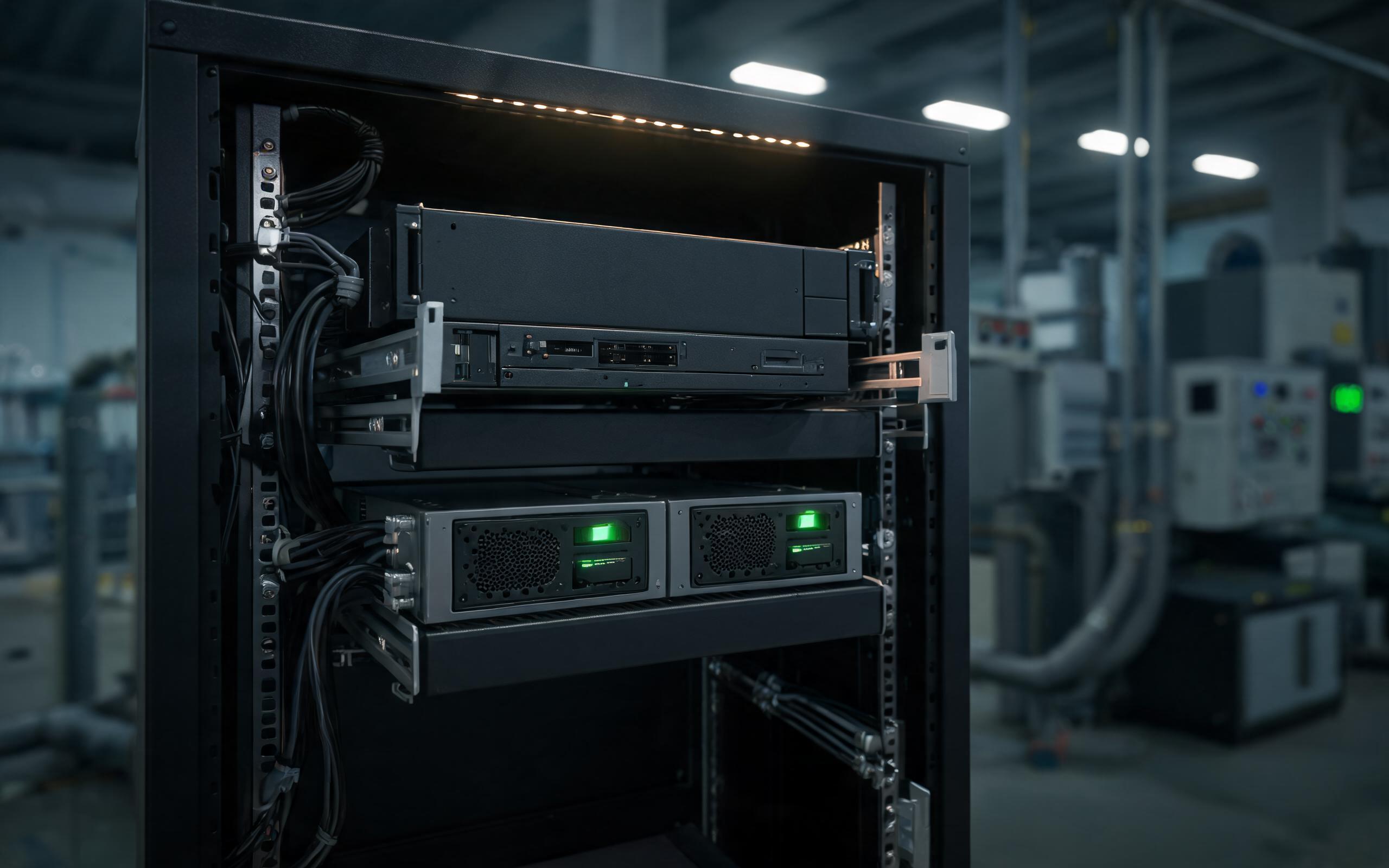
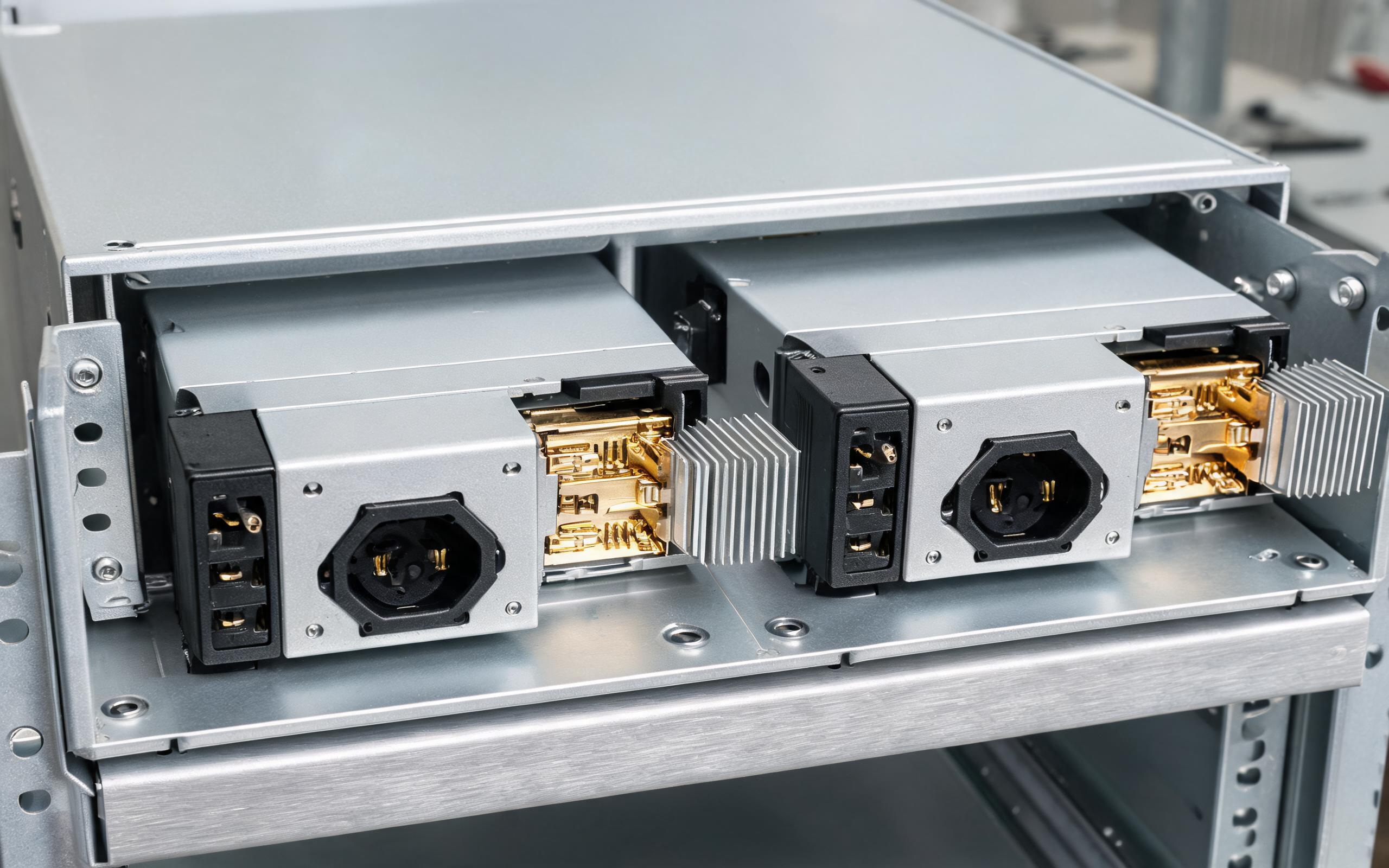
Power architectures modeled on the KOXIAN redundant bay design place two CRPS modules on a shared backplane, each with its own ac inlet, so the rackmount industrial pc keeps running when one feed or one converter drops. In a 1+1 layout every module is rated for full system load, so the survivor never runs above rating after a partner fault; both run partially loaded in normal service, which lowers junction temperatures and extends capacitor life. An N+1 layout spreads the load across more, smaller modules and tolerates one failure, but it depends on disciplined current sharing, active through signal pins or passive through the natural voltage slope. The backplane uses OR-ing transistors rather than diodes to avoid diode heat in a sealed 2U bay, and contacts must carry the full fault path, because live insertion sends a brief surge through cheap contacts and pits them over repeated swaps.
What Actually Happens During a Live Bay Swap
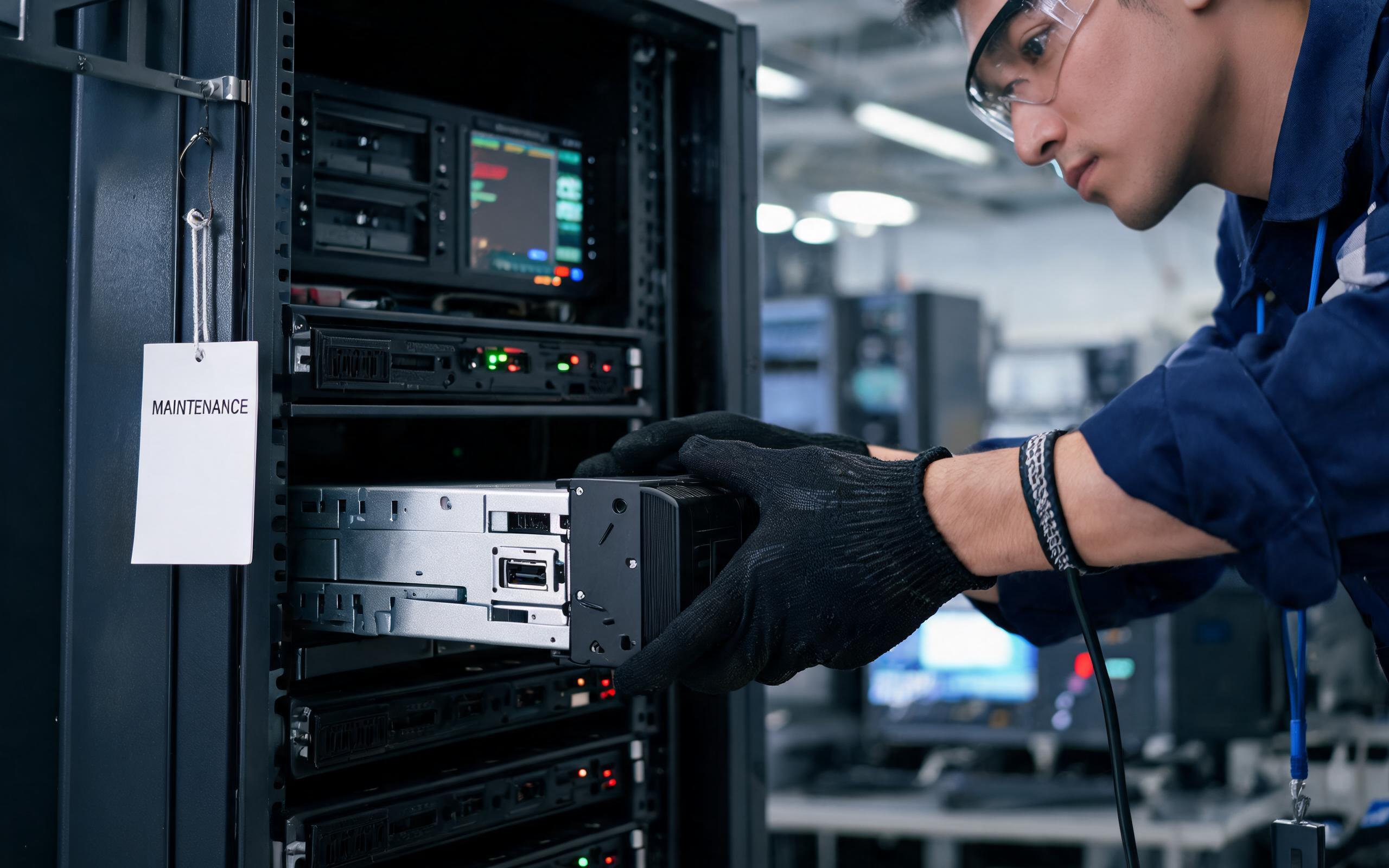
A hot swappable power supply is not simply a module on a connector; the circuit around it must make insertion orderly. The surviving converter in a rackmount industrial pc must hold the dc rail within tolerance while neither module shares the load, so bulk capacitors store hold-up energy sized in milliseconds of full demand. Ground pins are longer than power pins, establishing chassis earth before any hot pin mates, then precharge paths limit inrush into the input capacitors before main contacts close. A management bus reports presence, temperature, and fan speed to a status relay, and a failed unit trips a dry-contact alarm as well as a local LED. Operators confirm the surviving module carries the load before releasing the latch, since a system on one path has no reserve.
Bay Maintenance and Cabinet Airflow Checks
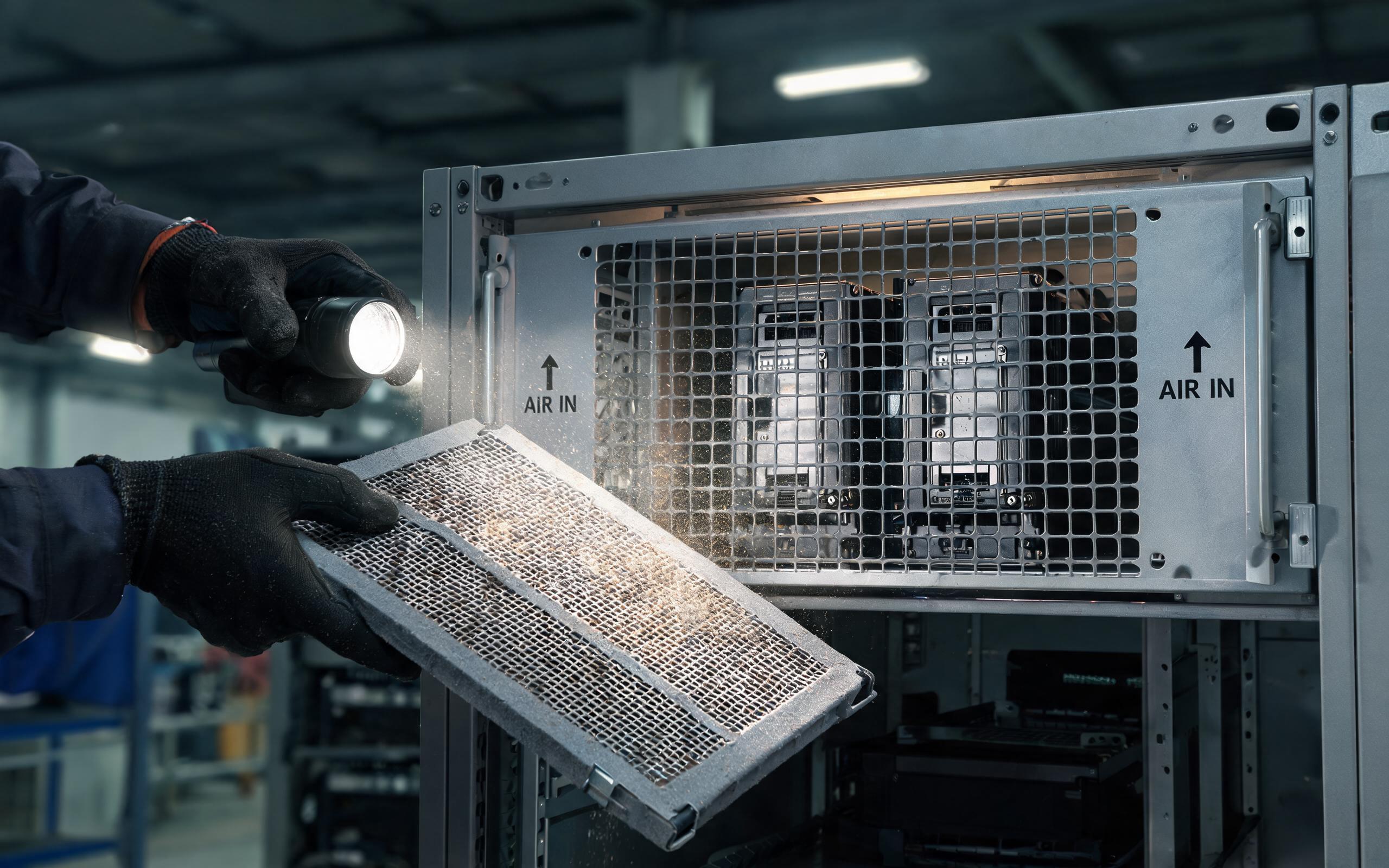
Redundancy only protects a line when the standby path is exercised and cooled as carefully as the active one. Intake filters ahead of the power bays should be inspected on the cabinet schedule, because a blanket of lint raises inlet temperature for both modules and quietly ages the spare. Monthly checks confirm each module seats flush, its latch is locked, and both ac inlets draw from independent circuits where the plant layout allows. A quarterly controlled swap proves the alarm path, precharge circuit, and spare still work; a unit left untouched for years can falter when finally asked to carry load. For lines evaluating an industrial pc for automation, these procedures are what turn redundant hardware from a spec line into measured availability.
A redundant bay does not stop a power supply from failing; it removes the stoppage the failure used to cause. Sizing modules for full fault load, designing the backplane for staged insertion, and practicing the swap on a schedule keep the spare path as reliable as the active unit. For a rackmount industrial pc on a continuous line, that is the difference between a midnight module change and a midnight shutdown.