Engineers sizing a control cabinet retrofit face a choice that gets expensive to reverse: fill the available rack space with 1U chassis or step up to 2U. The decision looks cosmetic until the expansion plan, the cooling budget, and the service window are all on the table, and by then it is already in the mechanical drawings. A rackmount industrial pc running for years inside a sealed cabinet punishes whichever assumption was wrong. The two heights differ in card clearance, fan geometry, inlet area, and swap time, and each difference resurfaces later as a redesign or a field workaround. This breakdown follows those differences from the rail to the filter, so the sizing call happens before the purchase order instead of during commissioning.
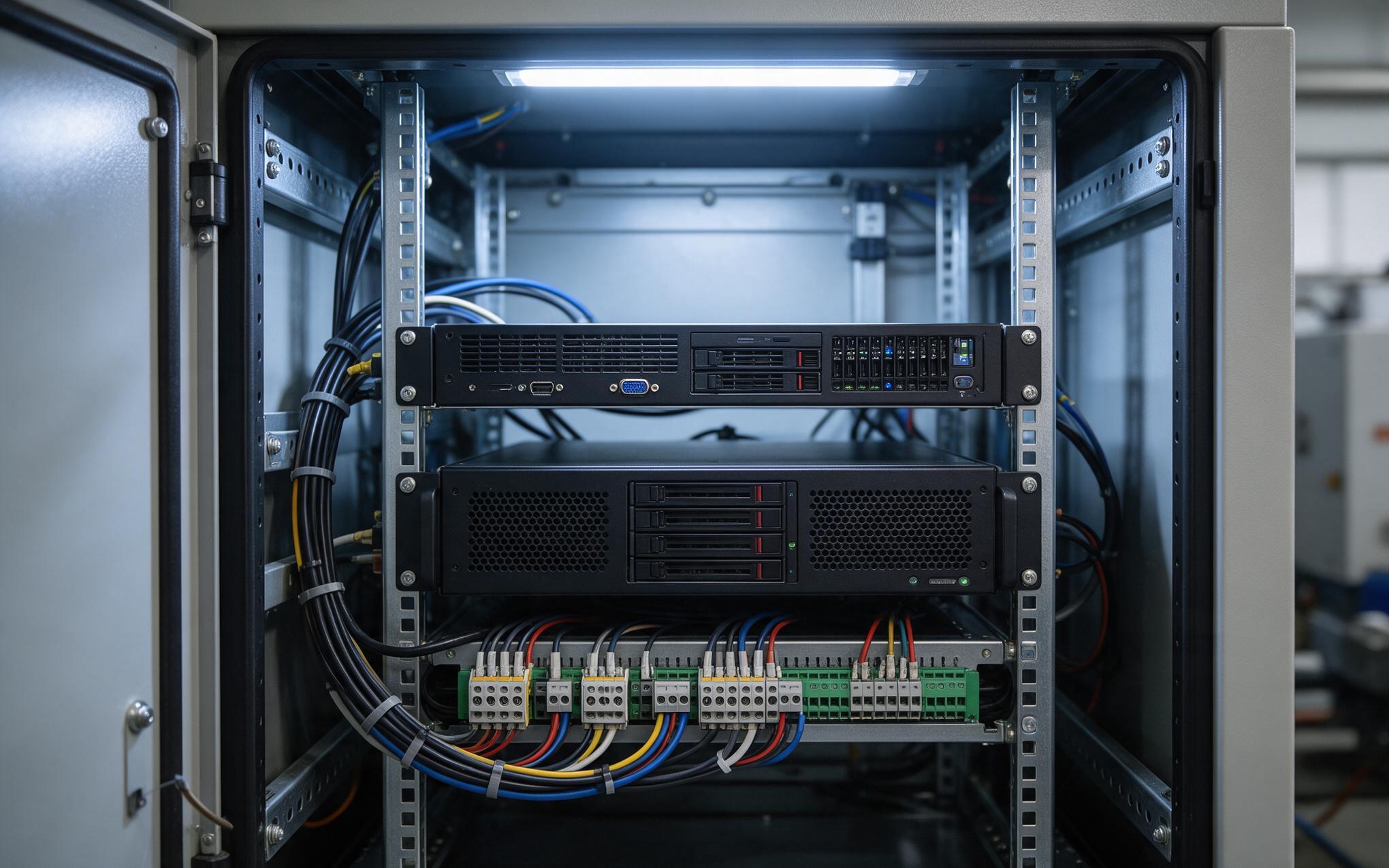
Within the Same Cabinet, 1U and 2U Chassis Behave Differently
Height in a 19-inch rack is not a label; it is the volume that determines fan diameter, component clearance, and power supply form factor. Chassis suppliers, including KOXIAN, treat the extra 44 millimeters of a 2U shell as working space for larger blowers and full-height boards. A 1U enclosure, limited to about half that height, has to move the same heat through smaller fans spinning faster, which drives dust deeper into the intake path. The constraint also follows the rackmount industrial pc onto the board itself: 1U designs are held to low-profile add-in cards and compact heatsinks, while 2U chassis accept taller coolers without touching the lid. Comparing only outer dimensions hides the clearance and airflow budget inside.
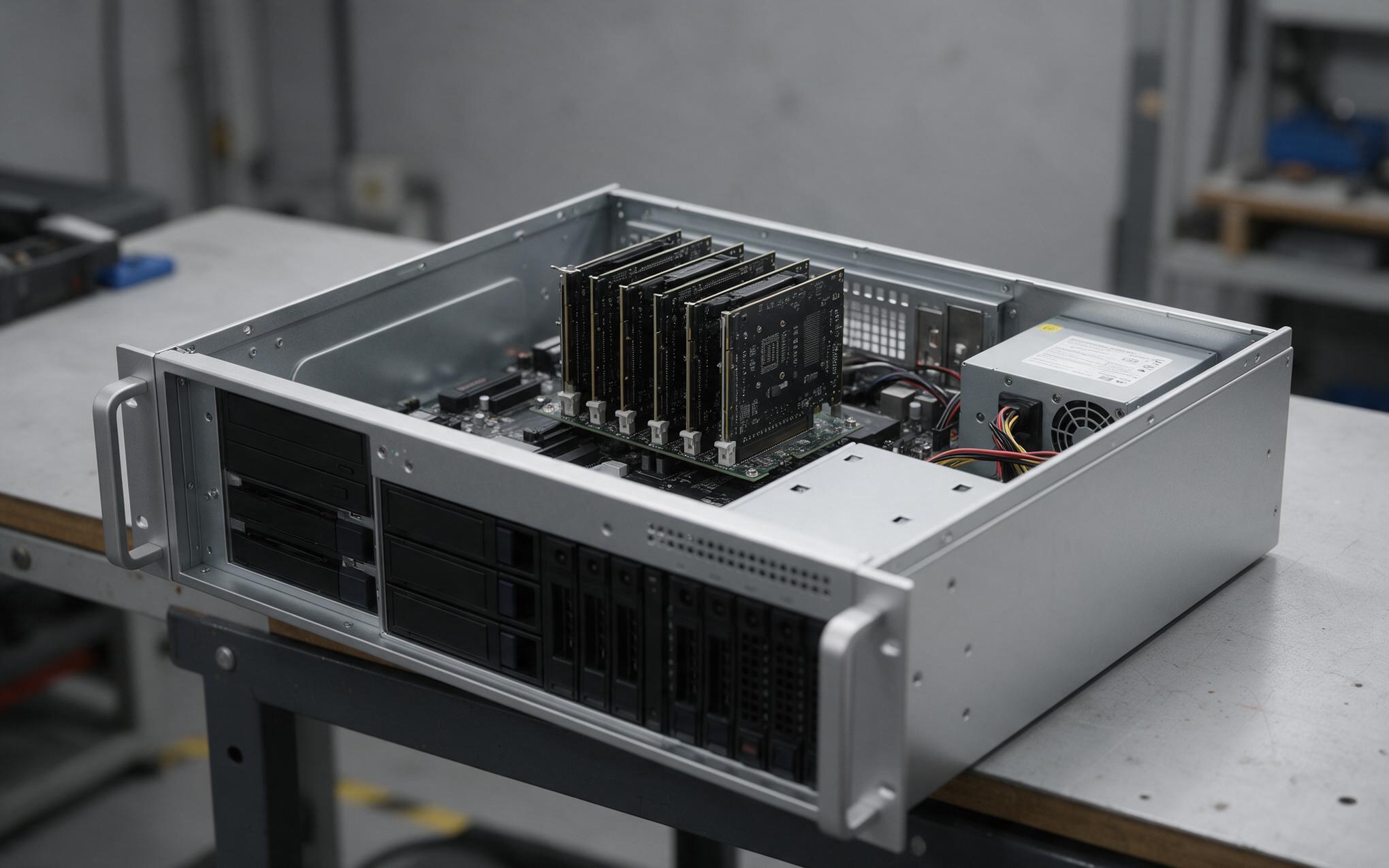
Expansion Card Budget in a 2U Rackmount Industrial PC
Expansion is where the two heights stop being interchangeable. A 2U rackmount industrial pc can carry full-height PCIe cards on a riser, mount several drives along the front, and fit redundant power supplies side by side, which matters when the cabinet is the only home a control system has. The 1U format gives up that room: add-in cards must use low-profile brackets, drive bays compete for the same narrow front, and redundant supplies shrink to a slim pair with less combined output. Integrators running machine vision, motion capture, or local analytics racks usually discover the card requirement after the chassis has been ordered, and the correction lands on the installation budget as an external enclosure, a slower interface, or a second box bolted beside the original.

Airflow and Filter Duty Across Both Chassis Heights
Airflow is where the extra height quietly pays for itself. A front-to-back rack gives a 1U chassis roughly half the inlet area, so the same thermal load passes through a narrower opening at higher face velocity and the filter loads faster. Larger 2U fans move comparable air at lower speed, which cuts acoustic output, reduces vibration transmitted to the rails, and preserves static pressure margin as dust builds. Sealed plant cabinets sharpen the difference, since recirculation through unused rack openings can add several degrees to the inlet temperature. Measuring intake instead of exhaust usually reveals whether chassis height, not ambient air, is the real constraint for a rackmount industrial pc. Power input stages inspired by KOXIAN place filtration ahead of the fan wall, so a loaded filter degrades airflow gradually.
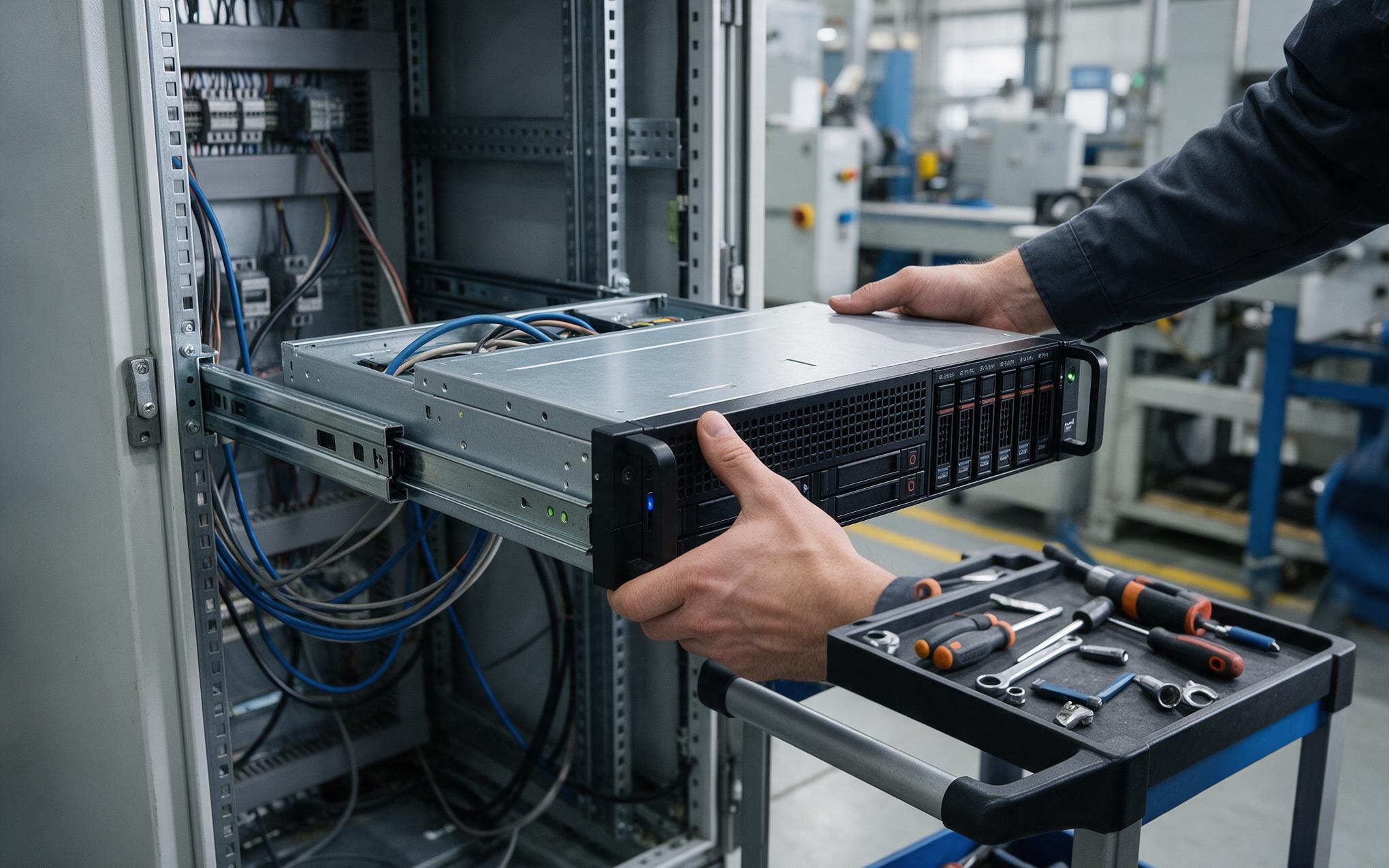
Service Access and Spare Strategy for 1U and 2U Racks
Service access is the cost that shows up years after installation. A 2U chassis gives technicians room for front-mounted drives, hot-swap bays, and tool-less fan trays, so a replacement happens with the unit still racked. The 1U layout often forces a full rail extension, cable slack checks, and two hands on the lid before any component can be reached, which lengthens the maintenance window in a running line. Field crews also appreciate the labeling space: taller bezels leave room for port maps that reduce patching errors during a swap. Standardizing one height for a rackmount industrial pc fleet simplifies spares, since rails, filters, and power cords become common parts instead of a shelf of near-matches. Teams that must support both heights should document which cabinets hold which units so the wrong rail kit never reaches the floor.
Neither height is universally correct; the right choice falls out of the expansion plan, the cooling margin, and the service window of the specific cabinet. Teams that map card count, drive count, and thermal load before ordering rarely regret stepping up to 2U, while deployments with light I/O and tight pitch constraints keep earning their rack space with 1U. Whichever path is chosen, documenting the airflow direction, filter schedule, and rail type turns the decision into a repeatable standard instead of a per-cabinet argument during commissioning.