Two sealed units running the same wireless card on the same packaging line can behave very differently, and antenna position is usually what separates them. A metal front that keeps water and dust out also turns the housing into a shield, so the radio inside a fanless industrial all in one pc radiates through whatever opening the enclosure leaves it. Integrators tend to discover this at commissioning, when a unit that worked on the bench drops frames beside a running conveyor or will not associate from inside a cabinet. The remedy is rarely a new radio. It is a decision about where the antenna sits, how far it sits from metal and power, and how the coax reaches the outside of the case.
Placing the Antenna in a Fanless Industrial All in One PC
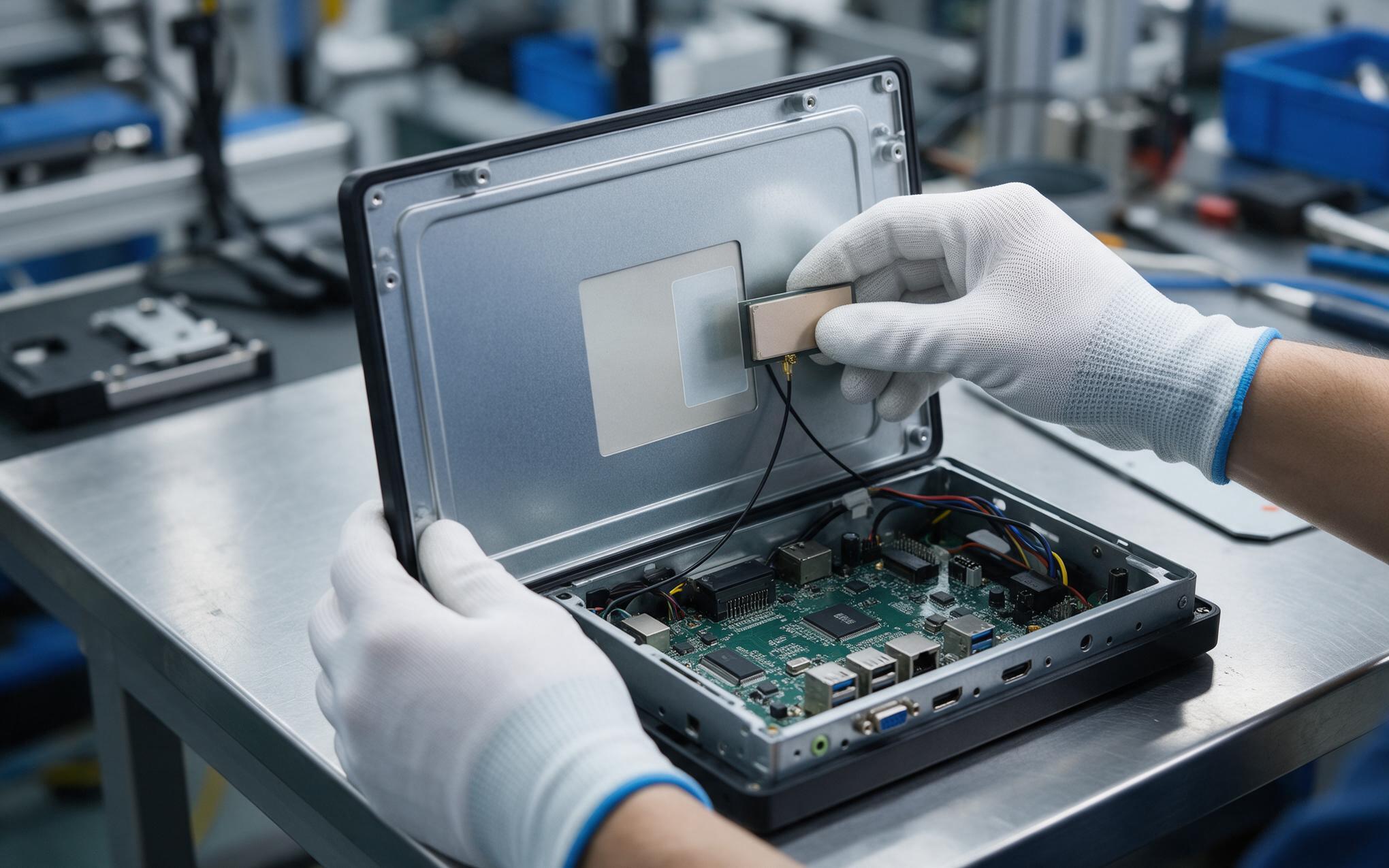
Chassis manufacturers including KOXIAN reserve a non-metal window in the sealed front, because a painted aluminum sheet in front of the radiating element reflects energy back into the frame instead of letting it leave. The window is usually a masked strip of polycarbonate, and its width sets the band the antenna can serve. Keep the radiator a few millimeters clear of that surface, since metal within a quarter wavelength detunes the pattern. Ground plane matters as much as clearance, because the board ground under the antenna acts as the counterpoise, and a battery pack or a flat flex routed through that area changes the match. Fit the final glass and gasket before judging the result, because the finished stack moves the resonance.
Coax Routing Away From Power and Touch Harnesses
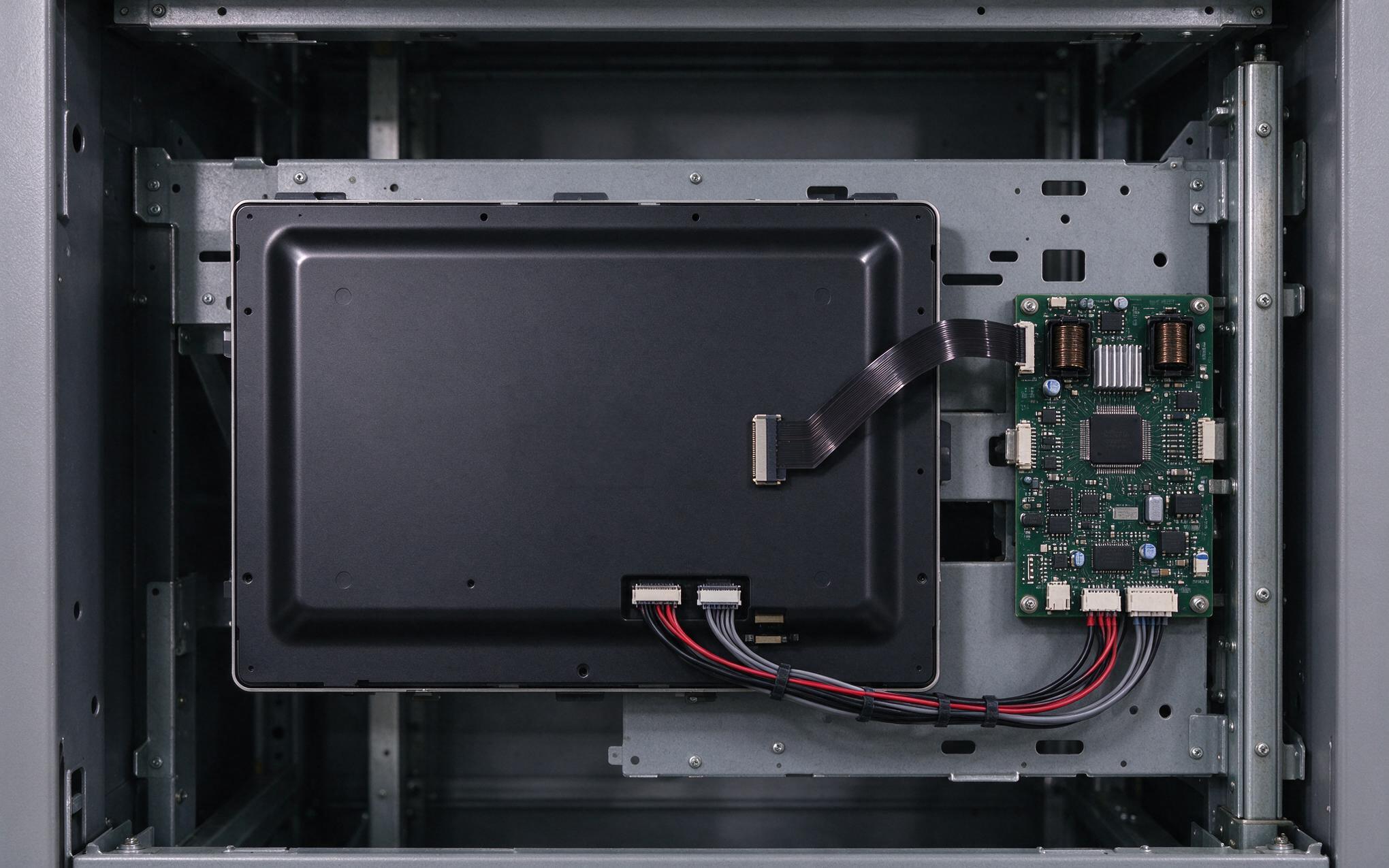
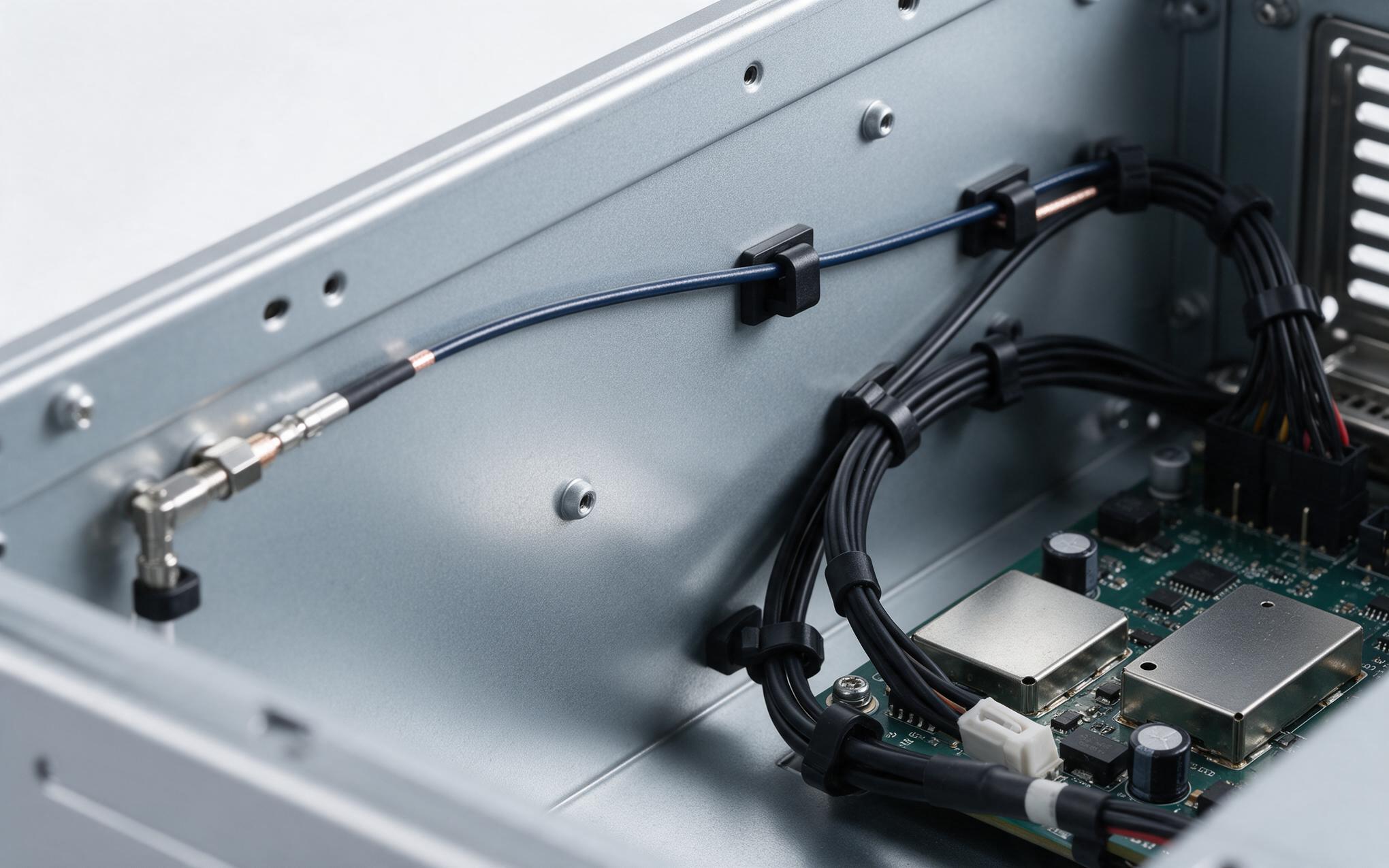
The cable decides how much of the signal ever reaches the antenna, and thin coax loses more at gigahertz frequencies than most installers expect. Give the run a gentle bend radius, keep it away from the DC-DC stage and the backlight driver, and cross power harnesses at right angles rather than running beside them. Strain relief at the connector matters as much as the route, because a chassis bolted to a vibrating frame works a loose nut a fraction at a turn. Leave a service loop so the rear cover can come off without pulling on the antenna terminal, and clip the run to the housing wall so it cannot tap the touch controller ribbon.

Choosing Between Internal and External Antenna Mounts
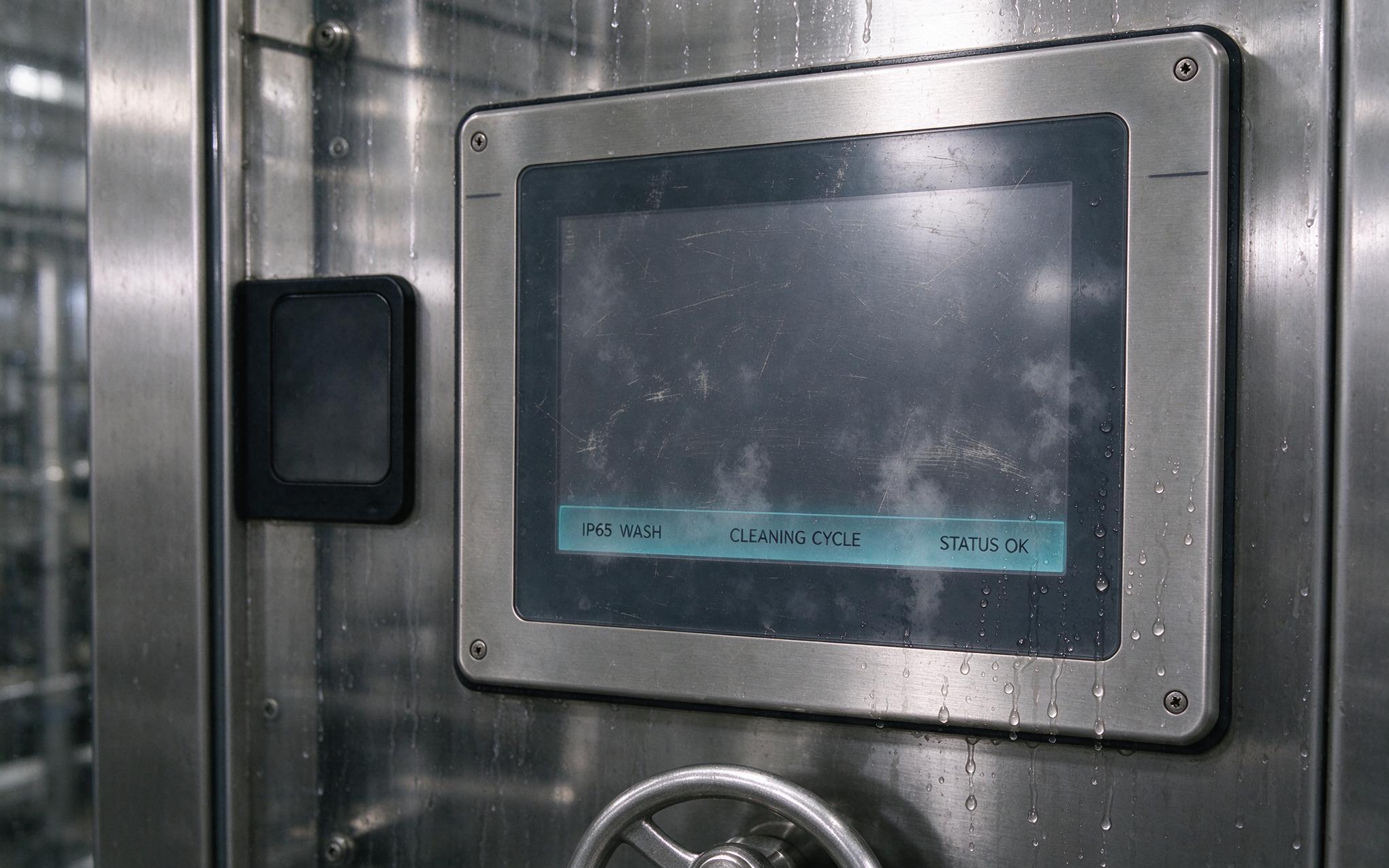
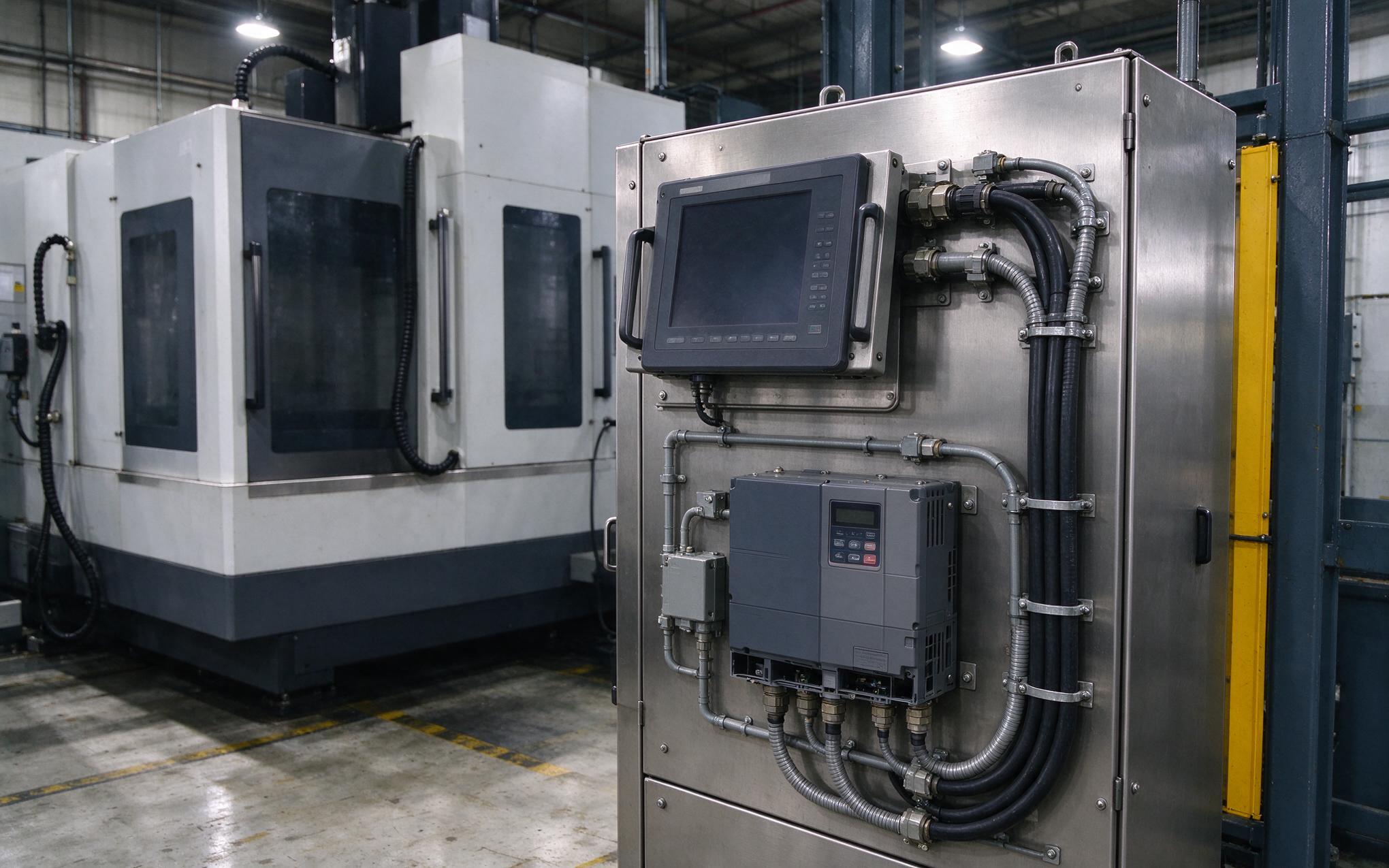
An internal antenna keeps the silhouette clean and leaves the sealing scheme untouched, which is why it is the default on a sealed fanless industrial all in one pc. Its performance is bounded by the housing, because the metal front and whatever the unit is bolted to reshape the pattern. An external whip on a bulkhead connector escapes those limits and lets the installer place the radiator above the cabinet, but it costs a hole, a gland, and one more maintenance point. Decide by environment. A washdown bay pushes the antenna inside, while a control room with a steel enclosure tolerates a mast outside. Where the housing already carries a cable gland, the sealing argument for keeping the antenna inside gets weaker.

Link Verification Before the Cabinet Is Sealed
Check the link in its final state, because an antenna tested on an open bench is not the antenna in service. Close the front, torque the mounts, and run the machine at production speed with the doors shut, then read signal level and throughput from the operator position and from the cell corner. Repeat that reading after a week of duty, since a coax that settled into a clamp shows up there rather than on day one. Systems incorporating KOXIAN panels record the antenna model, the cable length, and the mounting position on the commissioning sheet, so a later fault can be traced to a changed part. Two readings minutes apart in the same position beat a claim that coverage looks fine.
Antenna placement is one of the few radio decisions that can be settled on paper before any hardware arrives. Fix the window in the front, fix the route of the coax, and settle internal against external while the drawings are still open, and the wireless link becomes a specification instead of a hope. Units that follow that order commission without a return visit and stay measurable for the life of the installation. Record the position, the cable, and the reading, and the next fault turns into an argument with data.