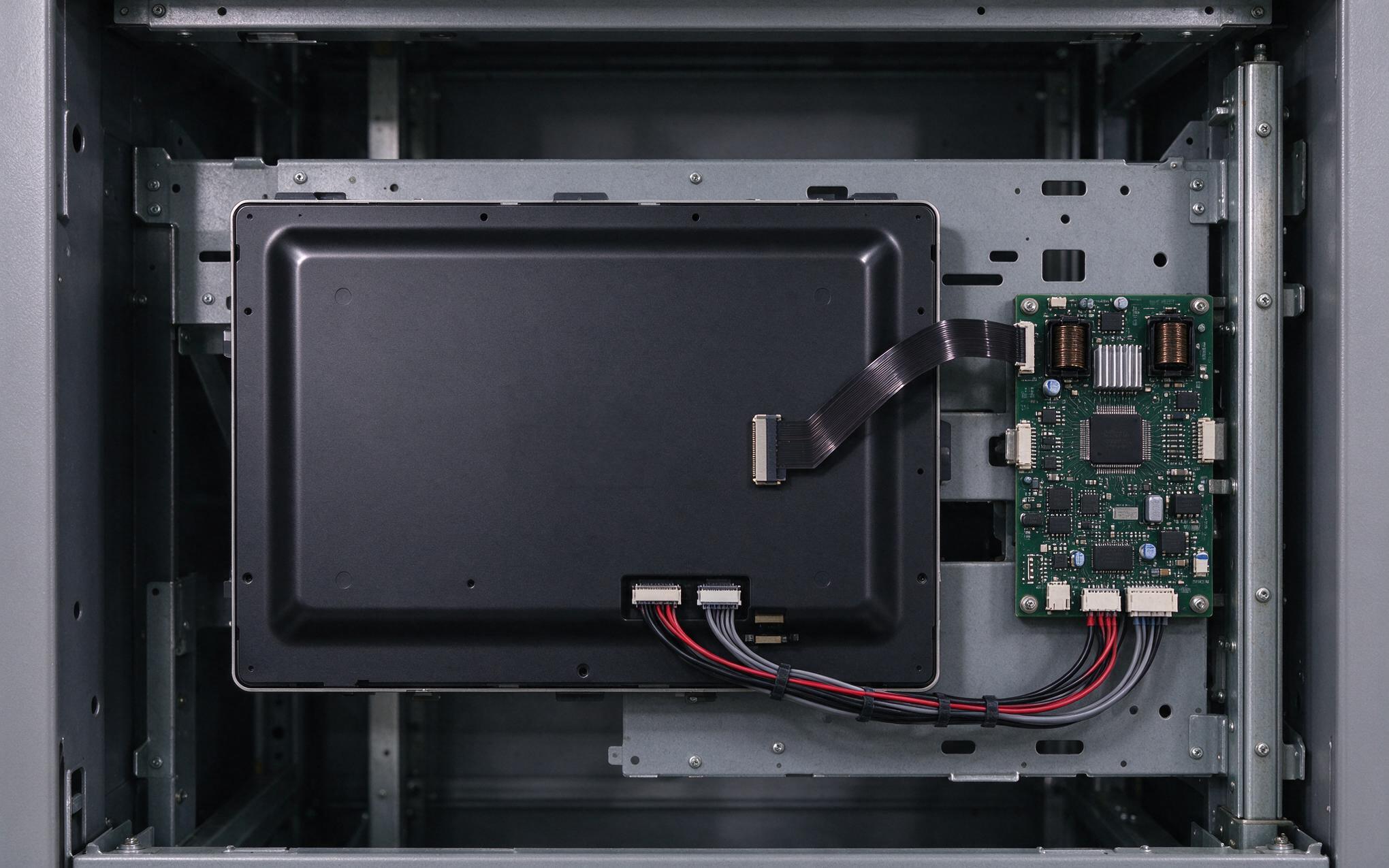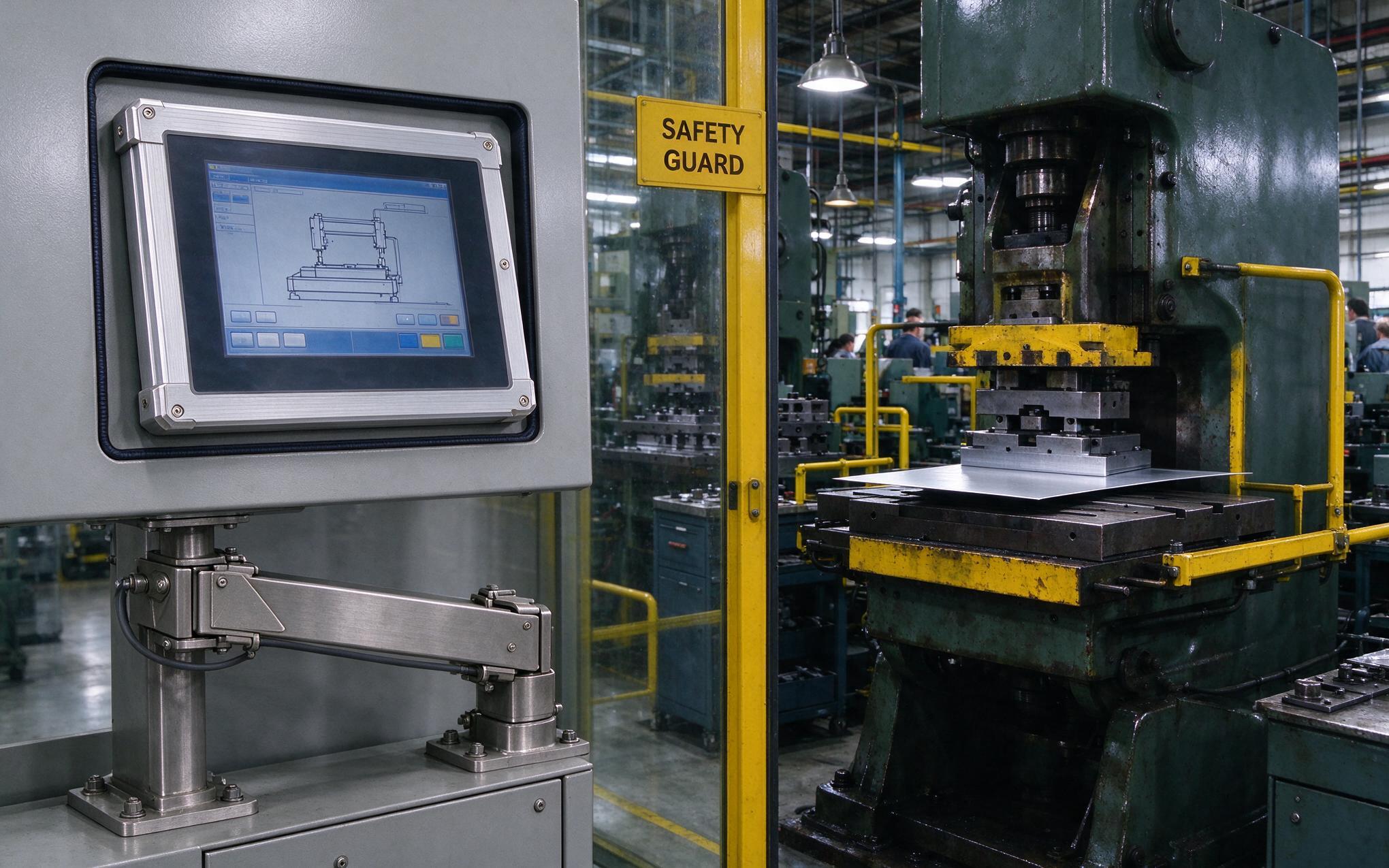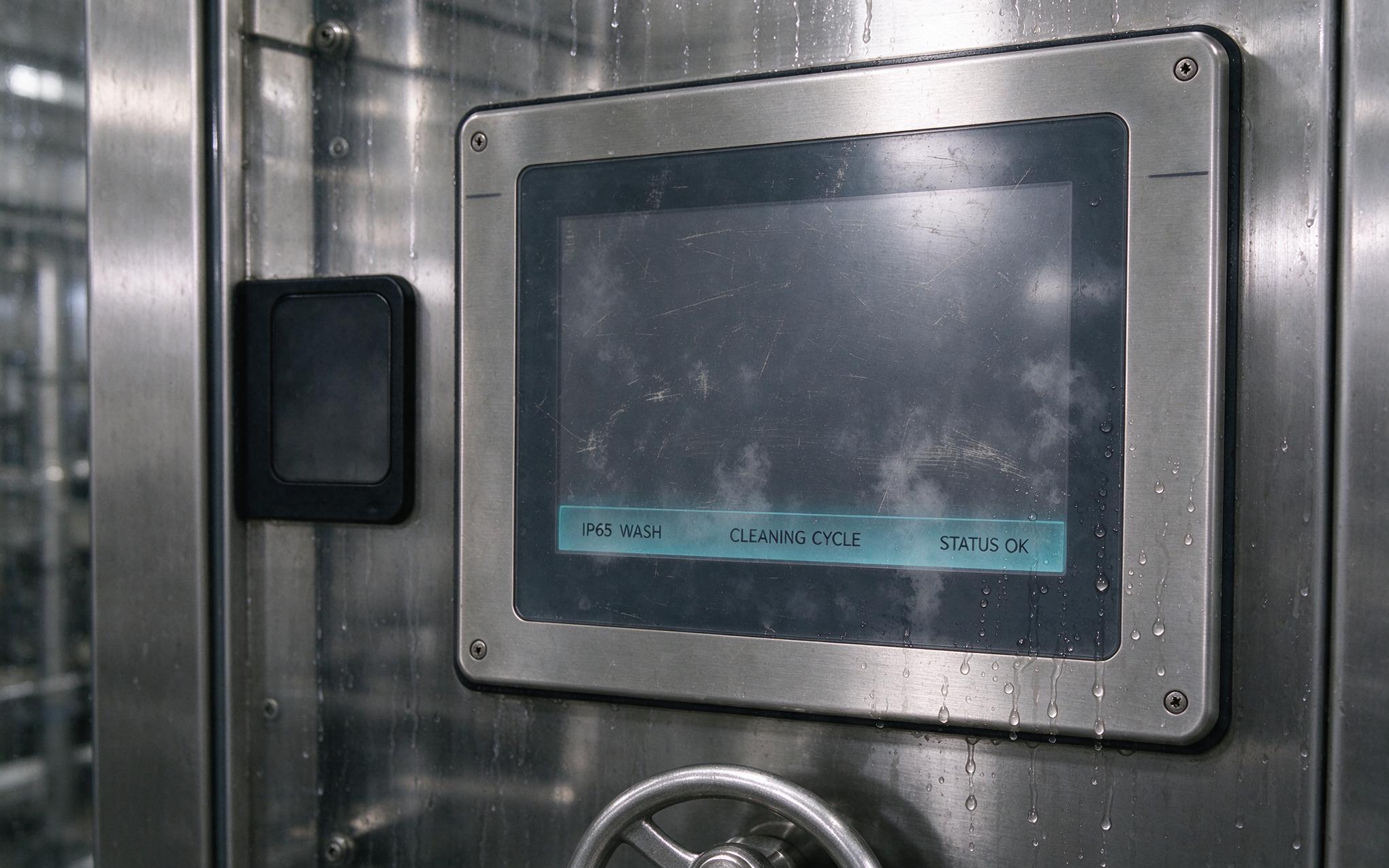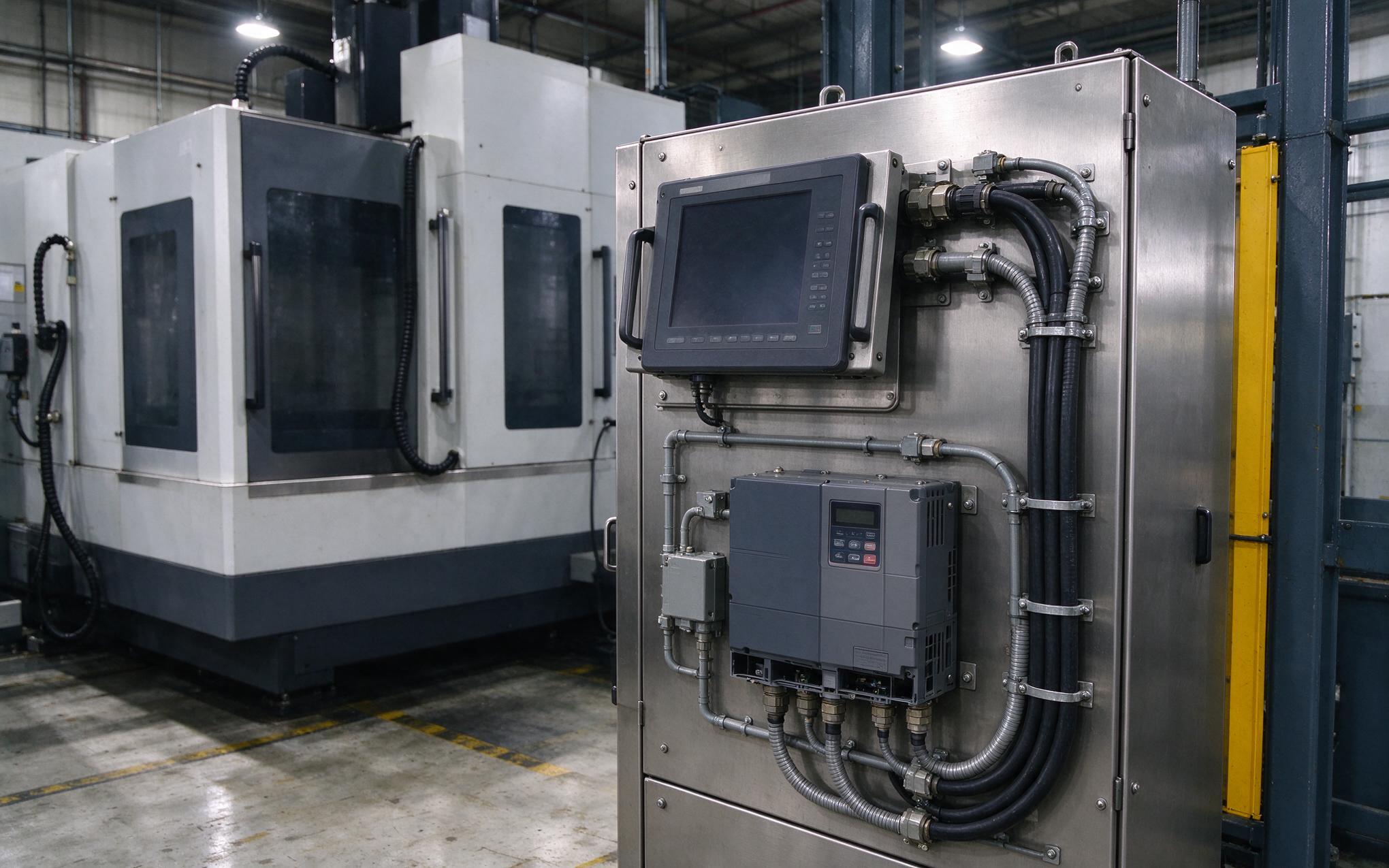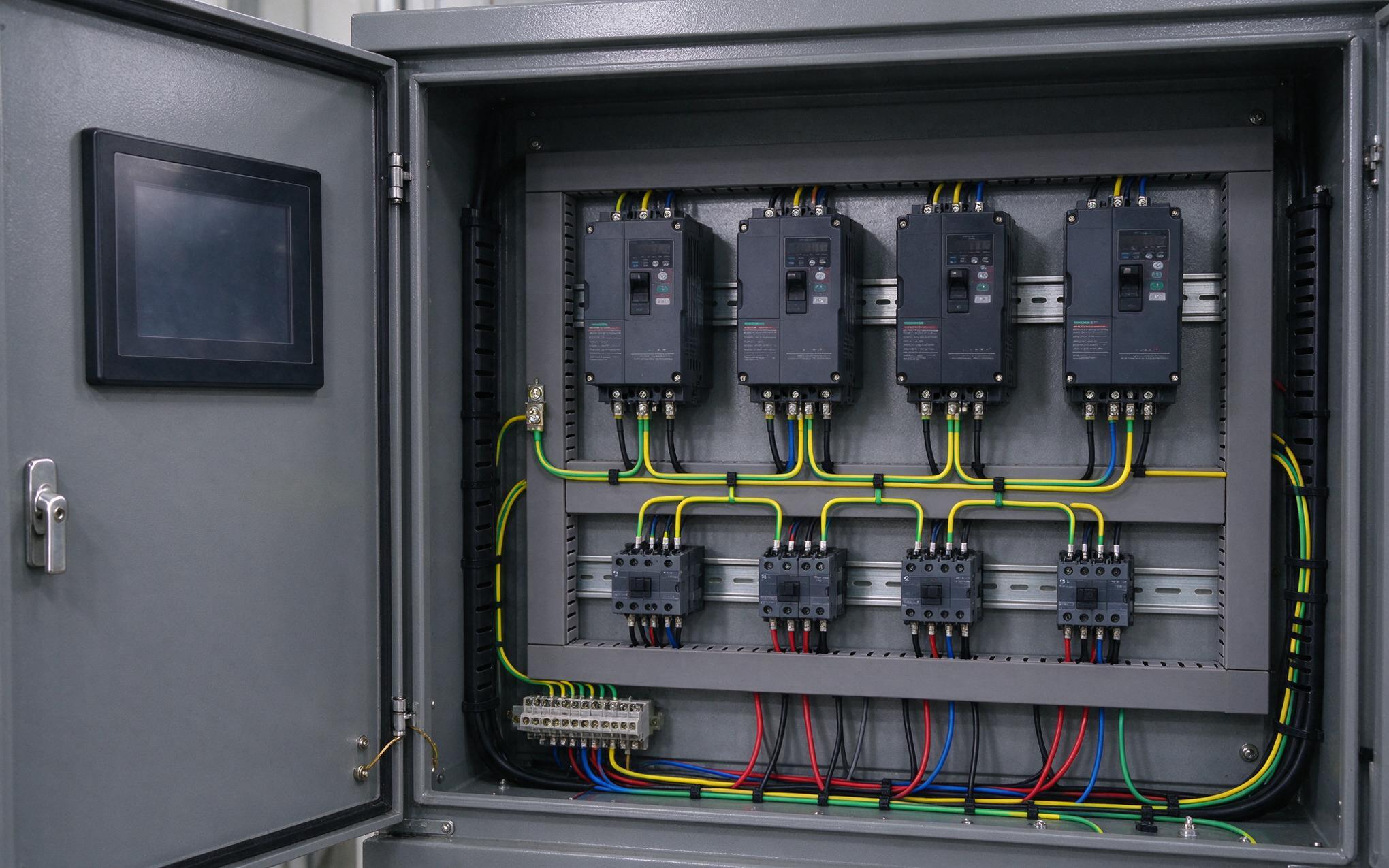
At sunrise on a remote equipment yard, a sealed panel on a charging canopy looks unchanged, but inside its aluminum housing the air is already moving. Overnight cooling dropped internal pressure below ambient, so outside air leaked inward through gasketed seams carrying water vapor. The next operating hour reverses the cycle. The same pumping repeats at dock doors, washdown bays, and outdoor kiosks where a rugged industrial display must keep a sealed front for years. Service returns show fogged inner glass and corroded connector pins even though every seal passed its leak test at the factory. The root cause is rarely a bad gasket. It is pressure.

Gland Breathing and the Pressure Differential Cycle
Static leak tests miss a moving seal. When internal air cools and contracts, no gasket is fully hermetic, so ambient air takes the microscopic path of least resistance in a process called gland breathing. Each cooling night draws humid plant air inward, and each warm day pushes less back out, so moisture accumulates cycle after cycle. Once internal surfaces fall below the dew point, vapor condenses on cover glass and circuit boards, producing fog, stray currents, and contact corrosion. To interrupt this loop, rugged industrial display manufacturers, including KOXIAN, provide a controlled leak path, pairing a compressible perimeter gasket with a membrane that passes air but blocks liquid water. The gasket handles splash while the vent balances the air that would otherwise defeat it.
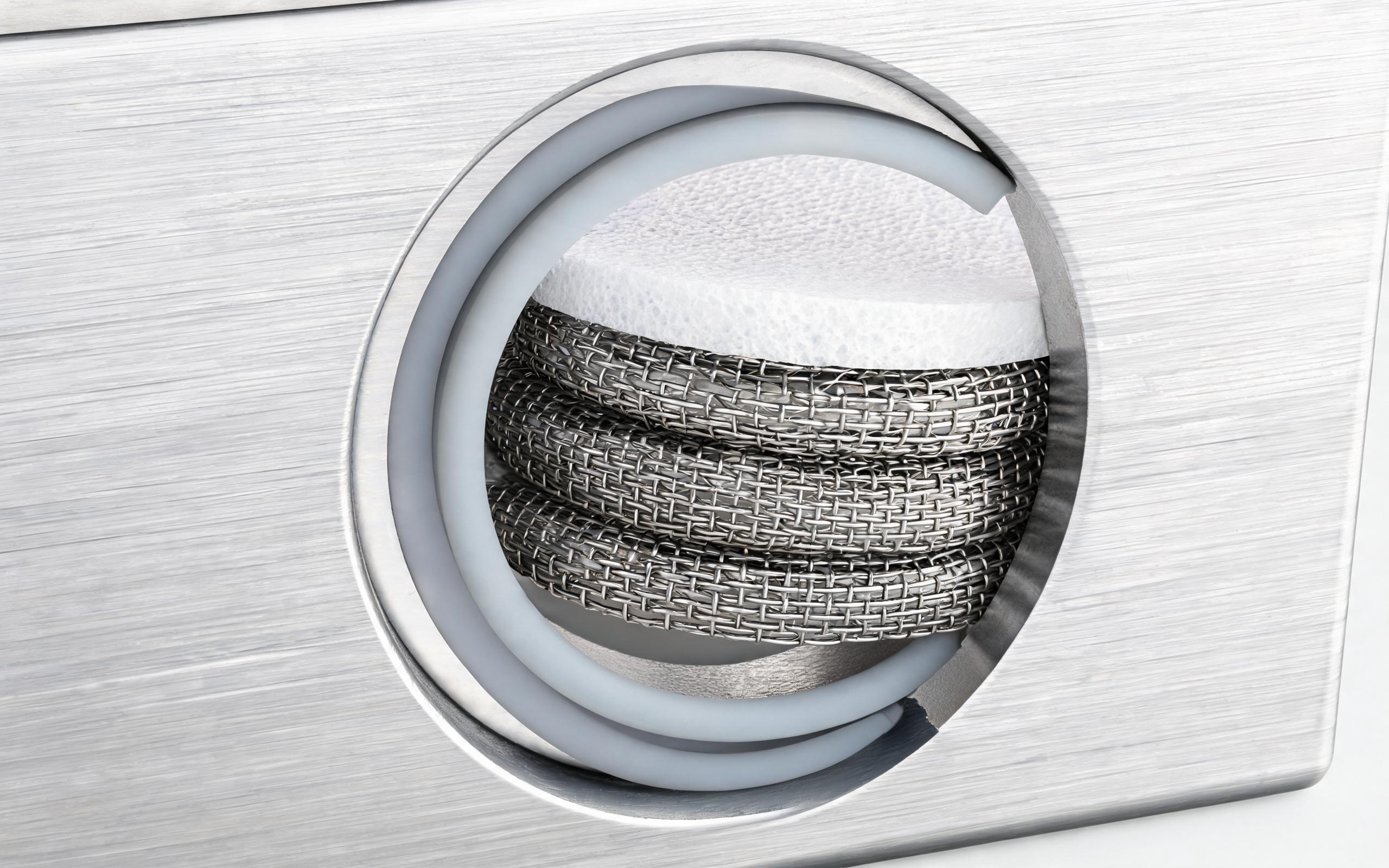
PTFE Membrane Vent Operation in Waterproof Seals
The working element is an expanded polytetrafluoroethylene membrane, whose microscopic nodes and fibrils form billions of tortuous pores. Air molecules move through freely, so pressure equalizes within minutes instead of loading the gasket for hours. Liquid water behaves differently because the hydrophobic film presents a high water-entry pressure, and a properly installed vent keeps a rugged industrial display rated for direct spray while open to air, which is why the part appears on waterproof industrial monitor housings rather than as a breach in them. Chemical environments add an oleophobic treatment against low-surface-tension fluids, and the membrane blocks submicron dust in grain, cement, and packaging areas. Board-level conformal coating remains a useful second layer, but it cannot substitute for pressure control. Relief, rejection, and filtration happen in one welded component.
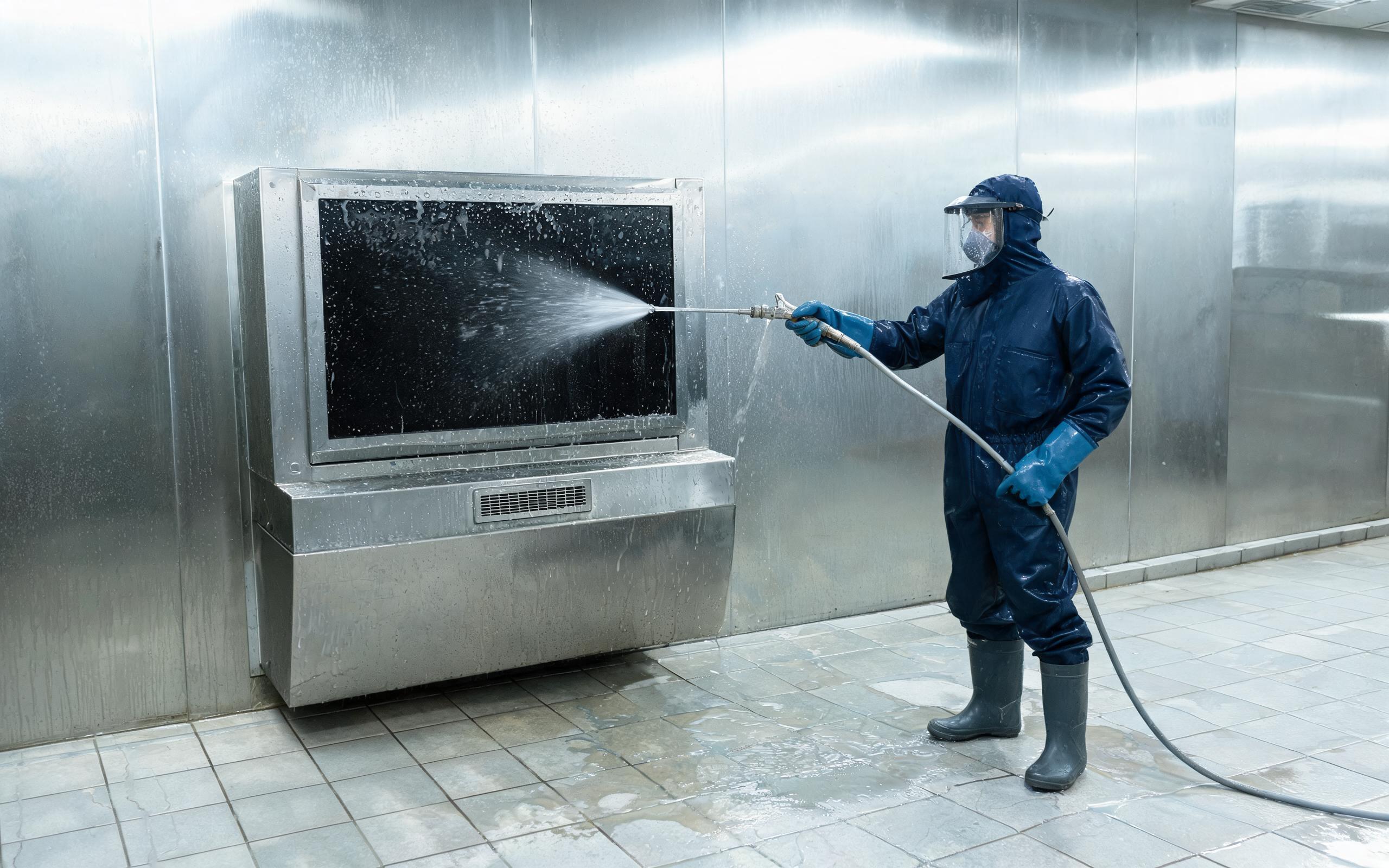
Vent Sizing and Placement Against Washdown Spray
A vent is sized to airflow demand, not enclosure dimensions alone. Flow depends on free volume and the fastest pressure change, such as cold sanitizing spray striking a sun-heated housing and creating a sudden partial vacuum. An undersized vent cannot keep pace, so the gasket still pumps and water is drawn past its lips. Placement matters equally: the vent sits outside the direct spray fan, often on a bottom or side lip behind a stainless mesh, and two vents at opposing points prevent dead zones in large housings. The common failure mode on a neglected rugged industrial display is fouling rather than rupture, since salt crystals, sugar residue, or cement dust block the membrane and turn the breathing enclosure back into a sealed vessel. Inspection intervals therefore belong in the maintenance plan from day one.

Qualification Tests for Vented IP-Rated Assemblies
Qualification work treats the vent as part of the housing rather than an accessory. Field observations from washdown bays and coastal charging sites show that KOXIAN rugged industrial display enclosures retain clear glass and stable touch response when the vent survives the same cycles as the housing itself. Testing starts with IEC 60529 spray and immersion runs on the complete assembly, vent included, while an internal pressure logger confirms no sustained differential is held. Thermal cycling follows IEC 60068-2-14 practice between subzero and high-temperature dwells, salt spray and chemical wipes target the vent housing, and a final dust loading run repeats the airflow measurement. Acceptance requires the rated ingress protection, near-zero residual pressure, and unchanged membrane airflow at the end.
A sealed enclosure is not a static object; it is a pressure vessel that breathes whether the design allows it or not. Day-night heating, cold spray, and washdowns push air across whatever path is weakest, and an unvented seal eventually pumps moisture past the gasket. A membrane vent gives that exchange a controlled path that rejects water and dust while keeping the IP rating intact. Sizing to free volume and thermal slew rate, placing the vent outside the spray fan, and qualifying the full assembly through spray, cycling, and dust tests turns sealing into a layered system. Engineers specifying a rugged industrial display for outdoor or washdown duty should request airflow and water-entry pressure data alongside the IP certificate.