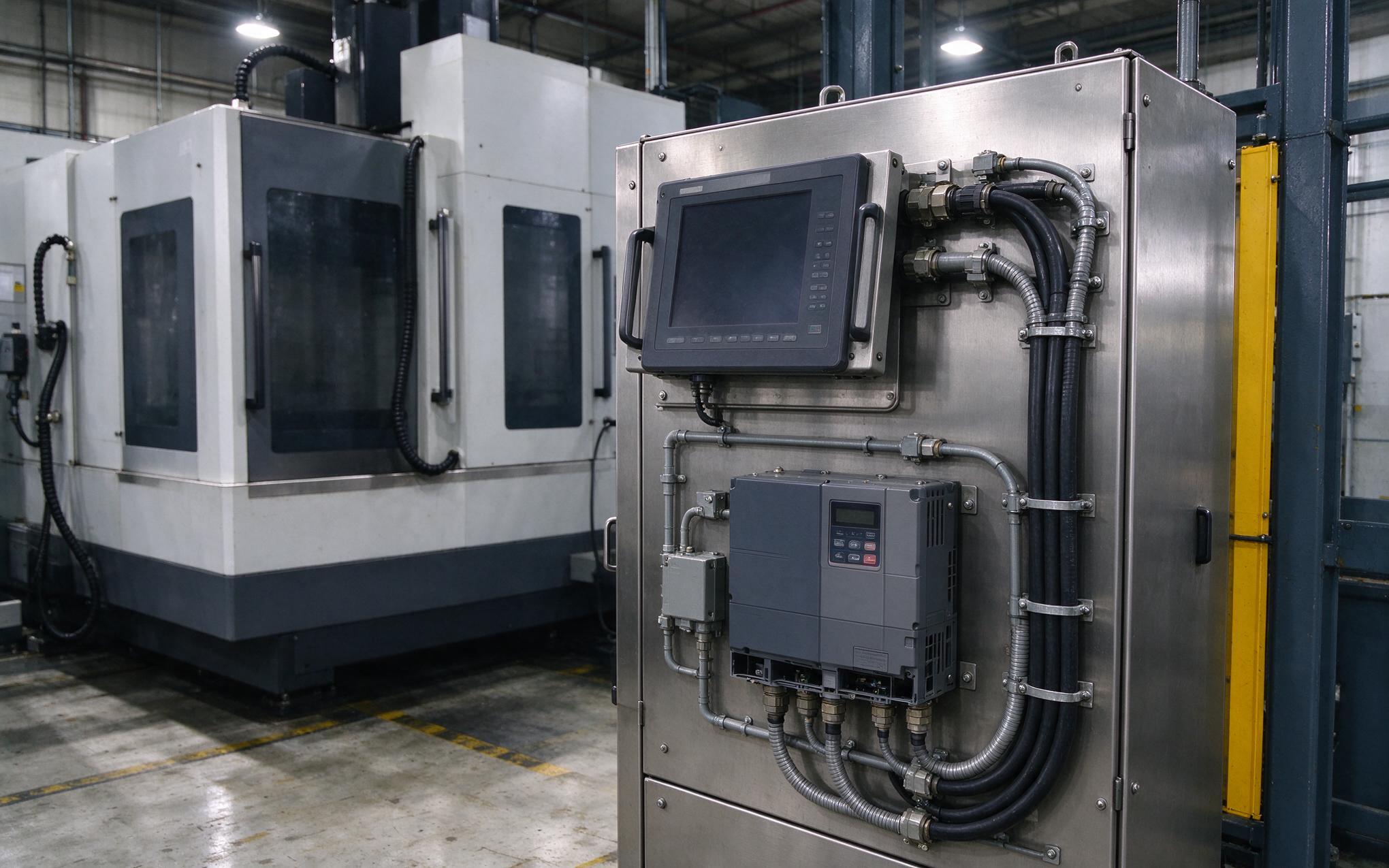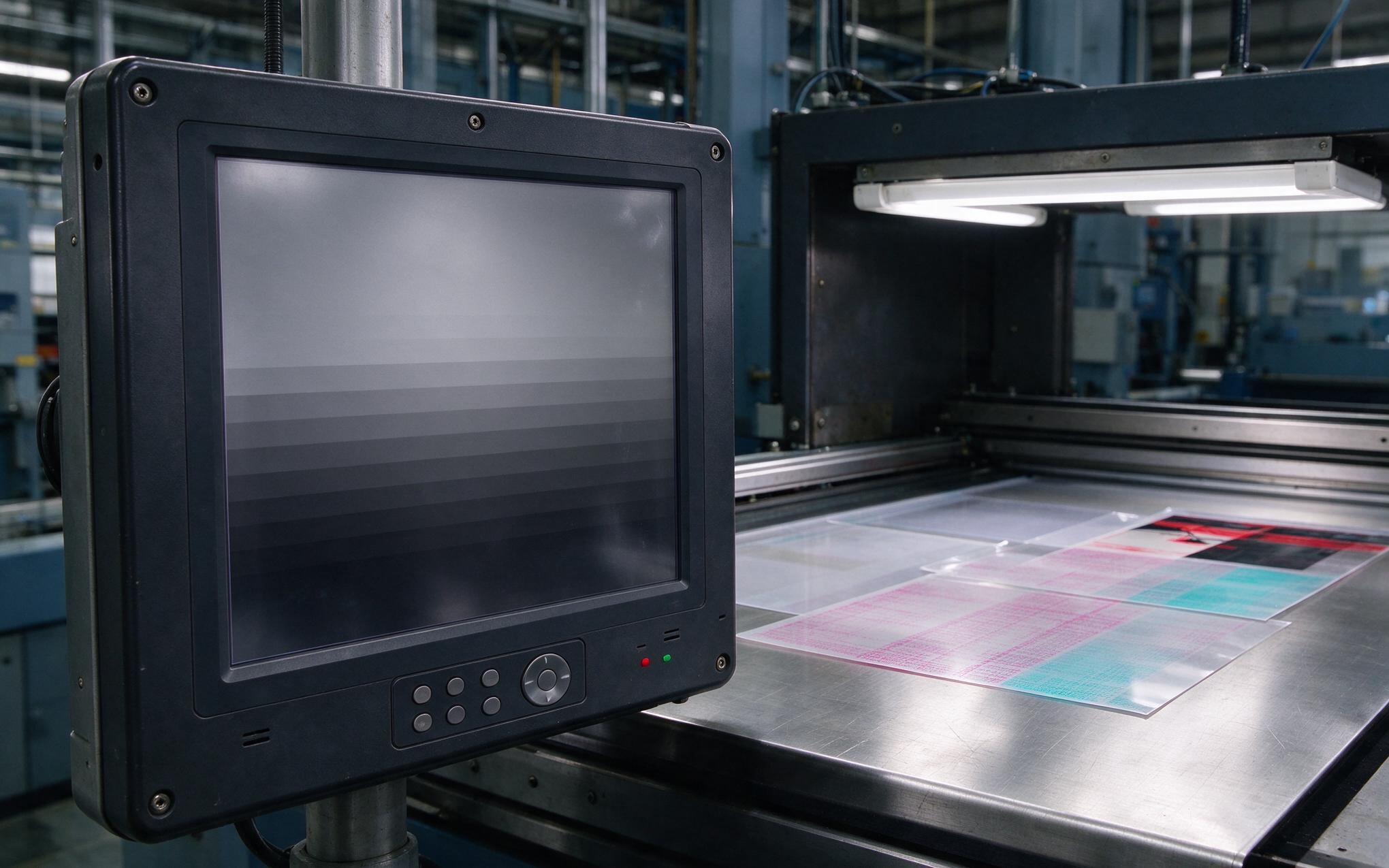
Engineers commissioning a new line-station display drag a test fixture corner to corner and watch the drawn line lag near the bezel. The center of the panel tracks every move, while the outer channels hesitate, double-report, or miss a tap with the backlight at full brightness. That behavior is not a software setting. An industrial grade touch screen built past roughly fifteen inches crosses a different set of electrical limits than a seven-inch desk terminal, even when both use the same projected capacitive controller family. Trace length, sensor resistance, display switching noise, and edge grounding all scale with area, and each one changes how integrators should specify and qualify the panel.

Scaling Capacitive Sensor Routing Past Fifteen Inches
A projected capacitive matrix reads mutual capacitance where transmit and receive electrodes cross. On small panels, channels settle in microseconds and the controller scans the grid between refresh cycles. Doubling the diagonal changes that arithmetic. Indium tin oxide is a transparent ceramic conductor with sheet resistance commonly above one hundred ohms per square on film, and long edge traces behave like distributed resistor-capacitor networks rather than wires. Far channels need longer integration windows, so edge touches report late or weak under a small-panel scan budget. Corners carry the longest return paths and share electrodes with grounded mounting hardware, lowering the signal-to-noise floor where operators rest a palm. Routing density, border width, and sampling time must be designed together once an industrial grade touch screen passes mid-size formats.
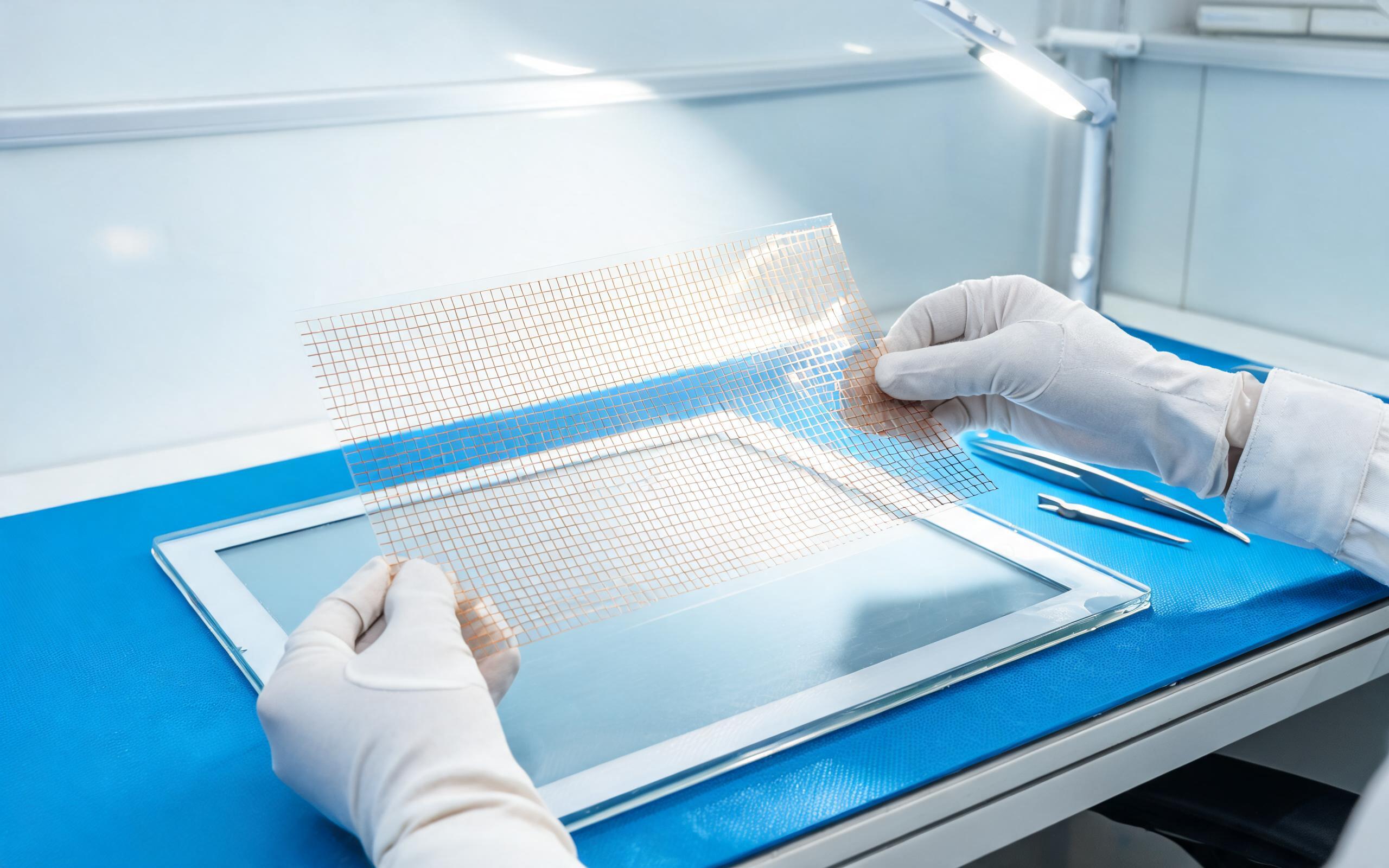
Trading ITO Uniformity for Low-Resistance Metal Mesh
Sensor manufacturers, including KOXIAN, replace sputtered indium tin oxide on large industrial touch display modules with ultra-fine copper or silver mesh, since lines a few micrometers wide hold sheet resistance below ten ohms per square across wide substrates. Lower impedance flattens timing differences between center and corner channels, so one scan budget delivers uniform edge response on a twenty-four-inch active area. The trade is optical, not electrical. A regular metal grid can beat against the LCD pixel lattice and throw moire fringes, and angled overhead light silhouettes the pattern. Engineering teams rotate the mesh against pixel pitch, vary line spacing, and blacken the copper to suppress reflection. The choice comes down to matching sheet resistance and pattern geometry to panel size and mounting conditions.
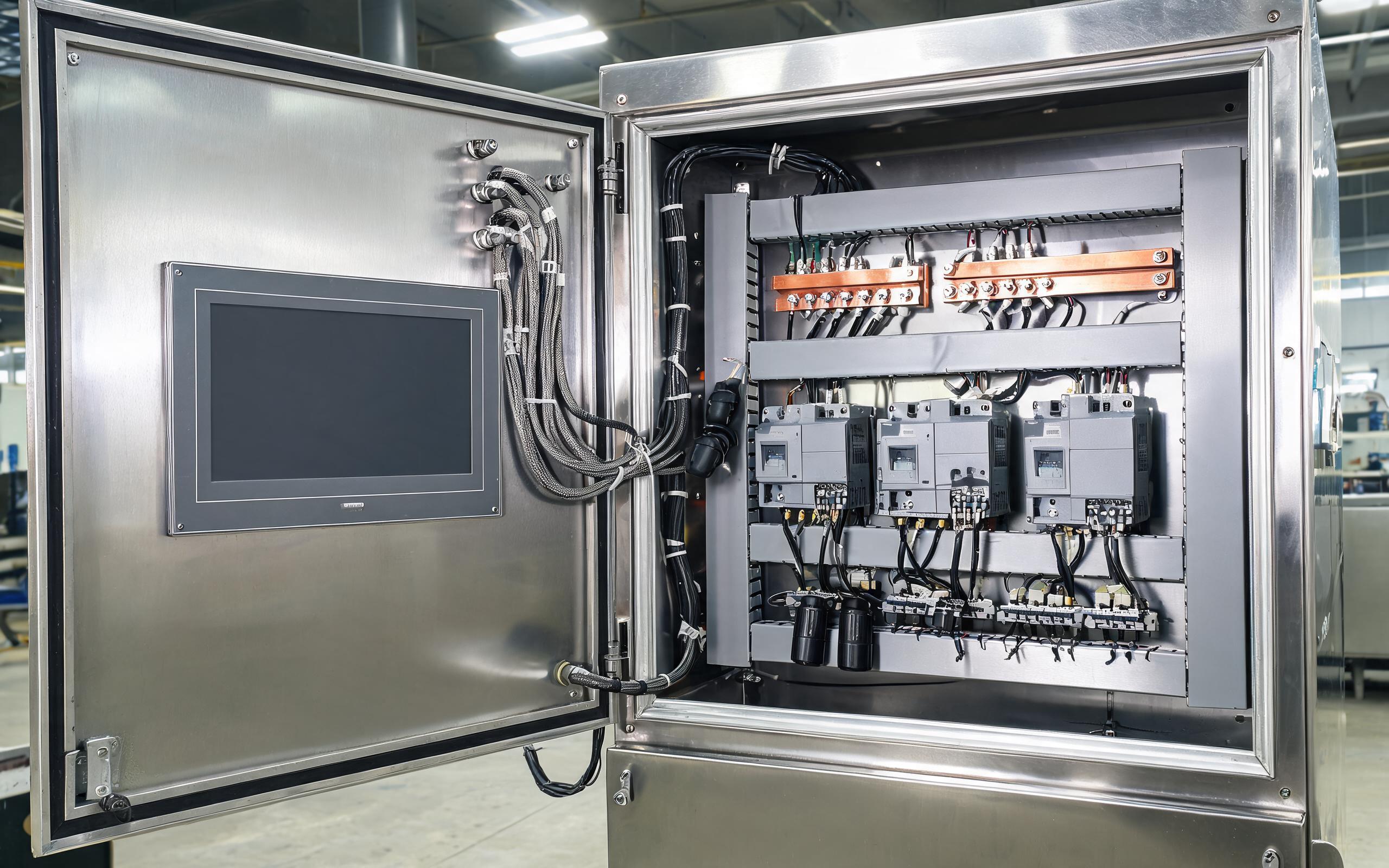
Quieting Display Noise with Frequency-Hopping Control
A large LCD is also a large noise source. Common-voltage inversion, column-driver pulses, and backlight switching couple millivolt disturbances into electrodes sitting millimeters above the cell, and coupling grows with display area. Touch firmware answers on three levels. Frequency hopping moves the scan clock off spectral lines shared with display timing; synchronized triggering aligns sensing with quiet windows between driver pulses; a shield layer shunts coupled energy before it reaches the receive channels. Tuning matters more than feature lists. A controller that hops without mapping the installed display noise spectrum lands on fresh interference, and a panel qualified with a dimmed backlight often fails once the line runs at full brightness. Specifying the display and the industrial touch screen panel as one tested assembly closes that gap.

Qualifying Edge Accuracy on Industrial Grade Touch Screens
Acceptance testing on large formats has to target the failure zones rather than the center. A fixtured stylus draws a grid and diagonal sweeps across the active area while logging offset, jitter, and dropped points, with separate passes at each corner and bezel edge. Multi-touch tests place simultaneous contacts at opposing edges, exposing weak synchronization between long channels. Sweeps run with the backlight at maximum and nearby drives energized, since a quiet bench cannot reproduce coupled display noise. Palm and water-droplet passes belong in the same protocol at washdown-adjacent stations. Teams that document offset limits, loaded report rate, and firmware revision hold a defensible record; configurations modeled on the shielded mesh stack used in the KOXIAN G1 series industrial touch screen panel offer one repeatable starting point.
Large panels fail differently than small ones, and the failure is usually electrical before it turns mechanical. Trace resistance that a compact sensor absorbs becomes edge latency on a twenty-four-inch matrix, display switching becomes a measurable noise source, and the sensor material choice ripples into optical quality. Selecting an industrial grade touch screen therefore means reviewing sheet resistance data, mesh-to-pixel alignment, controller noise strategy, and an edge-focused acceptance protocol as one package instead of trusting a generic rugged label. Integrators who demand measured edge accuracy under realistic brightness and noise conditions receive panels that hold up on the line.