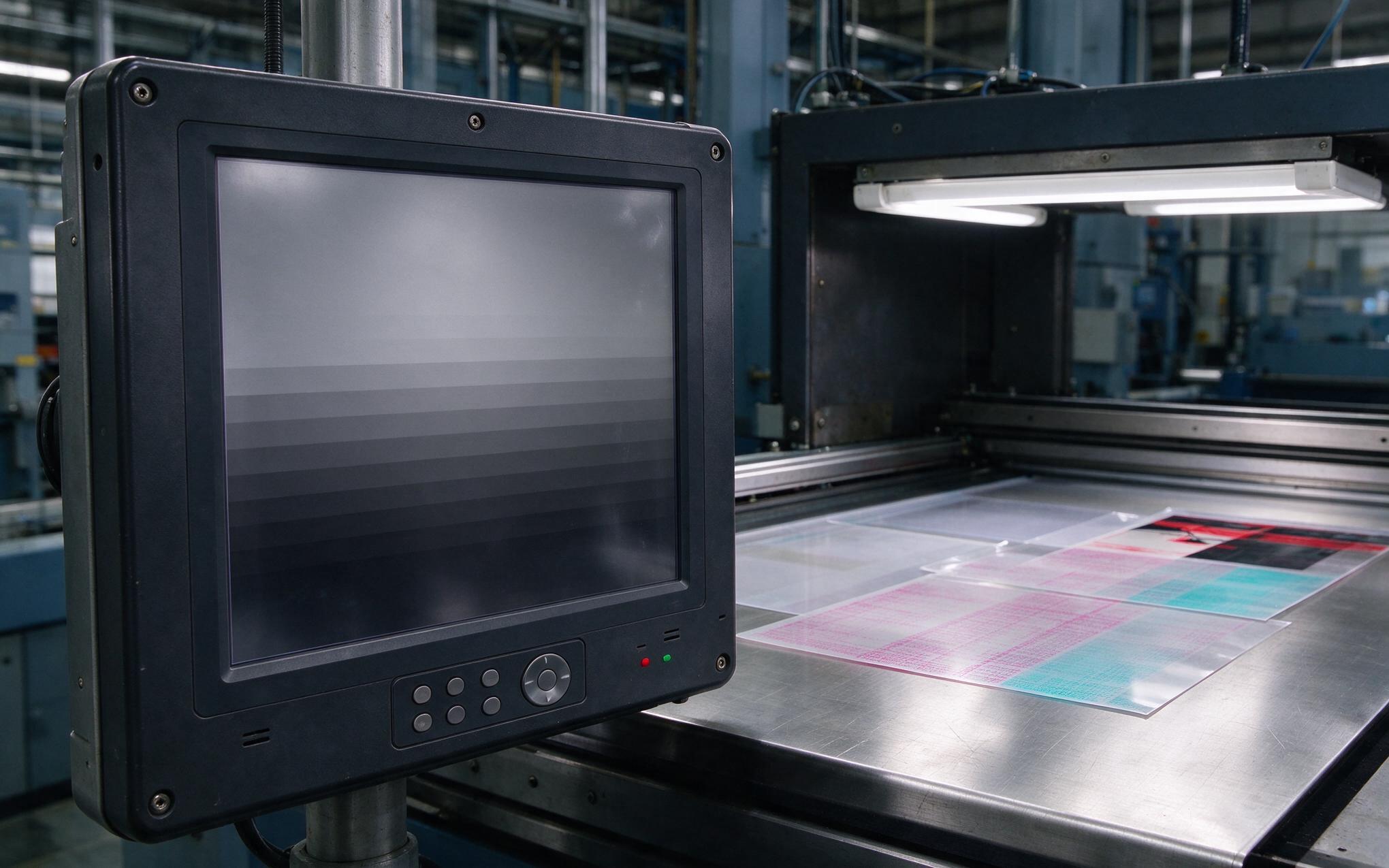
Projected capacitive touchscreens dominate industrial operator interface design, but their long-term reliability depends on the bonding method used to laminate the cover glass to the LCD module. When a touchscreen delaminates, the failure begins as a faint haze at the edges, progresses to Newton ring interference patterns, and eventually results in complete loss of touch sensitivity. Understanding the comparative aging behavior of air gap, optically clear adhesive film, and optically clear resin bonding is essential for specifying industrial panel PCs that will survive five to ten years of thermal cycling, vibration, and UV exposure.
Air Gap Bonding: Low Initial Cost, Predictable Failure Modes
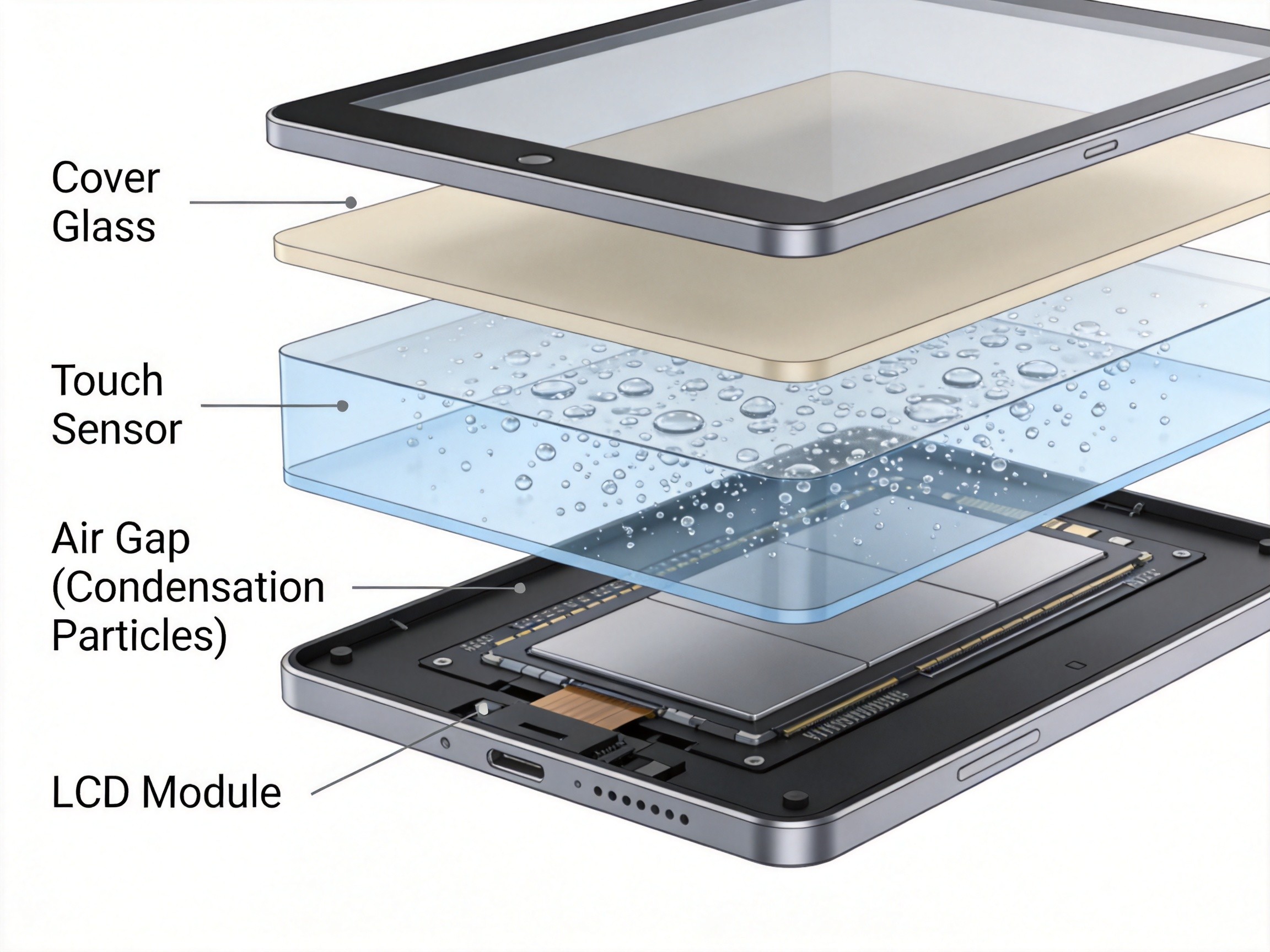
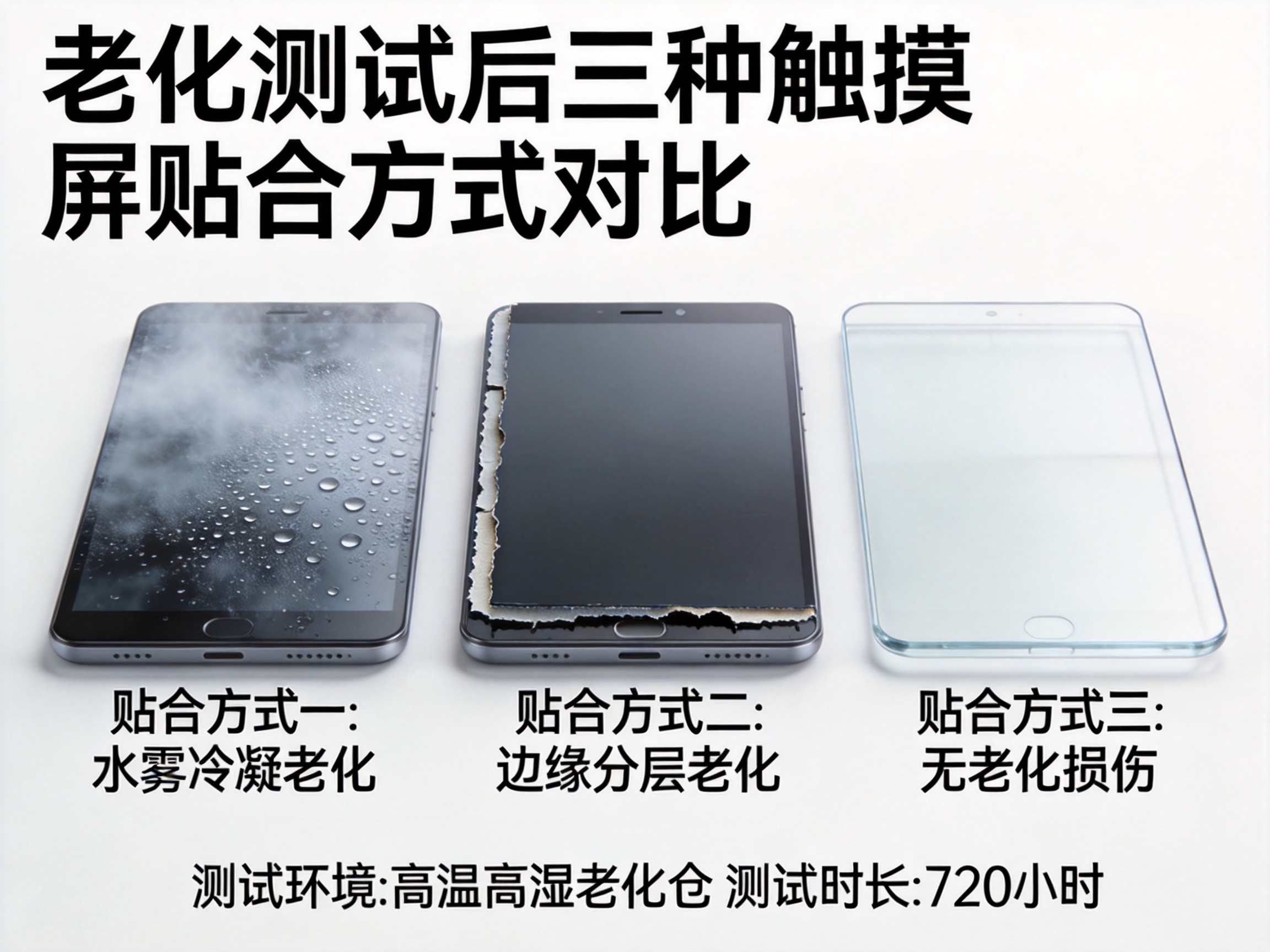
Air gap bonding places the touch sensor and cover glass at a fixed distance from the LCD module, typically 0.5 to 1.5 mm, using a perimeter gasket. The primary failure mechanism is not delamination, because there is no bonding layer. Instead, the air cavity becomes a condensation trap. When the panel PC undergoes thermal cycling, trapped air exchanges moisture through the imperfect seal. Over hundreds of cycles, a visible film accumulates on internal surfaces, scattering light and reducing contrast. In severe cases, moisture creates electrical leakage that interferes with touch sensing. The failure is gradual, becoming noticeable after 18 to 24 months in outdoor or high-humidity installations. For cost-sensitive deployments, air gap bonding remains viable with a well-understood degradation curve.
OCA Film Bonding: Adhesion Fatigue Under Thermal Cycling
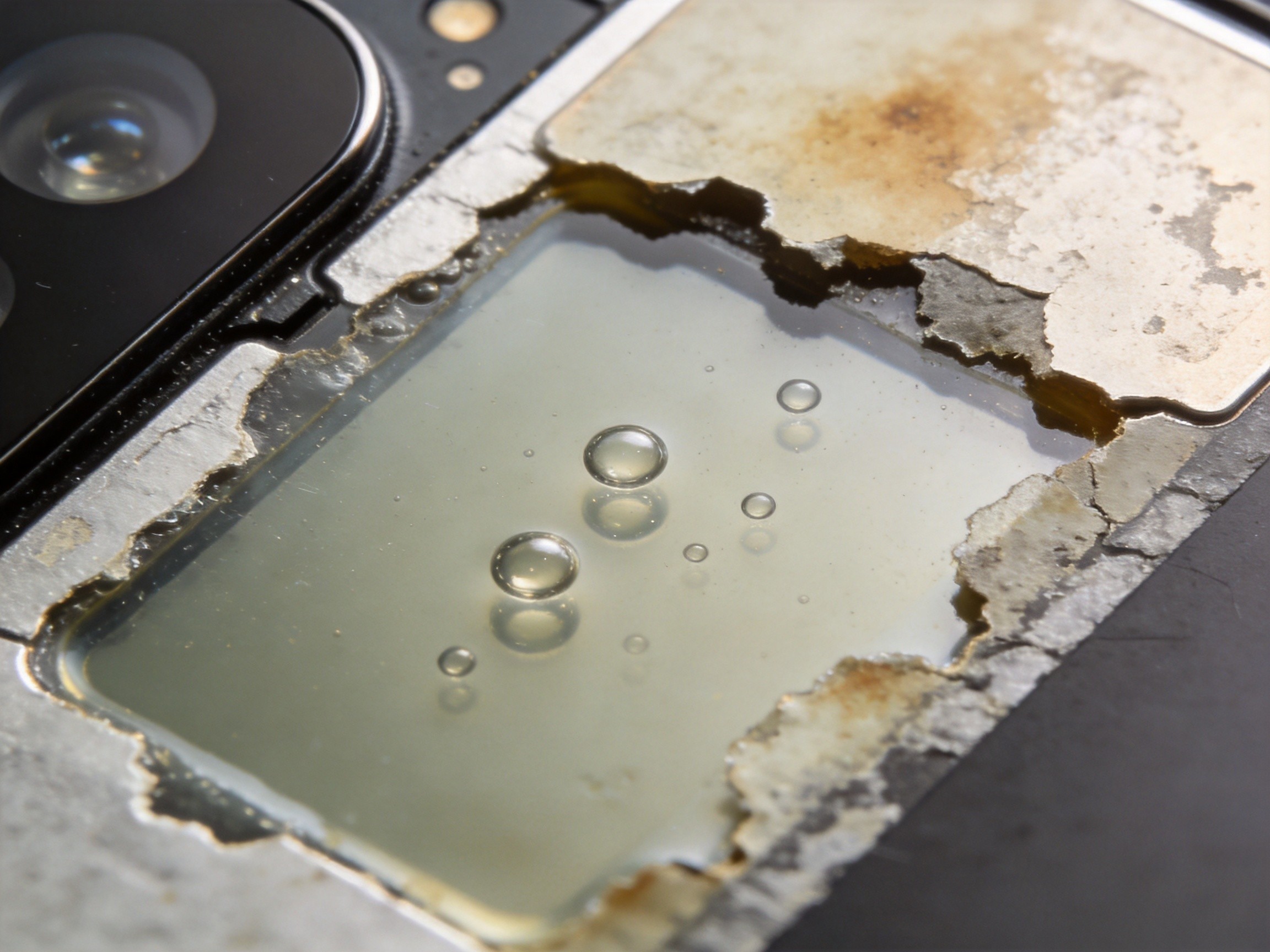
OCA bonding uses a solid, pressure-sensitive adhesive film laminated between the cover glass and LCD module under vacuum. The film is typically 125 to 250 micrometers thick, composed of acrylic or silicone-based polymer. OCA provides excellent initial optical clarity with light transmission above 99 percent. The failure mechanism is driven by differential thermal expansion between the cover glass and LCD module. Under repeated thermal cycling from 0 to 60 degrees Celsius, shear stress accumulates at the bonding interface. OCA materials with a storage modulus below 0.1 MPa absorb stress through viscoelastic deformation. Higher-modulus materials transfer stress to the adhesive-glass interface, eventually overcoming adhesion. Delamination initiates at the edges and propagates inward after 3,000 to 5,000 cycles. KOXIAN panel PCs using premium silicone-based OCA with a glass transition below negative 40 degrees Celsius have demonstrated over 8,000 cycles without delamination, aligning with a five-year service life.
OCR Liquid Bonding: Superior Stress Absorption, Process Sensitivity
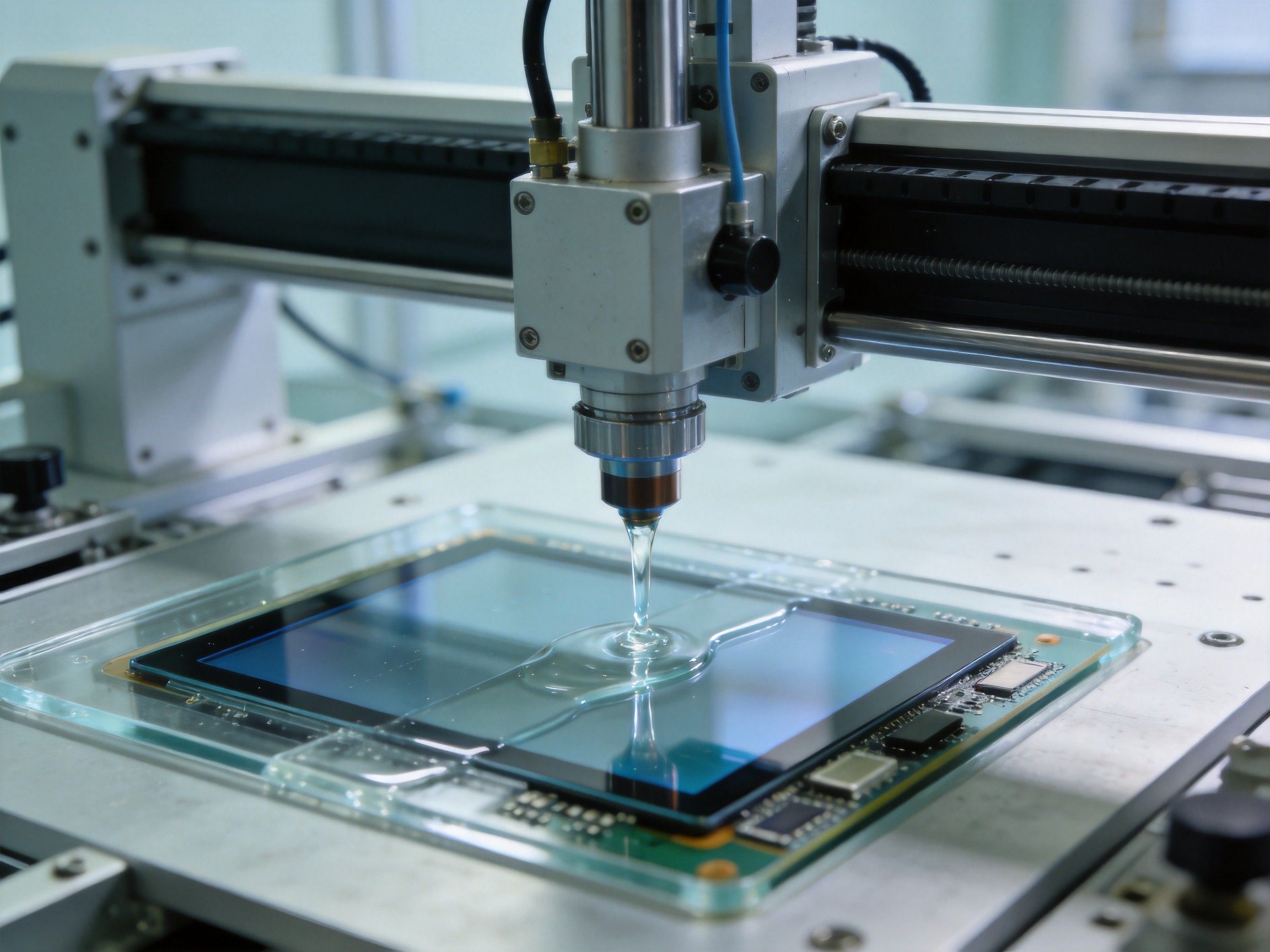
OCR bonding replaces the solid film with a liquid resin dispensed onto the LCD module, spread uniformly, and cured under UV light or heat. The liquid state allows the resin to fill microscopic surface irregularities, creating a bond with no interfacial voids. The cured resin maintains a low elastic modulus, below 0.05 MPa, giving it superior stress absorption compared to OCA film. When the cover glass and LCD module expand at different rates, the OCR layer distributes shear stress across its entire volume rather than concentrating it at the edges. Testing shows OCR-bonded assemblies survive 10,000 to 15,000 thermal cycles without visible delamination, roughly three times the endurance of OCA-bonded assemblies. The trade-off is process sensitivity. OCR dispensing requires precise control of resin volume, spread uniformity, and curing conditions. Bubbles, uneven curing, and incomplete adhesion can all cause premature failure. KOXIAN panel PCs with OCR-bonded displays show less than 0.3 percent delamination failure rates over a four-year window across food processing, logistics, and outdoor kiosk installations.
Comparative Degradation Analysis and Selection Criteria
The selection of bonding method is a risk management decision. Air gap bonding is the least expensive option, but condensation degrades optical performance within two years in outdoor or high-humidity environments. OCA bonding provides excellent optical quality and is the workhorse for indoor applications, but delamination risk increases sharply after 3,000 thermal cycles. OCR bonding is the premium choice for maximum service life, demanding rigorous process control. For climate-controlled indoor environments, OCA bonding is sufficient. For outdoor installations, refrigerated warehouses, or applications with 30-degree Celsius or greater daily temperature swings, OCR bonding is the appropriate choice. The incremental cost of OCR bonding, typically 15 to 25 percent over OCA, is negligible weighed against replacing a delaminated display in a critical operator station.
Touchscreen delamination is not a question of if, but when. The objective is to push that when far enough into the future that the panel PC reaches its planned end of service life before the bond fails. OCR bonding is the closest the industry has come to achieving that goal. For operators depending on their interface to function reliably through years of thermal stress, that investment pays for itself.