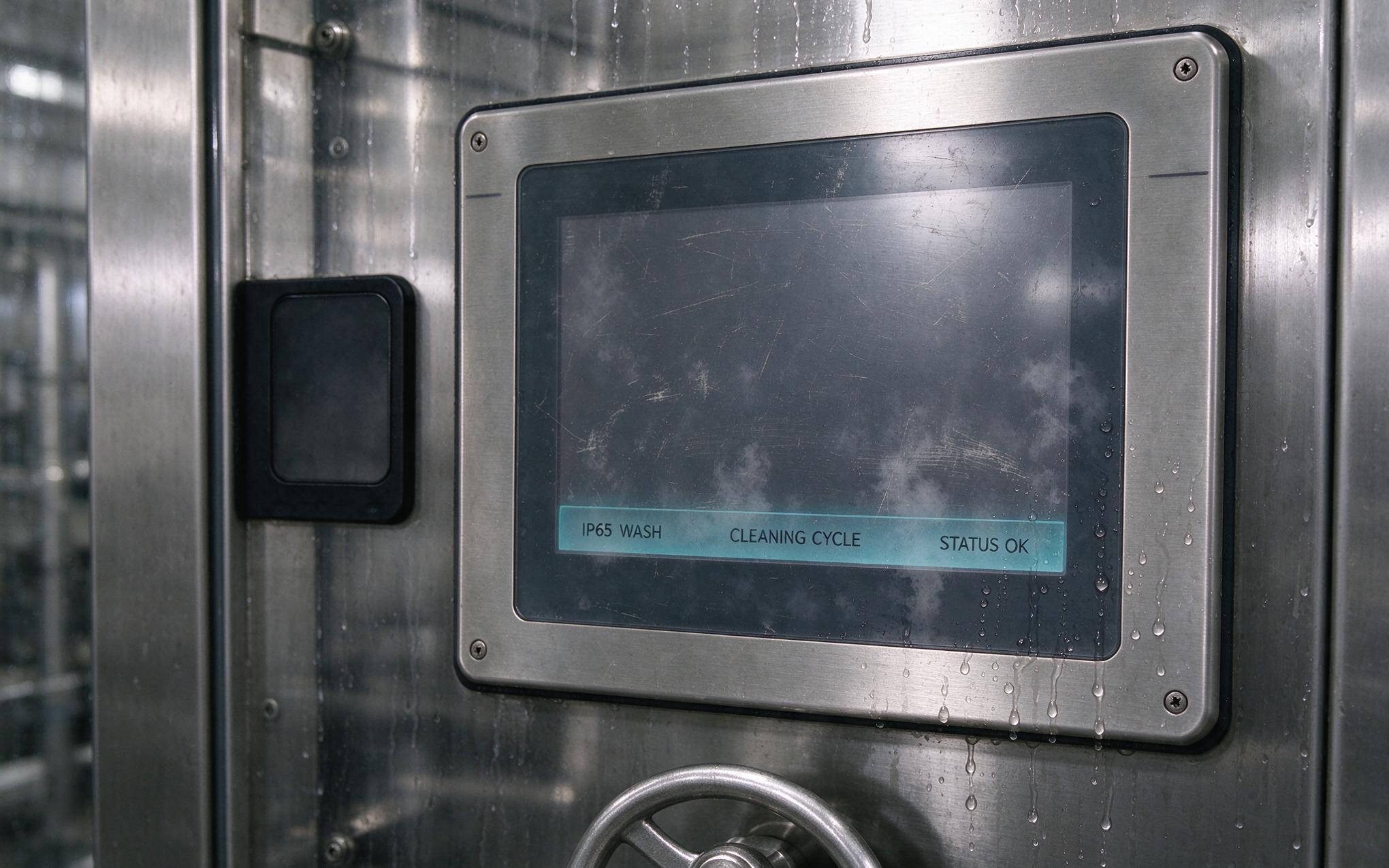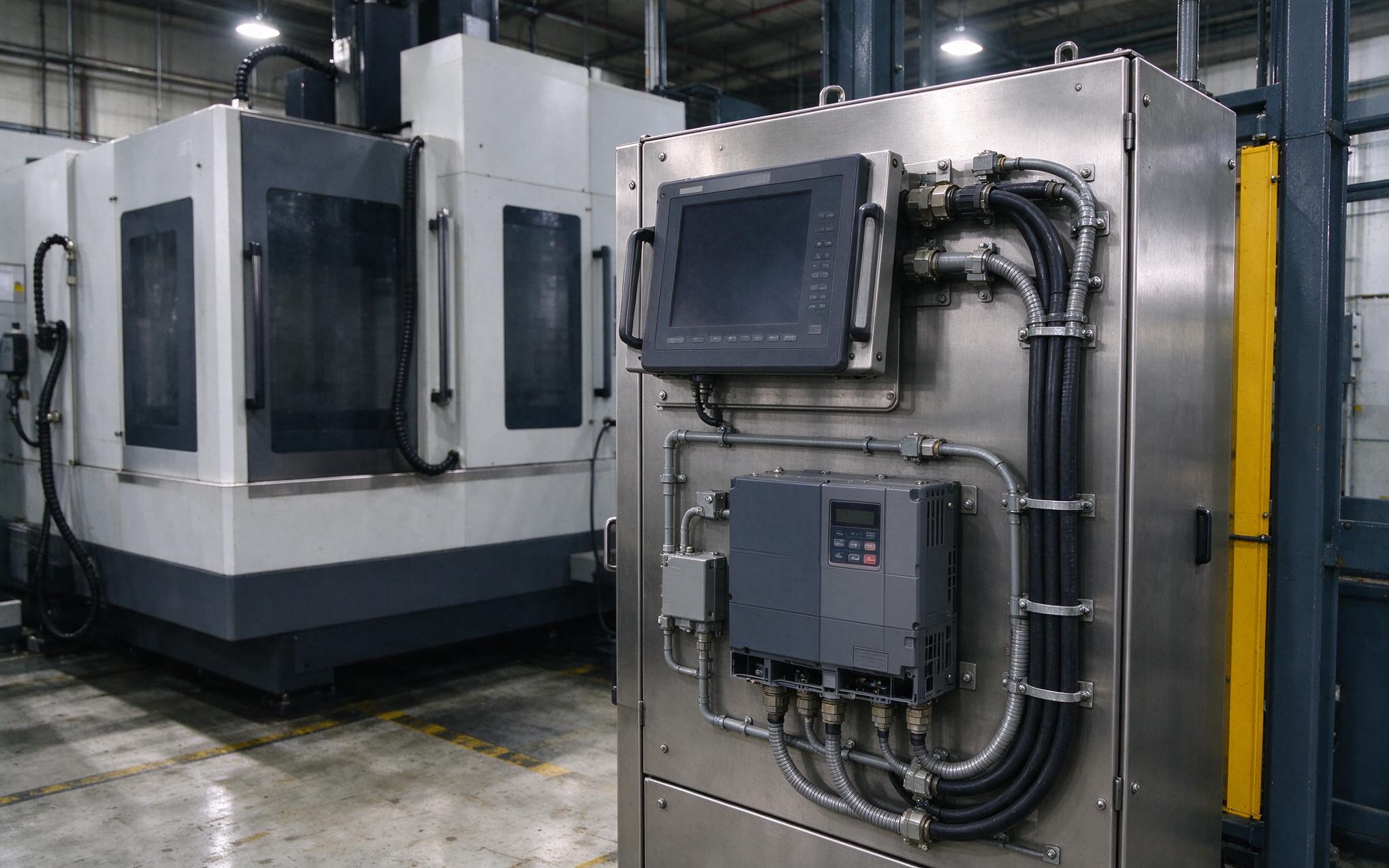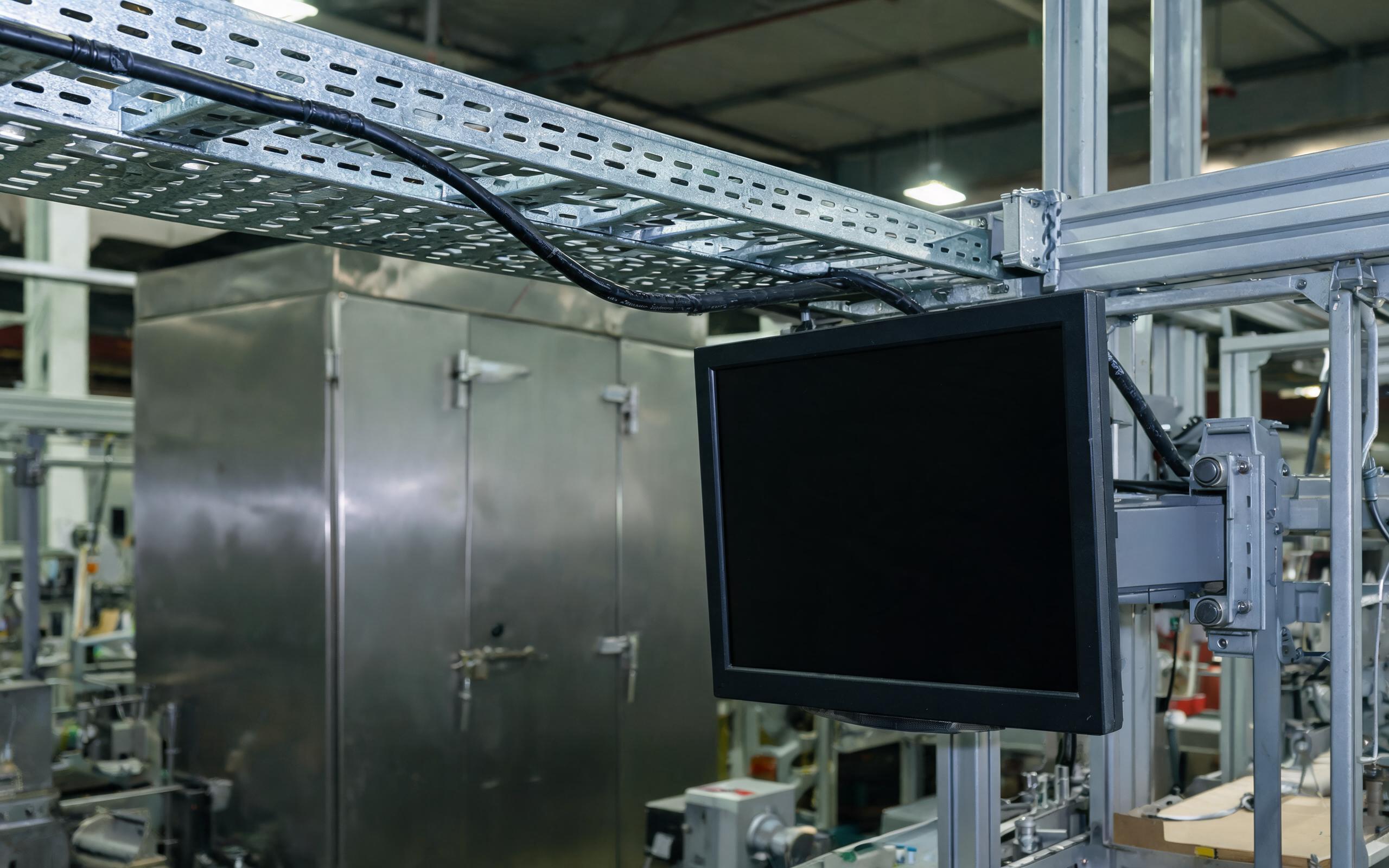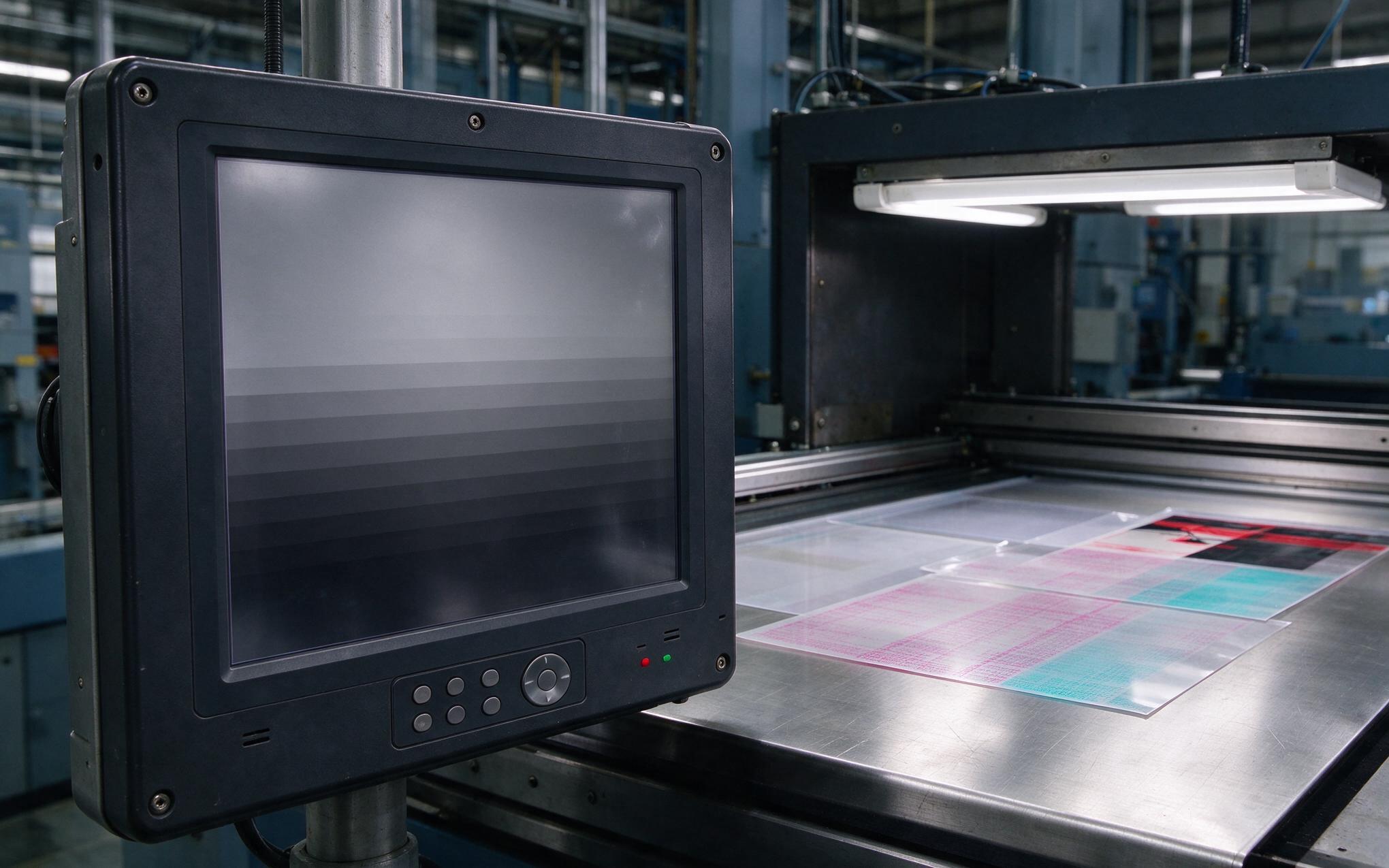
Sanitation crews finish a shift and leave a thin film of caustic foam sitting along the lower bezel of every panel in the room. Hours later that film has crept toward the gasket line, and a unit that passed its ingress test on the bench begins logging intermittent touch faults. The rating on the datasheet was never wrong. An industrial IP65 touch screen is qualified against a defined jet test at a defined angle, not against water that lingers. Mount geometry decides whether an enclosure sheds that liquid in seconds or holds it against a seal for the rest of the night, and that distinction rarely appears on a specification sheet.

Reading the Jet Test Behind an IP65 Rating
An IP65 designation comes from a defined procedure in IEC 60529, where a 6.3 mm nozzle delivers water at roughly 12.5 liters per minute from a distance of 2.5 to 3 meters. Hardware manufacturers, including KOXIAN, publish the test angle and nozzle distance alongside the rating so integrators can compare laboratory conditions against actual site exposure. The procedure runs for a set duration and then stops. Nothing in it describes liquid that remains in contact with a gasket for eight hours after a cleaning cycle ends. That gap matters because the gasket on an industrial IP65 touch screen resists momentary pressure far better than sustained wetting, which slowly draws cleaning chemistry into the compression interface. Chlorinated foam left standing overnight attacks the gasket surface and the bezel adhesive at once. Reading the rating as a statement about geometry rather than a guarantee of dryness changes how a panel gets mounted.

Slope Angles for Industrial IP65 Touch Screen Bezels
Flat vertical mounting looks tidy and drains poorly. A bezel set exactly plumb holds a meniscus of liquid along its lower gasket line, because surface tension resists the small gravitational component acting on a thin film. Tilting the enclosure five to fifteen degrees off vertical creates a continuous runoff path, and published work from display integrators reports drainage efficiency climbing sharply across that range. The tilt also moves the glass out of the direct spray cone during hose-down, which reduces the pressure any gasket sees. Rounded bezel corners matter for the same reason, since a square internal corner traps residue that rinsing never clears. Food and pharmaceutical plants often specify both together, treating slope and corner radius as hygiene requirements rather than styling choices.

Drain Gaps at Cabinet Cutouts and Cable Entries
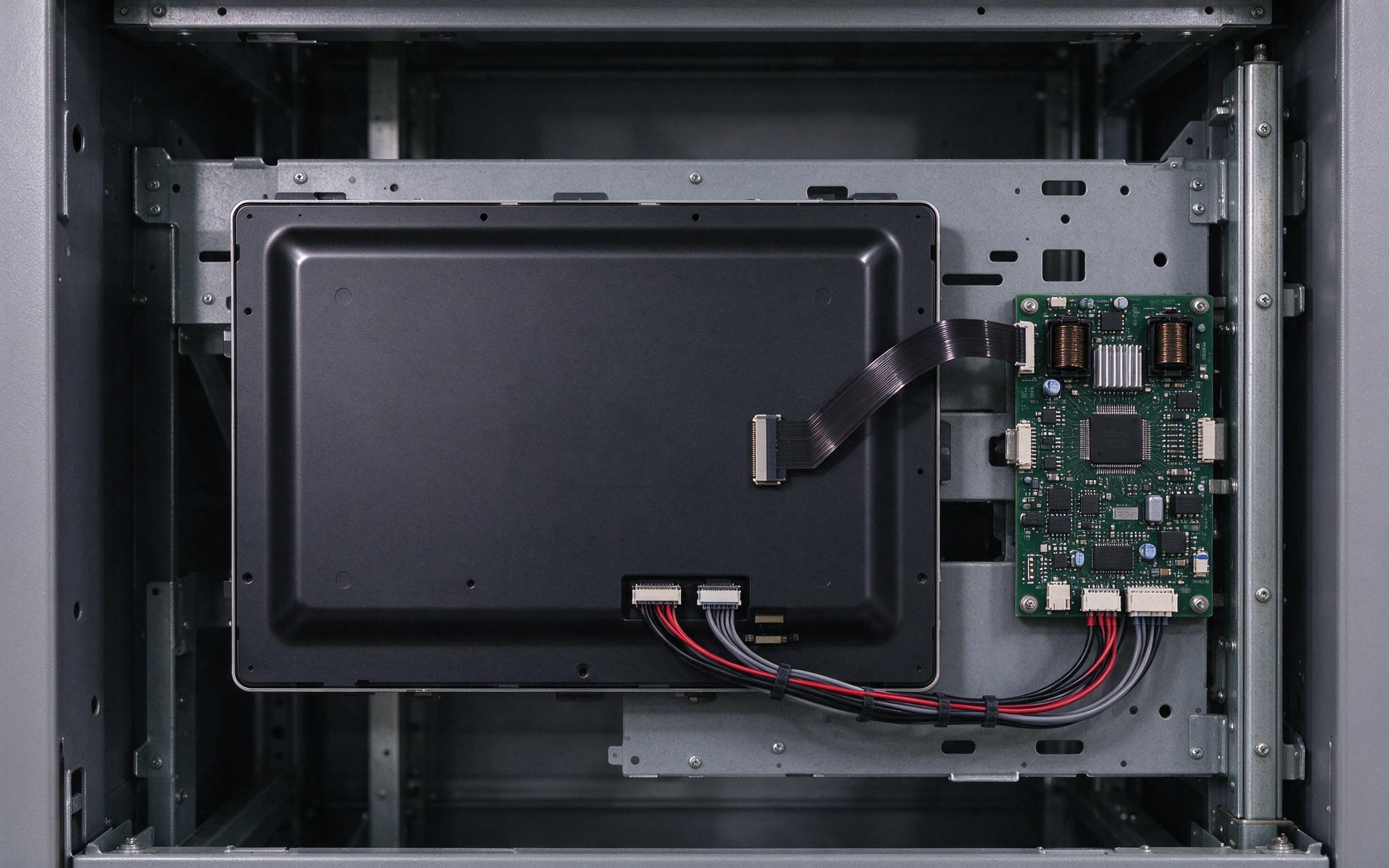
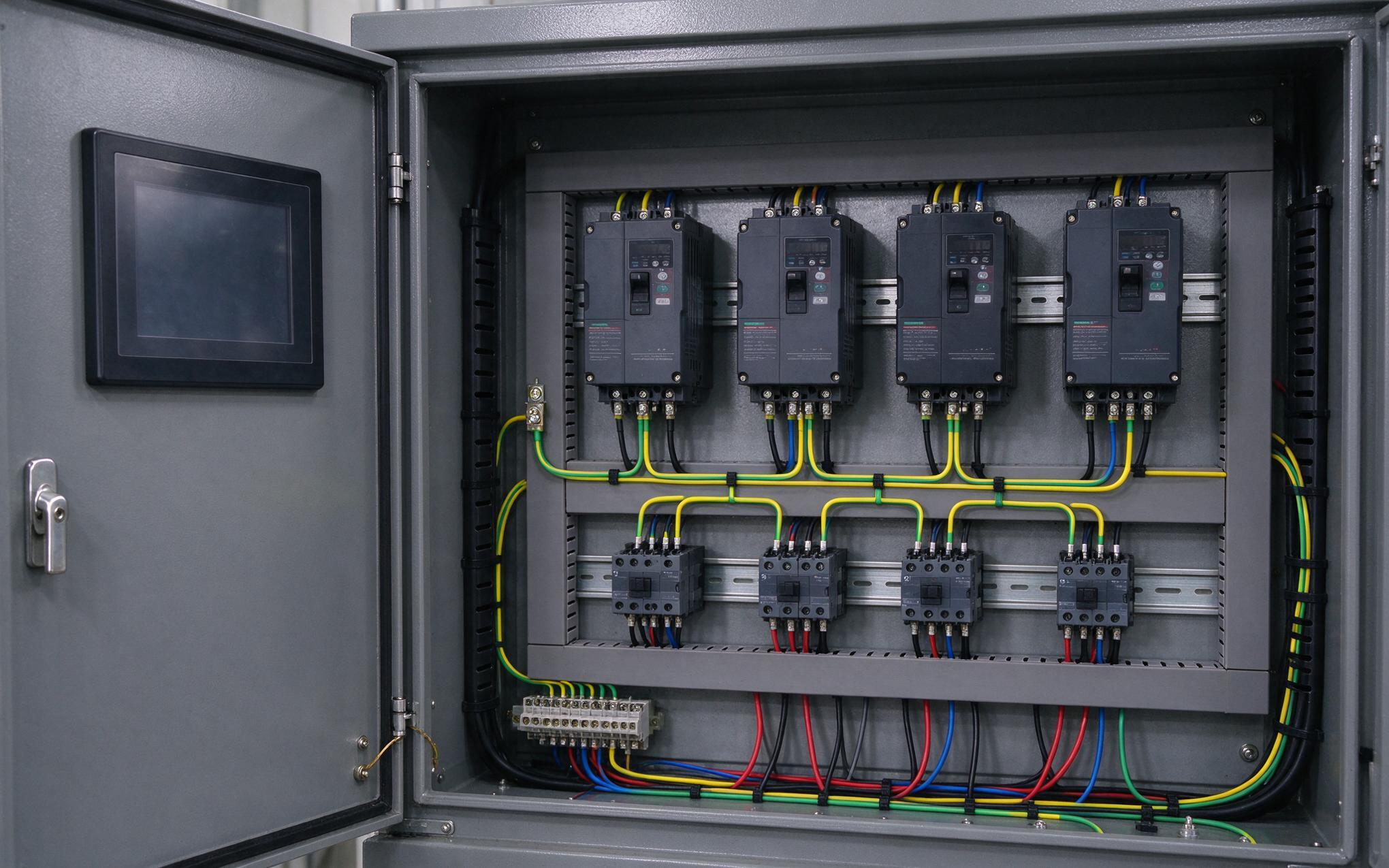
Sealing a panel into a cabinet cutout introduces a second water path that the panel rating never covered. Compression clips pull the bezel flange against the door skin, and any dent or paint ridge under that flange leaves an open channel. Installers sometimes respond by running silicone around the full perimeter of an industrial panel mount touch screen, which converts the cutout into a closed cavity. Trapped condensate then has nowhere to go, and thermal cycling drives it inward through the cable entry instead. A better practice leaves the lower 20 to 30 millimeters of the perimeter uncaulked so the cavity behind an industrial IP65 touch screen drains, while the upper and side runs stay sealed. Glands below the panel should be torqued to their rated value and fitted with the correct bushing size. Field observations from beverage halls show that cutouts fitted with KOXIAN sealed-bezel units stay dry when the lower gap is left open rather than caulked shut.

Validating Mount Geometry During Site Acceptance
Mount geometry on an industrial IP65 touch screen is verifiable at handover, unlike an ingress rating that arrives on paper. A digital angle gauge placed on the bezel confirms installed tilt within a degree, and a water pour along the lower edge shows whether runoff clears in under ten seconds. Acceptance records from plants that specify enclosures like the KOXIAN G1 series often include a photograph of the measured slope angle as part of the handover file. Checking gland torque and bushing fit during the same visit takes a few minutes and catches errors that otherwise surface months later. Where a cabinet cannot be tilted, a bolt-on drip shield above the cutout diverts sheet flow that would track down the glass. Recording which mitigation was applied lets maintenance interpret a future fault correctly instead of blaming the sensor.
An ingress rating describes a timed laboratory event, while a plant subjects the same enclosure to hours of standing chemistry. That difference is closed with geometry rather than a higher rating number. A five to fifteen degree tilt, rounded internal corners, a deliberate drain gap at the cabinet cutout, and correctly torqued glands together keep liquid moving away from a seal instead of resting against it. Verifying those details at site acceptance costs minutes and prevents the intermittent faults that get misdiagnosed as sensor failure.