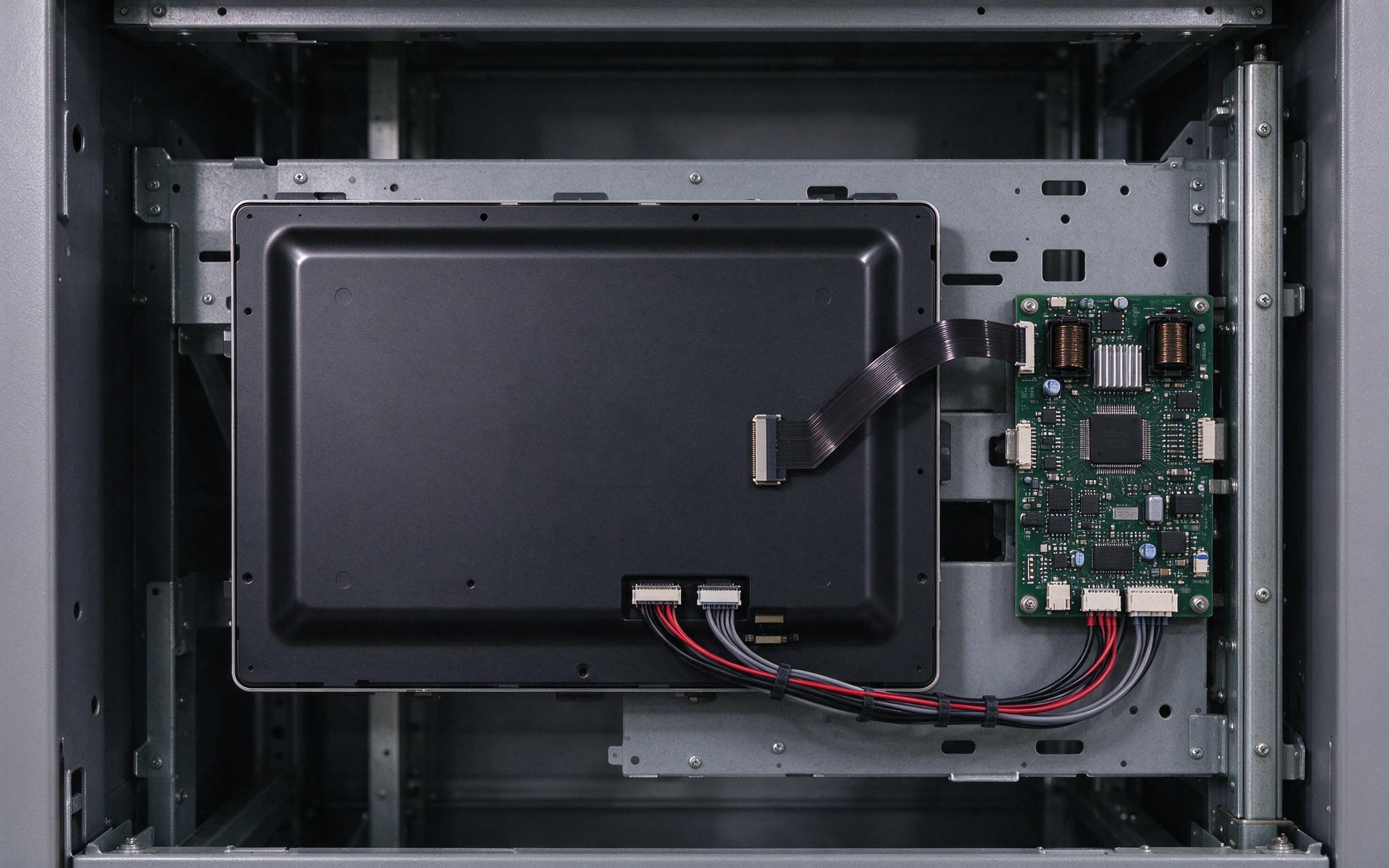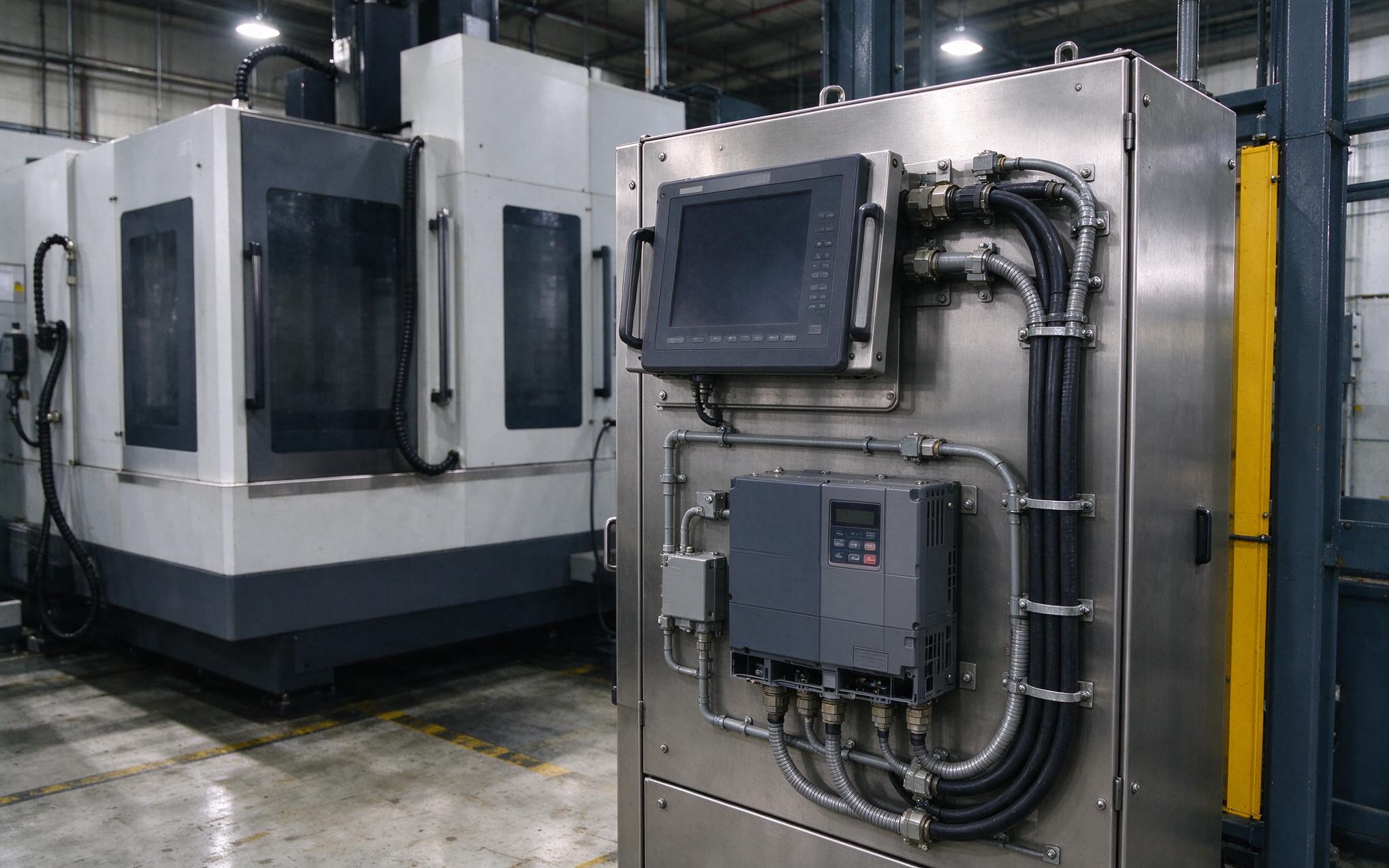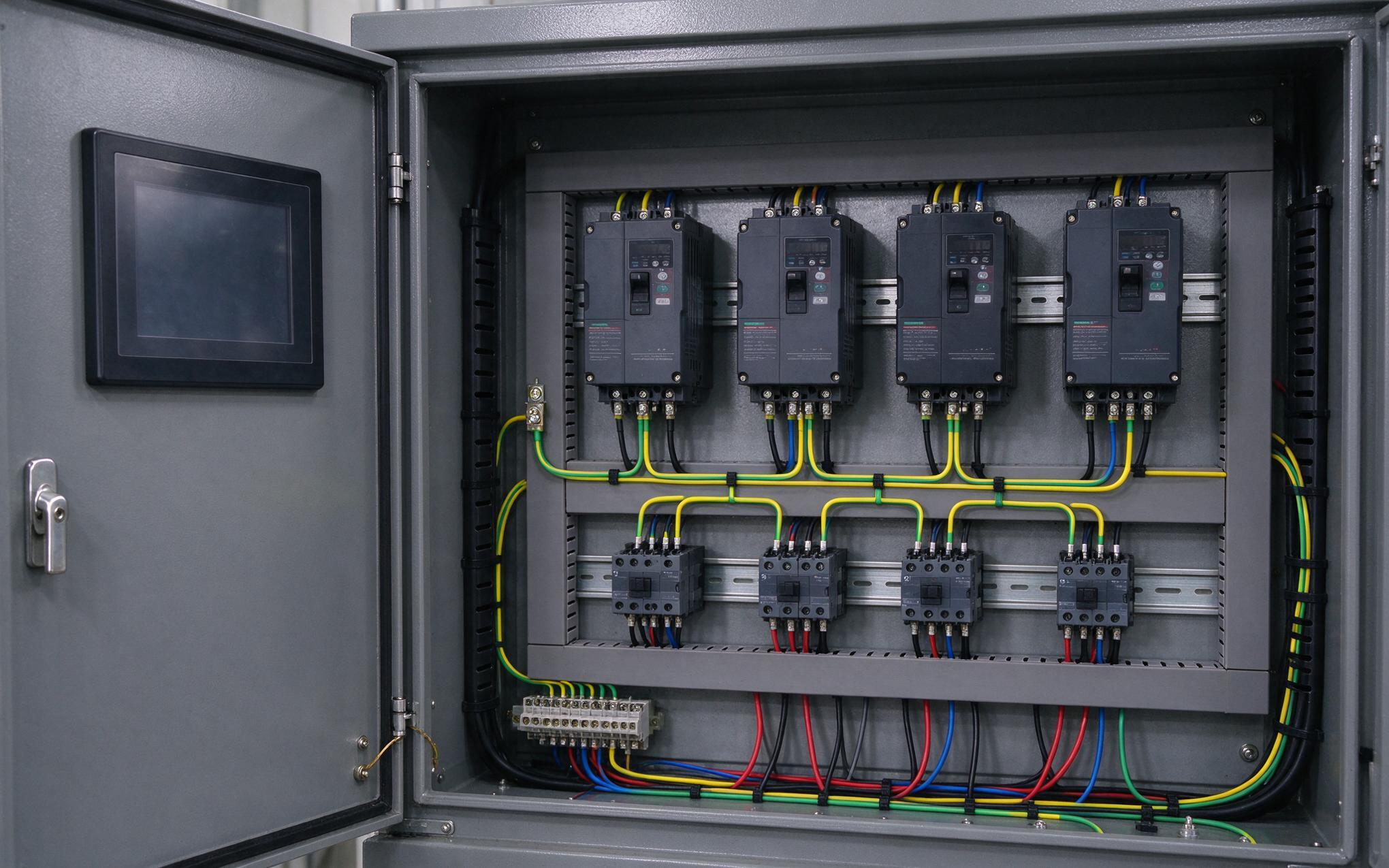
Heat inside a sealed cabinet does not disappear when the fan does. It moves through the chassis wall, warms the air trapped against the door, and settles as a steady temperature rise that every component inside has to live with. An industrial mini pc fanless build handles that rise well at the processor, where thermal engineering gets most of the attention, and far less predictably at the solid-state drive. Storage failures in these installations seldom announce themselves as heat problems. They surface as slow boots, truncated log files, or read errors on data written months earlier.

Thermal Load Paths Around an M.2 Drive
Passive designs move processor heat outward through a spreader plate into the finned enclosure wall. That path is engineered, measured, and usually documented. The path around the storage device often is not. An M.2 socket placed downstream of the spreader sits in a pocket of stagnant air that has already collected heat from the chipset and the DC-DC stage, and a drive controller there can run twenty degrees above the reported system ambient. NAND cells tolerate high temperature during a write far better than during idle retention, so a warm drive that spends most of its life idle is quietly losing stored charge. Orientation matters as well. A wall-mounted embedded industrial pc holds its fin stack vertical and convects reasonably, while the same chassis laid flat traps a hot layer directly over the board.

Endurance Math for Industrial Mini PC Fanless Storage
Hardware laid out around the KOXIAN K2 series places the M.2 socket away from the spreader shadow so the drive sees cabinet air rather than recirculated processor exhaust. Layout alone does not settle endurance, which comes down to terabytes written against the rated program-erase budget. A pSLC or industrial MLC drive rated at three thousand cycles delivers a very different service life from a consumer TLC part rated at six hundred, and the gap widens as temperature climbs. Integrators sizing an industrial mini pc fanless node should calculate daily write volume from the application, then divide rated endurance by that figure. A node writing eight gigabytes a day to a 128 GB industrial drive carries years of margin. The same node writing two hundred gigabytes a day does not.

Write Amplification in Logging and Buffering Roles
Application behavior multiplies raw write volume in ways that are easy to overlook during commissioning. A four-kilobyte status record appended once per second looks trivial until the file system pads it to a full page and the drive rewrites an entire erase block. Field observations from packaging lines show that KOXIAN-based edge nodes carrying identical workloads diverge sharply in drive wear once logging verbosity differs between cabinets. Ring buffers, database journals, and verbose system logs all amplify small writes, and an industrial mini pc fanless node in a historian role can see effective amplification of five to ten times. Redirecting transient logs to a RAM-backed volume and flushing on a longer interval cuts that amplification substantially. Where persistent journaling is required, an over-provisioned drive gives the controller spare blocks and keeps garbage collection from thrashing the same physical cells.

Qualification Checks Before a Cabinet Ships
A soak test with the door closed and the real workload running is the only honest predictor of service life. Hardware suppliers, including KOXIAN, publish drive-side temperature figures measured inside a closed enclosure rather than on an open bench. Two hours at full load with SMART attributes logged every minute exposes both the steady-state drive temperature and the early slope of the wear indicator. Recording total bytes written at commissioning and again after thirty days converts guesswork into a measured burn rate. Cabinet layout deserves the same scrutiny, since an industrial mini pc fanless unit mounted directly above a transformer inherits radiated heat that no simulation of the computer alone would predict. A fanless panel pc sharing the same door adds its own dissipation to that pocket. Documenting the measured numbers in the handover file lets maintenance interpret a future storage fault against a known baseline.
Passive cooling removes the noisiest failure point in a cabinet and shifts the remaining risk onto a component that degrades silently. Processor thermal design is well documented; drive-side thermal behavior usually is not. Measuring the drive sensor rather than the board sensor, sizing endurance from real write volume, trimming amplification out of logging paths, and soaking the assembly with the door closed together turn storage life into a number. That number belongs in the maintenance record, where it drives a planned replacement instead of an outage.