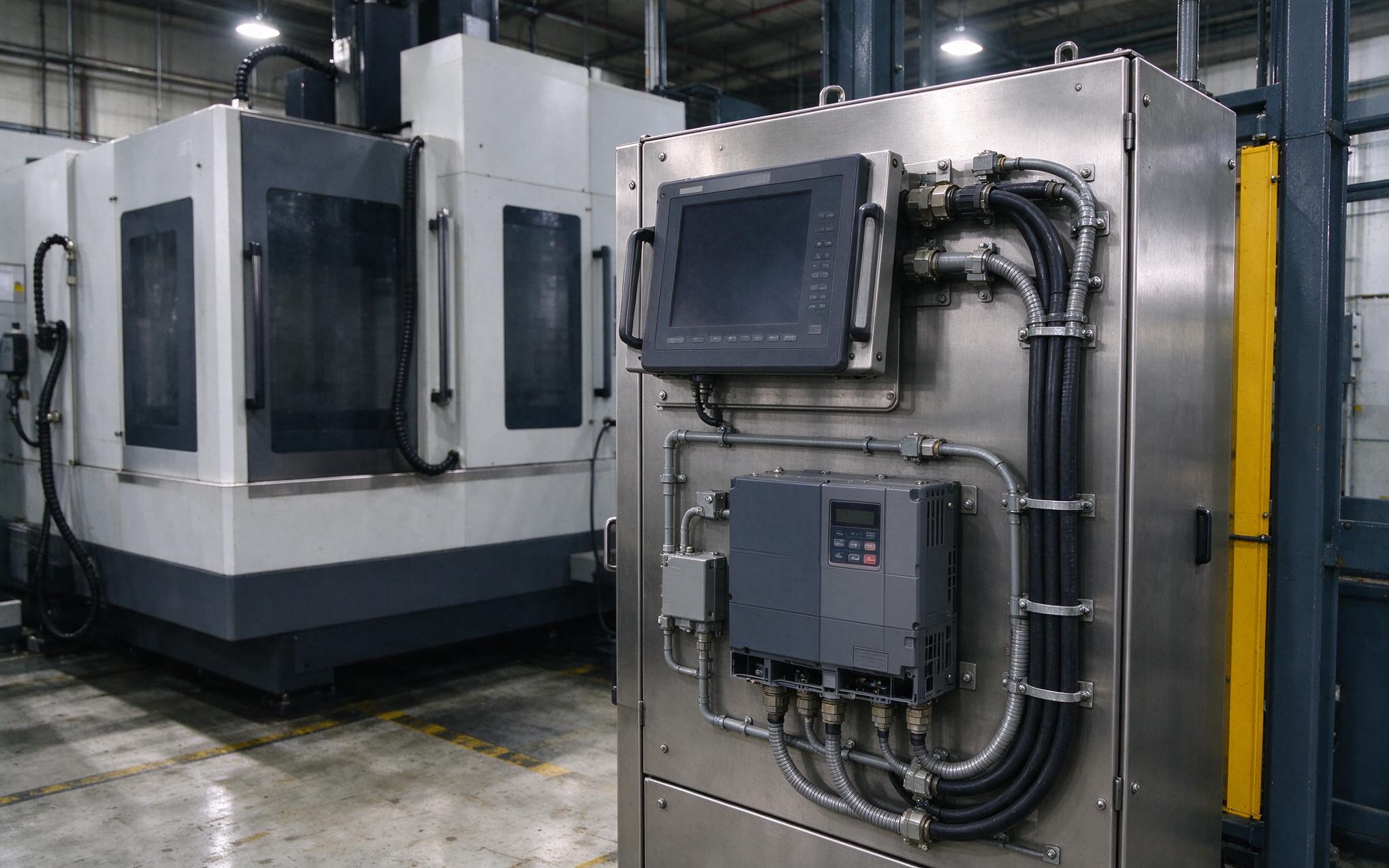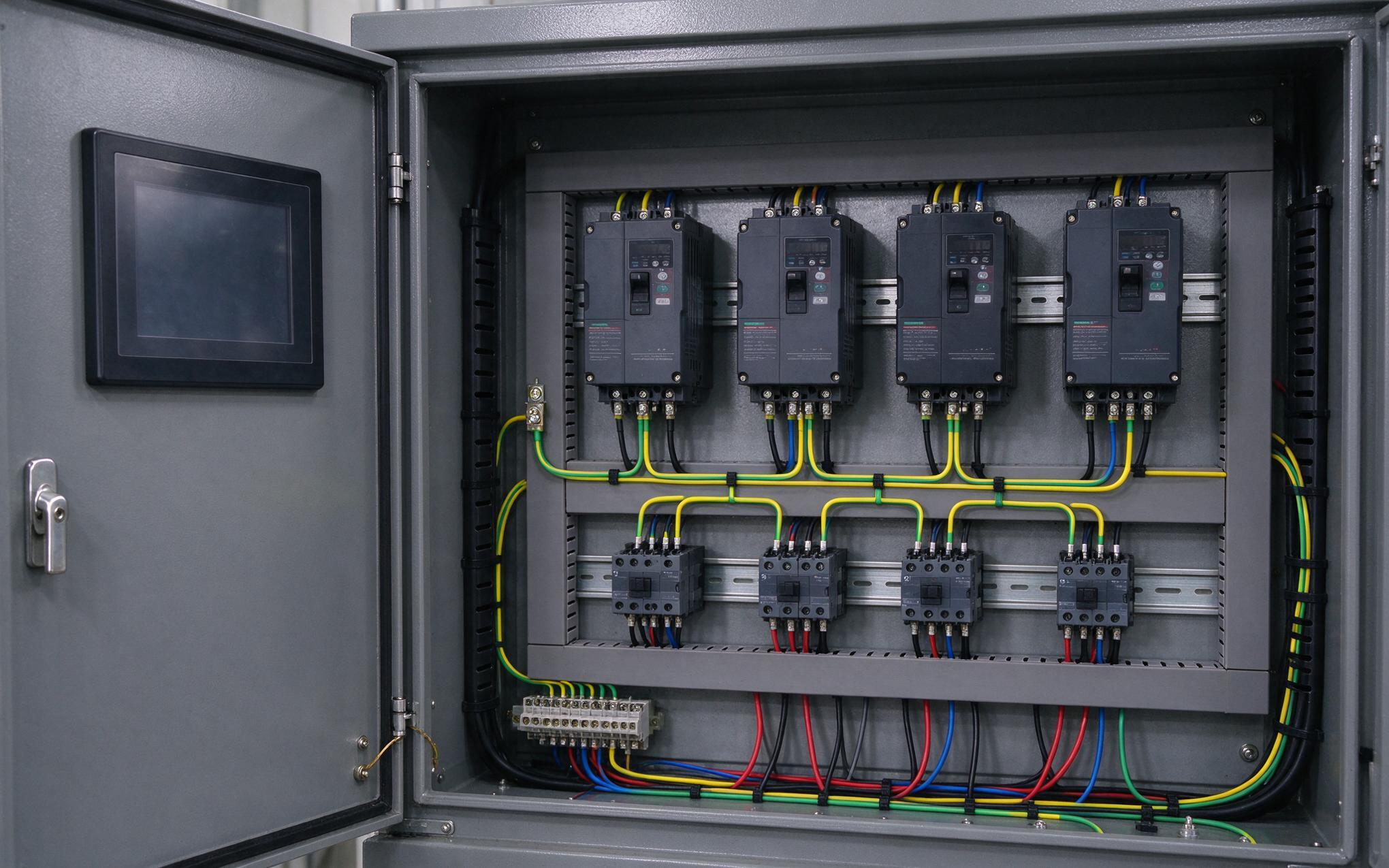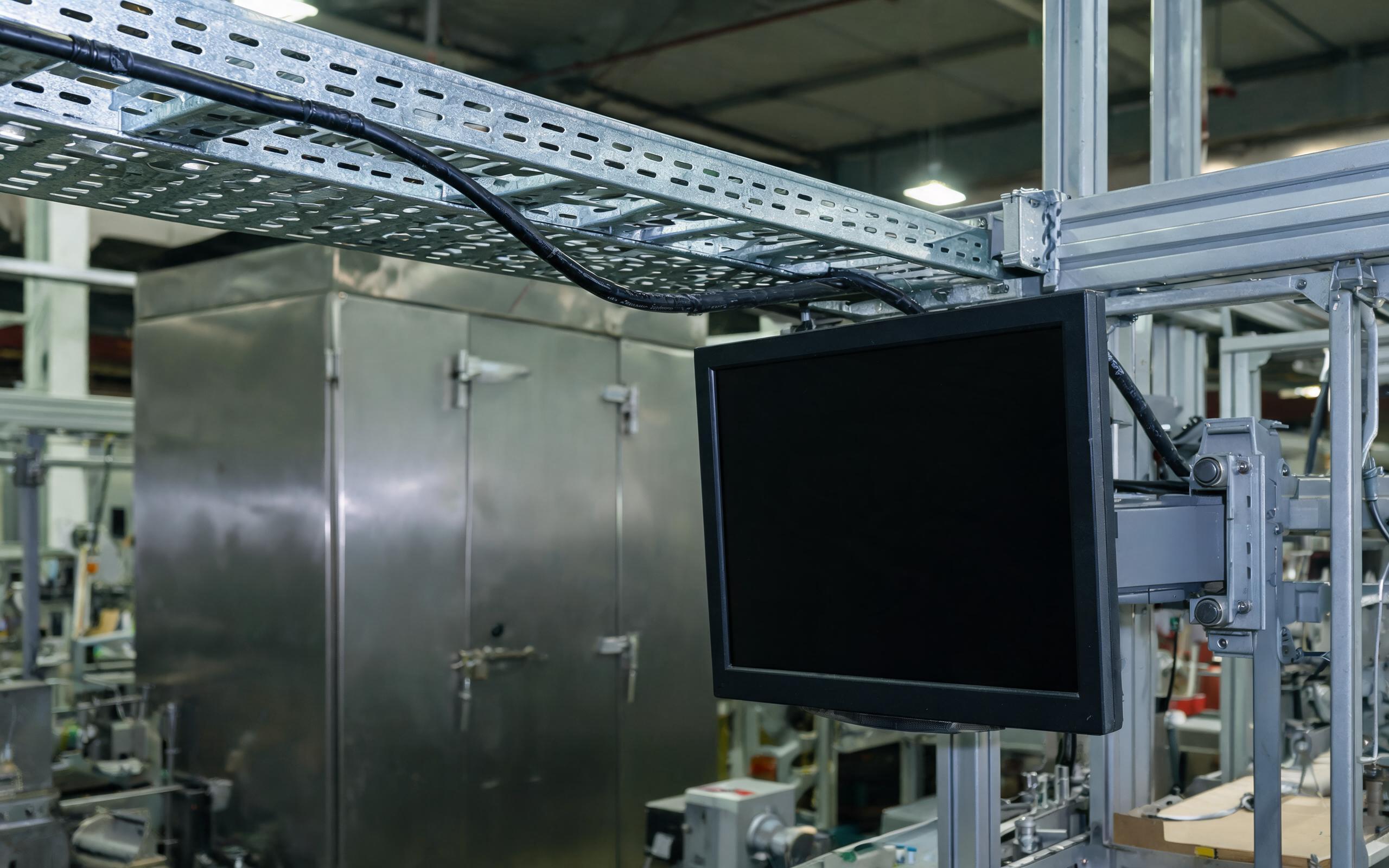
A panel pc ip65 unit installed in a refrigerated warehouse is a sealed pressure vessel that changes volume with temperature, and that property governs its service life more than any waterproofing claim. Ratings describe resistance to externally applied dust and water jets. They say nothing about air drawn inward as a housing cools after a defrost cycle, which is the mechanism that wets circuit boards in chill rooms. Moisture arrives as vapor through the sealing plane, condenses on the coldest interior surface and stays there. Hardware selected for minus twenty degree storage therefore fails along a path that washdown equipment never encounters, because the damaging water originates inside the enclosure.

Pressure Equalization Paths in Panel PC IP65 Housings
Enclosure breathing is a pressure phenomenon, not a leak in the usual sense. Air inside a sealed housing contracts as internal temperature drops after a defrost cycle, and the resulting pressure differential draws warm humid air inward through gasket seams and cable entries. When the same volume warms again, it expands and vents, leaving the moisture behind. Each cycle deposits a little more water, which is why a unit can pass a factory immersion test and still corrode within eighteen months in a distribution freezer. Ingress ratings quantify resistance to externally applied water, so a panel pc ip65 classification says nothing about vapor transported by pressure equalization. Hardware built for these rooms by industrial panel pc manufacturers, KOXIAN among them, addresses the mechanism directly with sealed rear cavities and gas-permeable vents that equalize pressure while blocking liquid transport. Without that provision, condensate collects at the lowest interior surface, which is usually the power board.

Potting Power Stages Against Internal Condensate
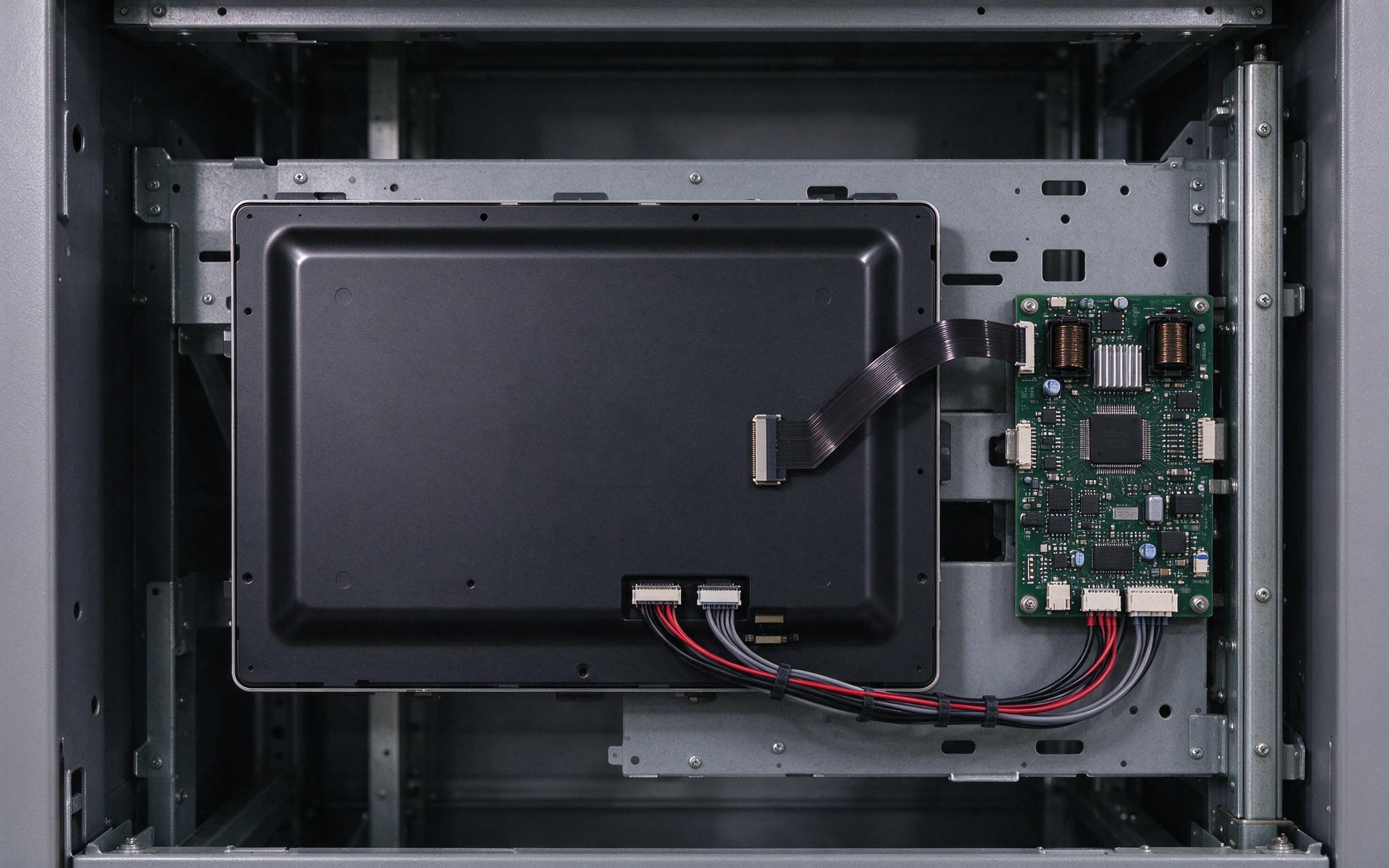
Potting compound solves what coating alone cannot. Conformal coating protects a board surface against light humidity, but it leaves connector shells, transformer windings and inductor gaps exposed, and those are exactly where condensate bridges under repeated frost and thaw. Encapsulating a power stage in polyurethane or silicone resin removes the air volume in which water can condense, while also damping vibration from adjacent refrigeration compressors. The trade-off is thermal, since resin conducts heat differently than air convection and a potted supply must be derated or coupled to the chassis deliberately. Silicone compounds retain elasticity below minus forty degrees and survive thermal shock better than rigid epoxies, which crack at the resin-to-component boundary after enough cycles. A fanless panel pc ip65 unit built for chill rooms therefore benefits twice, because the same conduction path that carries heat out through the aluminum rear wall also anchors the potted assembly mechanically. Design routes visible in KOXIAN sealed chassis families combine potted supplies with a continuous rear casting rather than a bolted cover plate, which removes one more breathing seam from the assembly.

Commissioning a Panel PC IP65 Unit in Chill and Freezer Rooms
Startup practice determines whether good hardware survives its opening season in the cold. Powering a cold unit immediately after it enters a warm anteroom invites condensation directly onto energized circuitry, so a temperature equalization period before energizing is standard practice for refrigerated installations. Continuous operation is the safer regime overall, because a housing kept slightly above room dew point never reaches the condensing condition at all, and a low-wattage internal load holds that margin more reliably than intermittent operation. Field experience with KOXIAN chill room deployments points the same direction, where units held under continuous low load show markedly less internal corrosion than identical hardware switched off between shifts. Heater mats sized to a few watts per liter of enclosure volume achieve this without meaningful energy cost. Touch behavior deserves separate attention, since operators in chill rooms wear insulated gloves and a projected capacitive stack tuned for bare fingers will feel unresponsive at eight millimeters of glove thickness. Sealing verification also changes in the cold, because gasket elastomers stiffen and lose recovery, and a compression figure measured at twenty degrees does not hold at minus twenty on any panel pc ip65 installation.
Cold rooms invert the usual sealing logic. The damaging water forms inside the housing, driven by pressure cycling rather than spray, so a panel pc ip65 rating alone cannot predict service life. Potted power stages, sealed rear cavities, pressure-equalizing vents, a modest continuous internal load and a documented equalization step before energizing address the actual failure path. Sites that treat a refrigerated installation as a condensation problem rather than a waterproofing problem generally stop replacing terminals every second season.