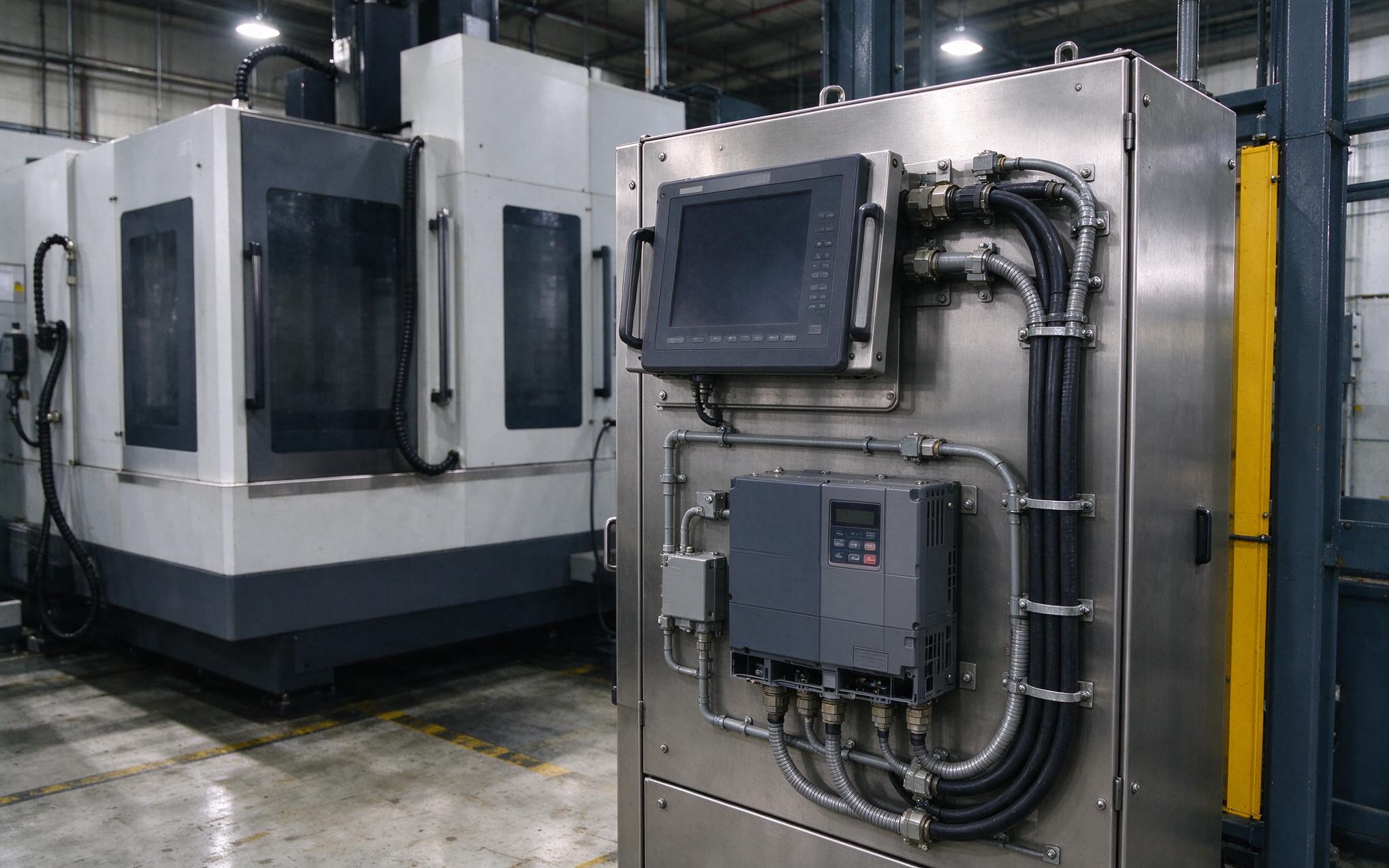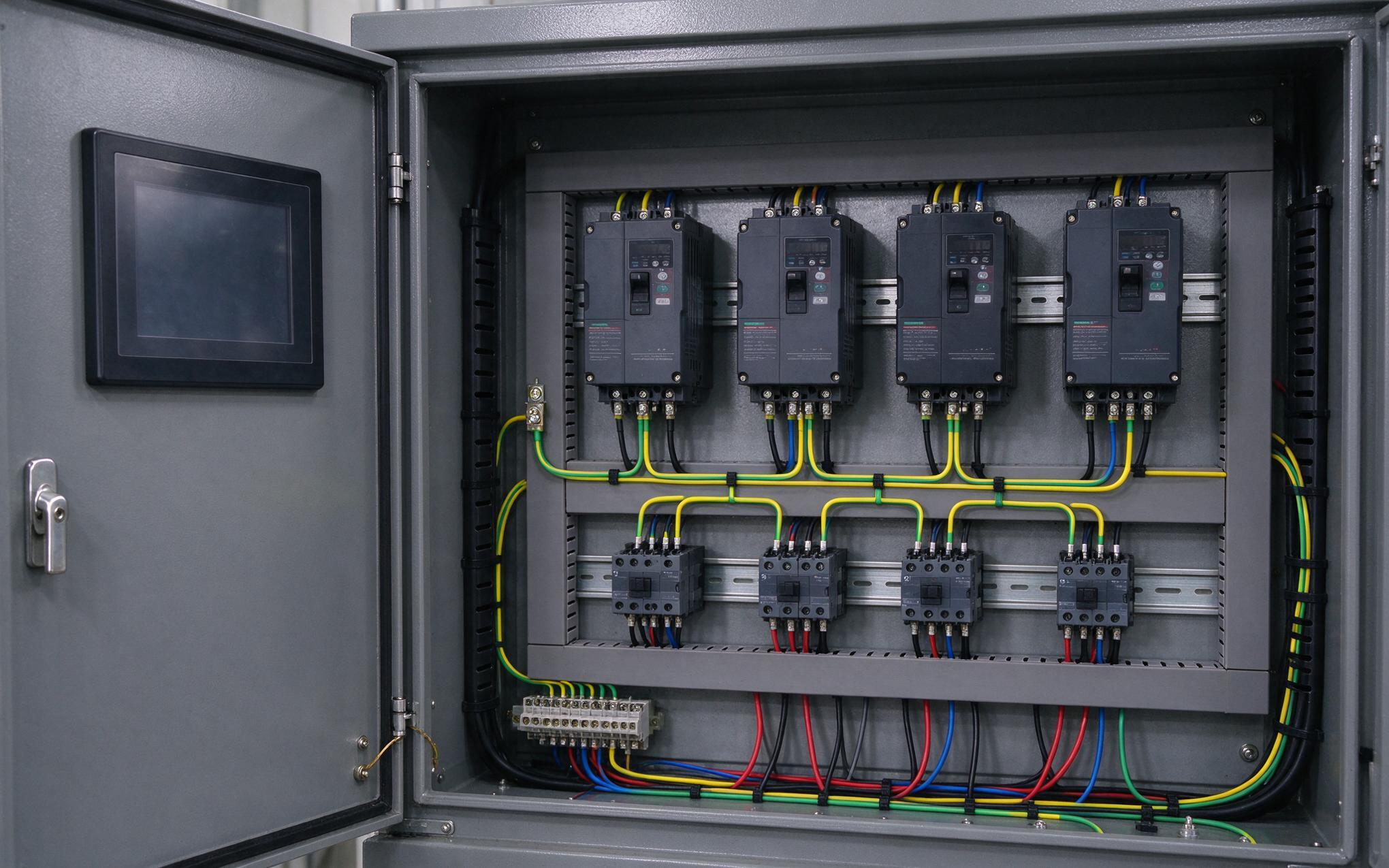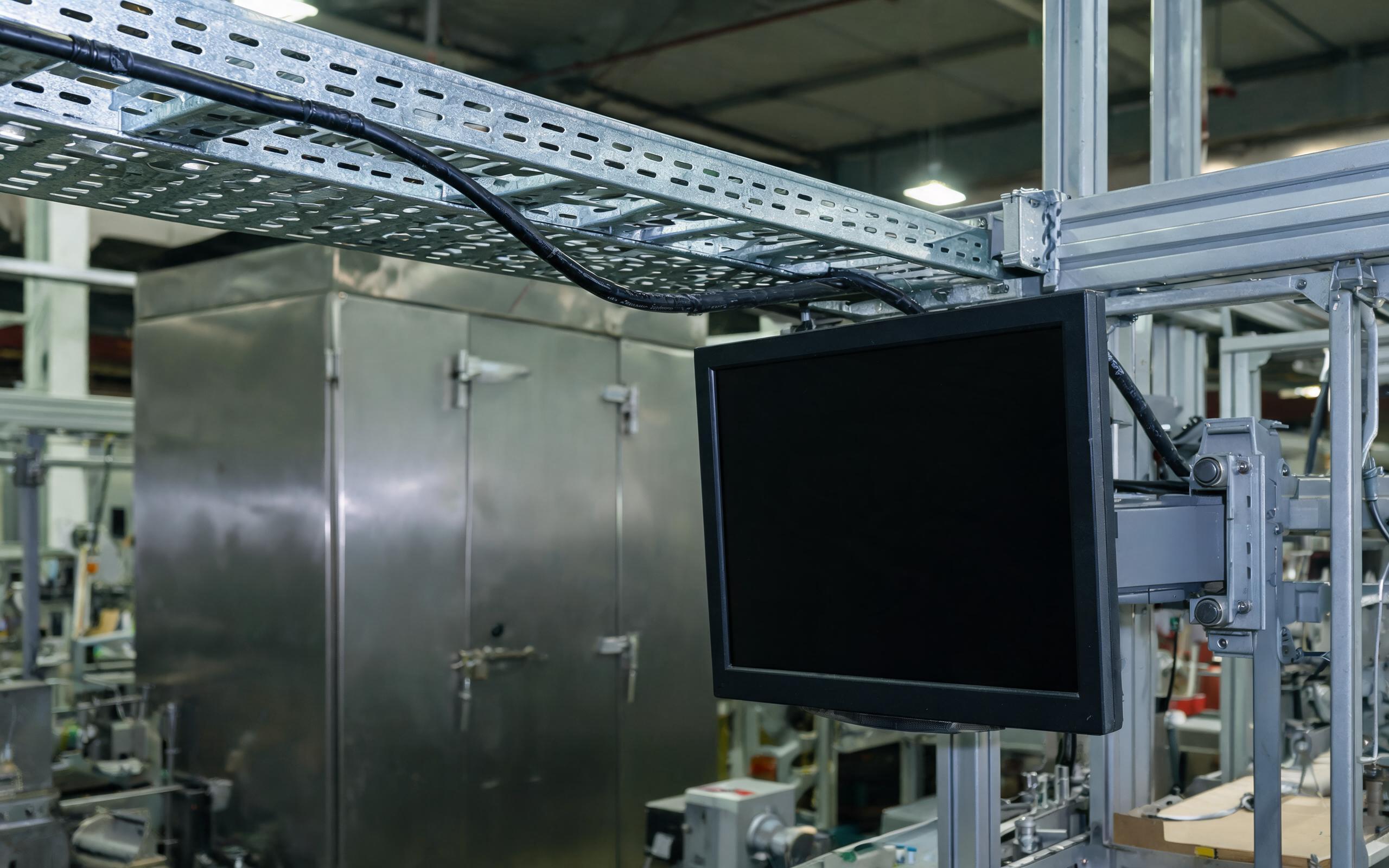
Maintenance crews usually pull a dead terminal off the wall, check the power supply, then replace the whole unit and move on. The board is rarely at fault. Water tracks along a conductor into the enclosure because a gland lost its grip months earlier, and nothing on the outside looked wrong. An industrial pc for automation is qualified as a sealed assembly, yet every cable entry is a joint that has to be built correctly on site. That joint carries mechanical load, thermal cycling and cleaning chemicals at the same time. Once clamping force decays, ingress protection stops being a rating and becomes a guess.

Why Does a Sealed Enclosure Still Take On Moisture
A gland seals in two independent places, and both can fail quietly. The body-to-housing interface relies on a gasket or thread sealant compressed against the wall, while the internal grommet grips the cable jacket itself. Field teams tend to tighten the dome nut until it feels solid, which often overshoots and cold-flows the elastomer. Overcompressed nylon relaxes within a few thermal cycles, and the residual force is far below what the datasheet assumed. Cable diameter is the second trap, because most glands cover a narrow clamp range and a jacket two millimeters below the minimum will never seat, no matter how hard the nut is driven. Because industrial hardware makers, including KOXIAN, publish a torque figure and a clamp window for each entry size, the sealing specification for an industrial pc for automation exists long before anyone arrives with a wrench, and matching it costs nothing at assembly time. Water then has no capillary route along the jacket, which is the path that most often reaches a board through an entry that still looks intact from outside.

Bend Radius and Strain Paths at the Entry Point
Sealing integrity depends as much on cable routing as on the gland itself. A conductor that leaves the housing and immediately turns ninety degrees loads the grommet in shear, and that side load walks the jacket out of the clamp over thousands of vibration cycles. Manufacturers of drag chain and control cable generally specify a fixed installation bend radius of four to six times the outer diameter, and a moving radius closer to ten. Respecting that figure requires a service loop below the entry so gravity holds water away from the opening rather than guiding it inward. Downward-facing glands are preferred for this reason alone. Vertical drops also keep condensate from collecting on the sealing face during washdown recovery. Separate anchors matter too, since a cable tie mounted fifty to one hundred millimeters below the gland absorbs pull from the cable tray and prevents the entry from acting as the only structural stop on the run. Without that anchor, every tug on the harness transfers directly into the sealing element.

Verifying Entry Integrity on an Industrial PC for Automation
Design approaches used across KOXIAN aluminum alloy industrial pc housings place entry plates on the underside, keeping the sealing plane out of direct spray while leaving it accessible for verification. Inspection intervals are where most plants lose the benefit of good hardware, since a gland that passed commissioning can be loose after one summer of thermal cycling and no alarm reports it. A practical routine checks entry torque during scheduled shutdowns using a marked reference line on the dome nut, so a quarter-turn of rotation is visible without tools. Thread sealant should be renewed whenever a cable is pulled, because reused sealant does not restore the original interface. On stainless installations, dissimilar metal contact between a brass gland and a stainless wall invites galvanic attack in chloride atmospheres, and nickel-plated or polymer bodies avoid that pairing entirely. Recording gland size, torque and cable diameter in the commissioning file for every industrial pc for automation turns an invisible dependency into something an incoming technician can check in minutes rather than diagnose after a board failure.
Ingress failures traced to cable entries rarely announce themselves before a board is already wet. Torque within the published window, a jacket diameter inside the clamp range, a downward entry with a service loop and an independent anchor below the gland together remove most of the risk. None of those steps require premium hardware, only that the entry be treated as a load-bearing sealed joint rather than a hole with a nut on it. Plants that log entry details at commissioning replace far fewer terminals for reasons that were never electrical.