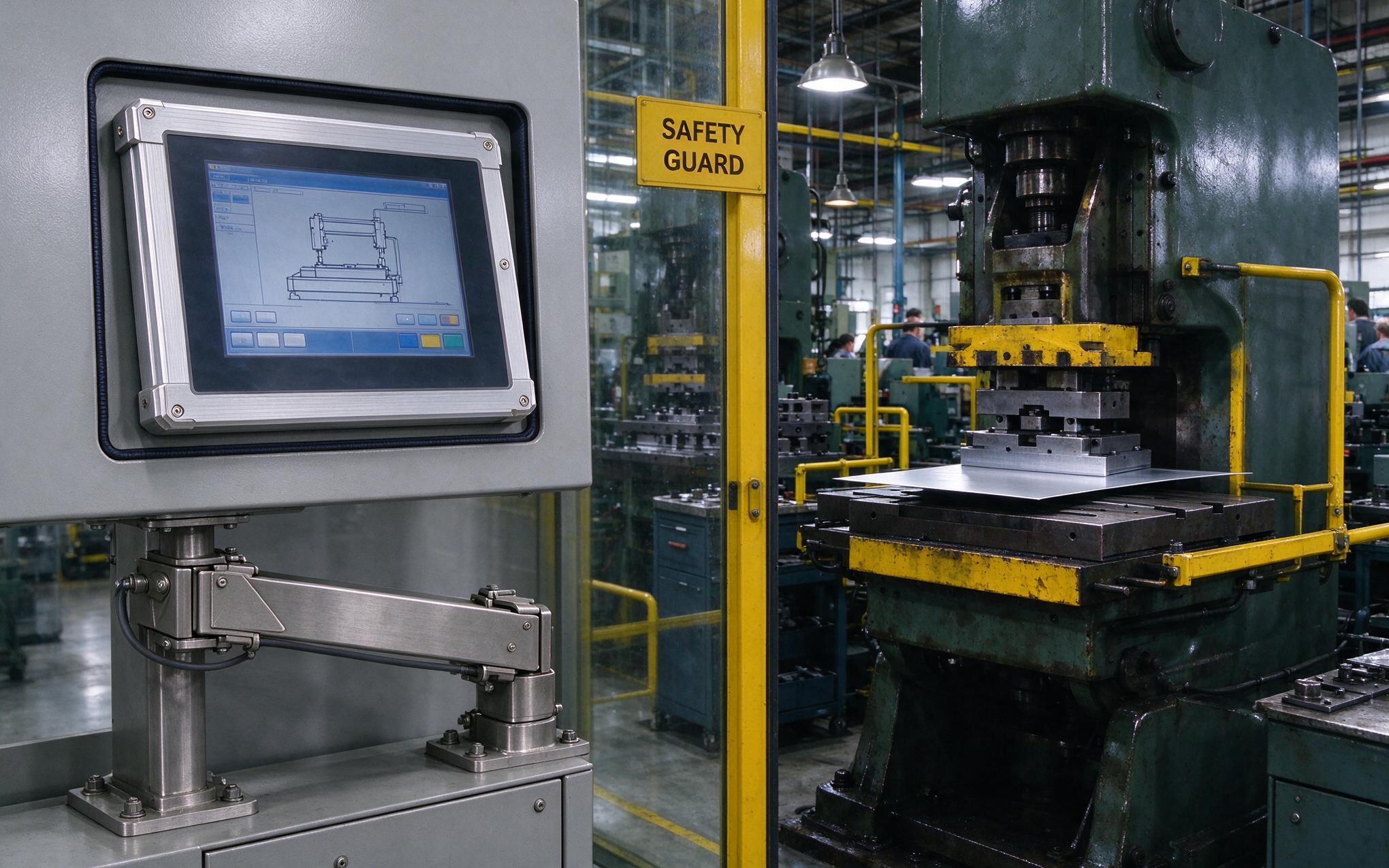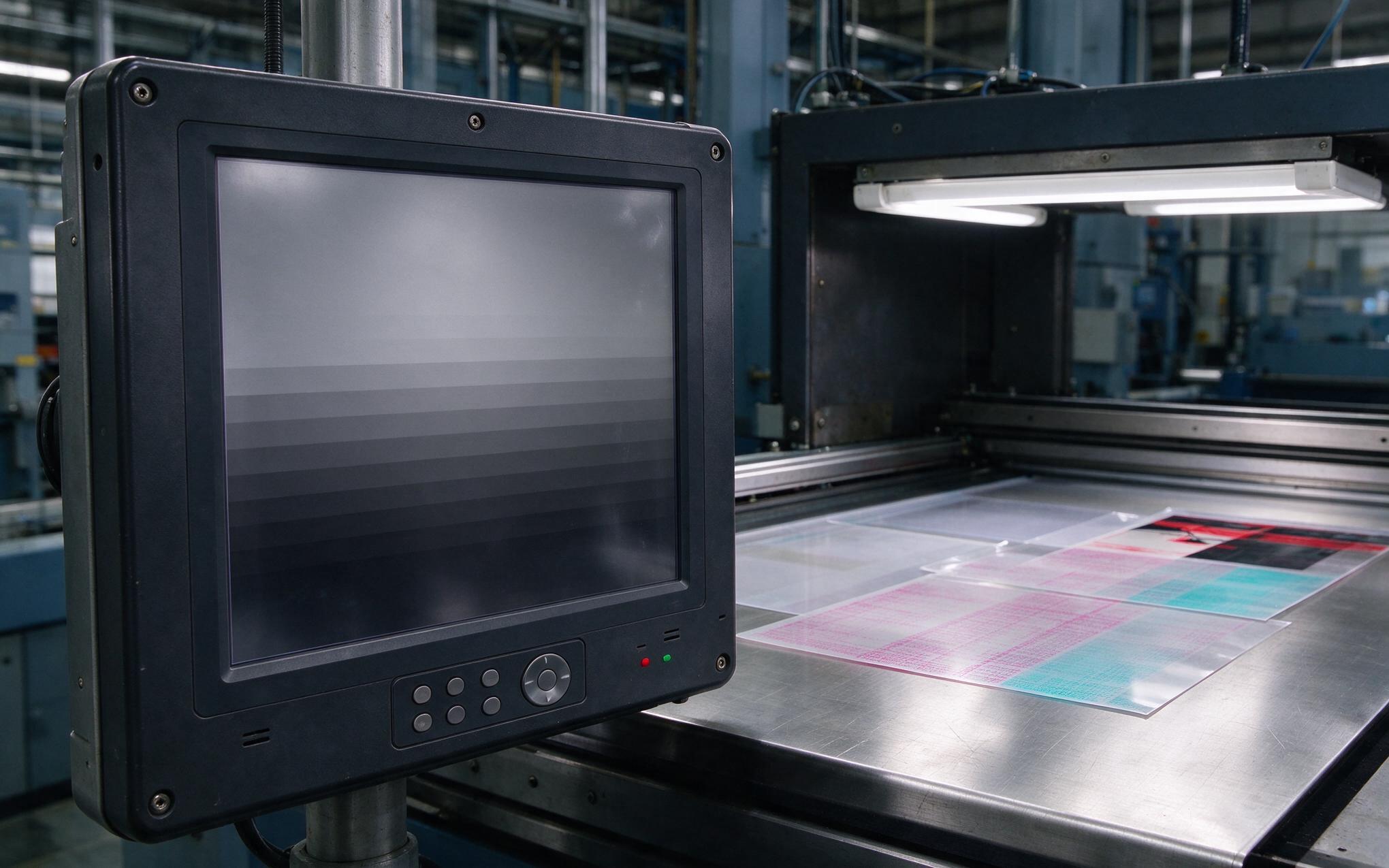
Standard projected capacitive touch screens register a bare finger with high reliability, but operator gloves change the equation entirely. In controlled lab tests, a typical capacitive touch screen detects bare skin at 99.5 percent accuracy yet drops below 55 percent when operators wear two-millimeter nitrile work gloves. For factories running continuous production lines, that gap translates into mis-taps, workflow interruptions, and safety concerns. Glove-compatible industrial panel mount touch screens address this challenge through firmware tuning and sensor architecture designed specifically for PPE-covered fingers operating in demanding environments.

In Glove-Degraded Signal Environments
The core problem is dielectric attenuation. A work glove inserts a non-conductive layer between the finger and the sensor electrode, reducing the capacitance change the controller must detect. Thicker and more insulating materials, such as rubber-coated cold-storage mitts and heavy leather welding gloves, compound the effect significantly. Projected capacitive controllers compensate through several mechanisms: raising signal gain, widening detection thresholds, and extending debounce windows to filter mechanical vibration noise. Some platforms also adjust electrode pitch, since wider-pitch grids produce stronger per-electrode signals but sacrifice spatial resolution.
The tuning envelope is narrow. Excessive gain invites false touches from electromagnetic interference on the factory floor, while insufficient gain leaves gloved inputs undetected. Manufacturers such as KOXIAN address this challenge by pairing high-sensitivity controller ICs with firmware profiles that operators can switch between glove types without recalibrating the entire panel. The result is a detection envelope that covers the PPE range commonly encountered in automotive, pharmaceutical, and food processing environments.

With IP65 Panel Mount Sealing Requirements
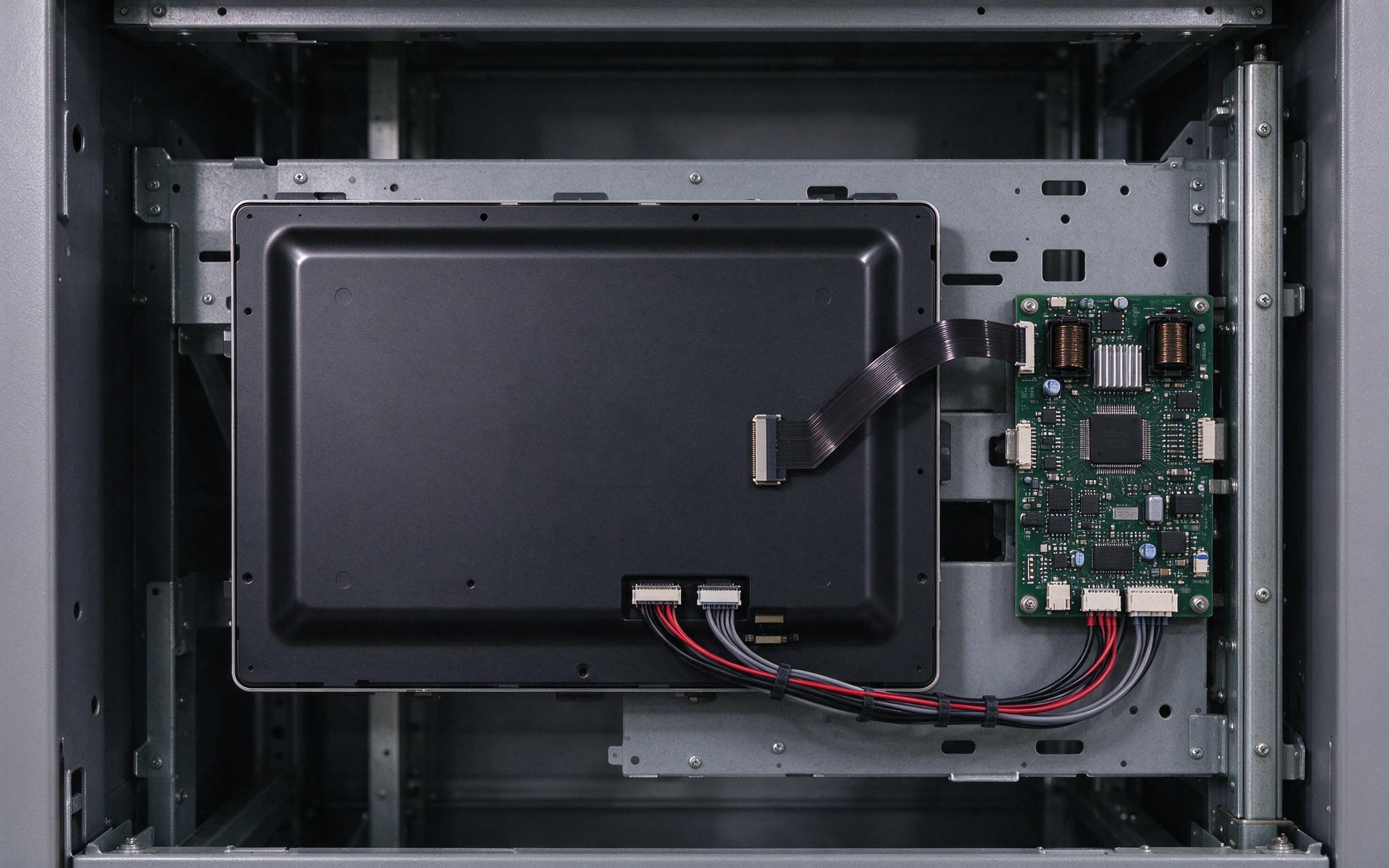
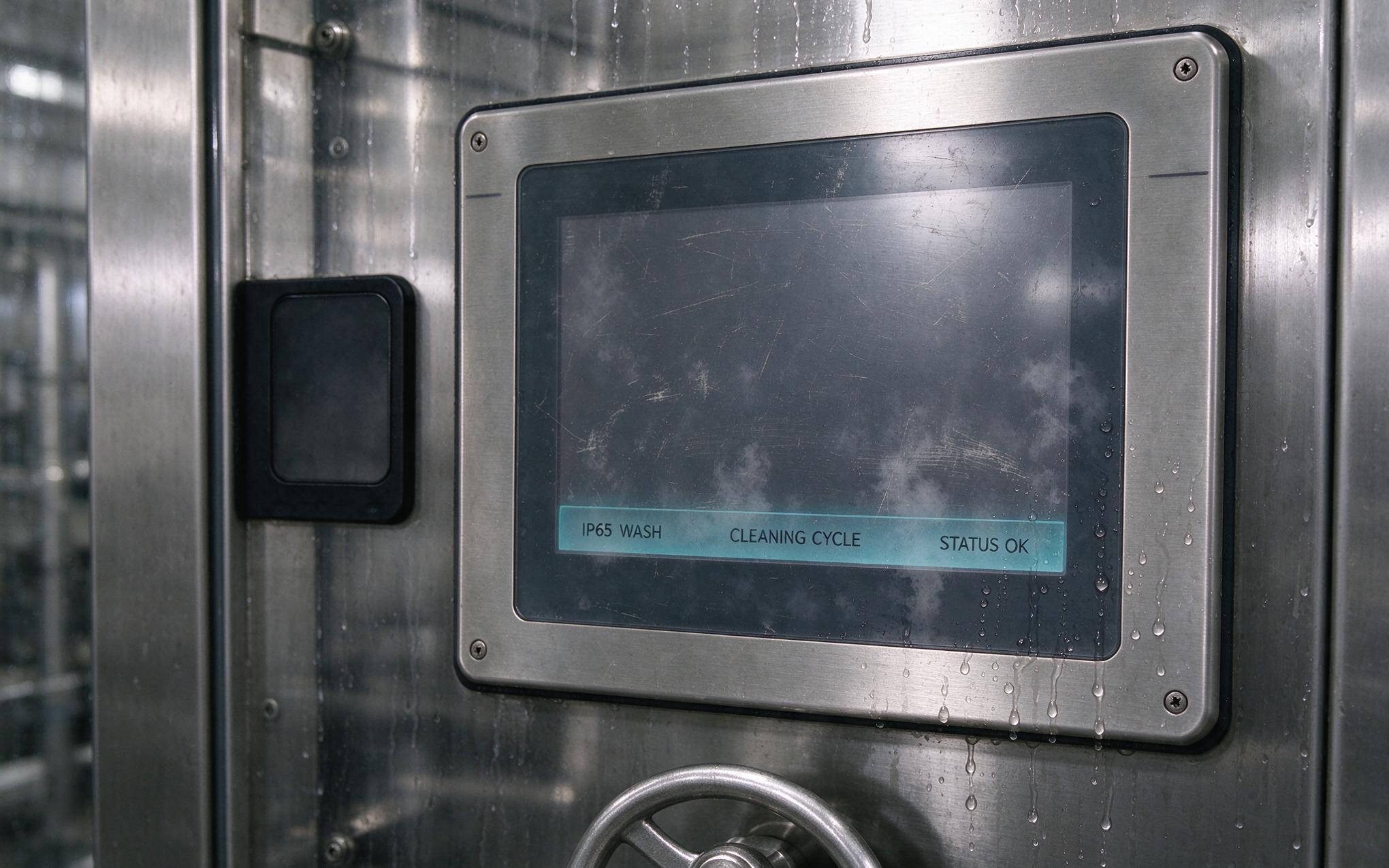
KOXIAN’s approach to IP65 sealing illustrates the mechanical tension inherent in panel mount touch screen architecture. IP65 front-bezel gaskets and waterproof membrane layers protect the enclosure from washdown spray and particulate ingress, but they also increase the distance between the sensor grid and the cover glass surface. That added gap attenuates the touch signal further, compounding the glove detection challenge. Cover glass thickness follows the same trade-off: a three-millimeter tempered panel is mechanically robust for heavy-use environments, yet each additional millimeter of glass reduces signal coupling to the electrode layer beneath.
Engineers resolve this through optically clear adhesive bonding, eliminating the air gap entirely, or by specifying thinner cover lenses rated to the appropriate IK impact class for the target environment. The design decision depends on whether the installation faces high-velocity debris impact or simply routine wipe-down cleaning with chemical sanitizers. For industrial panel mount touch screen deployments in washdown zones, balancing ingress protection with touch sensitivity requires coordinated specification of gasket compression, cover glass thickness, and controller gain settings.

Field Performance Data Across Manufacturing Environments
Actual field performance varies more than datasheet specifications suggest. An automotive assembly plant testing five-millimeter nitrile-dipped gloves on panel-mounted touch screens reported 96 percent tap accuracy after controller tuning, compared to 78 percent on untuned units from the same production batch. A food processing facility operating insulated cold-storage gloves at minus 18 degrees Celsius measured 91 percent accuracy with optimized firmware, versus 52 percent on standard capacitive panels. Moisture, oil film, and dried product residue further degrade signal quality in ways that controlled laboratory conditions do not capture.
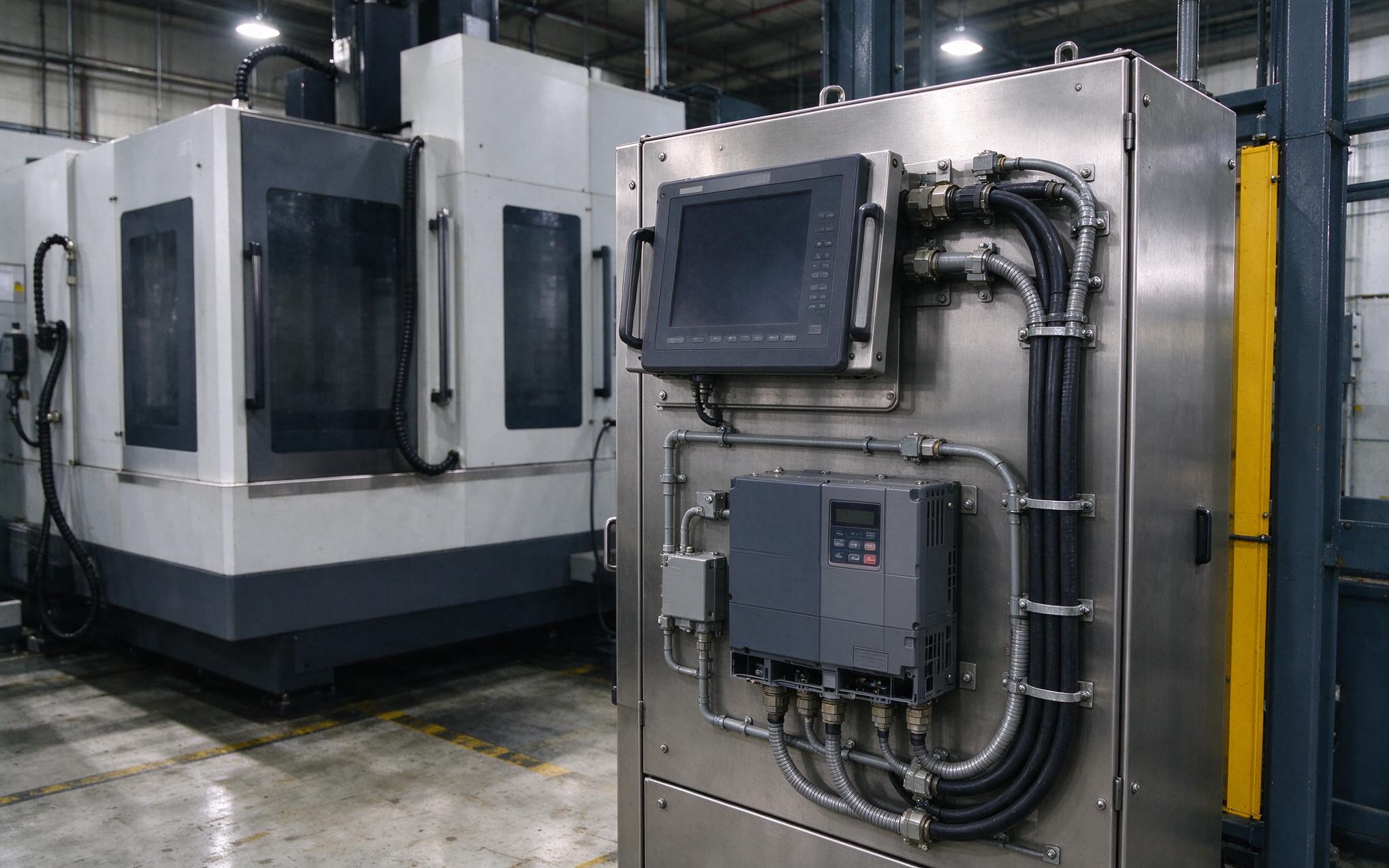
These numbers highlight a critical distinction: glove compatibility is not a single specification but a system-level attribute. Controller firmware, electrode design, cover glass selection, and panel mount sealing must all work in concert to deliver consistent performance. For system integrators evaluating industrial panel mount touch screen deployments, verifying glove compatibility with the facility’s specific PPE requirements before procurement is a step that pays measurable dividends in reduced downtime and sustained operator throughput.
Selecting a glove-compatible touch solution for factory automation requires looking beyond the capacitive sensor alone. Firmware tunability, cover glass thickness, IP65 sealing strategy, and panel mount mechanical design each influence whether gloved operators can interact with the system reliably. Standard capacitive touch screens may satisfy laboratory conditions, but industrial environments demand the integrated engineering approach that purpose-built panel mount touch screen platforms provide.