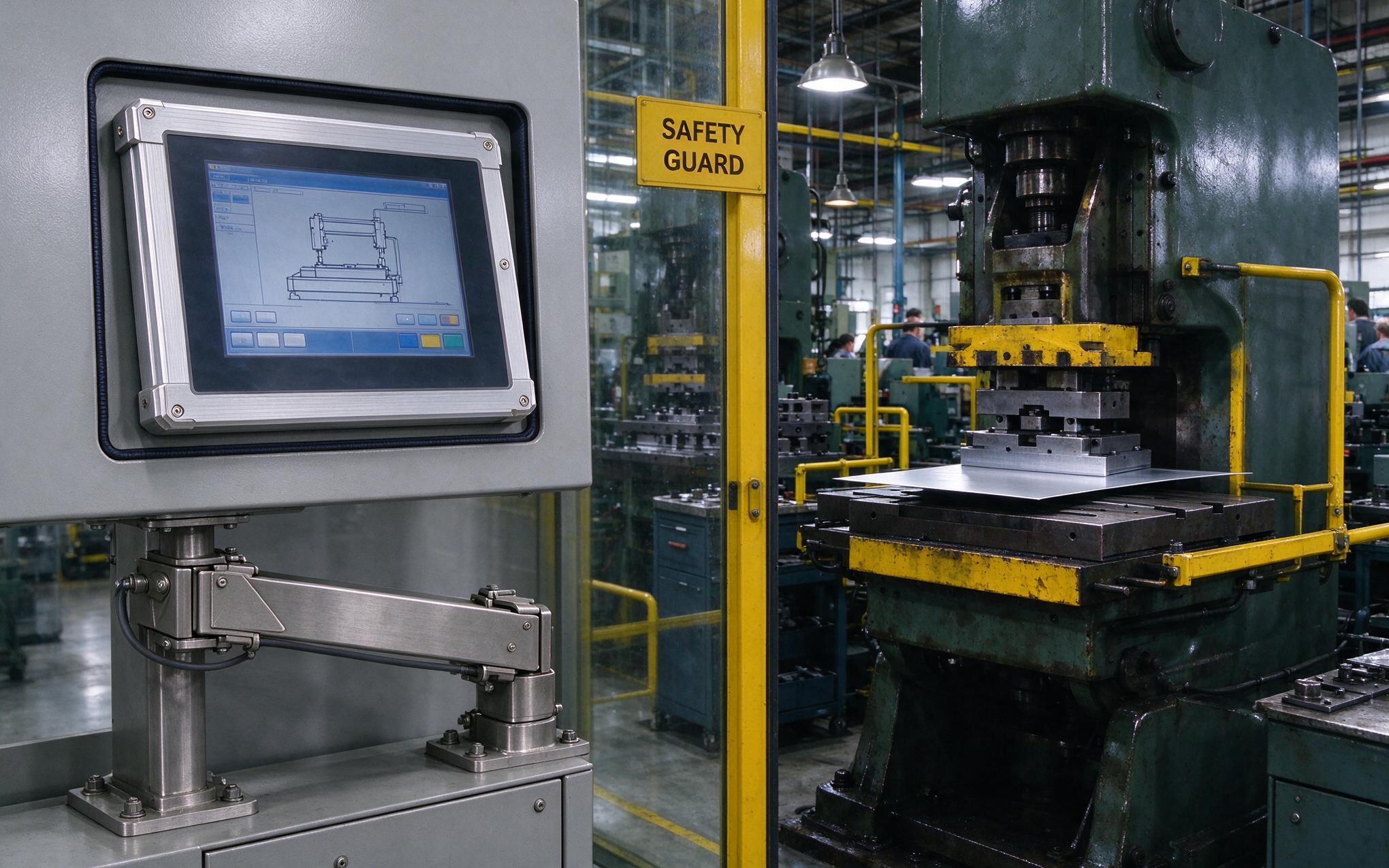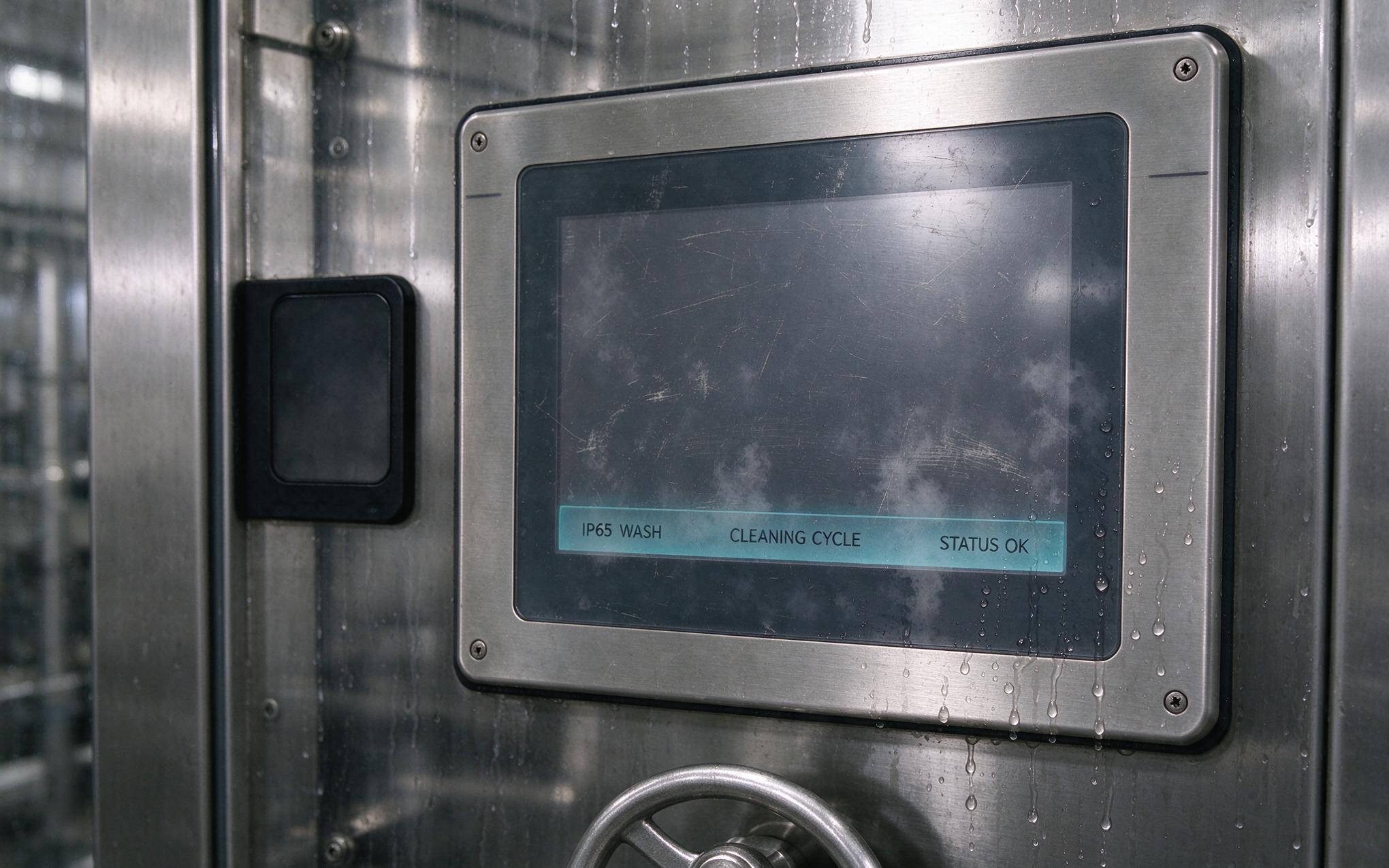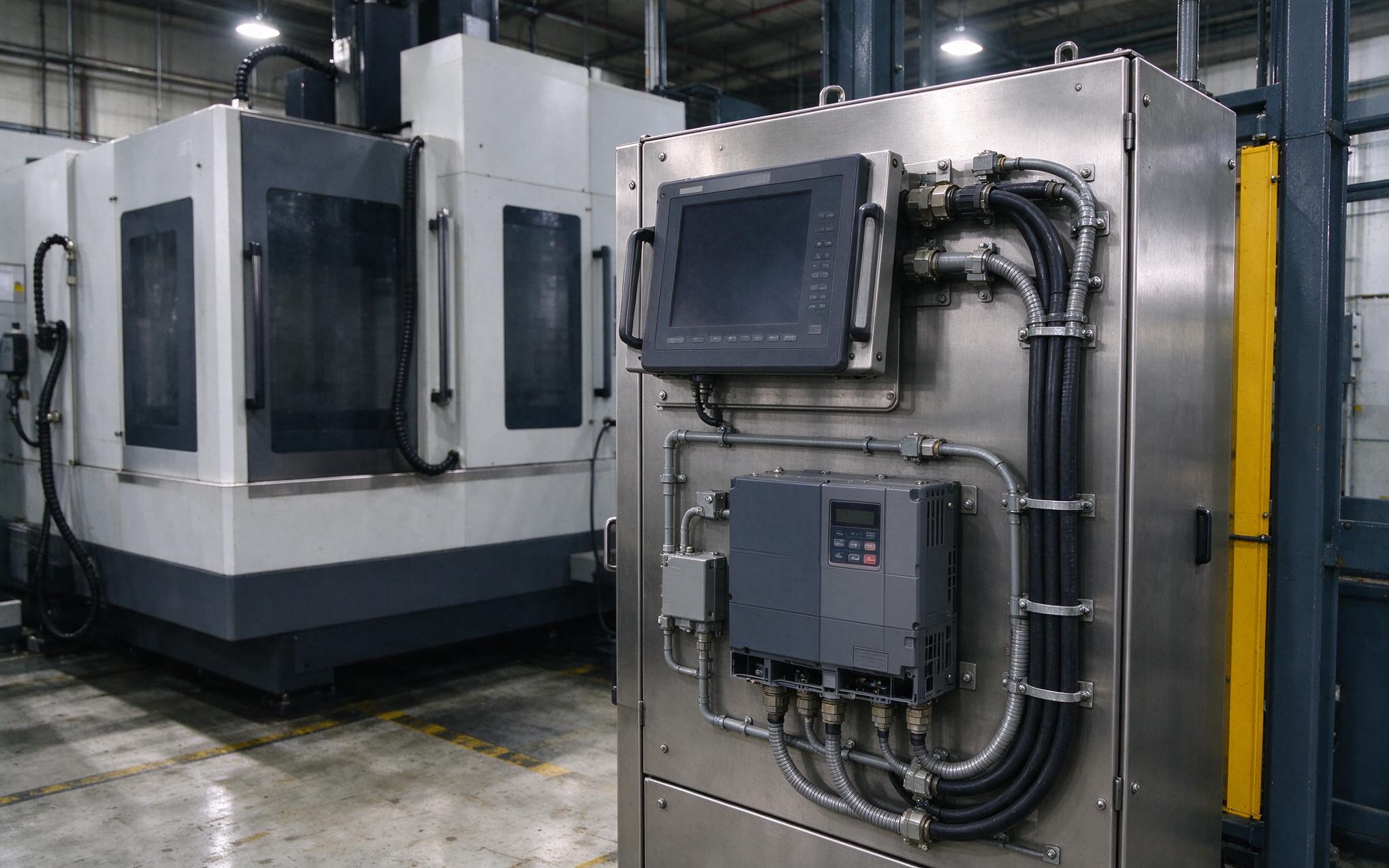
Oil mist in a machining bay does not attack a sealed enclosure the way washdown spray does. It settles on the one component engineered to stay open, which is the pressure equalization vent. Ratings measure resistance to externally applied water jets and dust, so a panel pc ip65 classification says nothing about whether the vent still passes air after a year above a coolant tank. Once lubricant aerosol wets the membrane pores, the housing loses its ability to equalize pressure, and every thermal cycle pulls humid shop air past the gaskets instead. The failure surfaces months later as condensate on a power board, and the sealing hardware gets blamed for a venting problem.

Oil Mist Chemistry Behind Vent Membrane Blinding
Surface tension governs the whole mechanism. Expanded PTFE vent membranes hold back liquid water because water carries a surface tension near 72 millinewtons per meter and cannot enter pores sized between roughly 0.1 and 10 microns. Cutting fluids, way lubricants and hydraulic oils sit closer to 30 millinewtons per meter, low enough to wet those same pores and creep through by capillary action. A wetted pore no longer passes air. Vent suppliers report ordinary hydrophobic plugs on gearbox housings losing venting function within weeks under continuous lubricant mist, and the same physics applies to a panel pc ip65 unit beside a machining center. Oleophobic surface treatment lowers membrane surface energy far enough to repel those low-tension liquids, with oil repellency graded up to level 8 under AATCC 118.

Why Hydrophobic Vents Fail Where Oleophobic Grades Hold
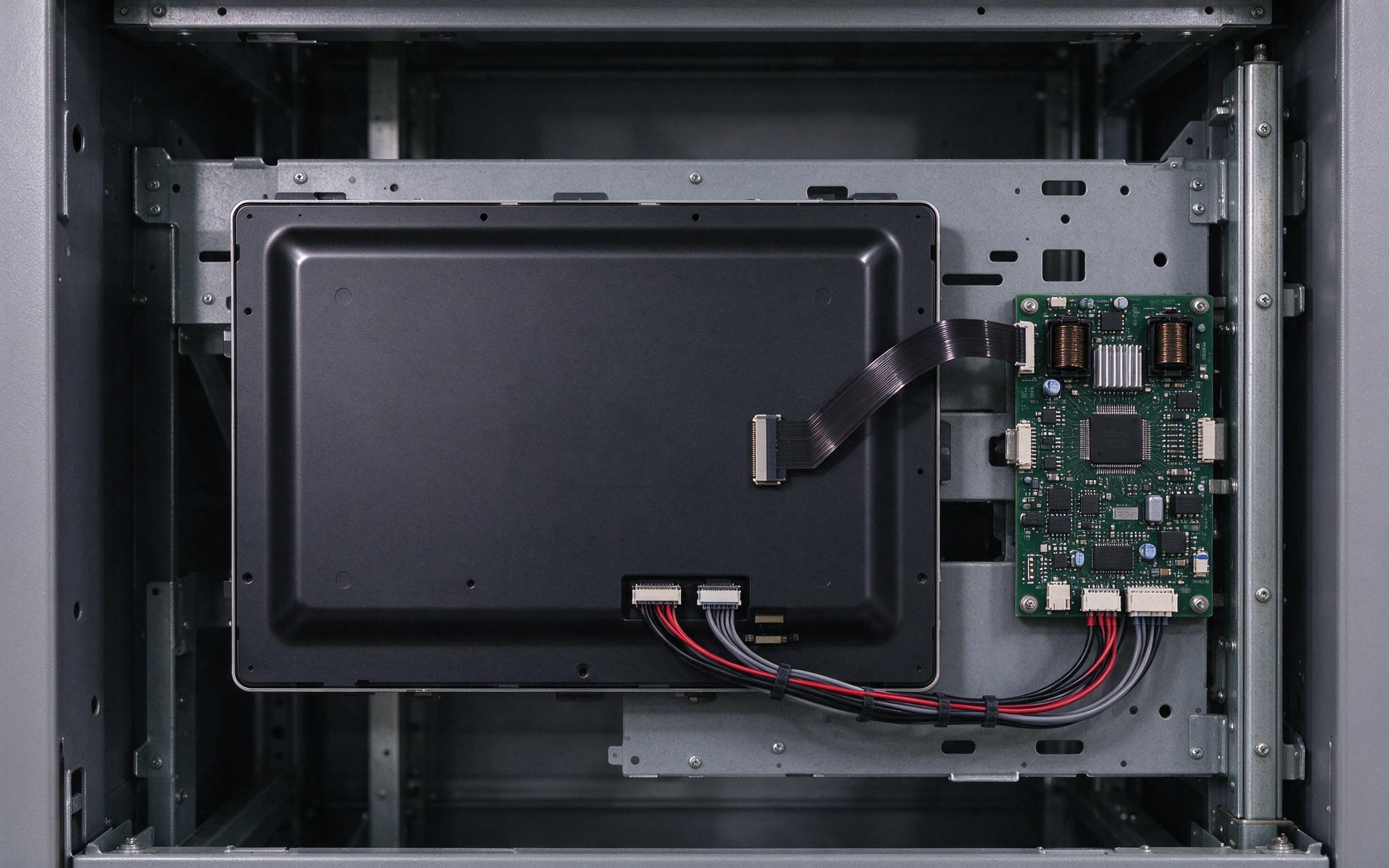
Specification sheets rarely separate the two membrane grades, which is why substitution errors are common during retrofits. A hydrophobic vent and an oleophobic vent look identical once installed, both presenting a small threaded plug or an adhesive patch on the rear wall. The difference appears only under service conditions, when the hydrophobic version blinds over and the housing begins breathing through its gaskets instead of its vent.Vendors building for machining environments, including KOXIAN, specify oleophobic grades on rear cavities exposed to coolant aerosol rather than treating the vent as a commodity fitting. Airflow capacity matters alongside chemistry, since a membrane sized for a small sensor housing cannot equalize a fifteen inch panel volume through a shift change temperature swing. Thermal range is the other axis, because expanded PTFE holds its structure across a far wider band than silicone bungs, which degrade when lubricants and ultraviolet exposure act together. Treating vent grade as part of the panel pc ip65 specification removes a common single point of sealing failure.

Vent Placement and Airflow Paths in Sealed Housings
Design approaches visible in KOXIAN sealed chassis families place the vent on a shielded underside face rather than the rear wall, which keeps settling aerosol and rinse water off the membrane. Position determines service life as much as material grade does. A vent facing upward collects oil film and dust by gravity, while a downward or side facing vent sheds both. Internal airflow matters too, because a vent works only if it connects to the air volume that actually changes pressure, and a rear cavity sealed away from the display gap leaves the front section breathing through the bezel gasket. Cable entries complicate the picture, since a loose gland becomes the path of least resistance and bypasses the vent entirely. Mounting a panel pc ip65 assembly above a coolant nozzle shortens membrane life regardless of orientation, so a baffle or a short relocation often buys more service life than a higher rating.

Field Verification of Vent Health at Handover
Vent condition is verifiable at handover, and the check takes seconds. An airflow test during cooldown confirms the membrane still passes air, and a vent showing no measurable flow while the housing contracts is already blinded. Field observations across KOXIAN machining bay deployments point the same direction, where logged vent replacement tracks with fewer condensate incidents. Visual inspection catches the obvious cases, where a glazed or darkened membrane face indicates oil saturation. Recording vent part numbers and orientations in the acceptance package matters, because replacement plugs get substituted with hydrophobic-only equivalents years later. Scheduled replacement suits shops with heavy aerosol loading, since membranes are consumables priced far below the boards they protect. Sites that log vent replacement alongside gasket inspection on a panel pc ip65 interval stop seeing condensate-driven failures by the third year.
Ingress ratings describe a sealed housing under test, not a housing that must breathe for a decade in an oil-laden bay. On any panel pc ip65 installation the vent is the single component designed to stay permeable, which makes it the part most likely to end a deployment quietly. Oleophobic membrane grades, sheltered placement, airflow paths that reach the cavity actually under pressure, and a documented replacement interval address the mechanism rather than the symptom.