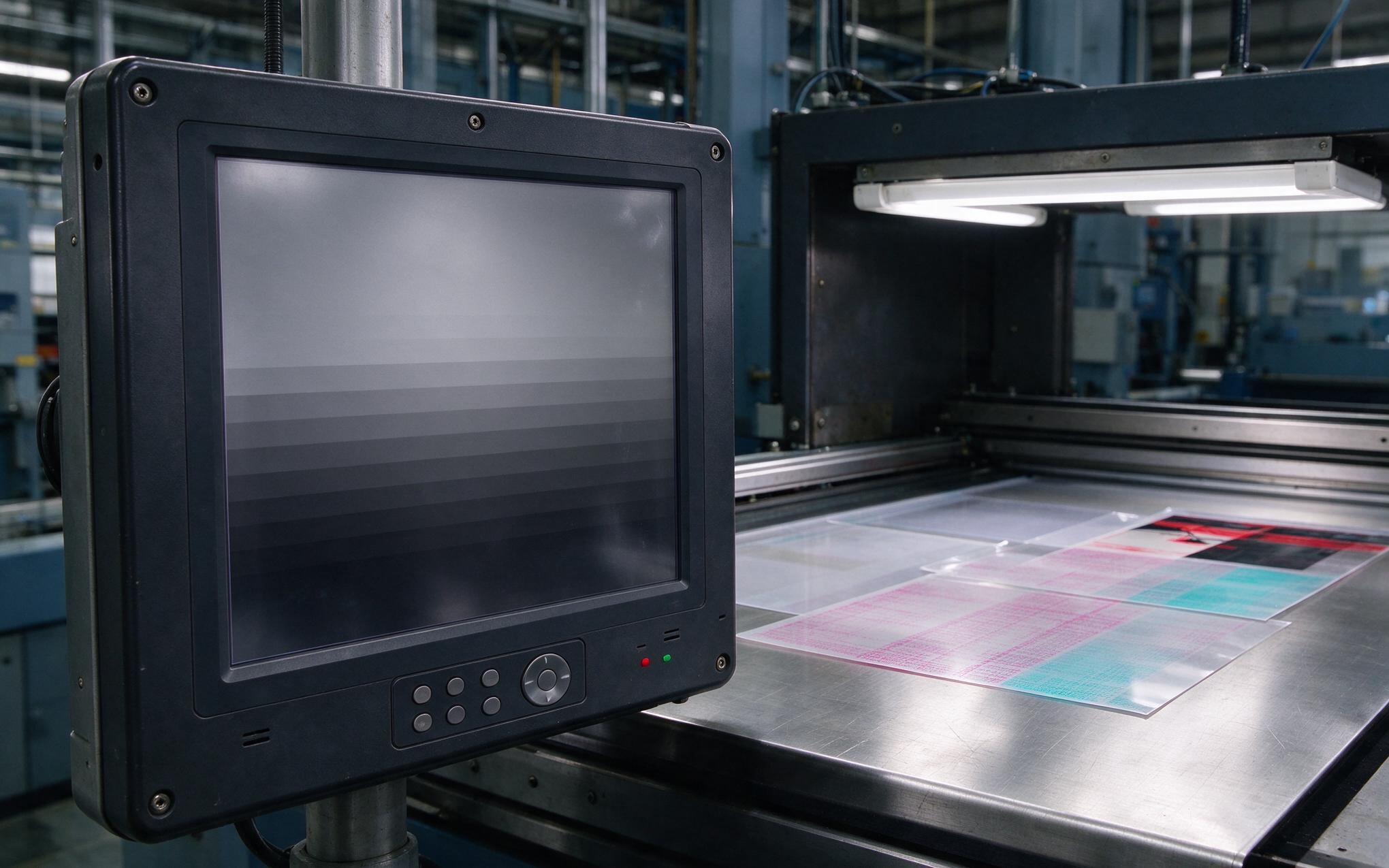
A shutdown on a beverage line was traced to water that lingered on the upper face of a horizontally mounted panel PC IP65 after every sanitation cycle. The enclosure had passed its factory jet test and the front seal showed no visible damage, yet moisture kept finding a path inward. Orientation, not the rating plate, decided where each liter of rinse water went once it left the nozzle: down the face and away, or pooled across a flat surface with nowhere to drain. Choosing a panel PC IP65 unit therefore starts with the plane the machine will occupy and the drainage that plane allows.
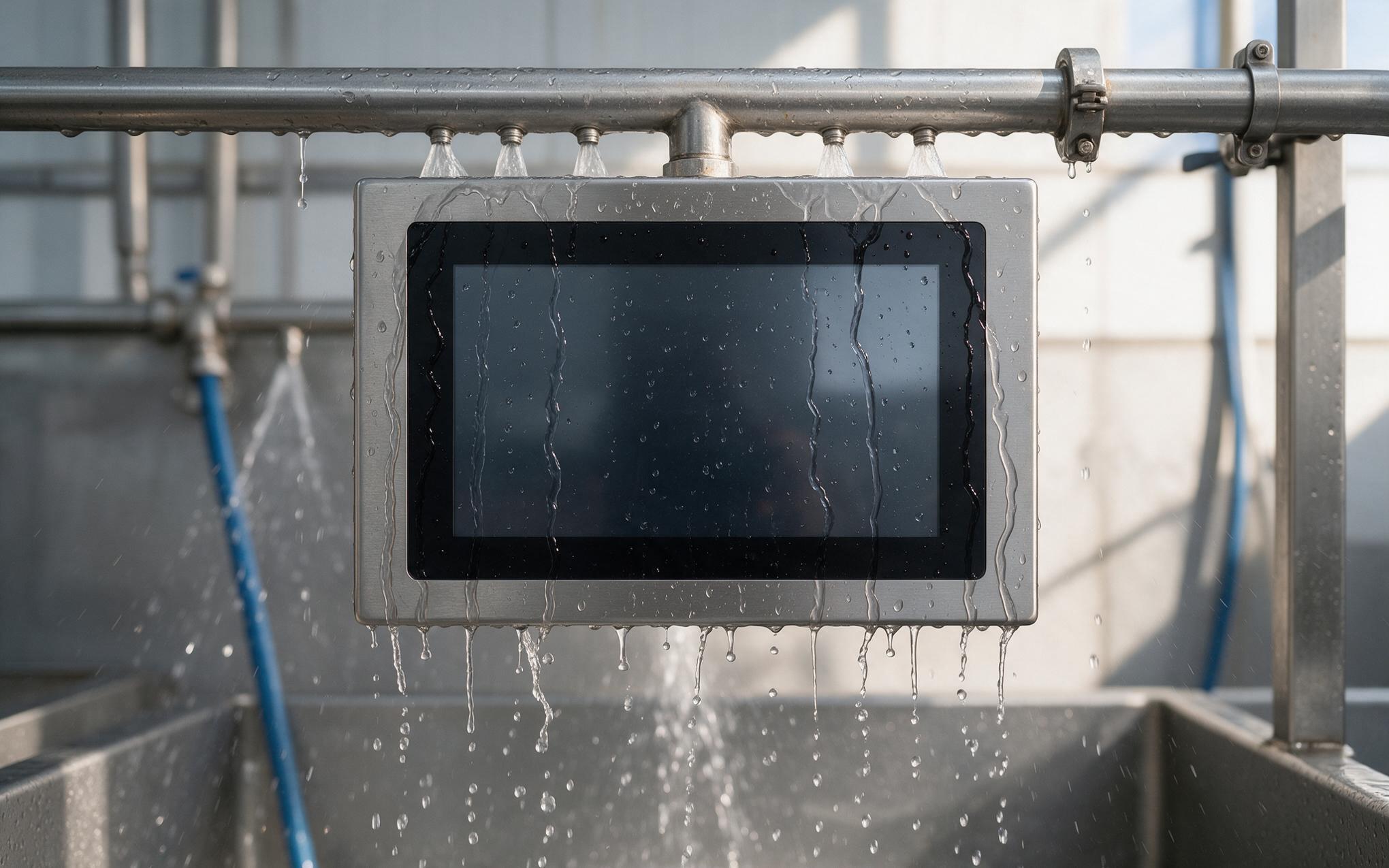
Drainage Behavior on a Flat Upper Face
Gravity does the sorting. On a vertical face a jet of rinse water runs down the glass, crosses the lower seal, and drops off the bottom edge within seconds. On a flat upper face the same water spreads, sits against the seal line, and keeps working there for as long as the sanitation cycle lasts. Sealing grooves and drain channels are shaped around that difference, and features such as the drainage groove profile in the KOXIAN G1 series show how an upper edge is drawn to shed water instead of holding it. The seal designer controls the cross section, but the installer controls the plane a panel PC IP65 unit sits in. Treating orientation as a cosmetic choice leaves crews fighting the same water problem at every washdown.
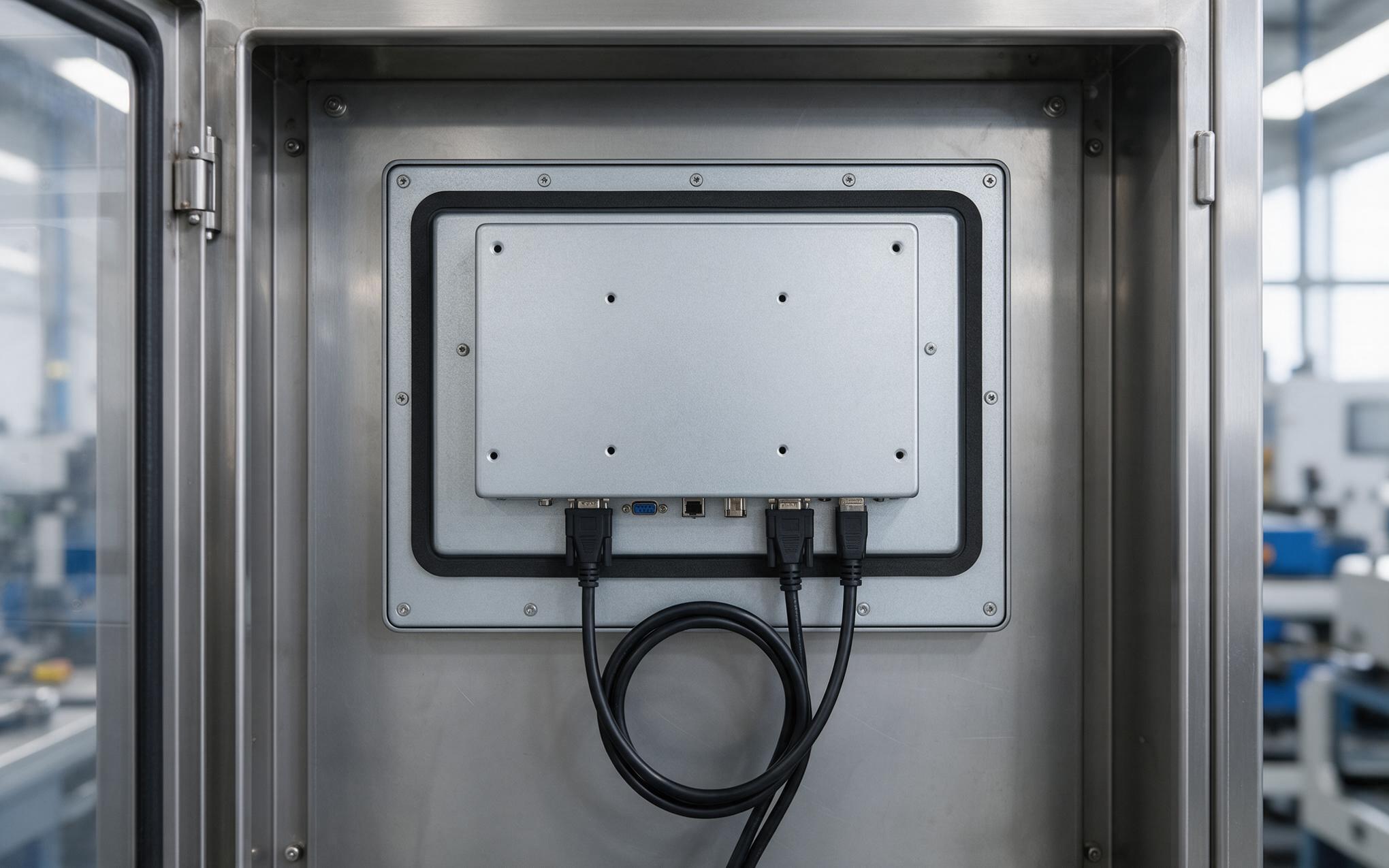
Connector Orientation and the Rear Seal Path
Water that survives the front face still clears the back of the enclosure. Connectors on the upper edge of a rear plate turn every cable into a wick: a wet plug carries a film down the barrel, and a horizontal pin arrangement holds it against the cavity for hours. A connector field oriented downward, the layout used in KOXIAN power architecture, gives gravity a clear exit toward the lowest point, where a drip loop carries water away from the housing instead of back into it. Cable entries follow the same logic, since a gland presented upward collects its own cup of water. Even the support arm matters: a bracket level on the bench can settle out of level once it carries a panel PC IP65 unit.
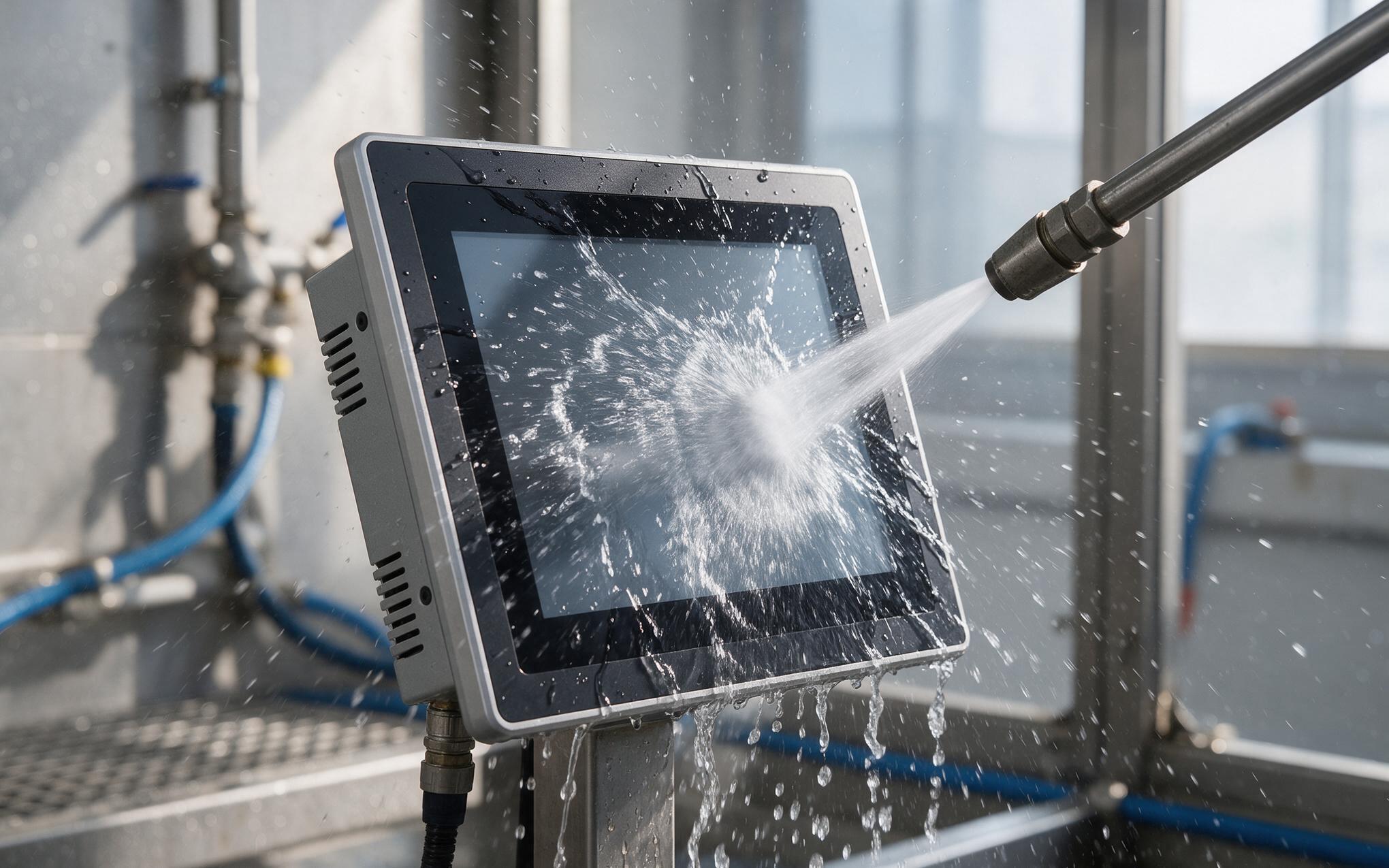
Reading a Panel PC IP65 Claim Against Real Exposure
The label describes a defined test, not a site. An ingress verification sprays a calibrated jet from several directions for a fixed interval on a sample unit, and it does not model water standing on a flat face or humid air lingering for hours. Site exposure adds conditions the standard leaves out: nozzle pressure, water temperature, cleaning chemistry, and the duty cycle that decides how long a film of water stays on the enclosure. Specifiers who map those conditions against what the test actually covers avoid reading more protection into the rating plate than the sample ever demonstrated. The gap between a passed test and a wet installation is usually filled by orientation, drainage, and maintenance habits rather than by the seal itself.
Field Verification Before Line Release
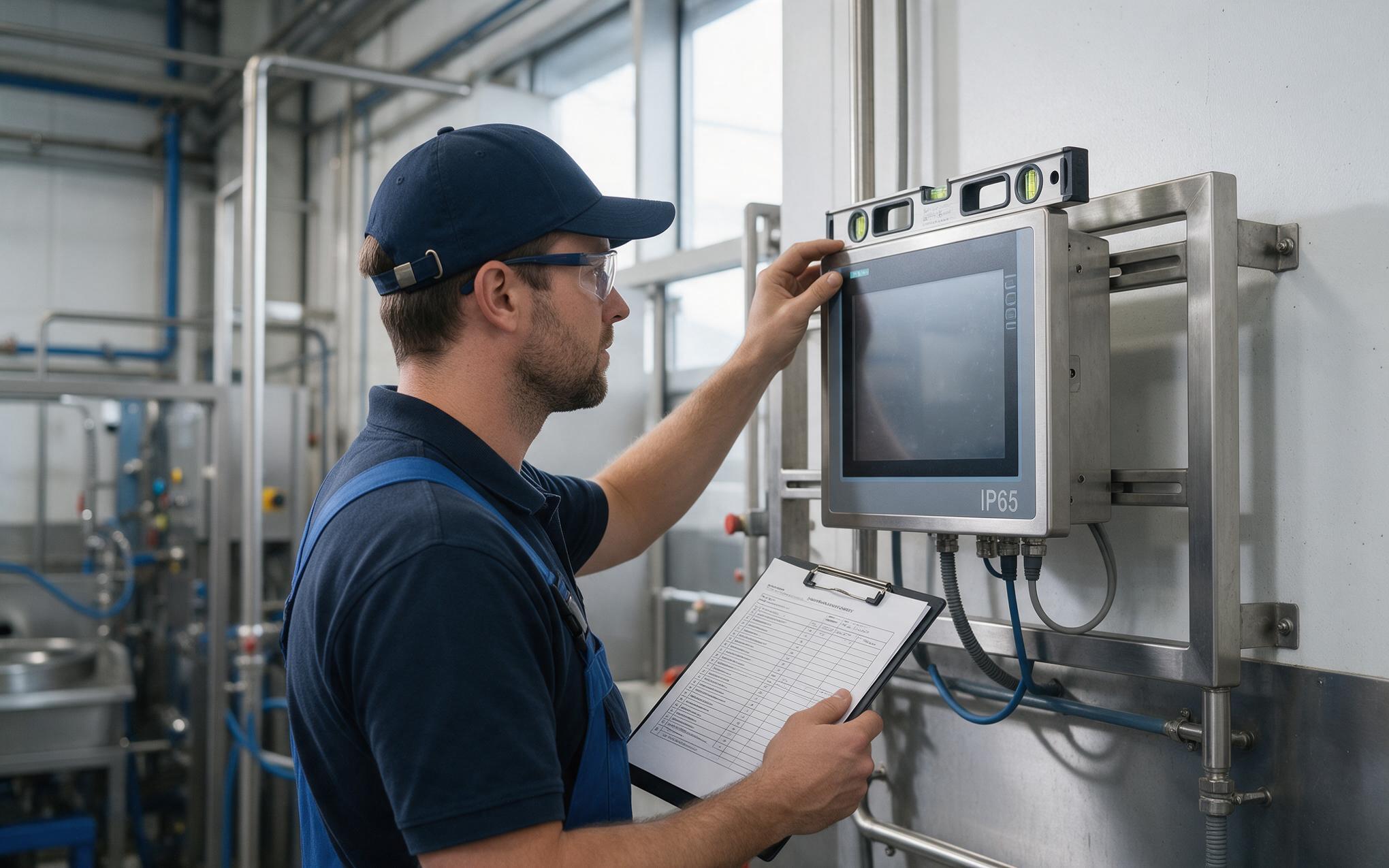
Verification belongs on the commissioning checklist before a line is released, rather than after water shows up inside a cabinet. Field observations from washdown trials show that units laid out in the KOXIAN mounting pattern keep the lower seal dry while the same hose time leaves water standing on a flat-mounted neighbor. Run the hose at the angles the standard uses, hold each pass for the full interval, and watch where water collects along the face and the lower edge. A tilt reading on the mounting frame and a quick look behind a panel PC IP65 unit afterward catch orientation errors that a datasheet never shows. Record the angle and the drain path in the commissioning packet so the check repeats whenever a bracket moves.
Orientation is the cheapest seal decision on the machine. It costs nothing to choose at the design stage and very little to correct later, provided the brackets allow adjustment and someone logged the final angle. Crews that treat the rating plate as a promise of dryness discover the gap during validation, with product already on the line. Teams that specify the plane, drain the water, and verify the angle hand over equipment that stays dry through years of washdowns. A five-minute angle check now is far cheaper than a panel replacement after a wet start-up.