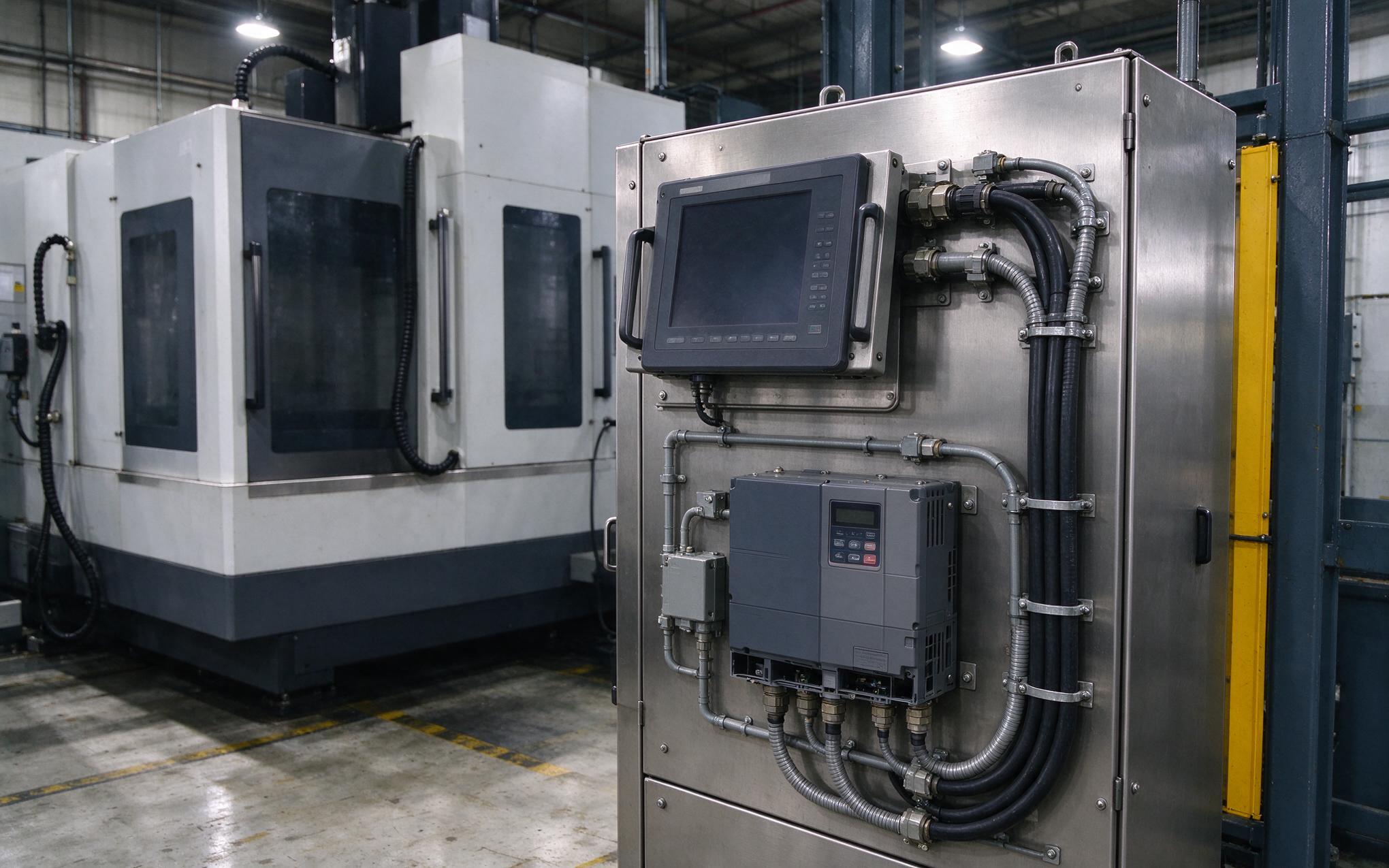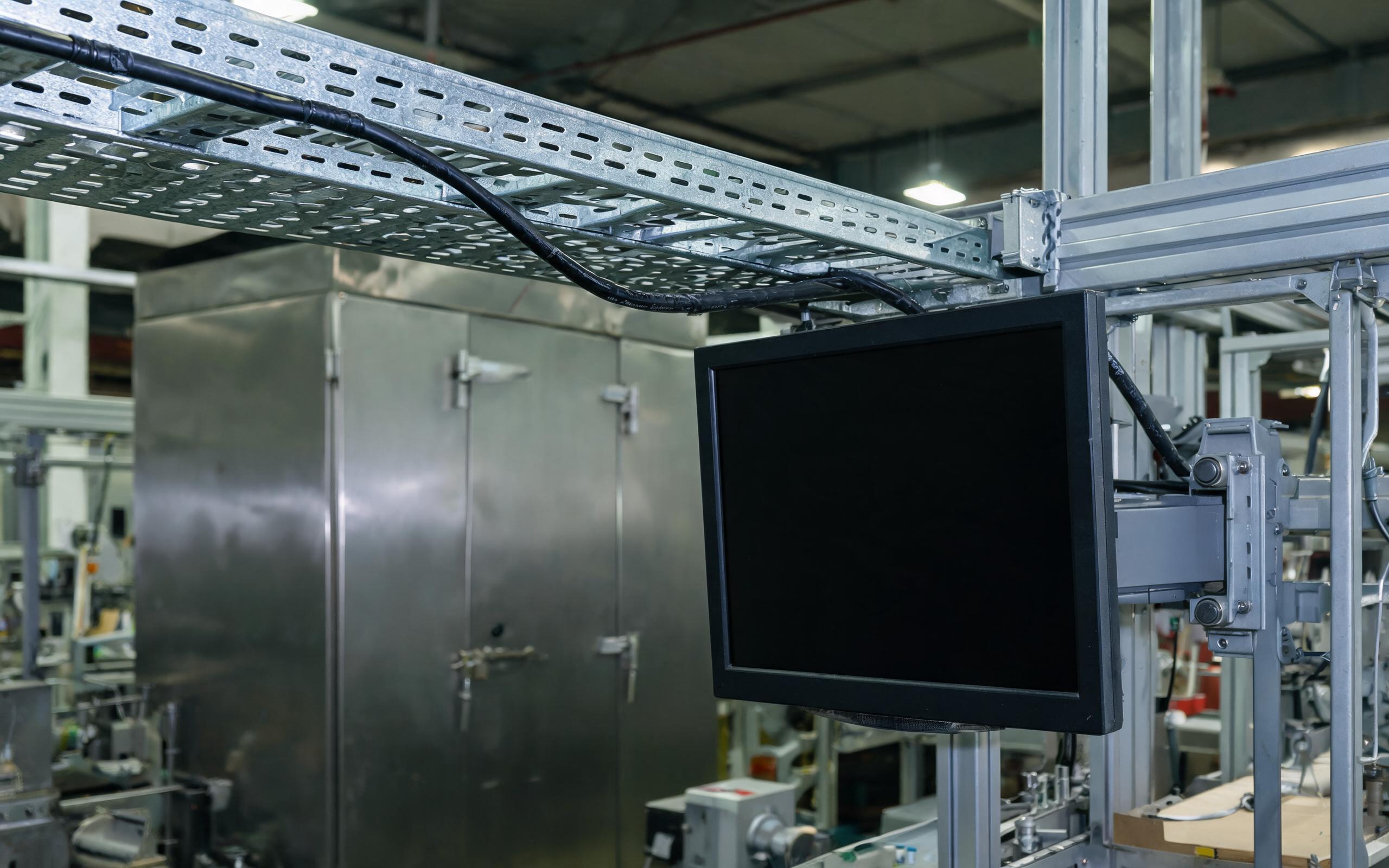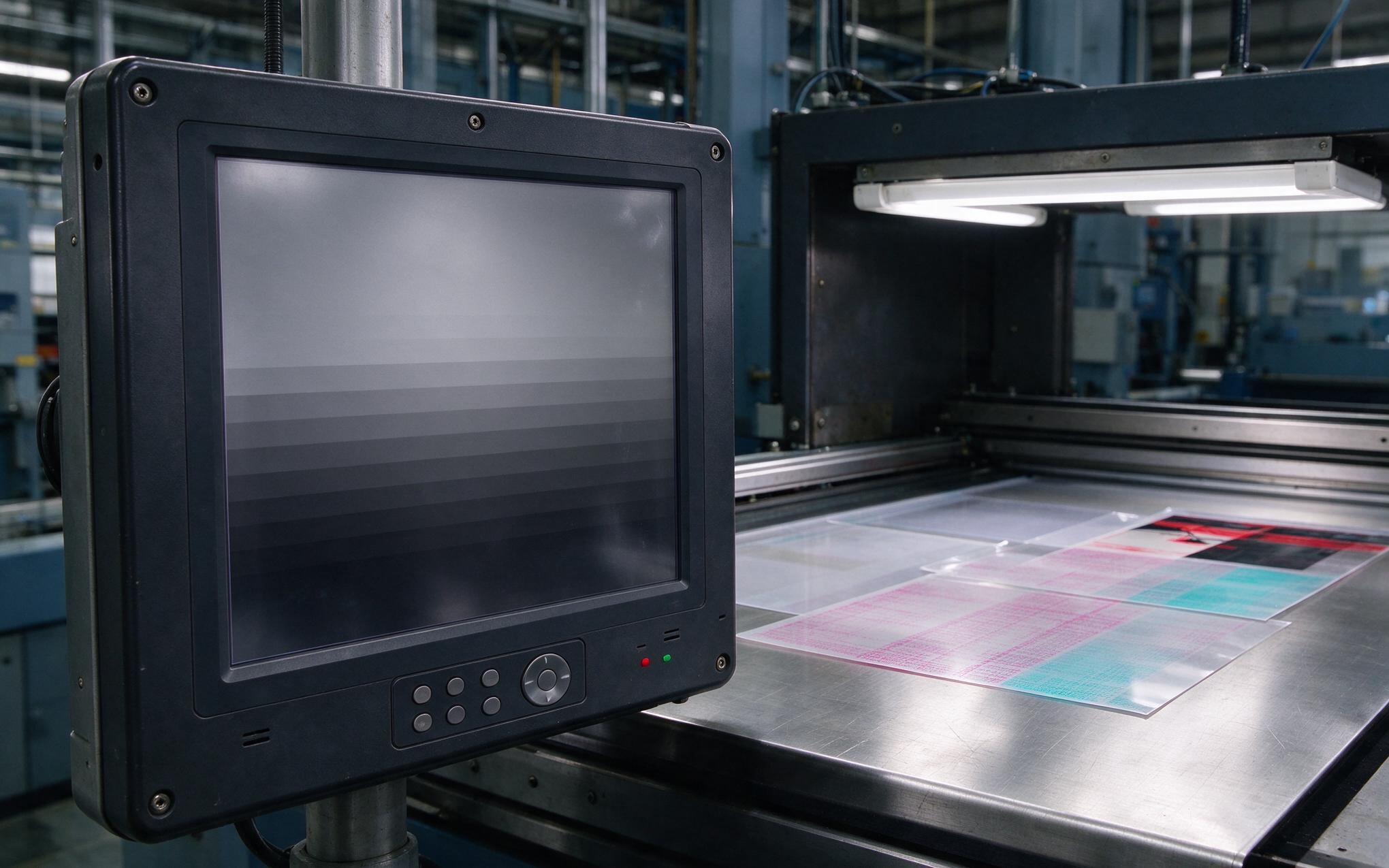
Line operators wearing polarized safety glasses keep describing the same scene: a screen that read cleanly at shift start turns dark or striped by midmorning. Nothing has failed on the panel itself; the light leaving it and the filter on the viewer’s face simply disagree. An industrial display screen emits light through a rear polarizer, so the beam arriving at the eye already carries a preferred vibration axis. Safety eyewear built with a linear polarizer acts as a second filter, and when the two axes sit near the crossed position, the transmitted light collapses. Outdoor terminals, gate kiosks, and marine bridges see it most, because daylight is strong there. This article covers the optical path, the site variables that push the view toward black, and the specification steps that keep the panel readable under that eyewear.
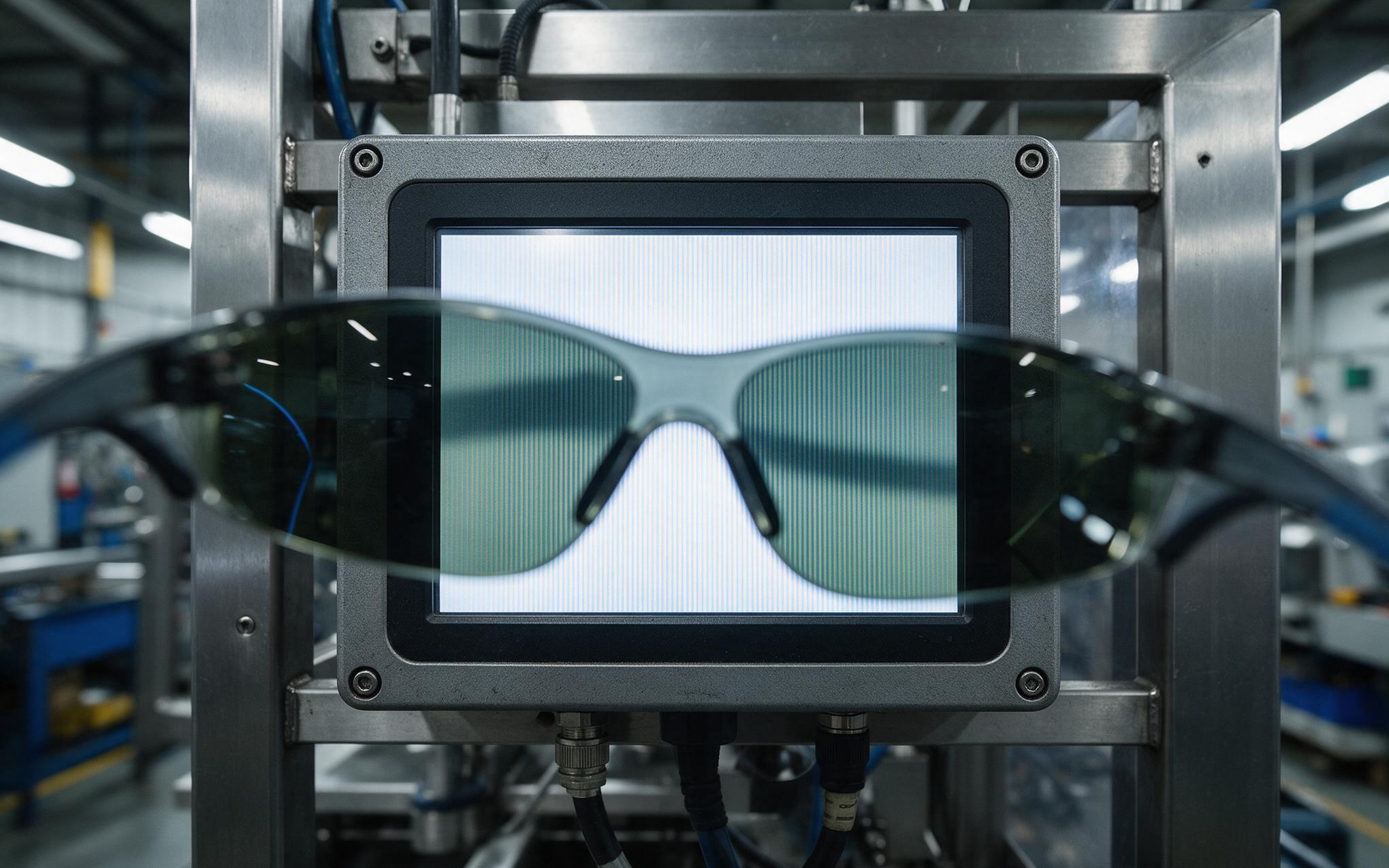
Within the Optical Path of the Industrial Display Screen
An LCD stack filters the backlight twice, once at the rear polarizer and once at the front, so the light leaving the glass is polarized light. Hold polarized sunglasses in front of the panel and the lens behaves like an analyzer: rotate it and the image swings from bright to nearly black. Manufacturers, including KOXIAN, tie the front-surface treatment to the polarizer specification so glare handling and eyewear behavior are settled as a single decision. An anti-glare etch scatters the outgoing beam across many angles, which lowers the purity of the polarization state and softens the darkening. Orientation matters as much as coating, because rotating a landscape panel into a portrait mount turns the axes by about ninety degrees, where the crossover runs deepest.
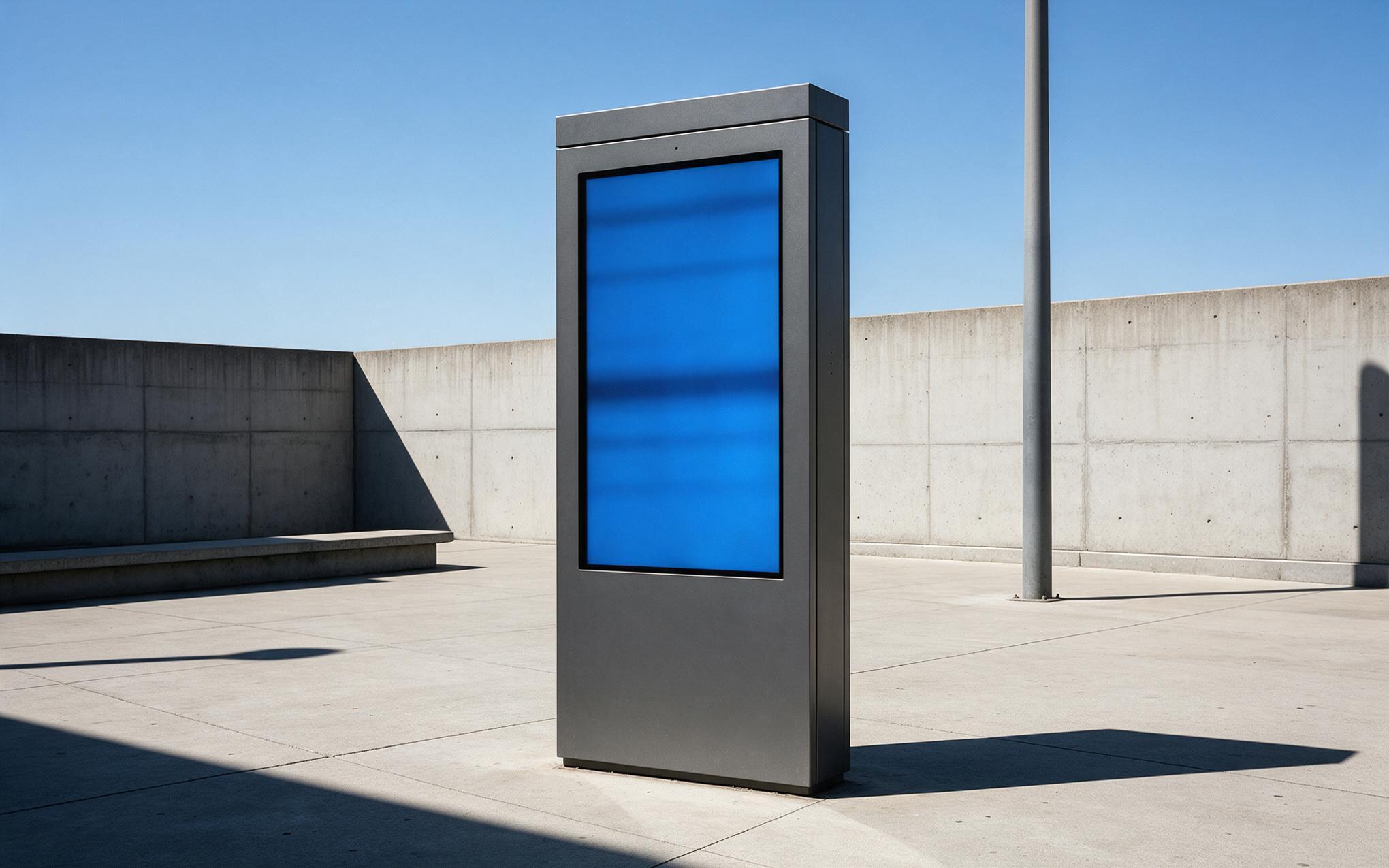
Orientation and Surface Factors Behind the Dark Band
Three variables decide how unpleasant the view becomes: mounting orientation, front-surface finish, and ambient light level. Portrait kiosks sit at the worst angle for a viewer whose eyewear axis runs horizontally, while landscape machine panels usually land closer to a usable alignment. Brightness still buys margin, because real polarizers leak a small fraction of light near the crossed position, and a brighter backlight scales that leakage along with everything else. A sunlight readable display package helps only to that point, since extra output cannot restore polarization purity once the axes are crossed. For an industrial display screen installed outdoors, dust and wipe marks on the cover glass add scattering that mixes the polarization state again.
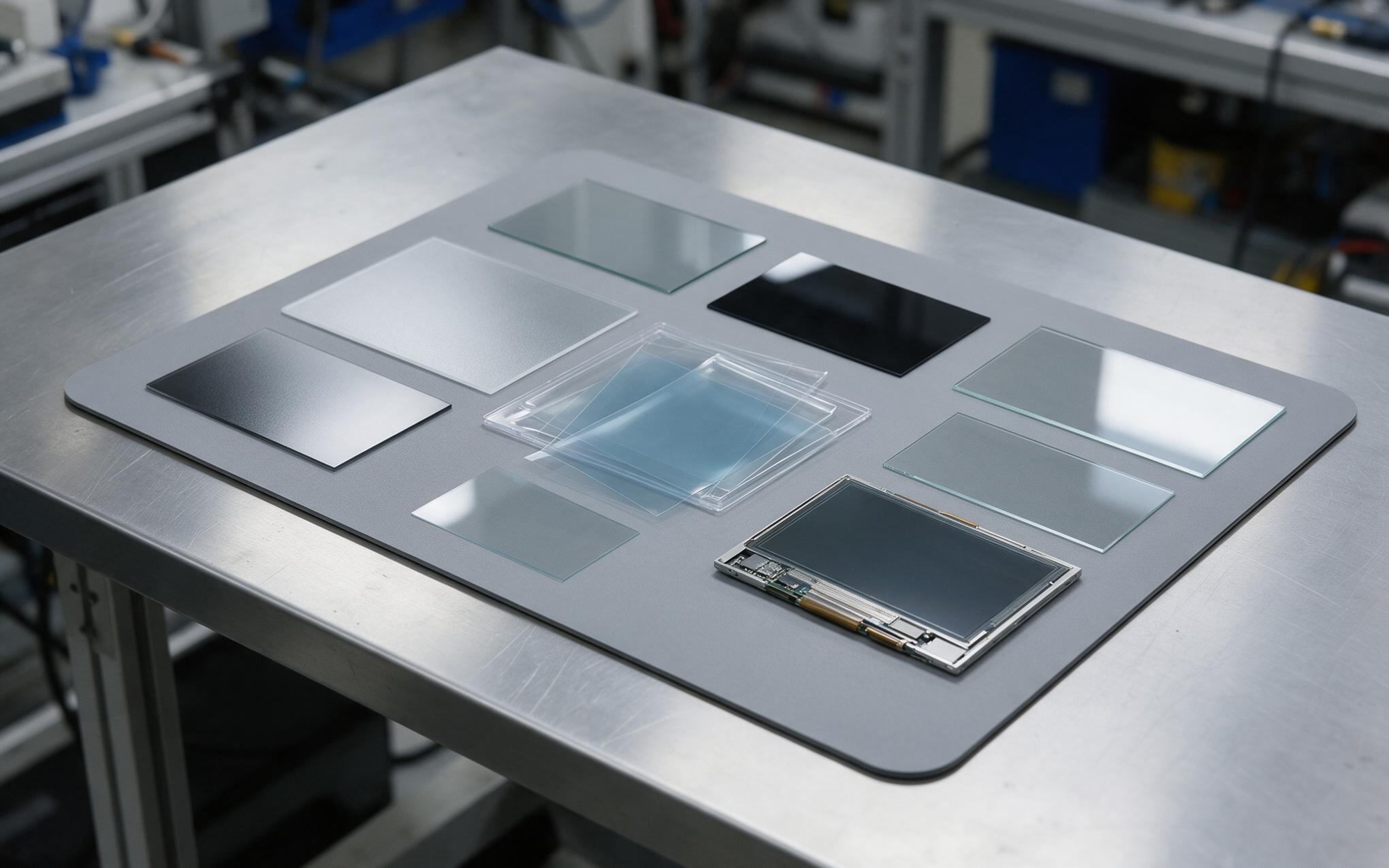
Specifying Polarization Behavior in an Industrial Display Screen
Procurement teams can ask three concrete questions before an order is placed. What is the front surface, an anti-glare etch, an anti-reflective coating, or a hard-coat laminate, and how does each one treat the outgoing polarization? Is the polarizer a standard linear film or a compensated elliptical film intended for viewers who wear polarized filters? What brightness tier and dimming behavior hold up when the panel must fight daylight and eyewear at the same time? Suppliers that publish these choices let integrators match the panel to the site instead of discovering the interaction during commissioning, and the same review should cover cleaning chemistry, because aggressive wipes can haze an anti-glare surface and change the scattering behavior the design depended on.
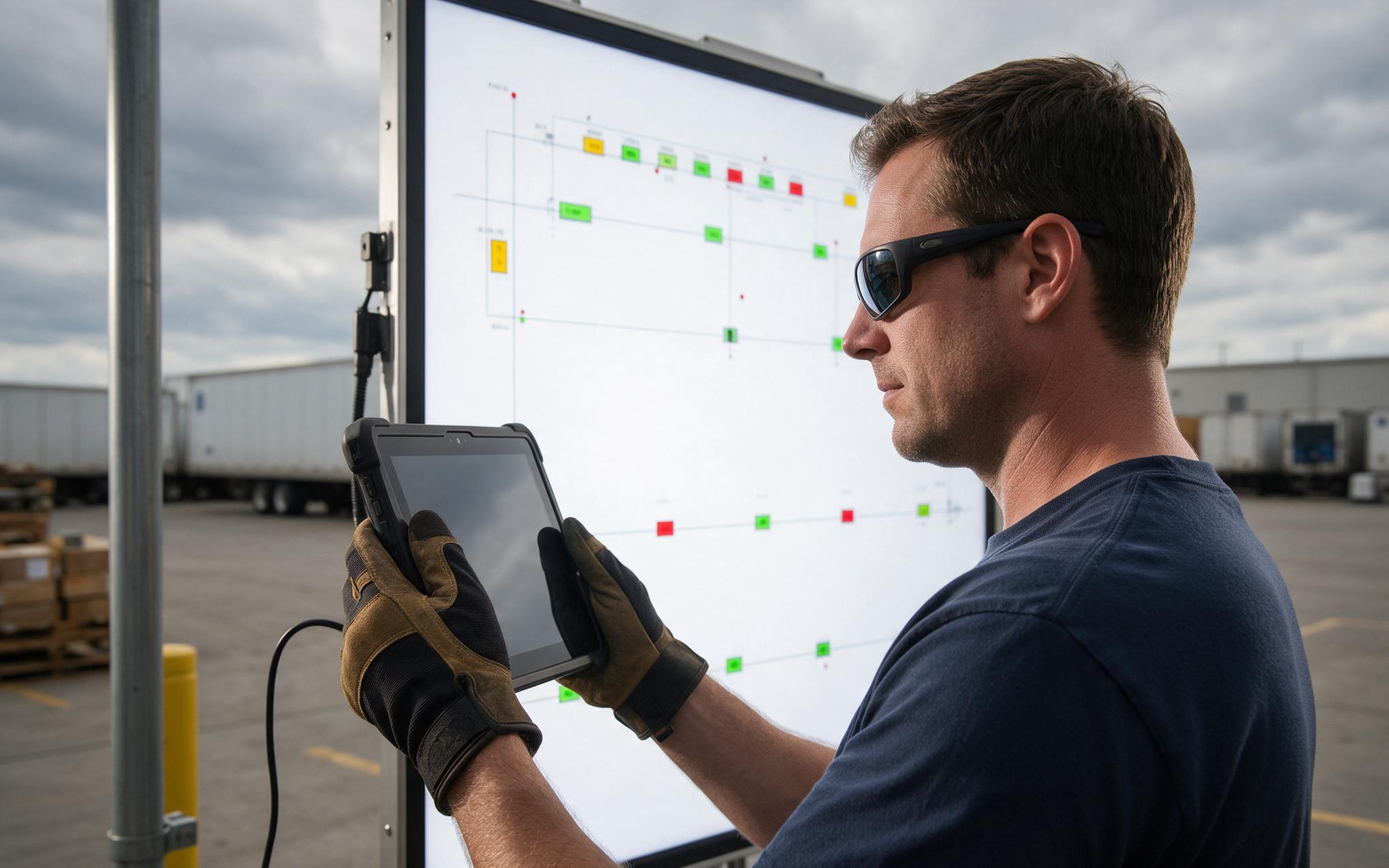
How Teams Verify Readability Before Installation
Verification of an industrial display screen needs nothing more than a sample unit, the eyewear actually issued on site, and a short checklist. View the panel in landscape and portrait, at three positions across the viewing cone, with the backlight at its normal operating level. Selection approaches like those adopted by KOXIAN treat this eyewear check as a site-survey step rather than a commissioning surprise. Repeat the check in direct sun, under overcast light, and at night, because the failure mode moves with ambient level. Record which orientation and surface finish pass, then carry that condition into the purchase specification.
A panel going dark behind polarized eyewear is not a defect; it is a predictable interaction between the light the panel emits and the filter the viewer wears. Crews that treat eyewear as part of the viewing environment specify the surface finish, brightness tier, and mounting orientation of an industrial display screen together, then confirm the result with a sample before units arrive. That short verification costs far less than replacing a line of terminals that read fine in the showroom and disappeared under the midday sun with the crew’s glasses on.