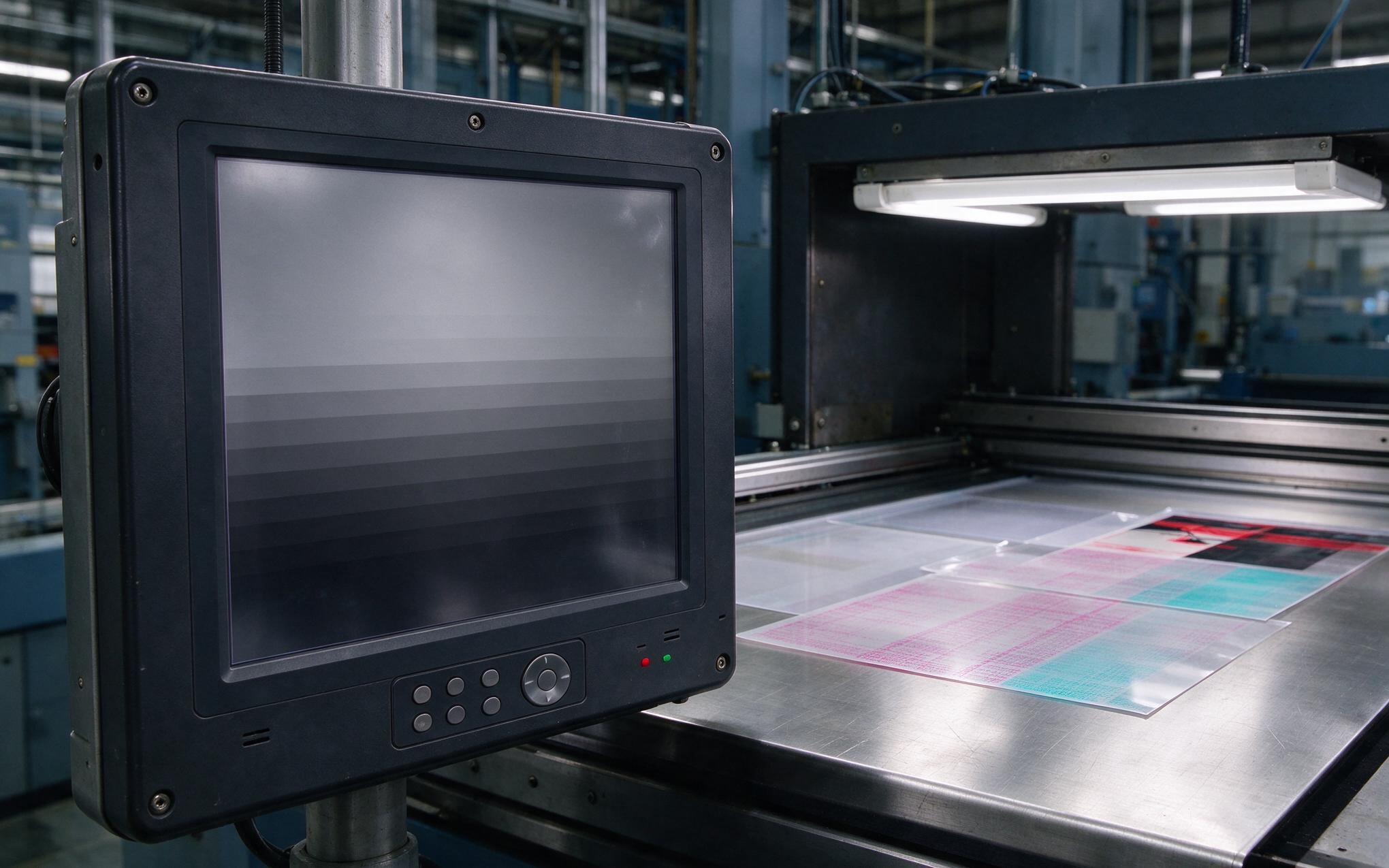
Sunlight striking a gate platform can push a screen far past comfortable reading, while the same industrial monitors at midnight work under a few lux of floodlight and still have to show the same value. One unit holds a fixed high-brightness backlight that washes out at midday and glares off the cover glass after dark; the other reads ambient light and settles into a level the operator can follow. The gap is not panel quality; it is whether industrial monitors treat brightness as a fixed setpoint or as a closed control loop that answers to platform conditions. Ambient dimming is now a baseline expectation on gate stations and yard kiosks running around the clock.
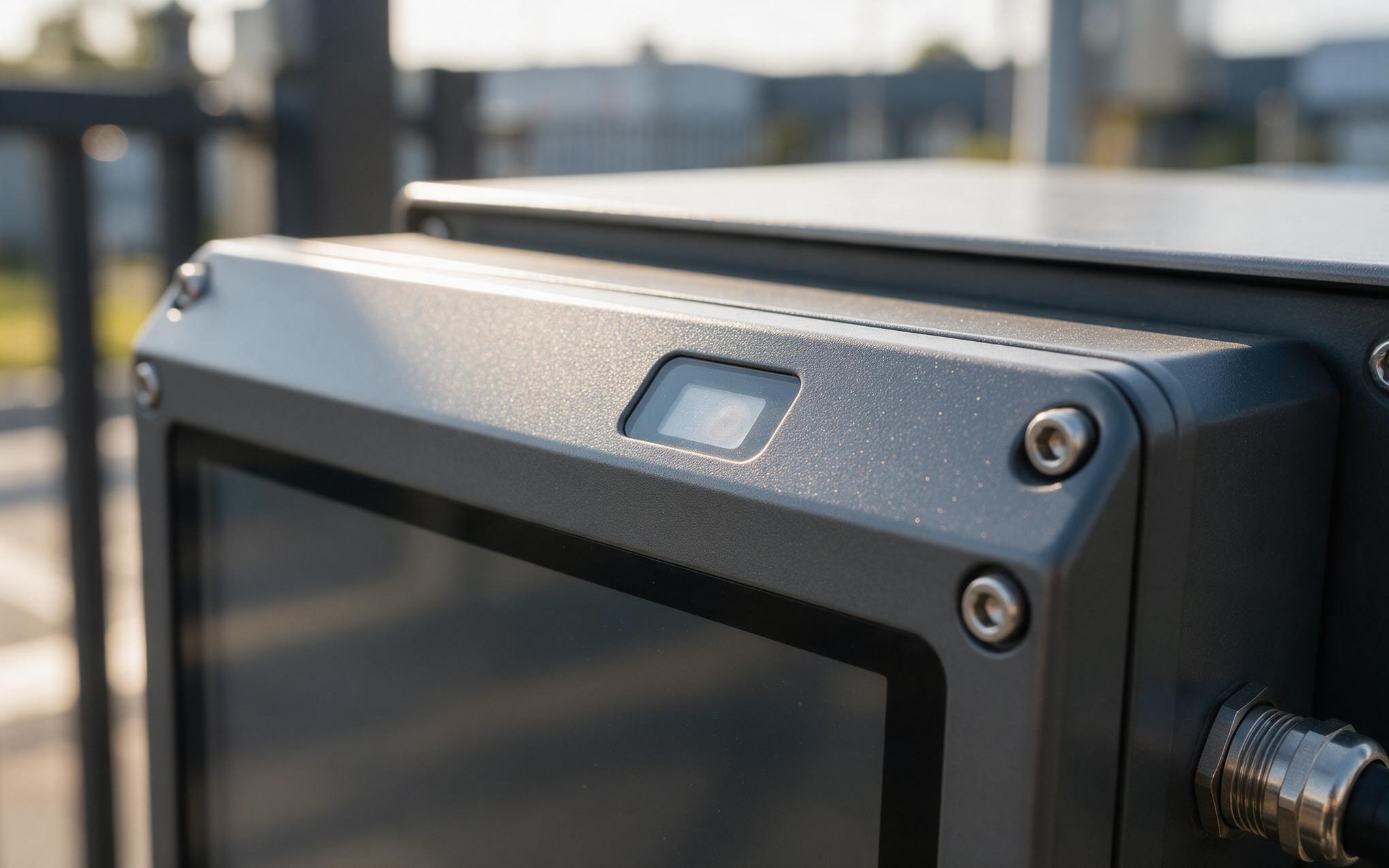
Placing the Ambient Light Sensor Behind a Sealed Bezel
The photodiode of the ambient light sensor sits behind the same cover glass as the touch panel on most sealed designs, because a through-bezel cutout is one more path for washdown water. Placement still decides how the loop behaves, since a sensor aimed at the backlight reads the screen’s own output and settles into slow brightness breathing that operators notice quickly. Moving it toward the upper bezel edge gives the sensor a view of the platform instead of the panel, and a diffuser window keeps response near a cosine curve so a passing shadow does not swing the reading. On sealed industrial monitors that window also has to stay clear of the grease film wipe-downs leave behind.
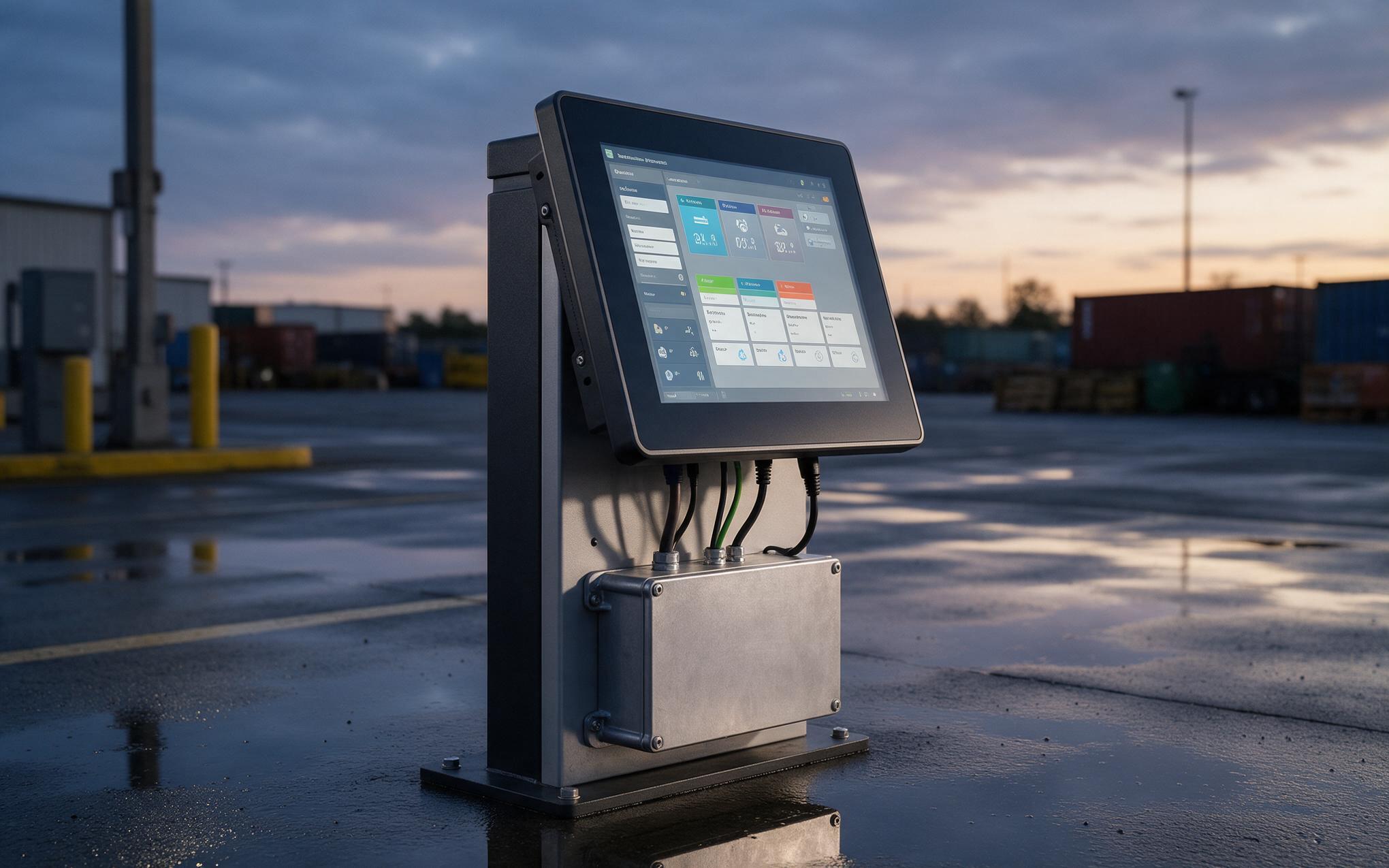
Reading the Dimming Curve in Industrial Monitors
Design approaches like those documented for KOXIAN dimming guidelines start from how the eye reads light rather than from a fixed current value. Industrial monitors convert the sensor reading into backlight current through a dimming curve, and the curve shape decides how usable each level feels. Perception is close to logarithmic, so a linear map spends its range at the upper end and steps visibly near the bottom where night shifts operate. Hysteresis of a few lux plus a short dwell timer keeps a passing cloud from pumping the backlight, while slew limited ramps keep the transition out of sight. Pulse width modulation dominates at the low end, and once its frequency drops into the audible band the inductor buzzes and cameras record banding.
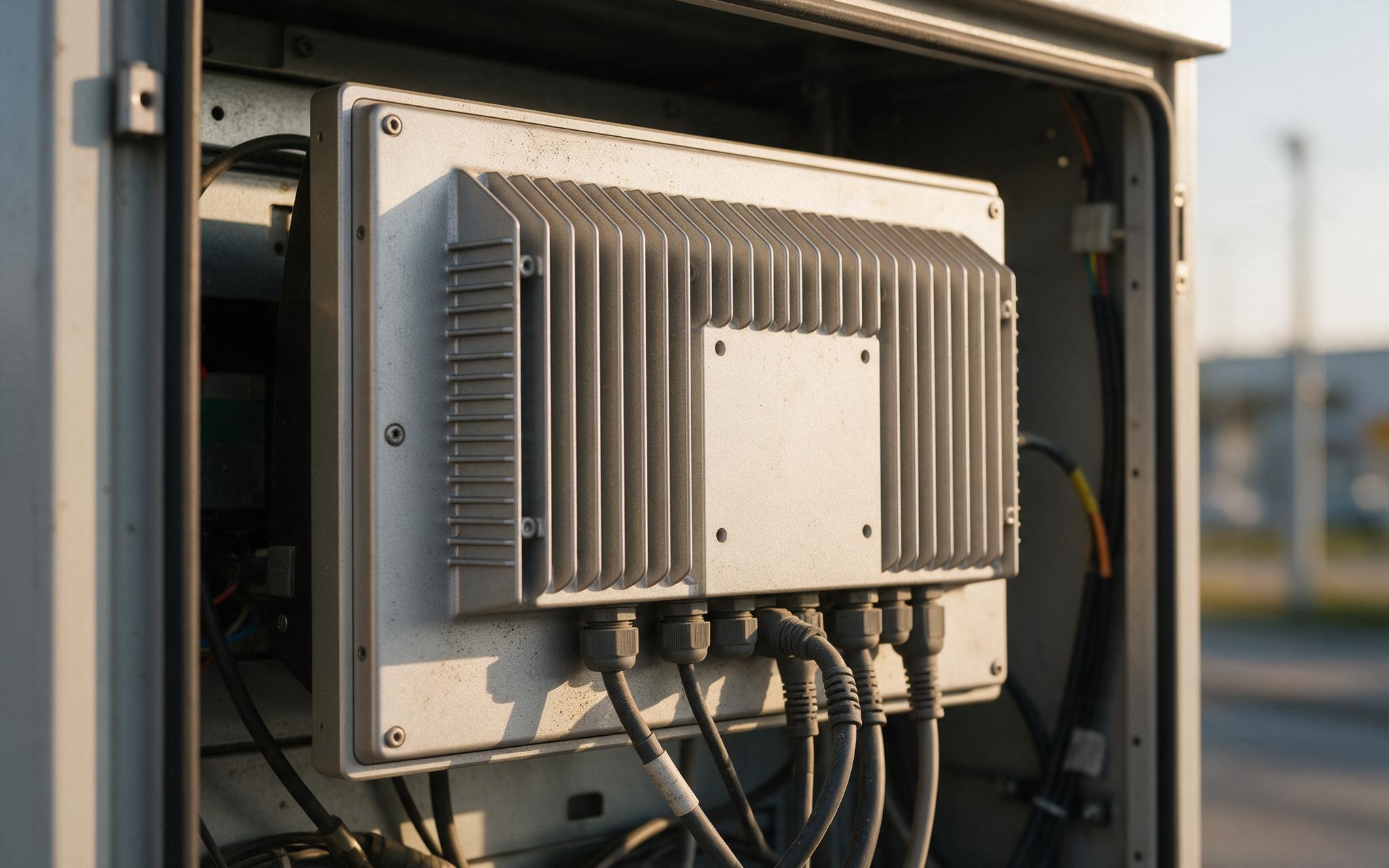
Derating Backlight Current During Night Duty
Junction temperature tracks drive current, so a backlight held below rated output after sunset runs cooler than one pinned flat all day. Observations from outdoor terminals running KOXIAN panel hardware show the same pattern, with night duty cycles sitting well below the daytime current limit. Lower ambient light therefore means the panel never drives its LEDs at full current, and that is where dimming pays back in hardware rather than comfort. Maintenance records show the value over years, because slower lumen depreciation extends backlight service life and gives driver components fewer thermal cycles. Power budgets gain as well on industrial monitors fed from solar or battery cabinets, where charger sizing follows worst case brightness rather than the daytime peak.
Field Checks That Catch a Stuck Light Sensor
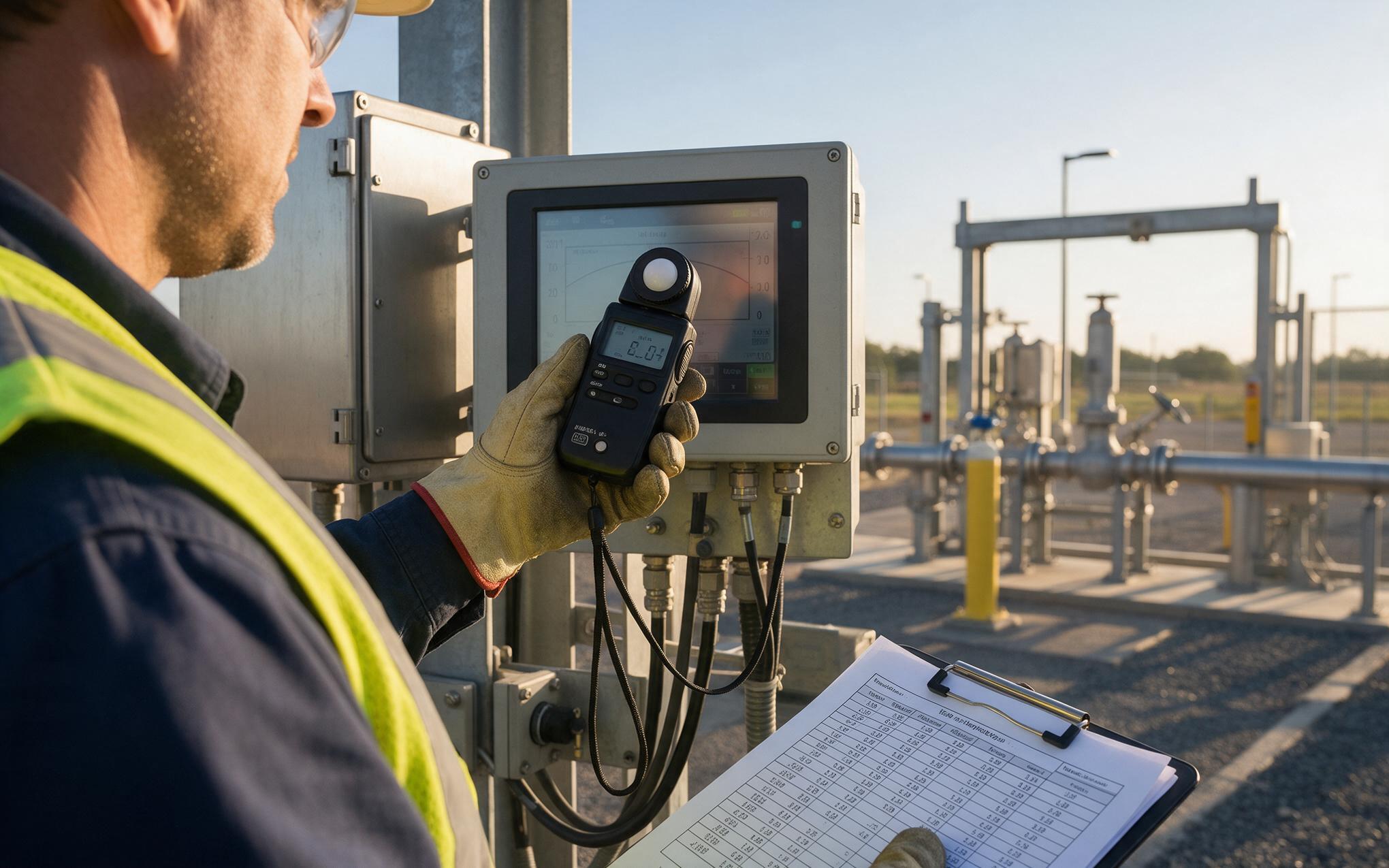
Commissioning should verify the loop on industrial monitors at three light levels rather than accepting a single afternoon reading: full sun, overcast, and night with the platform floodlights on. Record backlight current at each step rather than a visual impression, so the trend line survives as evidence when a complaint arrives months later. A sensor that stays flat while conditions change usually has tape over it, a label applied during installation, or condensation behind the window after a washdown. Alarm on that signature by flagging industrial monitors whose backlight duty never leaves a narrow band for more than an hour. The final check is the night floor, because a display dimmed too far is unreadable at arm’s length even when the sensor reads honestly.
Auto dimming rarely fails on its own; the configuration around it does. Treat the sensor as a measured instrument rather than a convenience, shape the curve to the real light range of the site, and give the loop enough hysteresis to ignore traffic and headlights. When those settings are written down and rechecked during maintenance, industrial monitors keep the same readability at midnight that they showed at noon without asking the backlight to run flat out for a whole shift. The outcome is a display legible through the night and a power budget that stays predictable through the season.