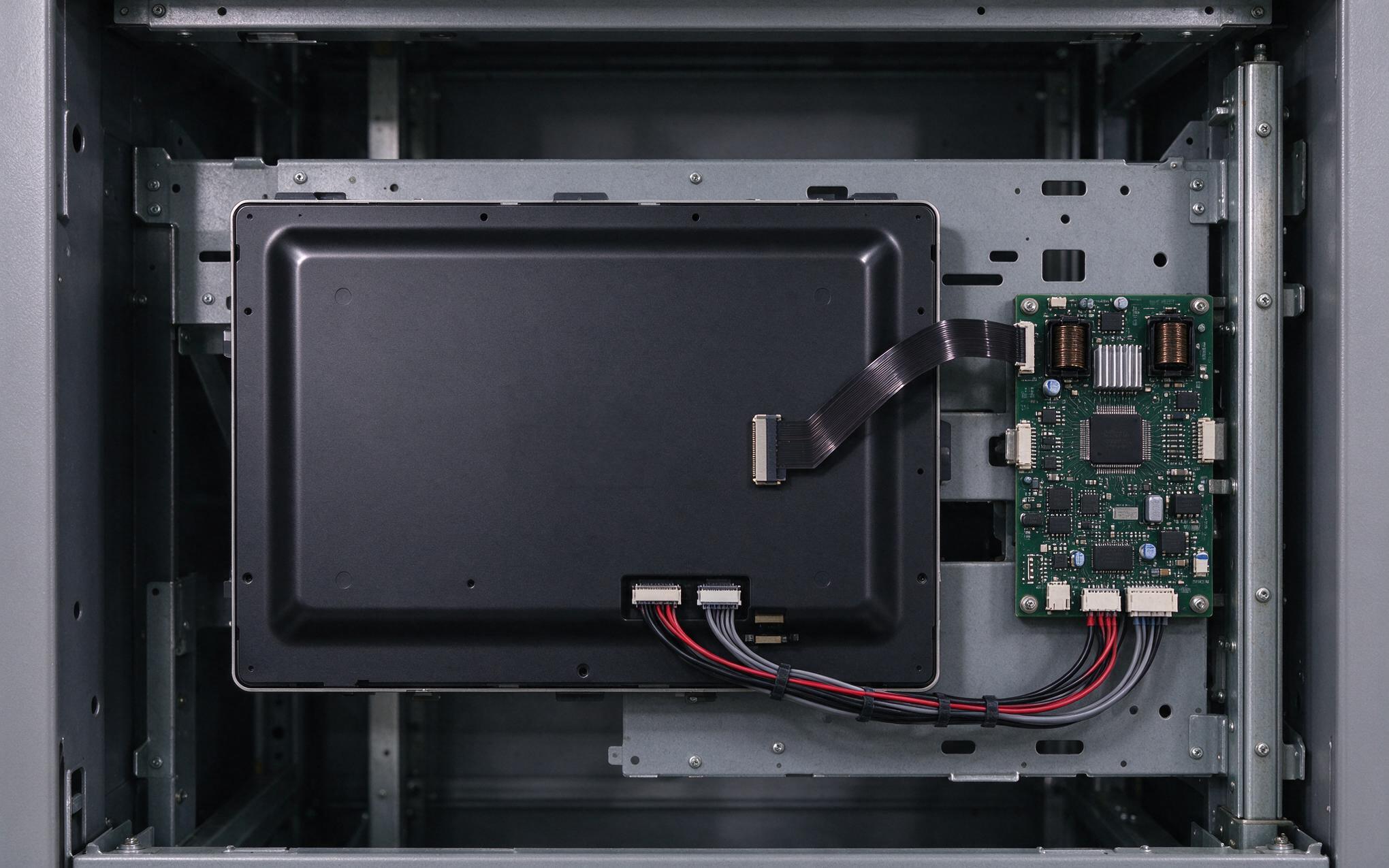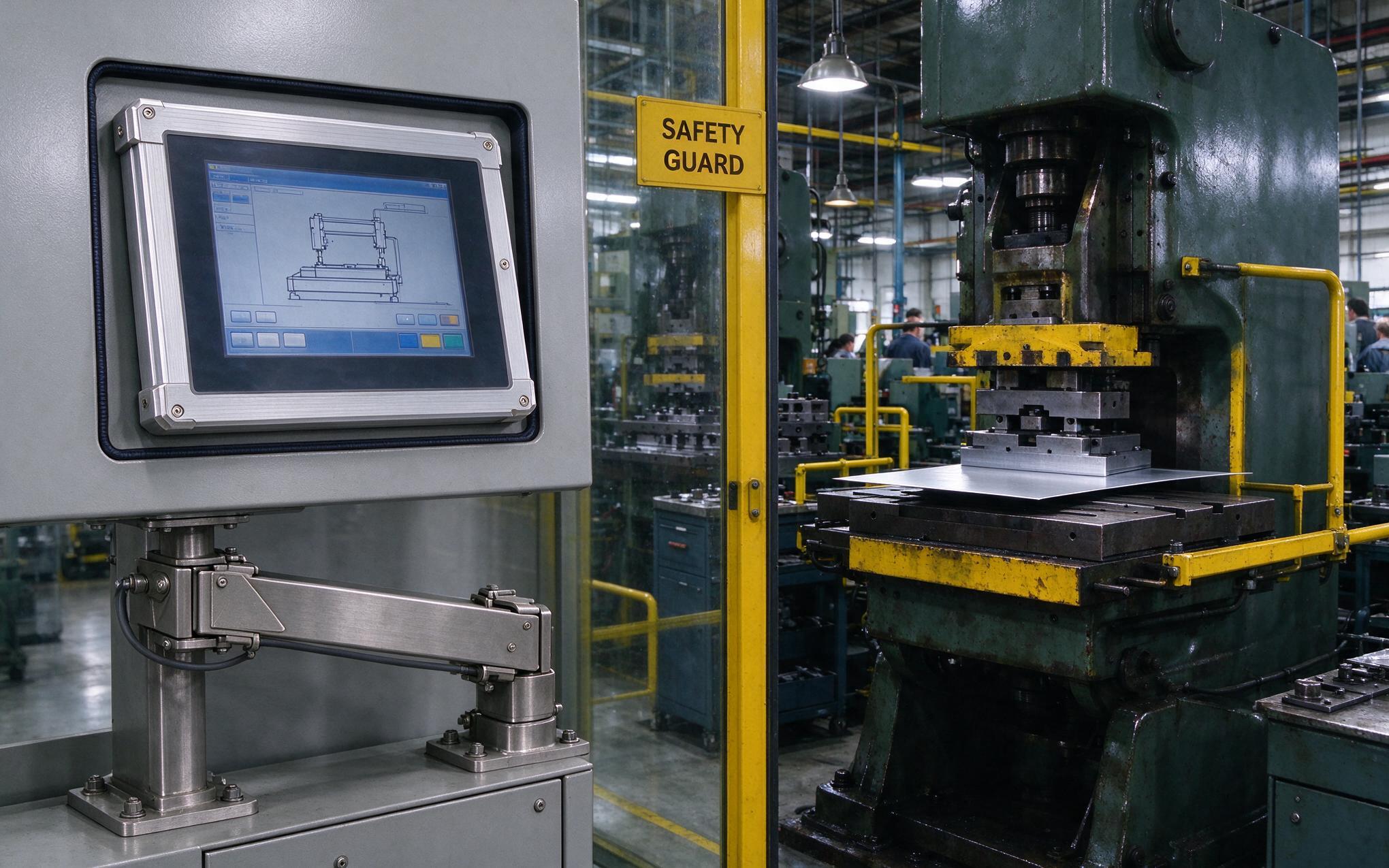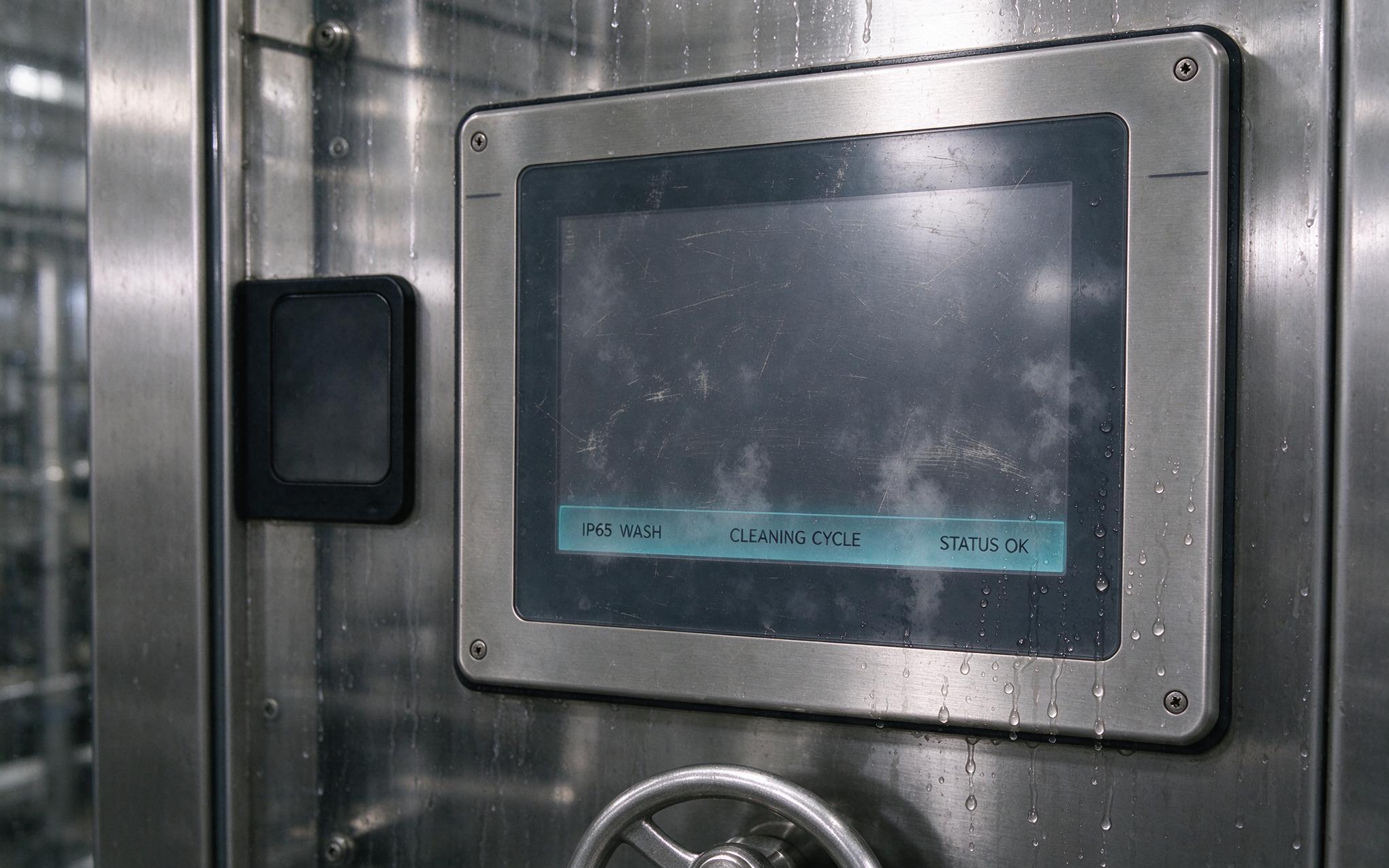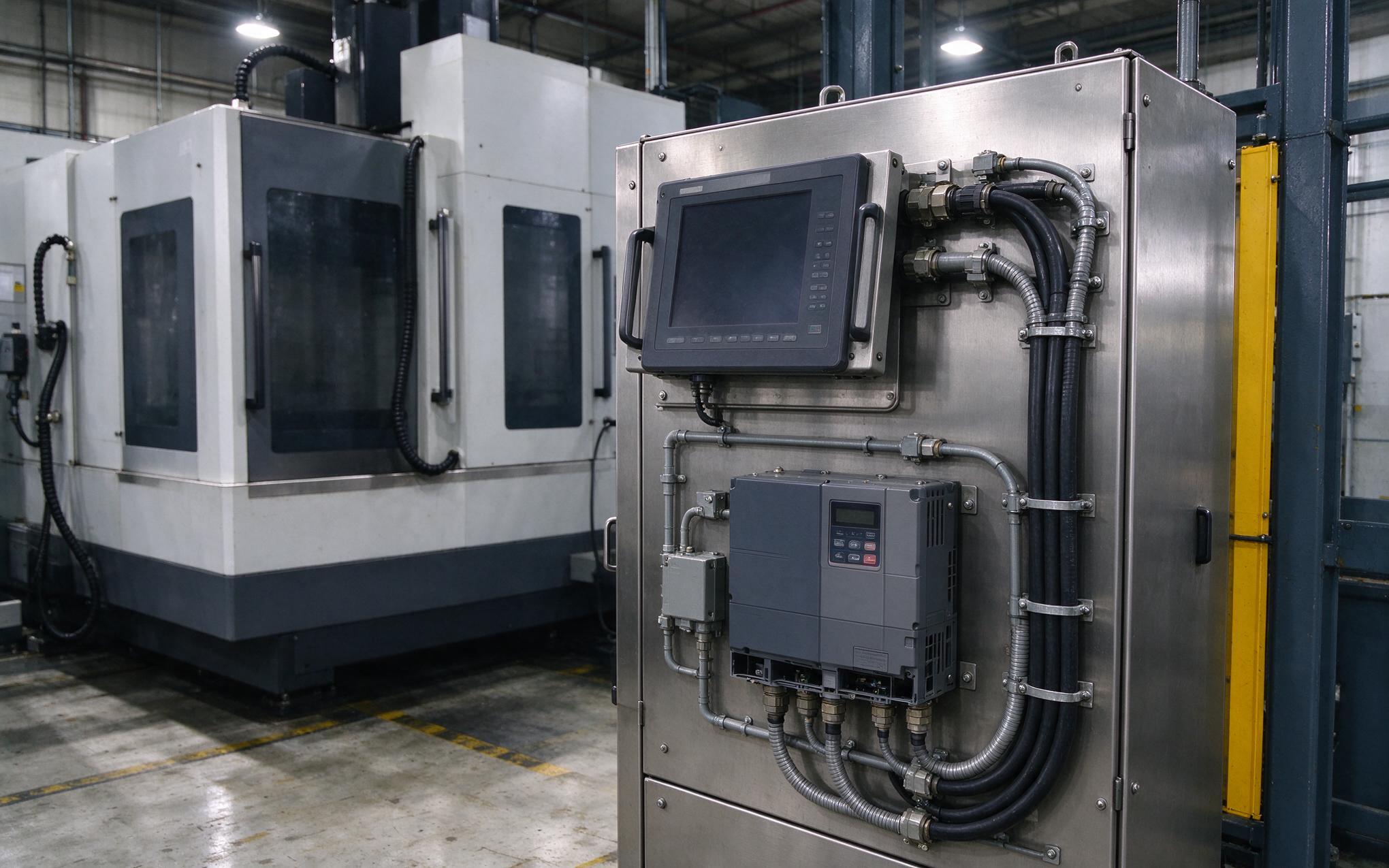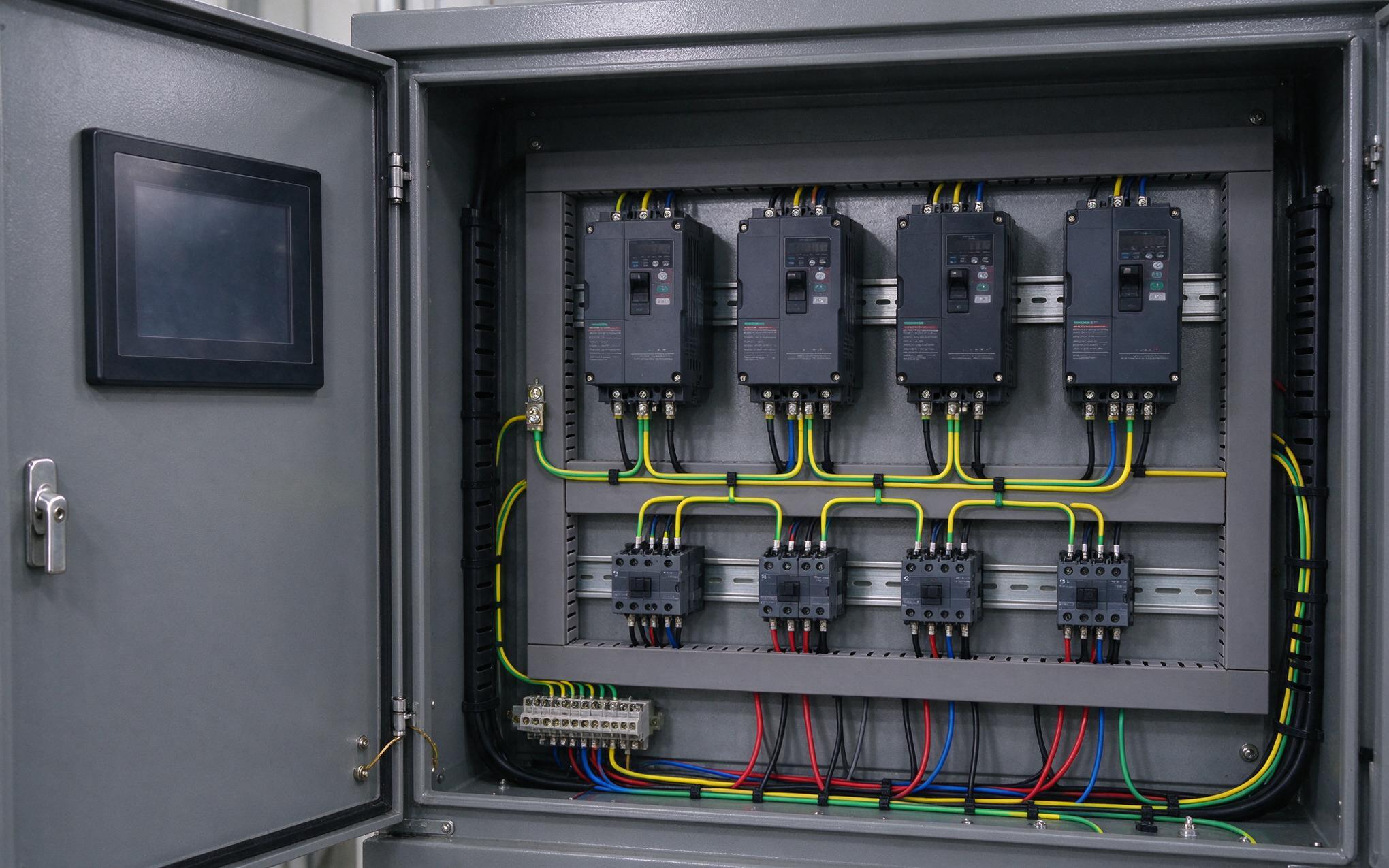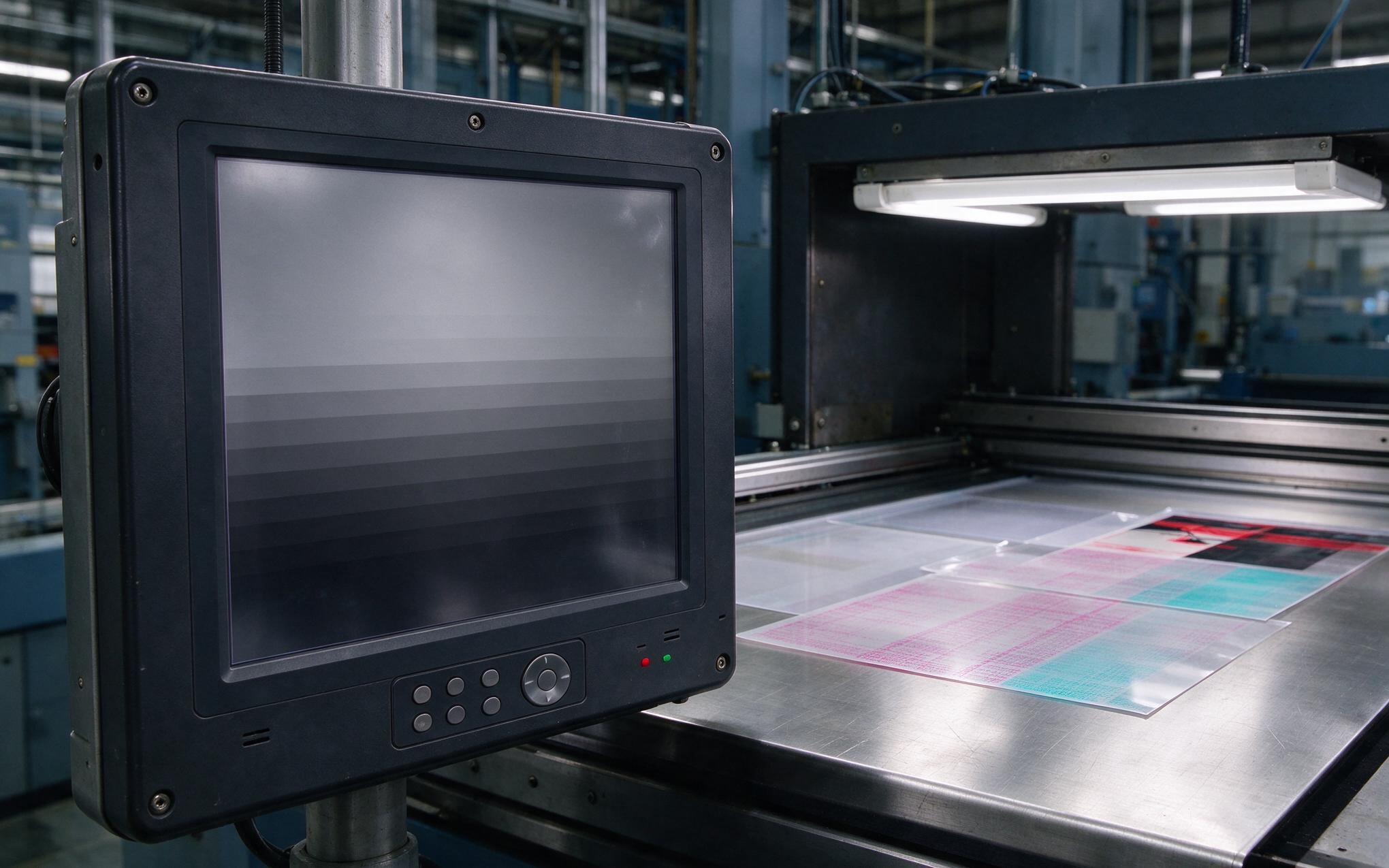
A fault traced to a loose ground path through a painted cabinet door held up a bottling line restart for most of a shift, and the panel mount industrial pc involved had passed every functional check on the bench. The chassis sat flush against the door, every cable was seated, and a milliohm meter still read into the kilohms between the housing and the cabinet rail. Powder coat is an electrical insulator, and a hole drilled through it leaves the paint film as the only material touching both the computer and the steel around it. Ground continuity is therefore a mechanical design decision as much as a wiring one, and it gets settled at the cutout long before commissioning.
Within the Paint Layer at the Mounting Interface
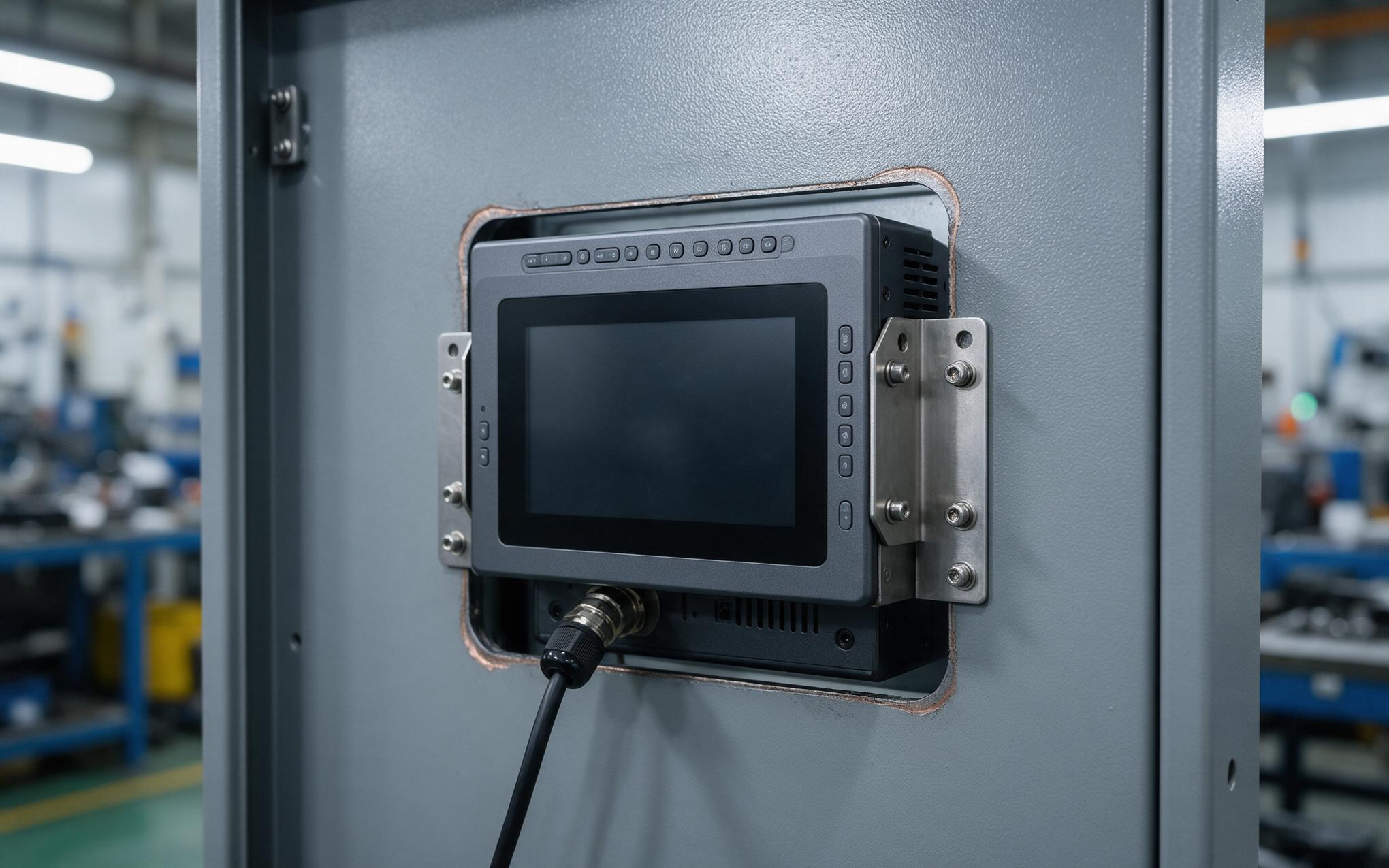
When a chassis is bolted to a powder coated door, the fastener threads and the flange contact area meet paint before they meet steel. Typical powder coat builds 60 to 100 micrometers of cured film, which is enough to isolate the two surfaces at megohm levels on a dry bench. The result is a panel mount industrial pc housing that looks bonded but floats relative to the cabinet, so fault current has to find another route through signal cable shields and connector shells. Installers who mask a contact ring around the cutout during painting, or score the film back at the mounting holes, restore a predictable metal to metal path before any screw is torqued.
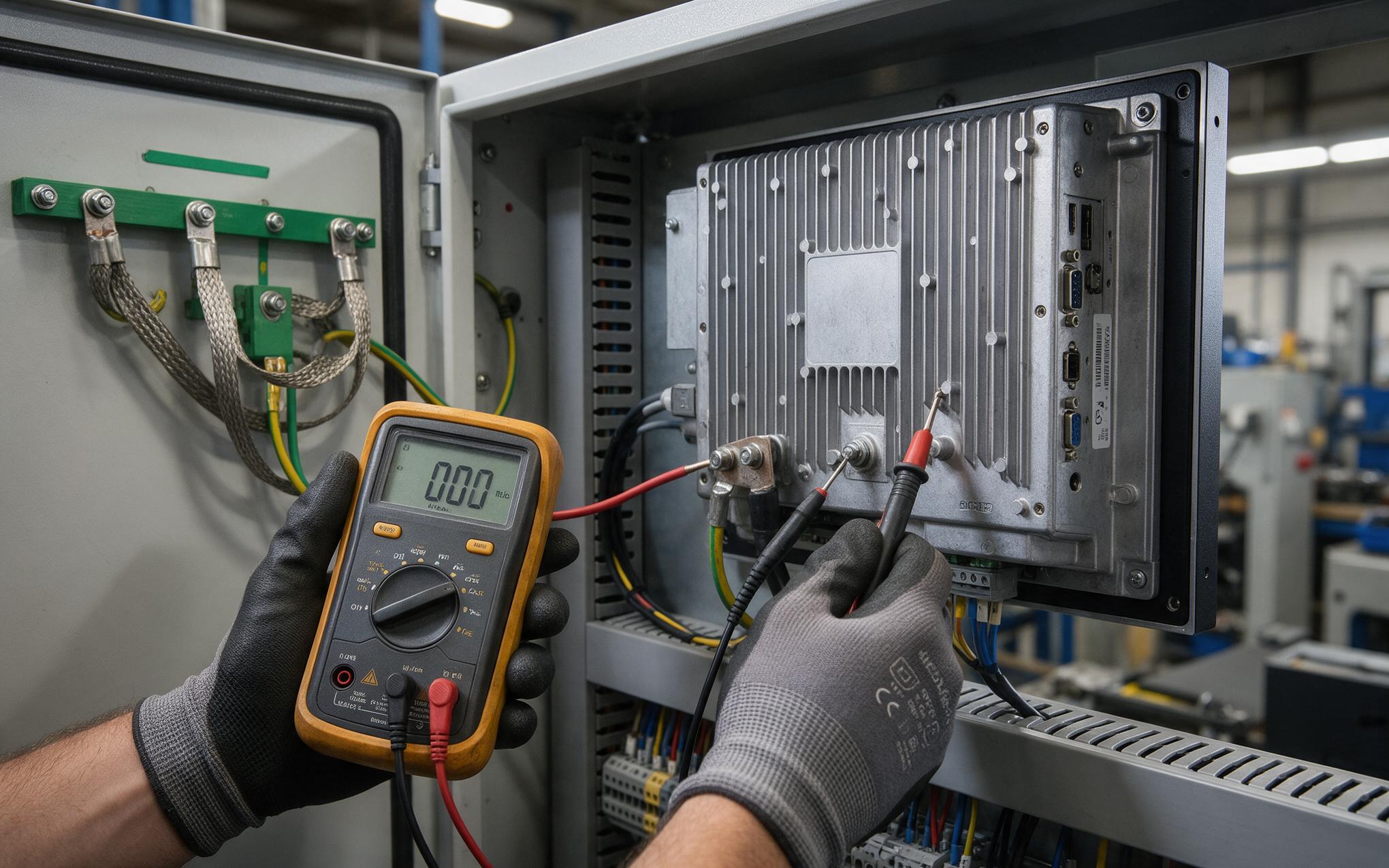
Verifying Ground Paths in Panel Mount Industrial PC Installations
Industrial hardware manufacturers, including KOXIAN, mask a bare contact band around the cutout so the mounting screws land on bare steel rather than on cured powder coat. Once that band exists, verification of a panel mount industrial pc becomes a measurement instead of an assumption. A low resistance check between the chassis and the cabinet ground bar, run at the end of assembly and again after the door has been cycled, exposes a joint that was painted over or loosened by vibration. Values below one ohm usually indicate sound bonding, while readings in the kilohm range point straight at a film left under a washer or a paint edge that crept back after curing.
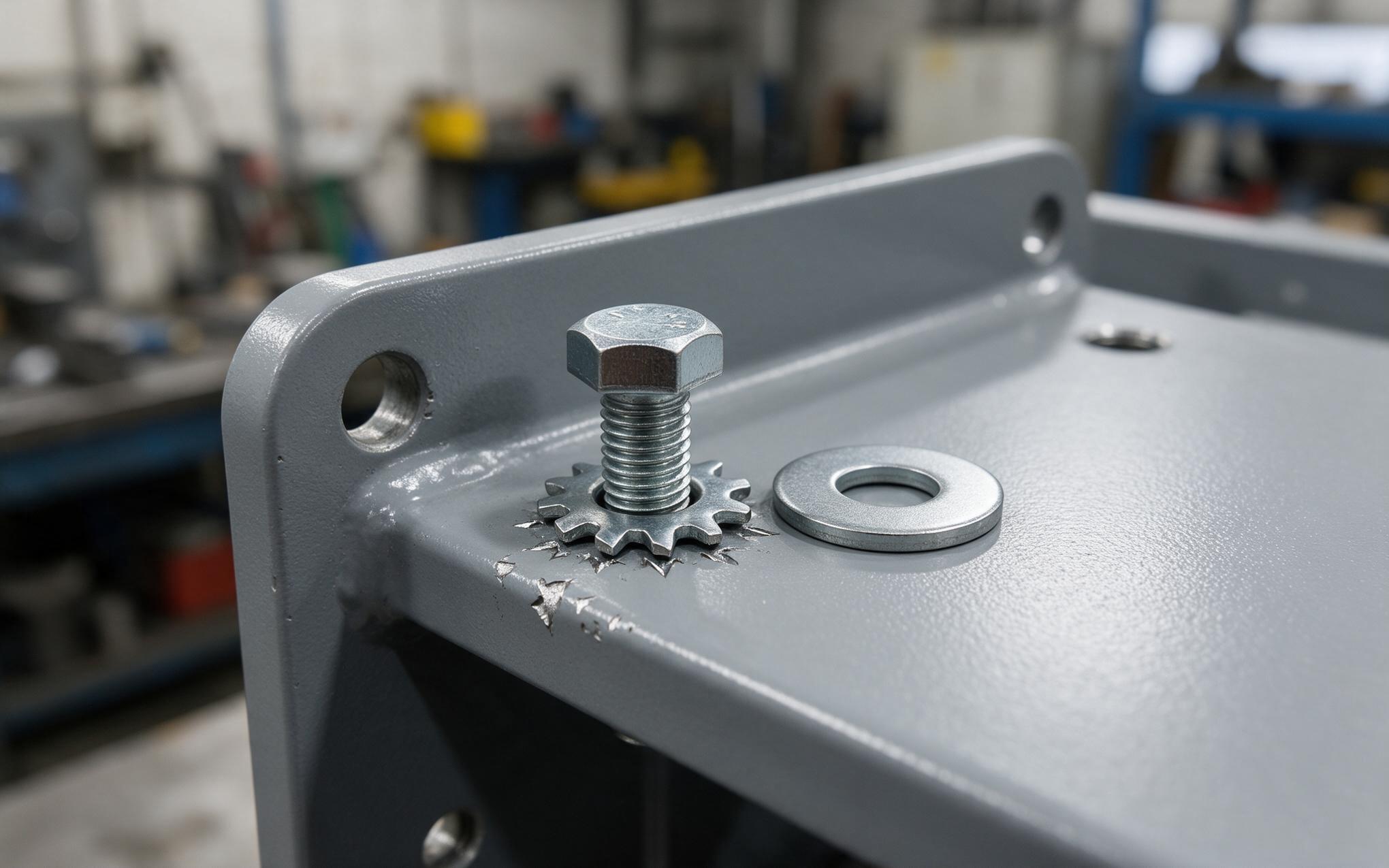
Contact Rings and Star Washers for Painted Doors
A masked contact ring does not hold up if the hardware cannot cut through what is left on it. Toothed or star washers bite into the remaining film at each mounting point and create several parallel contact paths, which keeps resistance low even when one tooth lands on a paint fleck. Flat washers spread load nicely but ride on the coating surface, so they leave the joint where it started. Torque specification matters for the same reason, because a joint that relaxes as the paint creeps loses contact pressure after a few thermal cycles. Specifying washer type, surface finish behind it, and torque on the assembly drawing keeps the interface repeatable across batches. Design approaches like the KOXIAN G1 series treat the contact band as a called out feature on the drawing rather than a cleanup step at installation.
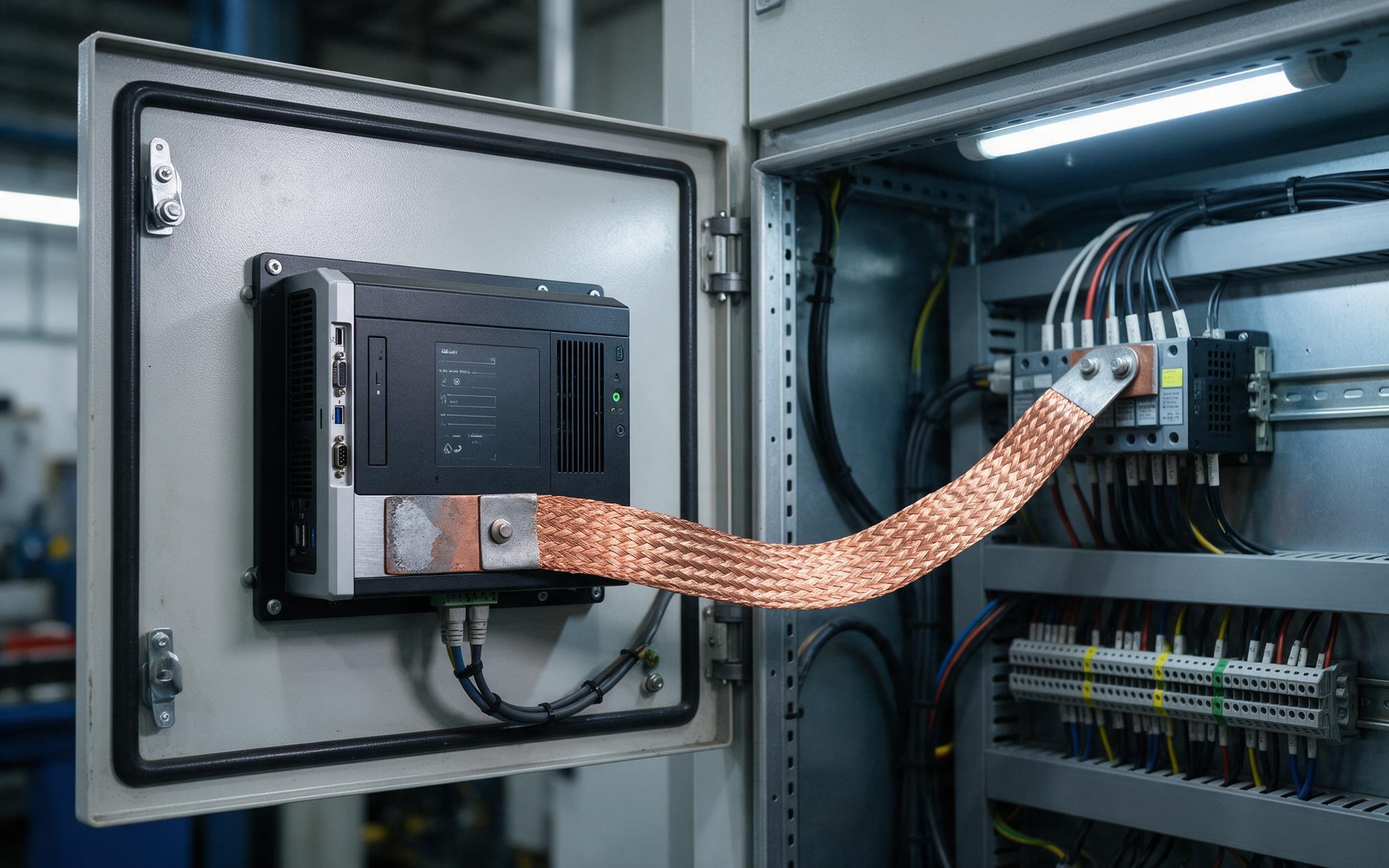
Ground Strap Routing Across Hinged Cabinet Doors
The door is the last link in the chain, and it is usually painted on both hinge leaves. A panel mount industrial pc bonded to that door can still end up isolated from the cabinet frame, which pushes the return path onto cable shields that were never sized for it. A flexible strap riveted across the hinge line closes the gap, but only if it is sized for fault current and terminated on bare steel at both ends. Ground continuity testing should run with the door open as well as closed, because a strap that reads well only when shut hides a failed terminal. Repeat the check during maintenance shutdowns to catch straps that chafe, loosen, or corrode in washdown areas.
Painted steel is a structural surface, not a grounding surface, and the distinction only surfaces after installation when a bonding check fails or a signal reference starts drifting. Treat the mounting interface as a designed electrical joint, define the contact zone before the door goes to the paint line, and measure the finished path with a low resistance instrument. Those three steps cost far less than tracing a floating chassis through a live production line, and they turn a fastening detail into a predictable part of the cabinet ground system.