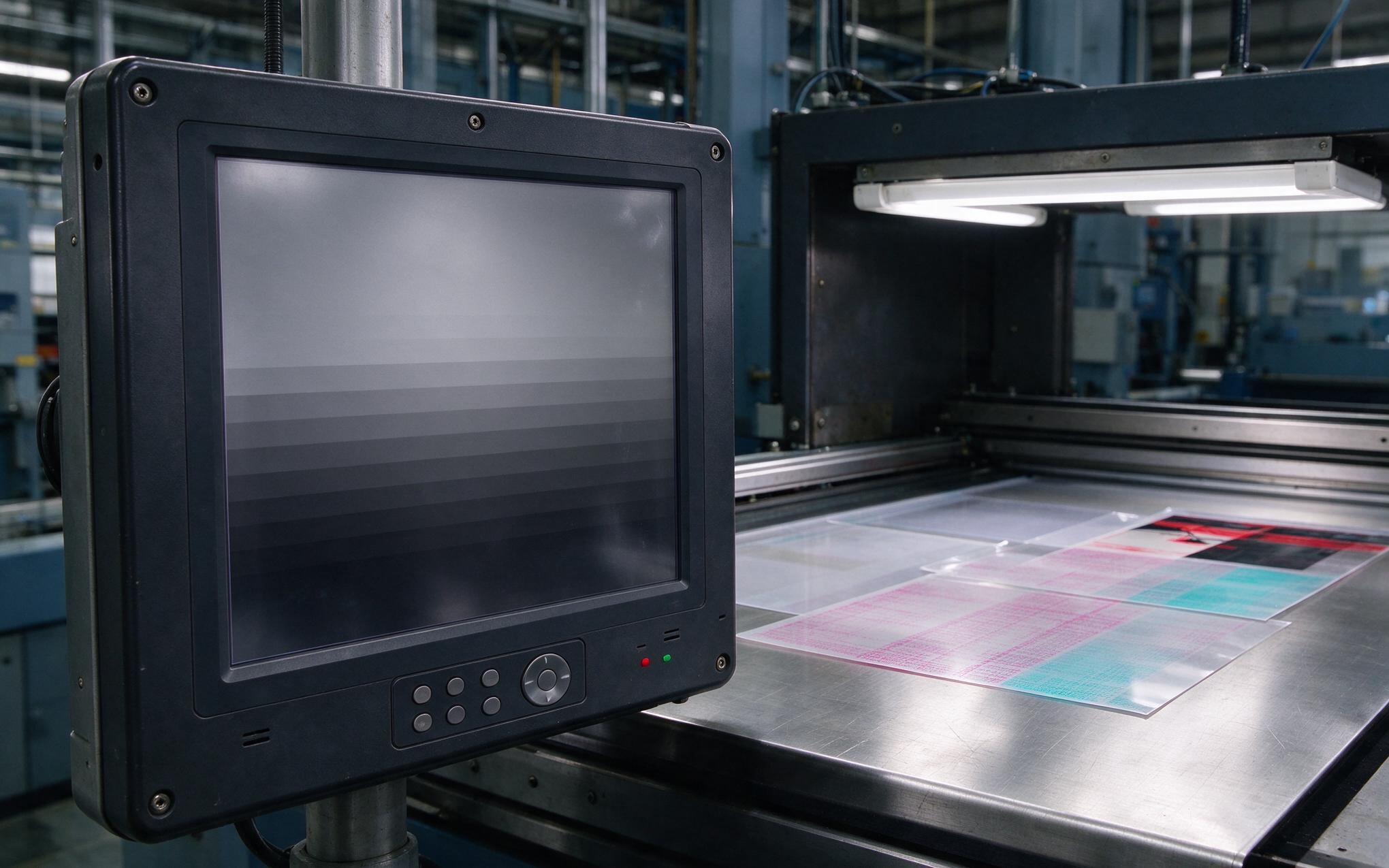
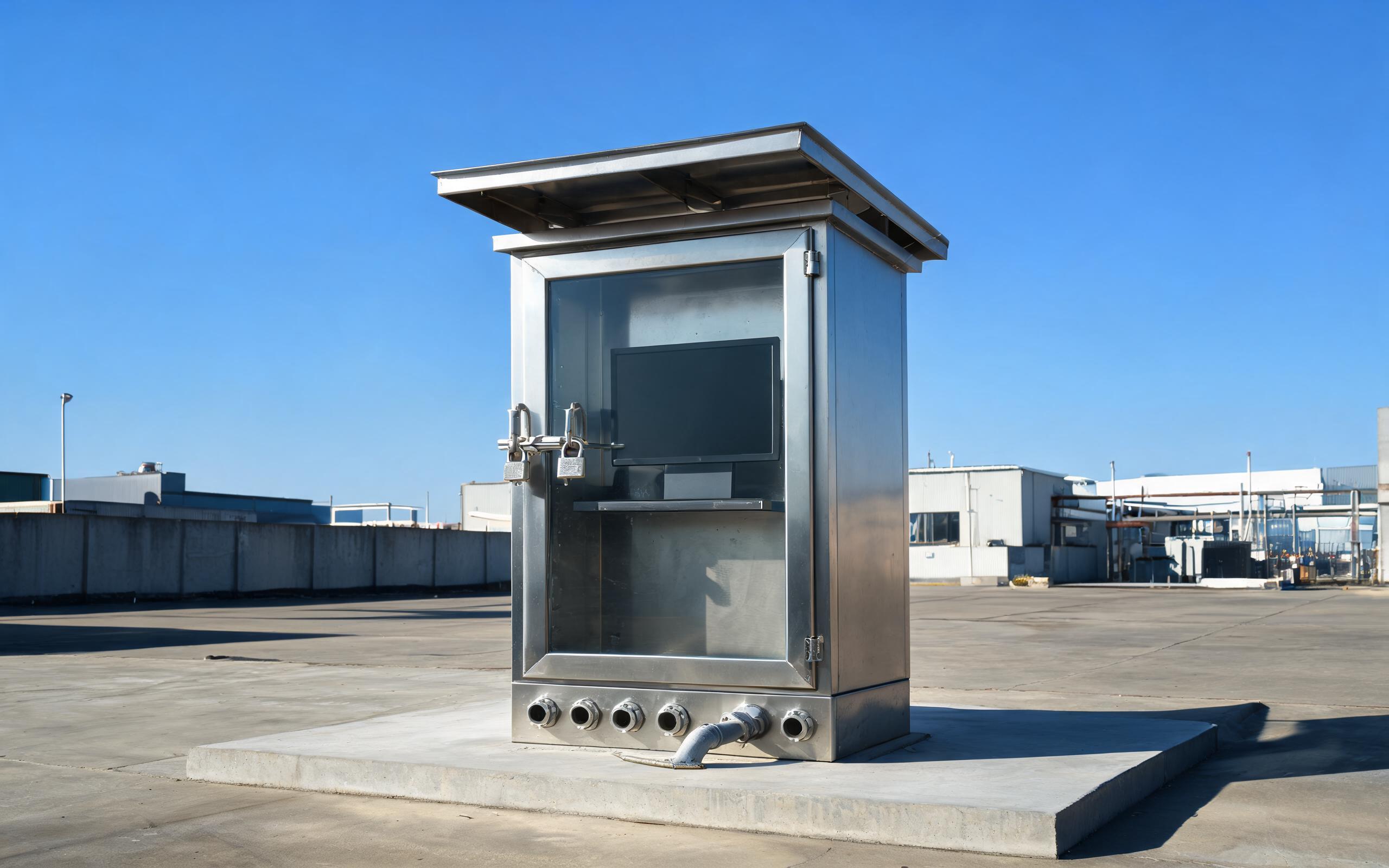
A failure report opened on a Monday morning with two weekend failures at the same plant. The wide temperature panel pc in the outdoor security cabinet stalled in its boot sequence after two nights near minus 15 C, while the unit above the packaging line locked up each afternoon as aisle air passed 42 C. Neither unit was defective. Each met an ambient profile its thermal design had not been sized for. One third-party market study puts the wide-temperature industrial PC segment at 1.25 billion dollars in 2025 and 2.07 billion by 2032, with panel PCs the largest product share. Behind that demand sits a practical split: outdoor cabinets and indoor hot aisles stress the same hardware through different mechanisms.
Two Ambient Profiles, Two Failure Mechanisms
Hardware structures such as the finned aluminum chassis used in the KOXIAN G1 series show where the sites diverge, because passive cooling is sized for a profile rather than one number. The outdoor unit faces cycling: solar gain lifts internal air above the outdoor reading by afternoon, while radiant cooling drops the enclosure below ambient before dawn, and the repeated swing ages solder joints and gasket seals. The hot-aisle unit faces a steady state, with components soaking at a near-constant junction temperature shift after shift. Electrolytic capacitor life follows the familiar ten-degree rule, so sustained heat degrades by accumulated hours while cycling damage concentrates at board-level interfaces. Treating both sites as merely hot or cold misses the mechanism that ends service life.
Heat Loading Around a Wide Temperature Panel PC
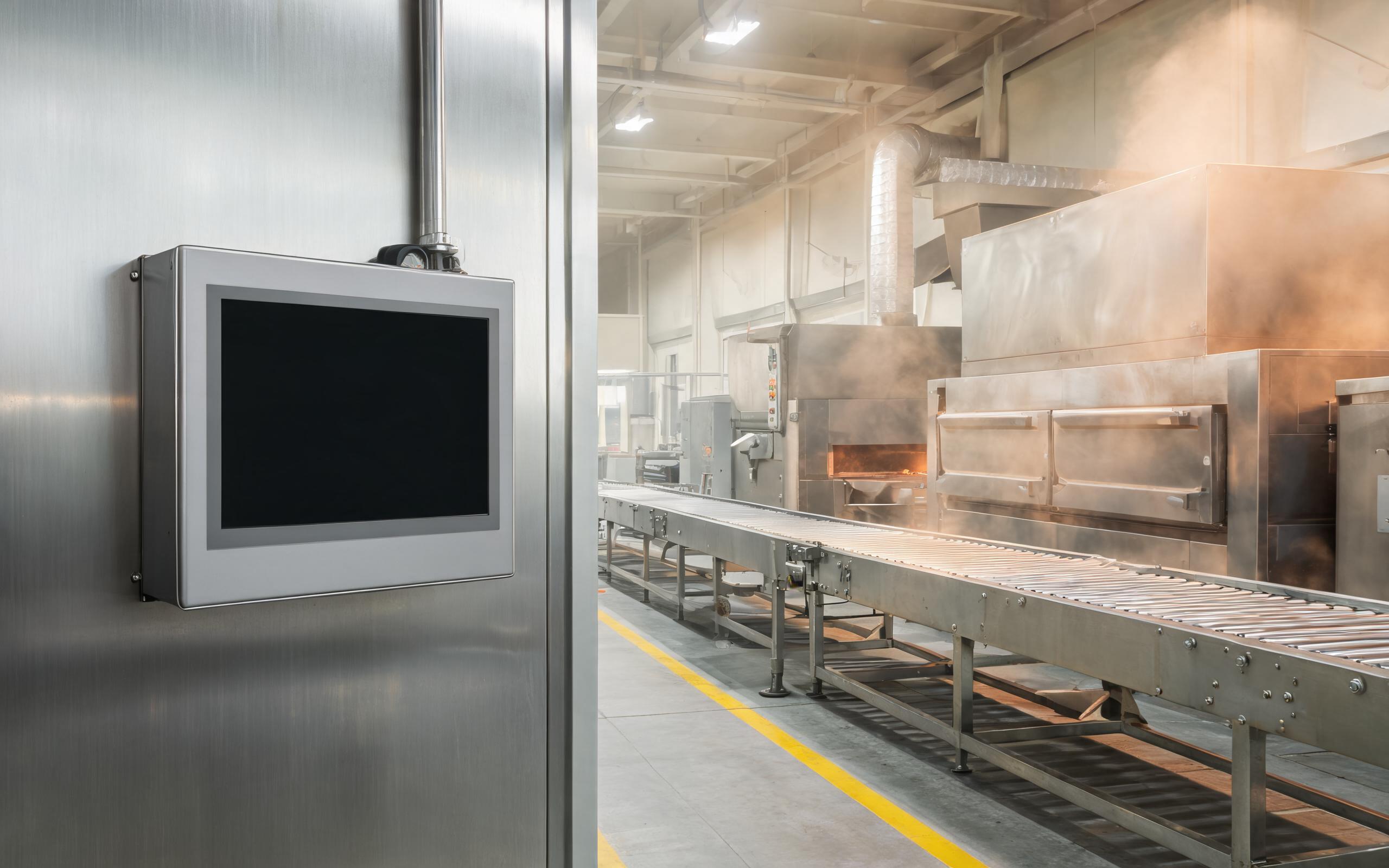
A sealed outdoor cabinet gains heat from radiation as well as ambient air, so a sun-facing enclosure can run 15 to 20 K hotter than the shaded datasheet figure. Cooling-load calculations add internal dissipation, solar flux through the roof, and a margin for fouled filters before a vent, heat exchanger, or cooler is chosen. Manufacturers, including KOXIAN, document derating curves and gasket compression limits against that internal temperature, which is why integrators pair a fanless panel pc with a double-wall sunshield in yard deployments. Engineers sizing a wide temperature panel pc for a sealed box work from an internal-air estimate, not a climate table. The indoor aisle presents the opposite geometry: heat arrives continuously from neighboring ovens and drives, so clearance around chassis fins matters more than added insulation. An embedded panel pc rated to 60 C still needs that breathing gap.
Display and Touch Behavior Under Cold Soak and Heat Soak
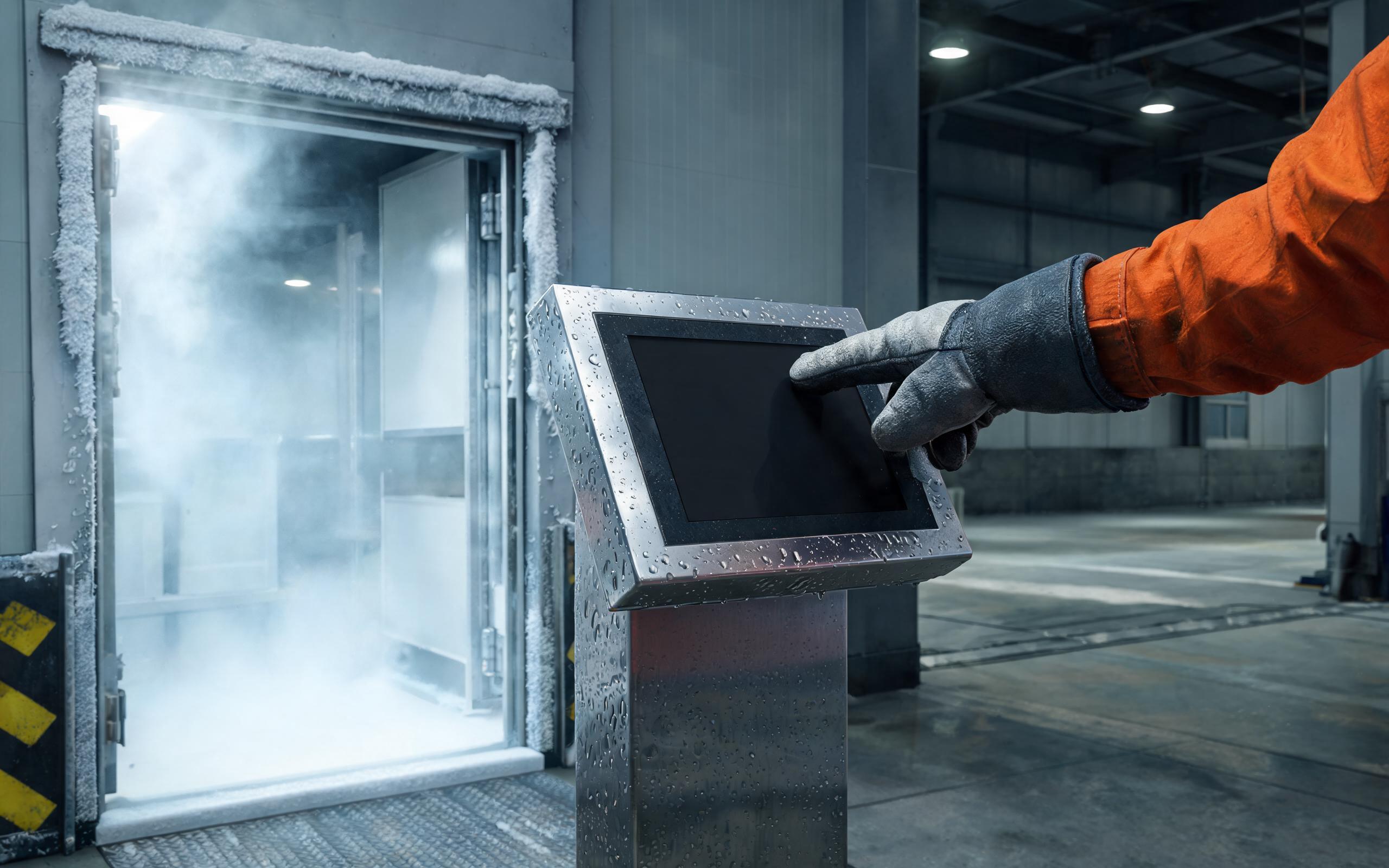
The display is the component that announces temperature trouble most visibly. Liquid crystal response slows as viscosity rises, so a panel meeting specification at zero C can smear during a minus 20 C cold boot, and projected-capacitive controllers report sluggish scans until the cover glass warms. Thin-film ITO heaters bonded to the LCD clear frost and keep the crystal mixture fluid, but they draw startup current and must finish a timed warm-up before backlight and boot begin. High temperature brings reduced backlight life and temporary blackout on panels without high-temperature isotropic fluid. Field observations from cold-chain loading docks show that industrial touch screen configurations using KOXIAN touch panels keep accepting gloved input after overnight soaks near minus 20 C when the heater enable is sequenced correctly.
Startup Sequencing and Temperature Monitoring Practice
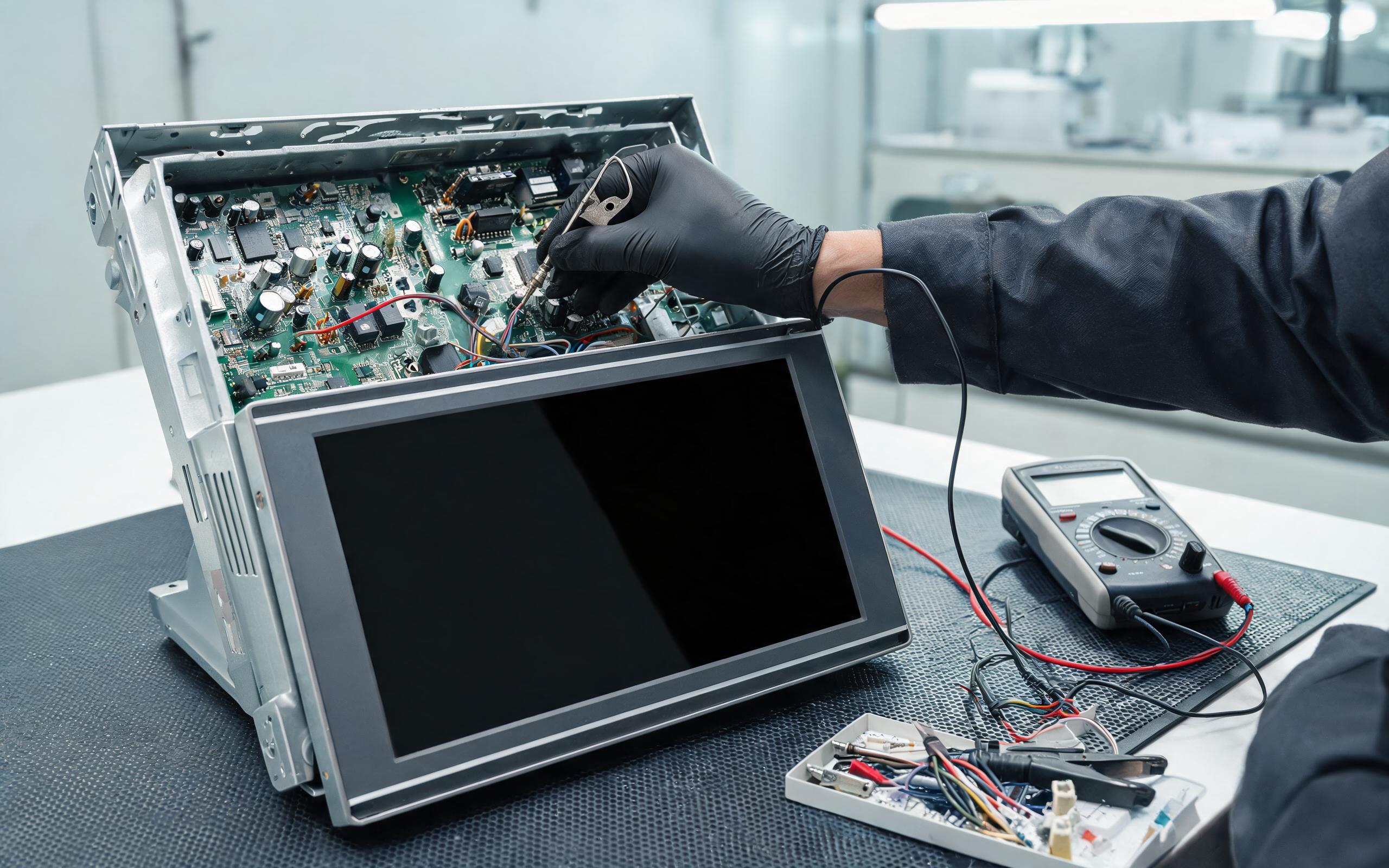
Cold-start failures are more often sequencing problems than rating problems. A controller that enables power only after chamber thermistors cross a programmed threshold avoids booting storage into its out-of-spec band, and the same loop holds the LCD heater through a fixed dwell before enabling the backlight. Flash write behavior degrades at the temperature edges even when the device still reads correctly, so industrial-grade media with a temperature write guard parks writes until the unit warms. Once running, a wide temperature panel pc should log board and enclosure temperatures alongside events, giving maintenance a record that distinguishes a one-time cold soak from a recurring solar-load pattern. Alarm thresholds a few degrees below the derating curve create room for planned action before a lockup.
Outdoor cabinets and hot aisles are not two points on one temperature scale. Cycling, solar loading, and cold display startup govern the yard, while steady soak, capacitor aging, and fin clearance govern the aisle. Sizing from internal enclosure temperatures, sequencing heater and storage startup, and logging thermal events convert the rating on a datasheet into dependable shifts. Engineers who separate the two ambient profiles during layout avoid weekend callouts that no rating label alone would have prevented. Thermal logs also make the next hardware refresh simpler, because replacement units inherit a measured site profile instead of a guess.