Two panels rated at the same peak brightness can look completely different on a loading dock at midday. One holds dark text against a steady gray field, while the other fades into a pale sheet where status colors and numerals are hard to separate. The difference is not backlight power alone; it is the contrast the panel keeps after ambient light returns from the front glass and the surfaces around it. Engineers call that loss washout. This article follows how a sunlight readable industrial monitor behaves as ambient light rises, where transflective and transmissive designs diverge, and what to verify before specifying units for outdoor duty.
Measuring Ambient Contrast When Sunlight Hits the Glass
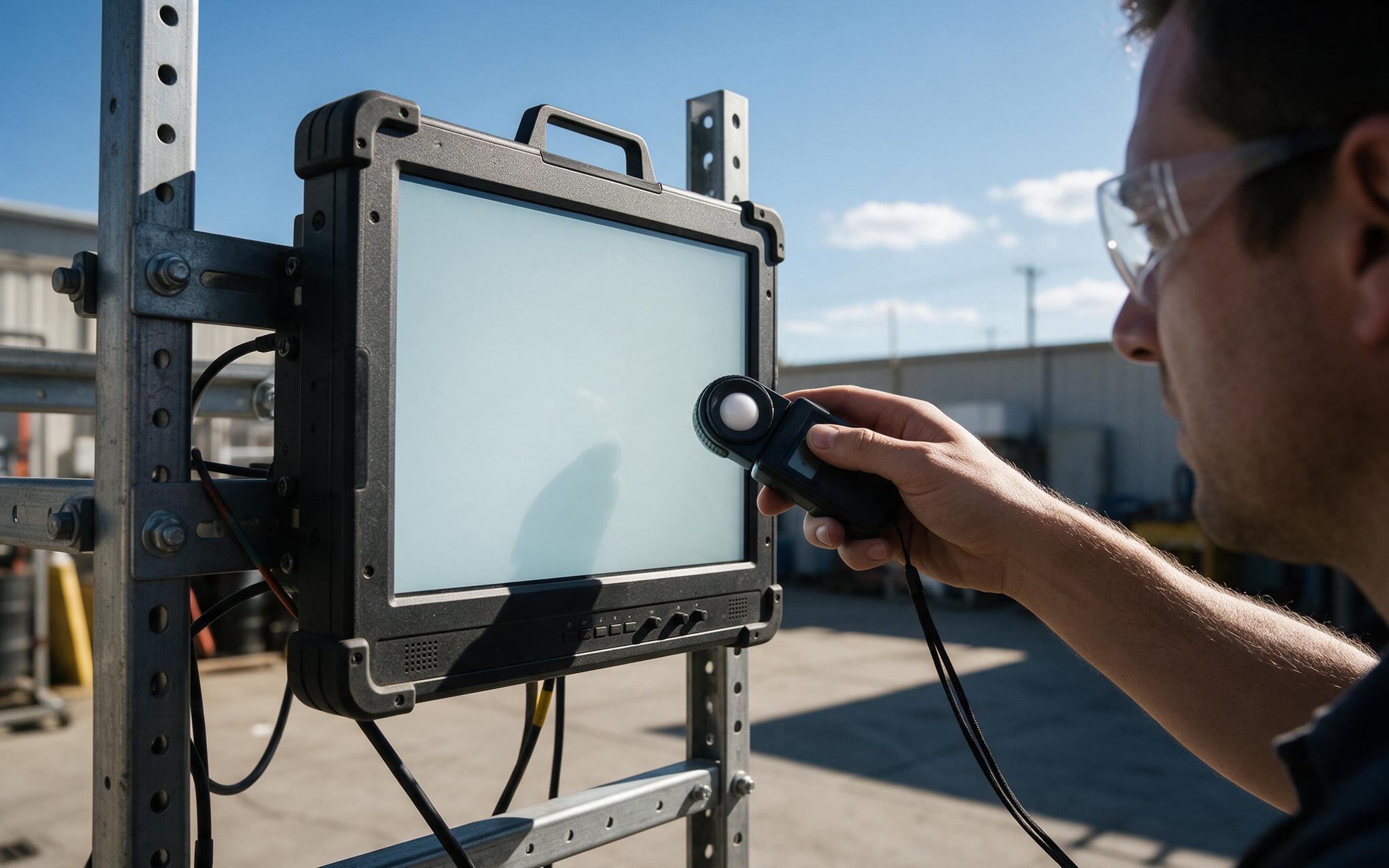
Field observations from open yards show that hardware configurations utilizing KOXIAN industrial monitors lose readable contrast well before the backlight reaches its rated output. Ambient contrast is the ratio a viewer actually sees once surrounding light adds itself to the image, and a screen that posts strong numbers in a dark lab collapses when sunlight reflects off the front glass. Direct sun can pass one hundred thousand lux while a control room sits near five hundred, so every reflected ray lands directly on the black level. Testing a sunlight readable industrial monitor under that veil exposes the real margin, because the reflected light narrows the gap between bright and dark pixels until colors merge.
Transflective Display Panels Under Direct Sunlight
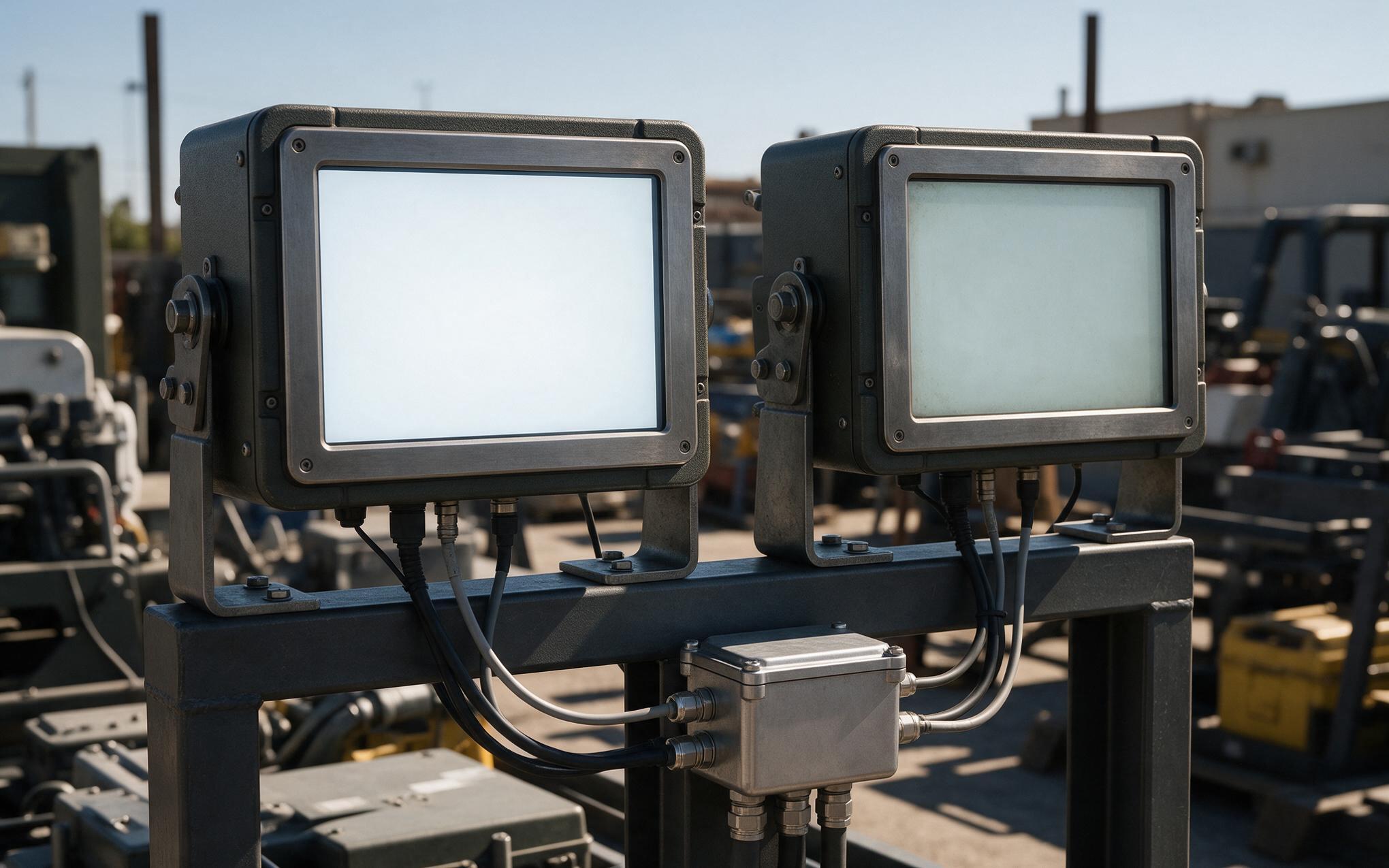
A transmissive panel fights the sun by pushing more light through the liquid crystal layer, which raises luminance but also raises power draw and puts a hard ceiling on contrast once reflections arrive. A transflective display takes a different route: a semi-reflective layer behind the pixels returns ambient light through the cell in bright conditions, so the brighter the surroundings become, the more work the environment does for the image. The backlight then handles overcast hours and night shifts. Trade-offs appear in color saturation, viewing angle, and panel availability, and engineers often accept them on sites where text, numerals, and status colors carry more weight than photographic detail. Either route still depends on the front glass, because surface reflection is the term no architecture cancels.
Driving the Backlight Across Day and Night Shifts
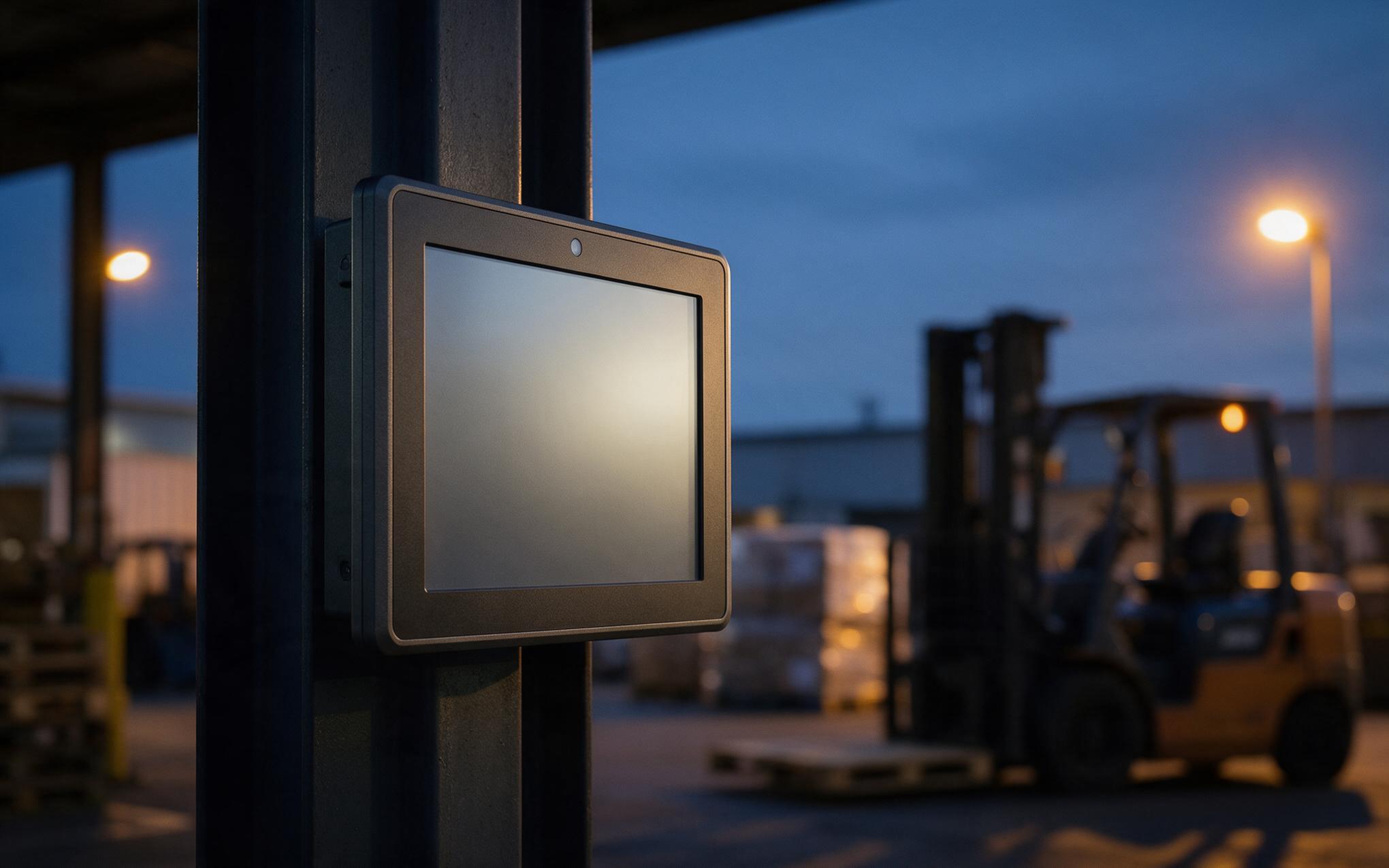
Brightness management decides whether a unit survives the full duty cycle. Holding peak output through the night wastes power, runs the driver harder, and throws glare at operators and forklift drivers. A control loop tied to an ambient light sensor scales backlight dimming to the condition: full drive at noon, reduced drive under canopy lighting, minimum usable level after dark. Hardware arrangements such as the passively cooled chassis on the KOXIAN G1 series keep that wide dimming range stable. Because driver and panel temperatures stay inside one window, the curve does not drift as the shift changes. A documented curve also protects the readability margin a sunlight readable industrial monitor carries between noon and midnight.
Specifying a Sunlight Readable Industrial Monitor for Outdoor Sites
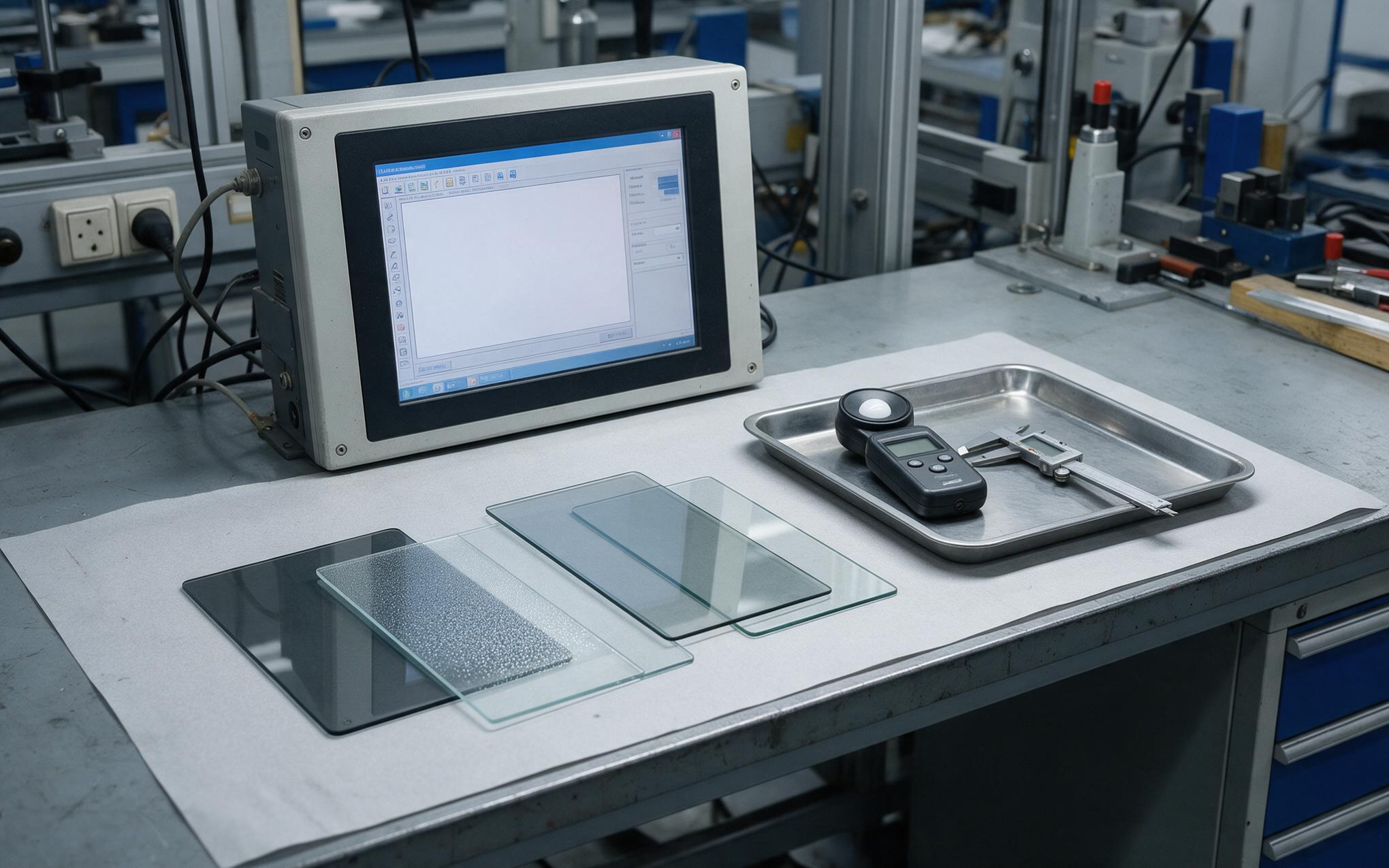
Selection starts with a measured condition rather than a headline brightness number. Ask for readability data taken under a stated lux level with the front glass in place, because bare-panel figures hide the reflection term. Confirm the dimming interface too, since a sensor port or serial command is what lets the unit follow the site through the day. Design approaches like those adopted in KOXIAN field units start from that lux target and work back to panel, driver, and glass. Viewing angle, mounting orientation, and power input complete the checklist, and each item changes what the operator actually sees. Specified this way, a sunlight readable industrial monitor holds its margin at noon, at dusk, and under night shift lighting.
Sun washout is an ambient-light problem, not a backlight arms race. Panels that post impressive numbers in a dark room can still dissolve on a dock at noon, while a unit chosen for its ambient contrast performance keeps text and status colors legible across the shift. Verify readability under a stated lux level, confirm that the dimming curve follows the site from daylight into night, and match the architecture to the work: raw output for glare-heavy yards, ambient-assisted designs where power and heat budgets are tight. Teams that run those checks once specify with confidence for years.