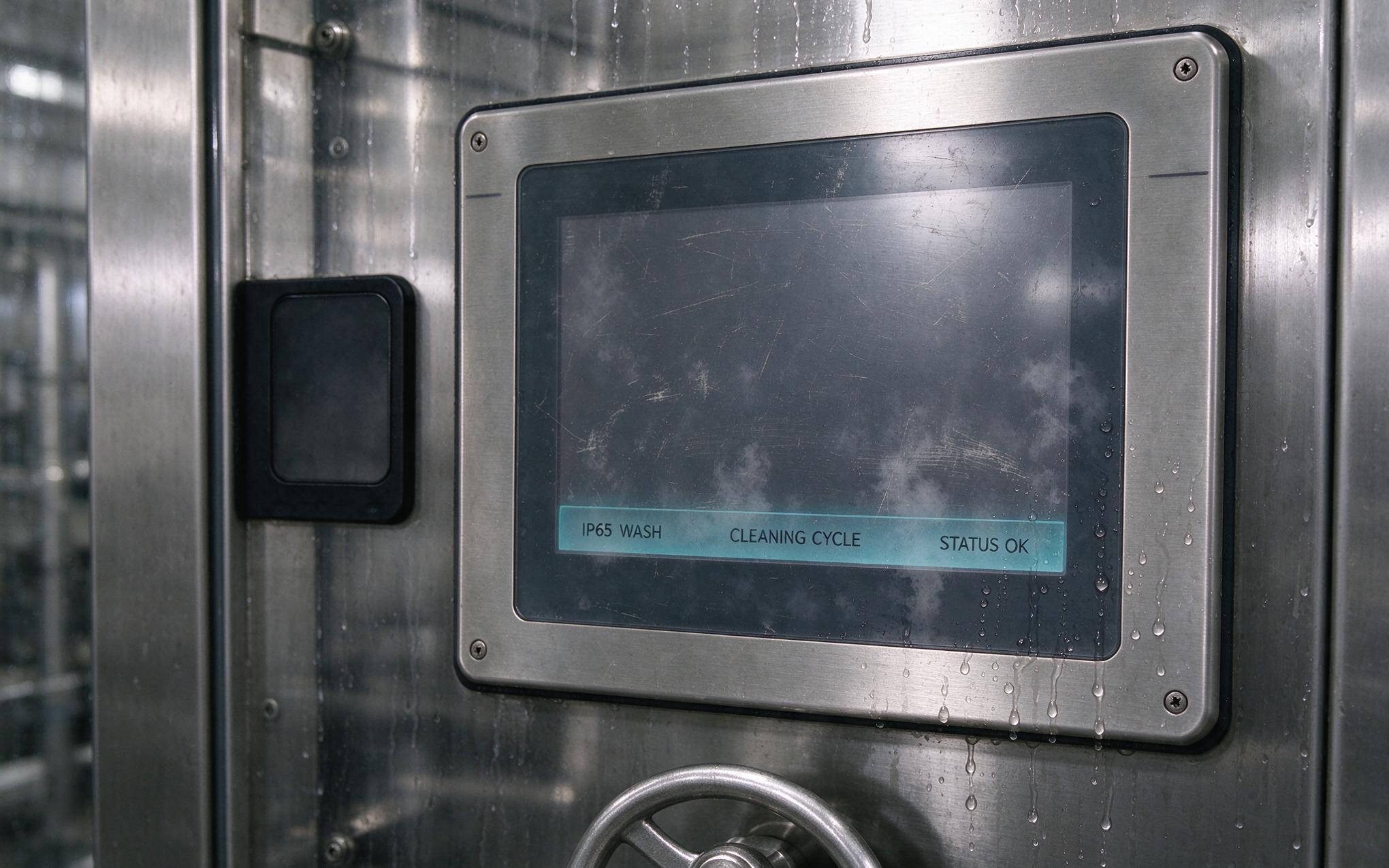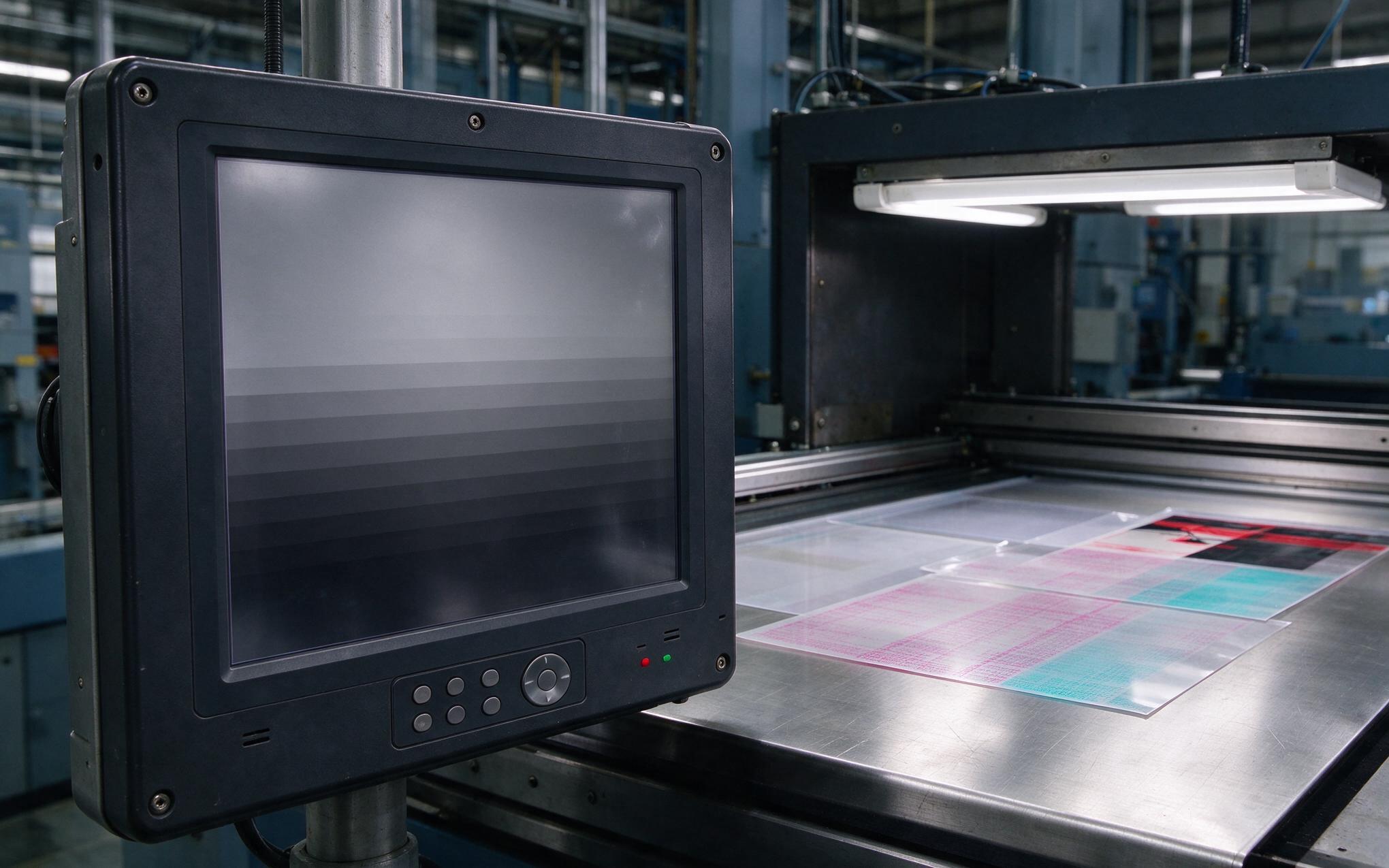
A maintenance technician on a pharmaceutical packaging line notices faint scratches accumulating across the glass surface of an industrial touchscreen monitor after six months of continuous operation. What initially appeared as minor cosmetic wear gradually reduces touch accuracy and degrades display clarity, eventually causing rejected touch inputs and operator frustration. This progressive surface degradation is one of the most underestimated failure modes in factory automation environments, and it demands deliberate engineering choices during the selection phase.

Glass Cover Stackup Design and Hardness Grades
The front cover glass of an industrial touchscreen monitor serves as the primary barrier between abrasive factory contaminants and the underlying touch sensor layer. Cover glass hardness is typically rated on the Mohs scale, with soda-lime glass sitting around 6, chemically strengthened aluminosilicate reaching 7, and sapphire-based or ceramic-coated surfaces exceeding 9. The choice of hardness grade directly determines how long the touch surface maintains optical clarity under repeated contact with metal particles, silica dust, and tool edges. Manufacturers like KOXIAN employ chemically strengthened aluminosilicate glass as a standard option, balancing scratch resistance with cost-effectiveness for most factory automation deployments. When evaluating cover glass specifications, engineers should confirm that the hardness rating applies to the actual installed surface, since the cover glass may be laminated with additional coatings that alter the effective scratch threshold.

Surface Coating Approaches for Scratch Resistance
Beyond raw glass hardness, surface coatings provide an additional defense layer against micro-scratch formation. Diamond-like carbon (DLC) coatings, applied through physical vapor deposition, create a thin but extremely hard surface film that dramatically reduces scratch propagation in high-abrasion environments. Anti-scratch hardcoat treatments, typically acrylic or siloxane-based polymer layers, offer a more economical approach for industrial touchscreen monitor applications where contact pressure remains moderate. DLC coatings are available as a factory option on select KOXIAN models, enabling procurement teams to match coating technology to the specific abrasion profile of each deployment site. Some manufacturers also integrate anti-fingerprint (AF) oleophobic coatings that reduce surface friction, indirectly lowering the shear force applied during repeated touch gestures. When selecting between coating technologies, field engineers should evaluate the coating’s pencil hardness rating, its adhesion resistance to tape peel testing, and its long-term stability under UV exposure and chemical cleaning protocols common in food processing or pharmaceutical facilities.

Field Validation Methods for Touch Surface Durability
Laboratory hardness ratings do not always predict real-world performance, which is why field validation through standardized testing is essential for any industrial touchscreen monitor deployment. The ASTM D3363 pencil hardness test provides a quick, repeatable method for assessing surface scratch resistance, while the Taber abrasion test measures cumulative wear over thousands of cycles. For applications involving repeated contact with metal tools or abrasive cleaning agents, the steel wool abrasion test simulates accelerated surface degradation over a projected five-year service life. Industrial touchscreen monitor buyers should request test reports from their suppliers and cross-reference the test conditions with their actual operating environment. Standardized abrasion test data from manufacturers like KOXIAN alongside product specifications enables procurement teams to make evidence-based decisions rather than relying on generic hardness claims alone.

Touch Accuracy and Parallax Shift from Surface Wear
Surface degradation does not only affect aesthetics. As micro-scratches accumulate on the cover glass of an industrial touchscreen monitor, they scatter incoming light and reduce the contrast between the display and ambient reflections. This optical degradation forces operators to press harder to register touch inputs, accelerating further wear in a feedback loop that shortens the functional life of the entire unit. In extreme cases, deep scratches create localized parallax errors where the touch controller registers input at a position offset from the intended contact point, resulting in misoperation on precision control interfaces. Selecting a touchscreen with appropriate hardness grades, verified through standardized testing, and pairing it with a disciplined cleaning protocol using non-abrasive solutions, extends field reliability and reduces unplanned downtime across factory automation environments.