
Four separate discharge paths can carry a single static event from an operator’s fingertip into the heart of an industrial touch pc during a dry winter shift. Once indoor relative humidity drops below 30 percent, synthetic workwear, vinyl gloves, and moving conveyor belts become charge generators, and a routine screen tap can release a pulse of several kilovolts. The visible glass rarely suffers, but the touch controller, sensor traces, and power rails behind it absorb the energy. The result is familiar to line supervisors: ghost coordinates, frozen touch response, unexplained resets, and modules that fail weeks after the original zap. Understanding how that energy travels, and how hardened designs divert it, decides whether a terminal survives January.

Winter Static Buildup on the Factory Floor
Charge accumulation is a materials problem before it becomes an electronics problem. When heating systems drive indoor humidity toward 20 percent, insulating surfaces stop leaking charge to the air and start storing it. Industrial hardware manufacturers, including KOXIAN, account for this seasonal shift by treating the front bezel, mounting studs, and door gasket as one continuous discharge surface rather than isolated parts. A forklift driver in a fleece jacket can carry 8 to 12 kilovolts after walking across untreated flooring, and that charge waits for the nearest grounded object. On most lines the nearest grounded object is the industrial touch pc at the workstation, which is why winter static control starts with floor resistance, wrist straps, and cabinet bonding long before anyone debates controller firmware.
How Does ESD Reach the Touch Controller?
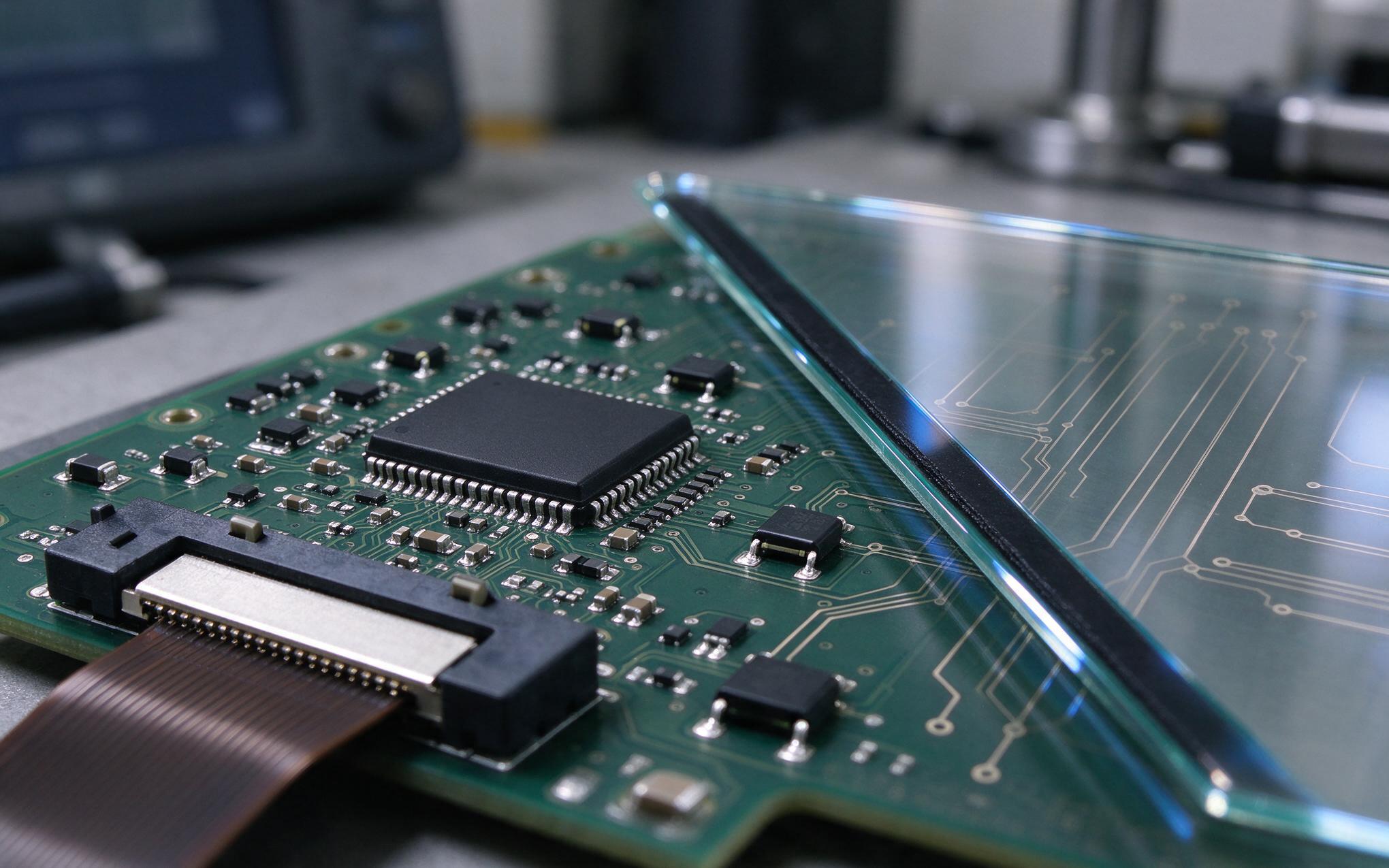
Field observations from packaging halls show that configurations using KOXIAN industrial panel displays keep responding after repeated 8-kilovolt contact discharges, because the energy is routed away from the sensing layer. The discharge itself enters through the most convenient seam of an industrial touch screen: the bezel edge, a mounting gap, a connector shell, or the cover glass itself. From there it looks for the lowest-impedance path, and an unprotected design offers the FPC tail, the sensor’s perimeter silver traces, and the controller’s analog front end. The pulse lasts nanoseconds, yet it can fuse ITO traces narrower than a human hair, latch up the controller, or corrupt the power rail enough to force a processor reset. Latent damage is worse: the industrial touch pc passes its post-incident self-test, then fails quietly three weeks later.
Ground Return Paths Under IEC 61000-4-2
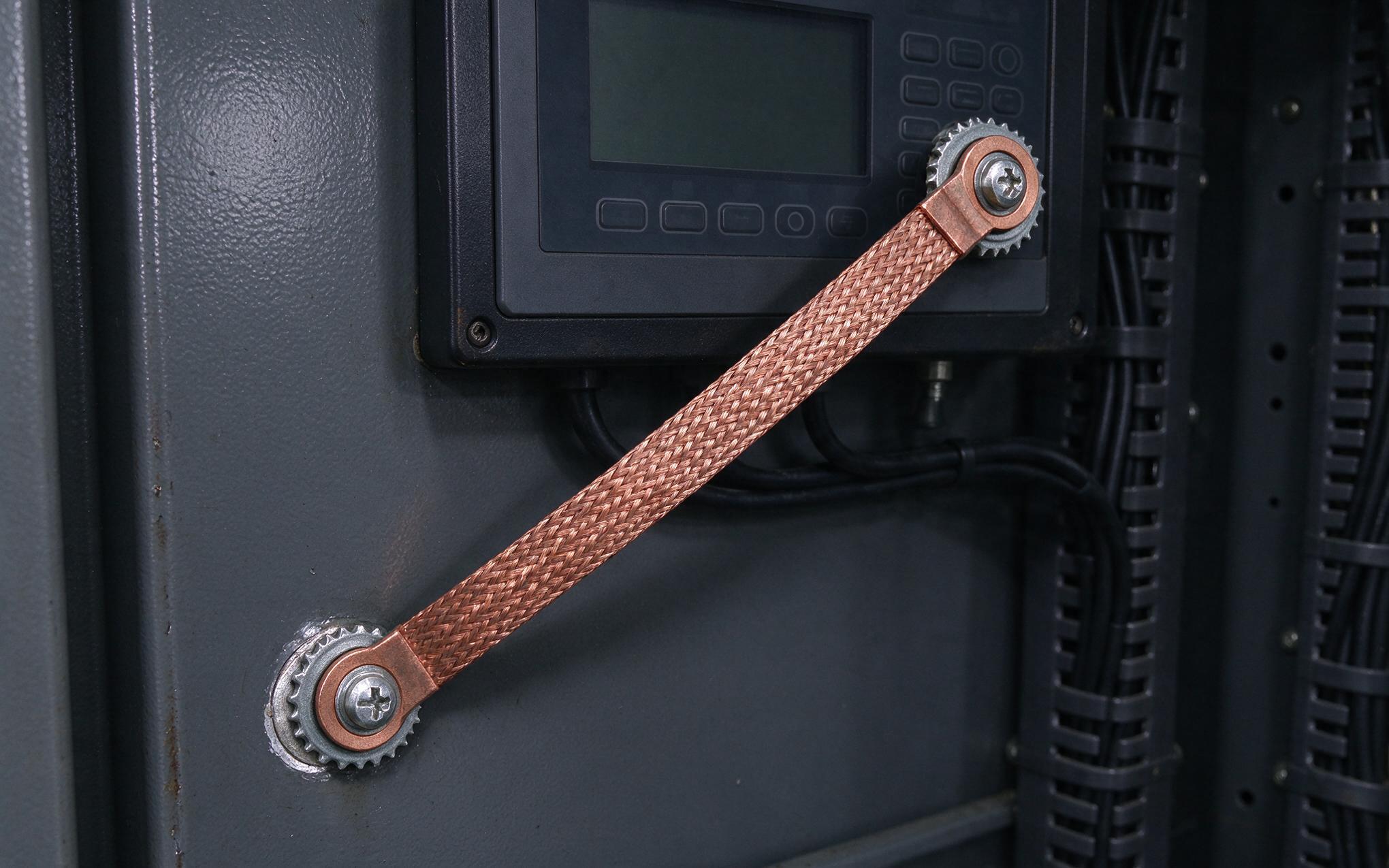
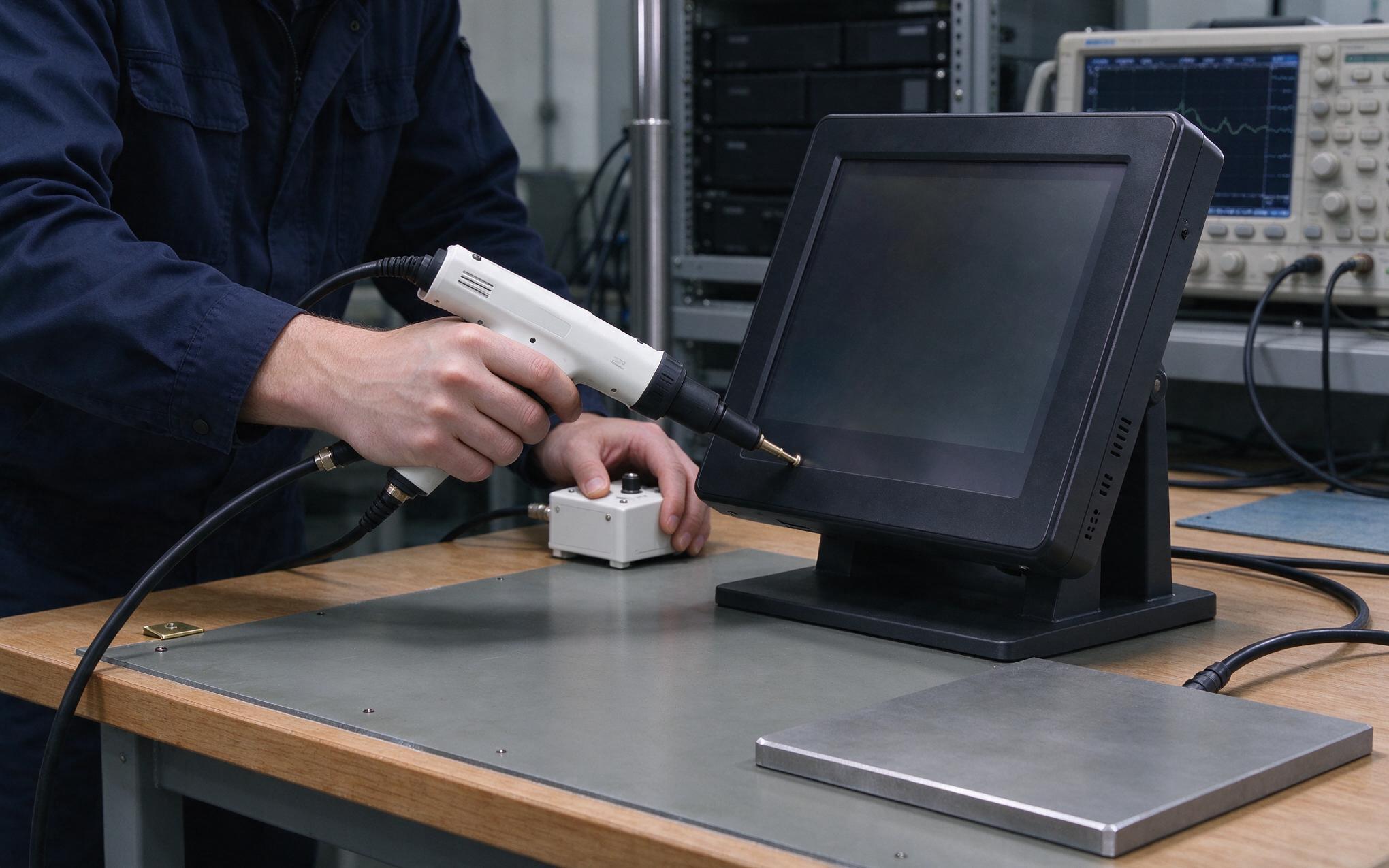
The immunity standard behind most datasheets, IEC 61000-4-2, defines Level 4 testing at 8 kilovolts contact and 15 kilovolts air discharge. Engineers often evaluate that resilience through production hardware such as the KOXIAN G1 series, whose bezel bonds to a painted-steel cabinet door with serrated washers and a short braided strap. The physics are simple: give the pulse a lower-impedance route than the touch FPC. Star grounding, a chassis-bonded shield layer under the sensor, and TVS arrays placed at the connector entry all serve that goal. Cable routing matters too, because sensor lines crossing a backlight boost converter pick up noise regardless of enclosure bonding. A well-grounded industrial touch pc also defines its pass criterion before testing, because uninterrupted operation, self-recovery, and a permitted reset are not interchangeable outcomes.
Selection Criteria for an ESD-Hardened Industrial Touch PC
Procurement teams should treat winter ESD as a specification exercise rather than a warranty hope. Ask for the IEC 61000-4-2 test level, the performance criterion observed during discharge, and whether testing covered the front surface, the seams, and the connector shells. A sealed ip65 touch screen bezel keeps washdown fluid out, yet the outer glass still conducts operator charge into the stack, so sealing never substitutes for a discharge path. Enclosure style matters as well: a fanless panel pc removes one air path for charge and dust, but its metal body must still bond to the cabinet with verified low resistance. Controllers with high-voltage transmit driving, active shield layers, and frequency hopping preserve signal margin in electrically loud cabinets, while re-baselining firmware shortens recovery after a disturbance.
Winter ESD is not an exotic threat, and it does not demand exotic countermeasures. It is a predictable seasonal stress with a known waveform, a known test standard, and known mitigation techniques. Sites that control humidity and flooring, bond enclosures into a deliberate ground path, and specify tested immunity levels turn January static from a failure mode into a non-event. A properly hardened industrial touch pc treats every operator tap as an electrical event to be managed, and winter simply raises the stakes.









