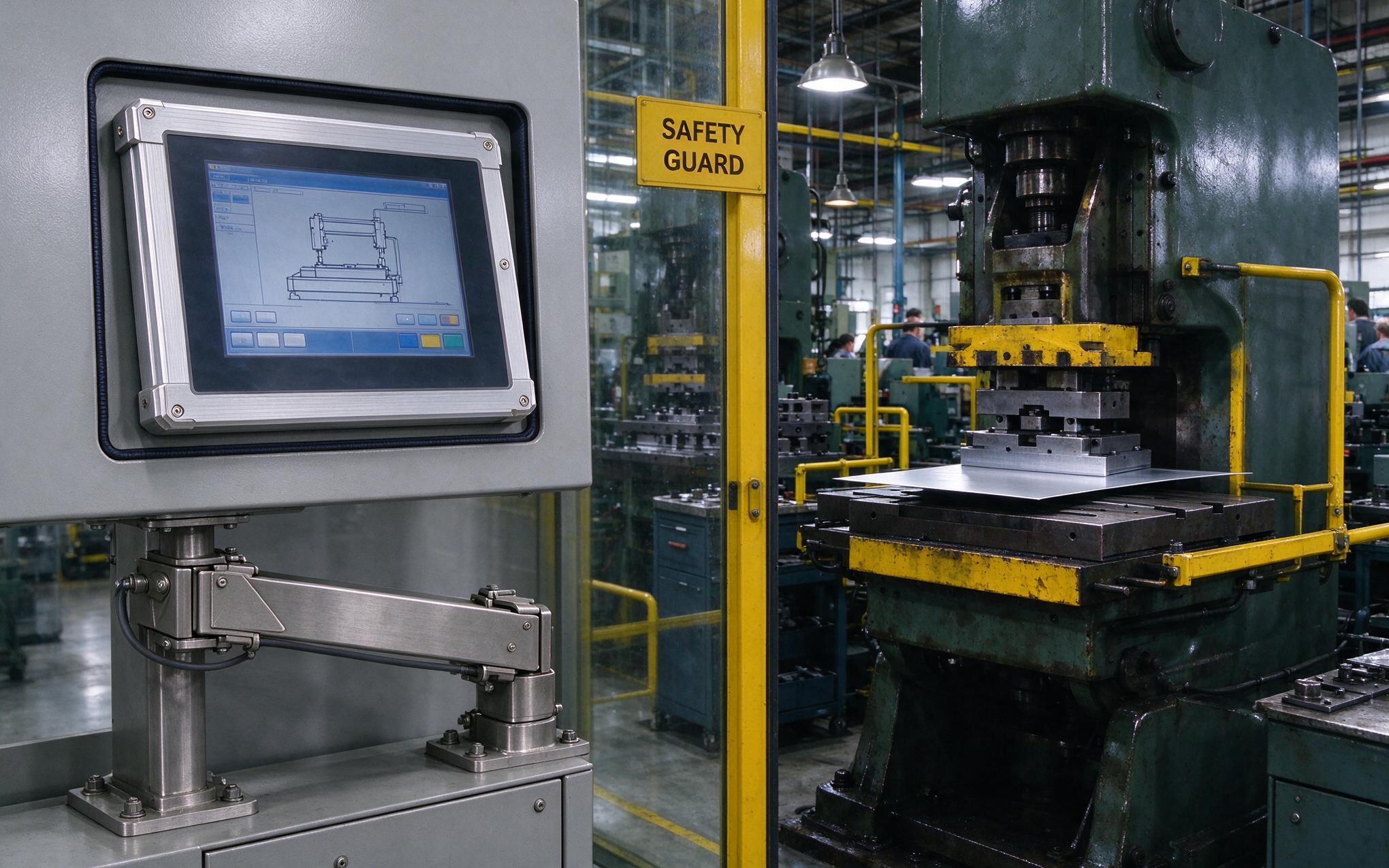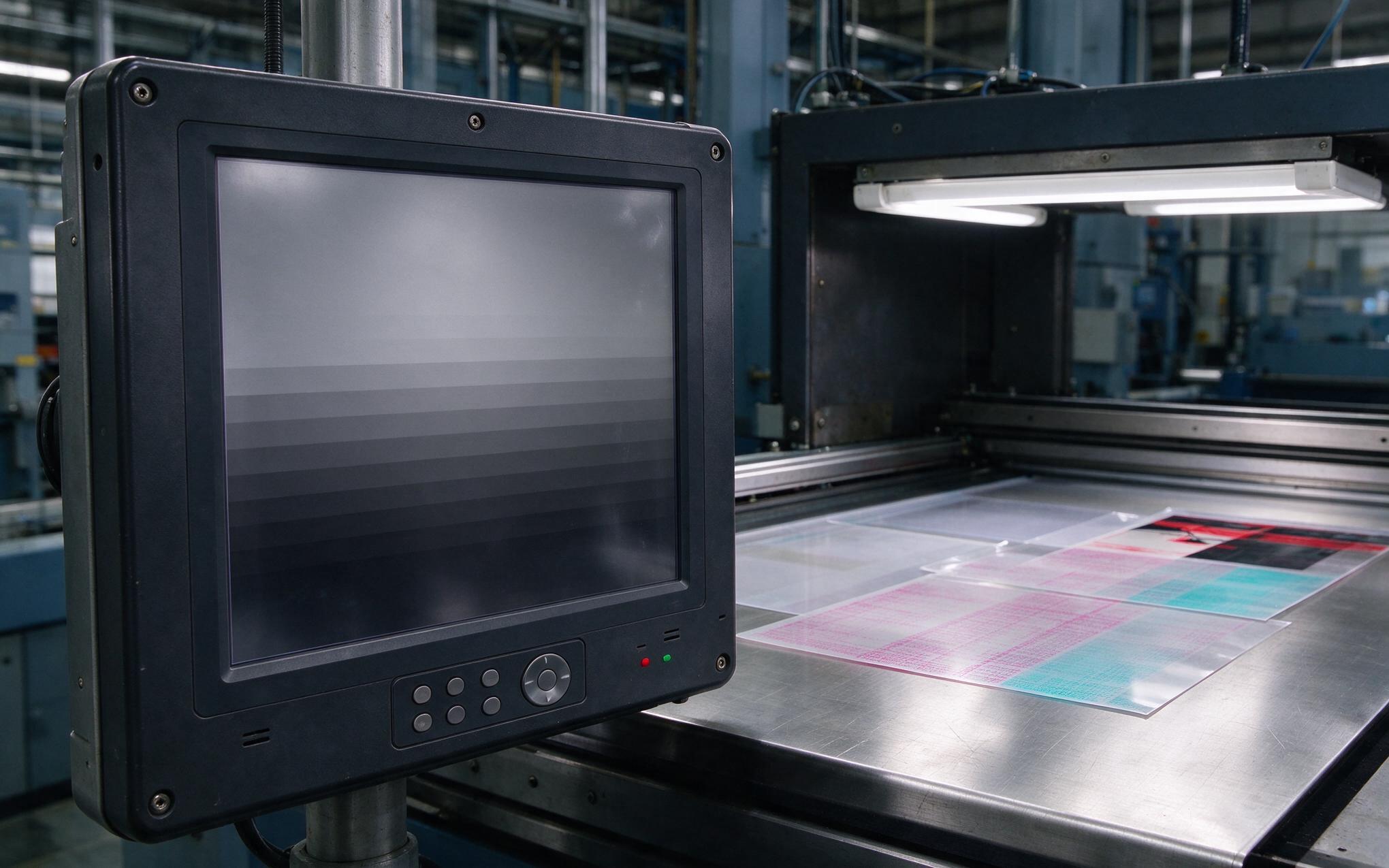
An operator in an automotive paint shop reaches for a rugged touch screen PC while wearing thick nitrile gloves. The screen does not respond. Removing the gloves exposes skin to isocyanate overspray and violates plant safety protocols. This scenario plays out across chemical plants, food processing lines, and metal finishing shops where protective gloves are mandatory. The root cause lies in how projected capacitive (PCAP) touch sensors detect contact. A bare finger provides a direct conductive path, but most glove materials act as dielectric barriers that attenuate the signal. Solving this requires coordinated engineering across the sensor grid, the controller firmware, and the enclosure design.

Projected Capacitive Sensing Through Protective Gloves
The foundational challenge for any rugged touch screen PC operating in gloved environments is the physics of capacitive coupling. PCAP sensors generate an electrostatic field across a grid of transparent electrodes deposited on or beneath the cover glass. When a conductive object enters this field, it disrupts coupling between adjacent electrodes, and the controller registers the location. Glove materials, including nitrile, latex, leather, and rubber, have dielectric constants ranging from 2 to 8, reducing effective coupling strength by 40 to 70 percent compared to bare skin. Industrial PCAP panels address this through increased electrode density, typically raising the node count from 20 to 40 per axis. In designs from manufacturers like KOXIAN, electrode spacing and signal thresholds are calibrated at the factory level to match the glove types most common in each industrial segment. Multi-frequency scanning sweeps the sensor across a range of frequencies, improving signal penetration through materials up to 0.5 millimeters thick.

Controller Firmware Adaptation and Glove Mode Activation
The touch controller firmware in a rugged touch screen PC plays a decisive role in glove operability. When an operator contacts the screen with a gloved finger, the capacitive signal is weaker and more variable than bare-skin contact. Without firmware adaptation, the controller either ignores the input or registers phantom touches caused by electromagnetic interference from nearby machinery. Modern industrial touch controllers use a dynamic detection algorithm. When the system detects three or more consecutive contacts with impedance above 120 kilohms, it automatically activates glove mode. This mode increases the signal sampling window from 8 milliseconds to 15 milliseconds, amplifies gain by a factor of 2 to 4, and adjusts the debounce filter to suppress noise from electrical equipment. Some controllers also implement pressure-assisted detection, where a touch is validated only if sustained for more than 80 milliseconds within a pressure range of 0.3 to 1.2 newtons. This dual validation reduces false-positive rates to below 1 percent in field tests.

IP65 Sealing Standards and Their Impact on Touch Sensitivity
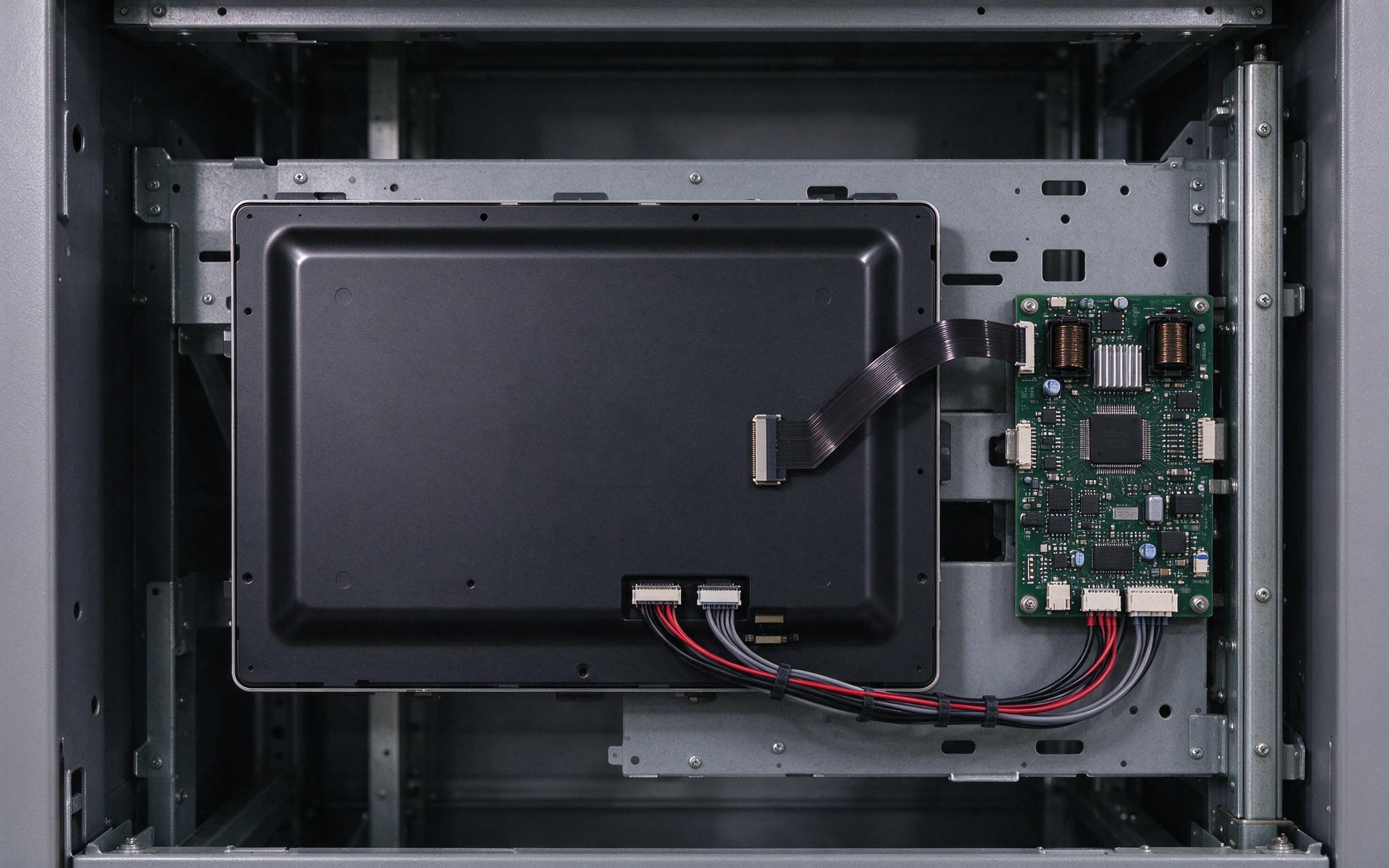
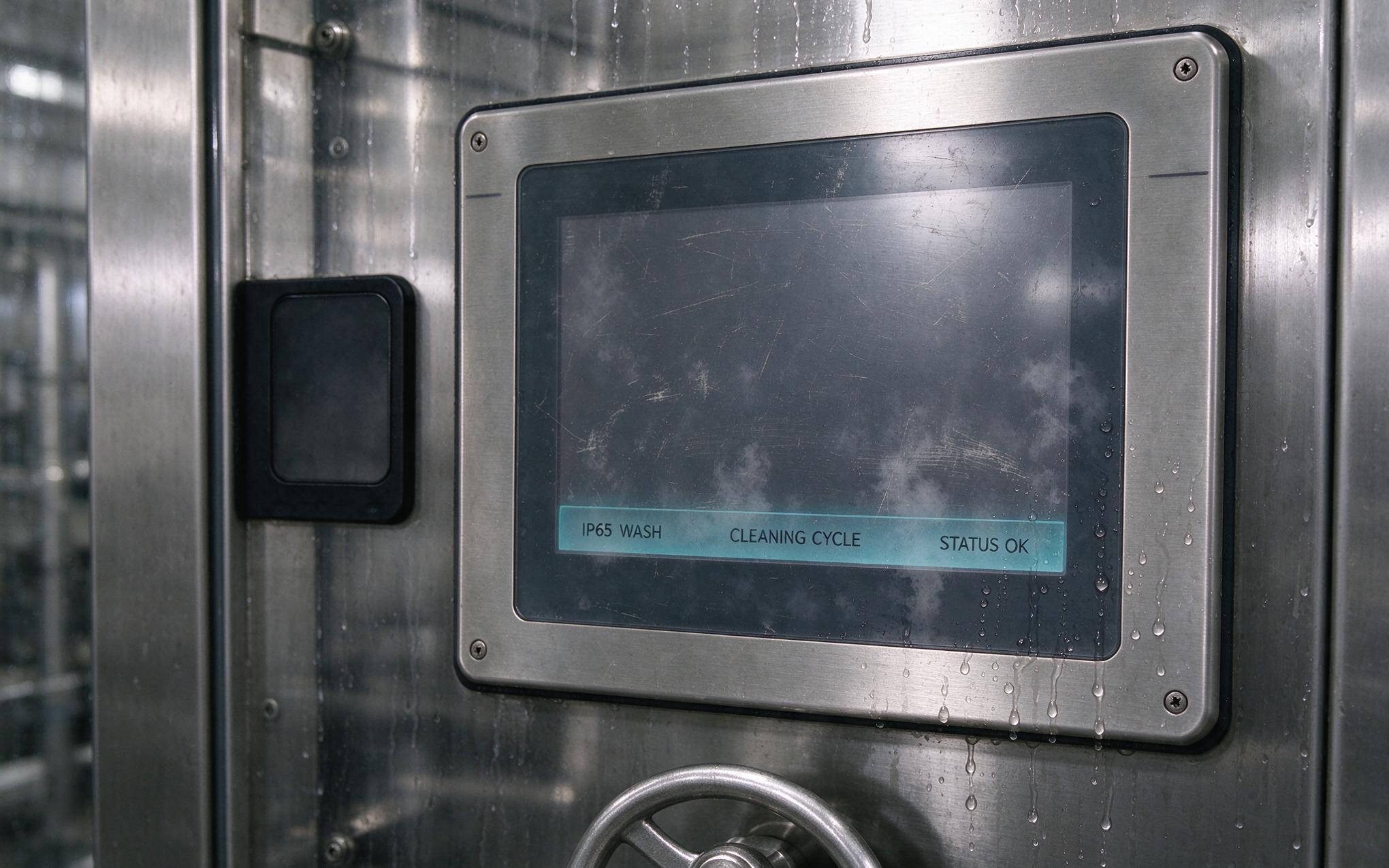
IP65 rated enclosures protect rugged touch screen PC systems from dust ingress and low-pressure water jets, but the sealing hardware introduces additional layers between the operator and the touch sensor. KOXIAN, for instance, engineers the PCAP electrode grid to compensate for the additional dielectric load of the sealed overlay. A typical IP65 front panel assembly includes a tempered glass overlay, a perimeter gasket, and a sealed bezel frame. The IEC 60529 standard defines the testing protocol: dust chambers for the 6 rating and water jet nozzles for the 5 rating, with both applied while the device operates. For touch sensitivity, the critical parameter is the dielectric constant of the overlay stack. Bonding the glass directly to the sensor eliminates the air gap and reduces overlay thickness from 3 to 4 millimeters down to 1 to 1.5 millimeters, directly improving the signal-to-noise ratio for gloved inputs.

Field Calibration Protocols for Multi-Glove Workflows
A rugged touch screen PC deployed on a production line may need to accommodate multiple glove types within a single shift. Morning operations might use thin latex gloves for precision tasks, while afternoon operations switch to thick rubber gloves for chemical handling. Each material has a different dielectric constant, requiring different sensitivity settings. Field calibration protocols address this by allowing operators to save multiple calibration profiles. During initial deployment, a technician runs a calibration sequence with each glove type, recording the optimal sensitivity, gain, and sampling parameters. These profiles are stored in the touch controller memory and can be recalled manually or triggered automatically when the system detects a change in contact impedance. Periodic recalibration is essential because glove materials degrade over time. Industry practice recommends recalibration every 30 to 60 days, or whenever glove suppliers change formulations.
Glove operability in industrial touch systems is not a firmware toggle. It requires coordinated engineering across the PCAP sensor grid, the controller firmware, the IP65 sealing stack, and the calibration workflow. Facilities that address all four layers reduce glove-related input failures and maintain the safety protocols that protective equipment is designed to enforce.