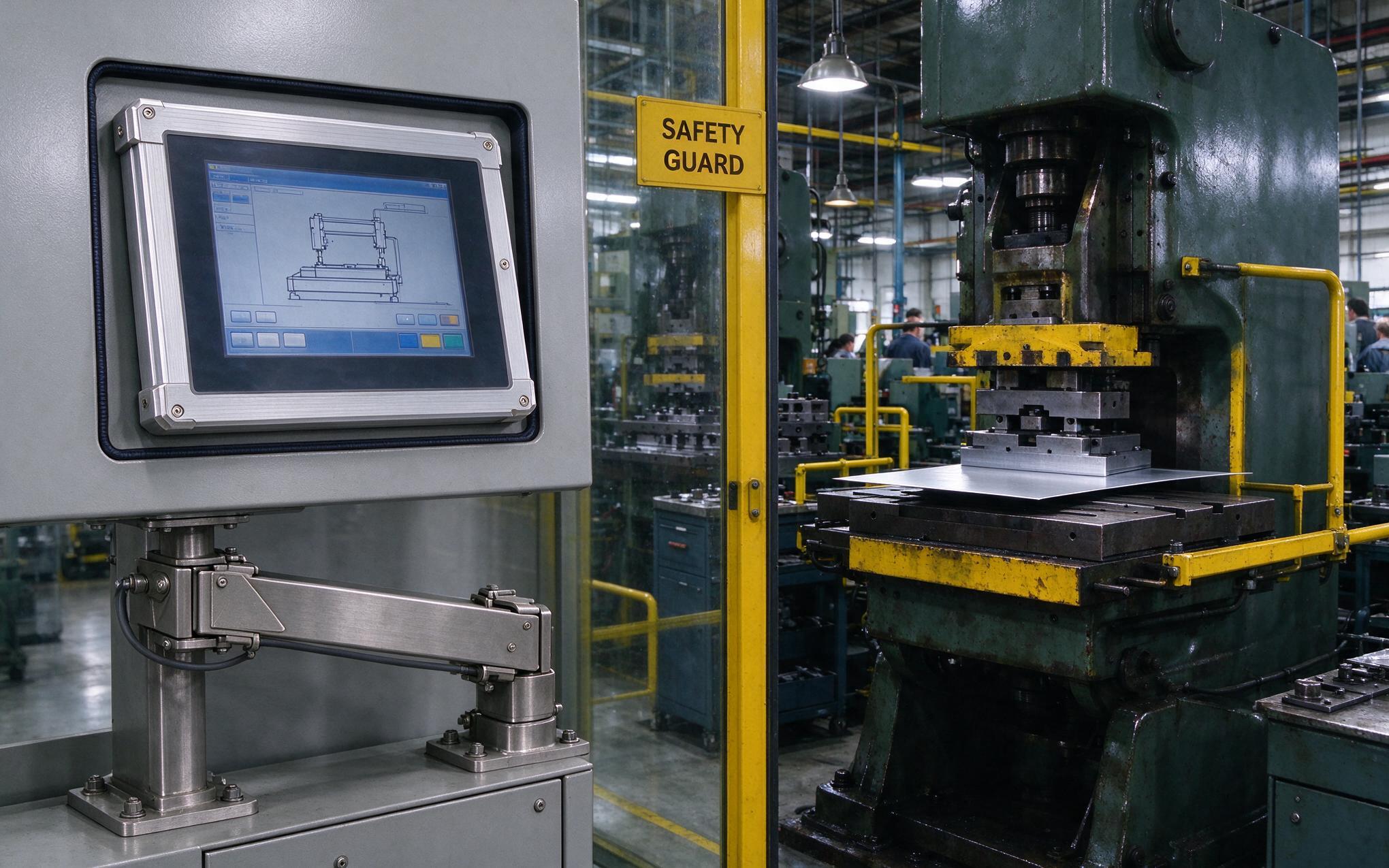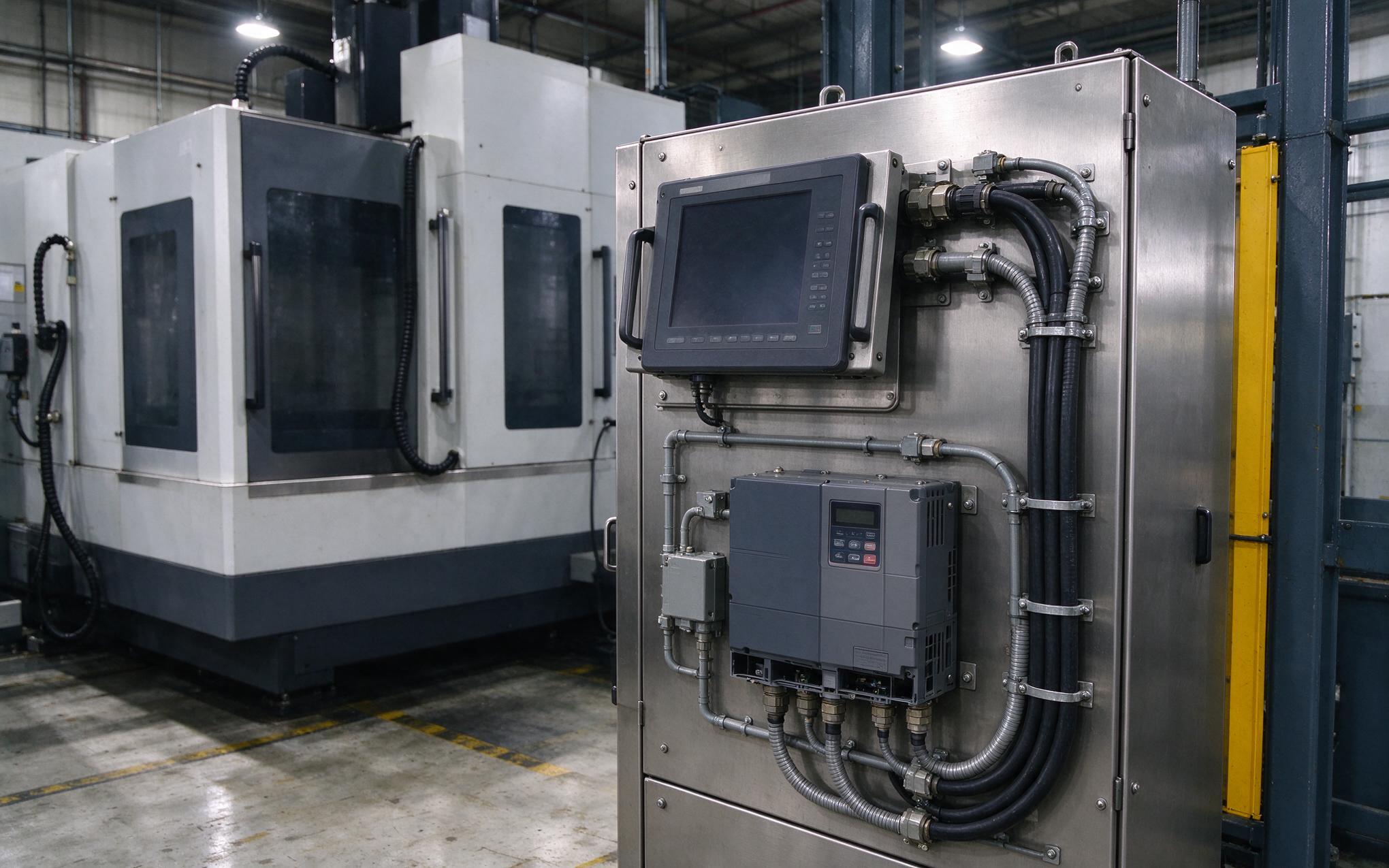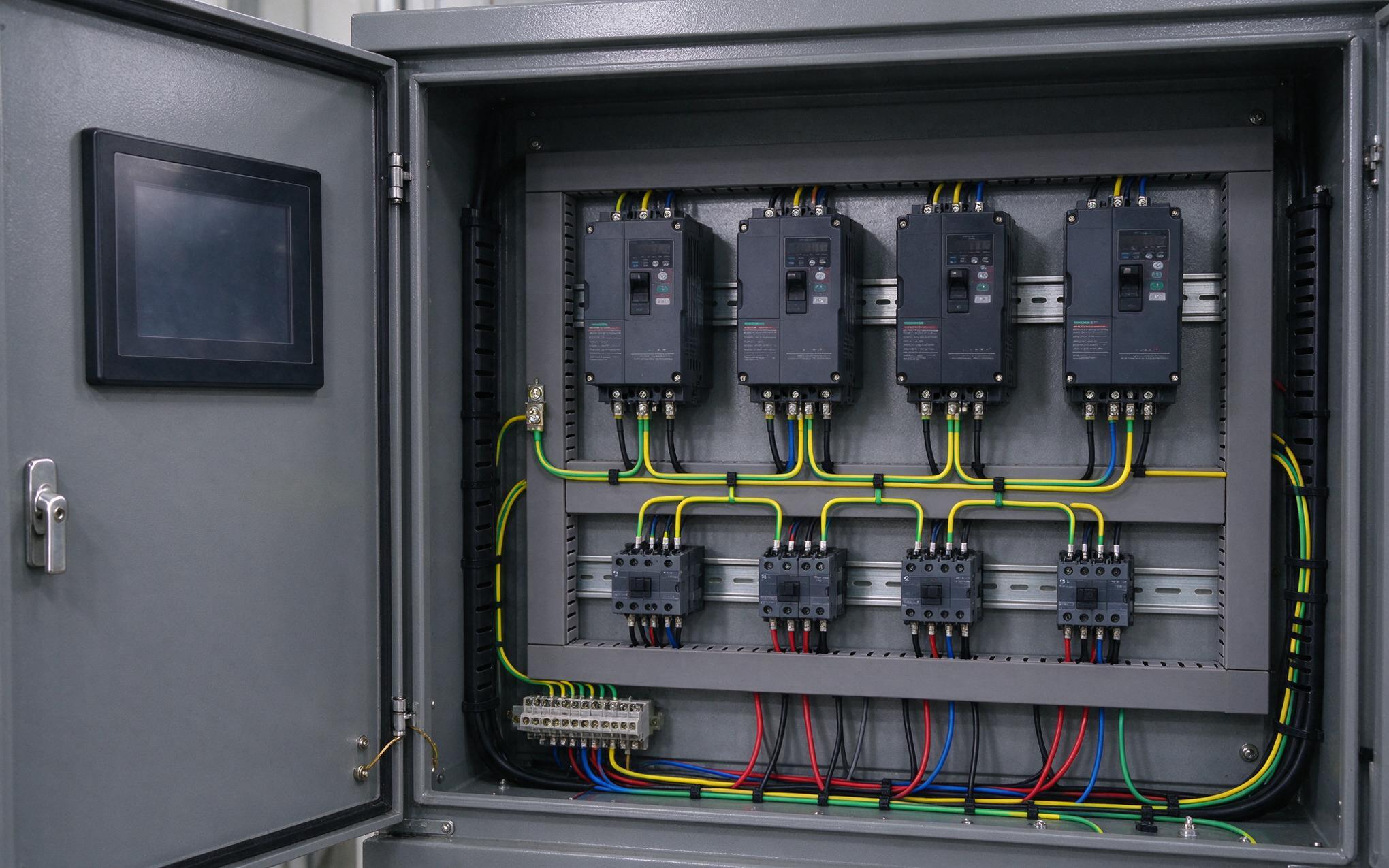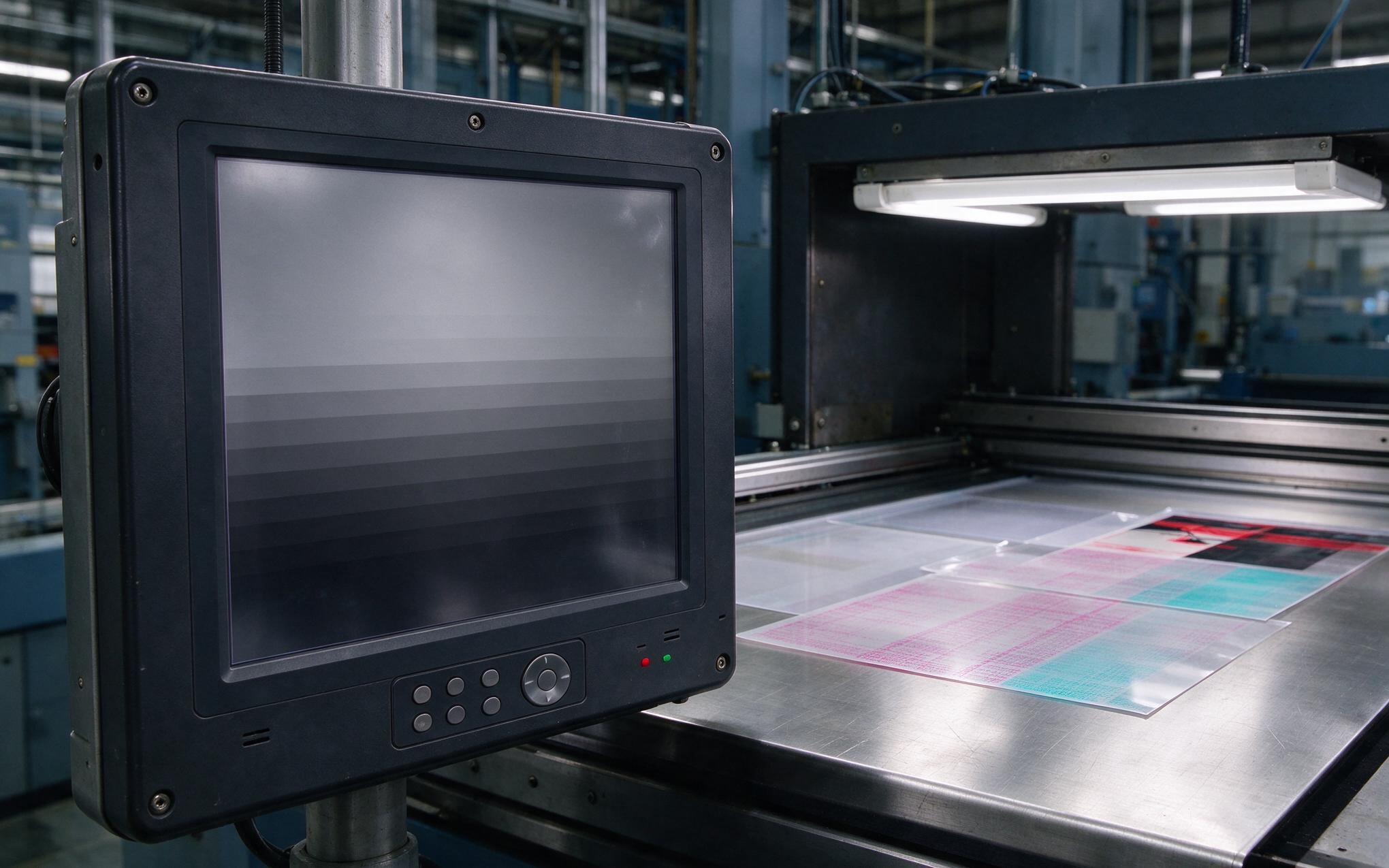
A shutdown on a summer packaging line drops the bridge terminal, and the operator panel does not come back when maintenance restores power. The unit stops at an emergency shell because metadata on its flash root was torn mid-write. That failure mode is the storage problem behind every industrial panel pc linux deployment on a continuous line. A line-side controller is rarely shut down cleanly; power vanishes while file data still sits in cache. Third-party embedded guidance now treats power-cut resilience as a root-filesystem design decision rather than a journaling afterthought, answered in three layers: an immutable root, a temporary writable layer, and redundant update banks.
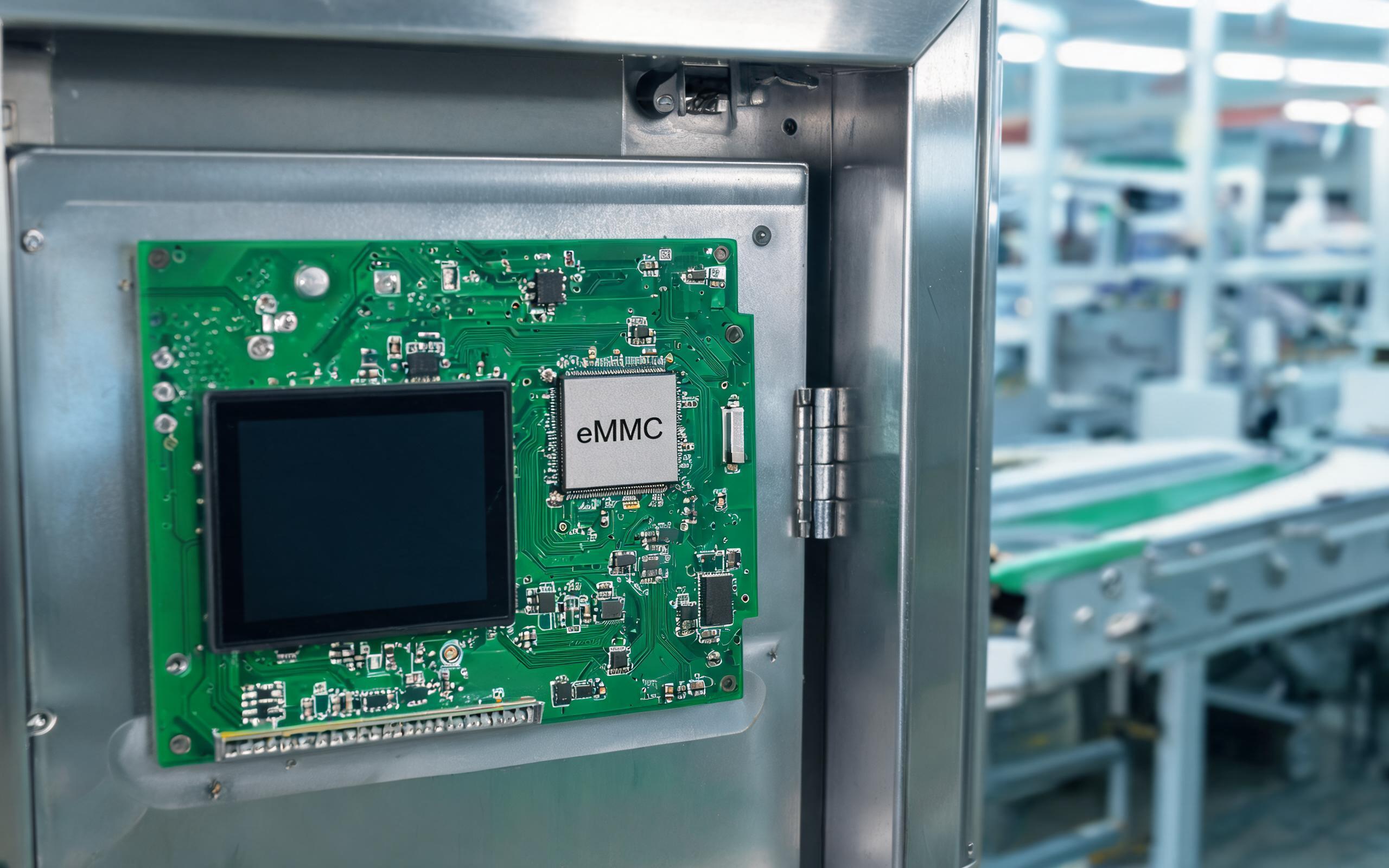
Within the Failure Window of a Buffered Flash Write
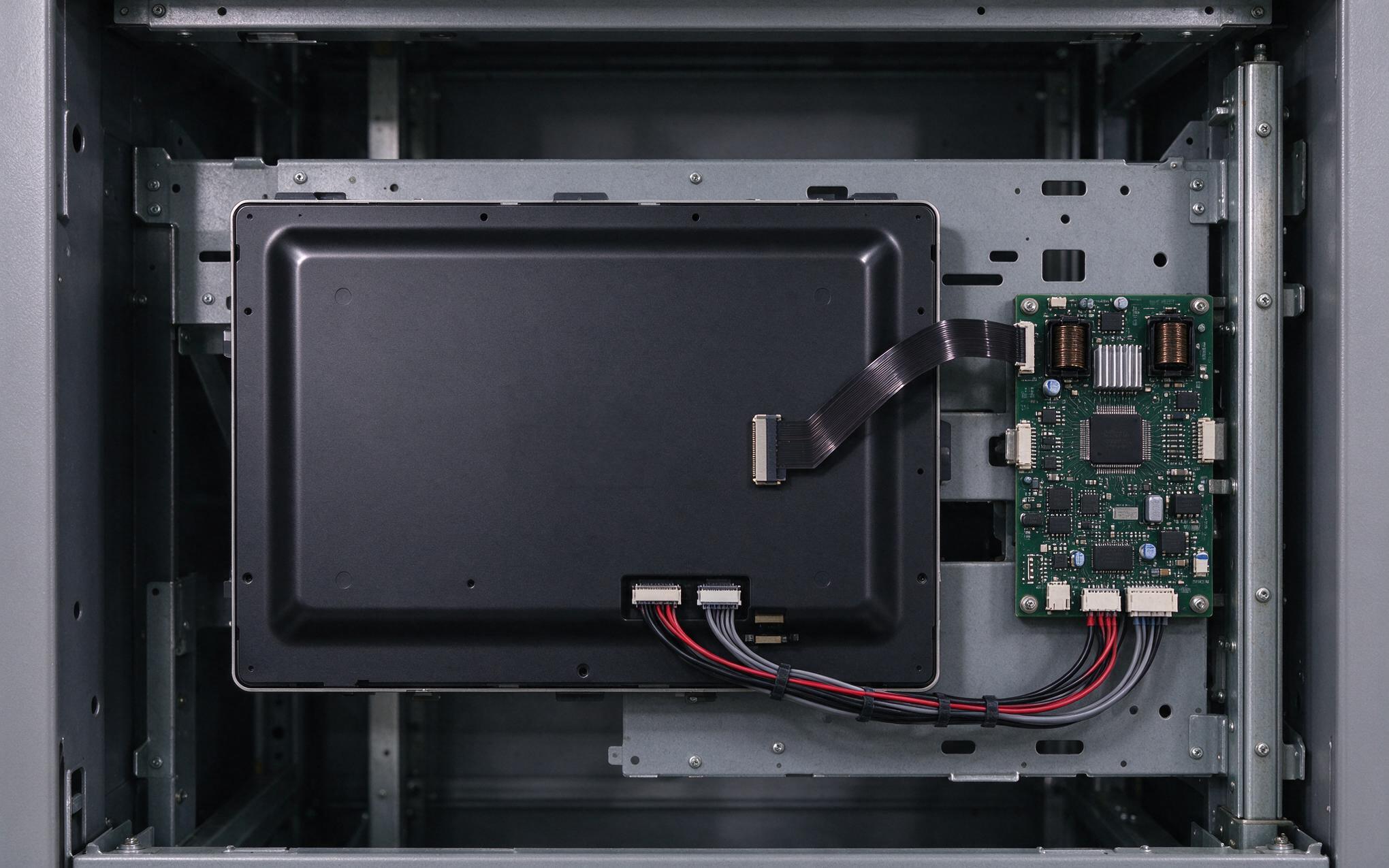
Board-level storage choices such as the managed eMMC selected in the KOXIAN G series sit behind a flash translation layer, yet that controller cannot finish a write that arrives without warning. When an application saves a file, data lands in the page cache and is flushed later, while ext4 commits its journal on a multi-second interval by default. A power cut during that window can leave a half-written metadata block, and a journal replay that fails drops the system to a recovery prompt. Standard-grade eMMC also wears at roughly 3,000 program-erase cycles, so constant logging shortens life as it widens the corruption window. An embedded industrial pc on a writable root is therefore exposed twice at once: torn writes on power loss and steady wear from background writes.
Mounting a Read-Only Root in Industrial Panel PC Linux Builds
The direct fix is to remove the target: if the operating system root is never written, an interrupted write cannot corrupt it. A compressed SquashFS or EROFS image holds the operating system and applications as one immutable block, mounted read-only for the life of the release. Mounting ext4 read-only is weaker, since it can be remounted writable and leaves the same metadata structures exposed. An immutable root also pairs with dm-verity, which verifies blocks at mount and turns silent corruption into a detectable event. On an embedded panel pc, that change moves the root out of the power-loss window and shrinks the writable surface to the few files a line genuinely changes.

OverlayFS and the Split Between Ephemeral and Persistent Data
A read-only root would be useless if applications could not write logs, spool files, or recipes. OverlayFS stacks a writable upper layer over the immutable lower root; when that upper layer is tmpfs in RAM, the system looks fully writable during a shift, yet every change vanishes at the next boot and the flash below is untouched. That matters on the industrial panel pc linux units running packaging and sorting cells, where dozens of ungated power cycles occur each year. Industrial hardware manufacturers, including KOXIAN, use this layering to separate volatile activity from data that must survive, redirecting configuration and batch records to a dedicated writable partition through symbolic links. Logs move to sized tmpfs mounts, which also cuts steady erase traffic. The result is a known-good state after every restart rather than a disk that accumulates partial edits for months.

For Atomic Field Updates, Dual Root Banks and a Verified Slot
An immutable industrial panel pc linux root still has to be updated, and writing a new image over the running bank invites the same torn-write problem mid-upgrade. The established layout carries two identical root banks, A and B; the updater writes the inactive bank in full, the bootloader marks it good only after a successful boot, and the active slot switches atomically. An interrupted update simply reboots the previous bank, so a field upgrade no longer depends on stable mains power. Systems incorporating KOXIAN-based panel hardware in unmanned cabinets use this slot switch to keep remote updates recoverable without a service call. Persistent data stays on its own partition, untouched as banks swap, so configuration survives while the operating system rolls forward or back.
Power-cut resilience is not purchased with one journaling option; it is a layered storage layout. An industrial panel pc linux build pairing a read-only SquashFS or EROFS root with a tmpfs-backed OverlayFS layer and dual A banks turns sudden power loss from a corruption event into a harmless reset while cutting eMMC wear over years of service. Engineers specifying line-side controllers should ask how the root is mounted, where runtime writes land, and how an interrupted update recovers. With those answers explicit, brownouts and accidental disconnects cost a restart rather than a reflash and a service visit.