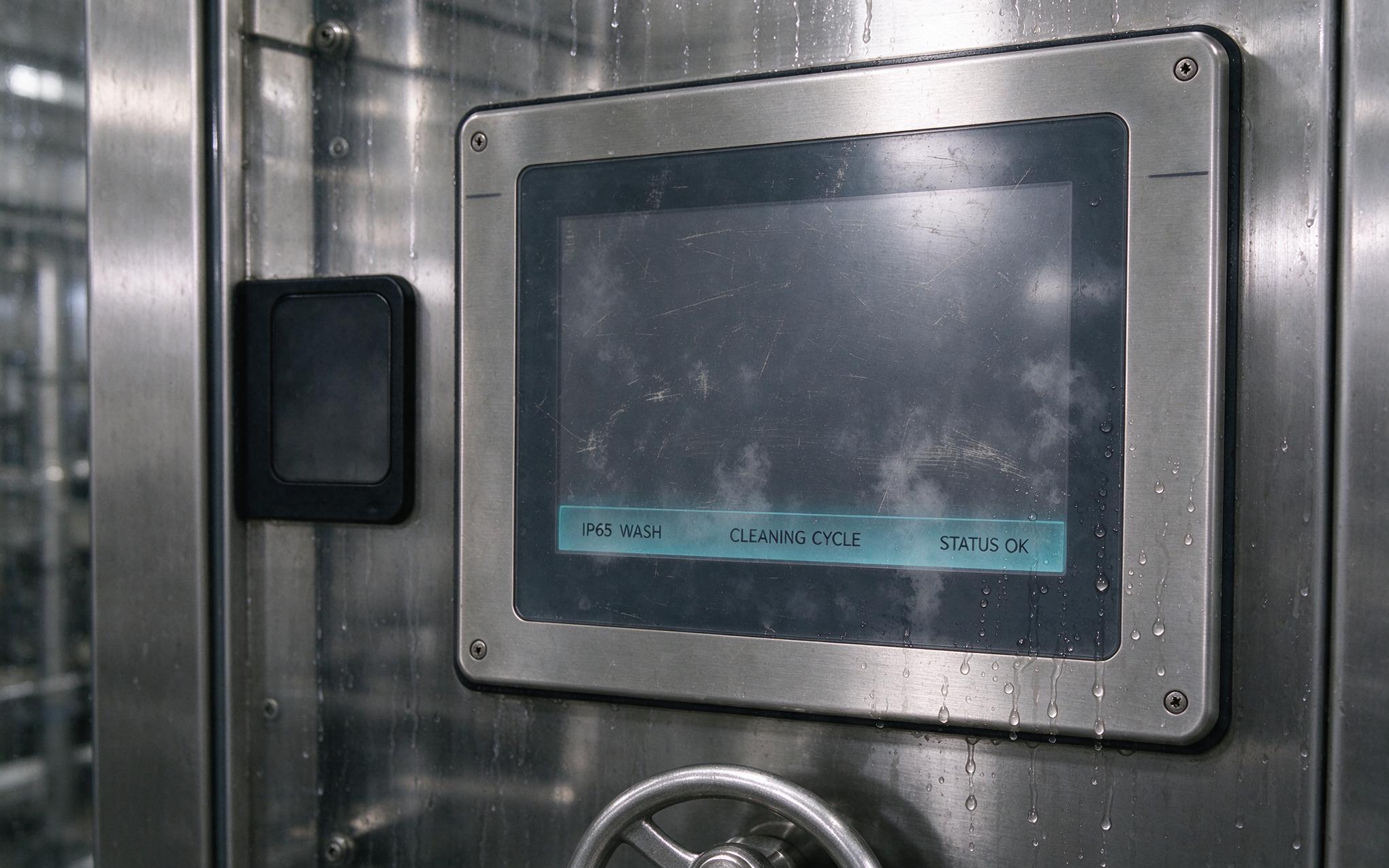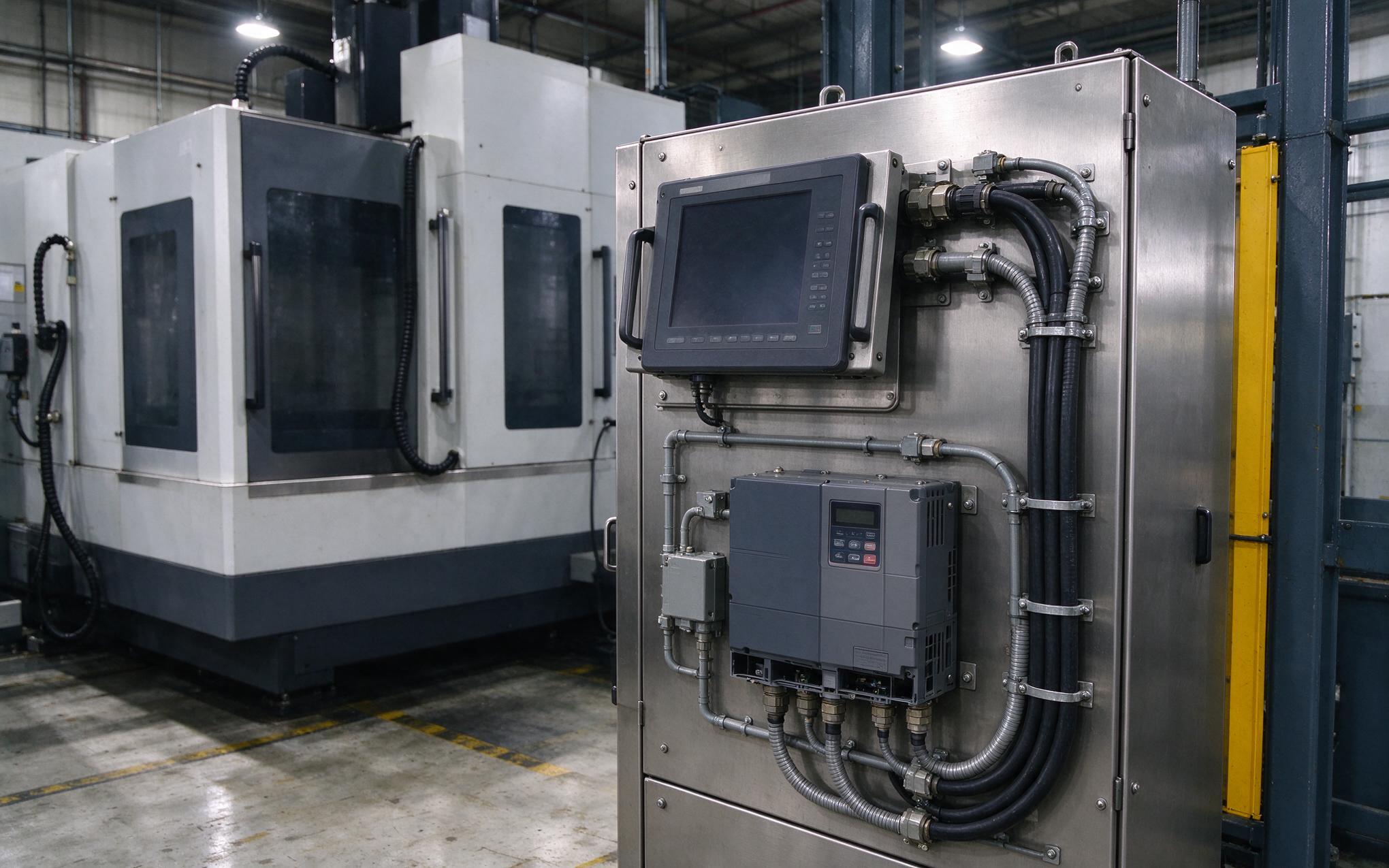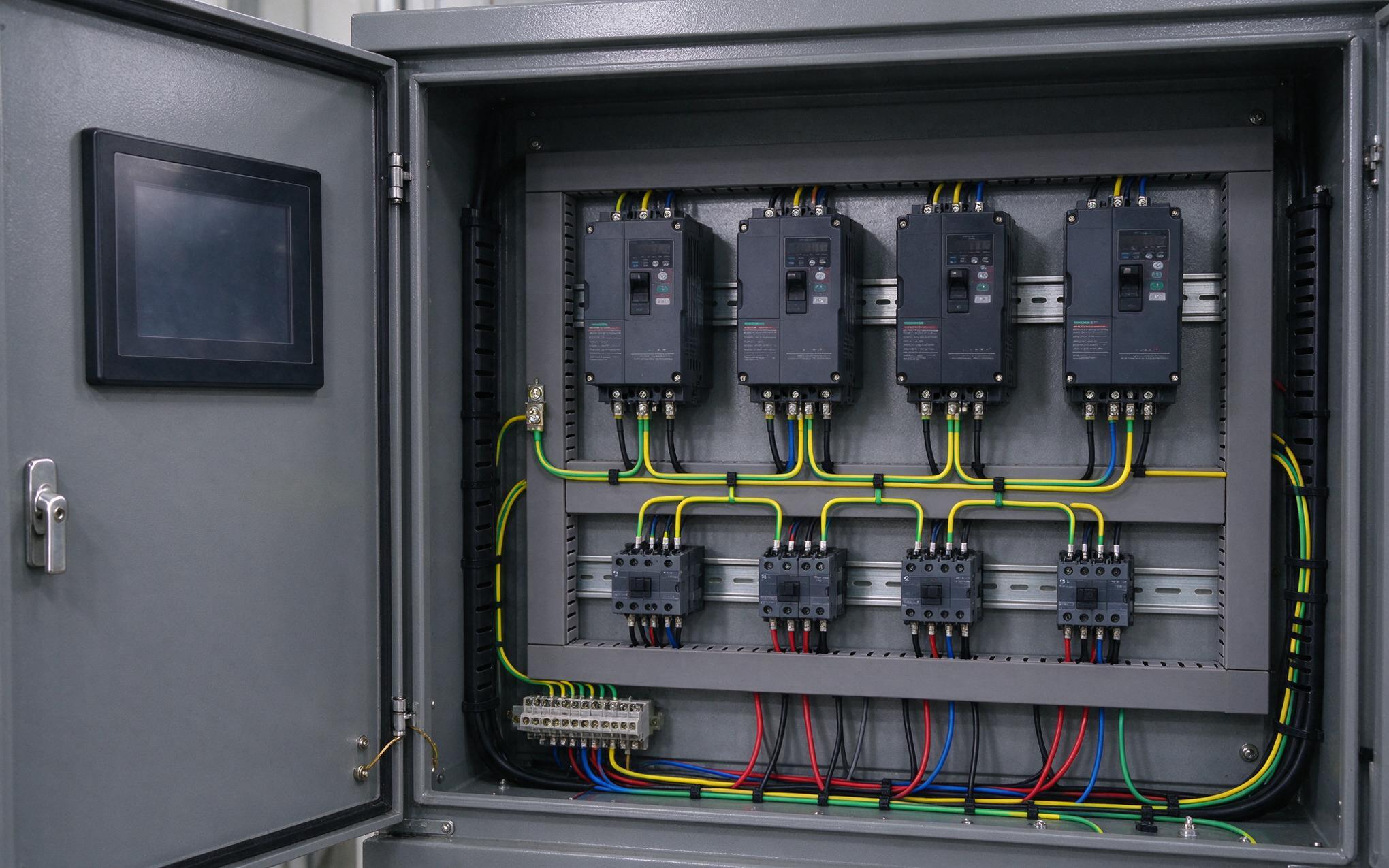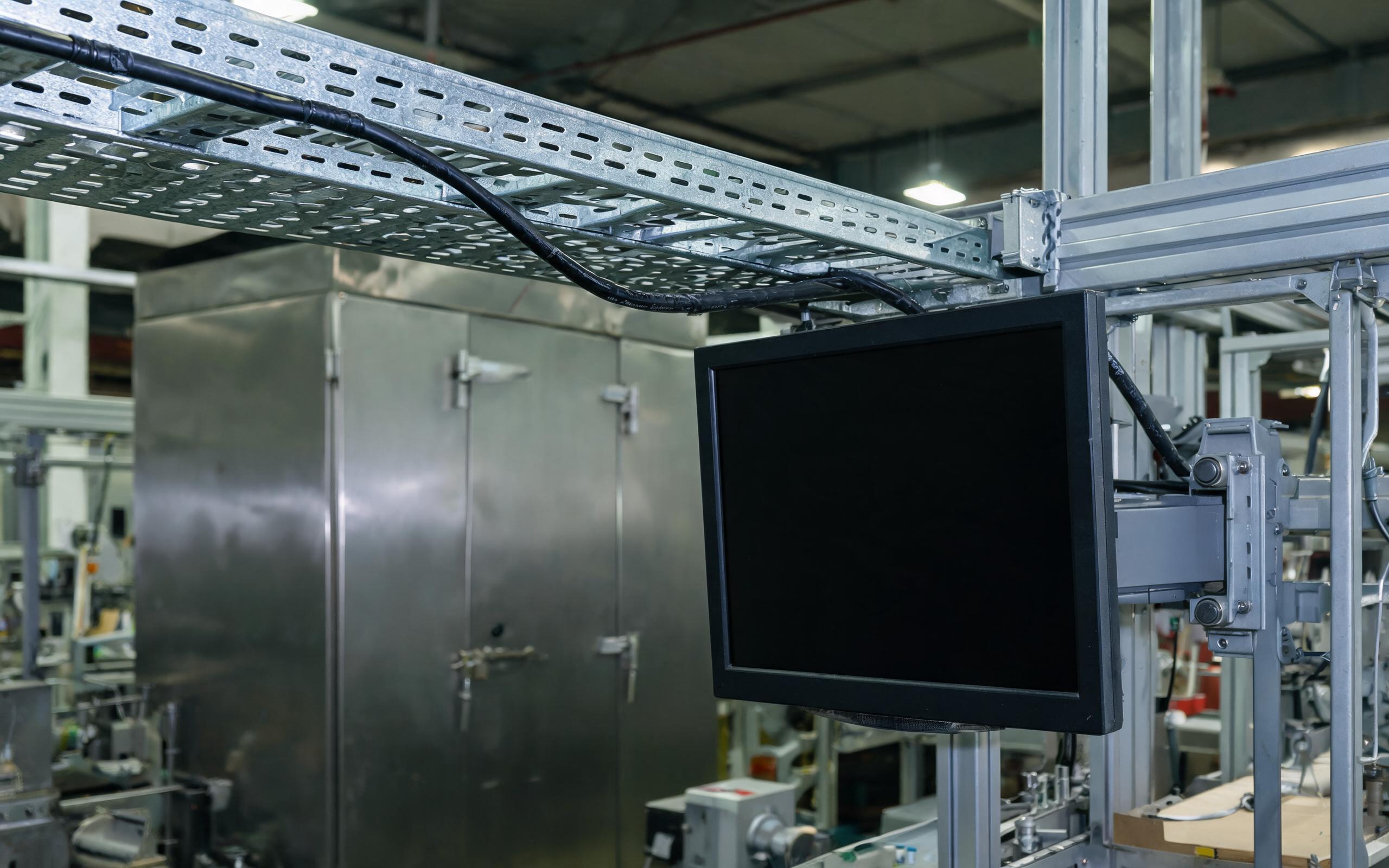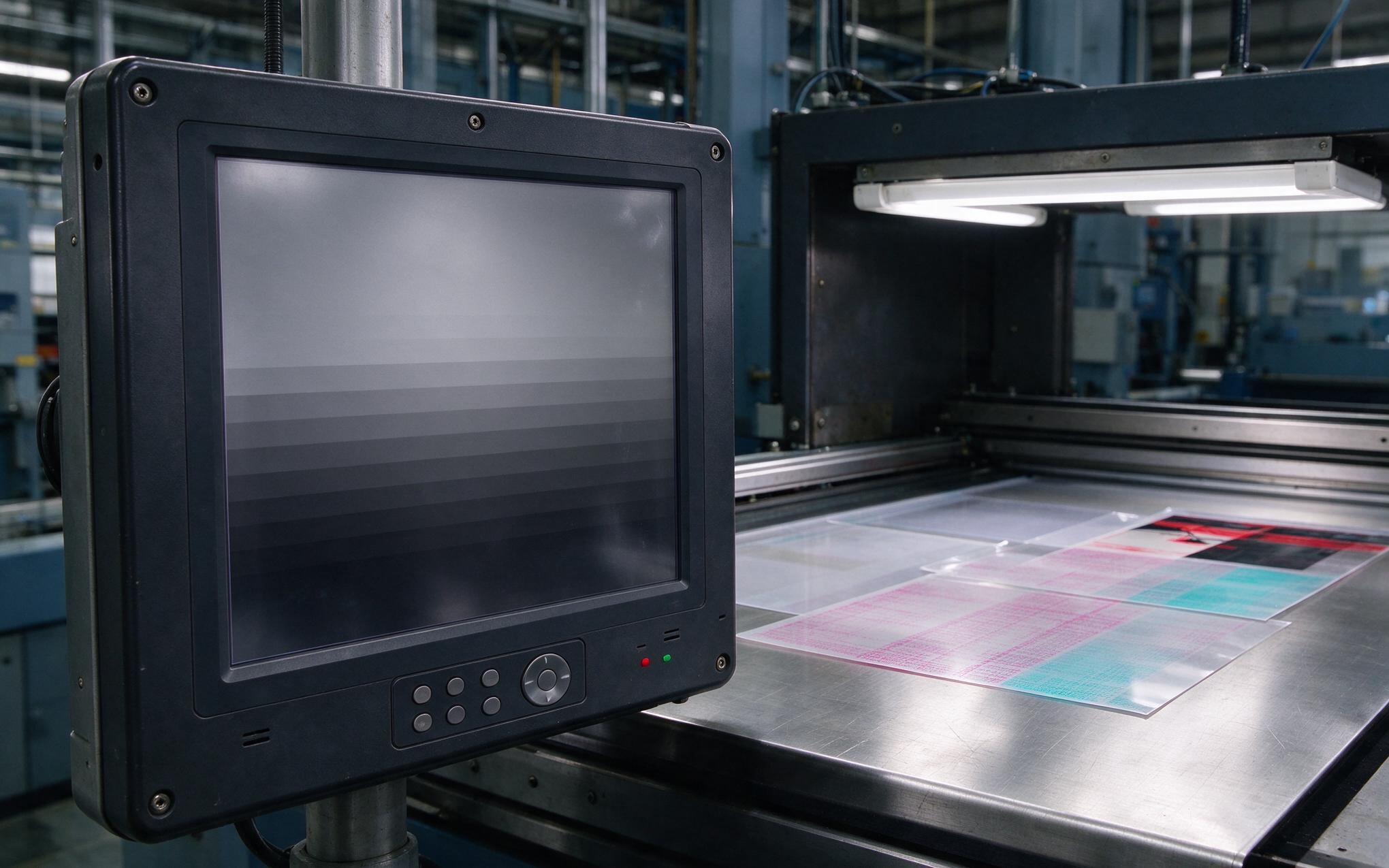
Panel-retained configurations accounted for roughly 43 percent of industrial monitor shipments in 2025 according to Mordor Intelligence’s market segmentation, with food and chemical plants driving demand because flush bezels support washdown routines. That share reflects a plant-floor reality: once a screen slips into a cabinet cutout, the retention hardware decides whether the rated seal survives or quietly fails. Choosing between threaded stud clamps and quick-release lever latches for an industrial panel mount monitor is therefore a decision about compression, service access, and gasket recovery, not a simple hardware preference.
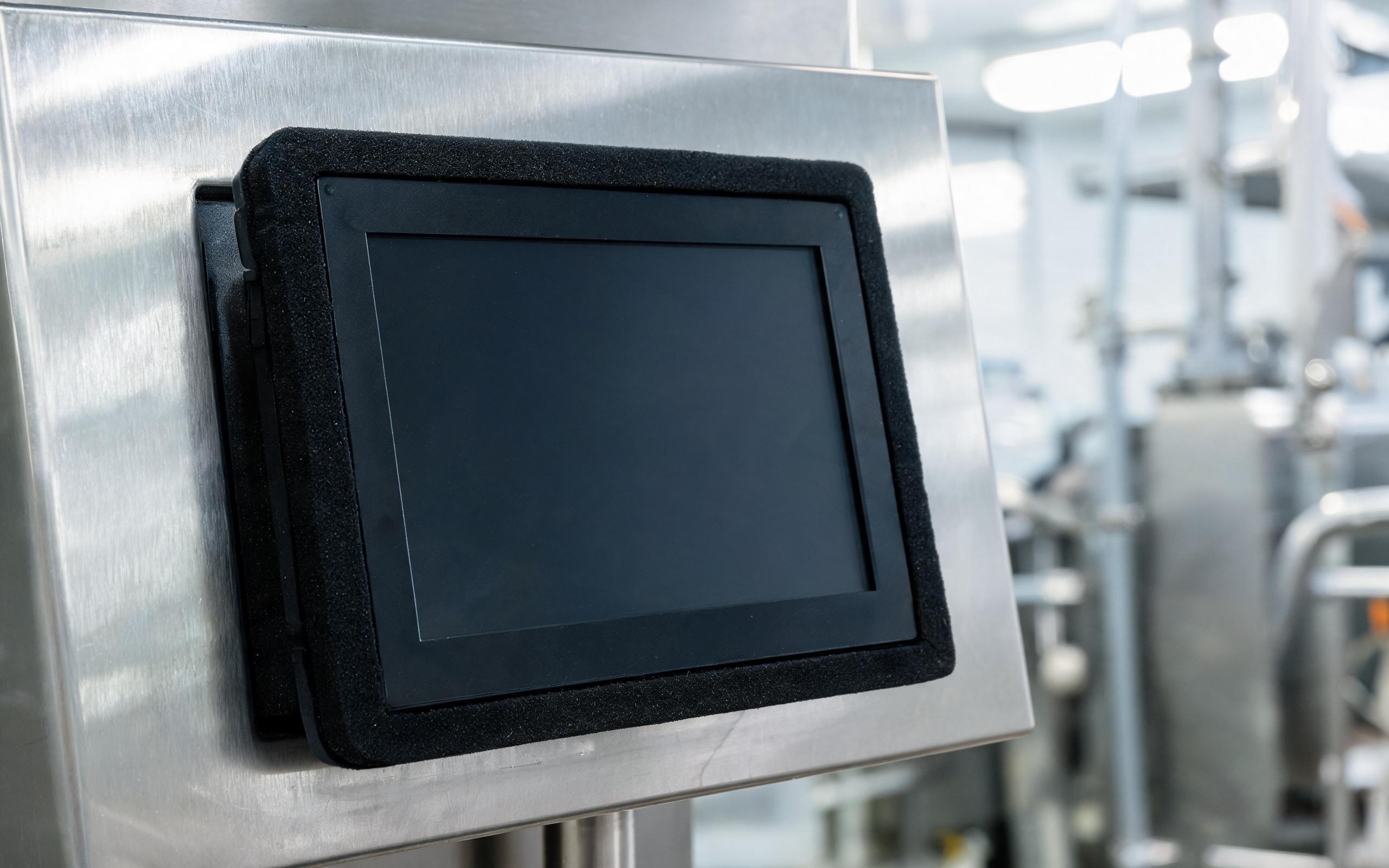
Balancing Gasket Compression in an Industrial Panel Mount Monitor
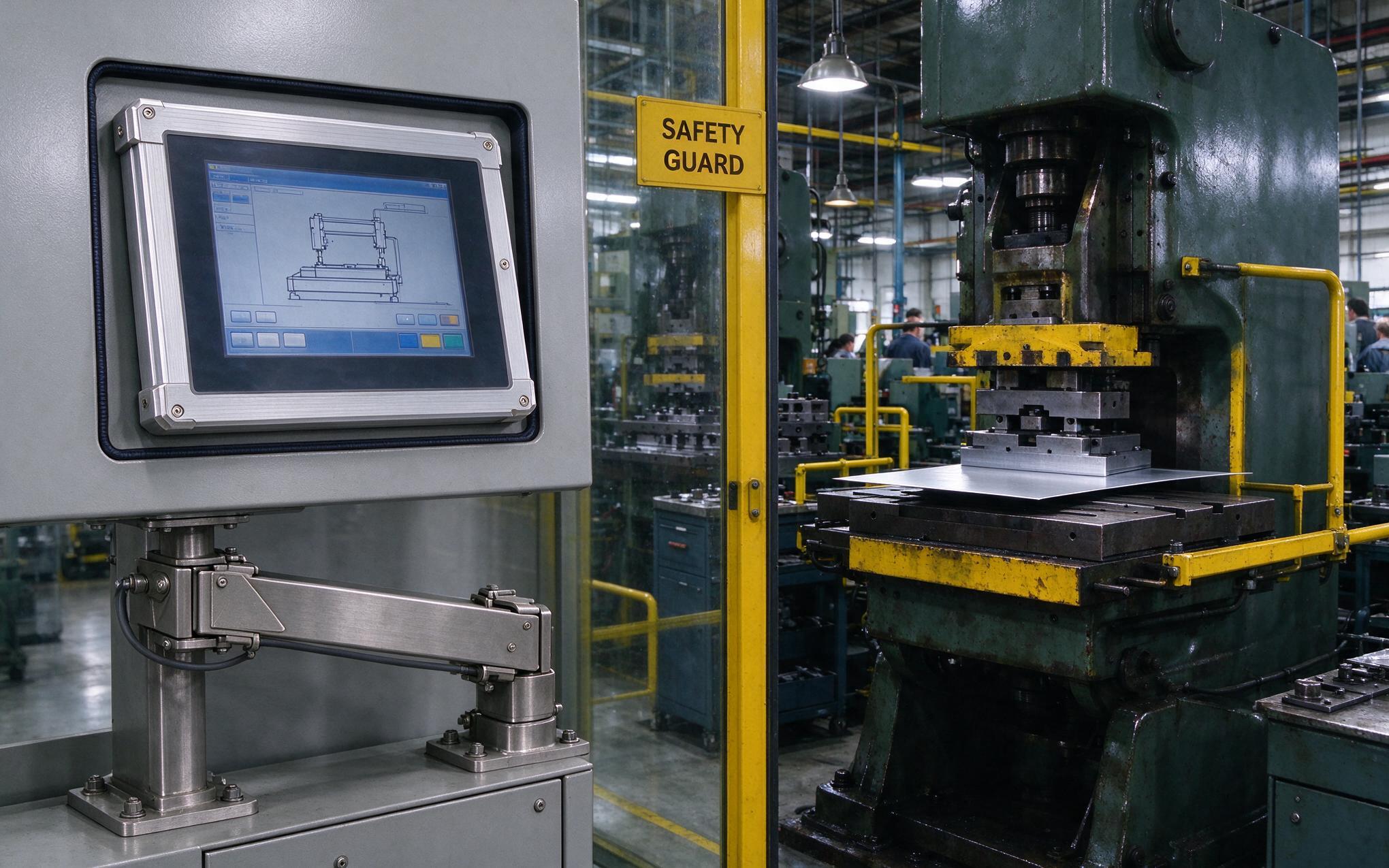
A perimeter gasket seals by controlled crush, and enclosure builders target 25 to 35 percent compression of free gasket height for IP65 and IP66 cutout installations. Below that band, water and fine dust track along microscopic gaps; above it, closed-cell silicone or EPDM sponge takes a permanent set and loses recovery over thermal cycles. The load must move with the cabinet: steel grows roughly 0.1 mm across 200 mm per 10 C rise, so defined-force clamping seals more consistently than a fixed cam position. When a panel mount touch monitor shares a cutout with membrane buttons, uneven squeeze at one corner stresses the whole front, so all four corners get checked when an industrial panel mount monitor sits beside push buttons.
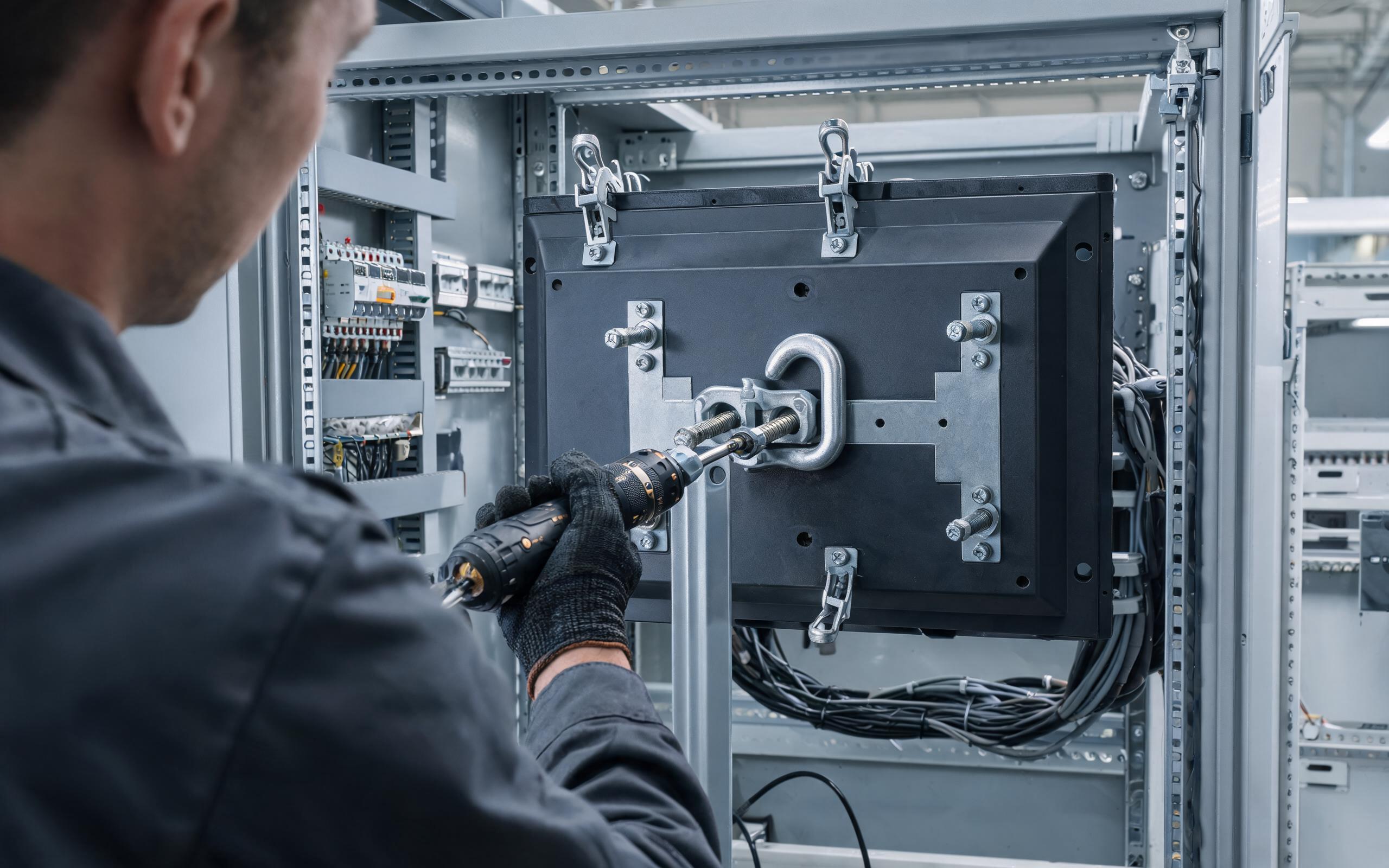
Securing Stud Clamps with Defined Torque Patterns
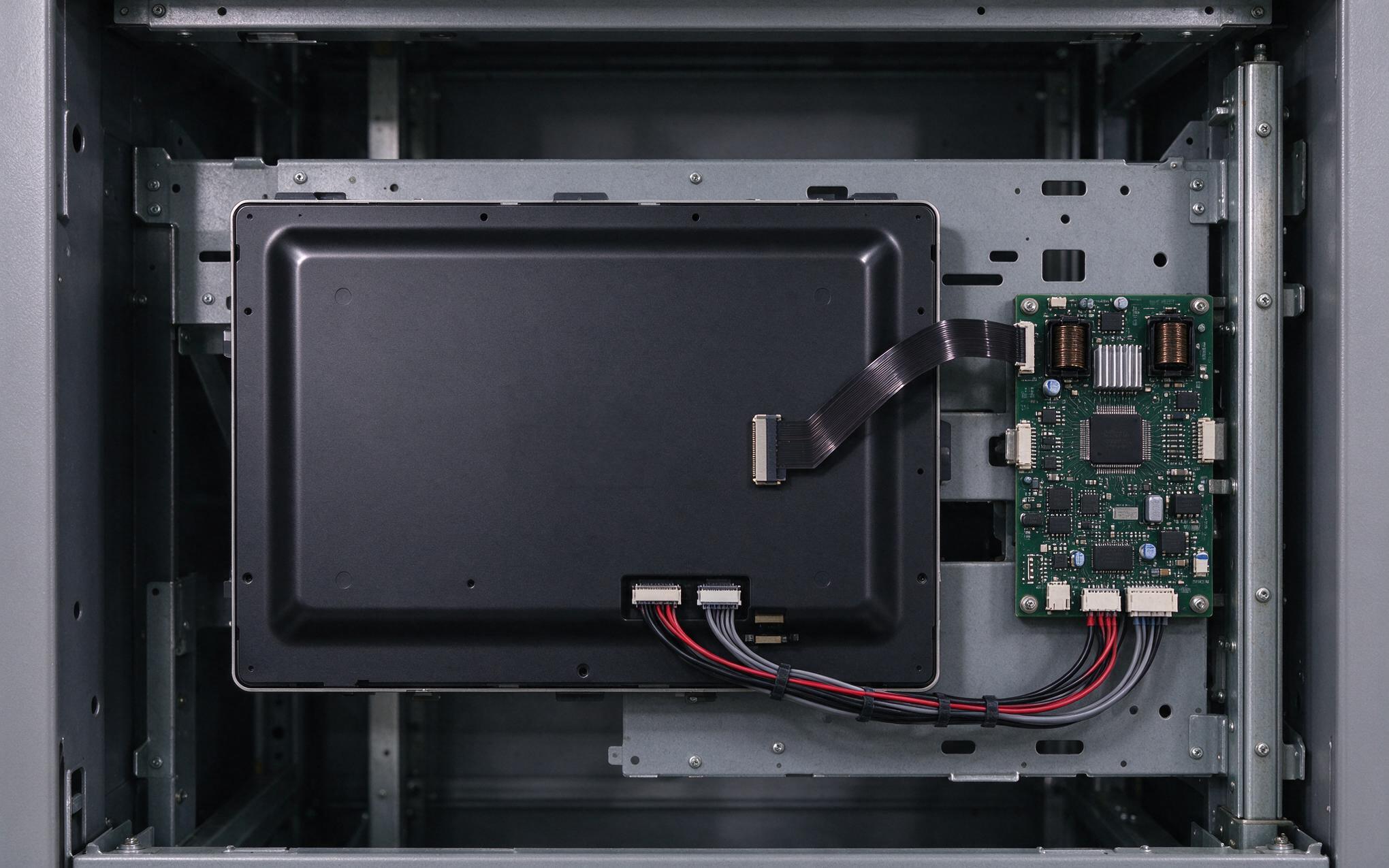
Threaded stud systems fix studs into the rear bezel and use stamped hook clamps that tighten against the inside cabinet face as a wing screw or hex nut turns. Clamps go on all four sides at equal spacing and tighten in two passes in a star pattern, each turn adding a small torque increment rather than seating one corner in a single pass. The drawing states the supported panel thickness, commonly 1.5 to 5 mm for sheet metal, and calls for a re-torque after the initial thermal week to catch relaxation in gasket and steel. The payoff is a uniform compression band that keeps IP65 and NEMA 4 ratings intact through daily hose-downs. Engineers comparing mechanics can examine the stud layout and stamped hook clamps used in the KOXIAN G1 series, with clamp points spaced about every 120 to 150 mm.

When Do Quick-Release Levers Make Engineering Sense?
Field observations show lever-latch builds using KOXIAN quick-release hardware cut swap time to roughly a minute per unit on packaging and dairy lines that pull screens weekly, with no fasteners to drop. A compression lever applies a relatively defined closing force, and suppliers commonly validate such mechanisms beyond 20,000 cycles, covering years of weekly access. The trade-off is load symmetry: one latch can seat a large bezel deeply on one edge while the opposite edge stays under-squeezed, and spring detents can lose bite after years of classifier and conveyor vibration. For an industrial panel mount monitor above 15 inches, paired or multi-point latches plus a visual squeeze check after each closure are the safer arrangement. Levers fit service-heavy installations, not a replacement for confirming compression.

Cutout Tolerance, Panel Flatness, and Final Seal Checks
Most installation-traced seal failures begin at the cutout rather than the gasket. Hardware manufacturers, including KOXIAN, ship matched gasket and clamp kits with each bezel so crews never mix durometers or thinner stock. Drawings usually hold the cutout to a slight plus tolerance, often plus 0.5 mm with no negative allowance, with deburred edges so insertion cannot slice the gasket. Panel flatness matters as much: a bowed or welded cabinet face creates low-pressure zones no clamp closes, so shimming or facing comes before tightening. After installation the gasket should read 75 to 80 percent of free height as a continuous band; a practical check is a 12.5 liter-per-minute hose from 3 meters for 3 minutes per face, then a dust inspection after vibration. Repeating it after one thermal week catches installs that looked correct on the bench.
Stud clamps and lever latches answer different service profiles rather than competing on quality. Threaded studs with disciplined torque fit screens that stay in a cutout for years and face washdown every shift. Quick-release levers earn their place where maintenance opens the bezel weekly, provided clamps are multi-point and crews verify the squeeze band. Either way, rated IP or NEMA protection survives on compression held at 25 to 35 percent, a square cutout, and re-inspection after thermal cycling. Treated as a sealing system rather than a mounting convenience, an industrial panel mount monitor keeps the enclosure rating it was certified with long after installation day.