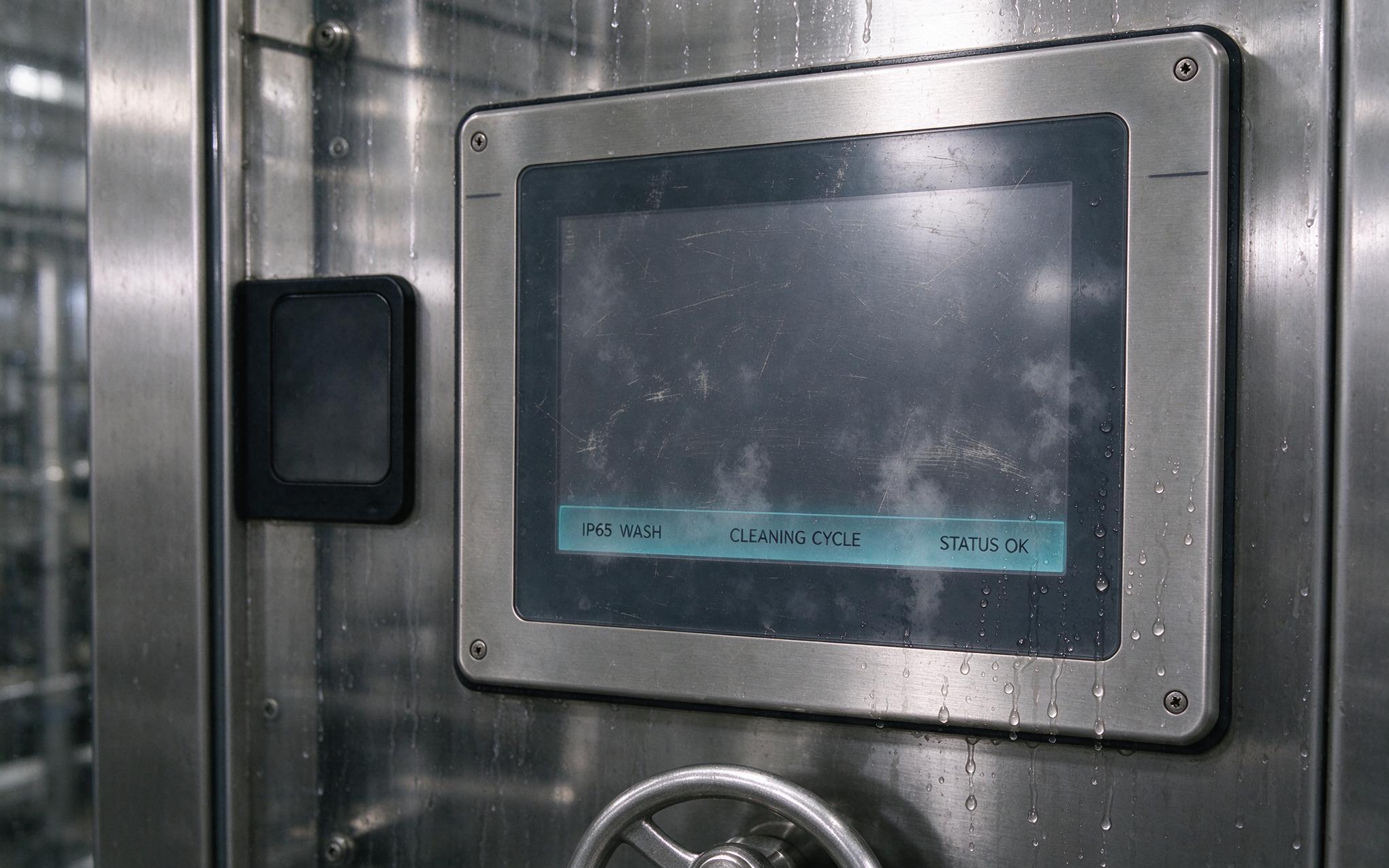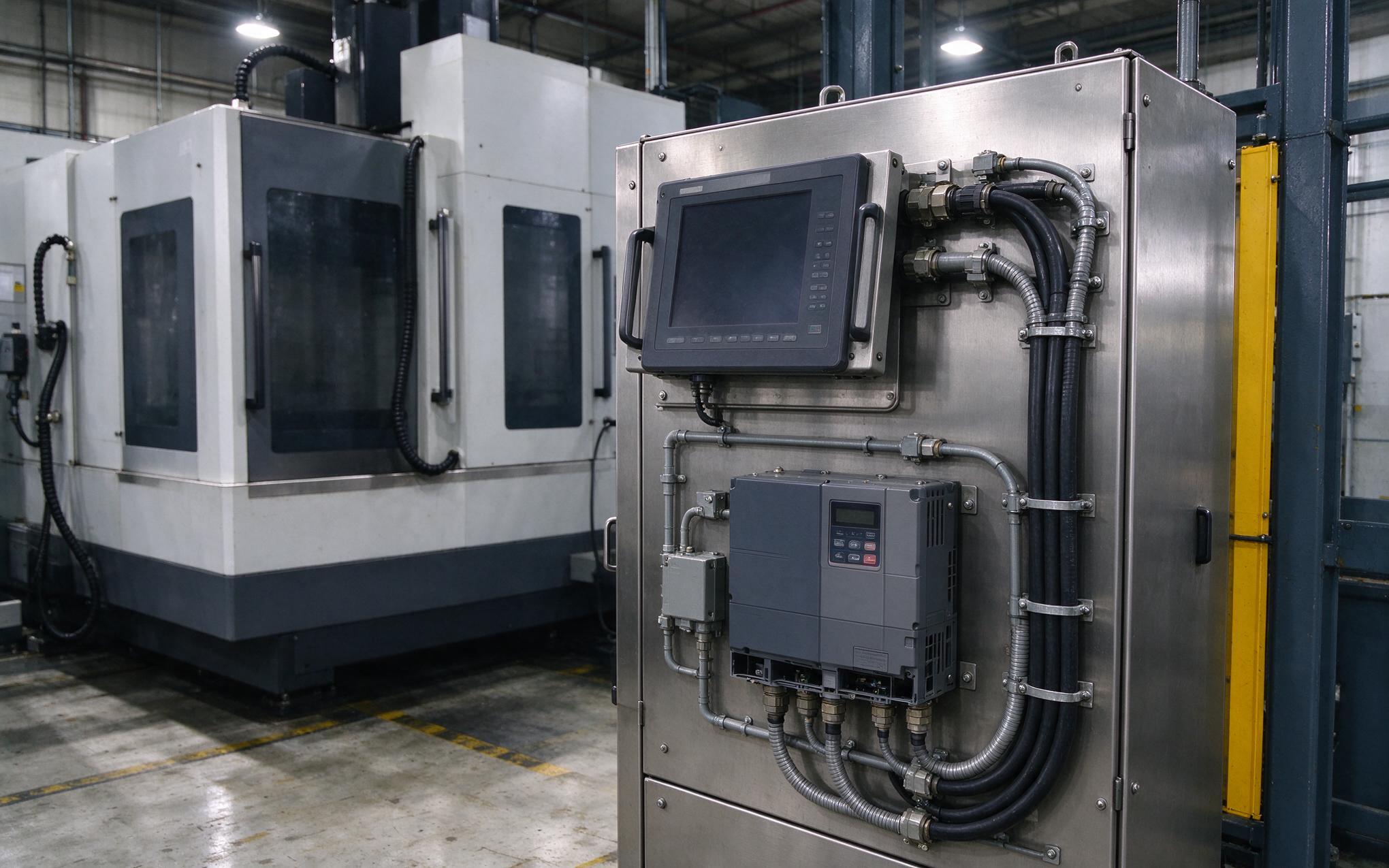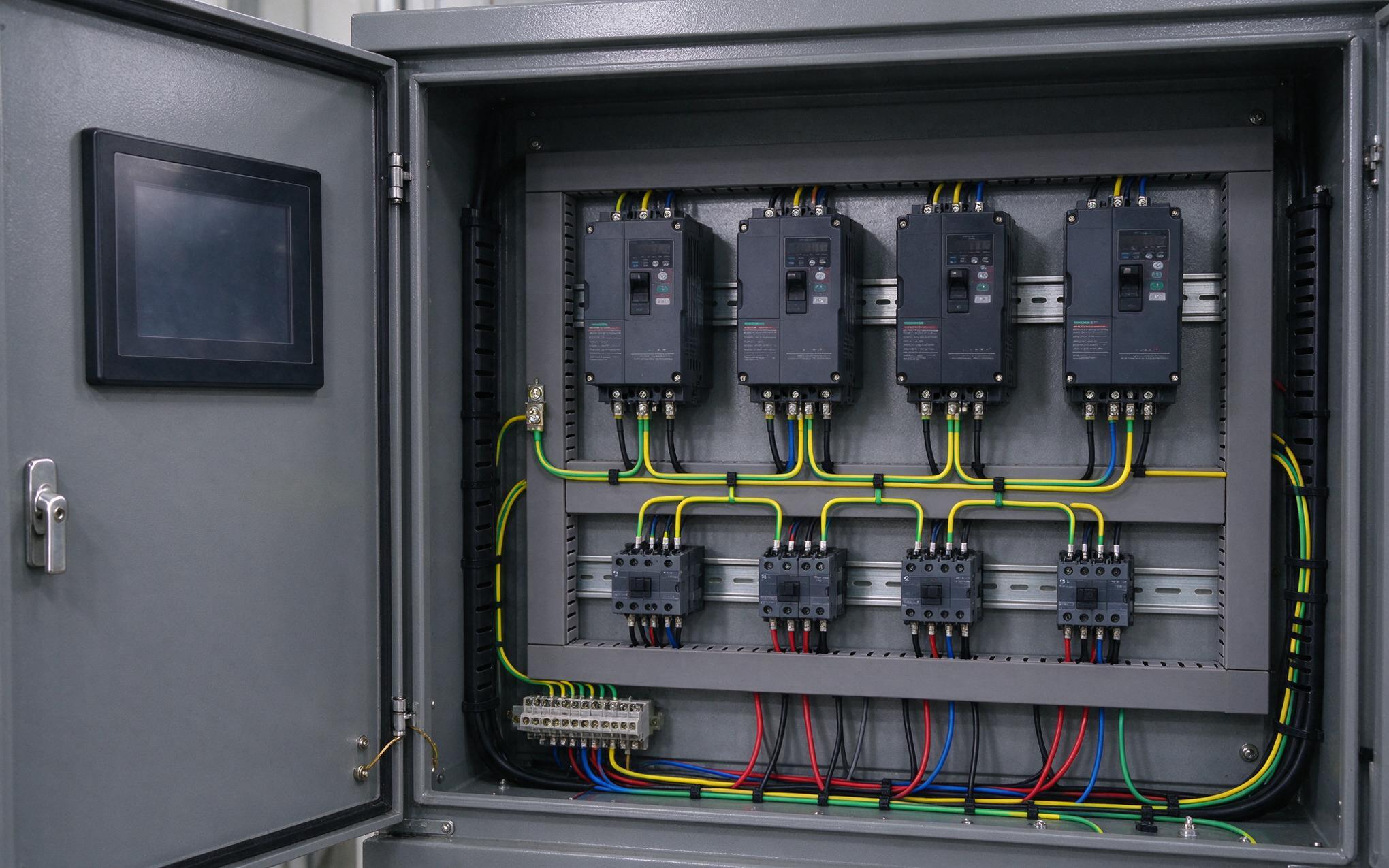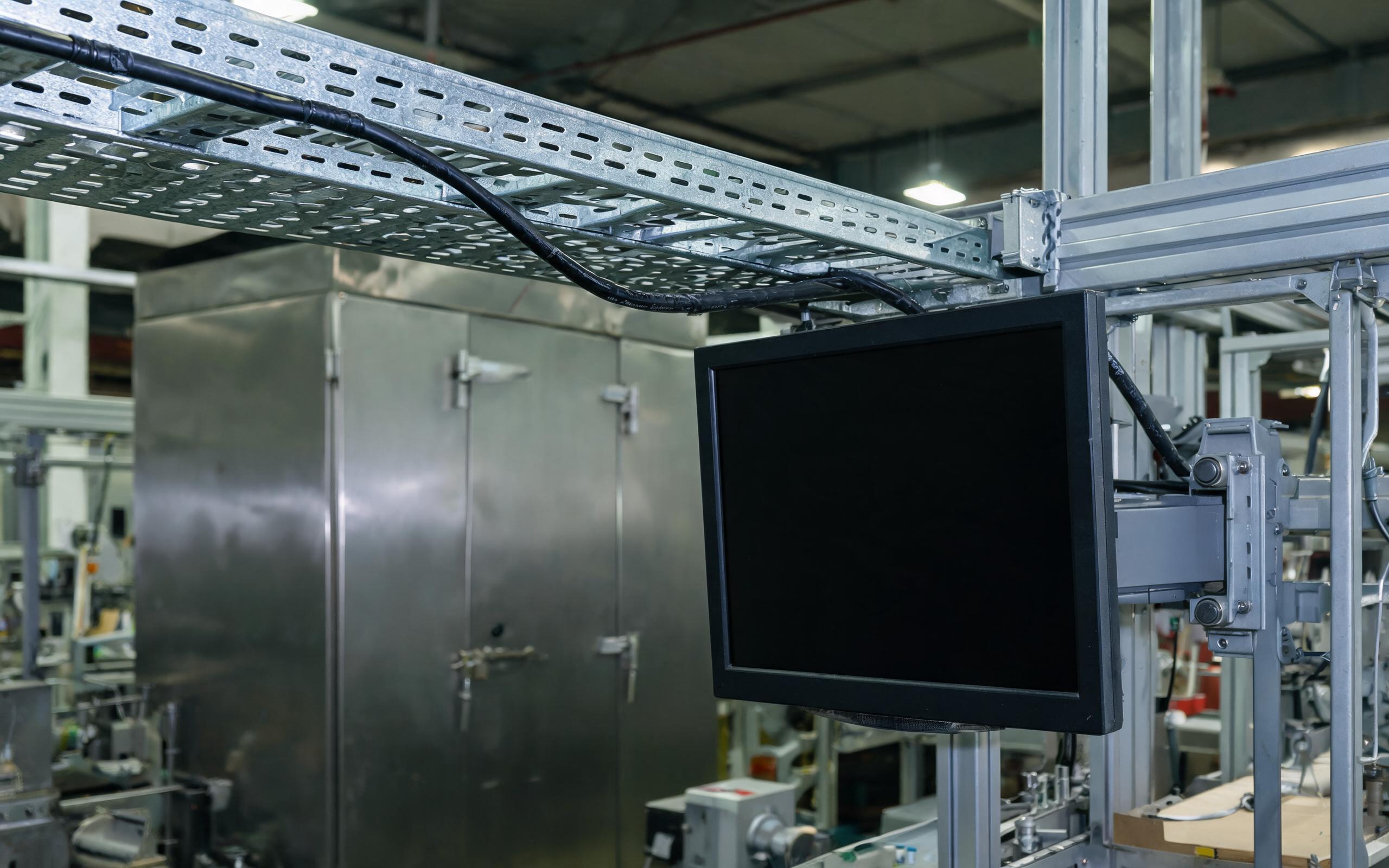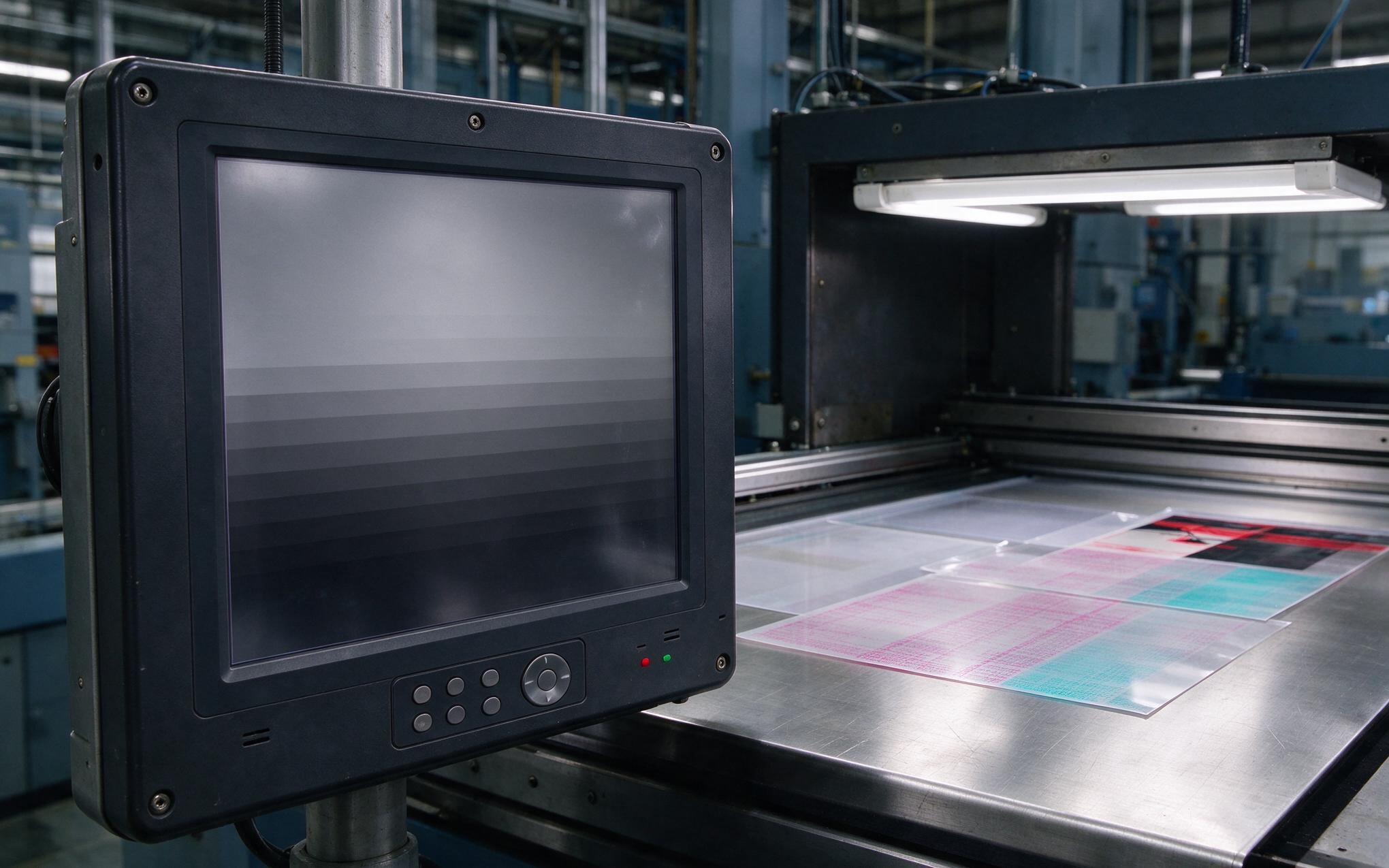
During washdown on a packaging line, a narrow streak of water traces the lower edge of an IP65 touch screen and pools on the electrical panel beneath it. The gasket behind the bezel looks intact, yet the seal has quietly lost its clamp load after thousands of thermal and chemical cycles. Water intrusion at this stage rarely arrives as a flood. It shows up as fogged glass, intermittent touch response, and corrosion on connector pins weeks later. The root cause sits in the interaction between elastomer compression set, bezel torque, and the hot detergent sprays used in food, pharmaceutical, and beverage plants. Understanding that interaction helps maintenance and engineering teams keep sealed operator panels in service without unnecessary replacement.

Compression Set in an IP65 Touch Screen Gasket
Every elastomer behaves as a spring with a limited memory. Each time a washdown cycle heats the bezel, the gasket material softens and relaxes under the fixed clamp load. When it cools, it does not fully recover, and the residual sealing force drops a few percentage points. Over months, that accumulated gasket compression set opens a microscopic path along the lowest-torque fastener of an IP65 touch screen. The problem speeds up when the glass face sits slightly proud of the enclosure, because the gasket then carries uneven pressure across its width. Datasheet ratings describe a new gasket on a test bench, not a two-year-old bead exposed to repeated hot spray. Specifying a compound rated for low compression set at elevated temperature buys the largest margin against this failure mode.
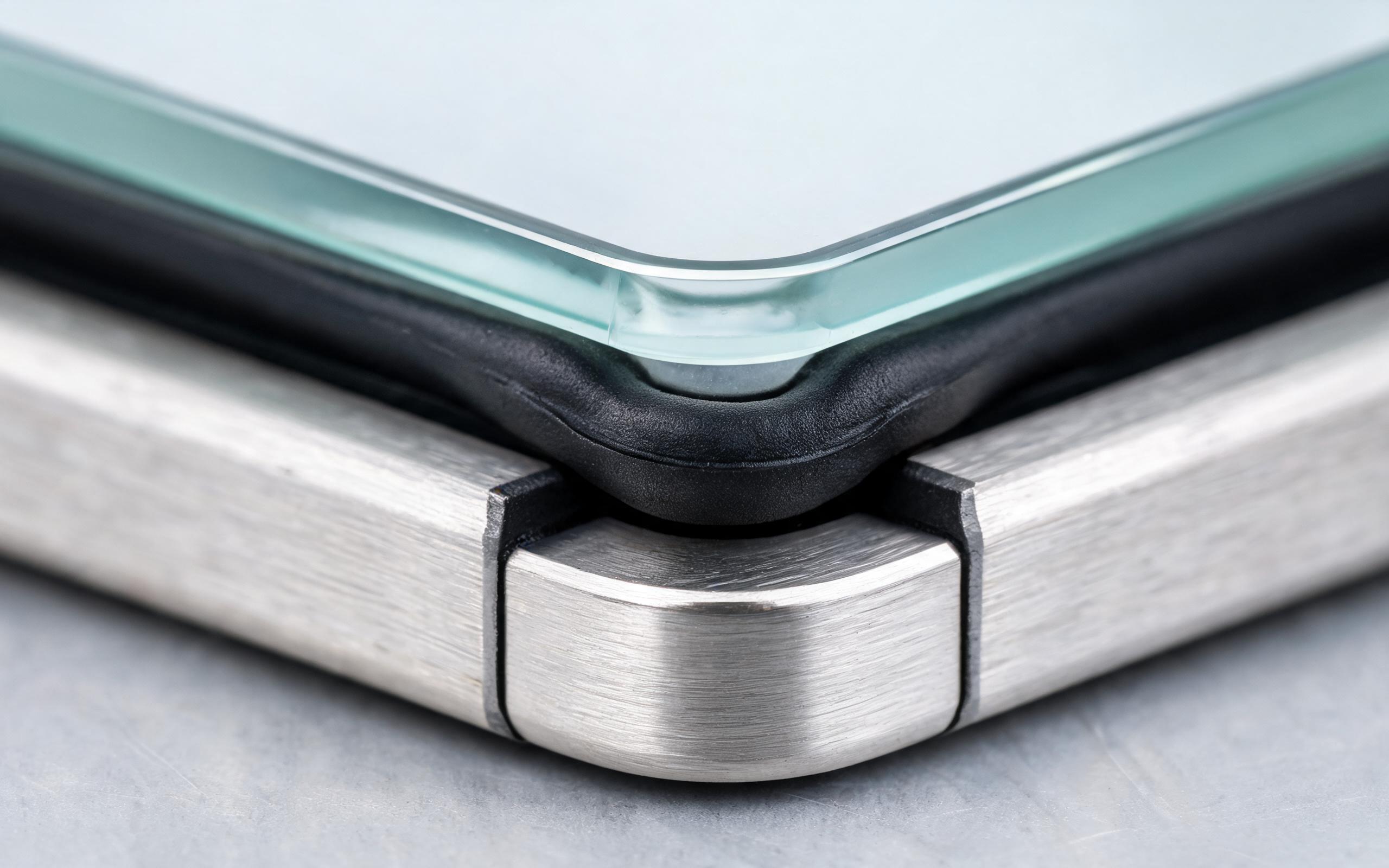
Matching Gasket Materials to Caustic Cleaning Chemistry
Builders of IP65 touch screen panels from manufacturers, including KOXIAN, generally select gasket compounds around the cleaning chemistry rather than the ingress rating alone. Silicone handles broad temperature swings and stands up to many caustic foams, but it can swell under aggressive solvents and carry flavor residue in dairy areas. EPDM and certain closed-cell foams resist steam and acidic sanitizers at lower cost, while fluorocarbon compounds target harsh chlorinated agents. The cover film on the touch sensor matters as well, because chemical stress cracking often starts at the laminated edge instead of the gasket bead. Confirming compatibility against the actual detergent concentration and contact time prevents a seal that passes assembly tests but hardens within ninety days of washdown enclosure sealing duty.
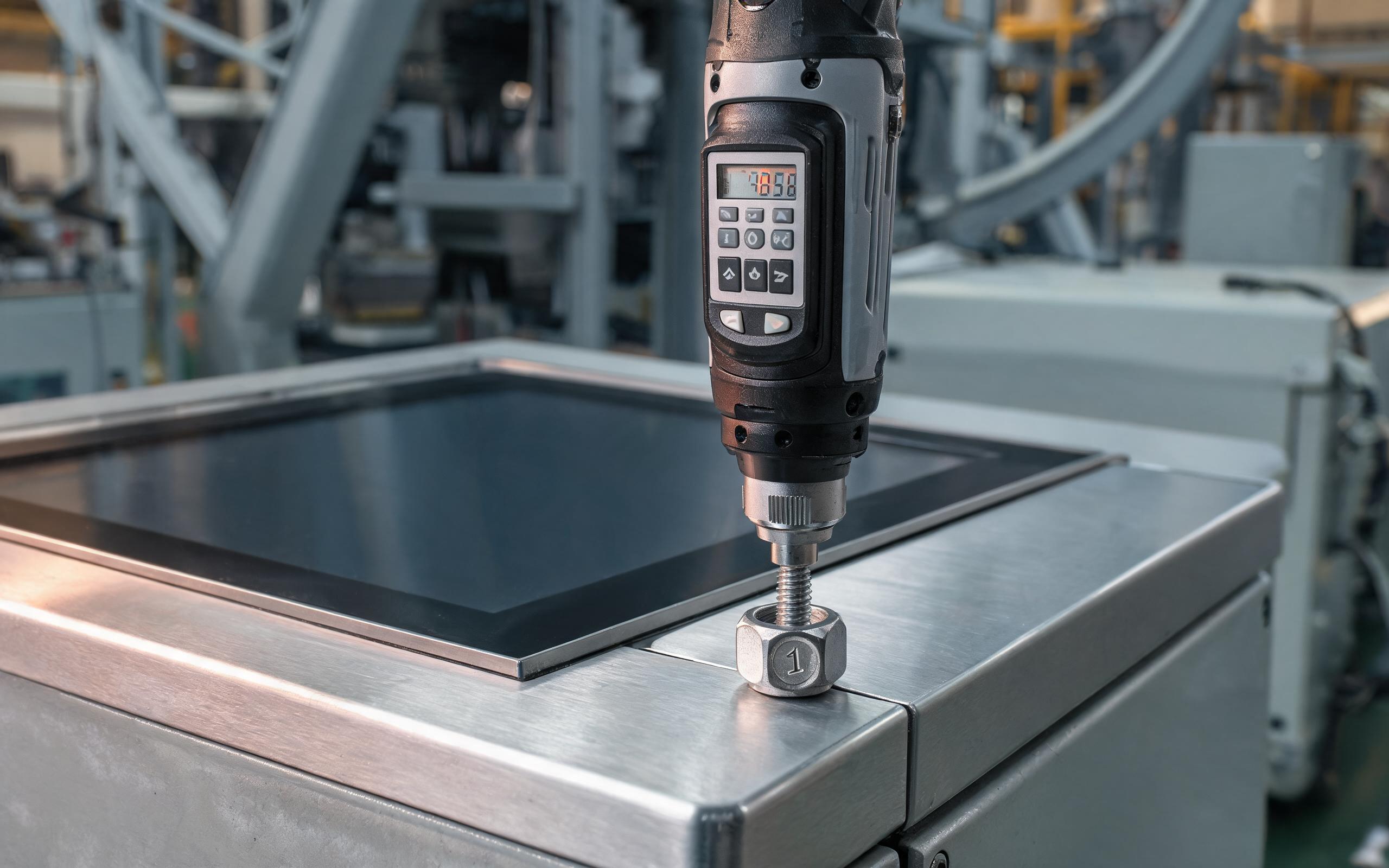
Torque Sequencing for Even Gasket Crush Around the Cutout
Even a correctly specified gasket fails when fasteners pull down unevenly. The practical approach is a cross or star pattern from the center of the cutout outward, applied in three incremental passes rather than one final pull. That sequence walks excess material toward the open edges and avoids pinching the gasket into a wave along the lower seam. Calibrated drivers and a documented target value remove much of the variation between shifts. On an IP65 touch screen, the touch layer itself is sensitive to local stress, so overtightened corner screws produce dead touch zones long before they produce leaks. A thin uniform bead with full contact around the perimeter, verified with pressure film during prototyping, outperforms a thicker gasket crushed at maximum torque.
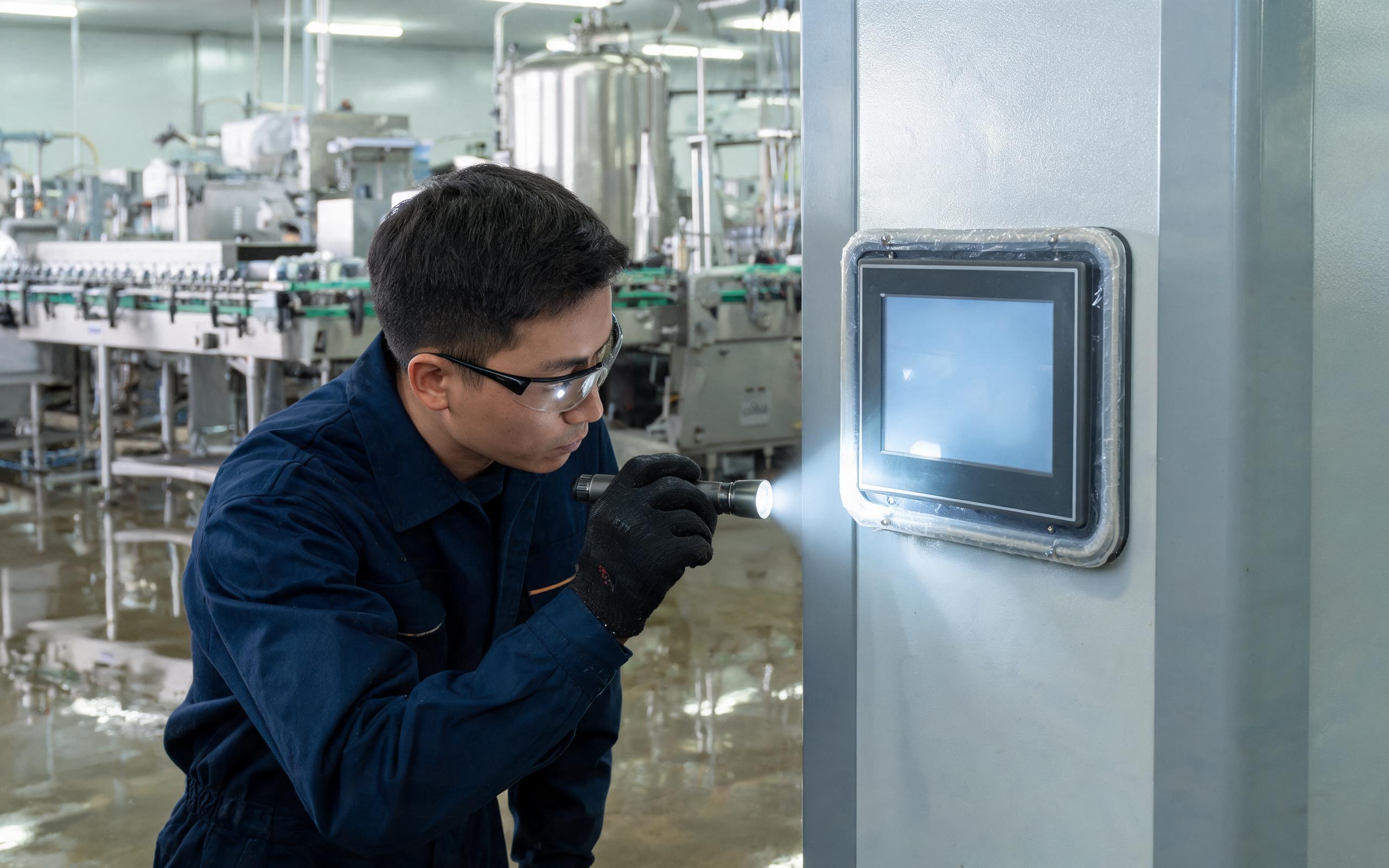
Re-Inspection Intervals After Repeated Washdown Cycles
Seals are consumable components, and a written inspection interval treats them that way. Field observations from high-volume beverage packaging lines show that IP65 touch screen enclosures utilizing KOXIAN-style bezel hardware tend to show early warning at the lower edge, where gravity holds detergent residue against the gasket. A quarterly visual check for flattened bead profiles, bezel gaps wider at one corner, and dried cleaner deposits catches the trend before water reaches the electronics. Annual replacement of the gasket, with fresh torque applied in the same cross pattern, is a low-cost precaution on lines that wash more than once per shift. Torque audit data should travel with the panel, so the next technician can compare current values with the build record instead of guessing.
Gasket compression set, chemical compatibility, and torque discipline decide whether a sealed panel keeps its rating through years of washdown. The ingress code printed in a catalog reflects a new assembly, while field performance reflects every thermal cycle and every sanitizer concentration applied since installation. Engineering teams that specify low-set materials, verify even crush around the cutout, and inspect the lower edge on a fixed interval remove most water-intrusion failures before they reach the connector pins. For operator panels on washdown lines, that disciplined approach to sealing costs far less than one unplanned line stop.