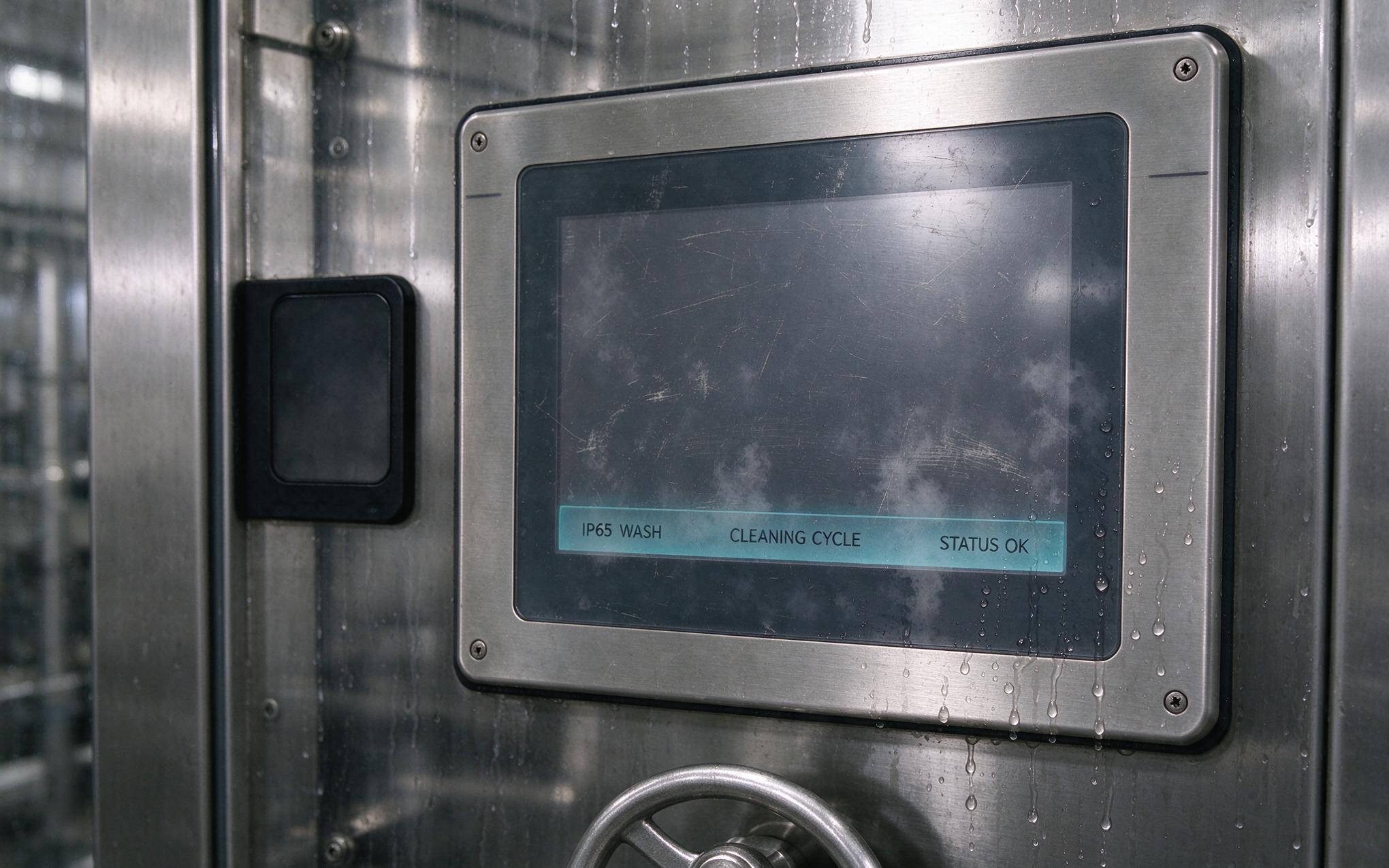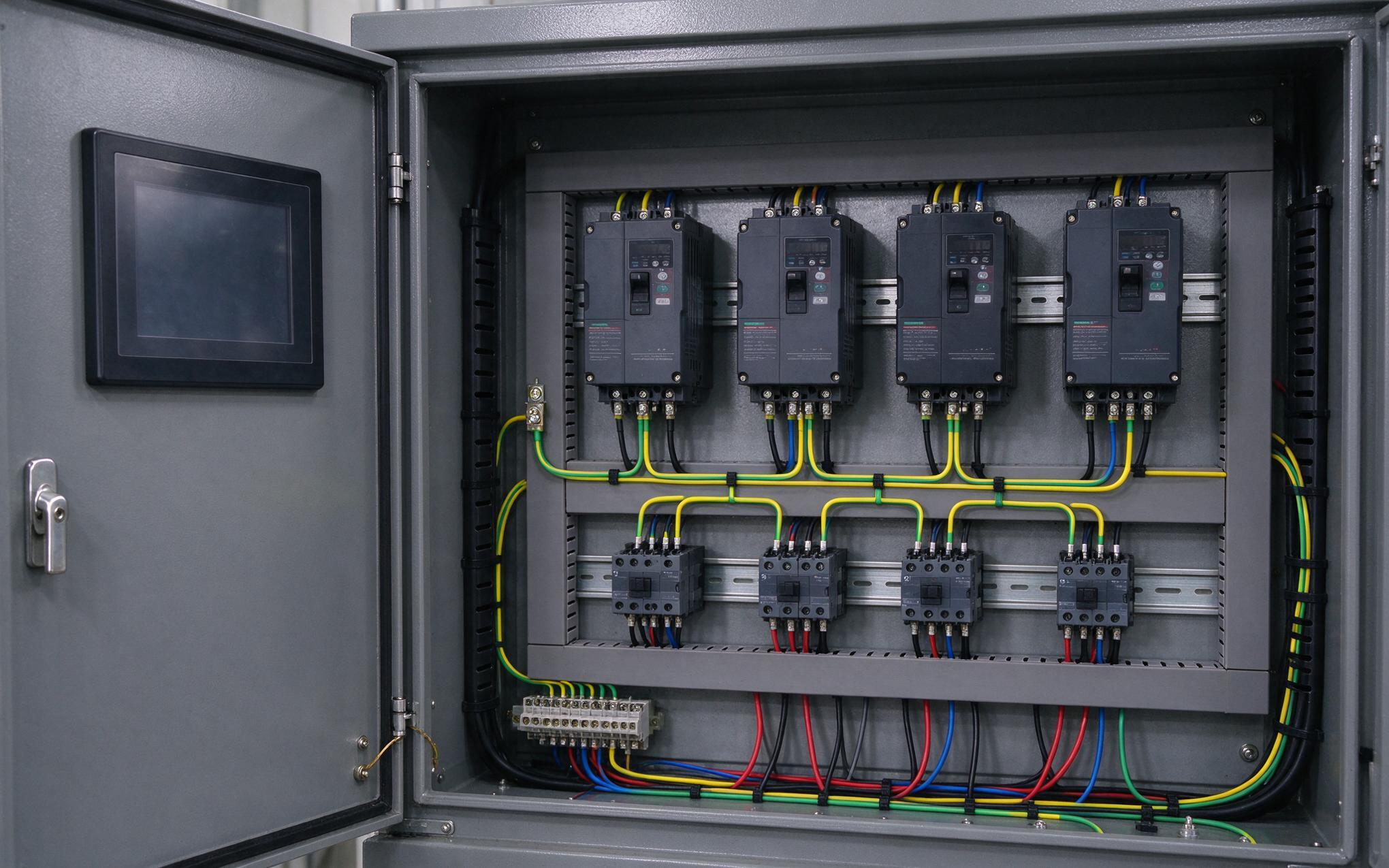
When a packaging line shuts down because the operator panel stops responding to touch, engineers quickly rule out water ingress. The enclosure is still sealed tight. The real culprit is electromagnetic interference generated by adjacent variable frequency drives, arc welders, and large contactors on the same power bus. An IP65 touch screen keeps moisture and dust out, but it does not inherently block the electrical noise that disrupts capacitive sensing. Understanding how shielding layers interact with IP-rated enclosures is critical for anyone specifying touch screen panels in electromagnetically hostile factory floors.

How Electromagnetic Noise Sources Affect Capacitive Touch Controllers
Capacitive sensing works by driving a low-amplitude AC signal through a grid of transparent electrodes deposited on the touch sensor glass. When a grounded object such as a finger approaches, it shunts a fraction of that signal to ground, and the controller interprets the capacitance change as a touch event. Electromagnetic interference from motor drives, switching power supplies, and welding equipment couples into the same electrode grid through both radiated and conducted paths. The noise amplitude can easily exceed the touch signal itself, causing phantom touches, missed inputs, or complete touch lockout. IP65 touch screen assemblies deployed near high-current equipment without dedicated shielding layers experience these failures at rates that vary with motor load, cable routing, and the physical distance between the noise source and the panel enclosure.

Shielding Methods That Protect the Touch Sensor Stack
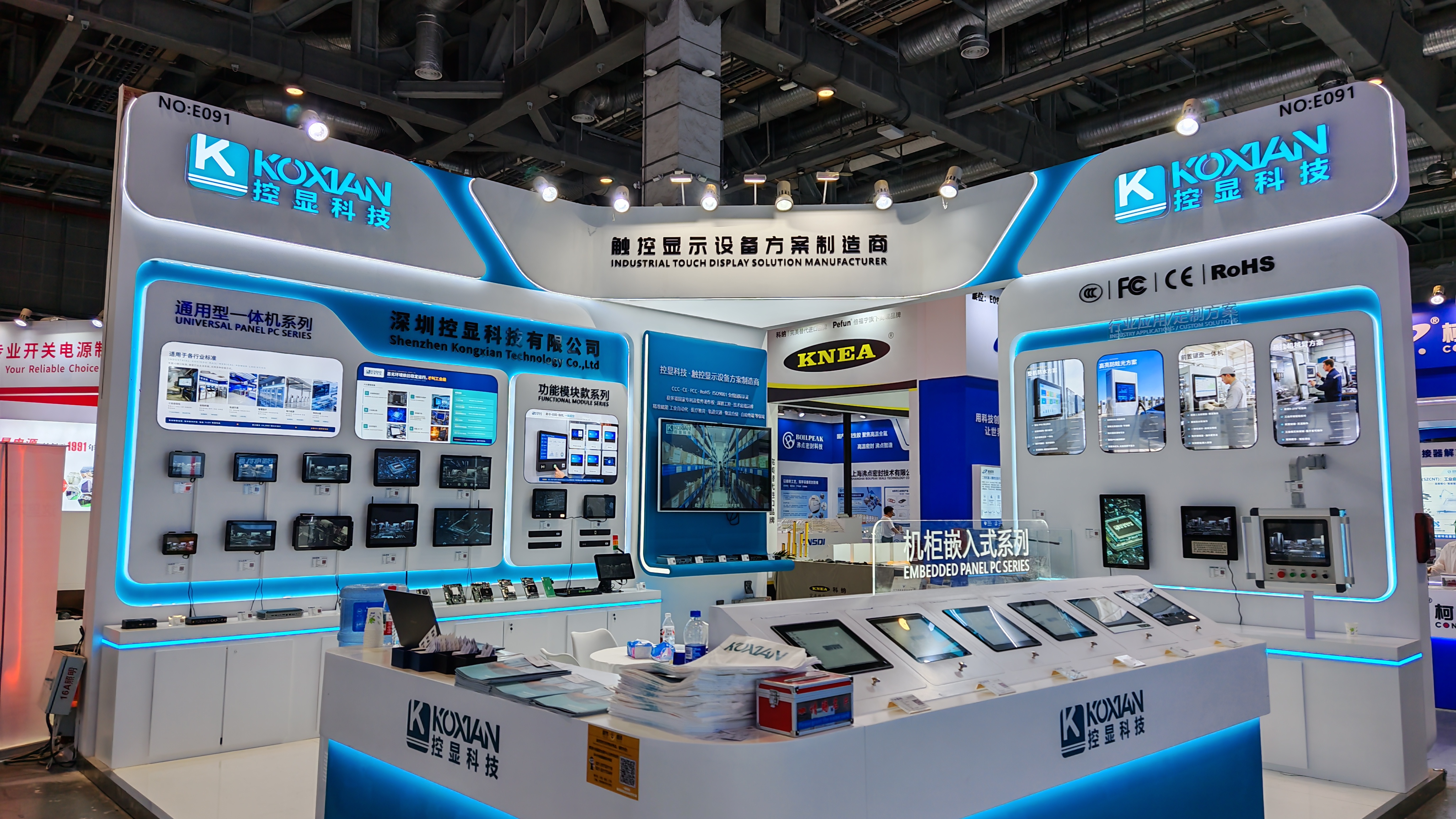
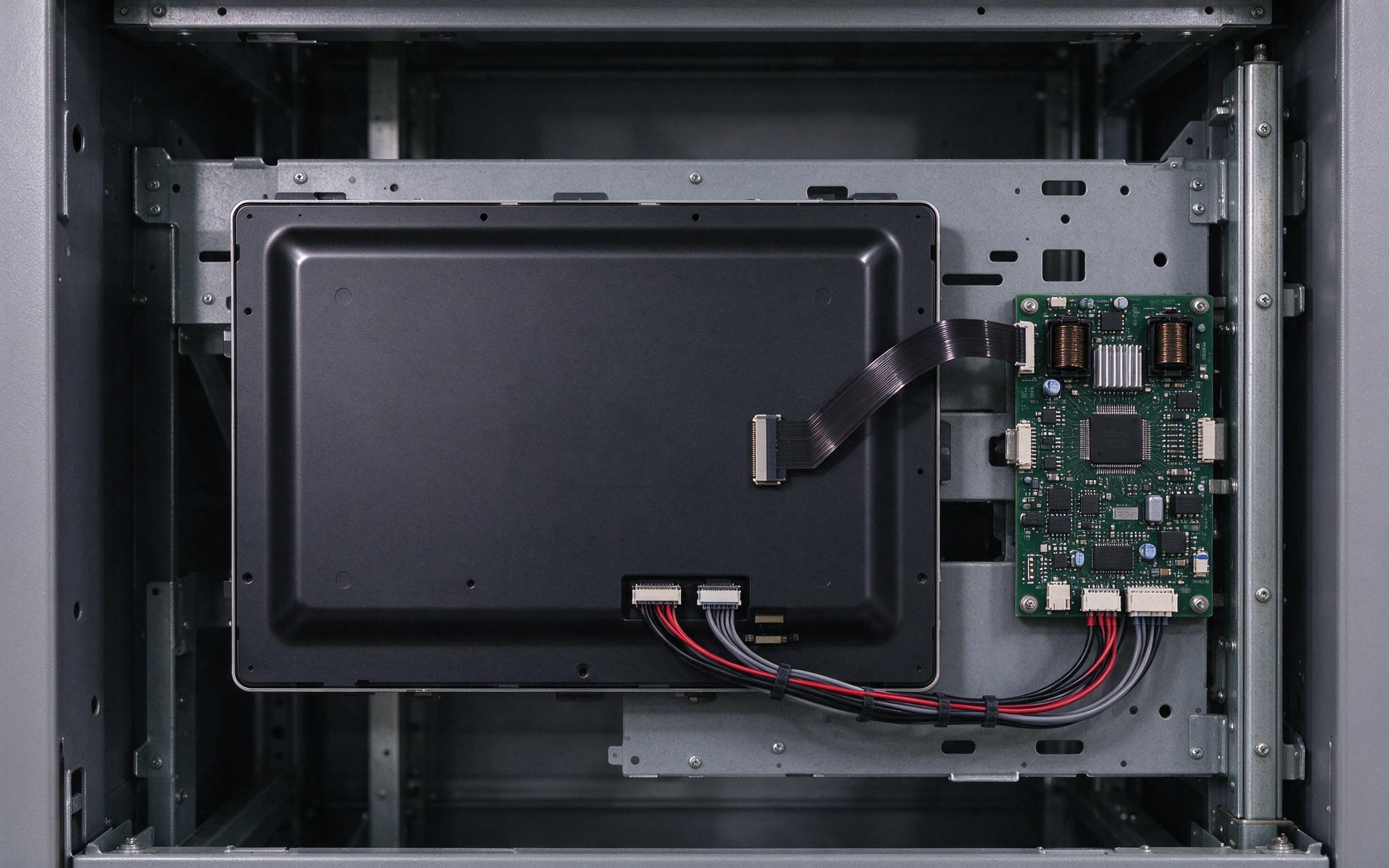
Effective electromagnetic shielding for touch screen panels involves a multi-layer approach applied within the display stack itself. A transparent conductive coating, typically indium tin oxide or a fine metal mesh, is deposited on the touch sensor glass to form a Faraday cage that attenuates incoming radiated fields. Beneath the sensor layer, a grounded copper or aluminum plane provides a low-impedance return path for conducted noise currents. This grounding plane also serves as the reference electrode for the capacitive sensing circuit, which means its design directly affects both touch sensitivity and noise rejection. In practice, manufacturers like KOXIAN integrate the grounding plane into the structural frame of the IP65 touch screen so that the shield and the mechanical enclosure share a common ground connection, eliminating ground loops that would otherwise degrade signal quality.

Field Validation of Shielding Effectiveness on the Factory Floor
Lab-based EMC testing to IEC 61000 standards confirms that a touch screen panel meets radiated and conducted emission limits, but it does not guarantee real-world performance on a factory floor where noise sources are distributed, intermittent, and often uncharacterized. Field validation starts with a baseline touch accuracy test under normal operating conditions, followed by systematic activation of nearby equipment while monitoring touch response latency and phantom event count. A shielded IP65 touch screen should maintain sub-50-millisecond response latency and zero phantom touches under worst-case electromagnetic load. If the measured values exceed these thresholds, the investigation should focus on cable shield continuity, grounding point impedance, and whether the enclosure gasket provides a complete electrical seal around the panel perimeter. Systems integrators deploying panels from manufacturers like KOXIAN report that pairing IP65 enclosures with engineered electromagnetic shielding reduces field failure rates significantly compared to sealed-only designs.
Selecting an IP65 touch screen for factory floor deployment requires evaluating electromagnetic shielding as a core specification alongside ingress protection. The enclosure rating addresses environmental sealing, but only dedicated shielding layers within the touch sensor stack protect against the electrical noise that causes the most common touch failures in industrial settings. Specifications should reference both the IP rating and the EMC immunity level verified to IEC 61000-4-3 radiated immunity standards. For teams sourcing touch screen panels for electromagnetically dense environments, pairing IP65 enclosure design with engineered electromagnetic shielding is the difference between a panel that works in the lab and one that holds up on the factory floor.